Cornell University

Image result for Cornell UniversityCornell University

·         ABOUT
\”I would found an institution where any person can find instruction in any study,” is the motto of Cornell University, words first uttered by its co-founder Ezra Cornell. Cornell was founded in 1865 with the then radical intention of teaching and making contributions in all fields of knowledge. 
Since its founding, Cornell has been a co-educational, non-sectarian institution where admission has not been restricted by religion or race. These are liberal traditions that Cornell holds dear: a recent article in the Cornell Chronicle heralded the first all-female class admitted to its famous Farrier program in veterinary science. Cornell was also the first university to offer degrees in journalism and the first to teach modern Far Eastern languages. 
The main campus of Cornell is on East Hill in Ithaca, New York, overlooking the city and Cayuga Lake. It spreads over 2,300 acres and comprises laboratories, administrative buildings, and almost all the campus\’ academic buildings, athletic facilities, auditoriums, and museums. 

The architecture is an eclectic mix of Collegiate Gothic, Victorian, and Neoclassical buildings, international and modernist structures. There are other campuses and facilities in New York City itself such as the medical campus Weill Cornell in Manhattan, and the engineering campus Cornell Tech. Outside New York, Cornell has an outpost in the gulf state of Qatar, which is the first American medical college to open outside of the United States. 

Ithaca campus sits at the heart of the Finger Lakes region, surrounded by green space and natural beauty. Students here are as likely to be found sitting under a tree with their nose in a book as they are taking advantage of the many clubs, societies and activities Cornell has to offer. 
First-year undergraduates live on North Campus, while upper-level students often hone in on the communities that they have found, opting for a fraternity or sorority, a co-op, a themed residence hall, or an apartment off campus. 
There are more than 1,000 organizations on campus, ranging from skateboarding to volunteer programs. Sporty or outdoorsy students can take part in courses as diverse as caving and rope climbing, and there are four sports centers for the fitness inclined. 
Food lovers are also well catered for, with Cornell voted in the top ten universities for food, with more than 30 dining facilities across campus. 

Princeton University

Princeton University

·         ABOUT
Princeton is one of the oldest and most prestigious universities in the United States. It was founded in 1746 and moved to its current site in New Jersey in 1896. 
Princeton is renowned for the spectacular greenery of its campus and for the architectural splendor of some of its landmark buildings, such as its Lewis Library, which was designed by Frank Gehry. Its student body is relatively small, with fewer than 10,000 enrolled in total, and international students make up 12 per cent of undergraduates. 
Princeton is one of the world’s foremost research universities, and has educated two US presidents, James Madison and Woodrow Wilson. Other distinguished graduates include Michelle Obama, actors Jimmy Stewart and David Duchovny, Google chairman Eric Schmidt and Apollo astronaut Pete Conrad.
Princeton was founded by New Light Presbyterians to provide training to its ministers. After the American Civil War, the college expanded, and its curriculum was overhauled. Around the turn of the 20th century, it officially became a university and its famous graduate school opened. 
Today’s Princeton provides undergraduate and graduate education in the humanities, social sciences, natural sciences, and engineering as well as offering a number of professional degrees. 
Princeton’s main campus is spread across 500 acres and has around 180 buildings, including 10 libraries. The main campus was named one of the most beautiful in the United States by New York’s Travel+Leisure magazine. Most Princeton students live, eat, study, work, and are at leisure on campus.  
The Ivy League institution guarantees accommodation to all of its undergraduate students across the four years of their degree and is committed to building a diverse campus community. Residential colleges offer a variety of academic, social, cultural and recreational programs, and opportunities abound for students to engage in interests beyond their academic study, whether that be writing for a literary publication, learning the science of beekeeping, or singing with an a capella group. 
The university is within easy reach of both New York City and Philadelphia, with the “Dinky” shuttle train providing a regular one-hour service to both cities. 
Studying at Princeton surrounded by natural beauty and architectural gems brings the best out in students. Several alumni and faculty members have been awarded Nobel prizes, and the university is consistently ranked in the top ten worldwide. Admissions are need-blind and, through a combination of grants and college jobs, few students graduate in debt – even though 60 percent of incoming students receive financial aid.

Nanyang Technological University, Singapore (NTU)

Image result for Nanyang Technological University, Singapore

Nanyang Technological University, Singapore (NTU)

·         ABOUT
Young and research-intensive, Nanyang Technological University, Singapore (NTU Singapore) is placed 12th globally, and 1st among the world’s best young universities for five consecutive years (QS university rankings).
 
Home to 33,000 students, NTU offers engineering, science, business, humanities, arts, social sciences, and education, and has a joint medical school with Imperial College London.
 
Ranked the top university in the world for citations in artificial intelligence (Nikkei and Elsevier 2017) for the period 2012-2016, NTU is embracing digital technologies for better learning and living as part of its Smart Campus vision. It has partnerships with the world’s leading technology companies such as Alibaba, Rolls-Royce, BMW, Volvo, Delta Electronics, and Singtel in many areas of societal importance and impact that include artificial intelligence, data science, robotics, smart transportation, computing, personalised medicine, healthcare and clean energy.
 
The NTU Smart Campus is not only a living testbed of tomorrow’s technologies, but it is also frequently listed among the world’s Top 15 most beautiful university campuses. It has 57 Green Mark-certified (equivalent to LEED-certified) building projects comprising more than 230 buildings, of which 95% are certified Green Mark Platinum.
 
Apart from its main campus, NTU also has a medical campus in Novena, Singapore’s healthcare district.

National University of Singapore (NUS)

National University of Singapore (NUS)

·         ABOUT

A leading global university centred in Asia, the National University of Singapore (NUS) is Singapore’s flagship university, which offers a global approach to education and research, with a focus on Asian perspectives and expertise.


NUS has 17 faculties and schools across three campuses. Its transformative education includes a broad-based curriculum underscored by multi-disciplinary courses and cross-faculty enrichment. Over 38,000 students from 100 countries enrich the community with their diverse social and cultural perspectives. NUS also strives to create a supportive and innovative environment to promote creative enterprise within its community.

The 17 Schools in NUS include:  

·         Arts and Social Sciences
·         Business
·         Computing
·         Continuing and Lifelong Education
·         Dentistry
·         Design and Environment
·         Duke-NUS Medical School
·         Engineering

·         Integrative Sciences and Engineering
·         Law
·         Medicine
·         Music
·         Public Health
·         Public Policy
·         Science
·         University Scholars Programme
·         Yale-NUS College
NUS takes an integrated and multi-disciplinary approach to research, working with partners from industry, government and academia, to address crucial and complex issues relevant to Asia and the world. Researchers in NUS’ Schools and Faculties, 30 university-level research institutes and centres, and Research Centres of Excellence cover a wide range of themes including: energy, environmental and urban sustainability; treatment and prevention of diseases common among Asians; active ageing; advanced materials; risk management and resilience of financial systems. The University’s latest research focus is to use data sciences, optimisation research and cyber security to support Singapore\’s Smart Nation initiative.

UCL (University College London)

Image result for university college londonUCL (University College London)

·         ABOUT
UCL is one of the world’s top multidisciplinary universities, with an international reputation for the quality of its research and teaching.
A world-leader in research, with outstanding results in the latest Research Excellence Framework (REF) 2014, UCL is home to centres of teaching excellence in subjects from medicine to languages, law to engineering, and history to astrophysics. Interdisciplinary study is encouraged and a belief that all areas of study can inform and enrich each other is woven into our programmes. We have had 29 Nobel laureates so far, with at least one every decade since the establishment of the prizes in 1901.
A central London location gives students access not only to world-renowned culture and nightlife, but also to academic resources. UCL is close to, and has teaching and research links with, countless hospitals, museums, galleries, libraries and professional bodies. International students make up nearly half our student population and come from over 150 countries, giving UCL its cosmopolitan atmosphere. We work hard to embed a global perspective in our teaching and there are many opportunities to study abroad for a term or a year—approximately 25% of students spend some time in another country as part of their degree programme.
·         ALL
·         VIDEOS
https://i.ytimg.com/vi/w5F8rqN7rFA/hqdefault.jpg
About UCL
UCL (University College London) is London\’s leading multidisciplinary university, with 11,000…
https://i.ytimg.com/vi/HXKpxz8p-Do/hqdefault.jpg
The Bartlett School of Construction and Project Management – PhD Student
To find out more please visit: http:

http://www.bartlett.ucl.ac.uk
cpm
research
https://i.ytimg.com/vi/ZQnfAFz-L_g/hqdefault.jpg
UCL Accommodation – Students View
Embarking on a degree is an exciting challenge, and for many students may mean living independently…
https://i.ytimg.com/vi/74dM4KyRrlY/hqdefault.jpg
Cupid and Psyche – Lauren Keeley, MFA Painting, UCL
Current UCL student, Lauren Keeley presents her work Cupid and Psyche. You can visit this work and…
https://i.ytimg.com/vi/XInVK7_cTuY/hqdefault.jpg
Study Abroad at UCL
UCL’s history, reputation and academic standing makes it a top destination for study abroad in the…

Programs available

Postgraduate Faculties/Departments and Programs

Can’t find your specific course/subject? Try our simple search

UCL Bartlett, Faculty of the Built Environment

·         Architecture
·         Development Planning
·         Energy
·         Planning
·         Sustainable Heritage
·         Sustainable Resources

UCL Faculty of Arts and Humanities

·         Early Modern Studies
·         English
·         Fine Art – Slade School
·         Greek and Latin
·         Hebrew and Jewish Studies
·         History of Art
·         Information Studies

UCL Faculty of Brain Sciences

·         Brain Sciences
·         Ear Institute
·         Neurology
·         Ophthalmology
·         Psychiatry

UCL Faculty of Engineering Sciences

·         Biochemical Engineering
·         Chemical Engineering
·         Computer Science
·         Finance
·         Management (School of)
·         Mechanical Engineering
·         Security and Crime Science

UCL Faculty of Laws

·         Law

UCL Faculty of Life Sciences

·         Biosciences
·         Pharmacy (School of)

UCL Faculty of Mathematical and Physical Sciences

·         Chemistry
·         Earth Sciences
·         Mathematics
·         Physics and Astronomy
·         Space and Climate Physics
·         Statistical Science

UCL Faculty of Medical Sciences

·         Cancer Institute
·         Medical Education
·         Medicine

UCL Faculty of Population Health Sciences

·         Cardiovascular Science
·         Child Health (Institute of)
·         Epidemiology and Health Care
·         Infection and Immunity

UCL Faculty of Social and Historical Sciences

·         Americas (Institute of the)
·         Anthropology
·         Archaeology
·         Economics
·         Geography
·         History
·         Philosophy
·         Political Science

UCL Institute of Education

·         Teacher training

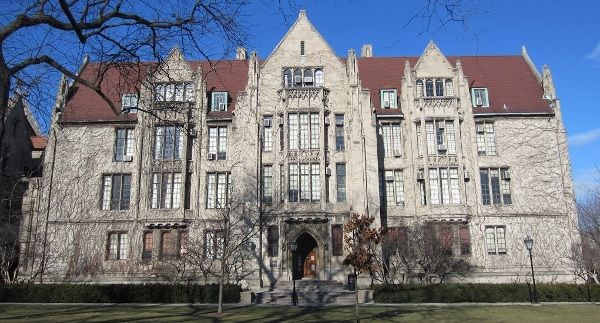
University of Chicago

Related imageUniversity of Chicago

·         ABOUT
Established in 1856, the University of Chicago is a private research university based in the urban center of Chicago, the third most populous city in the United States. Outside of the Ivy League, Chicago is one of America’s top universities, and holds top-ten positions in various national and international rankings. 
Beyond the arts and sciences, Chicago has a glowing reputation for its professional schools, including the Pritzker School of Medicine, the Booth School of Business, and the Harris School of Public Policy Studies. University of Chicago alumni are responsible for the development of many academic disciplines, such as sociology, economics, law, and literary criticism.  
The college’s crest sees a phoenix rising from the ashes, a reference to the fire, foreclosure, and demolition of the Old University of Chicago campus, with the current University of Chicago emerging triumphantly in its place in 1890. The old university was founded through a land endowment from the controversial senator Stephen Douglas, a supporter of slavery who authored the Kansas-Nebraska act. By contrast, the new University of Chicago was co-educational and funded through donations from wealthy Chicagoans and the oil magnet John D. Rockefeller. 
Today, the University of Chicago has approximately 16,000 students enrolled, with a male to female ratio of 56:44. A quarter of all students hail from overseas, a nod to the institution’s progressive credentials. 
Students run more than 400 clubs and societies, which consist of a typical mix of sports teams, arts, cultural and religious groups, academic and political groupings, and societies that promote eclectic common interests. Among the more famous examples are the University of Chicago bowl team, which has won 118 tournaments and 15 national championships, while the university\’s competitive Model United Nations team was the top ranked team in North America in 2013–14 and 2014–2015. 
If you have an interest in media and film, then you’re well catered for: the university is home to the longest continuously running student film society Doc Films and publishes several newspapers and magazines. Budding thespians can join renowned improvisational theater troupe Off-Off Campus, or learn how to broadcast at the university-owned radio station WHPK.
Notable faculty members past and present include 29 Nobel laureates and former US president Barack Obama. Illustrious alumni come in practically every field, including the novelists Philip Roth and Saul Bellow, political movers and shakers such as pollster Nate Silver and Obama strategist David Axelrod, pioneering balloonist Jeannette Piccard, and the fictional archaeologist Indiana Jones. 

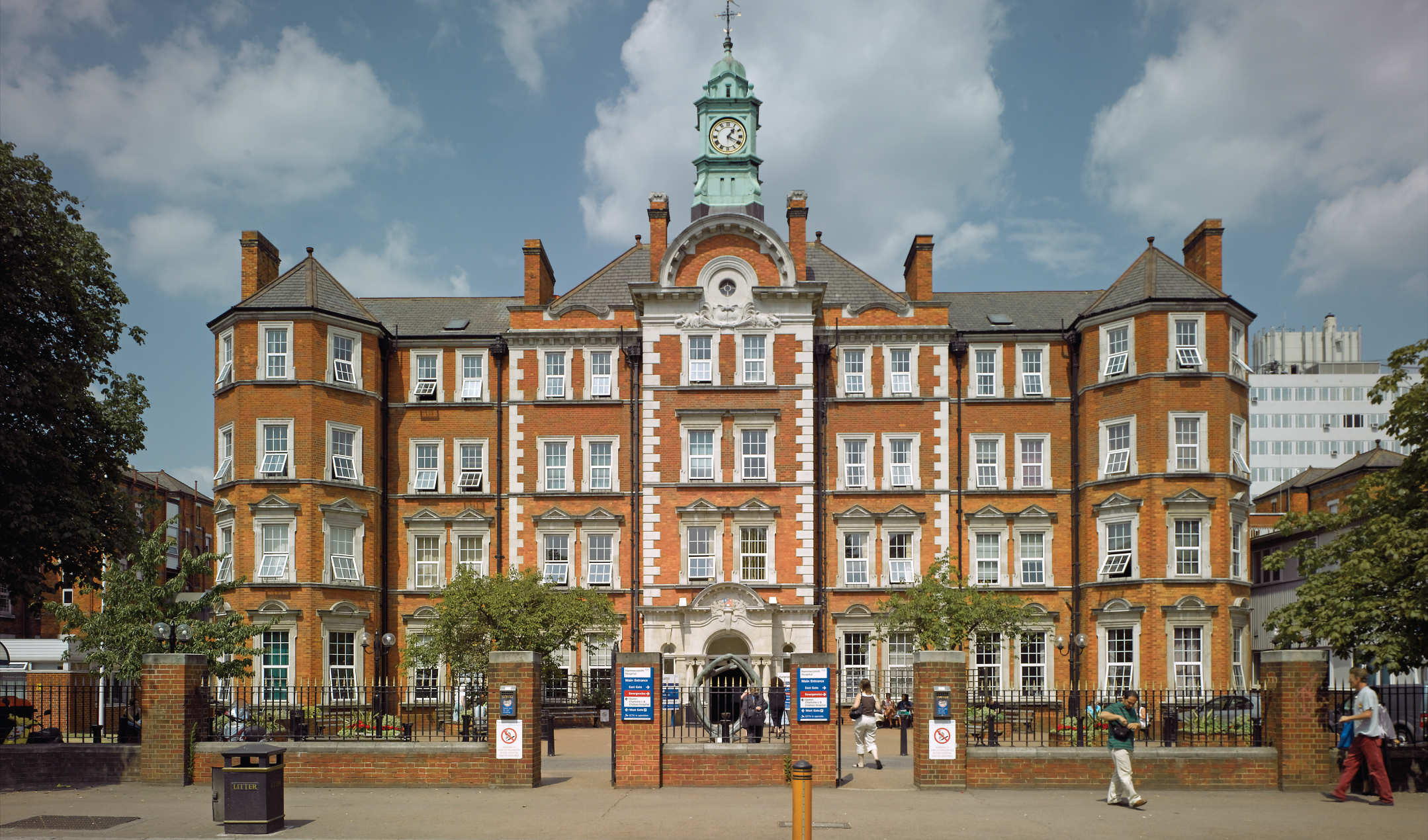
Imperial College London

Image result for imperial college london
Imperial College London
·         ABOUT
Ranked 8th in the world in the QS World University Rankings® 2019Imperial College London is a one-of-a-kind institution in the UK, focusing solely on science, engineering, medicine and business. Imperial offers an education that is research-led, exposing youto real world challenges with no easy answers, teaching that opens everythingup to question and opportunities to work across multi-cultural, multi-nationalteams.

Imperial is based in South Kensington in London, in an area known as ‘Albertopolis’, Prince Albert and Sir Henry Cole’s 19th century vision for an area where science and the arts would come together. As a result, Imperial’s neighbors include a number of world leading cultural organizations including the Science, Natural History and Victoria and Albert museums; the Royal Colleges of Art and Music; the English National Ballet; and the Royal Albert Hall, where all of their students also graduate.

There is plenty of green space too, including two Royal Parks (Hyde Park and Kensington Gardens) within 10 minutes’ walk of campus. Travel to and from the area is also really easy as it’s served by three Tube lines and many bus routes.

One of the most distinctive elements of an Imperial education is that students join a community of world-class researchers. The cutting edge and globally influential nature of this research is what Imperial is best known for. It’s the focus on the practical application of their research – particularly in addressing global challenges – and the high level of interdisciplinary collaboration that makes their research so effective. Read more about their research impact here.

The number of award winners, Nobel Prize holders and prestigious Fellowships (Royal Society, Royal Academy of Engineering, Academy of Medical Sciences) amongst their staff is a testament to the outstanding contributions they have made in their respective fields.

Imperial is is one of the most international universities in the world, with 59% of its student body in 2017-18 being non-UK citizens and more than 140 countries are currently represented on campus. Meanwhile, the College’s staff, like their students, are diverse in their cultural backgrounds, nationalities and experiences.

Follow Imperial on FacebookTwitterInstagram, and Snapchat (just search \”imperial college\”). 

·         ALL
·         VIDEOS
·         IMAGES
https://i.ytimg.com/vi/ld9Wo7Jxq_g/hqdefault.jpg
Our neighbourhood explained
Our South Kensington Campus enjoys an enviable location at the heart of ‘Albertopolis’, where scien…
https://i.ytimg.com/vi/BfEq4ZQWykI/hqdefault.jpg
Societies and clubs at Imperial explained
With over 350 clubs and societies covering all kinds of sports, arts, culture, departmental and cha…
https://i.ytimg.com/vi/xZAA9fKptvM/hqdefault.jpg
#HerImperial: the new generation
At Imperial we are committed to supporting the increasing participation of women in science, techno…
https://i.ytimg.com/vi/LwzghDcLkaI/hqdefault.jpg
International student life at Imperial explained
Imperial is the UK\’s most international university and home to students from around 130 differ…
https://i.ytimg.com/vi/QUBsf-2GX5s/hqdefault.jpg
A day in the life of Imperial
https://i.ytimg.com/vi/mMVeZJtWDMM/hqdefault.jpg
Imperial College London: Where It All Begins
At Imperial College London, we are looking for the best minds to join us. Find out how you can join…
https://www.topuniversities.com/sites/default/files/styles/content_slider_290x163/public/icl-exhibrdentrance-101-135455-001_3.jpg
https://www.topuniversities.com/sites/default/files/styles/content_slider_290x163/public/150914-aerial-campus-sken-004-181041-001_3.jpg
https://www.topuniversities.com/sites/default/files/styles/content_slider_290x163/public/150807-chambon-clementine-scholar-027-177692-001_3.jpg
https://www.topuniversities.com/sites/default/files/styles/content_slider_290x163/public/160428-ahmer-wadee-012-192764-001_3.jpg
https://www.topuniversities.com/sites/default/files/styles/content_slider_290x163/public/engineeringdepart-s-007_3.jpg
https://www.topuniversities.com/sites/default/files/styles/content_slider_290x163/public/171208-mecheng-005_3.jpg
https://www.topuniversities.com/sites/default/files/styles/content_slider_290x163/public/imperialoct2010-481-076478-001_3.jpg
https://www.topuniversities.com/sites/default/files/styles/content_slider_290x163/public/161020-petar-kormushev-denirobot-015-205674-001_3.jpg
https://www.topuniversities.com/sites/default/files/styles/content_slider_290x163/public/000180201-aerial-robotics-lab-084_3.jpg
https://www.topuniversities.com/sites/default/files/styles/content_slider_290x163/public/mfk-imperial-080908-045-049552-001_3.jpg
https://www.topuniversities.com/sites/default/files/styles/content_slider_290x163/public/161101-toxicology-charingcross-048-208288-001_3.jpg
https://www.topuniversities.com/sites/default/files/styles/content_slider_290x163/public/230317-vcc-154-213095-001_3.jpg
https://www.topuniversities.com/sites/default/files/styles/content_slider_290x163/public/161005-freshers-fair-010-204832-001_3.jpg
https://www.topuniversities.com/sites/default/files/styles/content_slider_290x163/public/161005-freshers-fair-103-204925-001_3.jpg
https://www.topuniversities.com/sites/default/files/styles/content_slider_290x163/public/150318-angus-varsity-071-167072-001_3.jpg
https://www.topuniversities.com/sites/default/files/styles/content_slider_290x163/public/171003-welcome-freshersfair-004_3.jpg
https://www.topuniversities.com/sites/default/files/styles/content_slider_290x163/public/180502-graduationbusinessschool227_3.jpg
https://www.topuniversities.com/sites/default/files/styles/content_slider_290x163/public/020518-dg-imperial-graduation-342_3.jpg
https://www.topuniversities.com/sites/default/files/styles/content_slider_290x163/public/180502-graduationbusinessschool045_3.jpg
https://www.topuniversities.com/sites/default/files/styles/content_slider_290x163/public/170523-norwegian-dsi-visit-008-216315-001_3.jpg
https://www.topuniversities.com/sites/default/files/styles/content_slider_290x163/public/000180201-aerial-robotics-lab-098_3.jpg
https://www.topuniversities.com/sites/default/files/styles/content_slider_290x163/public/9v8a1559-165243-001_3.jpg
https://www.topuniversities.com/sites/default/files/styles/content_slider_290x163/public/aerial-view-of-imperial-college-london-south-kensington-campus_7.jpg
https://www.topuniversities.com/sites/default/files/styles/content_slider_290x163/public/imperial-college-london-cell-and-molecular-biology_7.jpg
https://www.topuniversities.com/sites/default/files/styles/content_slider_290x163/public/imperial-college-london-library-study-area_7.jpg
https://www.topuniversities.com/sites/default/files/styles/content_slider_290x163/public/imperial-college-london-queens-tower_7.jpg

Programs available

Postgraduate Faculties/Departments and Programs

Can’t find your specific course/subject? Try our simple search

Faculty of Engineering

Faculty of Natural Sciences

Faculty of Medicine

Imperial College Business School

·         Executive MBA
·         Full-Time MBA
·         Global Online MBA
·         MSc Business Analytics
·         MSc Finance
·         MSc Finance & Accounting
·         MSc Management
·         MSc Strategic Marketing
·         Weekend MBA

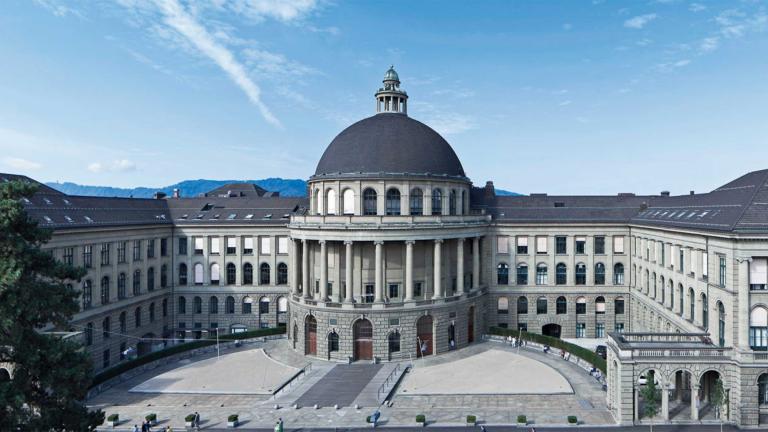
ETH Zurich – Swiss Federal Institute of Technology

Related imageETH Zurich – Swiss Federal Institute of Technology

·         ABOUT
ETH Zurich is one of the world\’s leading universities in science and technology and is known for its cutting-edge research and innovation. It was established in 1855 as the Swiss Federal Polytechnic School, and a century and a half later the university can count over 20 Nobel Prize laureates as alumni, including the great Albert Einstein himself. 
The university, commonly known as Swiss Federal Institute of Technology Zurich, has 16 departments that offer academic education and conduct scientific research in subjects ranging from engineering and architecture to chemistry and physics. 
Education at ETH Zurich combines solid theory with practical application, and most degree programs build on strong mathematical foundations. For undergraduates the main teaching language is German, while most master\’s programs and doctoral studies are in English.
Located in Zurich, Switzerland\’s largest city, ETH Zurich is largely based on a modern main campus built on a hill in the outskirts of the town. Students at ETH have twice as many lectures as those at other Swiss institutions, but can still attend regular exhibitions, plays and concerts, as well as take advantage of the regular symposia and conferences on campus, where some of the best minds in science come to speak. 

ETH students like to exercise their bodies as well as their minds, and there are various sports events held on campus, of which the largest is an annual SOLA relay race in 14 sections, taking place over a total distance of 140 kilometers. More than 900 teams have been known to take part at once in the annual spectacle. 

Since the 1880s, students have also been able to show off their best moves at the Polyball, a classic ball event featuring a live orchestra and famous national singers, in which 10,000 dancers, music-lovers and partygoers descend on ETH’s extensively decorated main building for what is usually an unforgettable night. 

University of Cambridge

Image result for university of cambridgeUniversity of Cambridge

·         ABOUT
Located in the center of the ancient city of Cambridge, 50 miles north of London, the University of Cambridge is a collegiate public research institution that serves more than 18,000 students from all corners of the globe. 
The university consists of numerous listed buildings and is divided into 31 autonomous colleges, with many of the older ones situated on the famous river Cam. Applications are made directly to the individual colleges, rather than to the university overall. You can live and are often taught within your college, receiving small group teaching sessions known as college supervisions. 
Six academic schools – Arts and Humanities, Biological Sciences, Clinical Medicine, Humanities and Social Sciences, Physical Sciences, and Technology – are spread across the university’s colleges, housing roughly 150 faculties and other institutions. 
Founded in 1209, the University of Cambridge’s 800-year history makes it the fourth-oldest university in the world and the second-oldest university in the English-speaking world. Cambridge students make up 20 percent of the town\’s population and most of the older colleges are situated near the city center. Its notable buildings give the city of Cambridge a unique character, and include King\’s College Chapel, the history faculty building designed by James Stirling and the Cripps Building at St John\’s College.
Cambridge is widely acknowledged as a vibrant place to be a student. On the academic side, the university is home to over 100 libraries, which hold more than 15 million books in total. There are also nine world-renowned arts, scientific and cultural museums such as Kettle’s Yard and the Fitzwilliam Museum, which are open to the public throughout the year, as well as a botanical garden. 
Extracurricular activities give you the chance to get involved with anything from the university’s renowned student drama societies, which spawned the likes of comedy group Monty Python, to music, politics and hundreds of other clubs and societies. The sports scene at Cambridge is huge too, with state-of-the-art facilities and over 80 sports on offer with teams for novices and experts alike. 
With its reputation for academic excellence and traditional scholarly values, the University of Cambridge often ranks among the very top universities in the world for teaching, research, and international outlook. The university has educated eminent mathematicians, scientists, politicians, lawyers, philosophers, writers, actors and heads of state. Ninety-eight Nobel laureates and 15 British prime ministers have affiliations with Cambridge as students, faculty or alumni, including the scientists Francis Crick and Frederick Sanger.

University of Oxford

Image result for university of oxfordUniversity of Oxford
·         ABOUT
The University of Oxford is the oldest university in the English-speaking world, and is actually so ancient that its founding date is unknown – though it is thought that teaching took place there as early as the 11th century. 
It’s located in and around the medieval city center of Oxford, dubbed “the dreaming city of spires” by the 19th century poet Matthew Arnold, and comprises 44 colleges and halls as well as the largest library system in the UK. 
There are 22,000 students at Oxford in total, around half of whom are undergraduates, while 40 per cent are international students. A quarter of the city of Oxford’s residents are students, giving the city the youngest population in the UK. 
The University of Oxford does not have a main campus, its buildings and facilities instead being scattered around the medieval city center. Its colleges each have a distinctive character and traditions often dating back centuries. Colleges are self-governing institutions to which students usually apply directly. There are four academic divisions within Oxford University: Humanities, Mathematical, Physical and Life Sciences; Medical Sciences; and Social Sciences. The university’s particular strength is the sciences, and it is ranked number one in the world for medicine.
Oxford is a youthful and cosmopolitan city with plenty to see and do. There are dozens of historic and iconic buildings, including the Bodleian Libraries, Ashmolean Museum, Sheldonian Theatre, the cathedral, and the colleges themselves. 
Students can choose to spend their time studying or avail themselves of the many extracurricular activities available. There’s a strong musical life at Oxford, with clubs and societies spanning all genres, from jazz, through to classical and folk. Oxford is also ranked highly for sport, with its top rowers taking part every year in the world-famous boat race with the University of Cambridge on the River Thames. Drama lovers are also well catered for, with one of the largest and most vibrant university drama scenes in the country.
Oxford has an alumni network of over 250,000 individuals, including more than 120 Olympic medalists, 26 Nobel Prize winners, seven poets laureate, and over 30 modern world leaders (including Bill Clinton, Aung San Suu Kyi, Indira Ghandi and 26 UK Prime Ministers). 
It has a friendly rivalry with Cambridge for the title of best university in the UK and is regularly ranked as being one of the top three universities in the world. Notable Oxford thinkers and scientists include Tim Berners-Lee, Stephen Hawking and Richard Dawkins. 

Harvard University

Image result for harvard universityHarvard University

·         ABOUT
Established in 1636, Harvard is the oldest higher education institution in the United States, and is widely regarded in terms of its influence, reputation, and academic pedigree as a leading university in not just the US but also the world. 
Located in Cambridge, Massachusetts, three miles north-west of Boston, Harvard’s 209-acre campus houses 10 degree-granting schools in addition to the Radcliffe Institute for Advanced Study, two theaters, and five museums. It is also home to the largest academic library system in the world, with 18 million volumes, 180,000 serial titles, an estimated 400 million manuscript items and 10 million photographs. 
Like most of the United States’ pre-Civil War colleges, Harvard was founded to train clergy, but Harvard’s curriculum and student body quickly secularized, and in the 20th century admissions policy was opened up to bring in a more diverse pool of applicants. 
Now, a total of 21,000 students attend the university, each of whom at some point can be seen bustling past the famous statue of John Harvard, the university’s first benefactor and founder, which looks on benignly in the center of the campus. The bronze statue’s gleaming foot is due to almost incessant rubbing by tourists and students, who believe the act brings good luck. 
Only the academic elite can claim a place at Harvard, and the nominal cost of attendance is high – though the university’s hefty endowment is such that it can offer generous financial aid packages, which around 60 per cent of students take advantage of. 
As freshmen, students live in one of the dormitories in Harvard Yard, a prime location, and eat in the historic and picturesque Annenberg dining hall. Harvard students are active around and beyond campus, with over 400 official student societies including extracurricular, co-curricular and athletic opportunities. Whether playing on the field in Harvard Stadium, fostering entrepreneurial activities at the Harvard innovation lab or writing and editing at the daily newspaper the Harvard Crimson, student life is a rich and rewarding experience. 
Harvard\’s alumni include eight US presidents, several foreign heads of state, 62 living billionaires, 359 Rhodes Scholars, and 242 Marshall Scholars. Whether it be Pulitzer Prizes, Nobel Prizes, or Academy Awards, Harvard graduates have won them. Students and alumni have also won 108 Olympic medals between them. The university is regularly ranked number one in the world, and the consistency of its chart-topping performances shows that success is yet to breed complacency.  

California Institute of Technology (Caltech)

Image result for california institute of technology

California Institute of Technology (Caltech)

·         ABOUT
The California Institute of Technology (Caltech) is a world-renowned science and engineering research and education institution, located in Pasadena, California, around 11 miles northeast of downtown Los Angeles. 
Caltech has a high research output as well as many high-quality facilities such as the Jet Propulsion Laboratory (owned by NASA), the Caltech Seismological Laboratory, and the International Observatory Network.  It’s among a small group of institutes of technology in the United States primarily devoted to teaching technical arts and applied sciences, and its fiercely competitive admissions process ensures only a small number of the most gifted students are admitted.
The university was founded as a preparatory and vocational school by Amos G. Throop in 1891, with the mission “to expand human knowledge and benefit society through research integrated with education”. It became a major hub of US scientific research in the early 20th century and was instrumental to the United States’ war effort during World War II. 
Today, it is home to the Einstein Papers Project, an initiative seeking to preserve, translate and publish selected papers from the estate of Albert Einstein. It has also established an energy innovation hub that aims to discovery revolutionary methods of generating fuels directly from sunlight. 
Caltech’s 124-acre campus is within walking distance of Old Town Pasadena and the Pasadena Playhouse District, and the two locations are frequent getaways for students. Life on campus is rich with social activities, clubs, associations and recreational facilities. Intercollegiate sport is taken very seriously, with the Caltech Beavers (the beaver – nature’s engineer – is the college’s mascot) competing in 13 intercollegiate sports. 
Caltech also offers excellent opportunities for the study and performance of music, theater, and the visual arts, all activities that play a vital role in realizing Caltech’s mission to role in realizing the Institute\’s mission of \”educating outstanding students to become creative members of society\”. Providing a touch of grandeur, the Athenaeum is a stately building in the center of the campus where members can go for formal and informal dining, meetings, rendezvous and private parties. 
The balance at Caltech between a rigorous academic curriculum and activities that promote personal development ensures time spent there for students is both formative and an invaluable staging post to a successful career.  Although it may lack the reputation of Ivy League universities or the likes of Oxford and Cambridge, Caltech is undoubtedly one of the best universities in the world, a fact reflected in all the university rankings, which regularly single out technology and engineering as the school’s key academic strengths. 

Stanford University

Image result for stanford universityStanford University

·         ABOUT
Located 35 miles south of San Francisco and 20 miles north of San Jose, Stanford University is in the heart of Northern California’s dynamic Silicon Valley, home to Yahoo, Google, Hewlett-Packard, and many other cutting-edge tech companies that were founded by and continue to be led by Stanford alumni and faculty. Nicknamed the “billionaire factory”, it is said that if Stanford graduates formed their own country it would boast one of the world’s largest ten economies. 
Covering 8,180 acres, Stanford has one of the largest university campuses in the US, with 18 interdisciplinary research institutes and seven schools: the Graduate School of Business; School of Earth, Energy & Environmental Sciences; Graduate School of Education; School of Engineering; School of Humanities and Sciences; Law School; and School of Medicine. 
Stanford University was founded in 1885 by California senator Leland Stanford and his wife, Jane, to “promote the public welfare by exercising an influence in behalf of humanity and civilization”. The couple’s only child had died of typhoid, and their decision to build a university on their farm was intended as a memorial. From the start the university was non-sectarian, co-educational and affordable, teaching both the traditional liberal arts and the technology and engineering that was shaping the new America at the time.  
Fast forward more than a century, and Stanford counts 19 Nobel laureates within its community and is regularly ranked among the top three universities in the world. Nicknamed “The Farm” from the days when horses roamed there, Stanford’s campus is now a thriving community of more than 11,000 creative and accomplished people from around the world. Nearly all undergraduate and 60 per cent of graduate students live on campus, so it is hardly surprising that student life is rich and diverse, with over 625 organized student groups. 
Sport is popular, with students, faculty and staff enjoying state-of-the-art recreational facilities and wellness programs. Stanford students compete in 36 varsity and 32 club sports, including baseball, football, basketball, and squash. Sports teams are referred to as the “Stanford Cardinal”.
Stanford also has a rich tradition of fostering creativity and the arts: there is a vibrant campus arts district and two world-class museums which host regular exhibitions.  Eight dining halls, a teaching kitchen and organic gardens provide the campus community with healthy, sustainable meals. The close-knit communal nature of life on campus has even given rise to “Stanford speak”, a special language only spoken on campus. 

Massachusetts Institute of Technology (MIT)

Image result for mit massachusetts institute of technology


“Mind and Hand” is the thought-provoking motto of the Massachusetts Institute of Technology, known also as MIT. This motto enigmatically encapsulates this famous institution’s mission to advance knowledge in science, technology and areas of scholarship that can help to make the world a better place. 

At its founding in 1861, MIT was initially a small community of problem-solvers and science lovers eager to bring their knowledge to bear on the world. Today, MIT has evolved into an educational behemoth, with some 1,000 faculty members and more than 11,000 undergraduate and graduate students. 
MIT is now an independent, coeducational, privately endowed university organized into five schools (architecture and planning; engineering; humanities, arts, and social sciences; management; science). Yet the principle of educational innovation remains at the core of MIT’s educational philosophy. 
MIT researchers are at the forefront of developments in artificial intelligence, climate adaptation, HIV, cancer, and poverty alleviation, while in the past MIT research has fuelled scientific breakthroughs such as the development of radar, the invention of magnetic core memory and the concept of the expanding universe. 
Science and technology are not the only strings to MIT’s bow, however. Approximately 20 percent of MIT undergraduates join a sports team, and with 33 varsity sports MIT boasts one of the broadest intercollegiate athletic programs in the world. 
A vibrant arts culture also permeates college life. There are 12 museums and galleries on campus, with the MIT Museum drawing nearly 125,000 visitors each year. Students participate in more than 60 music, theatre, writing and dance groups, and faculty members of MIT even include Pulitzer Prize winners and Guggenheim fellows.
MIT is set in 168 acres of grounds that extend for more than a mile along the Cambridge side of the Charles River basin. The campus features stunning landmarks designed by the likes of architects Alvar Aalto, Frank Gehry, and Steven Hollin, as well as buildings in a range of architectural styles, from neoclassical to modernist and brutalist. 
At its edges, the campus merges with various Cambridge neighborhoods, including Kendall Square which is one of the most innovative square miles on the planet. The close association of industry and research has helped MIT alumni go on to launch more than 30,000 active companies, creating 4.6 million jobs and generating roughly $1.9 trillion in annual revenue. No wonder then that a nation of MIT graduates would be equivalent to the 10th-largest economy in the world.

Jammu and Kashmir HC Upholds PM’s Employment Package (2009) ForKashmiri Pandits Living In The Valley

There can be no two views that in a landmark, latest and laudable judgment delivered by the Jammu and Kashmir High Court in Kashmiri Sikh Community and others v. State of J&K and others in OWP no. 2048/2017 just recently on February 14, 2019, it has very rightly upheld PM’s Employment Package (2009) for Kashmiri Pandits living in the Valley.  Every Indian must salute the heroic determination of all those Kashmiri Pandits who did not flee the Valley despite all round pressure on them and terrorists breathing down their neck since such a long time from 1990s onwards! No doubt, the Jammu and Kashmir High Court has very rightly turned down the plea challenging special dispensation in the matter of employment given in favour of Kashmiri Pandits living in Kashmir Valley for which it must be applauded and appreciated in no uncertain terms.
Jammu and Kashmir HC Upholds PM’s Employment Package (2009) For Kashmiri Pandits Living In The Valley
                            First and foremost, this commendable and noteworthy judgment delivered by Justice Sanjeev Kumar of Jammu and Kashmir High Court sets the ball rolling in para 1 by bringing out that, “The petitioner no. 1 claims to be a body of Kashmiri Sikhs, represented by one Shri Santpal Singh, resident of Aloochi Bagh, Srinagar. The petitioners 2 & 3 claim to be the unemployed Kashmiri Sikh youth. The petitioners are aggrieved of special dispensation in the matter of employment given in favour of Kashmiri Pandits, living in Kashmir Valley, by amending J&K Migrants (Special Drive) Recruitment Rules 2009 (for short “Rules of 2009”) in terms of SRO 425 dated 10th October 2017. They are also aggrieved by the subsequent Government Order, issued by respondent no. 1, bearing no. 96-DMRR&R of 2017 dated 13th November 2017. It is asserted that SRO425 dated 10th October 2017, whereby the Rules of 2009 have been amended violates the equality clause, bedrock of Articles 14 and 16 of the Constitution, by treating the Sikh Community staying in Kashmir Valley differently than the similarly placed Kashmiri Pandits, for the purposes of extending the Prime Minister’s Employment Package. In essence, the petitioners seek mandamus to respondents to treat them at par with Kashmiri Pandits, staying in Valley, for the purposes of providing the employment pursuant to the Prime Minister’s Package of Return and Rehabilitation.”
                                        Of course, it is then pointed out in para 2 that, “Before adverting to the grounds of challenge urged in support of the claim made in the writ petition, it would be pertinent to briefly narrate the factual background leading to issuance of the impugned SRO.”
                  In hindsight, it is then brought out in para 3 that, “It is a historical known fact that during the year 1990, there was a sudden spurt of militancy and terrorism in Kashmir Valley. There were stray instances of target killings of minority community (Kashmiri Pandits) and political workers. This led to scare in the minds of such people who feared for their life and honour in the wake of happenings which were taking place at the relevant point of time. The happenings created a sort of fear of psychosis and instilled strong sense of insecurity in the mind of aforesaid community. In the result, the Nation witnessed large scale exodus of Kashmiri Pandits along with the political workers from Kashmir Valley. This was unprecedented situation witnessed by the Nation. The condition in the Valley at the relevant point was such that no authority of the State could prevent such mass exodus. There are different versions on the reasons for such mass exodus of a particular community. Different political parties hold different views. The Court may not be concerned as to what were actual reasons of the mass exodus of Kashmiri Pandits from Kashmir Valley but at the same time is not oblivious to the plight and miseries that befell on these migrants. They had to leave their home and hearth and settle in camps in Jammu, New Delhi and various other places of the country, where they felt sense of security.”
                                 It cannot be lost on us that it is then further noted in para 4 that, “There can be no dispute that sufferings of all these Kashmiri Migrants, who had to leave their home and hearth in peculiar law and order situation in the State, were of high magnitude. The Government of India as also the Governments of various States came up with different measures of rehabilitation and provided relief and succor to these families by all possible means. Despite all efforts made by the Government of India at its level, there was no discernible improvement in the living standard of this migrant community. This led the Government of India to come up with a comprehensive package and policy of relief and rehabilitation in the year 2008. This package/policy was first announced by the then Prime Minister during his visit to the State on April 25-26, 2008. The package was meant to ameliorate the lot of Kashmiri Pandit Community, who had been forced to migrate from Kashmir Valley and to facilitate their return and rehabilitation. Apart from other incentives contained in the package formally announced in June 2008, it was also decided to provide the jobs to the educated among migrant youth in the State Government services and financial assistance (grant of loans to unemployed to help them engage in self-employment through vocational training. Accordingly, 3000 supernumerary posts were created in various Departments for providing employment to migrant youth who were willing to return and serve in Kashmir Valley. With a view to filling up these posts and providing employment exclusively to the unemployed youth from amongst the migrants, the Government came up with the Rules of 2009, which were notified by the Government vide SRO 412 dated 30th December 2009. These Rules, as is apparent from their recital, are statutory rules framed by the Governor under proviso to Section 124 of the Constitution of J&K. The supernumerary posts created under the Prime Minister’s package were, accordingly, filled up under the aforesaid Rules and the employment to several migrant youth, came to be provided.”         
                                   Going ahead, it is then elaborated in detail in para 5 stating that, “It appears that despite all efforts made by the Central Government and issuance of the employment package under the name of the Prime Minister’s package for relief and rehabilitation of Kashmiri Migrants, the things did not improve at the desired pace. This led the Government of India to do rethinking on the matter. With a view to going deep into the living conditions of the Kashmiri Migrants and to suggest better means and ways to improve upon their living standards, a Joint Parliamentary Committee was constituted, which submitted its 137th report on the rehabilitation of J&K Migrants. Apart from the general suggestions, various measures for improving the pitiable condition of migrants were suggested. The Committee, in its observations/conclusions/recommendations at serial no. 4.2, expressed its deep concern over the pathetic condition of about 4000 Kashmiri Pandits, living in Kashmir Valley. The Committee felt that there should be special budgetary provision for Kashmiri Pandits left behind in the Valley for fulfilling their genuine needs of the housing, employment/self-employment, for improving their living conditions. Subsequently, the Parliamentary Standing Committee of Home Affairs submitted its 179th report on the action taken by the Government on the recommendations/observations contained in 137th Report on rehabilitation of the J&K Migrants. The report elaborately deals with the action on different aspects but with regard to the condition of Kashmiri Pandits living in the Valley. The Parliamentary Committee in paragraph 2.1.21 observed that a large number of Kashmiri Pandit families were living in Kashmir Valley in a pathetic condition. A  number of such families living in the Valley, was pegged at 600. The Committee, thus, recommended that courage of such Kashmiri Pandit families, who continued to reside in the Valley despite the adverse conditions, needed to be appreciated and they should be provided appropriate security and other facilities as may be required. It appears that in light of the report of the Parliamentary Standing Committee on the rehabilitation of Kashmiri Migrants and also taking note of pathetic condition of Kashmir Pandit community, which had decided not to migrate because of many reasons as also to extend the Prime Minister’s Package of Return and Rehabilitation, the Government of India sanctioned additional 3000 government jobs for Kashmir Migrants vide its communication dated 4th December 2015. This package of employment was meant for all Kashmiri Migrants and the category of Kashmiri Pandits, who had not migrated from the Kashmir Valley during the terrorist violence, was first time included for the benefit of the aforesaid employment package. As is apparent from the aforesaid communication, the Government of India desired that while providing the jobs to the Kashmiri Pandit families under the package, preferably the formula of one job per family be adopted. This sanction of the additional package of employment prompted the Kashmiri Pandits residing in the Valley to approach this Court by way of OWP no. 1986/2013 titled Kashmiri Pandit Sangarsh Samiti and others v. Union of India and others. The petition was essentially filed to implement the package of incentive particularly in part pertaining to the benefit of jobs to be given to the Kashmiri Pandit families on the formula of one job per family. The petition was disposed of by this Court on 31st May 2016, with a direction to the respondents to consider the claim of the petitioners therein in accordance with the rules. The decision was directed to be taken within a period of six weeks from the date of receipt of copy of the order. It appears that the State Government did not move in the matter, which made the petitioners in the aforesaid petition to file a contempt petition, seeking implementation of the directions passed on 31st May 2016. The notice in the contempt appears to have waken the State from its slumber, which immediately came up with Government Order no. 58-DMRR&R of 2017 dated 29th July 2017, and created 3000 supernumerary posts in different departments. Since in the revised package of the employment and rehabilitation issued by the Government of India, the Kashmiri Pandit families residing in the Valley who had not migrated in the wake of onslaught of militancy in 1990, had also been included for the benefits, it was necessary for the Government to amend the Rules of 2009. It may be noted that under the Rules of 2009, as they then stood, the employment package was meant for all migrants, who had fled from the Valley leaving their home and hearth for settlement in safer places irrespective of their caste, community or religion. These migrants include the internally displaced persons as well, but this package of employment under Rules of 2009 was not available to the Kashmiri Pandit community, which had decided to stay back in the Valley despite the prevailing adverse security scenario and despite the fact that there was large scale exodus of their community from the Valley in the year 1990. The State Government, after going through the formal procedure, ultimately amended the rules of 2009 vide SRO 425 of 2017 dated 10th October 2017 and included such Kashmiri Pandit families also for the benefit under the Rules of 2009. Since the Government of India, while sanctioning the additional 3000 supernumerary posts, had indicated that for the purposes of providing the employment to Kashmiri Pandit families, preferably the formula of one job per family, should be adopted, as such, the State Government decided to set apart 500 posts for Kashmiri Pandit families to be filled up by a different committee, constituted vide Government Order no. 96-DMRR&R of 2017 dated 13th November 2017. A separate committee was necessitated as these posts could not have been filled up through J&K Services Selection Board, which is enjoined to make the selection on the basis of merit. It is worthwhile to notice that the State Government, instead of effecting appropriate amendment in the Rules of 2009, did so by executive fiat.”     
                                        In essence, it is then aptly stated in para 6 that, “From the sequence of events given hereinabove, it is clear that the amendment impugned has enured to the benefit of a particular community, i.e. Kashmiri Pandit community, which stayed back in the Valley despite adverse conditions. It does not make any provision for the petitioners’ community, which claims to have suffered in the similar manner and which like the Kashmiri Pandit families also decided to stay back and did not migrate from the Valley. This deprivation appears to have led to heartburning in the petitioners’ community. The petitioners feel that the State has ventured into class legislation and has treated persons in the same class differently. They claim that the similar benefit needs to be extended to them and the Rules of 2009 as amended vide SRO impugned are ultra vires the Constitution. It is in this background that the instant petition has been filed by the members of the Sikh community living in the Valley.”  
                      As a consequence, it is then pointed out in para 7 that, “The respondents have filed their reply and have explained the reasons for coming up with the special package of employment in favour of Kashmiri Pandit families staying in the Valley. Referring to some empirical data which respondents claim was analysed before grant of the package of employment to Kashmiri Pandit families, it is pleaded that the two communities, i.e. Kashmiri Pandits and Sikhs living in the Valley do not form the same class and, therefore, classification made by the respondents for providing the benefit of employment to one person per family to the Kashmiri Pandits living in the Valley is a valid classification and meets the requirement of Article 14 and 16 of the Constitution.”
                             More importantly, it is then pointed out in para 8 that, “Kashmiri Pandits living in the Valley too have intervened in the matter and have filed a separate set of objections raising several issues with regard to maintainability of the petition. In short, they too have sought to justify the classification made by the respondents for the purposes of employment on the formula of one job per family to the Kashmiri Pandit families living in the Valley. In their objections they have relied upon the Parliamentary Standing Committee reports and other material to demonstrate that Kashmiri Pandit community which decided against migration and stayed back due to various reasons viz. economical, security or the assurances by the community in the neighbourhood etc, have suffered more than those who migrated from the Valley. The Parliamentary Standing Committee, which went deep into the matter has clearly highlighted the pitiable and pathetic condition of the Kashmiri Pandit community living in the Valley. It is, thus, pleaded that the decision to extend the special benefit of employment to the Kashmiri Pandit community was on the basis of the empirical data collected by the Government with regard to the living conditions of the Kashmiri Pandit community living in the Valley. It is, thus, pleaded that looking to the empirical data, it cannot be said that the Sikh Community, which stayed in the Valley and did not migrate, suffered in the same manner.”
                                        Having said this, let us now turn to para 23. It states that, “From reading of Rules of 2009, in their entirety, it is abundantly clear that the posts specially created from time to time in the Valley under the Prime Minister’s Special Package are meant to be filled up from ‘Migrants’ as defined in Rule 2(d). From the definition of migrant given in the Rules, it is evident that the benefit envisaged under the Rules is available to all migrants fulfilling the three conditions enumerated herein above irrespective of their caste, community or religion. The Rules of 2009 treats all migrants as a class and do not make any discrimination on any ground whatsoever.”
                                 Be it noted, what cannot be missed out here is that it is then added in para 24 stipulating that, “However, the amendment incorporated in the Rules of 2009, vide SRO 425 dated 10th October 2017, introduces a class of Kashmiri Pandits, who have not migrated from Kashmir Valley after 1st of November 1989, and are presently residing in Kashmir Valley. The Rules of 2009, which prior to amendment were called J&K Kashmiri Migrants (Special Drive) Recruitment Rules, 2009, now after amendment would be known as J&K Kashmiri Migrants or Kashmiri Pandits (Special Drive) Recruitment Rules 2009. The expression “Kashmiri Pandits” has been defined by inserting Clause (ca) after Clause © of Rule 2. Similarly, other necessary amendments have been made to give effect to the intendment of the amendment, which is to confer the similar benefit of the package of employment on Kashmiri Pandit community, who did not migrate during turmoil of 1989-90 and decided to stay back in the Valley. Interestingly, SRO 425 of 2017 does not make any amendment to the definition of post given in Rule 2 (c), which when read with Rule 3 would mean that amended Rules would apply to the posts which are sanctioned from time to time in the Valley under the Special Package for return and rehabilitation of Kashmiri Migrants to the Valley, issued by the Prime Minister. It would also mean that the posts becoming available on account of supernumerary creation under the Prime Minister’s Special Package cannot be filled up otherwise than in accordance with the Rules of 2009 as amended vide SRO 425 of 2017.”    
                                Enumerating on the various reasons why Kashmiri Pandits who did not migrate from Kashmir were given reservation, para 25 then goes on to elaborate stating rightly that, “From careful reading of the Rules of 2009 and amendments carried thereto vide SRO impugned in this petition, it is abundantly clear that a class different from the migrants has been created for conferring the benefit of the Prime Minister’s Package for return and rehabilitation of Kashmiri Migrants. The class identified under the impugned SRO is a community of Kashmiri Pandits, who did not migrate in the wake of turmoil in the Valley and stayed back despite adverse conditions perceivably prevailing for their community. This classification has been necessitated pursuant to the several representations received for and on behalf of this community, which was living in a very pitiable and pathetic condition in the Valley. The Government of India also took note of the fact that these handful families had not migrated due to reasons of their poverty, economic conditions, a sense of security instilled in them by their supporting neighbourhood, etcetera, etcetera. They stayed back and braved the adverse conditions in the Valley, which seriously impacted growth of their families educationally and economically. Taking note of their plight and the persistent pitiable conditions, a policy decision was taken to confer the benefit of the Prime Minister’s Package of return and rehabilitation on this community as well. As noted above, this was not a hollow exercise by the Government of India. Not only it collected the relevant empirical data but also appointed a Standing Parliamentary Committee to go into all these aspects and make their recommendations. As is averred by the respondents in their affidavit that as per the records available with the Relief and Rehabilitation Commissioner (Migrant), Jammu, there are 15700 Hindu Relief families and 22062 Hindu Non-Relief families, consisting of 49859 souls and 82740 souls respectively. Besides there are 1336 Relief Sikh families and 353 Non-Relief Sikh families consisting of 5043 souls and 1502 souls respectively registered with the Relief Organisation. In the light of the aforesaid data placed on record, the respondents have pleaded that the effect of migration in the wake of turmoil in the Valley was more on the Kashmiri Pandit community than other communities. It is though conceded that handful of Sikh families too migrated from the Valley but majority decided to stay back and has been residing peacefully. It is on the basis of this empirical data and the recommendations of the Parliamentary Standing Committee constituted for the purpose that the Government appears to have taken a policy decision to extend some helping hand to this distressed Kashmiri Pandit community.”  
                                    Needless to say, para 25 makes it abundantly clear why Kashmiri Pandits who did not migrate from Kashmir Valley were given reservations. It also specifies why Sikhs were not given reservation. This was because majority of them did not migrate from Kashmir as opposed to majority of Kashmiri Pandits who had migrated from the Kashmir Valley! The stand taken by the Government was a well thought out decision which has to be appreciated and applauded! No wonder that Jammu and Kashmir High Court too endorsed it!
                                        Viewed from this perspective, there can be no gainsaying that para 26 then further goes on to explain stating that, “From the aforesaid discussion and in view of the stand taken by the respondents, it cannot be said that the Sikh Community is similarly placed with the Kashmiri Pandits. There appears to be intelligible differentia, which distinguishes Kashmiri Pandits, who have stayed back in the Valley and did not migrate when lakhs of their community members left their home and hearth in view of the then prevailing security scenario in the Valley. The classification clearly distinguishes Kashmiri Pandit community from Sikh Community living in the Valley, which has been left out of group. The classification based on intelligible differentia has a definite nexus with the object sought to be achieved by the Rules of 2009 as amended vide impugned SRO, and is meant to ameliorate the lot of Kashmiri Pandits who preferred to stay back and did not flee despite unsavoury security conditions in the Valley in the year 1989-90. The target killings of members of their community instilled sense of fear and insecurity in their minds, which made their living in the Valley possible only at the cost of their lives. This sense of insecurity was all pervasive. In the milieu, there were certain families who decided not to migrate either because they were poverty ridden or did not have resources to move out or that they were assured by the community in their neighbourhood not to be afraid of. Whatever be the reasons, they decided to stay back but suffered due to unsavoury and not too good conditions in the Valley for the community. As per 137th report of the Standing Parliamentary Committee, their condition continued to worsen. They lacked behind in education and fared very bad on the economic front. Taking into account all these factors and the historical background responsible for en masse exodus of the community, the Central Government decided to provide some relief and succor to these families of Kashmiri Pandits. It is in this background that a policy decision was taken by the Government to treat these families of Kashmiri Pandits, staying in the Valley, at par with the migrants for the purposes of providing the employment package. This necessitated the amendment in the Rules of 2009, so as to include Kashmiri Pandits, staying in the Valley, also as beneficiary of the Prime Minister’s Package for return and rehabilitation of Kashmiri Migrants, issued from time to time.”
                        It is then underscored in this same para 26 that, “Viewed thus, it cannot be said, by any stretch of imagination or reasoning, that the classification made by the impugned SRO is not based on intelligible differentia or that differentia has no nexus with the object sought to be achieved. If the object of the Rules of 2009 is return and rehabilitation of migrants, it would make no sense if the same does not provide for rehabilitation of those who have not fled from the Valley despite adverse conditions and have stayed back.”
                                  Not stopping here, it is then held in para 27 that, “In view of the foregoing discussion, I find that the impugned SRO does not amount to class legislation but makes a valid classification which is permissible under Article 14 and 16 of the Constitution.” 
                                      It would be imperative to mention here that para 33 then envisages that, “Going by the aforesaid considerations, the respondents have carved out the classification on the parameters of data as well as the recommendation of Parliamentary Standing Committee. Such a decision is based on policy considerations. It cannot be said that this decision is manifestly arbitrary or unreasonable. It is settled law that policy decisions of the Executive are best left to it and a court cannot be propelled into the unchartered ocean of Government policy. [See: Bennett Coleman & Co. v. Union of India, 1972 (2) SCC 788]. Public authorities must have liberty and freedom in framing the policies. It is well accepted principle that in complex social, economic and commercial matters, decisions have to be taken by governmental authorities keeping in view the several factors and it is not possible for the Courts to consider the competing claims and to conclude which way the balance tilts. The Courts are ill-equipped to substitute their decisions. It is not within the realm of the Courts to go into the issue as to whether there could have been a better policy and on that parameters direct the Executive to formulate, change, vary and/or modify the policy which appears better to the Court. Such an exercise is impermissible in policy matters. The scope of judicial review is very limited in such matters. It is only when a particular policy decision is found to be against a Statute or it offends any of the provisions of the Constitution or it is manifestly arbitrary, capricious or mala fide, the Court would interfere with such policy decisions. No such case is made out. On the contrary, views of the petitioners have not only been considered but accommodated to the extent possible and permissible.”
                                      What’s more, it is then clarified in para 34 that, “The Court cannot sit in judgment over the wisdom of the policy evolved by the Legislature and the subordinate regulation-making body. It may be a wise policy which will fully effectuate the purpose of the enactment or it may be lacking in effectiveness and hence calling for revision and improvement. But any drawbacks in the policy incorporated in a rule or regulation will not render it ultra vires and the Court cannot strike it down on the ground that in its opinion, it is not a wise or prudent policy, but is even a foolish one, and that it will not really serve to effectuate the purposes of the Act. The Legislature and its delegate are the sole repositories of the power to decide what policy should be pursued in relation to matters covered by the Act and there is no scope for interference by the Court unless the particular provision impugned before it can be said to suffer from any legal infirmity, in the sense of its being wholly beyond the scope of the regulation-making power or its being inconsistent with any of the provisions of the parent enactment or in violation of any of the limitation imposed by this Constitution. Reference in this regard may be made to Maharashtra State Board of Writ Secondary Education v. Paritosh Bhupeshkumar Sheth, 1984 (4) SCC 27; and Federation Haj PTOs of India v. Union of India, 2019 SCC Online SC 119.”     
                                  To be sure, it is then reiterated in para 35 that, “I have already elaborately discussed all the aspects in detail herein above and reaffirm that the impugned SRO only makes a valid classification which falls within the scope and purview of Articles 14 and 16 of the Constitution of India. The impugned SRO is affirmative action and a policy decision on the part of the State to bring a particular community, staying in the Valley under peculiar circumstances, at par with their counterparts, so that they could compete and avail of the employment opportunities after they are brought in a position to compete with them. Having said that, I hold the amendment to the Rules of 2009 intra vires the Constitution.”
                                 Continuing in the same vein, it is then brought out in detail in para 36 that, “This brings me to the second question, which pertains to the competence of the Government to set apart 500 posts out of 3000 supernumerary posts created by the Government under the Prime Minister’s Package for return and rehabilitation of Kashmiri Migrants. Although the issue was not well articulated and debated by the parties before this Court, yet while going through the records and appreciating their contentions, I have reached a conclusion that filling up of the posts as defined in Rule 2 (e) of the Rules of 2009 as amended vide impugned SRO, which are sanctioned by the State from time to time under the Prime Minister’s package for return and rehabilitation of Kashmiri Migrants, is regulated by the Rules of 2009, which are statutory in character, having been issued by the Governor in exercise of the powers conferred by proviso to Section 124 of the Constitution of J&K. The SRO, as amended, makes a provision for Kashmiri Pandit community by treating them at par with the migrants and, therefore, takes care of their rehabilitation. It is equally true that the implementation of the Rules of 2009 as amended would pose some difficulty in allocating one job per family for this community of Kashmiri Pandits, staying in the Valley. In this background, perhaps, it was advisable on the part of the Government to take out 500 posts out of the Package to be appropriated for achieving the aforesaid end but that could have been done by adopting proper process countenanced by law. Needless to say, that the Government Order can supplement, but cannot supplant the Statutory Rules and, therefore, without effecting appropriate amendment in the Rules and providing for a separate allocation of posts for Kashmiri Pandits, the respondents could not have set apart 500 posts to be filled up in the manner provided in the impugned Government order. If the Government Order impugned is allowed to stand, it would mean that not only Kashmiri Pandit community would be entitled to one job per family to be provided by the Government from out of 500 posts created under the Prime Minister’s Package and set apart for the purpose, but it would also entitle them to compete with other migrants for rest of 2500 posts under the Rules of 2009. I am sure this is not intended by the Government.”     
                                    Needless to add, it is then stated in para 37 that, “In view of the aforesaid, I do not find the impugned Government Order no. 96-DMRR&R of 2017 dated 13th November 2017 sustainable in law, for the same has the effect of modifying the Statutory Rules which is impermissible. All the posts created in pursuance to the Prime Minister’s Package for Return and Rehabilitation are required to be filled up as per the Rules of 2009 and in no other manner.”
                         Finally, it is then held in para 38 that, “In view of the aforesaid analysis, I find no merit in the petition so far as challenge to the vires of SRO 425 dated 10th October 2017 is concerned and the same is accordingly, rejected. However, the impugned Government Order no. 96-DMRR&R of 2017 dated 13th November 2017 is held unsustainable in law and is accordingly quashed. The respondents may proceed in the matter in accordance with law.”
                                   All said and done, it is a comforting, commendable and courageous decision which clearly takes into account the unpardonable trauma and innumerable sufferings faced by those Kashmiri Pandits who inspite of being subjected to repeated harassment still refused to shun their homes and courageously face the situation! This alone explains why it upheld PM’s Employment Package (2009) for Kashmiri Pandits living in the Valley! Very rightly so! A majority of Sikhs preferred to stay back in Kashmir Valley in 1989-90 and therefore the Jammu and Kashmir High Court very rightly refused to accord them the same position which was accorded to those hapless Kashmiri Pandits who decided not to leave the Kashmir Valley even though a majority of them decided to shift to other places!   
Sanjeev Sirohi, Advocate,
s/o Col BPS Sirohi,
A 82, Defence Enclave,
Sardhana Road, Kankerkhera,
Meerut – 250001, Uttar Pradesh.