Immersive FPV flying changes how pilots experience aerial footage. Instead of viewing only what lies ahead, 360° drones capture the entire surrounding scene, allowing creators to choose different angles after landing. This flexibility makes filming easier and opens new possibilities for aerial storytelling.The Antigravity A1 combines a lightweight foldable design, 8K 360° recording, vision goggles, and motion controls. DJI Avata 360 takes a different approach with dual 1-inch-equivalent sensors, 8K/60fps HDR video, and multiple controller options. Both offer immersive experiences, but their differences affect how pilots fly, film, and edit.
Understanding the Immersive 360° FPV Flying Experience
How 360° Video Changes Traditional FPV
Traditional FPV drones rely on forward-facing cameras, requiring pilots to manage framing during flight. A 360° drone records its surroundings, allowing creators to select drone camera angles later.Antigravity A1 captures 8K 360° video at up to 30fps, while DJI Avata 360 supports 8K/60fps HDR recording. The higher frame rate gives DJI Avata 360 more flexibility when filming fast-moving subjects.DJI also includes a Single-Lens mode supporting 4K/60fps video and 2.7K/120fps slow motion. Both drones reduce the need for repeated flights, making it easier to create multiple perspectives from one recording.
Head Tracking and Real-Time Visual Feedback
Head tracking makes immersive FPV more natural by allowing pilots to look around without changing the drone’s direction.Antigravity A1 uses dedicated vision goggles and OmniLink 360 transmission to provide real-time panoramic viewing. Pilots can explore their surroundings while maintaining a consistent flight path.DJI Avata 360 supports compatible FPV goggles and motion controllers, alongside traditional controllers such as the DJI RC 2.Their transmission systems also differ. Antigravity A1 delivers up to 2K/30fps live video, while DJI Avata 360 uses O4+ transmission with a 1080p/60fps feed. These systems prioritize panoramic viewing and smooth visual feedback in different ways.
Antigravity A1 vs DJI Avata 360: Immersive Flight Systems
Vision Goggles and Motion Controls
Antigravity A1 features dedicated vision goggles weighing approximately 340.4g. They include dual 1.03-inch Micro-OLED displays with 2560 × 2560 resolution, a 72Hz refresh rate, and a 90° field of view.Additional features include adjustable diopters, 30GB of built-in storage, and approximately 2.5 hours of battery life. Its 124.3g grip controller offers around four hours of operation.DJI Avata 360 provides more controller flexibility. Pilots can choose compatible goggles and motion controls for immersive flying or use a standard remote controller for traditional operation.Antigravity A1 emphasizes a dedicated motion-controlled experience, while DJI Avata 360 accommodates different flying preferences.
8K Recording and Video Transmission
Camera performance is a major consideration when comparing these drones.Antigravity A1 records 8K 360° video at up to 30fps, 5.2K at 60fps, and 4K at up to 100fps. It also captures 55MP photos and supports formats including INSV, DNG, H.264, and H.265.DJI Avata 360 features dual 1-inch-equivalent sensors capable of recording 8K/60fps HDR video and 120MP photos. Its Single-Lens mode provides additional shooting flexibility.For transmission, Antigravity A1 supports a maximum 10km FCC range through OmniLink 360. DJI Avata 360 offers up to 20km FCC or 10km CE through O4+.These figures represent maximum rated transmission distances. Actual performance varies with interference, terrain, and local regulations.
Flight Performance, Safety, and Everyday Usability
Weight, Portability, and Battery Life
Size and weight influence how easily pilots can travel with their equipment.Antigravity A1 weighs approximately 249g with its standard battery or 291g with the extended battery. Its folded dimensions of 141.3 × 96.2 × 81.4mm make it convenient for compact travel kits.Flight time reaches up to 24 minutes with the standard battery or 39 minutes with the high-capacity option.DJI Avata 360 weighs 455g, placing it in the C1 category, and offers up to 23 minutes of rated flight time.Antigravity A1 prioritizes portability and longer optional endurance, while DJI Avata 360 uses a heavier FPV-oriented design with integrated propeller protection.
Obstacle Sensing and Flight Safety
Safety features help pilots navigate unfamiliar environments, particularly when using FPV goggles.Antigravity A1 combines forward and downward binocular vision sensors, a bottom infrared sensor, and omnidirectional visual obstacle avoidance.DJI Avata 360 includes omnidirectional obstacle sensing, integrated propeller guards, and ActiveTrack 360° for automated subject tracking.These features support different flying needs. Antigravity A1 combines sensing with a lightweight design, while DJI Avata 360 adds physical propeller protection and automated tracking.Neither system eliminates collision risks. Pilots should maintain situational awareness and follow local flight regulations.
Creating Immersive 360° Aerial Videos
Capturing Multiple Angles in One Flight
A 360° drone allows creators to capture several perspectives during a single flight. A smooth climb, orbit, or forward pass can become multiple cinematic shots during editing.Antigravity A1 supports this workflow through its panoramic camera and motion-based controls, making it practical for travel footage and landscape filming.DJI Avata 360 adds flexibility through its Single-Lens mode and higher-frame-rate 8K recording. These features can benefit creators filming action sequences or switching between panoramic and conventional video.Both drones help reduce repeated takes and allow pilots to focus on smooth flight movements.
Reframing Footage for Social Media
Reframing allows creators to turn 360° footage into standard horizontal videos, cinematic landscape shots, or vertical clips for social media.Antigravity A1’s 8K panoramic recording provides flexibility when selecting angles after filming. DJI Avata 360 offers similar possibilities with 8K/60fps HDR capture and 42GB of built-in storage.Both support content creation for YouTube, Instagram Reels, and short-form platforms.Final image quality depends on the selected crop, export resolution, and editing process. However, capturing multiple perspectives in one flight makes aerial content production more efficient.
Conclusion
Antigravity A1 and DJI Avata 360 offer distinct approaches to immersive FPV flying.Antigravity A1 focuses on lightweight portability, dedicated vision goggles, motion controls, and flexible 360° recording. DJI Avata 360 emphasizes higher-frame-rate 8K HDR video, controller versatility, integrated propeller guards, and automated tracking.For travel-focused creators, portability and battery flexibility may matter most. For action-oriented pilots, higher frame rates and additional control options may carry more weight.Both drones demonstrate how immersive 360° technology gives pilots greater creative freedom, turning one well-planned flight into multiple finished perspectives.
Beginners benefit most from foldable drone features that reduce risk, simplify control, and make carrying the drone effortless. The right model should help new pilots stay oriented, avoid common mistakes, and capture good footage without requiring advanced skills. Safety tools such as obstacle avoidance, return-to-home, stable navigation, and battery warnings matter more than raw speed. Portability also plays a big role, because a compact drone is easier to pack, store, and bring to practice sessions. Camera features can further lower the learning curve when they include automated shots, subject tracking, and flexible editing options. For example, the Antigravity A1 combines a foldable travel-friendly design with beginner-focused flying support and 8K panoramic capture, showing how modern features can make first flights more manageable and enjoyable.
What Safety Features Should Beginners Prioritize?
Obstacle Avoidance and Automatic Return to Home
The most helpful safety features for beginners are obstacle avoidance and automatic return to home. Obstacle sensing can detect nearby objects and help prevent collisions during forward flight, landing, or low-altitude maneuvering, which is where new pilots often make mistakes. Return-to-home adds another layer of protection by guiding the drone back automatically if the signal drops or the pilot becomes disoriented. On a beginner-friendly foldable drone, these tools reduce panic and make each practice session less stressful. The Antigravity A1 supports omnidirectional visual obstacle avoidance through forward and downward binocular vision sensing plus a bottom infrared sensor, giving new users stronger environmental awareness and added confidence when flying in unfamiliar open spaces.
Navigation Assistance and Low-Battery Alerts
Navigation assistance helps beginners hold position, understand location, and fly more predictably. Reliable satellite positioning improves hovering stability and makes it easier to stop, reframe, and return safely. This matters when a new pilot is still learning orientation and distance judgment. Clear low-battery alerts are equally important because beginners often lose track of remaining power while focusing on flight controls or the camera view. Early warnings create time to descend or trigger return procedures before battery levels become critical. The Antigravity A1 uses GPS, BeiDou, and Galileo for positioning support, which strengthens location accuracy. Combined with battery monitoring and automated safety responses, this type of guidance helps first-time users avoid rushed decisions and unsafe landings.
How Do Portability and Battery Life Help New Pilots?
Lightweight Foldable Designs for Easy Travel
A lightweight foldable drone is easier for beginners to live with, and that usually means more practice. Compact designs fit into small bags, store neatly at home, and feel less intimidating to carry to a park or travel destination. A lighter takeoff weight can also simplify compliance in some regions, which removes another barrier for first-time owners. The Antigravity A1 folds down to 141.3 × 96.2 × 81.4 mm and weighs 249g in its standard version, making it especially convenient for casual outings. When a drone is easy to pack and quick to deploy, new pilots are more likely to fly often and build confidence.
Flight Time, Battery Options, and Charging Convenience
Battery life directly affects how comfortable beginners feel while learning. Short flights create pressure, while longer endurance gives new pilots time to practice takeoffs, hovering, turns, and landing without rushing. Flexible battery options are also valuable because they let users choose between lighter everyday flying and extended sessions. The Antigravity A1 offers up to 24 minutes with the standard battery and up to 39 minutes with the high-capacity option, with charging times of roughly 45 to 103 minutes. That combination supports both quick practice flights and longer outings. For beginners, predictable endurance and manageable charging make regular training much easier to maintain over time.
Which Camera Features Make Aerial Filming Easier?
8K 360° Video and Flexible Post-Flight Framing
For beginners, easier aerial filming often starts with flexibility after the flight rather than perfect camera control in the air. An 8K 360° camera can capture everything around the drone, which means the pilot does not need to frame every shot precisely while also learning to fly. After landing, the footage can be reframed into standard angles, wide views, or social-ready clips without repeating the flight. The Antigravity A1 is a lightweight 8K panoramic drone co-incubated by Insta360, recording up to 8K at 30 fps, 5.2K at 60 fps, and 4K at 100 fps. That high-resolution spherical capture gives beginners more room to correct composition mistakes and still create polished results.
Automated Flight Shots, Subject Tracking, and Easy Editing
Automated flight shots are extremely helpful for beginners because they turn difficult camera moves into simple presets. Instead of manually controlling speed, direction, and framing at once, a new pilot can use guided movements to create smoother reveals, orbits, and cinematic passes. Subject tracking adds another layer of convenience by helping the drone keep a person or moving target in frame, reducing the need for constant corrections. Easy editing tools matter too, especially when they streamline trimming, reframing, and exporting clips for quick sharing. Together, these features lower the skill barrier between a first flight and a usable video. For beginners, that faster path to good results makes practice more rewarding and less frustrating.
Conclusion
The foldable drone features that help beginners most are clear: strong safety systems, dependable navigation, easy portability, useful battery life, and camera tools that simplify filming. Obstacle avoidance, return-to-home, and low-battery alerts reduce the chance of mistakes. Lightweight foldable construction makes it easier to carry the drone regularly, which leads to more practice and faster improvement. Longer flight times and convenient charging remove pressure during training sessions. On the camera side, 360 capture, automated shots, and editing flexibility help new pilots create better footage before they master advanced control. The Antigravity A1 shows how these features can work together in one beginner-friendly package. For most first-time buyers, ease of use and safety should come before speed or advanced manual performance.
What’s something you’ve done that your past self would be proud of?
A beginner-friendly drone with camera makes flying easier to learn, safer to practice, and more rewarding to use from the first session. The best models reduce manual complexity through intuitive controls, built-in assistance, and tools that help new pilots stay oriented in the air. They also support creativity by simplifying filming, framing, and movement. Instead of overwhelming users with technical demands, beginner-friendly drones guide them toward steady progress. That combination matters because most new flyers want two things at once: confidence during flight and better-looking footage without a long learning curve.
Features That Help Beginners Learn Drone Flying Faster
Simple Controls Reduce the Difficulty of First Flights
Simple controls make the first few flights far less intimidating. Clear takeoff and landing commands, responsive sticks or motion inputs, and easy access to basic camera functions help beginners focus on orientation rather than memorizing complex steps. A well-designed controller layout also reduces hesitation, which is important when learning how the aircraft reacts to altitude, direction, and wind. When controls feel predictable, users make corrections faster and avoid oversteering. Beginner-friendly drones often pair this simplicity with stable hovering, allowing new pilots to pause, regain awareness, and continue flying with less stress and better control.
Assisted Flight Modes Build User Confidence
Assisted flight modes give beginners a reliable safety net while they build core skills. Features such as automated takeoff, automatic return functions, altitude hold, and guided movement reduce the pressure of managing every action manually. These tools help users understand how the drone behaves in real flight without feeling overwhelmed by constant adjustments. They also create more consistent results, which encourages practice instead of frustration. When choosing the best drone with camera for beginners, users should consider how well these support features match their learning needs. When a drone can support the pilot during key moments, beginners gain confidence more quickly. That confidence often leads to smoother handling, better decision-making, and a more enjoyable learning experience overall.
Camera Drone Technologies That Support New Creators
Automated Shooting Features Simplify Content Creation
Automated shooting tools help new creators capture polished footage without needing advanced piloting or camera skills. Subject tracking, preset flight paths, and intelligent framing make it easier to produce clips that look controlled and intentional. Antigravity A1 supports this approach with Deep Track and automated flight options designed for creative shooting. Its 360° camera system also lets users capture footage first and adjust perspectives later, reducing the pressure to frame every shot perfectly in real time. For beginners, these features lower the technical barrier and make the creative process feel more accessible, flexible, and immediately rewarding.
Safety Systems Help Beginners Fly With More Awareness
Safety systems make beginner flights more manageable by helping users stay aware of their surroundings and aircraft status. Obstacle awareness, low-battery alerts, return assistance, and stable positioning all reduce the chance of avoidable mistakes. These features do more than prevent incidents; they teach better habits by reinforcing spatial awareness and encouraging smarter decisions in the air. New pilots benefit most when safety tools work quietly in the background instead of interrupting the flight experience. That balance allows beginners to learn actively while still receiving support, making practice sessions safer, calmer, and more productive from the beginning.
Immersive Views Make Flight More Engaging and Intuitive
Immersive viewing can make flight feel more natural because beginners see movement from a more direct, real-time perspective. Antigravity A1 introduces an FPV-style experience through Vision Goggles and a Grip Motion Controller, giving users a stronger sense of direction, speed, and camera alignment. This kind of interface can improve intuition during flight by connecting hand movement, visual feedback, and aircraft response more closely. For new users, that engagement often makes practice easier to understand and more enjoyable to repeat. A compelling view also helps creators feel more connected to the shots they are capturing.
How Beginner-Friendly Drones Improve the Creative Experience
Easier Operation Lets Users Focus on Capturing Moments
When operation feels easy, beginners spend less attention on managing the drone and more attention on the scene they want to capture. That shift matters because creativity usually improves when users can think about timing, movement, and composition instead of basic aircraft control. Smooth hovering, reliable assistance, and straightforward camera access all support that transition. New pilots can react faster to changing moments and experiment more freely when they trust the drone to remain stable and responsive. In practice, easier operation turns flight from a technical task into a more enjoyable tool for visual storytelling and memory-making.
Flexible Camera Options Encourage More Exploration
Flexible camera options encourage beginners to try more angles, movements, and storytelling styles without feeling locked into a single shooting approach. Features such as reframing, wide scene capture, and different perspective choices make experimentation less risky because users have more freedom to refine footage after the flight. That flexibility often leads to better learning, since beginners can review what worked and adjust their creative choices over time. It also makes short practice flights more productive. When a camera drone supports exploration instead of punishing mistakes, new users stay motivated and discover their preferred style much faster.
Conclusion
A drone with camera becomes beginner-friendly when it combines simple control, helpful automation, strong safety support, and creative tools that remove unnecessary pressure. These features help new pilots learn faster while making the experience more enjoyable from the start. They also improve results by letting users focus on composition and storytelling instead of constant technical correction. Models that add intelligent shooting and immersive viewing can make that process even more intuitive. For beginners, the right drone is not just easier to fly; it actively supports confidence, awareness, and creativity every time it leaves the ground
Which celebrity would you love to meet, and what would you talk about?
Pico do Areeiro is one of Madeira’s most rewarding destinations to visit by car. A paved mountain road leads to a viewpoint at 1,818 metres, allowing travellers to reach the island’s high peaks without joining an organized tour. Driving also provides the flexibility to respond to changing weather, arrive outside the busiest periods and combine the mountain with Ribeiro Frio or Santana.
The visit requires more planning in 2026 because parking is charged, access to the official PR1 trail must be reserved and the complete hike to Pico Ruivo is now one-way. Before leaving Funchal, decide whether you only want to visit the viewpoint, walk to Pedra Rija and return, or complete the full mountain crossing.
How to Drive from Funchal to Pico do Areeiro
The journey from central Funchal generally takes about 40 to 50 minutes in normal conditions. The usual route climbs towards Monte and Poiso before continuing to Pico do Areeiro. The road is paved throughout, so four-wheel drive is not necessary.
The main challenges are the gradient, frequent bends and rapidly changing visibility. Sunshine in Funchal does not guarantee clear weather at the summit. Cloud, wind and rain can develop as the road enters Madeira’s central mountain massif.
Use a lower gear on long descents to avoid relying constantly on the brakes. Automatic cars normally have a manual or low-gear mode that can provide additional engine braking. Remain in your lane around blind corners and stop only at designated viewpoints.
A compact car with adequate engine power is usually the most practical choice. It is easier to position on mountain roads and more convenient when parking areas become busy. Suitable vehicles can be compared through RentGo Madeira before planning the journey.
Parking and Sunrise Visits in 2026
The official parking area is close to the summit viewpoint and the beginning of PR1. The published parking charge for Pico do Areeiro in 2026 is EUR 4 per hour. This payment does not include access to the hiking trail.
Sunrise is the busiest time because visitors often arrive while the surrounding peaks are still above the cloud layer. Parking close to the viewpoint can fill quickly. Allow enough time to park correctly and avoid leaving the vehicle on bends, access lanes or turning areas.
A sunrise visit does not automatically provide access to PR1. Entry to the classified trail is controlled through an online reservation and the selected time slot. If the purpose of the visit is only photography or sightseeing, the viewpoint can be enjoyed without committing to the full hike.
Mountain weather is highly local. Check the forecast or a live camera before starting the drive, but be prepared for conditions to change. Warm clothing and a wind-resistant outer layer are useful even when the coast is hot.
Short Walk or Full PR1 Hike?
PR1 Vereda do Areeiro connects Pico do Areeiro with Pico Ruivo, Madeira’s highest summit at 1,862 metres. The official tourism portal currently lists the trail as open, although temporary restrictions may be introduced because of weather, maintenance or safety concerns.
Visitors can choose between two different versions of the route. The shorter option runs from Pico do Areeiro to Miradouro da Pedra Rija. This section is 1.2 kilometres each way, producing a return walk of approximately 2.4 kilometres. Walkers use the same path back to the car park.
The complete PR1 route covers 6.1 kilometres from Pico do Areeiro to Pico Ruivo. It is officially graded as moderate and takes approximately three hours, but the stairs, tunnels, exposed slopes and elevation changes make it physically demanding.
After Pedra Rija, the complete trail becomes one-way towards Pico Ruivo. Hikers are not permitted to return to Pico do Areeiro along the same section. After reaching the summit, the most practical exit is PR1.2 to Achada do Teixeira, adding approximately 2.8 kilometres. A longer exit is available through PR1.1 towards Ilha.
Advance registration through the SIMplifica portal is mandatory. The published 2026 fee is EUR 4.50 for visitors over 12 using only the return section to Pedra Rija. The full PR1 ticket costs EUR 10.50 and includes the authorized exit routes covered by the booking conditions.
How to Return to a Car Left at the Starting Point
The short Pedra Rija walk is the simplest choice for travellers using a rental car because it finishes at the Pico do Areeiro car park. The complete hike requires separate transport planning.
A car left at Pico do Areeiro will be far from Achada do Teixeira when the hike ends. The roads do not provide a quick connection between the two trailheads. Arrange a transfer or taxi before starting the walk and confirm the meeting point. The Madeira nature authority does not organize the return journey.
Using two vehicles is another possibility, but it adds considerable driving time because one car must first be left near the exit. For most visitors, a pre-booked transfer is more efficient. Include the transfer waiting time when planning the day and do not rely only on the official three-hour estimate for PR1.
Carry water, food, suitable footwear, a charged phone and protection from wind or rain. Download booking confirmation and essential route information in advance because mobile coverage may be unreliable in the mountains.
Pico do Areeiro remains one of Madeira’s outstanding road trip destinations in 2026. A car makes the summit easy to reach, but the hiking logistics should be organized before departure. Reserve the correct PR1 option, budget for parking, check the official trail status and arrange return transport if continuing beyond Pedra Rija. With those details settled, the visit becomes one of the most impressive mountain experiences available within an hour of Funchal.
Online learning has made specialist education available to families who may not live near a suitable teacher or who find regular travel difficult. For Quran education, however, convenience alone is not enough. A strong programme must combine accurate recitation, age-appropriate teaching, human attention and clear communication with parents.
The most useful question is therefore not whether Quran lessons can take place online. It is what good online Quran education should look like in practice.
One-to-one attention should be genuinely personalised
Children do not learn Quran reading at the same pace. One learner may recognise Arabic letters confidently but struggle to join them. Another may read fluently while needing careful correction of makharij, the points from which letters are pronounced. A third may be ready for structured memorisation but require more revision than new material.
In a high-quality one-to-one lesson, the teacher adjusts the content, pace and amount of repetition to the learner. The session should not simply reproduce a group lesson through a webcam. It should respond to what the child can do now and identify the next achievable step.
This individual attention is particularly valuable when a child is hesitant. A patient teacher can pause, model a sound, ask the learner to repeat it and correct the attempt immediately. That short feedback loop is difficult to achieve when one teacher is dividing attention among a large class.
Accurate recitation requires live feedback
Recorded videos and learning apps can support practice, but they cannot reliably hear and correct a learner’s recitation. Quran reading depends on details that may be subtle to an inexperienced student, including letter articulation, vowel length, stopping points and the application of Tajweed rules.
Live teaching allows the tutor to listen closely and correct an error before it becomes a habit. Good correction should be precise and encouraging. Instead of merely saying that a word is wrong, the teacher can isolate the sound, demonstrate it, explain the relevant rule when appropriate and then return to the full verse.
Parents should also be able to see that the lesson includes active participation. The child should read, answer questions and demonstrate understanding rather than spend most of the session listening passively.
Technology should support teaching, not distract from it
The best online lesson technology is often simple. A stable video connection, clear audio, screen sharing and a digital whiteboard are usually more useful than a long list of complicated features. These tools can help a teacher point to a letter, mark a reading position, display a rule or revisit a previous exercise.
The platform should also be easy enough for a child to use without constant technical help. Before lessons begin, families should test the device, headphones, microphone and internet connection. A quiet, visible study space helps the learner concentrate and allows a parent to supervise appropriately.
Structure matters more than lesson length
A productive lesson has a clear sequence. It may begin with revision, continue with a new reading or Tajweed objective, include guided practice and finish with a short task for the next session. The exact structure will vary by age and level, but the learner should understand what they are working towards.
Shorter, regular sessions may be more effective for young children than occasional long lessons. Consistency gives the teacher more opportunities to review learning, correct errors and build confidence. It also makes Quran study part of the child’s normal routine rather than an activity associated with last-minute pressure.
Progress should be visible to families
Parents should not have to guess whether lessons are working. A responsible provider should explain the learner’s starting point, current goals and recent progress in plain language. Useful feedback might cover reading fluency, pronunciation, Tajweed, memorisation, revision and participation.
Progress is not always linear. A child may need to revisit an earlier skill before moving forward, especially after a break. Honest reporting is more valuable than rushing through a syllabus. Parents should be able to ask why a particular exercise is being repeated and what they can reinforce between lessons.
The teacher-student relationship remains central
Online delivery does not reduce the importance of the teacher. Children learn best when expectations are clear and the relationship is calm, respectful and consistent. A good tutor notices when a learner is tired or confused, varies the activity where possible and corrects mistakes without embarrassment.
Families may also have practical preferences, such as choosing a male or female tutor, arranging lessons around school hours or requesting support for a particular goal. A suitable programme should discuss these needs before matching the learner with a teacher.
Safeguarding should be built into the service
Any online education provider working with children should be able to explain how lessons are supervised, how parents can raise concerns and what information is recorded. Parents should know who the teacher is, when lessons occur and how communication is handled.
Children should take lessons in an appropriate shared area where a parent or guardian can check in. Private contact outside the agreed platform should be limited, and families should receive clear guidance about account security and respectful online conduct. Safeguarding is not an optional extra; it is part of educational quality.
A useful example of the model
For families comparing providers, Online Quran Tuition illustrates several features worth looking for: one-to-one lessons, male and female tutors, Quran reading, Tajweed and Hifz options, interactive teaching tools, flexible monthly arrangements and trial lessons before a longer commitment. The organisation states that it has taught online since 2012 and provides programmes for both children and adults.
These details matter because a trial allows the parent to observe the teaching relationship directly. Families can assess whether the tutor listens carefully, corrects accurately, explains at the right level and helps the learner feel comfortable enough to participate.
Questions parents can ask before enrolling
Before choosing an online Quran programme, parents can ask:
Will the lessons be one-to-one or shared with other learners?
How are teachers selected and their recitation standards checked?
Can the tutor provide live correction of pronunciation and Tajweed?
How will goals and progress be recorded and shared?
What safeguarding and supervision arrangements are in place?
Can the family choose a suitable schedule and tutor?
Is there a trial lesson or short trial period?
What happens if the teacher is not a good match for the child?
Clear answers help families distinguish a structured educational service from a simple video call with no wider support.
Conclusion
High-quality online Quran education brings together specialist knowledge and good teaching practice. It gives the learner individual attention, accurate live feedback, manageable goals and a respectful relationship with a consistent tutor. Technology makes the connection possible, but thoughtful teaching is what makes the lesson effective.
Parents who observe a trial, ask about safeguarding and request regular progress information are better placed to choose a programme that supports both correct recitation and lasting confidence.
Scroll through Instagram for five minutes and you’ll start to notice it: the same glossy product shots, the same soft lighting, and models smiling at nothing in particular. A café in Ahmedabad and a furniture store in Pune end up with feeds that look like they came from the same machine, because many of them did.
AI tools have made it very easy to fill a content calendar. Type a line, get an image. Type another, get a caption. For a business owner with no time and a small budget, it feels like the problem is solved. Why pay anyone when the software does it in seconds?
In practice, the effect shows up a few months later, when reach and enquiries start to drop.
When everything looks the same, nothing gets noticed
Social media has always rewarded posts that feel different. People stop scrolling when something catches them off guard: a real photo of a real kitchen, an honest line from the owner, a joke that only locals would get.
AI-generated content tends to do the opposite. It is built from patterns, so it drifts towards whatever is most common. The result looks polished but forgettable. Followers don’t complain about it. They just stop paying attention, and the platform’s algorithm notices that before the business does.
Planning still needs a person
An AI tool will happily create thirty posts for next month. It won’t ask whether thirty is the right number. It won’t know that your best customers are school principals, not teenagers, or that your competitor just launched a cheaper product and your next few posts should answer that.
That is the part of social media marketing that never really changed. Someone has to decide who the brand is talking to, what it wants them to do, and what it should say this month that it didn’t say last month. A good social media marketing agency spends most of its time there, and the posts come after.
Brand voice is easy to lose
Most businesses have a way of speaking, even if they’ve never written it down. A family-run sweet shop sounds different from a pharma company, and a premium interior studio sounds different from a hardware store.
AI captions slowly sand that away. Every post becomes friendly, upbeat and slightly generic. Over time, the brand loses the voice that made customers trust it in the first place. Keeping that voice consistent across hundreds of posts takes a person who understands the business and cares how it comes across.
Design still needs a designer
AI images also have small problems that people pick up on, even if they can’t name them. Hands look odd. Text in the image is garbled. The product looks slightly different from the one on the shelf. For a brand, those details matter. A customer who notices that your post doesn’t match your actual product starts to wonder what else isn’t accurate.
Experienced designers know how to use AI as a starting point without letting it show. They fix the details, keep the brand’s colours and type consistent, and make sure every post looks like it belongs to the same company. That is one reason agencies with a design background, such as SmartFish Designs in Ahmedabad, still have a senior designer check what goes out, even when AI helped make it.
Someone has to be there after you post
Posting is only half of social media. The other half happens in the comments and the DMs. A potential customer asks about delivery. Someone complains about a late order. A dealer wants to know about bulk pricing.
AI can draft a reply, but it can’t judge when a complaint needs a phone call instead of a comment, or when a casual question is a big order waiting to happen. A social media manager who knows the business can, and that difference often decides whether an enquiry becomes a sale.
Where AI helps
None of this means brands should avoid AI. Used well, it saves time on first drafts, resizing, captions in different lengths and quick variations for testing. Most good agencies already use it every day.
Trouble starts when AI replaces the planning instead of supporting it. A tool will speed up the work, but someone still has to decide what the work is.
What to look for in an agency now
When choosing a social media marketing agency in Ahmedabad, find out how they use AI, not just whether they do. Who plans the content calendar? Who checks the designs before they go out, and who replies to your customers? It also helps to look at a feed they already manage. You’ll know quickly whether it looks like a real business or a stock photo library.
Posting more won’t fix a feed that looks like everyone else’s. Posts that sound like your business, and look like your actual products, will.
If aliens arrived tomorrow, what’s the first thing you’d ask them?
Online communication has evolved far beyond text messages, forums, and traditional social networking. Today, people increasingly want conversations that feel immediate, personal, and spontaneous. This shift has helped make random video chat platforms popular among users who want to meet new people online without spending hours creating profiles or waiting for matches.
One example is Camloo, a platform designed for spontaneous online conversations with people from different places. Through its video chat experience, users can connect face to face with new people and move from one conversation to another in a simple, informal way. Rather than functioning like a conventional dating website, Camloo fits into the broader trend of real-time social discovery, where the conversation itself becomes the starting point.
Why Video-Based Communication Feels Different
Text-based communication remains useful, but it often removes many of the signals people naturally use in face-to-face interaction. Tone of voice, facial expressions, pauses, gestures, and immediate reactions can all influence how a conversation develops.
An online video chat restores many of these elements. Instead of exchanging carefully prepared messages, two people can communicate in real time. This can make interactions feel more natural and can help participants quickly decide whether they share interests or enjoy talking with one another.
A random video chat adds another dimension: unpredictability. Users generally do not know exactly who they will meet next. One conversation might involve someone interested in music, while another might lead to a discussion about travel, education, culture, technology, or everyday life.
For many users, this unexpected variety is part of the appeal.
Meeting People Beyond Your Usual Social Circle
Daily routines can limit the number and variety of people someone encounters. Workplaces, universities, neighborhoods, and established friendship groups often create relatively fixed social circles.
Platforms that allow users to chat with strangers can expand those boundaries. A person may interact with someone from another city or country whom they would never have encountered through their ordinary routine.
This does not mean every random chat will turn into a lasting friendship. In fact, many conversations may be brief. However, even short interactions can offer exposure to different accents, perspectives, cultures, hobbies, and lifestyles.
For language learners in particular, casual online conversations may also provide an opportunity to practice speaking and listening in a less formal environment.
From Chatroulette to Modern Alternatives
The idea of randomly connecting strangers through webcams is not new. Earlier platforms helped establish the concept and showed that there was significant interest in spontaneous internet communication.
Today, people often search for a Chatroulette alternative or an Omegle alternative because they want similar spontaneity combined with modern interfaces and different community experiences. This has created a broader category of services where users can begin conversations quickly rather than relying on traditional social-network structures.
Modern platforms such as Camloo reflect how the concept has developed. Instead of requiring detailed profiles, long questionnaires, or complicated matching systems, the emphasis is generally placed on immediate communication.
For some users, this simplicity is refreshing.
Convenience Is Part of the Attraction
Another reason cam chat platforms continue to attract interest is convenience. People increasingly expect online services to be fast and easy to understand.
Some platforms offer video chat without registration or reduce the number of steps needed before communication begins. This can be appealing to people who simply want to explore conversations without creating another extensive online profile.
The cam to cam chat format is also straightforward: users can see and hear each other almost immediately. Compared with text-only anonymous spaces, video communication can sometimes make conversations feel more human because participants are responding to a real person rather than only a username.
Staying Safe While Talking to Strangers
The freedom and spontaneity of stranger video chat should always be balanced with sensible online safety practices.
Users should avoid sharing sensitive personal information such as home addresses, financial details, passwords, identification documents, or private account information. It is also wise to be cautious about clicking links sent by strangers or moving conversations to another platform too quickly.
People should also remember that they can end an uncomfortable conversation at any time. A healthy random video chat experience depends on respecting personal boundaries and using available reporting or moderation tools when necessary.
Young users should follow age requirements carefully, while parents and guardians should understand the nature of any platform used by minors.
A More Spontaneous Side of Online Socializing
Traditional social media often revolves around established contacts, carefully edited posts, followers, and public profiles. Random video communication offers something different. It emphasizes the present moment rather than building a permanent public identity.
That difference helps explain why services such as Camloo continue to attract people interested in casual conversation and social discovery. Users may join simply to talk, overcome boredom, practice communication skills, discover another culture, or meet someone with similar interests.
Random video chat will not replace messaging apps, social networks, or dating services. Instead, it occupies its own place within the wider online communication landscape.
For people who enjoy spontaneity, an online video chat can transform the internet from a space for reading and scrolling into a place for direct human interaction. Whether the conversation lasts two minutes or develops into a longer friendship, the appeal comes from not knowing exactly who might appear on the other side of the screen.
A traditional hair dryer does exactly what it is told: it blows air at whatever heat and speed the user selects, regardless of what is happening to the hair. The newest generation of devices is starting to change that by measuring conditions during use and responding to them, a shift that offers a clear example of how automation is spreading into everyday household products.
As covered by London Daily News, consumer technology company AENO has introduced the HD5 AI ProDryer, a dryer that uses artificial intelligence to control temperature, airflow and drying mode without manual adjustment. Nine patented technologies inside the device work together to track the condition of the hair and adapt the dryer’s performance in real time. Looking at how each of these systems functions helps explain why automated control can make a meaningful difference to the results of everyday styling.
The starting point is the relationship between heat and distance. The air leaving a dryer is hottest at the nozzle and cools as it travels, so the temperature that actually reaches the hair depends heavily on how far away the dryer is held. A setting that feels comfortable at arm’s length can become damaging when the nozzle is brought close to the scalp, and most people change that distance constantly while styling without thinking about it. The HD5 addresses this with a sensor that measures the gap between the nozzle and the hair and adjusts the heat to match. In effect, the device compensates for the user’s movements, aiming to keep the temperature on the hair steady even as the dryer moves closer or further away. A second thermal sensor adds a layer of protection by monitoring the temperature of the airflow continuously and reducing the heat automatically whenever it rises to a level considered risky for hair health. This combination of adaptive control and a safety limit is similar in principle to systems used in many other appliances, where one mechanism optimises performance and another prevents harmful extremes.
Other features in the HD5 target different aspects of the drying process. Static electricity builds up as hair dries and rubs against brushes and fingers, causing strands to repel one another and producing frizz. Ionic technology counters this by releasing charged particles intended to neutralise that effect, leaving hair smoother and shinier. The dryer also includes InfraCare, which uses light at a wavelength of 490 nm and, according to AENO, improves the texture and natural shine of hair over time. Automation extends to how the dryer behaves between uses as well. An auto start-stop function switches off the airflow when the dryer is placed on a surface and restarts it when it is picked up, which reduces energy use and wear on the motor during the frequent pauses of a styling session. Voice control lets users move between AI, Soft, Hot and Cold modes by speaking, which solves the practical problem of needing a free hand to press buttons.
Physical design plays a supporting role in making these features practical. Magnetic nozzles that rotate through 360 degrees can be changed quickly without tools, allowing users to switch between drying and styling tasks easily. A touchscreen displays all settings and gives live feedback on how the device is operating, making the automated decisions visible to the user. The dryer weighs around 600 grams, lighter than many professional models, whose extra weight can cause fatigue in the hand and arm during longer sessions. The HD5 is sold in black and other colours through AENO’s retail partners in several countries.
The product also illustrates a broader trend in consumer technology. A company spokesperson observed that good styling used to depend on either personal skill or a visit to a salon, and described the HD5 as a device that makes those decisions itself by adapting to the person using it. The same idea underpins much of AENO’s wider product range, which includes robot vacuums and kitchen appliances alongside personal care devices. The company focuses on building smart sensors and automation into products that have traditionally been operated manually, with the goal of making advanced technology simpler and more affordable. According to the report, the HD5 has already drawn interest from retailers and reviewers in Europe, largely because it combines AI-based automation with a price well below that of established salon brands. For students of technology and product design, it is a useful example of how relatively small sensors and control algorithms can transform a familiar everyday tool.
Commission plans are often treated as a simple payroll task, yet they sit at the meeting point of strategy, finance and human motivation. Studying how these plans evolve offers a useful lesson in why business processes that work well at a small scale tend to fail as an organisation becomes more complex.
As outlined by Brainz Magazine, companies move through four predictable stages of commission maturity, and the difficulties they face depend on the complexity of the organisation far more than on the number of salespeople it employs. The framework is based on observations of hundreds of commercial teams. It is useful for founders, finance professionals and students of management alike, because it shows how a tool meant to align sales behaviour with company goals can gradually lose that power if its structure is not updated.
Variable compensation, the portion of a salesperson’s pay tied to results, works as a signal. It tells reps which deals the company values most and rewards them for pursuing those deals. For the signal to work, reps must understand it and trust that it is calculated correctly. Much of the four-stage model is about what happens when either of those conditions breaks down. A few terms appear repeatedly when discussing this subject, and they are worth defining before looking at the stages:
What’s a moment in your life that made you feel truly alive?
Bangalore, often hailed as the Silicon Valley and educational hub of India, attracts thousands of students, fresh graduates, and working professionals every year. While moving to a thriving metropolitan city brings exciting career and academic opportunities, the physical process of relocation can often feel overwhelming. From securing accommodation to packing fragile belongings, planning each step carefully is essential for a smooth transition.
Key Factors to Consider Before Moving to Bangalore
1. Choose the Right Locality: Bangalore is known for its bustling tech corridors and vibrant neighborhoods. When deciding where to reside, proximity to your workplace or university should be the top priority to avoid long daily commutes. Popular residential hubs like Whitefield, Electronic City, Koramangala, Indiranagar, and HSR Layout offer great infrastructure, connectivity, and rental housing options.
2. Create an Inventory and Declutter: Before packing, sort through your possessions. Moving unnecessary items increases transit costs and creates clutter in your new living space. Donate, sell, or discard items you no longer use so you only carry what is essential.
3. Hire Verified Relocation Experts: Safe transit of household goods, electronics, and vehicles requires skilled handling. Booking reliable packers and movers in Bangalore ensures that delicate items, furniture, and appliances are packed with multi-layered protective materials and transported securely on time. Professional assistance saves valuable time and eliminates moving stress.
4. Prepare an Essentials Bag: Pack a separate luggage bag containing personal necessities for the first 2-3 days—including documents, chargers, toiletries, medicines, and a few pairs of clothes—so you do not have to unpack heavy boxes immediately upon arrival.
Final Thoughts
Relocating to a new city marks the start of a promising chapter. By planning well in advance, organizing your budget, and choosing dependable shifting partners, you can focus entirely on enjoying your new life and career in Bangalore without any moving anxiety.
Transportation is one of the most influential forces shaping the contemporary city. It determines how people access employment, education, healthcare, public spaces, markets, and social opportunities, while also influencing land values, urban expansion, energy consumption, air quality, and the spatial distribution of development. As cities continue to grow, transportation planning can no longer be treated as a technical exercise concerned only with moving vehicles. It must increasingly be understood as a central component of sustainable urban development.
Transit-Oriented Development (TOD) has emerged as an important planning approach for connecting land use and transportation. At its core, TOD seeks to organise urban development around public transportation and create environments in which walking, cycling, and transit become convenient components of everyday mobility. However, successful TOD involves considerably more than constructing high-density buildings near a transit station. It requires an integrated relationship between land use, accessibility, pedestrian networks, public spaces, housing, economic activity, environmental quality, and transportation services.
The increasing importance of this integrated approach is reflected in contemporary research. Sharma et al. (2024) discuss the precursors of transit-oriented development, while Sharma and Dehalwar (2025a) examine the role of TOD in economic development through a systematic literature review. Yadav et al. (2025a) examine the factors affecting first- and last-mile accessibility in TOD, while Yadav et al. (2025b) investigate user satisfaction with last-mile connectivity in Tier-2 Indian cities. Yadav et al. (2025c) extend this field through a user-centric machine-learning framework for predicting multimodal accessibility. Sharma and Dehalwar (2025b) examine the inclusivity of India’s National Urban Transport Policy for senior citizens, while Lodhi et al. (2024) investigate bus-user satisfaction using discrete-choice models in Bhopal.
These studies can be connected with research on public-space accessibility, urban growth, green buildings, recycled construction materials, artificial intelligence, and digital twins. Lalramsangi et al. (2025), for example, demonstrate the importance of route choices for accessing public open spaces in hill cities. Kumar et al. (2025) show how CA–ANN modelling can contribute to understanding urban growth. Sharma et al. (2025) connect green buildings with sustainable neighbourhoods, while Sharma (2026) explores generative AI and digital twins for sustainable last-mile logistics. Dehalwar and Sharma (2024) provide a methodological foundation for combining quantitative and qualitative approaches in complex urban research.
This article examines TOD from a broader perspective: as an integrated framework for creating accessible, inclusive, environmentally responsible and economically connected urban environments. Particular attention is given to the relationship between transit stations, first- and last-mile connectivity, public spaces, land-use development, senior citizens, Tier-2 cities, green infrastructure, artificial intelligence, and sustainable logistics.
1. From Transportation Planning to Accessibility Planning
Traditional transportation planning has frequently concentrated on movement. Roads are evaluated according to capacity, traffic speeds, congestion, and vehicle volumes. Public transportation is often evaluated through ridership, fleet size, frequency, and operating performance.
These indicators remain important, but they do not fully explain whether a transportation system enables people to participate in urban life.
A more comprehensive approach focuses on accessibility.
Accessibility asks not simply:
How fast can vehicles move?
but:
How easily can people reach the destinations and opportunities they need?
This distinction is fundamental.
A fast transportation system may provide limited accessibility if stations are difficult to reach. Similarly, a high-capacity bus system may be less useful to people if buses are infrequent, unreliable, overcrowded, or disconnected from pedestrian routes.
Research on TOD increasingly recognises this distinction. Yadav et al. (2025a) identify first- and last-mile accessibility as an important dimension of TOD. The transit journey does not begin when a passenger enters a bus or train. It begins when the person leaves home and starts moving towards the transit system.
The complete mobility chain can therefore be represented as:
Origin → first-mile connection → transit station → main transit journey → destination station → last-mile connection → final destination
A weakness at any stage can reduce the effectiveness of the entire system.
Therefore, TOD should be evaluated through accessibility rather than station proximity alone.
2. Understanding the Principles of Transit-Oriented Development
TOD generally combines several planning principles.
These include:
compact development;
mixed land use;
pedestrian accessibility;
public transportation;
cycling;
reduced dependence on private vehicles;
high-quality public spaces;
appropriate development intensity;
integrated land-use and transportation planning; and
accessible services.
The exact configuration can differ according to city size, transport technology, land-market conditions, topography, and institutional capacity.
Sharma et al. (2024), in discussing the precursors of TOD, highlight the importance of the relationship between transportation and urban development. The basic idea is that transportation infrastructure can influence urban form, while urban form influences travel behaviour.
If this relationship is not managed carefully, new transportation infrastructure can stimulate development patterns that eventually increase travel demand.
Conversely, if land-use and transportation planning are coordinated, transit investment can support more compact and accessible urban development.
3. TOD as a Land-Use Strategy
TOD is sometimes interpreted simply as high-density development around transit stations. Density, however, is only one component.
A successful TOD area should also provide:
diverse land uses;
pedestrian connectivity;
local employment;
public services;
accessible housing;
public spaces;
safe streets;
convenient transit;
cycling facilities; and
appropriate infrastructure.
A high-rise residential development next to a metro station may technically satisfy a narrow definition of transit proximity while still functioning poorly as a TOD environment if pedestrians must cross wide roads, public spaces are inaccessible, and local services are absent.
Therefore, TOD should be understood as a place-making strategy rather than simply a density strategy.
Sharma and Dehalwar (2025a) discuss the relationship between TOD and economic development, reinforcing the idea that transit-oriented development can have implications beyond transportation.
Transit stations can influence:
commercial activity;
employment;
property development;
local business;
public investment;
urban regeneration; and
land values.
However, these effects are context-dependent and require appropriate planning and governance.
4. First- and Last-Mile Connectivity
The first and last mile represents one of the most important challenges in TOD.
A person may live only one or two kilometres from a transit station, but this distance can become a significant barrier if:
sidewalks are discontinuous;
crossings are unsafe;
streets are poorly lit;
routes are indirect;
footpaths are obstructed;
gradients are steep;
public transport feeder services are unavailable; or
cycling infrastructure is inadequate.
Yadav et al. (2025a) specifically examine factors affecting first- and last-mile accessibility in TOD, highlighting the importance of this often-neglected component.
The station should therefore be viewed as the centre of a mobility catchment, rather than an isolated transportation facility.
The catchment should be evaluated through multiple modes:
Walking
Pedestrian routes should be direct, safe, shaded where appropriate, and accessible to diverse users.
Cycling
Cycling networks should connect residential and employment areas with transit stations.
Feeder buses
Feeder services can extend the effective catchment of stations.
Shared mobility
Auto-rickshaws, shared mobility, and other services may provide flexible connections, particularly in Indian cities.
Universal accessibility
Routes should consider the needs of older adults and people with disabilities.
5. User Satisfaction and Public Transportation
The technical performance of public transportation does not always correspond directly to user satisfaction.
Lodhi et al. (2024) examine bus-user satisfaction using discrete-choice models in Bhopal. Their research demonstrates the value of understanding transportation from the user’s perspective.
Passenger experience may depend on:
waiting time;
travel time;
reliability;
comfort;
cleanliness;
safety;
crowding;
fare;
information;
vehicle condition; and
station or stop accessibility.
This has an important implication for TOD.
A transit-oriented neighbourhood cannot be created simply through land-use regulations. If public transportation is inconvenient or unreliable, residents may continue to rely heavily on private vehicles.
The user’s journey should be treated as the central unit of analysis.
6. Senior Citizens and Inclusive TOD
Inclusive transportation requires attention to users who may experience greater mobility barriers.
Older adults can face challenges related to:
walking distance;
crossing times;
stairs;
uneven surfaces;
crowding;
inadequate seating;
lack of information;
poor lighting;
difficult boarding conditions; and
inaccessible stations.
Sharma and Dehalwar (2025b) examine the inclusivity of India’s National Urban Transport Policy for senior citizens. Their work is important because it highlights the need to consider age-sensitive mobility within transportation planning.
An inclusive TOD environment can incorporate:
step-free routes;
ramps and lifts;
seating at appropriate intervals;
safe crossings;
adequate lighting;
clear signage;
accessible toilets;
priority seating;
appropriate pedestrian crossing times; and
easy-to-understand travel information.
Such measures should not be considered specialised facilities benefiting only a small group. Many improve urban mobility for everyone.
A step-free station, for example, can assist older adults, wheelchair users, people carrying luggage, parents with children, and passengers with temporary injuries.
Universal design can therefore improve the general usability of TOD.
7. TOD in Tier-2 Indian Cities
Much of the global discussion on TOD has focused on major metropolitan areas with extensive rail networks. However, Tier-2 Indian cities represent an important context.
These cities often have:
rapidly increasing populations;
emerging public-transport systems;
expanding peripheral development;
mixed formal and informal land uses;
comparatively lower densities than major metropolitan regions;
significant two-wheeler dependence; and
limited transportation resources.
Yadav et al. (2025b) investigate user satisfaction in last-mile connectivity under TOD in Tier-2 Indian cities from a climate-sensitive perspective. This research highlights that transportation solutions developed for large metropolitan areas cannot simply be transferred without adaptation.
In many Tier-2 cities, buses may play a more important role than metro systems. Intermediate public transport, walking, cycling, shared mobility, and auto-rickshaws may also form significant parts of the mobility system.
Consequently, TOD in Tier-2 cities may need to be multimodal rather than rail-centric.
The station or transit hub can become an interchange point between:
city buses;
walking;
cycling;
intermediate public transport;
shared mobility;
private vehicles; and
emerging electric mobility.
8. Climate-Sensitive TOD
Climate is increasingly relevant to urban mobility.
In hot climates, walking may become uncomfortable during the middle of the day. During monsoon periods, poorly drained pedestrian routes may become inaccessible. In areas with steep terrain, rainfall can create additional challenges.
Yadav et al. (2025b) incorporate a climate-sensitive perspective into their examination of last-mile connectivity in Tier-2 Indian cities.
Climate-sensitive TOD can include:
shaded pedestrian routes;
street trees;
covered walkways;
permeable surfaces;
effective drainage;
rain shelters;
water-sensitive landscapes;
cool public spaces;
appropriate pavement materials; and
climate-responsive station design.
This demonstrates that TOD is not simply a transportation concept. It intersects with landscape architecture, environmental planning, public-space design, and building performance.
9. Public Open Spaces and Transit Accessibility
Transit stations and public spaces can reinforce one another.
A station surrounded by parks, plazas, markets, civic facilities, and active streets can become a node of urban life. Conversely, a station isolated within a large parking area may have weak pedestrian integration.
Lalramsangi et al. (2025) examine route choices for accessing public open spaces in hill cities. Their findings underline the importance of spatial configuration and pedestrian movement.
This insight can be applied to TOD station areas.
A public-space network around a transit station should provide:
direct routes;
visual connections;
comfortable walking conditions;
safe crossings;
resting spaces;
shade;
universal accessibility; and
connections to surrounding neighbourhoods.
Public spaces can also act as transition areas between transportation infrastructure and surrounding land uses.
For example:
Transit station → public plaza → commercial street → neighbourhood
can provide a more integrated urban experience than:
Transit station → parking area → road barrier → neighbourhood.
10. The Role of Street Connectivity
Street connectivity is one of the most important characteristics of walkable TOD.
A highly connected street network offers multiple route choices. A disconnected network can force pedestrians to take indirect routes.
This issue becomes particularly important when evaluating first- and last-mile accessibility.
Yadav et al. (2025a) identify accessibility factors affecting first- and last-mile connectivity, while Lalramsangi et al. (2025) demonstrate how route choice can be influenced by spatial configuration.
Together, these perspectives suggest that TOD planning should consider:
intersection density;
block size;
route directness;
pedestrian crossings;
network continuity;
permeability;
topography; and
perceived safety.
A dense road network does not automatically mean a good pedestrian environment. Street design must also consider vehicle speeds, footpath quality, crossing conditions, and shade.
11. Machine Learning for Multimodal Accessibility
As urban mobility systems become more complex, conventional accessibility calculations may not capture all relevant relationships.
Yadav et al. (2025c) propose a user-centric machine-learning framework for predicting multimodal accessibility in TOD zones for sustainable urban construction in Tier-2 Indian cities.
This represents an important transition from descriptive accessibility analysis towards predictive accessibility modelling.
Machine learning can potentially integrate multiple variables, including:
population;
land use;
transit frequency;
road connectivity;
walking distance;
cycling infrastructure;
travel time;
socioeconomic characteristics;
station characteristics; and
environmental conditions.
The advantage of such approaches is that they can potentially identify nonlinear relationships that conventional models may not capture easily.
However, machine-learning systems require careful validation.
A model that predicts accessibility accurately in one city may not perform equally well in another because urban form, transportation behaviour, climate, and institutional conditions differ.
Therefore, machine learning should be applied in a context-sensitive manner.
12. CA–ANN and the Future Spatial Structure of TOD
Kumar et al. (2025) demonstrate how CA–ANN can be used to predict urban growth in Indore.
This type of spatial modelling can complement TOD planning.
One challenge in transportation planning is that transit infrastructure is often designed according to current development patterns, while urbanisation continues to expand.
If planners can anticipate where development is likely to occur, they can potentially coordinate:
transit routes;
stations;
roads;
pedestrian infrastructure;
public facilities;
housing; and
employment areas.
This creates the possibility of anticipatory TOD.
Instead of waiting for urban development to occur and then attempting to provide transit, planners can coordinate development and transportation in advance.
The challenge is ensuring that predicted growth patterns are used carefully. Models represent scenarios based on assumptions and available data. They should therefore be combined with planning policy, market information, environmental assessment, and stakeholder consultation.
13. TOD and Economic Development
Transportation infrastructure can influence economic activity by reducing travel barriers and increasing access to markets and employment.
Sharma and Dehalwar (2025a) review the role of TOD in economic development. The relationship between transportation and economic activity can operate through several mechanisms.
Improved transit accessibility can potentially:
connect workers with employment;
expand customer catchment areas;
support commercial development;
increase access to educational institutions;
improve the attractiveness of development areas; and
stimulate investment around transit corridors.
However, the economic impacts of TOD depend on context.
A station alone does not automatically produce economic development. Supporting factors may include land availability, infrastructure, local economic activity, planning regulations, market conditions, and public investment.
The economic dimension of TOD should therefore be considered alongside environmental and social outcomes.
14. Land Values and the Risk of Unequal Development
Transportation improvements can influence land values and development pressures.
While increased accessibility can create economic opportunities, rising land values may also create challenges for households and small businesses if development is not accompanied by appropriate housing and inclusion policies.
This makes affordability an important component of TOD.
A genuinely inclusive transit-oriented neighbourhood should consider:
affordable housing;
rental housing;
access to employment;
public services;
local businesses;
displacement risks;
accessibility for low-income households; and
equitable distribution of infrastructure investment.
The purpose is not simply to maximise development around transit stations but to ensure that improved accessibility benefits diverse populations.
This is particularly relevant to rapidly transforming Indian cities, where land markets and informal development interact in complex ways.
15. Green Buildings Around Transit Stations
TOD and green-building strategies can reinforce each other.
Sharma et al. (2025) discuss the role of green buildings in creating sustainable neighbourhoods. In a TOD environment, green buildings can be integrated with:
transit accessibility;
passive design;
renewable energy;
water conservation;
green roofs;
shaded streets;
public spaces; and
mixed-use development.
This creates a relationship between building-level and neighbourhood-level sustainability.
For example, a mixed-use building located next to a transit station can reduce travel distances for some activities. If it also incorporates passive design, energy efficiency, water conservation, and green infrastructure, its environmental performance can be strengthened.
However, TOD should not be reduced to high-density construction.
Density should be accompanied by:
environmental quality;
public-space provision;
infrastructure capacity;
pedestrian accessibility;
social services; and
appropriate building design.
16. Circular Construction in TOD Areas
Large-scale TOD projects often involve substantial construction.
Stations, roads, pedestrian areas, buildings, parking structures, utility systems, and public spaces consume significant quantities of materials.
Sharma et al. (2024) demonstrate the relevance of Life Cycle Assessment to recycled and secondary materials in road construction.
This approach can be extended to TOD projects.
Project authorities can evaluate:
recycled aggregates;
reclaimed asphalt;
reused construction materials;
low-impact paving;
modular components;
material durability;
maintenance requirements; and
end-of-life recovery.
Life-cycle thinking is particularly important because TOD projects are often large and long-lived.
A project that reduces operational emissions but requires high environmental impacts during construction should be assessed across its entire life cycle.
Thus, sustainable TOD should consider both:
operational sustainability and construction sustainability.
17. Last-Mile Logistics and Transit-Oriented Areas
Urban logistics is increasingly intertwined with transit-oriented development.
Commercial areas around transit stations generate deliveries. Residential TOD areas receive parcels and online orders. Retail and office buildings require regular logistics activity.
Sharma (2026) examines generative AI and digital twins for sustainable last-mile logistics, including electric vehicles and alternative delivery systems.
TOD areas can potentially support more sustainable logistics through:
urban consolidation centres;
parcel lockers;
cargo-bike delivery;
electric delivery vehicles;
shared loading facilities;
designated delivery windows;
digital route optimisation; and
integrated logistics planning.
Digital twins could potentially model interactions between passenger movement and freight movement.
For example, a pedestrian-intensive station plaza may require delivery restrictions during peak periods. A digital model could help planners explore alternative delivery schedules.
This demonstrates how passenger transportation, public space, and freight management need to be coordinated.
18. Digital Twins for TOD Management
A digital twin of a TOD district could integrate:
land-use information;
building data;
transit schedules;
pedestrian networks;
cycling infrastructure;
traffic conditions;
parking;
public-space use;
logistics activity;
environmental conditions; and
energy consumption.
Such a system could support scenario testing.
For example:
What happens if transit frequency increases?
What happens if parking supply is reduced?
What happens if a pedestrian route is closed?
What happens if a new housing development is constructed?
What happens if electric buses replace conventional buses?
How does extreme rainfall affect station access?
The value of a digital twin lies in its ability to connect these variables.
However, Sharma (2026) also highlights challenges such as cost, data privacy, and equity in digital logistics. These considerations are relevant to TOD digital twins as well.
19. Quantitative and Qualitative Approaches in TOD Research
TOD is a complex phenomenon that cannot be adequately studied through one research method.
Dehalwar and Sharma (2024) discuss the distinctions between quantitative and qualitative research approaches. Their methodological perspective is particularly relevant to TOD because accessibility and mobility involve both measurable and experiential dimensions.
Quantitative methods can examine:
travel time;
transit frequency;
accessibility;
population density;
land-use mix;
route connectivity;
ridership;
pedestrian counts;
emissions;
land-use change.
Qualitative methods can investigate:
user perceptions;
safety;
comfort;
barriers to walking;
reasons for mode choice;
satisfaction;
social experiences;
institutional challenges.
Lodhi et al. (2024), for example, use discrete-choice models to examine bus-user satisfaction, demonstrating how user preferences can be incorporated quantitatively.
Combining these approaches can provide a richer understanding of TOD.
20. Measuring TOD Performance
A major challenge is determining how to evaluate whether a TOD area is functioning effectively.
A comprehensive assessment framework can include several dimensions.
20.1 Accessibility
walking time to transit;
cycling access;
feeder connectivity;
public-transport travel time;
access to essential services.
20.2 Land use
density;
land-use diversity;
employment opportunities;
residential mix;
service availability.
20.3 Mobility
transit ridership;
walking share;
cycling share;
private-vehicle dependence;
transfer efficiency.
20.4 Public space
public-space availability;
pedestrian connectivity;
comfort;
accessibility;
activity levels.
20.5 Inclusion
senior-citizen accessibility;
universal design;
affordability;
accessibility for people with disabilities;
distribution of benefits.
20.6 Environment
energy use;
emissions;
green coverage;
water efficiency;
material impacts.
20.7 Digital performance
data availability;
real-time information;
digital accessibility;
system interoperability.
Such a multidimensional framework is preferable to evaluating TOD using a single indicator such as density or transit proximity.
21. TOD and Public Health
Transportation planning also has implications for public health.
Walkable neighbourhoods can create opportunities for physical activity. Reduced dependence on private vehicles can potentially reduce emissions and improve environmental quality. Public spaces can support social interaction.
A TOD environment that encourages walking from home to a transit station can integrate physical activity into daily routines.
However, the health benefits of TOD depend on environmental conditions.
Walking is less attractive when streets are:
heavily polluted;
excessively hot;
unsafe;
poorly maintained;
noisy; or
lacking shade.
Therefore, pedestrian planning should be connected with environmental and landscape planning.
Green buildings and sustainable neighbourhood strategies discussed by Sharma et al. (2025) can contribute to this broader environmental quality.
22. TOD in Hill Cities
Hill cities require special consideration because topography influences both urban development and transportation.
Lalramsangi et al. (2025) demonstrate the importance of route choices and accessibility in hill-city public-space networks.
TOD in such environments cannot simply reproduce flat-city models.
Important considerations include:
slope;
stairs;
pedestrian gradients;
landslide risk;
drainage;
road geometry;
transit accessibility;
weather;
route redundancy.
Transit stations may need to be connected through carefully designed pedestrian systems incorporating stairs, ramps, lifts, and intermediate resting spaces.
Water-sensitive planning is also relevant because rainfall can affect both pedestrian accessibility and slope stability.
This demonstrates why TOD should always be adapted to local physical geography.
23. TOD and Urban Growth Management
TOD can potentially influence the spatial pattern of future urban expansion.
Kumar et al. (2025) demonstrate the application of CA–ANN for urban-growth prediction. Such models can help planners understand where development pressure may emerge.
If future development occurs around public transportation corridors, infrastructure investment can potentially be coordinated more efficiently.
However, TOD-based growth management requires careful attention to:
infrastructure capacity;
environmental constraints;
housing affordability;
public-space requirements;
employment;
schools;
healthcare; and
water and sanitation.
Transit infrastructure should not be used as the sole justification for increasing development intensity.
Instead, development intensity should be considered in relation to the overall capacity and sustainability of the neighbourhood.
24. Creating TOD Around Existing Cities
New TOD districts can be planned from the beginning, but many Indian cities must retrofit existing urban areas.
Retrofitting can involve:
improving sidewalks;
creating pedestrian crossings;
reorganising parking;
introducing feeder services;
improving bus stops;
creating cycle routes;
upgrading public spaces;
improving station entrances;
integrating street vendors;
introducing universal accessibility.
The advantage of incremental improvement is that cities do not need to wait for large redevelopment projects.
Small interventions can gradually improve the station-area environment.
For example, improving a 500-metre walking route between a residential neighbourhood and a transit stop may have immediate benefits even if surrounding land uses remain unchanged.
25. Governance and Institutional Coordination
TOD requires coordination between multiple institutions.
Relevant agencies may include:
urban development authorities;
municipal corporations;
transport authorities;
road agencies;
housing agencies;
environmental departments;
utility providers;
private developers;
community organisations.
Without coordination, transportation investment and land-use planning can move in different directions.
For example, a transit agency may develop a station while the planning authority permits disconnected development around it. Alternatively, a municipality may improve pedestrian infrastructure while parking policy continues to encourage private-vehicle use.
Integrated TOD governance therefore requires common objectives, shared data, coordinated investment, and institutional mechanisms for implementation.
26. The Role of Data in Future TOD
Data will increasingly influence transportation planning.
Potential data sources include:
GIS;
remote sensing;
GPS;
mobile-phone data;
smart-card transactions;
traffic sensors;
pedestrian counters;
public surveys;
social-media information;
vehicle tracking;
environmental sensors.
However, data should not be collected simply because it is available.
Each dataset should be evaluated according to:
relevance;
accuracy;
spatial coverage;
temporal coverage;
privacy;
representativeness;
accessibility; and
institutional usefulness.
Dehalwar and Sharma (2024) remind researchers of the importance of methodological appropriateness. The same principle applies to data-driven TOD.
27. A Framework for Integrated TOD Planning
The research discussed above can be combined into a ten-step TOD planning framework.
Step 1: Understand existing urban form
Map land uses, population, employment, public facilities, streets, and development patterns.
Step 2: Assess current mobility
Measure public transport, walking, cycling, private vehicles, and intermediate modes.
Step 3: Analyse first- and last-mile conditions
Identify barriers to station access using network and user-based analysis (Yadav et al., 2025a).
Step 4: Understand user experience
Assess satisfaction, safety, comfort, reliability, and preferences (Lodhi et al., 2024).
Step 5: Evaluate inclusion
Assess accessibility for older adults and other users with mobility constraints (Sharma & Dehalwar, 2025b).
Step 6: Model future growth
Use spatial prediction approaches such as CA–ANN to explore potential development patterns (Kumar et al., 2025).
Step 7: Improve public spaces
Create accessible pedestrian and public-space networks (Lalramsangi et al., 2025).
Step 8: Integrate green and circular infrastructure
Apply green-building principles and life-cycle assessment (Sharma et al., 2024; Sharma et al., 2025).
Step 9: Apply digital technologies
Use machine learning and digital twins for scenario analysis and operational management (Yadav et al., 2025c; Sharma, 2026).
Step 10: Monitor and adapt
Continuously evaluate outcomes and modify interventions according to evidence.
28. Future Research Agenda
The future of TOD research can develop in several directions.
28.1 Multimodal accessibility
Future research should combine walking, cycling, buses, rail, shared mobility, and intermediate public transport rather than evaluating each mode independently.
28.2 Climate-sensitive TOD
Accessibility models should consider heat, rainfall, flooding, air quality, and other environmental conditions.
28.3 AI-enabled planning
Machine learning can potentially improve prediction of multimodal accessibility and urban development patterns, building on the framework of Yadav et al. (2025c).
28.4 Inclusive TOD
Research should examine accessibility for older adults, people with disabilities, children, low-income households, and other groups.
28.5 Green TOD
Future studies should integrate green buildings, public spaces, vegetation, water-sensitive infrastructure, and transportation.
28.6 Circular TOD
Life-cycle assessment should be extended to complete TOD districts rather than individual infrastructure components.
28.7 Digital twins
Digital twins can potentially integrate land use, transportation, logistics, buildings, public spaces, and environmental conditions.
28.8 Tier-2 cities
More research is needed on TOD models appropriate for cities where buses, walking, cycling, intermediate public transport, and two-wheelers coexist with emerging mass transit.
Conclusion
Transit-Oriented Development represents much more than a strategy for placing high-density development near public transportation. Properly understood, it provides a framework for coordinating land use, transportation, public space, economic development, environmental performance, inclusion, and digital technologies.
The research cited in this article demonstrates the breadth of knowledge required for this transformation. Sharma et al. (2024) provide insight into the conceptual foundations of TOD. Sharma and Dehalwar (2025a) connect TOD with economic development, while Yadav et al. (2025a) highlight the importance of first- and last-mile accessibility. Yadav et al. (2025b) bring a climate-sensitive perspective to user satisfaction and last-mile connectivity in Tier-2 Indian cities. Yadav et al. (2025c) demonstrate the potential of machine learning for multimodal accessibility prediction. Sharma and Dehalwar (2025b) highlight the importance of considering senior citizens in urban transportation policy. Lodhi et al. (2024) demonstrate the value of understanding bus-user satisfaction through discrete-choice modelling.
These transportation studies can be strengthened further when connected with research from other urban domains. Lalramsangi et al. (2025) demonstrate the importance of route choice and spatial configuration in accessing public open spaces. Kumar et al. (2025) show how CA–ANN modelling can support understanding of urban growth. Sharma et al. (2025) connect green buildings with sustainable neighbourhoods. Sharma et al. (2024) demonstrate the relevance of life-cycle thinking and recycled materials in road construction. Sharma (2026) explores how generative AI and digital twins can support sustainable last-mile logistics. Dehalwar and Sharma (2024) provide a methodological foundation for combining quantitative and qualitative approaches.
Taken together, these studies suggest that the future of TOD should be multimodal, inclusive, climate-sensitive, spatially integrated, environmentally responsible, and increasingly data-enabled.
A transit station should not be viewed as an isolated piece of transportation infrastructure. It should be understood as an urban node connecting people, places, economic activities, public spaces, buildings, and environmental systems.
The first and last mile should receive as much attention as the main transit journey. A station that cannot be reached comfortably on foot or by other convenient modes cannot fully realise the potential of TOD. Public spaces around stations should be accessible and connected. Buildings should respond to environmental conditions. Infrastructure should incorporate circular material strategies. Development should be coordinated with predicted urban growth. Digital technologies should be used where they can provide meaningful decision support.
Most importantly, TOD should be evaluated from the perspective of people’s ability to access opportunities.
The ultimate objective is not simply to increase density around transit stations or increase transit ridership. The broader objective is to create urban environments in which people can reach employment, education, healthcare, recreation, public services, and social opportunities conveniently and equitably.
For Indian cities, this requires context-sensitive approaches. The TOD model for a major metropolitan rail corridor cannot simply be transferred to a Tier-2 city. A bus-based system, intermediate public transport, walking, cycling, and emerging electric mobility may need to be combined differently according to local conditions. Hill cities require attention to slopes and route configuration, while rapidly expanding cities require stronger integration between urban-growth modelling and transportation planning.
The future TOD district can therefore be conceived as a connected urban ecosystem:
compact land use + accessible transit + walkable streets + public spaces + inclusive design + green buildings + circular infrastructure + intelligent logistics + digital decision support.
Such integration can help shift transportation planning away from a narrow focus on vehicle movement towards a broader focus on accessibility, place-making, environmental quality, and human well-being.
The most significant transformation is consequently not technological but conceptual. TOD should no longer be understood merely as development around transit. It should be understood as a way of organising urban development around accessibility, connectivity, sustainability, and everyday human needs.
References
Dehalwar, K., & Sharma, S. N. (2024). Exploring the distinctions between quantitative and qualitative research methods. Think India Journal, 27(1), 7–15.
Kumar, G., Vyas, S., Sharma, S. N., & Dehalwar, K. (2025). Urban growth prediction using CA-ANN model and spatial analysis for planning policy in Indore city, India. GeoJournal, 90(3), 139.
Lalramsangi, V., Garg, Y. K., & Sharma, S. N. (2025). Route choices to access public open spaces in hill cities. Environment and Urbanization ASIA, 16(2), 283–299. https://doi.org/10.1177/09754253251388721
Lodhi, A. S., Jaiswal, A., & Sharma, S. N. (2024). Assessing bus users’ satisfaction using discrete choice models: A case of Bhopal. Innovative Infrastructure Solutions, 9(11), 437. https://doi.org/10.1007/s41062-024-01652-w
Sharma, S. N., Kumar, A., & Dehalwar, K. (2024). The precursors of transit-oriented development. Economic and Political Weekly, 59(14), 16–20. https://doi.org/10.5281/zenodo.10939448
Sharma, S. N., Dehalwar, K., Lodhi, A. S., & Jaiswal, A. (2024). Life Cycle Assessment (LCA) of recycled & secondary materials in the construction of roads. IOP Conference Series: Earth and Environmental Science, 1326(1), 012102.
Sharma, S. N., Singh, S., Kumar, G., Pandey, A. K., & Dehalwar, K. (2025). Role of green buildings in creating sustainable neighbourhoods. IOP Conference Series: Earth and Environmental Science, 1519(1), 012018.
Sharma, S. N., & Dehalwar, K. (2025a). A systematic literature review of transit-oriented development to assess its role in economic development of city. Transportation in Developing Economies, 11(2), 23. https://doi.org/10.1007/s40890-025-00245-1
Sharma, S. N., & Dehalwar, K. (2025b). Examining the inclusivity of India’s National Urban Transport Policy for senior citizens. In D. S.-K. Ting & J. A. Stagner (Eds.), Transforming healthcare infrastructure (pp. 115–134). CRC Press. https://doi.org/10.1201/9781003513834-5
Sharma, S. N. (2026). Generative AI and digital twins for sustainable last-mile logistics: Enabling green operations and electric vehicle integration. In A. Awad & D. Al Ahmari (Eds.), Accelerating logistics through generative AI, digital twins, and autonomous operations. IGI Global.
Yadav, K., Dehalwar, K., & Sharma, S. N. (2025a). Assessing the factors affecting first and last mile accessibility in transit-oriented development: A literature review. GeoJournal, 90, 298. https://doi.org/10.1007/s10708-025-11546-8
Yadav, K., Dehalwar, K., Sharma, S. N., & Yadav, S. (2025b). Understanding user satisfaction in last-mile connectivity under transit-oriented development in Tier 2 Indian cities: A climate-sensitive perspective. IOP Conference Series: Earth and Environmental Science, 1579, 012006. https://doi.org/10.1088/1755-1315/1579/1/012006
Yadav, K., Dehalwar, K., & Sharma, S. N. (2025c). A user-centric machine learning framework for predicting multi-modal accessibility in transit-oriented development zones for sustainable urban construction in Tier-2 Indian cities. Asian Journal of Civil Engineering. https://doi.org/10.1007/s42107-025-01625-z
What’s a moment in your life that made you feel truly alive?
Water has always been fundamental to the formation and functioning of cities. Settlements emerged around rivers, lakes, wetlands, coastlines, and other water resources because water supported agriculture, transportation, trade, sanitation, and human life. Yet contemporary urbanisation has increasingly separated cities from their natural water systems. Rivers have been channelised, wetlands have been filled, streams have been buried, floodplains have been developed, and stormwater has often been treated primarily as a waste product that must be removed from urban areas as rapidly as possible.
This conventional approach is becoming increasingly difficult to sustain. Climate variability, intense rainfall events, rapid urban expansion, groundwater depletion, increasing impervious surfaces, pollution, and infrastructure limitations are creating complex water-related challenges. At the same time, cities need to accommodate growing populations while providing safe housing, mobility, public spaces, economic opportunities, and environmental quality.
These challenges have encouraged the emergence of water-sensitive urbanism, an approach that considers water as an integral component of urban planning rather than merely a utility or drainage issue. Water-sensitive urbanism seeks to integrate stormwater management, water conservation, ecological restoration, public space, landscape design, buildings, transportation, and land-use planning.
The transition towards water-sensitive cities also requires a transformation in planning methods. Spatial analysis can help identify areas exposed to water-related risks. Predictive models can help anticipate urban growth. Life Cycle Assessment can inform infrastructure and material choices. Green buildings can contribute to water efficiency at the building and neighbourhood scales. Artificial intelligence and digital twins can potentially support real-time water and infrastructure management. At the same time, qualitative research and community participation are essential for understanding how residents perceive and respond to water-related interventions.
The studies by Dehalwar and Sharma (2024), Lalramsangi et al. (2025), Sharma et al. (2024), Kumar et al. (2025), Sharma et al. (2025), and Sharma (2026), although addressing different aspects of urban research, provide useful conceptual and methodological foundations for developing such an integrated perspective.
This article explores how water-sensitive urbanism can become a framework for sustainable, resilient, accessible, and technologically informed urban development.
1. From Drainage-Based Planning to Water-Sensitive Urbanism
Conventional urban drainage systems generally follow a simple principle: collect rainfall runoff and transport it away from developed areas as quickly as possible. This approach has historically been effective for reducing local flooding under certain conditions. However, it can create problems downstream by increasing peak flows, reducing groundwater recharge, carrying pollutants into rivers, and disconnecting urban communities from natural water systems.
Urbanisation changes the hydrological cycle in several ways. Natural vegetation and soil are replaced by roads, roofs, parking areas, pavements, and other impervious surfaces. Rainfall that would previously infiltrate into the ground instead becomes surface runoff. As urban density increases, the volume and speed of runoff can increase.
The result is a paradox: cities may experience flooding during heavy rainfall while simultaneously experiencing water shortages during dry periods.
Water-sensitive urbanism seeks to address this contradiction by treating rainfall as a resource rather than simply a hazard.
Instead of immediately removing water, urban systems can seek to:
capture rainfall;
infiltrate water into the ground;
store excess runoff;
reuse water;
restore ecological systems;
reduce pollution;
recharge groundwater;
provide urban cooling; and
create attractive public spaces.
This requires a fundamental shift in planning philosophy.
The question is no longer simply:
How can stormwater be removed from the city?
It becomes:
How can water be retained, reused, infiltrated, cleaned, and integrated into urban life?
2. Urbanisation and Changing Water Landscapes
The relationship between urban growth and water is strongly influenced by spatial development.
Kumar et al. (2025), through their research on urban-growth prediction using a CA–ANN model and spatial analysis in Indore, demonstrate the value of understanding how urban areas expand spatially. Although their study focuses on urban growth rather than water management specifically, the methodological implications are important for water-sensitive planning.
Urban growth prediction can be connected to hydrological planning by examining whether future development is likely to occur in:
flood-prone areas;
drainage corridors;
wetlands;
low-lying land;
groundwater-recharge zones;
river buffers;
agricultural areas; and
environmentally sensitive landscapes.
If urban-growth models are used only to predict where buildings will appear, they provide incomplete information for sustainable planning. Future research can incorporate water-related environmental constraints into such models.
For example, a CA–ANN framework could potentially consider variables such as elevation, slope, distance from drainage channels, soil characteristics, land cover, rainfall patterns, existing development, road accessibility, and infrastructure availability.
The purpose would not necessarily be to prohibit all development near water. Instead, spatial modelling could help planners distinguish between areas suitable for development and areas where development should be limited, adapted, or accompanied by specific water-sensitive measures.
This demonstrates how urban-growth modelling can become a component of environmental planning.
3. The Urban Catchment as a Planning Unit
Conventional urban planning often follows administrative boundaries. Hydrological systems do not.
A river basin, watershed, drainage catchment, or groundwater system can cross multiple municipal jurisdictions. Consequently, water-sensitive urbanism requires planners to understand the city as part of a larger hydrological landscape.
A neighbourhood may discharge stormwater into another neighbourhood. A wetland located outside the administrative boundary may reduce downstream flooding. Development upstream may influence water quality downstream.
This means that water governance needs coordination across institutional boundaries.
The urban catchment can therefore complement the conventional planning unit.
At the catchment level, planners can examine:
rainfall patterns;
topography;
drainage networks;
impervious surfaces;
soil characteristics;
vegetation;
groundwater conditions;
development intensity;
flood exposure; and
infrastructure capacity.
Spatial information can then be used to identify locations for retention ponds, wetlands, rain gardens, infiltration areas, green corridors, and other interventions.
Such an approach connects land-use planning with hydrological processes.
4. Blue-Green Infrastructure
One of the central concepts in water-sensitive urbanism is blue-green infrastructure.
“Blue” infrastructure refers broadly to water-related systems such as rivers, streams, lakes, wetlands, ponds, drainage channels, retention areas, and water bodies. “Green” infrastructure includes vegetation, parks, urban forests, green roofs, rain gardens, bioswales, permeable landscapes, and ecological corridors.
Their integration can produce multiple benefits.
A wetland can simultaneously:
retain stormwater;
improve water quality;
support biodiversity;
provide recreational opportunities;
reduce downstream flood risk; and
contribute to landscape identity.
Similarly, a vegetated drainage corridor can provide:
stormwater conveyance;
groundwater recharge;
pedestrian movement;
shade;
biodiversity;
recreation; and
visual improvement.
This multifunctionality is particularly valuable in dense cities where land is scarce.
Rather than constructing separate areas for drainage, recreation, mobility, and ecological protection, planners can seek spaces that perform several functions.
The sustainable neighbourhood perspective discussed by Sharma et al. (2025) is relevant here because green-building strategies can be extended to neighbourhood-scale systems. Buildings, landscapes, streets, and water infrastructure can work together rather than being designed as isolated elements.
5. Water-Sensitive Streets
Streets occupy a substantial proportion of urban land and therefore represent an important opportunity for water-sensitive design.
Conventional streets typically direct rainfall into gutters and underground drainage systems. A water-sensitive street can instead incorporate landscape-based stormwater management.
Possible elements include:
permeable pavements;
tree pits;
bioswales;
rain gardens;
vegetated medians;
infiltration trenches;
permeable parking areas;
rainwater storage;
planted drainage channels; and
roadside wetlands.
Such infrastructure can reduce runoff while improving the quality of public space.
This is also where mobility and water management intersect.
A street can simultaneously serve as:
a movement corridor + drainage system + ecological corridor + public space.
Lalramsangi et al. (2025) demonstrate the importance of route configuration and accessibility in relation to public open spaces, particularly in hill cities. Their findings can be extended conceptually to water-sensitive streets because pedestrian movement needs to be considered alongside drainage and topography.
In steep areas, for example, stormwater can move rapidly downslope, while pedestrians may also experience difficult gradients. Carefully designed street infrastructure can potentially address both problems.
6. Topography, Mobility and Water
Topography plays a particularly important role in water-sensitive urban planning.
In hill cities, slopes determine how water moves through the urban landscape. The same slopes also influence pedestrian routes and transportation accessibility.
Lalramsangi et al. (2025) investigate route choices for accessing public open spaces in hill cities, showing how spatial configuration and topography influence movement.
This provides an important basis for integrated planning.
A steep corridor may simultaneously be:
a pedestrian route;
a stormwater flow path;
an erosion-prone area;
an ecological corridor; and
a potential public-space connection.
Consequently, transportation planning, landscape planning, and stormwater planning should not always be undertaken independently.
In hill settlements, water-sensitive design may require:
terraced landscapes;
check structures;
permeable surfaces;
planted drainage channels;
slope stabilisation;
pedestrian stairs;
accessible resting points;
vegetation-based erosion control; and
carefully designed crossings.
Such interventions can improve environmental performance while also supporting human mobility.
7. Public Spaces as Water Infrastructure
The relationship between public space and water infrastructure deserves greater attention.
Traditional engineering approaches may separate parks from drainage systems. Water-sensitive urbanism can combine them.
A public park can incorporate:
retention basins;
wetlands;
rain gardens;
permeable surfaces;
seasonal water storage;
bioswales; and
floodable landscapes.
During normal conditions, these areas can function as recreational spaces. During heavy rainfall, they can temporarily store excess water.
This concept of multifunctional public space is particularly useful in dense urban areas.
The research of Lalramsangi et al. (2025) demonstrates the importance of accessibility to public open spaces. A water-sensitive public space must therefore be both hydrologically functional and socially accessible.
A flood-retention park that is disconnected from neighbourhoods may provide environmental benefits but limited social value. Conversely, an accessible park designed to accommodate temporary water storage can provide recreation and environmental services simultaneously.
This approach can transform perceptions of water infrastructure.
Instead of seeing drainage facilities as technical infrastructure hidden from public view, cities can make water systems visible and educational.
8. Green Buildings and Water Efficiency
Buildings are important components of urban water management.
They consume water for drinking, sanitation, cleaning, landscaping, cooling, and other activities. They also generate wastewater and influence stormwater runoff through their roofs and surrounding surfaces.
Sharma et al. (2025) examine green buildings as contributors to sustainable neighbourhoods. This perspective can be extended to water-sensitive building design.
Water-sensitive buildings can incorporate:
rainwater harvesting;
greywater reuse;
water-efficient fixtures;
wastewater treatment;
green roofs;
permeable landscapes;
rainwater storage;
drought-tolerant landscaping; and
smart water monitoring.
Green roofs can reduce and delay stormwater runoff while also contributing to thermal regulation. Rainwater harvesting can reduce demand on municipal supplies. Greywater reuse can reduce freshwater demand for non-potable uses.
At the neighbourhood scale, these individual interventions can collectively reduce pressure on urban water systems.
This reinforces the importance of moving from green buildings to water-sensitive neighbourhoods.
9. Life Cycle Assessment and Water Infrastructure
Water infrastructure is often evaluated according to construction cost and technical performance. However, its environmental impacts can extend throughout its life cycle.
Sharma et al. (2024) examine Life Cycle Assessment of recycled and secondary materials in road construction. Their approach is relevant to water-sensitive infrastructure because roads, drainage channels, pavements, retention structures, and public spaces all require materials whose production and maintenance generate environmental impacts.
Life Cycle Assessment can consider:
raw-material extraction;
manufacturing;
transportation;
construction;
operation;
maintenance;
rehabilitation; and
end-of-life recovery.
This is important because water-sensitive infrastructure should not create environmental problems elsewhere.
For example, a drainage improvement project may reduce flooding but require large quantities of high-impact construction materials. A nature-based alternative may have different construction and maintenance requirements.
The objective should therefore be to compare alternatives systematically.
Life-cycle thinking can also support circularity. Recycled aggregates and secondary materials may potentially be incorporated into pavements, drainage structures, landscape infrastructure, and other components, subject to technical requirements.
Thus, water-sensitive urbanism should not be separated from circular construction.
10. Water, Circular Economy and Urban Resource Management
Cities can be understood as systems through which materials, water, energy, food, and information flow.
Traditional urban management often treats these flows independently. Circular urbanism attempts to close loops.
For water, this can mean:
capture → treat → reuse → recover → recharge.
For materials:
produce → construct → maintain → recover → reuse.
For organic waste:
collect → process → compost → return to soil.
These cycles can interact.
For example, treated wastewater can potentially be reused for landscape irrigation. Organic waste can support soil restoration. Recovered construction materials can be used in landscape infrastructure. Green spaces can improve stormwater management.
The Life Cycle Assessment perspective of Sharma et al. (2024) supports this broader resource-efficiency approach.
Water-sensitive cities therefore have the potential to become resource-recovery cities rather than simply consumption-based cities.
11. Predictive Planning for Water-Sensitive Urban Expansion
Future urban development must account for hydrological consequences before construction occurs.
The CA–ANN approach discussed by Kumar et al. (2025) demonstrates how predictive modelling can help understand future urban expansion.
This framework can potentially be enhanced by incorporating water-sensitive indicators.
For example, future development suitability could be evaluated according to:
elevation;
slope;
flood susceptibility;
proximity to rivers;
wetland locations;
groundwater recharge potential;
drainage capacity;
impervious-surface growth;
road accessibility; and
existing infrastructure.
Such a model could generate alternative growth scenarios.
Scenario A: Uncontrolled expansion
Development follows existing market and accessibility patterns.
Scenario B: Infrastructure-led expansion
Growth is concentrated around areas with existing infrastructure.
Scenario C: Water-sensitive expansion
Development is guided by infrastructure capacity and hydrological constraints while protecting ecological systems.
The purpose of scenario modelling is not to determine a single inevitable future but to help decision-makers understand the consequences of alternative policies.
12. Artificial Intelligence for Urban Water Management
Artificial intelligence can potentially contribute to water-sensitive planning in several ways.
Machine-learning systems can be used to analyse large datasets and identify patterns in:
rainfall;
water consumption;
groundwater levels;
drainage performance;
flood occurrence;
land-use change;
infrastructure deterioration; and
urban growth.
Predictive models can potentially support early warning systems and infrastructure management.
For example, historical rainfall, terrain, drainage capacity, and land-cover information could be combined to identify areas where flooding is more likely under specific rainfall conditions.
However, AI should not be treated as a replacement for physical understanding.
Urban water systems are complex. Data may be incomplete, sensors may fail, and unusual events may fall outside historical patterns.
Therefore, AI-based systems should be combined with hydrological knowledge, field observation, engineering expertise, and community information.
This is consistent with the broader methodological perspective of Dehalwar and Sharma (2024): the method should be selected according to the research question and the nature of the evidence required.
13. Digital Twins and Real-Time Water Management
Sharma (2026) discusses the role of generative AI and digital twins in sustainable last-mile logistics. The digital-twin concept has wider applications in urban water management.
A water-management digital twin could potentially integrate:
rainfall sensors;
water-level sensors;
drainage networks;
reservoirs;
pumping systems;
land-use information;
terrain models;
weather forecasts;
traffic conditions; and
emergency-response information.
Such a system could create a dynamic representation of urban water conditions.
During heavy rainfall, authorities could potentially use the system to identify locations where drainage capacity is being exceeded and determine where interventions may be required.
Digital twins could also support infrastructure maintenance by monitoring performance over time.
However, digital infrastructure introduces challenges concerning cost, data privacy, interoperability, technical capacity, and equity. Sharma (2026) identifies cost and data-related concerns in the context of digital logistics, and similar considerations are relevant to urban water systems.
14. Community Knowledge and Water Management
Water is not only a technical issue. It is also social and cultural.
Residents often possess detailed knowledge of local drainage patterns, flood locations, water shortages, traditional water systems, and environmental changes.
A technical model may identify a flood-prone area, but local residents may already know which streets flood first, how long water remains, which routes become inaccessible, and which buildings serve as informal shelters.
Qualitative research is therefore essential.
Dehalwar and Sharma (2024) emphasise the value of qualitative and quantitative research approaches for different types of research questions. In water-sensitive planning, both are needed.
Quantitative evidence can determine:
rainfall intensity;
runoff volumes;
flood depth;
drainage capacity;
groundwater levels;
water consumption.
Qualitative evidence can reveal:
local perceptions;
historical flood experience;
household adaptation;
water-use practices;
cultural relationships with water;
community priorities.
Combining these sources can produce more comprehensive planning knowledge.
15. Participatory Water-Sensitive Planning
Community participation can improve water-sensitive planning in several ways.
Residents can participate in:
mapping flood-prone locations;
identifying blocked drains;
documenting traditional water bodies;
selecting public-space improvements;
monitoring water quality;
identifying water-use practices; and
evaluating proposed interventions.
Participatory mapping can be particularly useful.
Residents can mark locations of:
flooding;
waterlogging;
unsafe pedestrian crossings;
damaged drainage infrastructure;
water shortages;
informal water sources;
valuable ecological areas; and
important community spaces.
These observations can be combined with GIS and remote sensing.
The result is a form of hybrid knowledge, in which scientific data and local experience inform one another.
16. Water-Sensitive Mobility
Transportation systems interact with water in several ways.
Roads and parking areas contribute to impervious surfaces and runoff. Bridges and culverts interact directly with drainage systems. Public transport infrastructure may be vulnerable to flooding. Pedestrian routes can become inaccessible during rainfall events.
A water-sensitive mobility system should therefore consider:
permeable surfaces;
drainage;
flood-resilient crossings;
elevated infrastructure where appropriate;
safe pedestrian routes;
vegetation;
stormwater storage; and
alternative routes.
The route-choice research of Lalramsangi et al. (2025) provides a useful conceptual connection. Accessibility is not simply about the existence of roads; it depends on how people can actually move through spatial networks.
In water-sensitive planning, this means ensuring that important pedestrian and transportation routes remain usable under a range of environmental conditions.
17. Urban Logistics and Water Resilience
Last-mile logistics is increasingly important to contemporary cities.
Sharma (2026) examines how generative AI and digital twins can support sustainable last-mile logistics, including electric vehicles and alternative delivery strategies.
Water-sensitive planning can intersect with logistics in several ways.
Delivery vehicles contribute to road use, while warehouses and logistics facilities require substantial land and infrastructure. Poorly located logistics facilities can occupy flood-prone areas or interfere with drainage networks.
Urban logistics planning should therefore consider:
flood risk;
drainage capacity;
road accessibility;
emergency access;
delivery timing;
vehicle type;
charging infrastructure; and
land-use compatibility.
Digital twins could potentially simulate delivery movements during extreme weather events and identify alternative routes or facilities.
This demonstrates again that urban systems cannot be planned independently.
18. Blue-Green Infrastructure and Climate Adaptation
Climate adaptation is one of the strongest arguments for water-sensitive urbanism.
Increasingly variable rainfall and extreme precipitation can place pressure on conventional drainage systems. Blue-green infrastructure provides opportunities to distribute water-management functions throughout the urban landscape.
Potential interventions include:
Rain gardens
Small landscaped areas that temporarily store and infiltrate stormwater.
Bioswales
Vegetated channels that slow and filter runoff.
Wetlands
Ecological systems that store water and improve water quality.
Green roofs
Vegetated roofs that can retain rainfall and reduce runoff.
Permeable pavements
Surfaces that allow some rainfall to infiltrate.
Urban forests
Vegetation systems that provide shade, improve microclimates, and influence runoff.
Retention landscapes
Spaces designed to temporarily hold excess water.
These interventions should be connected rather than treated as isolated projects.
A network of blue-green infrastructure can form an urban ecological system.
19. The Neighbourhood Water Budget
A useful planning concept is the neighbourhood water budget.
Instead of assessing water only at the building or utility level, planners can estimate how much water enters, moves through, is consumed, stored, reused, and leaves a neighbourhood.
The budget can include:
Water inputs
rainfall;
municipal supply;
groundwater;
reclaimed water.
Water uses
domestic consumption;
commercial use;
irrigation;
institutional uses;
industrial uses.
Water recovery
rainwater harvesting;
greywater reuse;
treated wastewater;
groundwater recharge.
Water losses
evaporation;
runoff;
leakage;
untreated discharge.
Such a framework can help planners identify opportunities for reducing freshwater demand and increasing local water retention.
Green-building strategies discussed by Sharma et al. (2025) can contribute to this process at the building level, while blue-green infrastructure can address neighbourhood-scale water flows.
20. Water-Sensitive Urban Design in Indian Cities
Indian cities provide a particularly important context for water-sensitive urbanism because they experience a wide range of water challenges.
Different cities may experience:
monsoon flooding;
groundwater depletion;
water scarcity;
river pollution;
wetland loss;
rapid urban expansion;
inadequate drainage;
informal development;
coastal hazards; and
increasing impervious surfaces.
The appropriate solution will vary by city.
In a water-scarce city, rainwater harvesting and wastewater reuse may receive greater attention. In a flood-prone city, retention and drainage capacity may be priorities. In a hill city, slope management and erosion control may be particularly important. In a rapidly expanding city such as Indore, predictive growth modelling can help identify future areas where water infrastructure will be required.
The CA–ANN and spatial-analysis approach examined by Kumar et al. (2025) can therefore be connected to water-sensitive development planning.
Similarly, the accessibility research of Lalramsangi et al. (2025) can inform the design of water-sensitive public spaces and mobility networks in topographically complex environments.
21. A Framework for Water-Sensitive Neighbourhood Planning
An integrated planning framework can be organised into eight steps.
Map buildings, roads, public spaces, infrastructure, land uses, and population.
Step 3: Predict future growth
Use spatial models such as CA–ANN to examine likely development patterns (Kumar et al., 2025).
Step 4: Assess accessibility
Examine how people reach public spaces, transportation, schools, healthcare, and other essential destinations (Lalramsangi et al., 2025).
Step 5: Evaluate materials and infrastructure
Apply LCA to compare alternative infrastructure and material strategies (Sharma et al., 2024).
Step 6: Integrate green buildings
Incorporate water-efficient buildings into neighbourhood-scale sustainability strategies (Sharma et al., 2025).
Step 7: Develop digital management systems
Use AI, sensors, and digital twins where appropriate to monitor and manage complex systems (Sharma, 2026).
Step 8: Engage communities
Combine quantitative evidence with qualitative research and local knowledge (Dehalwar & Sharma, 2024).
This framework integrates all six research contributions into a coherent planning approach.
22. From Grey Infrastructure to Hybrid Infrastructure
Water-sensitive urbanism does not imply that conventional infrastructure should be abandoned.
Large drainage systems, reservoirs, pumping stations, treatment facilities, flood-control structures, and engineered channels will remain important in many cities.
The objective is instead to create hybrid infrastructure.
Grey infrastructure can provide capacity and reliability, while blue-green systems can provide ecological and multifunctional benefits.
can potentially provide a more distributed system than underground drainage alone.
Hybrid systems also provide redundancy. If one component performs below capacity during an extreme event, other components may provide partial support.
This principle of redundancy is central to resilient infrastructure.
23. Governance Challenges
Implementing water-sensitive urbanism requires more than technical knowledge.
Several institutional challenges must be addressed.
Fragmented responsibilities
Water supply, drainage, transportation, parks, land use, and environmental management are often handled by different agencies.
Short-term budgeting
Projects may be evaluated according to initial cost rather than long-term benefits.
Maintenance
Blue-green infrastructure requires regular maintenance and monitoring.
Technical capacity
Municipal institutions may lack expertise in advanced modelling, AI, LCA, or digital systems.
Public acceptance
Residents may initially perceive new landscape-based drainage systems as unconventional.
Land availability
Dense areas may have limited space for new water infrastructure.
These challenges demonstrate why water-sensitive urbanism is ultimately a governance issue as much as an engineering issue.
24. Future Research Directions
Several areas offer opportunities for future research.
24.1 AI-enabled flood prediction
Machine-learning models could integrate rainfall, topography, land use, drainage capacity, and historical flooding data.
24.2 Water-sensitive urban-growth modelling
CA–ANN models could incorporate hydrological and ecological constraints into urban-growth prediction.
24.3 Accessibility of blue-green infrastructure
Research could examine whether parks, wetlands, waterfronts, and other blue-green spaces are accessible to different social groups.
24.4 Life-cycle assessment of nature-based infrastructure
LCA could compare the environmental performance of conventional grey infrastructure and hybrid blue-green alternatives.
24.5 Digital twins for integrated water management
Digital twins could connect water, land use, transportation, energy, and public-space information.
24.6 Participatory water governance
Qualitative research could investigate how communities perceive and use water-sensitive infrastructure.
24.7 Neighbourhood water budgets
Research could develop practical indicators for assessing water inflows, consumption, reuse, storage, and discharge at neighbourhood scale.
Conclusion
Water-sensitive urbanism provides an opportunity to rethink the relationship between cities and their water systems. Rather than treating water as a technical service or stormwater as waste, it positions water as an important component of urban structure, ecological health, public space, mobility, building performance, and community life.
The research cited in this article provides complementary methodological and conceptual foundations for this transition. Dehalwar and Sharma (2024) demonstrate why both quantitative and qualitative methods are important when investigating complex problems. Kumar et al. (2025) show how CA–ANN and spatial analysis can support understanding of urban growth. Lalramsangi et al. (2025) demonstrate the importance of spatial configuration and route choice in access to public open spaces, particularly in hill-city contexts. Sharma et al. (2024) highlight the value of Life Cycle Assessment in evaluating recycled and secondary materials for infrastructure. Sharma et al. (2025) connect green buildings with sustainable neighbourhoods, while Sharma (2026) demonstrates the emerging relevance of generative AI and digital twins for sustainable urban logistics.
When these approaches are brought together, a broader planning framework becomes possible.
Urban-growth models can identify where development may occur. Hydrological analysis can determine how water moves through these areas. Accessibility analysis can reveal how residents reach public spaces and services. Green-building strategies can reduce water and resource consumption. Life Cycle Assessment can inform infrastructure-material decisions. AI and digital twins can support monitoring and scenario analysis. Qualitative research and public participation can ensure that technical systems remain connected to local experience.
The resulting city is not simply a “smart city” or a “green city.” It is a water-sensitive, resource-efficient, accessible, and adaptive city.
Such a city recognises that roads are also drainage surfaces, parks can also be water-retention systems, buildings can also be water-management units, streets can also be ecological corridors, and digital platforms can also support environmental governance. The boundaries between infrastructure, landscape, mobility, and water management become less rigid.
The most important transformation is therefore conceptual. Instead of asking how cities can control water, planners should increasingly ask how cities can live with water.
This means restoring natural water systems where possible, retaining rainfall, reusing water, protecting wetlands, integrating blue-green infrastructure, improving public-space accessibility, reducing resource consumption, and using technology responsibly.
The future water-sensitive city will depend not on a single intervention but on the integration of multiple systems. Its success will depend on the ability of planners, engineers, architects, environmental researchers, policymakers, technology specialists, and communities to work across disciplinary and institutional boundaries.
Ultimately, water-sensitive urbanism is not only about flood reduction or water conservation. It is about creating a different relationship between water, land, infrastructure, ecology, and society.
When water becomes an organising principle of urban planning, cities can become more environmentally responsive while also creating healthier public spaces, more resilient infrastructure, more efficient buildings, and more connected communities.
References
Dehalwar, K., & Sharma, S. N. (2024). Exploring the distinctions between quantitative and qualitative research methods. Think India Journal, 27(1), 7–15.
Kumar, G., Vyas, S., Sharma, S. N., & Dehalwar, K. (2025). Urban growth prediction using CA-ANN model and spatial analysis for planning policy in Indore city, India. GeoJournal, 90(3), 139.
Lalramsangi, V., Garg, Y. K., & Sharma, S. N. (2025). Route choices to access public open spaces in hill cities. Environment and Urbanization ASIA, 16(2), 283–299. https://doi.org/10.1177/09754253251388721
Sharma, S. N., Dehalwar, K., Lodhi, A. S., & Jaiswal, A. (2024). Life Cycle Assessment (LCA) of recycled & secondary materials in the construction of roads. IOP Conference Series: Earth and Environmental Science, 1326(1), 012102.
Sharma, S. N., Singh, S., Kumar, G., Pandey, A. K., & Dehalwar, K. (2025). Role of green buildings in creating sustainable neighbourhoods. IOP Conference Series: Earth and Environmental Science, 1519(1), 012018.
Sharma, S. N. (2026). Generative AI and digital twins for sustainable last-mile logistics: Enabling green operations and electric vehicle integration. In A. Awad & D. Al Ahmari (Eds.), Accelerating logistics through generative AI, digital twins, and autonomous operations. IGI Global.
The contemporary city is experiencing a profound transformation. Urban development is no longer defined only by the construction of buildings, roads, bridges, and infrastructure. Increasingly, attention is being directed towards the quality of everyday urban life: how easily people can reach essential destinations, whether neighbourhoods provide accessible public spaces, how buildings interact with their surroundings, how materials are consumed, and how emerging technologies can support more sustainable urban systems.
For much of the twentieth century, urban development was strongly influenced by functional separation. Housing, employment, commerce, recreation, and transportation were frequently planned as distinct components. The expansion of automobile-oriented development further increased spatial separation between everyday activities. While this model enabled large-scale urban expansion, it also contributed to longer travel distances, dependence on motorised transport, fragmented public spaces, increased infrastructure costs, and unequal access to urban opportunities.
An alternative approach is to reconsider the city from the perspective of everyday life. Instead of beginning with infrastructure, land parcels, or development intensity, planning can begin with people and their daily activities. Where do people live? Where do they work and study? How do they reach parks and public facilities? What makes a route convenient or uncomfortable? How do buildings contribute to neighbourhood quality? How can technology support, rather than replace, human experience?
Recent research provides several useful foundations for this perspective. Dehalwar and Sharma (2024) highlight the complementary nature of quantitative and qualitative research approaches. Lalramsangi et al. (2025) investigate route choices for accessing public open spaces in hill cities. Sharma et al. (2024) examine the life-cycle implications of recycled and secondary materials in road construction. Kumar et al. (2025) demonstrate the use of CA–ANN and spatial analysis to understand urban growth. Sharma et al. (2025) examine green buildings in relation to sustainable neighbourhoods, while Sharma (2026) explores generative AI and digital twins for sustainable last-mile logistics.
Taken together, these studies can inform a broader discussion about the human-centred city—a city in which accessibility, proximity, public space, environmental responsibility, technological innovation, and social experience are considered together.
1. From the City of Infrastructure to the City of Everyday Life
Cities are often represented through infrastructure. Maps show roads, buildings, transit lines, land-use zones, drainage systems, and utility networks. These representations are essential for planning, but they do not fully capture how cities are experienced.
For residents, the city is encountered through everyday activities: walking to a bus stop, taking children to school, visiting a market, meeting friends in a public space, travelling to work, accessing healthcare, buying groceries, or simply sitting outdoors.
This distinction between the physical city and the experienced city is fundamental.
Two neighbourhoods with similar infrastructure may produce very different experiences. One may have shaded streets, active public spaces, short walking routes, accessible services, and good connectivity. Another may have technically adequate infrastructure but long distances, poor pedestrian conditions, disconnected streets, and limited public life.
Consequently, the quality of urban development cannot be measured solely through the amount of infrastructure provided. The more important question is how infrastructure enables people to use and experience the city.
This perspective suggests a shift from infrastructure provision to urban usability.
A road is not simply a transportation facility; it can also be a pedestrian barrier, a public-space edge, a commercial environment, or a source of noise and air pollution. A park is not simply an area of vegetation; it is also a social space whose value depends on accessibility, safety, comfort, and usability.
Similarly, a building should not be considered independently from its street, neighbourhood, transportation system, and environmental context.
The human-centred city therefore requires planners to examine relationships between individual components rather than treating them as isolated objects.
2. Proximity as a Principle of Urban Planning
One of the most important principles of a human-centred city is proximity.
When essential destinations are located close to residential areas, people can make more journeys by walking or cycling. Shorter distances can also reduce dependence on private vehicles, decrease travel costs, and make daily activities more manageable for people who cannot drive.
Proximity is particularly important for children, older adults, people with disabilities, low-income households, and others who may have limited access to private vehicles.
However, proximity should not be understood simply as straight-line distance. Actual accessibility depends on the structure of the street network, topography, crossings, barriers, safety, and the quality of pedestrian routes.
Lalramsangi et al. (2025) demonstrate the importance of this distinction in their research on route choices for accessing public open spaces in hill cities. In environments with significant topographical variation, the physical distance between two locations does not necessarily represent the difficulty of travelling between them.
A public park may appear geographically close to a neighbourhood while requiring a long or difficult walking route because of steep terrain, disconnected streets, stairs, or other barriers.
Therefore, planning for proximity requires an understanding of effective distance rather than simply geographical distance.
3. Public Open Spaces as Everyday Urban Destinations
Public open spaces are among the most important components of a human-centred city.
They provide opportunities for recreation, relaxation, physical activity, social interaction, community events, children’s play, and contact with nature. They can also contribute to environmental functions such as shade, stormwater management, biodiversity, and urban cooling.
However, the existence of public open space does not guarantee its social value.
A park located far from residential areas may have limited everyday use. A centrally located park may still be underused if access is difficult, safety is poor, or the space does not respond to local needs.
The work of Lalramsangi et al. (2025) is relevant because it places attention on route choice and accessibility. Understanding how people reach public spaces provides insight into whether these spaces are genuinely integrated into urban life.
This suggests that public-space planning should consider at least four dimensions:
3.1 Availability
Is there a public open space within a reasonable travel distance?
3.2 Accessibility
Can people reach it through safe and convenient routes?
3.3 Usability
Does the space provide facilities and environmental conditions appropriate for different users?
3.4 Connectivity
Is the space connected to other parks, streets, neighbourhoods, and public facilities?
A city can therefore move from a simple target of providing a certain amount of open space towards a more meaningful objective: creating an accessible network of public spaces.
4. Streets as Public Spaces
The traditional distinction between transportation infrastructure and public space is increasingly being questioned.
Streets occupy a large proportion of urban land and influence the daily experience of residents. They accommodate vehicles, pedestrians, cyclists, vendors, trees, street furniture, drainage, utilities, and social activity.
In many cities, however, street design has prioritised vehicle movement over other functions.
A human-centred approach would reconsider the street as a multifunctional space.
A successful street can:
move people efficiently;
provide comfortable walking routes;
accommodate cycling;
support local commerce;
provide shade;
manage stormwater;
create social interaction;
improve visual quality; and
connect public spaces.
This is especially important in dense neighbourhoods where creating new public land may be difficult.
Instead of viewing streets exclusively as transport corridors, planners can consider them part of the broader public-space network.
This perspective is consistent with the findings of Lalramsangi et al. (2025), because the quality and configuration of movement routes influence access to public destinations.
5. Designing for Different Users
The human-centred city cannot be designed around an abstract “average user.”
People differ in age, physical ability, income, travel behaviour, occupation, gender, family structure, and access to technology. These differences influence how they use urban environments.
For example, a steep pedestrian route may be acceptable to some users but difficult for people with mobility limitations. A long distance may be manageable for a young adult but challenging for an older person. A digitally managed transport system may be convenient for some users but inaccessible to people with limited digital literacy.
Urban design should therefore incorporate principles of universal accessibility.
This involves:
step-free routes where feasible;
appropriate gradients;
tactile surfaces;
accessible crossings;
adequate seating;
shade;
lighting;
clear signage;
accessible public transportation;
safe pedestrian intersections; and
appropriately designed public toilets and facilities.
The objective is not to design separate cities for different groups. Rather, it is to design common urban environments that can accommodate diverse needs.
6. The Neighbourhood as the Basic Unit of Everyday Urbanism
The neighbourhood is an important scale for human-centred planning.
The metropolitan scale is useful for understanding regional transportation, economic development, and large infrastructure. The building scale is necessary for architectural and environmental performance. However, many everyday activities occur at the neighbourhood level.
People interact with:
local streets;
schools;
parks;
shops;
clinics;
community facilities;
transit stops;
religious and cultural spaces;
workplaces; and
neighbours.
Sharma et al. (2025), in examining the role of green buildings in creating sustainable neighbourhoods, provide a useful foundation for considering this intermediate scale.
A neighbourhood should not be viewed merely as a collection of buildings. It is an integrated environmental and social system.
A sustainable neighbourhood can combine:
energy-efficient buildings;
accessible public spaces;
pedestrian-friendly streets;
public transportation;
water-sensitive infrastructure;
green infrastructure;
waste management;
local services; and
community facilities.
This approach creates opportunities for coordinated interventions.
For example, a street improvement programme can simultaneously incorporate pedestrian infrastructure, trees, stormwater management, seating, lighting, and cycle facilities. Such multifunctionality can increase the value generated from limited urban land.
7. Green Buildings and the Neighbourhood Context
Green buildings are frequently evaluated through energy efficiency, water conservation, material selection, indoor environmental quality, and renewable energy.
These characteristics remain important, but their contribution to urban sustainability depends partly on the neighbourhood in which the building is located.
A highly efficient building surrounded by inaccessible roads, limited public transportation, and few services may still generate substantial transportation demand.
Sharma et al. (2025) emphasise the relationship between green buildings and sustainable neighbourhoods. This relationship suggests that building sustainability should be integrated with spatial planning.
For example, building orientation can influence pedestrian comfort and public-space quality. Ground-floor uses can influence street activity. Green roofs can contribute to ecological networks. Water-sensitive building systems can complement neighbourhood drainage. Renewable energy systems can contribute to local energy resilience.
This creates a multi-scalar approach:
Building → Street → Neighbourhood → City
Sustainability interventions should ideally be evaluated across all four levels.
8. Circularity and the Material City
The human-centred city must also consider the materials from which it is constructed.
Urban residents may rarely think about the origin of road aggregates, concrete, asphalt, steel, bricks, or other construction materials. Nevertheless, these materials have environmental and economic consequences.
Sharma et al. (2024) examine recycled and secondary materials for road construction using Life Cycle Assessment. Their work demonstrates why infrastructure should be evaluated across its life cycle rather than solely through initial construction cost.
A circular city attempts to reduce the linear consumption of resources.
This approach is particularly important for roads and other infrastructure because they contain substantial quantities of materials.
Construction and demolition waste can potentially become a resource for new infrastructure, provided that technical quality and environmental safety are appropriately assessed.
Life-cycle thinking can also influence design. Infrastructure can be designed to facilitate maintenance, repair, replacement, disassembly, and future material recovery.
This represents a fundamental change in the concept of infrastructure.
Infrastructure should not be considered a permanent object. It should be considered part of a long-term material cycle.
9. Urban Growth and the Loss of Proximity
One of the major threats to the human-centred city is uncontrolled spatial expansion.
When cities grow outward without coordinated planning, residential areas may become separated from employment, services, schools, and recreational spaces. This increases travel requirements and makes public transportation more difficult to provide efficiently.
Kumar et al. (2025) demonstrate the usefulness of CA–ANN modelling and spatial analysis for understanding urban growth in Indore. Predictive urban-growth modelling can help planners understand where expansion is likely to occur and examine the implications for infrastructure and land-use planning.
From a human-centred perspective, urban-growth modelling should not only ask:
Where will the city expand?
It should also ask:
What will this expansion mean for everyday accessibility?
A new development area may contain thousands of housing units, but if schools, healthcare, public transportation, workplaces, and public spaces are distant, residents may become highly dependent on motorised transportation.
Therefore, spatial-growth models can be combined with accessibility analysis to assess whether future urban expansion supports or undermines proximity.
This creates an important connection between macro-scale urban modelling and micro-scale everyday life.
10. The Relationship Between Land Use and Mobility
Land use and transportation are deeply interconnected.
When housing, employment, education, shopping, recreation, and services are spatially separated, people travel longer distances. Conversely, mixed-use and well-connected neighbourhoods can reduce the distance between everyday destinations.
However, mixed-use development alone does not guarantee accessibility. Street connectivity, pedestrian infrastructure, public transportation, and the quality of public spaces also matter.
A human-centred planning framework should therefore evaluate land-use patterns according to their mobility implications.
For example, a neighbourhood could be assessed through:
average distance to schools;
distance to healthcare facilities;
access to public transport;
access to parks;
pedestrian-network connectivity;
cycling accessibility;
travel-time distribution; and
availability of local employment.
Such indicators can transform the idea of “mixed-use development” from a land-use category into an assessment of actual everyday accessibility.
11. Last-Mile Connectivity and Everyday Urban Experience
The last kilometre of a journey often determines whether a transportation system is genuinely usable.
A person may live close to a railway station or bus terminal, but if the final connection requires an uncomfortable or unsafe walk, the theoretical accessibility of the transit system may not translate into actual use.
This is particularly important in dense urban areas and in cities with complex topography.
Lalramsangi et al. (2025) demonstrate the importance of understanding route choices and spatial configuration. Their work can be connected to a broader understanding of last-mile accessibility.
A complete mobility chain can be represented as:
Home → pedestrian route → local transport → main transit system → pedestrian route → destination
Weakness at any stage can reduce the usability of the entire system.
Therefore, transportation planning should not end at the transit station. The surrounding pedestrian environment is equally important.
12. Digital Technologies and the Human Experience
Technology is becoming increasingly important in managing urban systems. However, technology should ultimately serve human needs.
Sharma (2026) examines the potential of generative AI and digital twins for sustainable last-mile logistics. These technologies can support route optimisation, scenario analysis, electric-vehicle integration, and more efficient logistics operations.
The same technologies could potentially contribute to everyday urban management.
For example, digital twins could be used to examine:
pedestrian flows;
public-space utilisation;
transportation demand;
delivery movements;
building energy use;
infrastructure conditions; and
environmental conditions.
Generative AI could assist planners in developing and comparing scenarios.
However, the purpose should not be technological complexity for its own sake.
A digital system is valuable when it helps answer a meaningful question or improve a public outcome.
For example:
Can residents reach a park more easily?
Can deliveries be completed with fewer emissions?
Can public transport become more accessible?
Can infrastructure materials be reused?
Can future development reduce travel distances?
These questions maintain the focus on people.
13. The Risk of a Technology-Centred City
There is a danger that the concept of the smart city can become overly technology-centred.
A city may install sensors, cameras, digital platforms, and artificial-intelligence systems while still having poor sidewalks, inaccessible public spaces, inadequate maintenance, and unequal access to services.
Technology cannot compensate automatically for poor planning.
Sharma (2026) identifies issues such as cost, data privacy, and equity in relation to digital technologies for logistics. These concerns are relevant to broader urban applications as well.
A human-centred digital strategy should therefore satisfy three conditions:
First, technological relevance
The technology should address a clearly defined urban problem.
Second, institutional capacity
Authorities should have the skills and organisational systems necessary to operate and maintain it.
Third, social accessibility
The technology should not create new barriers for people who lack digital access or skills.
Technology should therefore be treated as an enabler of better planning, not as a substitute for planning.
14. The Importance of Research Methods
Human-centred planning requires evidence about both physical conditions and human experience.
Dehalwar and Sharma (2024) provide an important methodological perspective by examining distinctions between quantitative and qualitative research methods.
Quantitative methods can measure:
travel time;
accessibility;
land-use change;
building energy use;
material impacts;
pedestrian flows;
urban-growth patterns; and
transportation demand.
Qualitative approaches can explore:
user perceptions;
behavioural motivations;
cultural meanings;
social barriers;
institutional processes;
stakeholder expectations; and
lived experiences.
A comprehensive neighbourhood study may therefore combine both.
For example, researchers could use GIS to calculate walking accessibility to public spaces and then conduct interviews to understand why some residents do not use those spaces.
The quantitative analysis identifies what is happening, while qualitative research can help explain why it is happening.
This methodological combination is especially important when planning for vulnerable groups whose experiences may not be visible in aggregate datasets.
15. Measuring the Human-Centred City
If cities are to become more human-centred, planning institutions need appropriate indicators.
Traditional urban indicators often focus on:
road length;
floor-space development;
infrastructure expenditure;
number of buildings;
vehicle capacity; or
total developed area.
These remain relevant, but additional indicators can capture everyday urban experience.
Accessibility indicators
percentage of residents within walking distance of public transport;
percentage within walking distance of public open spaces;
average walking time to essential services.
Public-space indicators
public-space area per resident;
proportion of residents with convenient access;
pedestrian connectivity;
quality and usability.
Neighbourhood indicators
local service accessibility;
mixed-use intensity;
pedestrian connectivity;
green coverage;
building environmental performance.
Resource indicators
proportion of recycled construction materials;
construction waste recovery;
life-cycle emissions;
material reuse.
Digital indicators
availability of urban data;
digital-service accessibility;
system transparency;
data-protection performance.
The purpose of such indicators is not simply to create another ranking system. Their purpose is to help planners understand whether urban interventions are improving everyday conditions.
16. Towards a New Planning Model
The research discussed in this article suggests a new model of planning based on six principles.
16.1 Proximity
Essential destinations should be located within reasonable reach of residents.
16.2 Connectivity
Neighbourhoods should provide connected networks for walking, cycling, public transport, and other forms of mobility.
16.3 Inclusivity
Urban environments should respond to diverse physical, social, economic, and demographic needs.
16.4 Circularity
Buildings and infrastructure should be designed around efficient resource use, maintenance, reuse, and recovery.
16.5 Intelligence
Spatial analysis, AI, digital twins, and other technologies should support evidence-based decisions.
16.6 Participation
Residents and communities should contribute knowledge and perspectives to planning processes.
These principles are mutually reinforcing.
For example, a connected pedestrian network improves accessibility, reduces dependence on motorised travel, strengthens public-space use, and can contribute to neighbourhood vitality. Green buildings reduce resource consumption while contributing to neighbourhood environmental quality. Circular construction reduces material pressure while supporting long-term infrastructure sustainability.
17. A Human-Centred Planning Cycle
A practical planning process can be organised into eight stages.
Stage 1: Understand the neighbourhood
Map land use, infrastructure, population, public spaces, mobility, environmental conditions, and social characteristics.
Stage 2: Measure accessibility
Analyse actual travel routes, not only straight-line distances. The route-choice perspective highlighted by Lalramsangi et al. (2025) is particularly relevant.
Stage 3: Understand growth
Use spatial analysis and predictive approaches such as CA–ANN to understand potential future development (Kumar et al., 2025).
Stage 4: Evaluate environmental performance
Apply LCA and other environmental assessment tools to infrastructure and material choices (Sharma et al., 2024).
Stage 5: Improve buildings and neighbourhoods
Integrate green-building strategies with neighbourhood-scale planning (Sharma et al., 2025).
Stage 6: Explore digital scenarios
Use AI and digital twins to evaluate mobility, logistics, infrastructure, and operational alternatives (Sharma, 2026).
Stage 7: Engage communities
Use interviews, surveys, workshops, and participatory methods alongside quantitative analysis (Dehalwar & Sharma, 2024).
This cycle turns planning into a process of continuous learning.
18. Implications for Indian Urban Development
The human-centred approach is especially relevant to Indian cities because of their diversity of urban forms.
Indian cities contain historic cores, planned colonies, informal settlements, peri-urban villages, new residential developments, industrial areas, institutional campuses, and rapidly transforming corridors.
A uniform model is therefore unlikely to work everywhere.
In older urban areas, improving pedestrian connectivity and public spaces may be more important than constructing new roads. In rapidly expanding peripheral areas, managing urban growth and ensuring proximity to services may be the priority. In hill cities, topography-sensitive accessibility may require greater attention. In rapidly developing Tier-2 cities, predictive urban-growth modelling may help coordinate infrastructure investment.
The research represented by Kumar et al. (2025), Lalramsangi et al. (2025), Sharma et al. (2024), Sharma et al. (2025), Sharma (2026), and Dehalwar and Sharma (2024) collectively illustrates the importance of context-sensitive approaches.
Indian urban planning can benefit from integrating these methods rather than applying them independently.
19. Future Research Agenda
Future research on human-centred urbanism can expand in several directions.
First, accessibility studies should integrate physical, social, and perceived accessibility. Distance alone cannot capture the full experience of urban movement.
Second, urban-growth models should be connected with accessibility indicators. Predicting where development will occur is useful, but understanding whether future development will provide adequate access to services is equally important.
Third, LCA can be extended beyond roads to neighbourhood infrastructure, buildings, pavements, public spaces, and urban utilities.
Fourth, green-building research should increasingly examine relationships between building performance and public-space quality.
Fifth, digital twins can be explored as platforms for integrating transportation, land use, logistics, energy, and environmental information.
Sixth, AI-based planning systems should be evaluated not only for accuracy but also for transparency, fairness, privacy, and practical usefulness.
Finally, mixed-method research should become more common. Quantitative modelling can provide systematic evidence, while qualitative research can ensure that planning remains connected to people’s lived experiences.
Conclusion
The idea of the human-centred city offers an alternative way of understanding urban development. Instead of treating infrastructure, buildings, mobility, public spaces, materials, and digital technologies as separate sectors, it considers them components of everyday urban life.
The research discussed in this article provides valuable building blocks for this perspective. Dehalwar and Sharma (2024) demonstrate the importance of selecting appropriate quantitative and qualitative research methods. Lalramsangi et al. (2025) show how route choices and spatial configuration influence access to public open spaces. Kumar et al. (2025) demonstrate how CA–ANN and spatial analysis can contribute to understanding urban growth. Sharma et al. (2024) highlight the relevance of life-cycle thinking and recycled materials in road construction. Sharma et al. (2025) connect green buildings with sustainable neighbourhood development. Sharma (2026) demonstrates the emerging potential of generative AI and digital twins for sustainable logistics.
These contributions can be interpreted through a common principle: urban sustainability should ultimately be evaluated through its consequences for people, places, resources, and everyday life.
A human-centred city is not necessarily a city with fewer technologies or less infrastructure. Rather, it is a city where infrastructure and technology are directed towards meaningful human outcomes. It is a city where residents can reach essential services conveniently, access public spaces safely, move through streets comfortably, live in environmentally responsive buildings, and benefit from infrastructure designed with long-term resource efficiency in mind.
The human-centred city is also not a rejection of data-driven planning. On the contrary, it requires better data. But data must be interpreted carefully and combined with local knowledge. A model can identify patterns; communities can explain experiences. A digital twin can simulate scenarios; planners must decide which scenarios are socially and environmentally appropriate. LCA can quantify environmental consequences; policymakers must incorporate these findings into investment decisions.
The future of urban planning therefore lies in integration rather than substitution.
Artificial intelligence should complement professional judgement. Quantitative analysis should complement qualitative understanding. Digital models should complement field observation. Green buildings should complement sustainable neighbourhoods. Public spaces should complement mobility networks. Circular construction should complement long-term infrastructure planning.
Ultimately, the most meaningful measure of an urban system is not how sophisticated its technology appears or how much infrastructure it contains, but whether people can live, move, interact, work, and participate in urban life with reasonable accessibility, safety, comfort, dignity, and environmental quality.
The city of the future should consequently be understood not merely as a smart city, a green city, or a compact city, but as a human-centred and continuously learning city—one that uses spatial knowledge, environmental assessment, emerging technologies, and community experience to improve the everyday conditions of urban life.
References
Dehalwar, K., & Sharma, S. N. (2024). Exploring the distinctions between quantitative and qualitative research methods. Think India Journal, 27(1), 7–15.
Kumar, G., Vyas, S., Sharma, S. N., & Dehalwar, K. (2025). Urban growth prediction using CA-ANN model and spatial analysis for planning policy in Indore city, India. GeoJournal, 90(3), 139.
Lalramsangi, V., Garg, Y. K., & Sharma, S. N. (2025). Route choices to access public open spaces in hill cities. Environment and Urbanization ASIA, 16(2), 283–299. https://doi.org/10.1177/09754253251388721
Sharma, S. N., Dehalwar, K., Lodhi, A. S., & Jaiswal, A. (2024). Life Cycle Assessment (LCA) of recycled & secondary materials in the construction of roads. IOP Conference Series: Earth and Environmental Science, 1326(1), 012102.
Sharma, S. N., Singh, S., Kumar, G., Pandey, A. K., & Dehalwar, K. (2025). Role of green buildings in creating sustainable neighbourhoods. IOP Conference Series: Earth and Environmental Science, 1519(1), 012018.
Sharma, S. N. (2026). Generative AI and digital twins for sustainable last-mile logistics: Enabling green operations and electric vehicle integration. In A. Awad & D. Al Ahmari (Eds.), Accelerating logistics through generative AI, digital twins, and autonomous operations. IGI Global.
Which relationship has taught you the most about yourself?
Cities are no longer developing through linear processes in which planners prepare plans, governments implement projects, and communities simply experience the resulting urban environment. Contemporary urbanisation is characterised by continuous change, complex interactions, rapidly evolving technologies, diverse social expectations, and increasingly large volumes of spatial and non-spatial data. Urban governance must therefore evolve from a static, plan-making exercise into a dynamic process of monitoring, interpretation, participation, experimentation, and adaptive decision-making.
The transformation is particularly important in rapidly urbanising countries, where cities are simultaneously dealing with population growth, changing land-use patterns, infrastructure deficits, mobility challenges, environmental pressures, construction activity, and technological disruption. Conventional planning instruments remain necessary, but they are increasingly being complemented by geographic information systems, artificial intelligence, digital twins, machine learning, life-cycle assessment, spatial-network analysis, and other analytical technologies.
Recent research provides a useful basis for examining this transformation. Research on quantitative and qualitative methods demonstrates the importance of selecting appropriate approaches to complex research problems (Dehalwar & Sharma, 2024). Work on route choices to public open spaces illustrates how spatial configuration can influence human movement (Lalramsangi et al., 2025). Life Cycle Assessment of recycled and secondary materials demonstrates the importance of evaluating infrastructure beyond its initial construction stage (Sharma et al., 2024). Research on CA–ANN modelling shows how computational approaches can support urban-growth analysis (Kumar et al., 2025). Green-building research extends sustainability from individual buildings to neighbourhood-scale planning (Sharma et al., 2025). Meanwhile, emerging work on generative AI and digital twins points toward a new generation of digitally enabled urban logistics and management systems (Sharma, 2026).
These studies can be brought together through a different but complementary perspective: the transformation of urban governance from plan-centric governance towards evidence-based, data-enabled and human-centred urban management.
This article explores how such a transformation can occur, focusing on six major themes: data-driven governance, spatial intelligence, accessibility and inclusion, circular resource governance, neighbourhood-scale management, artificial intelligence and digital twins, and the continuing importance of human judgement.
1. From Master Planning to Continuous Urban Governance
The conventional master-planning model is based largely on the preparation of a plan for a defined period. Land uses are identified, development controls are established, infrastructure networks are proposed, and broad spatial strategies are prepared. While this approach remains valuable, urban systems often change faster than statutory plans can be revised.
Population distribution may change within a few years. New employment centres can emerge rapidly. Transportation behaviour can be transformed by ride-hailing, e-commerce, remote work, and new mobility services. Construction technologies change, while environmental conditions and infrastructure demands also evolve.
Consequently, urban governance needs to become more continuous.
Rather than asking only:
What should the city look like in twenty years?
planning institutions increasingly need to ask:
How is the city changing today, why is it changing, and how should planning respond?
This requires continuous monitoring.
Digital maps, satellite imagery, mobile data, traffic information, environmental sensors, building databases, property information, and public feedback can collectively provide a more dynamic picture of urban change. However, collecting data is only the first step. The more important issue is converting information into knowledge and then converting knowledge into appropriate planning decisions.
This is where analytical methodologies become important. Dehalwar and Sharma (2024) emphasise the distinction between quantitative and qualitative approaches, demonstrating that different research questions require different methodological strategies. This principle has direct relevance to urban governance. Numerical data can identify patterns, but qualitative evidence can explain why those patterns occur.
For example, a GIS analysis may identify declining pedestrian movement in a public space. However, only interviews, observation, or participatory research may reveal whether the decline is caused by poor maintenance, safety concerns, lack of shade, changing user preferences, or competing destinations.
The future of urban governance should therefore not be based on data replacing people, but on data and human knowledge working together.
2. Spatial Intelligence as a Foundation of Urban Governance
Urban governance is inherently spatial. Decisions concerning housing, transportation, public facilities, environmental protection, commercial development, and infrastructure all have geographical consequences.
Spatial intelligence refers broadly to the capacity to understand relationships between locations, people, infrastructure, land uses, environmental conditions, and movement patterns.
Geographic Information Systems have already transformed spatial planning by allowing planners to integrate multiple layers of information. However, contemporary spatial intelligence increasingly includes remote sensing, machine learning, network analysis, spatial statistics, and predictive modelling.
Kumar et al. (2025) demonstrate this direction through their work on urban-growth prediction using a CA–ANN model and spatial analysis for planning policy in Indore. The combination of Cellular Automata and Artificial Neural Networks provides a framework for examining how urban development can evolve spatially.
Such models can contribute to governance in several ways.
2.1 Identifying emerging development areas
Instead of waiting until informal or unplanned development has become established, planners can use spatial models to identify areas with a high probability of future urbanisation.
2.2 Anticipating infrastructure requirements
Potential growth areas can be compared with existing transportation, water, sanitation, educational, healthcare, and public-space infrastructure.
2.3 Testing alternative planning strategies
Different land-use or infrastructure scenarios can be evaluated before major investments are made.
2.4 Supporting development control
Predictive spatial information can help planning authorities determine where stronger development controls or infrastructure investments may be required.
However, predictive models should not be interpreted as deterministic forecasts. Urban growth is affected by political decisions, economic changes, infrastructure investment, land markets, migration, social preferences, and unforeseen events. Therefore, computational predictions should be treated as decision-support scenarios rather than inevitable futures.
This distinction is important for responsible urban governance.
3. Accessibility as a Measure of Urban Inclusion
A city may have roads, parks, public buildings, transit stations, and commercial areas, but their existence does not automatically mean that they are accessible to everyone.
Accessibility concerns the ability of people to reach destinations conveniently, safely, affordably, and comfortably. It is therefore more meaningful than simply measuring infrastructure provision.
Lalramsangi et al. (2025) examined route choices for accessing public open spaces in hill cities, highlighting the relationship between spatial configuration and people’s movement. Their research is particularly relevant to cities where topography strongly influences accessibility.
The lesson extends beyond hill cities.
Two neighbourhoods may have the same number of public facilities but substantially different accessibility because of differences in street connectivity, barriers, land-use configuration, pedestrian infrastructure, and terrain.
Accessibility should therefore be incorporated into urban governance through multiple indicators, including:
walking distance;
travel time;
street connectivity;
route directness;
public-transport access;
universal accessibility;
perceived safety;
thermal comfort;
affordability; and
availability of alternative routes.
The human experience of accessibility is also important. A route may be geographically short but uncomfortable because of steep slopes, inadequate lighting, traffic conflicts, poor pavement conditions, or a lack of shade.
The research of Lalramsangi et al. (2025) reinforces the value of analysing actual route choices rather than assuming that people always follow the mathematically shortest route.
This creates an important governance implication: accessibility should be evaluated from the perspective of users, not only from the perspective of infrastructure providers.
4. Public Spaces as Urban Governance Infrastructure
Public spaces are often treated as aesthetic components of urban development. In reality, they are important social infrastructure.
Parks, plazas, neighbourhood open spaces, streets, waterfronts, playgrounds, and community spaces provide opportunities for recreation, social interaction, informal economic activities, cultural expression, and community life.
Their governance involves more than physical construction. Authorities must also address:
maintenance;
safety;
accessibility;
programming;
vegetation management;
lighting;
cleanliness;
universal design;
community participation; and
equitable distribution.
The findings of Lalramsangi et al. (2025) concerning access to public open spaces suggest that location and connectivity influence the practical value of these spaces. A large park that is difficult to reach may serve fewer residents than a network of smaller spaces distributed throughout a neighbourhood.
This supports a shift from measuring public-space provision simply in terms of area towards measuring effective accessibility and usability.
Digital technologies can support this process. GIS can identify underserved areas, pedestrian-network analysis can measure accessibility, and community surveys can capture perceptions. Combined, these tools can provide a more comprehensive basis for public-space governance.
5. Circular Governance of Urban Construction
Urban governance also involves managing material flows.
Traditional infrastructure governance often concentrates on procurement and construction. However, cities consume enormous quantities of construction materials, and the resulting waste creates significant environmental challenges.
Sharma et al. (2024) examined the Life Cycle Assessment of recycled and secondary materials in road construction. Their work highlights the importance of evaluating materials through their environmental impacts over the infrastructure life cycle.
This has implications for public procurement and infrastructure policy.
Instead of evaluating infrastructure proposals primarily according to initial cost, public authorities can consider:
embodied energy;
carbon emissions;
raw-material consumption;
transportation requirements;
construction waste;
maintenance requirements;
durability;
recyclability; and
end-of-life recovery.
This approach can transform municipal procurement from a short-term purchasing exercise into a form of circular resource governance.
For example, construction and demolition waste can be viewed not merely as waste requiring disposal but as a potential source of secondary materials. Roads, pavements, buildings, and public spaces can be designed with future recovery and reuse in mind.
Such thinking is especially important for rapidly urbanising cities where infrastructure investment is accelerating.
6. Life-Cycle Thinking in Public Decision-Making
The significance of Life Cycle Assessment extends beyond construction materials.
Governments routinely make decisions involving long-lived assets. A road, public building, drainage system, bridge, or transportation facility may operate for several decades. The initial construction decision therefore creates a long-term pattern of energy use, maintenance, resource consumption, and environmental impact.
Life-cycle thinking requires planners to consider these future implications.
For example, two infrastructure alternatives may have similar construction costs but substantially different maintenance requirements. Another alternative may have a higher initial cost but lower resource consumption over its operational life.
This means that procurement systems need to evolve.
Public authorities can incorporate life-cycle criteria into tendering, infrastructure appraisal, and project evaluation. Environmental performance can become part of decision-making alongside cost and technical feasibility.
Sharma et al. (2024) provide an example of how this approach can be applied to road construction using recycled and secondary materials.
The broader lesson is that sustainability needs to become an institutional criterion rather than an optional project feature.
7. From Green Buildings to Green Neighbourhood Governance
Green-building strategies have traditionally focused on individual buildings. Energy-efficient lighting, renewable energy, water conservation, insulation, efficient mechanical systems, and sustainable materials are common components.
However, Sharma et al. (2025) examine the role of green buildings in creating sustainable neighbourhoods, pointing toward a broader scale of intervention.
The neighbourhood is an important governance scale because it connects buildings with infrastructure and everyday human activity.
A sustainable neighbourhood can integrate:
energy-efficient buildings;
public transportation;
walking and cycling;
green spaces;
water-sensitive infrastructure;
waste management;
local services;
community facilities;
renewable energy; and
social interaction spaces.
This creates opportunities for coordinated governance.
For example, a municipality could establish neighbourhood sustainability targets rather than focusing only on individual building certification. Indicators might include average walking accessibility, green-space access, energy demand, water efficiency, waste recovery, public-transport accessibility, and environmental quality.
Neighbourhood-scale governance also creates a manageable level for citizen participation. Residents can more easily participate in decisions concerning local parks, streets, public facilities, parking, waste management, and neighbourhood mobility than in metropolitan-scale planning processes.
Thus, the neighbourhood can serve as a bridge between strategic metropolitan planning and individual building management.
8. Artificial Intelligence and the Changing Role of the Planner
Artificial intelligence is increasingly influencing planning practice.
Machine learning can identify patterns in spatial data, predict urban growth, classify land uses, analyse movement patterns, and support infrastructure management. Kumar et al. (2025) demonstrate one application through CA–ANN-based urban-growth prediction.
The emergence of generative AI introduces an additional layer. Unlike conventional analytical models that are designed for particular tasks, generative AI can assist with information synthesis, scenario development, text analysis, communication, and interaction with complex datasets.
This raises an important question:
Will AI replace urban planners?
The more useful question is:
How will AI change what planners do?
Historically, planners have spent considerable time collecting information, preparing maps, analysing documents, preparing reports, and developing scenarios. AI may automate parts of these activities. This could allow planners to devote more attention to interpretation, stakeholder engagement, negotiation, ethics, and strategic decision-making.
However, AI systems can reproduce biases present in their training data. They may also generate plausible but inaccurate information. Therefore, professional verification remains essential.
The planner of the future may increasingly become a curator, interpreter, mediator, and strategic decision-maker, rather than simply a producer of plans and maps.
9. Digital Twins and Urban Governance
Digital twins offer another important development.
Sharma (2026) examines the application of generative AI and digital twins to sustainable last-mile logistics. Digital twins can create virtual representations of physical systems and support scenario testing.
The same principle can be extended to urban governance.
A city digital twin could potentially integrate:
land-use information;
building data;
transportation networks;
environmental sensors;
infrastructure conditions;
energy systems;
water networks;
logistics activity; and
demographic information.
Such a system could help authorities understand how changes in one system influence another.
For instance, a new commercial district may increase traffic, delivery demand, energy consumption, pedestrian activity, and public-space requirements. A digital environment could allow planners to explore these interactions before implementation.
Digital twins can also support infrastructure maintenance. Sensor information could identify deterioration or unusual performance, allowing authorities to move from reactive maintenance towards predictive management.
Nevertheless, digital twins should not become expensive technological platforms without clear governance objectives. Their development should be linked to specific public needs.
Sharma (2026) also highlights issues concerning cost, data privacy, and equity. These considerations are particularly important because digital infrastructure can create new forms of exclusion if smaller businesses, communities, or less technologically capable institutions cannot participate effectively.
10. Data Governance and the Ethics of Smart Cities
The development of data-driven governance creates significant ethical questions.
Who owns urban data?
Who can access it?
How long should it be stored?
Can individual movements be identified?
How should algorithms be audited?
What happens if an AI-based recommendation disadvantages a particular neighbourhood?
These questions demonstrate that smart-city governance cannot be reduced to technology procurement.
Data governance should include principles such as:
Transparency – people should understand how important data systems are used.
Privacy protection – personal information should be protected.
Purpose limitation – data should be collected for legitimate and clearly defined purposes.
Accountability – institutions should remain responsible for automated decisions.
Fairness – systems should be assessed for unequal effects.
Accessibility – public-interest information should be available in usable formats.
Human oversight – high-impact decisions should not be delegated entirely to algorithms.
These principles are essential if digital transformation is to strengthen public trust.
11. Quantitative Evidence and Community Knowledge
Technology can provide enormous amounts of information, but data alone cannot explain the city.
Dehalwar and Sharma (2024) highlight the distinction between quantitative and qualitative research methods. This distinction becomes especially important in data-driven urban governance.
Consider a neighbourhood where a statistical model indicates low demand for public transportation. The quantitative evidence might suggest that service frequency should be reduced. However, interviews could reveal that elderly residents depend heavily on the service, while limited digital literacy prevents some residents from using alternative mobility platforms.
Similarly, a digital model may identify a particular route as highly accessible, while community members may avoid it because of safety concerns.
These examples demonstrate why urban governance requires methodological pluralism.
Quantitative methods can answer questions such as:
How many people use a facility?
How far do they travel?
How has land use changed?
What is the predicted growth rate?
What are the environmental impacts?
Qualitative methods can address:
Why do people behave in this way?
How do residents perceive the intervention?
What barriers are experienced?
Why do stakeholders disagree?
How does local knowledge differ from official data?
Combining the two approaches produces richer evidence.
12. Participatory Planning in the Digital Era
The digital transformation of governance should not reduce public participation. Instead, technology can create new forms of participation.
Digital platforms can enable residents to:
report infrastructure problems;
identify unsafe locations;
comment on planning proposals;
map community assets;
provide feedback on public spaces;
participate in surveys; and
monitor project implementation.
However, digital participation can also exclude people who lack access to technology or digital skills.
Therefore, digital participation should complement rather than replace conventional engagement methods.
Community meetings, interviews, workshops, focus groups, public hearings, and field observations remain important. The methodological perspective discussed by Dehalwar and Sharma (2024) supports this broader understanding of evidence.
The objective should be inclusive participation, not simply digital participation.
13. Integrating Mobility, Land Use and Logistics
Urban governance increasingly needs to address the relationship between passenger mobility and freight movement.
The growth of e-commerce has increased delivery activity in residential and commercial areas. Sharma (2026) discusses how generative AI and digital twins can contribute to more sustainable last-mile logistics, including the integration of electric vehicles and alternative delivery systems.
This issue should also be connected to land-use planning.
Warehouses, distribution centres, commercial streets, residential neighbourhoods, and transport hubs all influence logistics patterns. Poorly located logistics facilities can increase congestion and environmental impacts.
Urban planning can respond through:
urban consolidation centres;
designated loading areas;
low-emission delivery zones;
electric delivery vehicles;
cargo-bike infrastructure;
time-based delivery management;
logistics-oriented land-use planning; and
digital route optimisation.
The governance challenge is to coordinate freight requirements with pedestrian activity, public space, residential quality, and environmental objectives.
Digital twins could provide a useful platform for examining these interactions before policies are implemented.
14. Building an Evidence-Based Urban Governance Framework
The research discussed throughout this article can be synthesised into an integrated governance framework.
Step 1: Observe
Use GIS, remote sensing, surveys, sensors, administrative data, and community observations to understand existing conditions.
Step 2: Diagnose
Identify spatial inequalities, infrastructure gaps, accessibility problems, environmental impacts, and emerging development trends.
Step 3: Predict
Apply models such as CA–ANN to investigate potential urban-growth patterns and other computational approaches to explore future scenarios (Kumar et al., 2025).
Step 4: Evaluate
Use accessibility analysis, LCA, building-performance assessment, environmental indicators, and social research to evaluate alternatives (Lalramsangi et al., 2025; Sharma et al., 2024).
Step 5: Engage
Incorporate residents, professionals, institutions, businesses, and other stakeholders through qualitative and participatory approaches (Dehalwar & Sharma, 2024).
Step 6: Simulate
Use AI and digital twins to examine complex scenarios and operational consequences (Sharma, 2026).
Step 7: Implement
Translate evidence into policies, projects, regulations, investments, and programmes.
Step 8: Monitor
Continuously assess outcomes and revise policies as urban conditions change.
This represents a shift from a linear planning cycle towards an adaptive governance cycle.
15. Implications for Indian Cities
The framework has particular relevance to Indian cities, where urbanisation is occurring at different rates and scales.
Metropolitan regions are experiencing rapid peripheral growth, while Tier-2 and Tier-3 cities are expanding and transforming their infrastructure systems. At the same time, many cities contain informal settlements, historic areas, peri-urban landscapes, environmentally sensitive zones, and infrastructure networks developed during different periods.
A single planning model is therefore unlikely to be appropriate for all cities.
Indian urban governance can benefit from:
locally calibrated spatial-growth models;
neighbourhood-level accessibility assessment;
stronger pedestrian networks;
circular construction practices;
green-building and neighbourhood strategies;
integrated land-use and transportation planning;
AI-supported infrastructure management;
digital twins for selected urban systems;
improved public participation; and
stronger integration of quantitative and qualitative evidence.
The research on Indore by Kumar et al. (2025), the hill-city accessibility work by Lalramsangi et al. (2025), and the material and green-building studies by Sharma and colleagues illustrate how context-specific research can contribute to this broader agenda.
16. Future Research Directions
Several areas deserve further investigation.
16.1 Urban digital twins at neighbourhood scale
Rather than attempting to build complete city-wide digital twins immediately, research could investigate smaller neighbourhood-scale systems that integrate mobility, buildings, public spaces, and infrastructure.
16.2 AI and planning ethics
Future research should investigate algorithmic bias, transparency, explainability, and accountability in planning applications.
16.3 Circular urban metabolism
LCA could be combined with urban material-flow analysis to understand how construction materials enter, circulate through, and leave cities.
16.4 Accessibility for diverse populations
Accessibility studies should incorporate age, disability, gender, income, safety perceptions, and thermal comfort in addition to conventional distance measures.
16.5 Participatory digital governance
Researchers could investigate how digital participation can complement face-to-face engagement without excluding digitally marginalised communities.
16.6 Integration of research methods
Mixed-method approaches could combine spatial modelling, AI, surveys, interviews, observation, and participatory mapping. The methodological distinction discussed by Dehalwar and Sharma (2024) provides a useful foundation for such research.
Conclusion
The transformation of urban governance is not simply a technological transition. It represents a fundamental change in how cities are understood, analysed, managed, and experienced.
Urban governance is moving from static plans towards continuous processes of observation, analysis, participation, implementation, and monitoring. Spatial intelligence can help authorities understand where and how cities are changing. CA–ANN modelling demonstrates the potential for anticipating urban-growth patterns (Kumar et al., 2025). Accessibility research highlights the importance of understanding how people actually navigate urban environments (Lalramsangi et al., 2025). Life Cycle Assessment demonstrates how infrastructure decisions can incorporate long-term environmental considerations (Sharma et al., 2024). Green-building research extends sustainability from individual buildings to neighbourhood-scale systems (Sharma et al., 2025). Generative AI and digital twins create new possibilities for modelling and managing complex urban operations (Sharma, 2026). At the same time, the distinction between quantitative and qualitative approaches reminds researchers and planners that technological data cannot replace human experience and interpretation (Dehalwar & Sharma, 2024).
The emerging model can therefore be described as evidence-based, spatially intelligent, digitally enabled, environmentally conscious, and human-centred urban governance.
The objective should not be to create cities in which algorithms make all decisions. Rather, the objective should be to create planning systems in which better evidence enables better questions, more transparent choices, meaningful participation, and more adaptive policies.
The successful city of the future will not necessarily be the city with the greatest number of sensors or the most sophisticated digital platform. It will be the city capable of combining technology with institutional capacity, scientific evidence with local knowledge, infrastructure investment with environmental responsibility, and computational intelligence with human judgement.
In this context, urban planning remains essential—but its role is changing. The planner increasingly becomes an interpreter of complex evidence, facilitator of multiple interests, evaluator of alternatives, and steward of long-term public value. The integration of spatial analysis, life-cycle thinking, accessibility research, green-building strategies, artificial intelligence, digital twins, and mixed research methodologies can provide the foundations for this transformation.
Ultimately, the digital city should not be understood as a city controlled by technology, but as a city in which technology is responsibly used to understand urban systems, strengthen public institutions, improve accessibility, manage resources, and support better-informed human decisions.
References
Dehalwar, K., & Sharma, S. N. (2024). Exploring the distinctions between quantitative and qualitative research methods. Think India Journal, 27(1), 7–15.
Kumar, G., Vyas, S., Sharma, S. N., & Dehalwar, K. (2025). Urban growth prediction using CA-ANN model and spatial analysis for planning policy in Indore city, India. GeoJournal, 90(3), 139.
Lalramsangi, V., Garg, Y. K., & Sharma, S. N. (2025). Route choices to access public open spaces in hill cities. Environment and Urbanization ASIA, 16(2), 283–299. https://doi.org/10.1177/09754253251388721
Sharma, S. N., Dehalwar, K., Lodhi, A. S., & Jaiswal, A. (2024). Life Cycle Assessment (LCA) of recycled & secondary materials in the construction of roads. IOP Conference Series: Earth and Environmental Science, 1326(1), 012102.
Sharma, S. N., Singh, S., Kumar, G., Pandey, A. K., & Dehalwar, K. (2025). Role of green buildings in creating sustainable neighbourhoods. IOP Conference Series: Earth and Environmental Science, 1519(1), 012018.
Sharma, S. N. (2026). Generative AI and digital twins for sustainable last-mile logistics: Enabling green operations and electric vehicle integration. In A. Awad & D. Al Ahmari (Eds.), Accelerating logistics through generative AI, digital twins, and autonomous operations. IGI Global.
Cities are increasingly exposed to a combination of climate change, rapid urbanisation, infrastructure deficits, resource constraints, and changing patterns of mobility. Flooding, extreme heat, water scarcity, deteriorating infrastructure, traffic congestion, increasing construction waste, and uncontrolled urban expansion are no longer isolated problems. They interact with one another and can amplify the vulnerability of urban communities. Climate-resilient urban development therefore requires a shift from fragmented infrastructure planning towards integrated approaches that connect land use, transportation, buildings, public spaces, materials, environmental performance, and digital technologies.
Urban resilience can be understood as the capacity of an urban system to anticipate, absorb, respond to, and recover from disturbances while maintaining essential functions. In practice, however, resilience should not be limited to disaster response. It should also involve reducing vulnerability before hazards occur and designing infrastructure that can adapt to changing environmental and social conditions.
Recent research provides several complementary pathways for achieving this objective. Studies on route choices and public-space accessibility demonstrate the importance of human-scale mobility; research on recycled and secondary construction materials highlights circular approaches to infrastructure; CA–ANN-based urban growth prediction demonstrates the value of spatial intelligence; green-building research connects building performance with neighbourhood sustainability; generative AI and digital twins introduce new opportunities for intelligent logistics; and research-methodology studies emphasise the importance of selecting appropriate analytical approaches (Dehalwar & Sharma, 2024; Lalramsangi et al., 2025; Sharma et al., 2024; Sharma et al., 2025; Sharma, 2026).
This article examines how these approaches can be integrated into a broader framework for climate-resilient and resource-efficient urban development.
1. Urban Resilience Beyond Disaster Management
Traditional approaches to urban resilience have often concentrated on engineering solutions designed to protect cities from specific hazards. Flood barriers, drainage systems, retaining structures, emergency shelters, and disaster-management plans remain important. However, resilience also depends on the underlying structure of the city.
A city with dispersed development, long travel distances, inefficient infrastructure, limited public spaces, inadequate pedestrian connections, and high dependence on private vehicles may be more vulnerable to disruptions than a compact and well-connected urban system. Similarly, buildings with poor thermal performance can increase vulnerability during extreme heat, while inefficient material use can intensify resource pressures.
Consequently, resilience needs to be embedded into everyday urban planning. Land-use planning, transportation planning, building design, infrastructure investment, and environmental management should collectively contribute to reducing vulnerability.
This perspective also requires planners to consider multiple temporal scales. Some interventions, such as tree planting or pedestrian improvements, may provide immediate benefits but require long-term maintenance. Others, such as urban-growth management or infrastructure restructuring, may take decades to produce their full effects. Climate-resilient planning must therefore combine short-term actions with long-term spatial strategies.
2. Managing Urban Growth Through Spatial Intelligence
Rapid urban expansion is one of the major challenges confronting cities in developing countries. Expansion can consume agricultural land, fragment ecological systems, increase infrastructure costs, and generate greater transportation demand. If new development occurs without adequate consideration of existing infrastructure and environmental constraints, urban vulnerability can increase.
Predictive spatial modelling provides an opportunity to anticipate these changes.
Kumar et al. (2025) applied a Cellular Automata–Artificial Neural Network (CA–ANN) approach to urban growth prediction and spatial analysis in Indore. Their work illustrates how computational modelling can support planning-policy decisions by examining the spatial dynamics of urban expansion. The combination of CA and ANN provides a framework for understanding how multiple spatial factors influence future development.
Such approaches can contribute to resilience in several ways. First, they can help identify areas where urban expansion is likely to occur. Second, they can support infrastructure planning by identifying future demand for roads, utilities, public facilities, and transportation. Third, predictive modelling can help planners investigate alternative development scenarios.
For example, if a model indicates that urbanisation is likely to expand rapidly towards environmentally sensitive land, planners can investigate alternative growth corridors or development controls. Similarly, if future development is expected to occur far from existing public transportation, planners can consider transit investment or compact-development strategies.
The usefulness of predictive models, however, depends on the quality of the data and the assumptions incorporated into the model. AI-based predictions should therefore be validated using historical evidence and field observations. They should support planning decisions rather than replace professional and community judgement.
3. Mobility as a Component of Climate Resilience
Transportation is central to urban resilience because accessibility determines whether people can reach employment, education, healthcare, public spaces, and emergency services. During disruptions such as flooding, extreme weather, or infrastructure failure, the availability of multiple mobility options can become particularly important.
Walking is often overlooked in discussions of resilient transportation. Yet pedestrian movement is fundamental to almost every journey, including journeys that begin or end at a public-transport station.
Lalramsangi et al. (2025) examined route choices for accessing public open spaces in hill cities. Their work demonstrates that topography and spatial configuration can substantially influence pedestrian routes. In hilly settlements, stairs, slopes, pathways, and level differences create a distinctive accessibility structure.
This has important implications for resilient planning. Infrastructure designed according to flat-terrain assumptions may not adequately address the needs of cities with steep slopes or complex terrain. Pedestrian routes need to be considered as networks rather than isolated sidewalks.
Accessible pedestrian networks can also provide redundancy. If one route becomes temporarily inaccessible because of flooding, construction, landslides, or other disruptions, alternative routes can help maintain connectivity. A resilient pedestrian system should therefore provide multiple safe and convenient connections between residential areas, public spaces, transit stops, schools, healthcare facilities, and other important destinations.
The research also highlights the importance of understanding how people actually choose routes rather than relying solely on theoretical shortest-path calculations. Human behaviour, topography, spatial configuration, and perceived convenience all influence movement.
4. Green Buildings as Climate-Responsive Infrastructure
Buildings are particularly important in the context of climate resilience because people spend substantial portions of their lives inside them. Building design affects thermal comfort, energy demand, water consumption, indoor environmental quality, and vulnerability to extreme climatic conditions.
Sharma et al. (2025) examined the role of green buildings in creating sustainable neighbourhoods. Their work suggests that the sustainability of individual buildings should be connected to the wider neighbourhood context.
This is an important shift in planning philosophy. A green building should not be viewed as an isolated technological object. Its performance depends partly on its surroundings. Solar access, street orientation, vegetation, pedestrian accessibility, transportation options, drainage, and surrounding building density can influence environmental performance.
Climate-responsive buildings can incorporate several strategies:
passive solar design;
natural ventilation;
appropriate building orientation;
thermal insulation;
energy-efficient systems;
rainwater harvesting;
water-efficient fixtures;
green roofs and walls;
shading devices;
renewable energy; and
climate-appropriate landscape design.
At the neighbourhood level, these interventions can be complemented by green infrastructure and efficient mobility networks.
The concept of green buildings therefore needs to move from a building-certification approach towards a broader urban-systems approach. Building performance should be considered alongside transportation, infrastructure, public space, water management, and ecological networks.
5. Circular Construction and Resilient Infrastructure
Climate resilience is also closely associated with resource resilience. Cities depend on enormous quantities of construction materials, including aggregates, cement, asphalt, steel, and other products. Increasing demand for new infrastructure places pressure on natural resources and generates substantial construction and demolition waste.
Sharma et al. (2024) examined the Life Cycle Assessment of recycled and secondary materials in road construction. The study highlights the relevance of evaluating recycled materials not merely in terms of their initial cost but through their broader environmental implications.
The circular-economy perspective changes the conventional infrastructure model from:
Such a transition can reduce dependence on virgin resources and provide productive uses for materials that would otherwise enter waste streams.
Life Cycle Assessment is particularly useful because infrastructure decisions can generate environmental impacts at different stages. Extraction, processing, transportation, construction, maintenance, and end-of-life treatment all need to be considered.
For road infrastructure, for example, the environmental performance of a recycled material can depend on its source, processing requirements, transportation distance, technical characteristics, and expected service life. A comprehensive assessment can therefore support more informed material selection.
Circular construction can also strengthen local resource resilience. Cities that develop systems for recovering construction materials may become less dependent on distant sources of raw materials. This can be particularly valuable when supply chains are disrupted by natural disasters, economic shocks, or other disturbances.
6. Green Infrastructure and Public Spaces
Climate resilience is not limited to buildings and roads. Public spaces and urban ecological systems can provide important environmental functions.
Parks, urban forests, green corridors, wetlands, open spaces, and vegetated streets can contribute to stormwater management, heat mitigation, biodiversity conservation, recreation, and social interaction. However, their effectiveness depends on spatial distribution and accessibility.
The findings concerning public-space route choices by Lalramsangi et al. (2025) are therefore relevant beyond mobility. Public spaces need to be located and connected in ways that allow different population groups to access them conveniently.
A network of smaller, well-connected green spaces may complement larger parks by providing everyday recreational opportunities close to residential areas. Green corridors can also connect ecological areas while providing pedestrian and cycling routes.
The integration of green infrastructure with mobility infrastructure creates multiple benefits. A shaded pedestrian route, for example, can simultaneously improve thermal comfort, encourage walking, support biodiversity, and improve the quality of public space.
Such multifunctionality is particularly important in dense cities where land is scarce. Instead of allocating land to single-purpose infrastructure wherever possible, planners can seek solutions that perform several functions simultaneously.
7. Digital Twins for Resilient Urban Management
The increasing availability of sensors, geospatial data, artificial intelligence, and cloud computing is creating new opportunities for urban management.
Sharma (2026) discusses generative AI and digital twins in the context of sustainable last-mile logistics. A digital twin can represent the characteristics and behaviour of a physical system in a virtual environment, allowing alternative scenarios to be tested.
Although the application discussed by Sharma (2026) focuses on logistics, the underlying concept can be extended to broader urban infrastructure. Digital twins could potentially support the management of:
transportation networks;
public buildings;
energy systems;
water infrastructure;
waste-management systems;
logistics networks;
emergency-response systems; and
public-space infrastructure.
For example, a digital representation of an urban transportation system could be used to test the effects of a road closure, changes in traffic demand, public-transport disruptions, or alternative delivery strategies.
Generative AI can further support scenario development and optimisation. Instead of examining only one predetermined scenario, planners could investigate multiple alternatives and compare their potential environmental, economic, and operational consequences.
However, digital systems also introduce challenges. Data privacy, interoperability, cybersecurity, infrastructure costs, technical capacity, and unequal access to digital technologies must be addressed. Sharma (2026) specifically highlights issues such as cost, data privacy, and equity in the application of digital technologies to logistics.
Thus, digital resilience must accompany physical resilience.
8. Integrating Quantitative and Qualitative Evidence
One of the most important lessons for climate-resilient planning concerns methodology.
Urban systems are complex because they contain both measurable physical processes and human perceptions. Quantitative models can measure land-use change, accessibility, energy use, environmental impacts, and transportation flows. Qualitative research can reveal people’s experiences, preferences, perceptions, institutional constraints, and social responses.
Dehalwar and Sharma (2024) discuss the distinctions between quantitative and qualitative research methods and highlight the importance of selecting the research approach according to the research problem.
This principle is particularly relevant to resilience planning. Consider a flood-resilient neighbourhood. A quantitative model may determine flood depths and evacuation routes, but interviews may reveal that residents avoid a theoretically optimal route because it is perceived as unsafe. Similarly, an accessibility model may identify a public space as geographically accessible, while field research may reveal barriers experienced by elderly people or persons with disabilities.
Mixed-method research can therefore provide a more complete understanding.
A resilient planning process could combine:
GIS and remote sensing for spatial analysis;
CA–ANN modelling for urban-growth prediction;
LCA for infrastructure and material assessment;
space-syntax or network analysis for accessibility;
building-performance analysis for environmental performance;
surveys and interviews for understanding users;
AI and digital twins for scenario modelling; and
participatory planning for incorporating community knowledge.
The combination of these approaches can strengthen both the analytical and social dimensions of planning.
9. A Framework for Climate-Resilient Urban Development
The studies discussed above can be integrated into a five-layer framework.
Layer 1: Spatial planning
Urban-growth models can identify where development is likely to occur and help guide land-use policy (Kumar et al., 2025).
Layer 2: Accessible mobility
Pedestrian and transportation networks should provide safe, connected, and redundant routes, particularly in geographically challenging environments (Lalramsangi et al., 2025).
Layer 3: Sustainable physical infrastructure
Green buildings and sustainable neighbourhoods can reduce resource consumption while improving environmental quality (Sharma et al., 2025).
Layer 4: Circular resource management
Recycled and secondary materials can be evaluated through life-cycle approaches to reduce resource consumption and environmental impacts (Sharma et al., 2024).
Layer 5: Digital and methodological intelligence
AI, digital twins, and appropriate quantitative and qualitative methods can strengthen scenario analysis, monitoring, and decision-making (Dehalwar & Sharma, 2024; Sharma, 2026).
These layers should operate together rather than independently. Urban growth influences infrastructure requirements; infrastructure affects mobility; mobility affects emissions and accessibility; buildings influence energy and resource demand; and digital systems can monitor and optimise these interactions.
10. Future Directions
Future urban research should increasingly investigate the interactions between climate, land use, infrastructure, mobility, and digital technologies. Several areas deserve particular attention.
First, urban-growth prediction should incorporate climate-risk information rather than focusing exclusively on historical patterns. Future development should be evaluated in relation to flood risk, heat exposure, water availability, ecological sensitivity, and infrastructure capacity.
Second, accessibility studies should move beyond conventional distance-based measures. Topography, thermal comfort, safety, age, disability, gender, and perceived accessibility can be incorporated into future analyses.
Third, LCA should become more widely integrated into infrastructure planning. Decisions about roads, buildings, pavements, and public spaces should consider material extraction, construction, maintenance, reuse, and end-of-life stages.
Fourth, green buildings should increasingly be evaluated at the neighbourhood and district scales. The interaction between building performance, transportation, vegetation, water systems, and public spaces deserves greater attention.
Finally, digital twins and AI should be developed with transparent governance and human oversight. Technology should support public-interest planning rather than become an end in itself.
Conclusion
Climate-resilient urban development requires a fundamental change in the way cities are planned and managed. Resilience cannot be achieved through isolated flood-control projects, green buildings, transport improvements, or digital technologies alone. It emerges from the interaction of spatial planning, accessible mobility, sustainable construction, ecological infrastructure, resource efficiency, and intelligent decision-making.
The research discussed in this article provides complementary insights into these dimensions. CA–ANN modelling demonstrates the potential of spatial intelligence for anticipating urban growth (Kumar et al., 2025). Research on route choices in hill cities emphasises the importance of human-scale accessibility and context-sensitive mobility planning (Lalramsangi et al., 2025). Life Cycle Assessment provides a framework for evaluating recycled and secondary materials in infrastructure development (Sharma et al., 2024). Green-building research connects building-level interventions with sustainable neighbourhood development (Sharma et al., 2025). Generative AI and digital twins introduce new possibilities for intelligent and sustainable urban logistics (Sharma, 2026). Finally, the distinction between quantitative and qualitative research reinforces the need for methodological choices that reflect the complexity of urban problems (Dehalwar & Sharma, 2024).
The future resilient city should therefore be understood as a connected socio-technical and ecological system. Its infrastructure should be resource-efficient, its mobility networks accessible, its buildings climate-responsive, its growth spatially managed, its public spaces inclusive, and its digital systems responsibly governed.
The central objective is not simply to make cities more technologically advanced. It is to make them more adaptable, resource-efficient, accessible, environmentally responsible, and capable of responding to uncertainty. Achieving this objective requires integration across disciplines and scales, supported by rigorous research and meaningful engagement with the communities that ultimately experience the city.
References
Dehalwar, K., & Sharma, S. N. (2024). Exploring the distinctions between quantitative and qualitative research methods. Think India Journal, 27(1), 7–15.
Kumar, G., Vyas, S., Sharma, S. N., & Dehalwar, K. (2025). Urban growth prediction using CA-ANN model and spatial analysis for planning policy in Indore city, India. GeoJournal, 90(3), 139.
Lalramsangi, V., Garg, Y. K., & Sharma, S. N. (2025). Route choices to access public open spaces in hill cities. Environment and Urbanization ASIA, 16(2), 283–299. https://doi.org/10.1177/09754253251388721
Sharma, S. N., Dehalwar, K., Lodhi, A. S., & Jaiswal, A. (2024). Life Cycle Assessment (LCA) of recycled & secondary materials in the construction of roads. IOP Conference Series: Earth and Environmental Science, 1326(1), 012102.
Sharma, S. N., Singh, S., Kumar, G., Pandey, A. K., & Dehalwar, K. (2025). Role of green buildings in creating sustainable neighbourhoods. IOP Conference Series: Earth and Environmental Science, 1519(1), 012018.
Sharma, S. N. (2026). Generative AI and digital twins for sustainable last-mile logistics: Enabling green operations and electric vehicle integration. In A. Awad & D. Al Ahmari (Eds.), Accelerating logistics through generative AI, digital twins, and autonomous operations. IGI Global.









 Online learning has made specialist education available to families who may not live near a suitable teacher or who find regular travel difficult. For Quran education, however, convenience alone is not enough. A strong programme must combine accurate recitation, age-appropriate teaching, human attention and clear communication with parents.


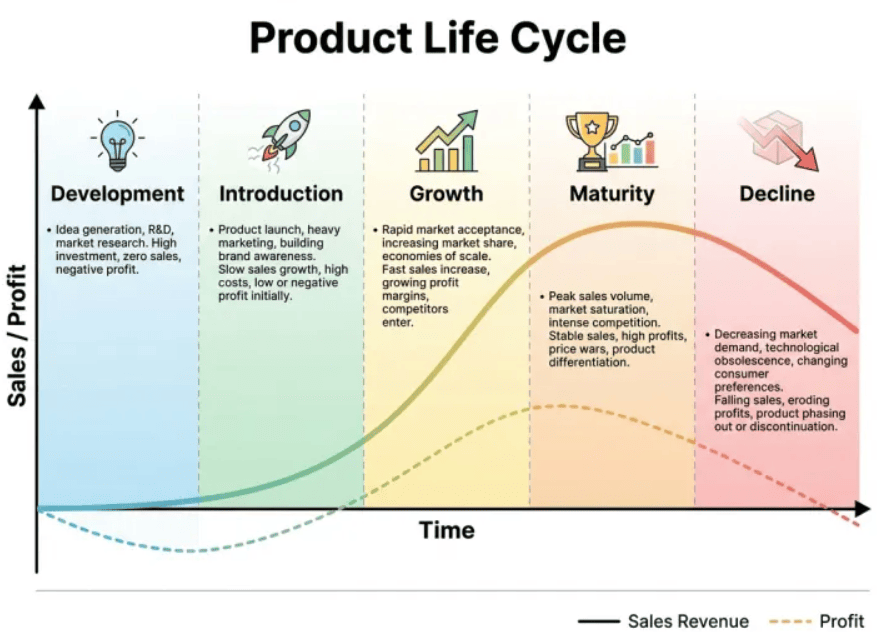


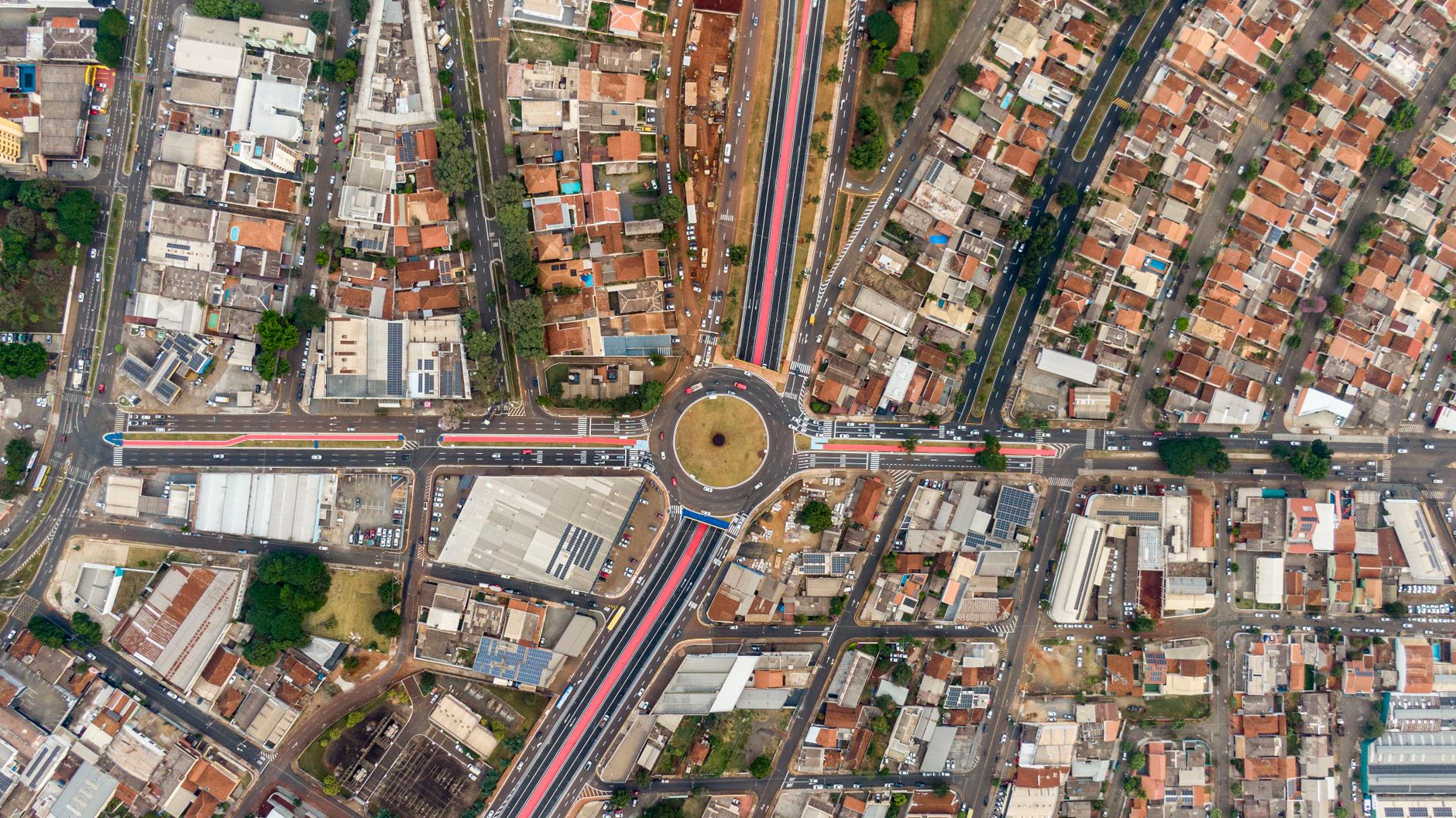

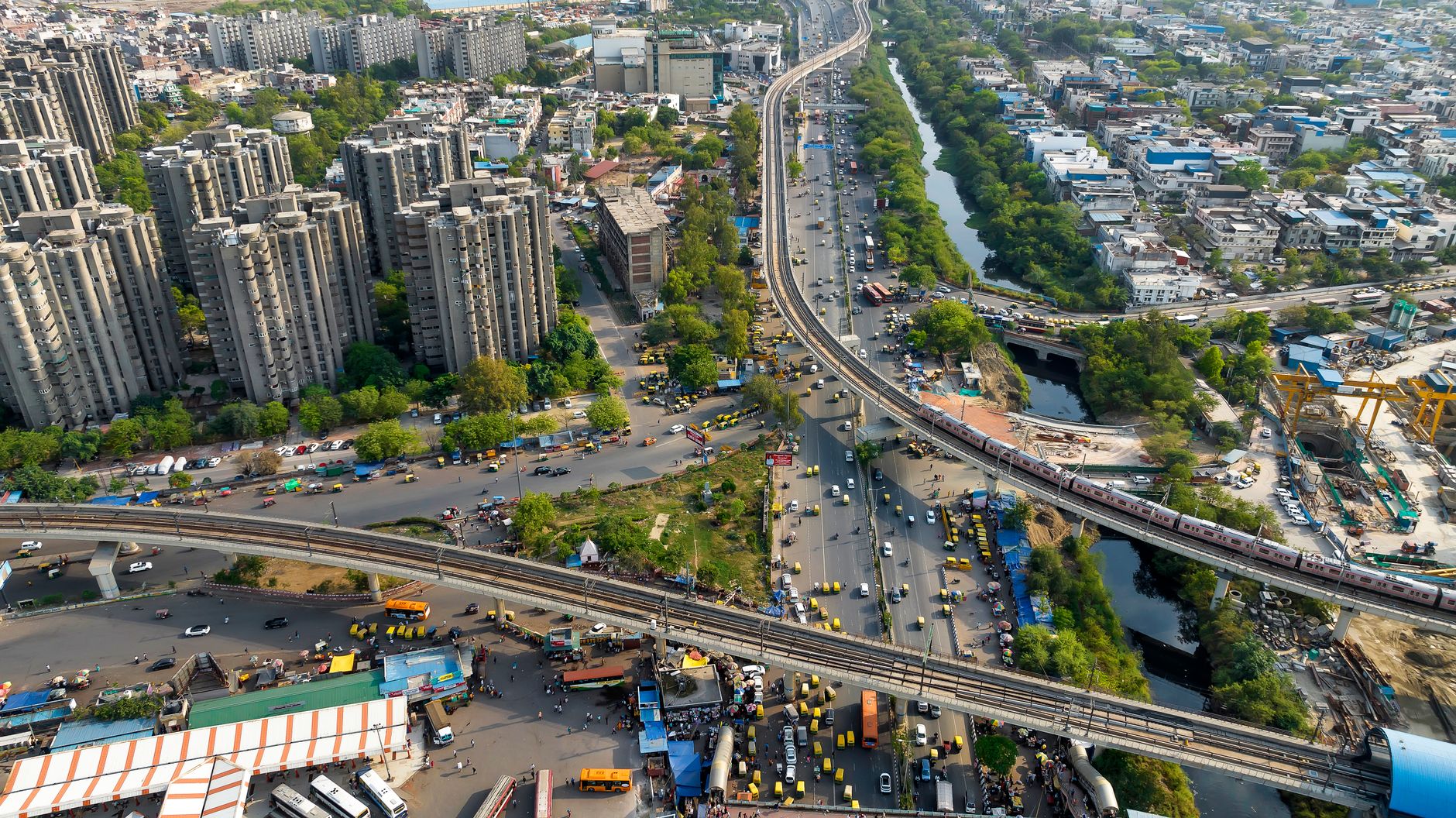



You must be logged in to post a comment.