University of California, Berkeley (UCB)

Image result for University of California, Berkeley (UCB)

Founded in 1868, the University of California, Berkeley (UCB) is a public research university and the flagship institution of the ten research universities affiliated with the University of California system. 
Berkeley is one of the 14 founding members of the Association of American Universities and is home to some world-renowned research institutes, including the Mathematical Sciences Research Institute and the Space Sciences Laboratory. 
Berkeley alumni, faculty and researchers include 99 Nobel laureates, 23 Turing Award winners, and 14 Pulitzer Prize winners. Faculty member J. R. Oppenheimer led the Manhattan project to create the first atomic bomb, while Berkeley’s Nobel laureate Ernest Lawrence invented the cyclotron, through which UC Berkeley scientists and researchers discovered 16 chemical elements of the periodic table.
Berkeley started out with little more than 40 students but, as the first full-curriculum university in California, it quickly gained ground on its illustrious forebears. By the early 1940s, it had grown substantially and was ranked second only to Harvard. 
During this decade, Berkeley gained further prestige through its radiation laboratory, which was instrumental in the project to develop an atomic bomb.  During the sixties, Berkeley gained a worldwide reputation for student activism, thanks to the Free Speech Movement of 1964 and campus opposition to the Vietnam War. In 1969, the then governor of California Ronald Reagan called the Berkeley campus \”a haven for communist sympathizers, protesters, and sex deviants\”, though today’s students tend to be more politically moderate. 
The Berkeley campus encompasses approximately 1,232 acres of the bay area of San Francisco, with many of its Beaux-Arts-style buildings recognized as California Historical Landmarks. 
Three quarters of its 40,000 students are undergraduates, giving life on campus a youthful feel in vibrant, urban surrounds. Most undergraduate students live in residential halls, where they can make friends, work and play in a safe environment designed to enhance the academic experience through a culture of care. 
There are also student co-ops and not-for-profit housing cooperatives for Berkeley students, with over 1,300 students living in 17 houses and three apartment cooperatives around the Berkeley campus. Students can play sports, and join clubs and societies spanning every imaginable interest. On campus, students can visit the Lawrence Hall of Science, watch sport at the newly-renovated California Memorial Stadium, take in a noon concert, or stroll through Sproul Plaza, the social heart of Berkeley campus.

University of Cambridge

Image result for University of Cambridge

Located in the center of the ancient city of Cambridge, 50 miles north of London, the University of Cambridge is a collegiate public research institution that serves more than 18,000 students from all corners of the globe. 
The university consists of numerous listed buildings and is divided into 31 autonomous colleges, with many of the older ones situated on the famous river Cam. Applications are made directly to the individual colleges, rather than to the university overall. You can live and are often taught within your college, receiving small group teaching sessions known as college supervisions. 
Six academic schools – Arts and Humanities, Biological Sciences, Clinical Medicine, Humanities and Social Sciences, Physical Sciences, and Technology – are spread across the university’s colleges, housing roughly 150 faculties and other institutions. 
Founded in 1209, the University of Cambridge’s 800-year history makes it the fourth-oldest university in the world and the second-oldest university in the English-speaking world. Cambridge students make up 20 percent of the town\’s population and most of the older colleges are situated near the city center. Its notable buildings give the city of Cambridge a unique character, and include King\’s College Chapel, the history faculty building designed by James Stirling and the Cripps Building at St John\’s College.
Cambridge is widely acknowledged as a vibrant place to be a student. On the academic side, the university is home to over 100 libraries, which hold more than 15 million books in total. There are also nine world-renowned arts, scientific and cultural museums such as Kettle’s Yard and the Fitzwilliam Museum, which are open to the public throughout the year, as well as a botanical garden. 
Extracurricular activities give you the chance to get involved with anything from the university’s renowned student drama societies, which spawned the likes of comedy group Monty Python, to music, politics and hundreds of other clubs and societies. The sports scene at Cambridge is huge too, with state-of-the-art facilities and over 80 sports on offer with teams for novices and experts alike. 
With its reputation for academic excellence and traditional scholarly values, the University of Cambridge often ranks among the very top universities in the world for teaching, research, and international outlook. The university has educated eminent mathematicians, scientists, politicians, lawyers, philosophers, writers, actors and heads of state. Ninety-eight Nobel laureates and 15 British prime ministers have affiliations with Cambridge as students, faculty or alumni, including the scientists Francis Crick and Frederick Sanger.

ETH Zurich – Swiss Federal Institute of Technology

Image result for ETH Zurich - Swiss Federal Institute of Technology

ETH Zurich is one of the world\’s leading universities in science and technology and is known for its cutting-edge research and innovation. It was established in 1855 as the Swiss Federal Polytechnic School, and a century and a half later the university can count over 20 Nobel Prize laureates as alumni, including the great Albert Einstein himself. 
The university, commonly known as Swiss Federal Institute of Technology Zurich, has 16 departments that offer academic education and conduct scientific research in subjects ranging from engineering and architecture to chemistry and physics. 
Education at ETH Zurich combines solid theory with practical application, and most degree programs build on strong mathematical foundations. For undergraduates the main teaching language is German, while most master\’s programs and doctoral studies are in English.
Located in Zurich, Switzerland\’s largest city, ETH Zurich is largely based on a modern main campus built on a hill in the outskirts of the town. Students at ETH have twice as many lectures as those at other Swiss institutions, but can still attend regular exhibitions, plays and concerts, as well as take advantage of the regular symposia and conferences on campus, where some of the best minds in science come to speak. 
ETH students like to exercise their bodies as well as their minds, and there are various sports events held on campus, of which the largest is an annual SOLA relay race in 14 sections, taking place over a total distance of 140 kilometers. More than 900 teams have been known to take part at once in the annual spectacle. 
Since the 1880s, students have also been able to show off their best moves at the Polyball, a classic ball event featuring a live orchestra and famous national singers, in which 10,000 dancers, music-lovers and partygoers descend on ETH’s extensively decorated main building for what is usually an unforgettable night. 

Stanford University

Located 35 miles south of San Francisco and 20 miles north of San Jose, Stanford University is in the heart of Northern California’s dynamic Silicon Valley, home to Yahoo, Google, Hewlett-Packard, and many other cutting-edge tech companies that were founded by and continue to be led by Stanford alumni and faculty. Nicknamed the “billionaire factory”, it is said that if Stanford graduates formed their own country it would boast one of the world’s largest ten economies. 
Covering 8,180 acres, Stanford has one of the largest university campuses in the US, with 18 interdisciplinary research institutes and seven schools: the Graduate School of Business; School of Earth, Energy & Environmental Sciences; Graduate School of Education; School of Engineering; School of Humanities and Sciences; Law School; and School of Medicine. 
Stanford University was founded in 1885 by California senator Leland Stanford and his wife, Jane, to “promote the public welfare by exercising an influence in behalf of humanity and civilization”. The couple’s only child had died of typhoid, and their decision to build a university on their farm was intended as a memorial. From the start the university was non-sectarian, co-educational and affordable, teaching both the traditional liberal arts and the technology and engineering that was shaping the new America at the time.  
Fast forward more than a century, and Stanford counts 19 Nobel laureates within its community and is regularly ranked among the top three universities in the world. Nicknamed “The Farm” from the days when horses roamed there, Stanford’s campus is now a thriving community of more than 11,000 creative and accomplished people from around the world. Nearly all undergraduate and 60 per cent of graduate students live on campus, so it is hardly surprising that student life is rich and diverse, with over 625 organized student groups. 
Sport is popular, with students, faculty and staff enjoying state-of-the-art recreational facilities and wellness programs. Stanford students compete in 36 varsity and 32 club sports, including baseball, football, basketball, and squash. Sports teams are referred to as the “Stanford Cardinal”.
Stanford also has a rich tradition of fostering creativity and the arts: there is a vibrant campus arts district and two world-class museums which host regular exhibitions.  Eight dining halls, a teaching kitchen and organic gardens provide the campus community with healthy, sustainable meals. The close-knit communal nature of life on campus has even given rise to “Stanford speak”, a special language only spoken on campus. 

Massachusetts Institute of Technology (MIT)

Image result for Massachusetts Institute of Technology (MIT)

“Mind and Hand” is the thought-provoking motto of the Massachusetts Institute of Technology, known also as MIT. This motto enigmatically encapsulates this famous institution’s mission to advance knowledge in science, technology and areas of scholarship that can help to make the world a better place. 
At its founding in 1861, MIT was initially a small community of problem-solvers and science lovers eager to bring their knowledge to bear on the world. Today, MIT has evolved into an educational behemoth, with some 1,000 faculty members and more than 11,000 undergraduate and graduate students. 
MIT is now an independent, coeducational, privately endowed university organized into five schools (architecture and planning; engineering; humanities, arts, and social sciences; management; science). Yet the principle of educational innovation remains at the core of MIT’s educational philosophy. 
MIT researchers are at the forefront of developments in artificial intelligence, climate adaptation, HIV, cancer, and poverty alleviation, while in the past MIT research has fuelled scientific breakthroughs such as the development of radar, the invention of magnetic core memory and the concept of the expanding universe. 
Science and technology are not the only strings to MIT’s bow, however. Approximately 20 percent of MIT undergraduates join a sports team, and with 33 varsity sports MIT boasts one of the broadest intercollegiate athletic programs in the world. 
A vibrant arts culture also permeates college life. There are 12 museums and galleries on campus, with the MIT Museum drawing nearly 125,000 visitors each year. Students participate in more than 60 music, theatre, writing and dance groups, and faculty members of MIT even include Pulitzer Prize winners and Guggenheim fellows.
MIT is set in 168 acres of grounds that extend for more than a mile along the Cambridge side of the Charles River basin. The campus features stunning landmarks designed by the likes of architects Alvar Aalto, Frank Gehry, and Steven Hollin, as well as buildings in a range of architectural styles, from neoclassical to modernist and brutalist. 
At its edges, the campus merges with various Cambridge neighborhoods, including Kendall Square which is one of the most innovative square miles on the planet. The close association of industry and research has helped MIT alumni go on to launch more than 30,000 active companies, creating 4.6 million jobs and generating roughly $1.9 trillion in annual revenue. No wonder then that a nation of MIT graduates would be equivalent to the 10th-largest economy in the world.

University of British Columbia

Image result for University of British Columbia

Ranked as the 51st best university in the world in the QS World University Rankings® 2018, the University of British Columbia has an excellent reputation with academics and employers alike and a particularly international faculty. The University of British Columbia excels in a number of subjects, as indicated by the QS World University Rankings by Subject, including: 
  • Geography 
  • Mineral and mining engineering 
  • Sports-related subjects 
With beautiful green campuses in Vancouver and Okanagan, the University of British Columbia is home to a concert hall, a working farm, an Olympic ice hockey venue, Canada’s largest blue whale skeleton, world-class science labs for subatomic physics, and a center for interactive research in sustainability.

Freie Universitaet Berlin

Image result for Freie Universitaet Berlin

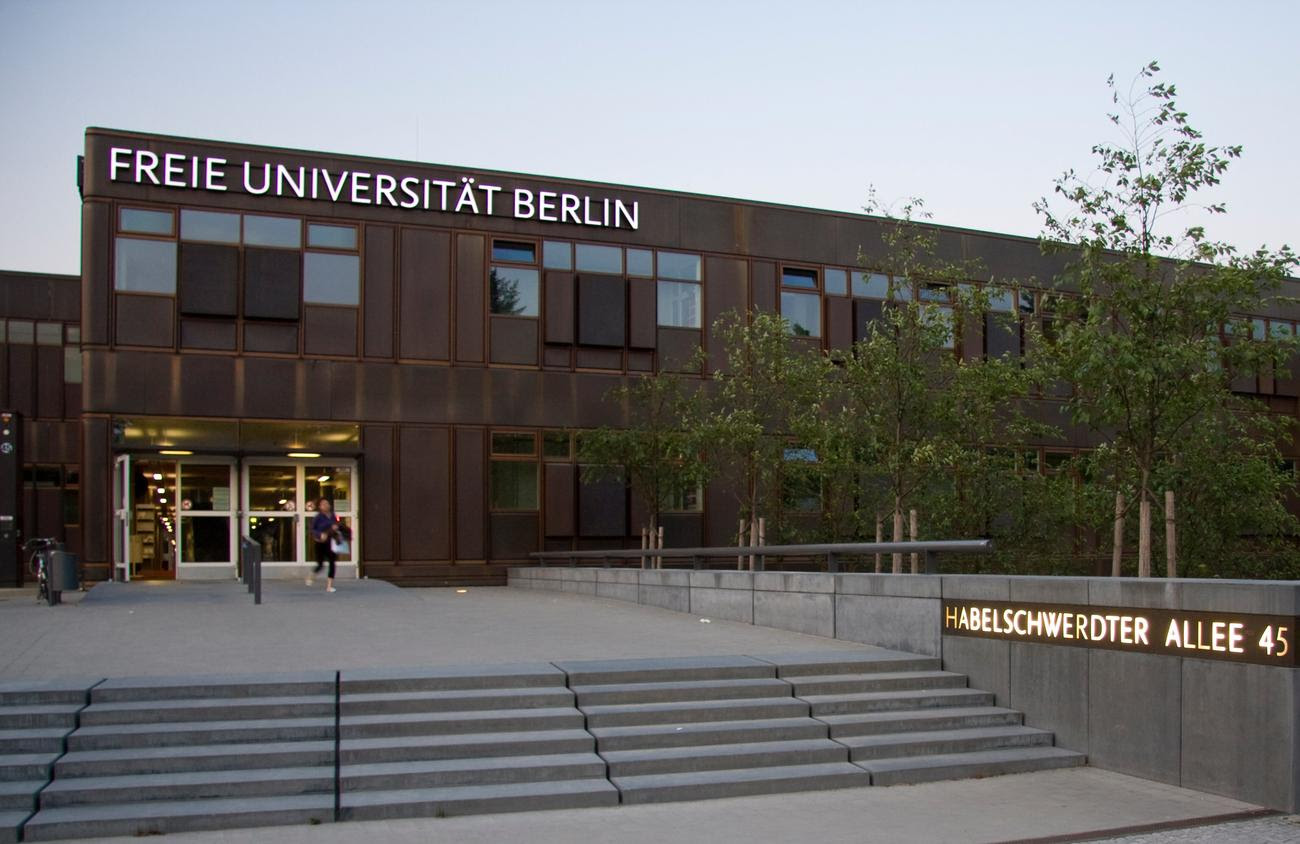
Freie Universität Berlin is an outstanding, future-oriented institution in Germany’s world-renowned academic landscape. Repeatedly selected as one of the country’s Universities of Excellence, it has an acclaimed international orientation, interdisciplinary approach, and commitment to social responsibility.
The university offers a comprehensive range of studies and highly competitive programs at all academic levels. While it enjoys a particularly strong reputation in the social sciences and humanities, it is also home to cutting-edge research in the natural and Earth sciences as well as computer sciences and mathematics.
As reflected in its name, Freie Universität Berlin has valued academic freedom as one of its core principles since its founding in 1948. Early on, the institution gained a particularly international outlook, and today it has become the premier choice for students and scholars coming to Germany from abroad.
The research performed at Freie Universität is marked by excellence within disciplines and encouragement for interdisciplinary orientation, a broad variety of academic and scientific networks, and areas of focus that enjoy high international visibility and competitiveness.
The university’s main campus is located in Berlin-Dahlem, where the peaceful residential setting offers an ideal atmosphere to focus on learning or conducting research.

The University of Sydney

Image result for The University of Sydney

The University of Sydney was founded on the principle of giving everyone the opportunity to realise their potential through education and still holds that belief just as strongly today.
Currently ranked 4th in the world, and 1st in Australia, for graduate employability*, the University of Sydney is also consistently placed among the top 50 universities in the world**. With a reimagined undergraduate curriculum, world-class facilities, inspirational academics and a vibrant campus life, it is a place where students can attain widely recognised and respected qualifications.
The University offers Australia’s broadest range of disciplines and its research focuses on finding solutions to society’s biggest challenges. With more than 400 areas of study to choose from, students have the flexibility to follow their interests, broaden their skills, and enjoy internship and global exchange opportunities.
Outside the classroom, students can make lifelong friends and connections, and enjoy unforgettable experiences, with more than 200 student-run clubs and societies bringing the campus to life. Our community – which covers the world – includes more than 50,000 students, 3400 academic staff, and 320,000 alumni.
Explore courses at the University of Sydney.

* QS Graduate Employability Rankings, 2017
** QS World University Rankings, 2016–17

London School of Economics and Political Science (LSE)

Related image

The London School of Economics and Political Science (LSE) offers you the opportunity to study the social sciences in an institution with a worldwide academic reputation, while enjoying the cultural, social and recreational facilities of one of the world’s greatest capital cities.
The School is a place of genuine intellectual excitement and cutting-edge research. In the most recent national Research Excellence Framework (REF) LSE had the highest percentage of world-leading research of any university in the United Kingdom.
All LSE’s teaching and research is undertaken from a social science perspective, giving the institution a unique approach to otherwise common fields. LSE academics are at the forefront of developments in the social sciences and their expertise is called upon by governments, businesses and media around the globe.
The School offers over 40 undergraduate programmes and over 140 taught and research postgraduate programmes. LSE’s academic profile spans a wide range of social science disciplines, from accounting to law, management to social policy.  
The character of LSE is inseparable from its location. Situated in central London, the School is located in one of the most cosmopolitan cities in the world. Only a short distance from Europe’s financial, legal and cultural centres, LSE stands at the crossroads of international debate. This is fundamental to our identity as an outward-looking institution with an active involvement in UK and world affairs. 
The student community at LSE is one of the most internationally diverse in the world, with students from over 140 countriesregistered each year. This mix encourages a truly international approach to intellectual discovery and academic life at LSE which cannot be matched elsewhere. 
The School has one of the most prestigious public events programmes in the world. Leading figures from all walks of life have spoken at LSE, including Bill Clinton, Nancy Pelosi, Amartya Sen, Christine Lagarde, Bill Gates, Helen Clark and George Soros.

Humboldt-Universität zu Berlin

Image result for Humboldt-Universität zu Berlin

The university was founded in Berlin in 1810, and the foundation concept of Wilhelm von Humboldt gave it the title \”Mother of all modern universities\”. This concept envisaged a \”Universitas litterarum\” which would achieve a unity of teaching and research and provide students with an all-round humanist education. This concept spread throughout the world and gave rise to the foundation of many universities of the same type over the next century and a half. The concept of the academic and statesman Wilhelm von Humboldt was influenced, among others, by the reform ideas of the philosopher Johann Gottlieb Fichte, the first vice chancellor of the university, and by the theologian and philosopher Friedrich Schleiermacher. From the outset, the university in Berlin had the four classical faculties of Law, Medicine, Philosophy and Theology. Its first academic term began with 256 students and 52 teaching staff. Professors such as Georg Friedrich Wilhelm Hegel (Philosophy), Karl Friedrich von Savigny (Law), August Boeckh (Classical Philology), Christoph Wilhelm Hufeland (Medicine) and Albrecht Daniel Thaer (Agriculture), shaped the profile of the individual faculties in accordance with Humboldt\’s concept. Partly due to the influence of the natural scientist Alexander von Humboldt, the university pioneered the introduction of many…

The University of Melbourne

Image result for The University of Melbourne

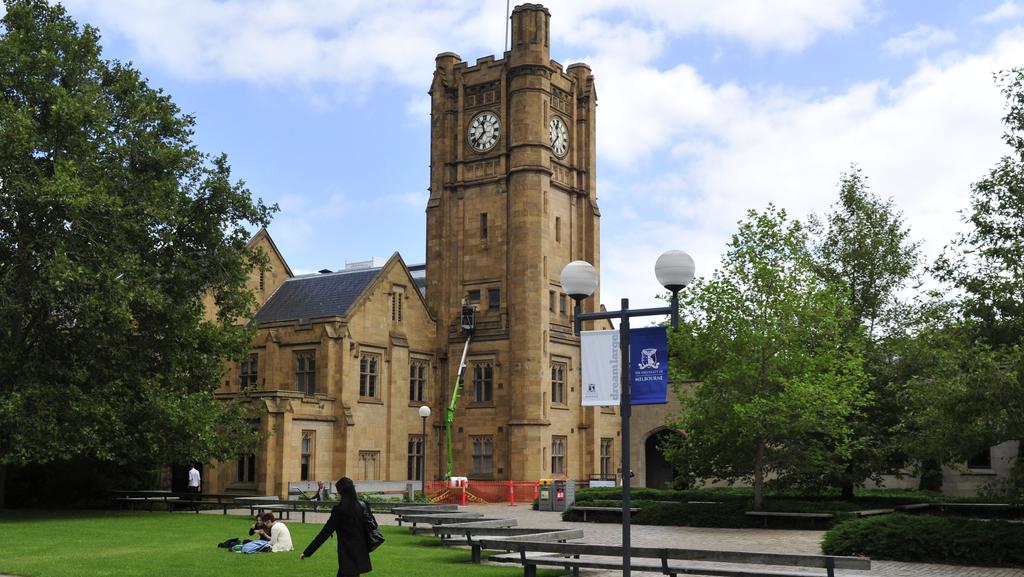
When the University of Melbourne was established in 1853, it was a mere cluster of buildings in a large park on the fringe of the city, with four professors and 16 students. The university now sits at the heart of a thriving international city and is consistently ranked among the leading universities in the world and number one in Australia. 
Over 8,000 academic and professional staff support a vibrant student body of more than 48,000, including 13,000 international students from over 130 countries around the world. Four Australian prime ministers and five governors-general have graduated from the University of Melbourne, located in the city dubbed Australia’s “cultural capital”. 
Indeed, Melbourne is a seven times winner of the Economist’s World’s Most Livable City award, and is a UNESCO City of Literature, as well as the birthplace of Australian rules football and a major center for street art, music, and theatre. 
Melbourne is known for offering students an experience that’s a lot more than just structured learning. The main Parkville campus is close to transport, cafes, shopping, arts and sports venues and accommodation. 
Students will find a blistering array of cultural activities on campus here, be it theatre, comedy, film or public lectures, and it’s easy to find people with matching interests by joining one of over 200 affiliated clubs and societies, ranging from Chess Club to Women in Science and Engineering, to the Chocolate Lovers’ Society. Sports enthusiasts are well catered for too, with a 25-metre six-lane heated indoor pool, an athletics track and sports field, and a large strength and fitness gym. 
The university has 11 residential colleges where most students live, which provide a quick way to build an academic and social network. Each college provides sporting and cultural programs to enrich the academic experience, which is at the center of university life. 
Degrees at the University of Melbourne stand out for being modelled on those from top institutions overseas. Students spend a year exploring a range of subject areas before choosing a major. They also study subjects outside as well as inside their chosen discipline, giving Melbourne students a breadth of knowledge that sets them apart.  

University of Toronto

Image result for University of Toronto

Founded in 1827, the University of Toronto has evolved into Canada’s leading institution of learning, discovery and knowledge creation. We are proud to be one of the world’s top research-intensive universities, driven to invent and innovate.
Our students have the opportunity to learn from and work with preeminent thought leaders through our multidisciplinary network of teaching and research faculty, alumni and partners. 
The ideas, innovations and actions of more than 560,000 graduates continue to have a positive impact on the world.

The University of Hong Kong

Image result for The University of Hong Kong

The University of Hong Kong (HKU), is Hong Kong’s oldest tertiary institution, with a history stretching back over a hundred years. The University of Hong Kong is ranked 26th amongst the most respected comprehensive research-led universities in the world.
  • A research driven university- 111 of our professors have been ranked as the world\’s top 1% scientists by Essential Science Indicators, Thomson Reuters.
  • A globally connected university with more than 340 leading universities across 43 countries.  
  • A diverse community with more than 9,000 international students from 96 countries.
  • A world class curriculum with English as medium of instruction.
  • Over 99.4% graduate employment rate for the last 11th consecutive years.

An Academic Powerhouse 
Apart from being the 26th best university overall globally, HKU has 6 subjects placed amongst Top 10 worldwide, while HKU Dentistry programme was ranked 1st in the world for the second consecutive years.  

HKU\’s exceptional academic standards and pioneering research attract many top-performing scholars in Hong Kong, Mainland China and overseas. Studying at HKU, you will have a chance to meet and learn with some of the world’s top scholars.

 A Globally Connected Campus
At HKU, you will meet students from 96 countries and learn from some of the best professors in the world, amongst which 60% are from outside Hong Kong. You get the opportunity to have a life experience abroad during your studies at HKU. In 2015, more than 4,000 HKU undergraduate students have gone on either one semester or one year\’s student exchange programme at our partner universities, or have participated in service learning projects, field trips, undergraduate research programme or internships in overseas. With HKU as your base, you get to go to places like Cambridge, MIT or Harvard to Myanmar, or South Africa to further expand your horizons!
A Degree that Opens Doors
For the last 11 years, more than 99.4% of our graduates have received at least one job offer in every consecutive academic year, with many embarking on careers in fields as diverse as finance, law, engineering and technology, and working at international corporate including the likes of Apple, Google and Goldman Sachs.

 There is a whole lot more to HKU. To find out more about the educational adventures awaiting you in one of the world’s most exciting cities and leading universities, just spend some time on our admissions website.

Massachusetts Institute of Technology (MIT)

Image result for Massachusetts Institute of Technology (MIT) arts and humanities

“Mind and Hand” is the thought-provoking motto of the Massachusetts Institute of Technology, known also as MIT. This motto enigmatically encapsulates this famous institution’s mission to advance knowledge in science, technology and areas of scholarship that can help to make the world a better place. 
At its founding in 1861, MIT was initially a small community of problem-solvers and science lovers eager to bring their knowledge to bear on the world. Today, MIT has evolved into an educational behemoth, with some 1,000 faculty members and more than 11,000 undergraduate and graduate students. 
MIT is now an independent, coeducational, privately endowed university organized into five schools (architecture and planning; engineering; humanities, arts, and social sciences; management; science). Yet the principle of educational innovation remains at the core of MIT’s educational philosophy. 
MIT researchers are at the forefront of developments in artificial intelligence, climate adaptation, HIV, cancer, and poverty alleviation, while in the past MIT research has fuelled scientific breakthroughs such as the development of radar, the invention of magnetic core memory and the concept of the expanding universe. 
Science and technology are not the only strings to MIT’s bow, however. Approximately 20 percent of MIT undergraduates join a sports team, and with 33 varsity sports MIT boasts one of the broadest intercollegiate athletic programs in the world. 
A vibrant arts culture also permeates college life. There are 12 museums and galleries on campus, with the MIT Museum drawing nearly 125,000 visitors each year. Students participate in more than 60 music, theatre, writing and dance groups, and faculty members of MIT even include Pulitzer Prize winners and Guggenheim fellows.
MIT is set in 168 acres of grounds that extend for more than a mile along the Cambridge side of the Charles River basin. The campus features stunning landmarks designed by the likes of architects Alvar Aalto, Frank Gehry, and Steven Hollin, as well as buildings in a range of architectural styles, from neoclassical to modernist and brutalist. 
At its edges, the campus merges with various Cambridge neighborhoods, including Kendall Square which is one of the most innovative square miles on the planet. The close association of industry and research has helped MIT alumni go on to launch more than 30,000 active companies, creating 4.6 million jobs and generating roughly $1.9 trillion in annual revenue. No wonder then that a nation of MIT graduates would be equivalent to the 10th-largest economy in the world.

The Australian National University

The Australian National University (ANU) is a world-leading centre for education and research. Ranked in Australia and in the world (QS World University Rankings 2016-17), Australia’s national university is further distinguished by an outstanding record for student satisfaction and graduate employability.

For academic and professional staff, ANU offers excellent conditions including flexible working arrangements, professional development opportunities, competitive pay and generous superannuation – all within an integrated and engaged on-campus community. Learn more about the benefits of working at ANU http://www.anu.edu.au/jobs.