Princeton University

Image result for Princeton University

Princeton is one of the oldest and most prestigious universities in the United States. It was founded in 1746 and moved to its current site in New Jersey in 1896. 
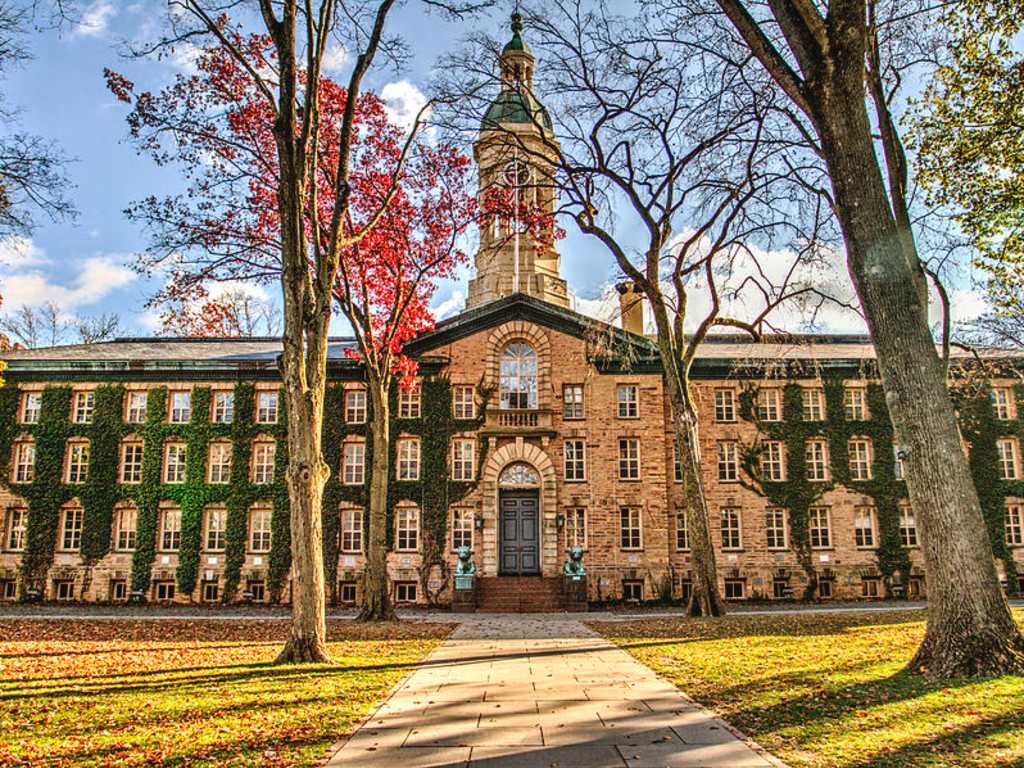
Princeton is renowned for the spectacular greenery of its campus and for the architectural splendor of some of its landmark buildings, such as its Lewis Library, which was designed by Frank Gehry. Its student body is relatively small, with fewer than 10,000 enrolled in total, and international students make up 12 per cent of undergraduates. 
Princeton is one of the world’s foremost research universities, and has educated two US presidents, James Madison and Woodrow Wilson. Other distinguished graduates include Michelle Obama, actors Jimmy Stewart and David Duchovny, Google chairman Eric Schmidt and Apollo astronaut Pete Conrad.
Princeton was founded by New Light Presbyterians to provide training to its ministers. After the American Civil War, the college expanded, and its curriculum was overhauled. Around the turn of the 20th century, it officially became a university and its famous graduate school opened. 
Today’s Princeton provides undergraduate and graduate education in the humanities, social sciences, natural sciences, and engineering as well as offering a number of professional degrees. 
Princeton’s main campus is spread across 500 acres and has around 180 buildings, including 10 libraries. The main campus was named one of the most beautiful in the United States by New York’s Travel+Leisure magazine. Most Princeton students live, eat, study, work, and are at leisure on campus.  
The Ivy League institution guarantees accommodation to all of its undergraduate students across the four years of their degree and is committed to building a diverse campus community. Residential colleges offer a variety of academic, social, cultural and recreational programs, and opportunities abound for students to engage in interests beyond their academic study, whether that be writing for a literary publication, learning the science of beekeeping, or singing with an a capella group. 
The university is within easy reach of both New York City and Philadelphia, with the “Dinky” shuttle train providing a regular one-hour service to both cities. 
Studying at Princeton surrounded by natural beauty and architectural gems brings the best out in students. Several alumni and faculty members have been awarded Nobel prizes, and the university is consistently ranked in the top ten worldwide. Admissions are need-blind and, through a combination of grants and college jobs, few students graduate in debt – even though 60 percent of incoming students receive financial aid.

Tokyo Institute of Technology

Image result for Tokyo Institute of Technology

Tokyo Tech’s three campuses — two in Japan’s clean, vibrant capital, and one in adjacent Yokohama — provide a comfortable setting for a truly unique study experience. The long-cherished practical science and engineering education for which the Institute is known allows all students to experience the pleasures of research from an early stage. Findings from research institutes such as ELSI are fed back into curricula, and as laboratory members, students are in close contact with the world’s top researchers. The Institute’s hands-on approach is reflected in graduate employability rankings, in which Tokyo Tech consistently excels.
Tokyo Tech provides full degree programs in English at all levels. The Global Scientists and Engineers Program (GSEP) is a transdisciplinary Bachelor of Engineering program, while the International Graduate Programs (IGP) cater to those hoping to pursue more advanced science or engineering degrees in Japan. Various scholarships are available.

University of Toronto

Image result for University of Toronto

Founded in 1827, the University of Toronto has evolved into Canada’s leading institution of learning, discovery and knowledge creation. We are proud to be one of the world’s top research-intensive universities, driven to invent and innovate.
Our students have the opportunity to learn from and work with preeminent thought leaders through our multidisciplinary network of teaching and research faculty, alumni and partners. 
The ideas, innovations and actions of more than 560,000 graduates continue to have a positive impact on the world.

Technical University of Munich

Image result for Technical University of Munich

Consistently featured as one of the highest-ranked universities in Germany in the QS World University Rankings®, Technical University of Munich (Technische Universität München), also known as TUM, was founded in 1868 and is a member of the TU9, an association of nine of Germany’s most prestigious technical universities. TUM has 14 academic departments and 40,124 students, of which around 24% are international. It calls itself The Entrepreneurial University and aims to foster a supportive environment for budding entrepreneurs. There are 172 degree programs available including a selection of English-taught courses.

University of California, Los Angeles (UCLA)

Image result for University of California, Los Angeles (UCLA)

Based in warm and sunny Los Angeles, the University of California, Los Angeles (UCLA) was ranked the 31st best university in the world according to the QS World University Rankings® 2016-2017.
UCLA graduates are in the enviable position of being among the world’s most employable students fresh out of uni, as suggested by UCLA’s impressive performance in the QS Graduate Employability Rankings ® 2017.
UCLA ranks among the top 10 universities in the world for:
  • English language and literature
  • Geography, linguistics
  • Modern languages
  • Electrical and electronic engineering
  • Biological sciences
  • Medicine
  • Psychology
  • Chemistry
  • Mathematics
  • Communication and media studies
  • Education and training
  • Anthropology
  • Archaeology
  • Arts and humanities
  • Life sciences and medicine

Peking University

Image result for Peking University

The oldest higher education institution in China, Peking University was founded in 1898 as a replacement for the ancient Guozijian school (Imperial College). By the early 1920s, it had become a center for Chinese progressive thought, playing an important role in China\’s New Culture Movement, the May Fourth Movement, and the Tiananmen Square protest of 1989, among other significant historical events. 
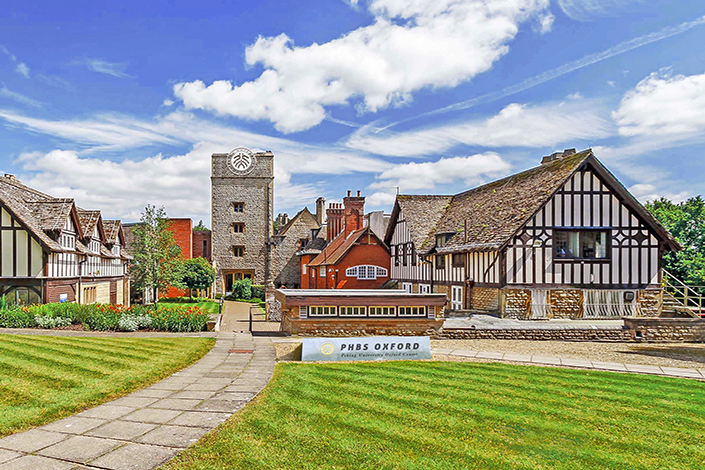
Peking University has been consistently ranked as the top academic institution in China. As well as being renowned academically, it’s well-known for its stunning campus grounds and for the beauty of its traditional Chinese architecture. Peking University has educated some of the most prominent figures in Chinese history, including Mao Zedong. 
The main university campus is in the former site of the Qing Dynasty imperial gardens and as such features traditional Chinese-style landscaping, including traditional houses, gardens, pagodas, as well as many notable historical buildings and structures. Weiming Lake is to the north of the campus and is surrounded by walking paths and small gardens. 
The university grounds are also home to museums, such as the Museum of University History and the Arthur M. Sackler Museum of Art and Archaeology, in which students can view objects dating back thousands of years. It’s an environment to feed the enquiring minds of young students – not that the academic curriculum doesn’t already do that. 
Peking University is a leading university for science research and teaching and has successfully developed applied sciences research and teaching as well. There are 30 colleges and 12 departments, with 93 undergraduate programs, 199 master\’s degree programs, and 173 options for doctoral candidates. 
Peking is eager for students to receive not only comprehensive education, but to take part in student life to the full.  Life on campus is rich with sport and extracurricular fare, with more than 200 student organizations and a range of activities running year-round. 
Sport is important, with Beida Cup Athletic Championships taking place each year, while festivals and events such as the International Cultural Festival, or Singing Competition for Foreign Students, allow students to meet up, make friends and enjoy a balanced life outside of their studies. 

Carnegie Mellon University

Image result for Carnegie Mellon University

Located three miles from downtown Pittsburgh in a 140-acre campus, Carnegie Mellon is a private research university, founded in 1900 by Andrew Carnegie as the Carnegie Technical Schools. 
Carnegie was a Scottish-American industrialist and philanthropist whose vision was to open a vocational training school for the offspring of working class Pittsburghers. In 1967, Carnegie Tech merged with the Mellon Institute, a science research center founded by the Mellon family of Pittsburgh. 
Today, Carnegie Mellon is home to 13,650 students from 114 countries, split roughly evenly between undergraduates and postgraduates. Globally, it regularly ranks in the top 50 universities, but excels in certain disciplines: in 2018, Carnegie Mellon was ranked third in the world for computer science in the QS World University Rankings by Subject. It also featured in the top 10 globally for statistics and operational research. 
For the Class of 2021, Carnegie Mellon had an overall admissions rate of 13.53 percent, with the acceptance rates of individual colleges varying significantly: for the Dietrich College of Humanities and Social Sciences it was 22 percent, while applicants had a meagre 7 percent chance of admission to the School of Computer Science. 
Carnegie Mellon has a distinctive interdisciplinary approach to research and education, establishing programs and centers outside the limitations of departments or colleges and becoming a leader in new fields such as computational finance, information systems, and cognitive sciences. 
There are seven academic divisions at Carnegie Mellon, including one of the oldest colleges of fine arts in the United States, as well as schools in the humanities and social sciences; engineering; information systems and public policy; science; and computer science.  
Student life at Carnegie Mellon features over 225 student societies and organizations, art galleries, and various singular traditions. Carnegie Mellon\’s campus houses galleries such as The Frame, and the Regina Gouger Miller Gallery, which specializes in contemporary art. 
Top class performing arts are staged by students at the Carnegie Mellon School of Music, the Carnegie Mellon School of Drama and the student-run theatrical organization Scotch\’n\’Soda. 
Inspired by Andrew Carnegie\’s Scottish heritage, as well as the Mellon family\’s Scots-Irish ancestry, a Celtic flavor runs through the campus, manifested in Scotty, the Scottish Terrier mascot, The Tartan student newspaper, Skibo Gymnasium, The Thistle yearbook, and the Céilidh weekend every fall semester for homecoming.

The Hong Kong University of Science and Technology

Image result for The Hong Kong University of Science and Technology

Established in 1991, the Hong Kong University of Science and Technology (HKUST) is an international research university dedicated to top-notch education and research. Founded on its mission to advance learning and knowledge through teaching and research particularly in science, technology, engineering, management and business studies complemented by humanities and social sciences, as well as assisting in Hong Kong’s socioeconomic development, this young and ambitious University has gone beyond the wildest dreams of many, climbing high in international esteem and reaping numerous honors and accolades. In 2018, HKUST is ranked 37th among 1000 universities and no.2 in the world’s top 50 Universities Under 50 by QS.
With respect to individual Schools, HKUST also puts in a strong performance. The School of Engineering is named No. 17 amongst world’s top 500 engineering and technology universities by QS Rankings published in 2018. It is ranked No. 2 in Greater China. Its much sought-after Kellogg-HKUST Executive MBA (EMBA) program, amid high expectations, also topped the Financial Times EMBA global rankings for nine times in the past twelve years.
Hailed widely as a ‘miracle’, the stunning achievements of HKUST do not come about miraculously. They boil down to the University’s positioning as a focused elite research university; its strong ties to global institutions and wide-ranging connections with Mainland China; the championing of interdisciplinary studies; its dedication to educating well-rounded students who flourish in today’s world, strong in entrepreneurial spirits and innovative in thinking; its mission to be a global premier knowledge hub, crystallized in the Institute of Advanced Study; and, last but not least, a spectacular setting by the sea that makes the University an attractive location for the pursuit of intellectual and academic excellence.
Keen on curating a diversified and international learning environment, HKUST is now home to over 15,000 students spanning more than 80 countries over five continents. Whereas world’s amazing talents are flocking to the campus for an eclectic educational experience, students enrolled are earnest in expanding their horizons by joining the University’s varied exchange programs, which now include over 250 partners worldwide. An international mix of students aside, HKUST also lives up to its promise as a stronghold of cutting-edge research and magnet for distinguished academics and influential thinkers. HKUST has consistently achieved the highest success rate in the Research Grant’s Council’s annual competitive General Research Fund exercise, which reaches 47% in 2018. The University sees a total of 41 faculty named Fellows of the Institute of Electrical and Electronics Engineers (IEEE), which is among the highest in Hong Kong. In 2011, its faculty reaped five State Science and Technology Awards, which are among the most prestigious awards in science and technology conferred by the State Council of the People\’s Republic of China, the largest share among local tertiary institutions. In addition to the six Chinese Academy of Sciences academicians at HKUST, nine faculty members also entered the National Science and Technology Programs Expert Database.

Faculty Awards

2017 IEEE Electron Devices Society Education Award
2017 Michael G. Gale Medal for Distinguished Teaching
2017 Prize for Scientific and Technological Progress of the Ho Leung Ho Lee Foundation
2017 Research Article of the Year in the Journal of Agricultural and Food Chemistry
2017 Telford Premium Award
2017 Prix R M Quigley Award (Honorable mention)
2018 Chemical Research in Toxicology Young Investigator Award
2018 Doctor of Science honoris causa
2018 Rolf Landauer Medal
2018 University Grants Committee (UGC) Teaching Award
2019 IEEE Robotics and Automation Technical Field Award
Croucher Innovation Awards 2018
Croucher Senior Research Fellowship Award for 2018-19
Fellow of the Society for Financial Econometrics
First Prize of 2017 Hong Kong Construction Industry Council (CIC) Innovation Award
First-class State Natural Science Award 2017
Inaugural President of the International Chinese Sociological Association
Invisible Silent Superheroes by the Institution of Civil Engineers Hong Kong Association
President of Association of Asia-Pacific Business Schools
President of the International Society for Soil Mechanics and Geotechnical Engineering (ISSMGE)
US National Inventors Hall of Fame

All faculty awards: 
https://www.ust.hk/about-hkust/awards/awards-faculty/ 

Delft University of Technology

Related image

Ranked the 54th best university in the world, according to the QS World University Rankings® 2018, Delft University of Technology particularly excels in a number of STEM subjects, such as:
  • Civil and structural engineering
  • Mechanical engineering
  • Environmental studies
  • Engineering and technology
  • Architecture
Based in Delft in the Netherlands, Delft University of Technology has one of the largest campuses in the world. Extending over 161 hectares, it features restaurants, parks, cycle paths, a botanical garden, a new media center, a flight simulator and an aerodynamics and propulsion lab.

Politecnico di Milano

Image result for Politecnico di Milano

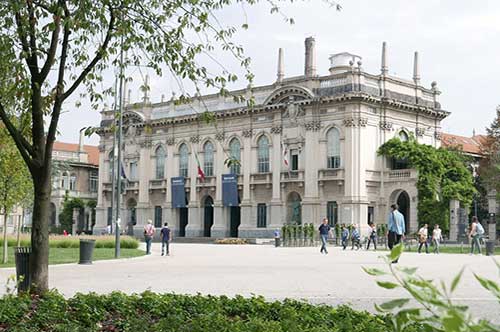
Established in 1863, Politecnico di Milano is one the most outstanding technical universities in Europe, and the largest Italian university in Engineering, Architecture and Design, with nearly 45,000 students. 
The university has seven campuses located in Milan and in other nearby Italian cities: Lecco, Cremona, Mantova and Piacenza. It is organized in 12 Departments and in 4 Schools, respectively devoted to research and education. 

Research plays a central role in the university mission, aiming at providing the best standards in education. It is fueled by strong links to corporate research, considerable European funds, and a set of well-equipped laboratories. 
Politecnico di Milano offers innovative programmes at all academic levels. Almost the entire postgraduate academic offer is taught in English, thus attracting an ever-increasing number of international students, coming from more than 100 countries.

The list of Politecnico di Milano notable alumni is considerable and includes renown professionals, such as Renzo Piano andAldo Rossi, both Pritzker Price, and Giulio Natta, Nobel Prize in Chemistry.

Politecnico di Milano is proudly member of IDEA League, a strategic alliance among five leading European universities of technology that aims to educate a new generation of Engineers with extra-curricular activities for selected, highly talented students.

California Institute of Technology (Caltech)

Image result for California Institute of Technology (Caltech)
The California Institute of Technology (Caltech) is a world-renowned science and engineering research and education institution, located in Pasadena, California, around 11 miles northeast of downtown Los Angeles. 
Caltech has a high research output as well as many high-quality facilities such as the Jet Propulsion Laboratory (owned by NASA), the Caltech Seismological Laboratory, and the International Observatory Network.  It’s among a small group of institutes of technology in the United States primarily devoted to teaching technical arts and applied sciences, and its fiercely competitive admissions process ensures only a small number of the most gifted students are admitted.
The university was founded as a preparatory and vocational school by Amos G. Throop in 1891, with the mission “to expand human knowledge and benefit society through research integrated with education”. It became a major hub of US scientific research in the early 20th century and was instrumental to the United States’ war effort during World War II. 
Today, it is home to the Einstein Papers Project, an initiative seeking to preserve, translate and publish selected papers from the estate of Albert Einstein. It has also established an energy innovation hub that aims to discovery revolutionary methods of generating fuels directly from sunlight. 
Caltech’s 124-acre campus is within walking distance of Old Town Pasadena and the Pasadena Playhouse District, and the two locations are frequent getaways for students. Life on campus is rich with social activities, clubs, associations and recreational facilities. Intercollegiate sport is taken very seriously, with the Caltech Beavers (the beaver – nature’s engineer – is the college’s mascot) competing in 13 intercollegiate sports. 
Caltech also offers excellent opportunities for the study and performance of music, theater, and the visual arts, all activities that play a vital role in realizing Caltech’s mission to role in realizing the Institute\’s mission of \”educating outstanding students to become creative members of society\”. Providing a touch of grandeur, the Athenaeum is a stately building in the center of the campus where members can go for formal and informal dining, meetings, rendezvous and private parties. 
The balance at Caltech between a rigorous academic curriculum and activities that promote personal development ensures time spent there for students is both formative and an invaluable staging post to a successful career.  Although it may lack the reputation of Ivy League universities or the likes of Oxford and Cambridge, Caltech is undoubtedly one of the best universities in the world, a fact reflected in all the university rankings, which regularly single out technology and engineering as the school’s key academic strengths. 

Georgia Institute of Technology

Ranked 70th in the world in the QS World University Rankings® 2018, Georgia Institute of Technology is a science and technology research university based in Atlanta, Georgia. According to the QS World University Rankings by Subject, it ranks among the top 20 universities in the world for:
  • Statistics and operational research (7th)
  • Mechanical engineering (12th)
  • Materials science (14th)
  • Electrical and electronic engineering (16th)
  • Engineering and technology (16th)
  • Civil and structural engineering (17th)
  • Architecture (18th)
  • Chemical engineering (20th)

The University of Tokyo

Image result for The University of Tokyo

Established in 1877 as the first imperial university, the University of Tokyo is one of Japan’s most storied and prestigious higher education establishments. In 2011, the university, which is nicknamed Todai, was ranked second in the world behind Harvard for the number of alumni in CEO positions at Fortune 500 companies. Also, 15 of Japan’s 62 prime ministers were educated at the University of Tokyo, and five alumni have gone on to become astronauts. 
Tokyo consists of 10 faculties and 15 graduate schools, and has 30,000 students enrolled, of which 2,100 are from overseas. Unusually for a Japanese university, it also runs undergraduate programs taught entirely in English: the International Program on Japan in East Asia and the International Program on Environmental Sciences. 
In 2014, the university’s School of Science introduced an all-English undergraduate transfer program called Global Science Course. Todai has five campuses, in the districts of Hongō, Komaba, Kashiwa, Shirokane and Nakano. 
Tokyo is a vibrant metropolis with a distinct urban character and unique culture that is ideal for growing minds and youthful adventure. The main Hongo campus occupies the former estate of the Maeda family, once the feudal lords of Kaga Province. It therefore attracts tourists due to landmarks such as Akamon (the Red Gate) and the majestic Yasuda Auditorium. It’s also where UTokyo’s annual May festival is held. 
The other campuses have more modern features. Komaba campus ¬– home to the College of Arts and Sciences, the Graduate School of Arts and Sciences, and the Graduate School of Mathematical Sciences – is home to 7,000 freshmen and sophomores. 
The undergraduate experience at the University of Tokyo is unique as it’s the only Japanese university with a system of two years of general education before students choose their major. The campus has been designated a \”center of excellence\” for three new areas of research by Japan’s Ministry of Education and Science. 

Harvard University

Image result for Harvard University

Established in 1636, Harvard is the oldest higher education institution in the United States, and is widely regarded in terms of its influence, reputation, and academic pedigree as a leading university in not just the US but also the world. 
Located in Cambridge, Massachusetts, three miles north-west of Boston, Harvard’s 209-acre campus houses 10 degree-granting schools in addition to the Radcliffe Institute for Advanced Study, two theaters, and five museums. It is also home to the largest academic library system in the world, with 18 million volumes, 180,000 serial titles, an estimated 400 million manuscript items and 10 million photographs. 
Like most of the United States’ pre-Civil War colleges, Harvard was founded to train clergy, but Harvard’s curriculum and student body quickly secularized, and in the 20th century admissions policy was opened up to bring in a more diverse pool of applicants. 
Now, a total of 21,000 students attend the university, each of whom at some point can be seen bustling past the famous statue of John Harvard, the university’s first benefactor and founder, which looks on benignly in the center of the campus. The bronze statue’s gleaming foot is due to almost incessant rubbing by tourists and students, who believe the act brings good luck. 
Only the academic elite can claim a place at Harvard, and the nominal cost of attendance is high – though the university’s hefty endowment is such that it can offer generous financial aid packages, which around 60 per cent of students take advantage of. 
As freshmen, students live in one of the dormitories in Harvard Yard, a prime location, and eat in the historic and picturesque Annenberg dining hall. Harvard students are active around and beyond campus, with over 400 official student societies including extracurricular, co-curricular and athletic opportunities. Whether playing on the field in Harvard Stadium, fostering entrepreneurial activities at the Harvard innovation lab or writing and editing at the daily newspaper the Harvard Crimson, student life is a rich and rewarding experience. 
Harvard\’s alumni include eight US presidents, several foreign heads of state, 62 living billionaires, 359 Rhodes Scholars, and 242 Marshall Scholars. Whether it be Pulitzer Prizes, Nobel Prizes, or Academy Awards, Harvard graduates have won them. Students and alumni have also won 108 Olympic medals between them. The university is regularly ranked number one in the world, and the consistency of its chart-topping performances shows that success is yet to breed complacency. 

EPFL – Ecole Polytechnique Federale de Lausanne

Image result for EPFL - Ecole Polytechnique Federale de Lausanne

The École polytechnique fédérale de Lausanne (EPFL) is a research institute and university in Lausanne, Switzerland, specializing in the natural sciences and engineering. 
Its roots can be traced back to the foundation of a private school in 1853, which to start with only had 11 students. Those days are long gone though, with the modern day EPFL one of two Swiss Federal Institutes of Technology and student numbers in Lausanne now totaling over 10,000. 
Located in the French-speaking part of Switzerland, EPFL is twinned with the Swiss Federal Institute of Technology in Zurich (ETH Zurich). As part of its research and teaching activities, EPFL is one of the only universities to run a nuclear reactor, a fusion reactor, a Gene/Q Supercomputer, and have P3 bio-hazard facilities.
EPFL has a very singular admissions process, which, for would-be undergraduates who are Swiss nationals, is not selective at all. At the end of freshman year, however, a block exam determines whether students can continue or have to repeat the year, with many home students dropping out entirely at this point. 
The EPFL campus lies on the shores of Lake Geneva and consists of 65 buildings across 136 acres. Facilities include banks, bars, two museums – the Musee Bolo and Archizoom – as well as bars, restaurants and cafeterias. 
There are students of 112 different nationalities here, though as of 2014 women made up only 27 percent of the student body. Life on campus is vibrant, with many student-formed clubs and associations providing social and recreational opportunities. 
A wide range of sports and leisure facilities keep students physically active while studying. EPFL also has an active student media, publishing the monthly newspaper Flash and there are daily broadcasts on the student radio station. 
Another priority on campus is the arts, with the university holding several annual music festivals each year. The largest is Balélec Festival, where 15,000 visitors descend upon the university to watch 30 concerts on two outdoor and four indoor stages.