The University of Melbourne

Image result for The University of Melbourne

When the University of Melbourne was established in 1853, it was a mere cluster of buildings in a large park on the fringe of the city, with four professors and 16 students. The university now sits at the heart of a thriving international city and is consistently ranked among the leading universities in the world and number one in Australia. 
Over 8,000 academic and professional staff support a vibrant student body of more than 48,000, including 13,000 international students from over 130 countries around the world. Four Australian prime ministers and five governors-general have graduated from the University of Melbourne, located in the city dubbed Australia’s “cultural capital”. 
Indeed, Melbourne is a seven times winner of the Economist’s World’s Most Livable City award, and is a UNESCO City of Literature, as well as the birthplace of Australian rules football and a major center for street art, music, and theatre. 
Melbourne is known for offering students an experience that’s a lot more than just structured learning. The main Parkville campus is close to transport, cafes, shopping, arts and sports venues and accommodation. 
Students will find a blistering array of cultural activities on campus here, be it theatre, comedy, film or public lectures, and it’s easy to find people with matching interests by joining one of over 200 affiliated clubs and societies, ranging from Chess Club to Women in Science and Engineering, to the Chocolate Lovers’ Society. Sports enthusiasts are well catered for too, with a 25-metre six-lane heated indoor pool, an athletics track and sports field, and a large strength and fitness gym. 
The university has 11 residential colleges where most students live, which provide a quick way to build an academic and social network. Each college provides sporting and cultural programs to enrich the academic experience, which is at the center of university life. 
Degrees at the University of Melbourne stand out for being modelled on those from top institutions overseas. Students spend a year exploring a range of subject areas before choosing a major. They also study subjects outside as well as inside their chosen discipline, giving Melbourne students a breadth of knowledge that sets them apart.  

University of Washington

Image result for University of Washington

The University of Washington (UW) is one of the world’s preeminent public universities. Our impact on individuals, our region and the world is profound — whether we are launching young people into a boundless future or confronting the grand challenges of our time through undaunted research and scholarship. Ranked No. 10 in the world in Shanghai Jiao Tong University’s 2015 rankings, the UW educates more than 54,000 students annually. We turn ideas into impact and transform lives and our world.

Global Innovation Exchange
The Global Innovation Exchange (GIX) is a global partnership between major research universities and innovative corporations to develop thought leaders in innovation. The first two academic partners are the University of Washington and Tsinghua University, with initial partner support from Microsoft. GIX pioneers new forms of teaching and learning by connecting world-class learners and faculty with research-led companies and non-profits to collaborate on solutions to global challenges.
GIX extends far beyond the walls of the Seattle-area facilities, attracting participants and encouraging collaboration unlimited by geography or discipline. Through project-based learning, students, researchers and industry professionals create solutions to pressing global challenges such as health, sustainability and social innovation.

The University of Edinburgh

Image result for The University of Edinburgh
 Influencing the world since 1583
The University of Edinburgh is one of the world\’s top universities, consistently ranked in the world top 50, and ranked 18th in the QS World University Rankings 2019. Our entrepreneurial and cross-disciplinary culture attracts not only students, but also staff from some 137 countries, which creates a unique Edinburgh experience. We provide a stimulating working, learning and teaching environment with access to excellent facilities and attract the world\’s best, from Nobel Prize winning laureates to future explorers, pioneers and inventors.
Study with us
As host to more than 39,000 students, the University of Edinburgh continues to attract the world’s greatest minds. We offer a range of ways to study, from on-campus taught programmes to online part-time study. We are the largest provider of online distance learning in the Russell Group of UK research-intensive universities, and offer more than 60 online programmes.
Teaching and research excellence
The latest report from the Quality Assurance Agency awarded us the highest rating possible for the quality of the student learning experience. At postgraduate level, we offer more than 300 taught masters courses and 135 research areas.
Our position as one of Britain’s leading research universities was reaffirmed by the results of the 2014 Research Excellence Framework (REF). The REF rates 83% of our research activity as world-leading or internationally excellent, ranking us fourth in the UK based on the quality and breadth of our research.
Our dynamic research culture has led to the discovery of chloroform anaesthesia, the Higgs boson particle, and has produced innovations such as Dolly the sheep – the first mammal to be genetically cloned from an adult somatic cell.

Duke University

Image result for Duke University

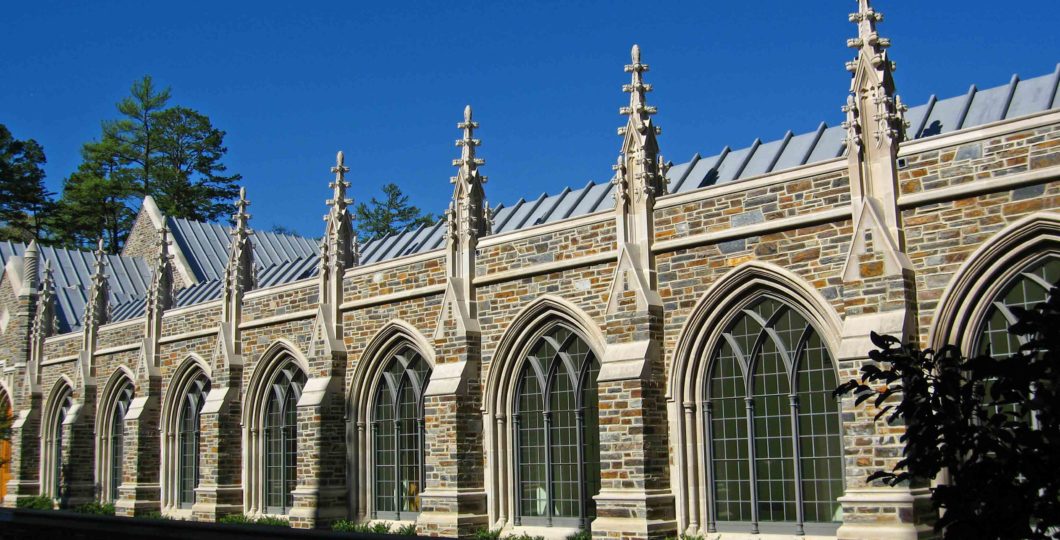
Founded in 1838, Duke University is a private research university located in Durham, North Carolina, named after the university’s great benefactor James Buchanan Duke’s deceased father, Washington Duke. 
Its campus spans over 8,600 acres on three campuses in Durham as well as a marine lab in Beaufort. The main campus – designed largely by architect Julian Abele – incorporates Gothic architecture with the looming presence of Duke Chapel, the campus\’ centerpiece that seats nearly 1,600 people and contains a 5,200-pipe organ. 
Duke is the seventh-wealthiest private university in America and in 2014, Thomson Reuters named 32 of Duke\’s professors to its list of Highly Cited Researchers. Ten Nobel laureates and three Turing Award winners are also affiliated with the university, which is the second-largest private employer in the state of North Carolina. 
From its early days as Brown’s Schoolhouse, Duke has evolved into a global academic and research powerhouse. Its Levine Science Research Center is the largest single-site interdisciplinary research facility of any American university, and in 2014 Duke spread its tentacles eastwards, opening a Chinese outpost, Duke Kunshan University, which blends an American-style liberal arts education with Chinese traditions. 
Its recent academic achievements include three of its students being named Rhodes Scholars in 2002 and 2006. Also in 2006, Duke researchers unveiled the first working demonstration of an invisibility cloak, to the delight of Harry Potter fans around the world. 
A total of around 15,000 students attend Duke, with the majority of them being postgraduates. There is an 8:1 student-to-faculty ratio, which personalizes the learning experience. 
Undergraduates have access to four academic schools including Trinity College of Arts and Sciences, and the Sanford School of Public Policy. Graduate students can enroll in nine graduate and professional schools, including Duke Law School, Fuqua School of Business, and the School of Medicine. 
The university has an ethnically diverse and politically engaged student body: activism in the 1960s prompted Martin Luther King Jr to speak on campus about the civil rights movement, and, following violence in Charlottesville in 2017, the statue of Confederate General Robert E Lee was removed from the entrance to Duke University Chapel.  
The majority of Duke students live on campus, where they can take advantage of the university’s enviable sports facilities and get fully involved in student life. Duke is home to over 400 student organizations – cultural, faith-based, political, and service-based – that foster student interaction and exchange, and help students develop their interests and passions.

Columbia University

Established in 1754, Columbia University is a private Ivy League research university in Upper Manhattan, New York City. It was established as King\’s College by royal charter of George II of Great Britain and renamed Columbia College in 1784 following the American Revolutionary War. 
With an undergraduate acceptance rate of 5.8 percent, Columbia is currently the third most selective college in the United States and the second most selective in the Ivy League after Harvard. Its first president was none other than the literary great Samuel Johnson, and over the years Columbia has produced numerous distinguished alumni, from Oscar winners and Nobel laureates to Supreme Court judges. Three US Presidents and the authors of the Declaration of Independence and American Constitution were also schooled at Columbia. It also runs the highly distinguished Pulitzer Prize, an annual award for achievements in journalism, literature and musical composition. 
The university is organized into 20 schools, including undergraduate schools such as Columbia College, the Fu Foundation School of Engineering and Applied Science, and the School of General Studies, as well as graduate schools such as Columbia Law School, Columbia College of Physicians and Surgeons, Columbia Journalism School and Columbia Business School. It also had global research outposts across the world. Its total student body numbers around 28,000 and is comprised mainly of postgraduates, with roughly 8,500 undergraduate students. 
Columbia’s main campus is Morningside Heights, occupying around six city blocks in the Morningside Heights district of New York. It’s home to the neo-classical Butler library, one of the largest buildings on campus, and almost two dozen undergraduate dormitories. The university also owns 7,800 apartments in the local area, which house faculty members, students, and staff. 
The campus was designed along Beaux-Arts principles and was a late 19th century vision of a campus where all disciplines could be taught. Some of its standout features include the Low Memorial Library, a National Historic Landmark, the site of the invention of FM radio, and the location where the nuclear fission of uranium first took place. 
More significant for students are The Steps, a long series of granite steps which are a popular hangout and meeting place, and the bronze figure of Alma Mater, a female figure draped in an academic gown who serves as a daily reminder to students of their scholarly duties. 

University of Pennsylvania

Image result for University of Pennsylvania

The University of Pennsylvania is a private Ivy League research university located in the city of Philadelphia. It was founded in 1740 by Benjamin Franklin, one of the United States’ founding fathers, who was eager to create a school to educate future generations. 
Franklin advocated a concept of higher education that focused not merely on the education of the clergy, but on teaching knowledge of arts and humanities, as well as the practical skills needed to make a living and to do public good. His maxim of “well done is better than well said” lives on today through its commitment to inclusive policies and innovation. 
As of fall 2017, there were 21,599 students studying at Penn, split equally between undergraduate and graduate students. Penn has a strong focus on interdisciplinary learning and research, offering double degree programs, unique majors and academic flexibility. This means competition to study at Penn is fierce, particularly at undergraduate level. The admission rate for the class of 2021 was 9.3 percent, of which 46 percent were either black, Hispanic Asian, or Native American. Unusually for an Ivy League school, women comprise over half (54 percent) of all students enrolled.  
Penn’s core campus covers more than 279 acres in a contiguous area of West Philadelphia\’s University City. All of Penn\’s schools and most of its research institutes are located on this campus, with the surrounding neighborhood including restaurants and pubs, a large supermarket and cinema. 
Student life at Penn serves up opportunities to discover new interests and passions galore, through a wide diversity of social, political, religious, and cultural activities. There are cultural centers and one-of-a-kind museums on campus that allow the arts to play a leading role in student life such as the Annenberg Center for the Performing Arts, the Arthur Ross Gallery, and Institute of Contemporary Art, which are all major cultural destinations and easy for Penn students to access. 
The university also takes sports and recreation very seriously, with students taking part in ice hockey, athletics and joining a variety of competitive, instructional and recreational sports clubs.  
With its arts and sciences programs ranking in the top 10 nationally, and the employment prospects for its students among the brightest (Penn boasts one of the highest numbers of graduates who go on to become Fortune 500 CEOs), there is little doubt that the University of Pennsylvania deserves its Ivy League status and reputation.  

University of California, Berkeley (UCB)

Image result for University of California, Berkeley (UCB)

Founded in 1868, the University of California, Berkeley (UCB) is a public research university and the flagship institution of the ten research universities affiliated with the University of California system. 
Berkeley is one of the 14 founding members of the Association of American Universities and is home to some world-renowned research institutes, including the Mathematical Sciences Research Institute and the Space Sciences Laboratory. 
Berkeley alumni, faculty and researchers include 99 Nobel laureates, 23 Turing Award winners, and 14 Pulitzer Prize winners. Faculty member J. R. Oppenheimer led the Manhattan project to create the first atomic bomb, while Berkeley’s Nobel laureate Ernest Lawrence invented the cyclotron, through which UC Berkeley scientists and researchers discovered 16 chemical elements of the periodic table.
Berkeley started out with little more than 40 students but, as the first full-curriculum university in California, it quickly gained ground on its illustrious forebears. By the early 1940s, it had grown substantially and was ranked second only to Harvard. 
During this decade, Berkeley gained further prestige through its radiation laboratory, which was instrumental in the project to develop an atomic bomb.  During the sixties, Berkeley gained a worldwide reputation for student activism, thanks to the Free Speech Movement of 1964 and campus opposition to the Vietnam War. In 1969, the then governor of California Ronald Reagan called the Berkeley campus \”a haven for communist sympathizers, protesters, and sex deviants\”, though today’s students tend to be more politically moderate. 
The Berkeley campus encompasses approximately 1,232 acres of the bay area of San Francisco, with many of its Beaux-Arts-style buildings recognized as California Historical Landmarks. 
Three quarters of its 40,000 students are undergraduates, giving life on campus a youthful feel in vibrant, urban surrounds. Most undergraduate students live in residential halls, where they can make friends, work and play in a safe environment designed to enhance the academic experience through a culture of care. 
There are also student co-ops and not-for-profit housing cooperatives for Berkeley students, with over 1,300 students living in 17 houses and three apartment cooperatives around the Berkeley campus. Students can play sports, and join clubs and societies spanning every imaginable interest. On campus, students can visit the Lawrence Hall of Science, watch sport at the newly-renovated California Memorial Stadium, take in a noon concert, or stroll through Sproul Plaza, the social heart of Berkeley campus.

Imperial College London

Image result for Imperial College London

Ranked 8th in the world in the QS World University Rankings® 2019Imperial College London is a one-of-a-kind institution in the UK, focusing solely on science, engineering, medicine and business. Imperial offers an education that is research-led, exposing youto real world challenges with no easy answers, teaching that opens everythingup to question and opportunities to work across multi-cultural, multi-nationalteams.

Imperial is based in South Kensington in London, in an area known as ‘Albertopolis’, Prince Albert and Sir Henry Cole’s 19th century vision for an area where science and the arts would come together. As a result, Imperial’s neighbors include a number of world leading cultural organizations including the Science, Natural History and Victoria and Albert museums; the Royal Colleges of Art and Music; the English National Ballet; and the Royal Albert Hall, where all of their students also graduate.

There is plenty of green space too, including two Royal Parks (Hyde Park and Kensington Gardens) within 10 minutes’ walk of campus. Travel to and from the area is also really easy as it’s served by three Tube lines and many bus routes.

One of the most distinctive elements of an Imperial education is that students join a community of world-class researchers. The cutting edge and globally influential nature of this research is what Imperial is best known for. It’s the focus on the practical application of their research – particularly in addressing global challenges – and the high level of interdisciplinary collaboration that makes their research so effective. Read more about their research impact here.

The number of award winners, Nobel Prize holders and prestigious Fellowships (Royal Society, Royal Academy of Engineering, Academy of Medical Sciences) amongst their staff is a testament to the outstanding contributions they have made in their respective fields.

Imperial is is one of the most international universities in the world, with 59% of its student body in 2017-18 being non-UK citizens and more than 140 countries are currently represented on campus. Meanwhile, the College’s staff, like their students, are diverse in their cultural backgrounds, nationalities and experiences.
Follow Imperial on FacebookTwitterInstagram, and Snapchat (just search \”imperial college\”). 

University of California, San Diego (UCSD)

Image result for University of California, San Diego (UCSD)

The University of California, San Diego (also known as UC San Diego), is one of the top 20 universities in the United States, according to the 2018 edition of the QS World University Rankings. The seventh oldest of the 10 campuses which comprise the University of California, UC San Diego is home to approximately 22,700 undergraduates and 6,300 postgraduates. The university is split into six different residential colleges, as well as three graduate schools and two professional medical schools. The campus is decorated by over a dozen public art projects, providing the university with a distinctive look unlike other institutions in the state of California.
The University of California San Diego is located in the neighborhood of La Jolla in northern San Diego, California, where it’s bordered by the communities of La Jolla Shores, Torrey Pines, and University City. The main campus consists of 761 buildings that occupy a huge 1,152 acres, with natural reserves covering about 889 acres. 
Around 37,000 students attend UC San Diego, the lion’s share of which are undergraduates, with the school offering over 200 undergraduate and graduate degree programs. The origins of UC San Diego go back to the early 20th century and the founding of the Scripps Institution of Oceanography, the first permanent marine science facility in the Western hemisphere and a pioneer in climate change theory. 

UC San Diego is a public research university organized into six undergraduate residential colleges, five academic divisions (arts and humanities, biological sciences, engineering, physical sciences and social sciences), and five graduate and professional schools (Rady School of Management, Scripps Institution of Oceanography, School of Global Policy and Strategy, UC San Diego School of Medicine and Skaggs School of Pharmacy and Pharmaceutical Sciences). 
UC San Diego has been ranked in the top five best public universities in the world, and of its current academic staff, 29 have been elected to the National Academy of Engineering, 70 to the National Academy of Sciences, 45 to the Institute of Medicine and 110 to the American Academy of Arts and Sciences.
Students can get involved in all the cultural activities, clubs, societies, and sports that you would expect from a top-ranking US university. There are over 550 student organizations and 38 national and local Greek organizations hosted on campus, with 20 percent of students joining fraternities and sororities. 
Highlights of student life include the Price Center (PC), a social hub comprising multiple restaurants, the central bookstore, a cinema, and office space. The Ché Café is a student worker cooperative, social center and vegan café which is also a prominent underground music venue. In the past, bands including Green Day, Bon Iver, and Bright Eyes have played here. 

Yale University

Image result for Yale University

Yale University is a private research university and a member of the prestigious Ivy League, a group of America’s most celebrated higher education institutions. Situated in New Haven, Connecticut, the first planned city in America, Yale was founded by English Puritans in 1701, making it the third-oldest higher education institution in the United States. 
Today, the city, which is part of the New York metropolitan area, is very much dominated by Yale, though it’s also billed as the “Cultural Capital of Connecticut”. According to the New York Times, New Haven is also extremely picturesque, with “art almost everywhere you look”.
Yale University’s central campus spans 260 acres and includes buildings from the mid-18th century. The university is organized into 14 schools: the original undergraduate college, the Yale Graduate School of Arts and Sciences and 12 professional schools. 
Undergraduates follow a liberal arts curriculum which allows you to think and learn across disciplines before deciding upon a major. Perhaps its most distinctive feature, Yale undergraduates are organized into a social system of residential colleges, which allows them to experience the cohesiveness and intimacy of a small school while still enjoying the cultural and scholarly resources of a large university.
A recently unveiled portrait of Barack Obama was by a Yale alumnus, and strolling across the Yale campus, you’ll find that you’re surrounded by public art. Be it in courtyards or plazas, lobbies or lecture halls, art at Yale inspires reflection and offers aesthetic pleasure. 
College life is similarly rich, reflecting the diversity of cultures and nationalities on campus. There’s always a packed arts calendar which includes exhibitions at world-class museums and galleries. There’s also a Tony Award-winning theater, Yale Cabaret – a theater-restaurant run by students – and hundreds of student groups, ranging from the serious to the silly. 
On top of this, you’ll also find the usual array of top quality sports facilities, a golf course and centers for tennis, polo, sailing, ice hockey, and more as well as competitive sports, with over 30 men’s and women’s varsity teams. 
To study at Yale is to join great company: four Yale graduates signed the American Declaration of Independence, and the university has educated five US presidents: William Howard Taft, Gerald Ford, George H. W. Bush, Bill Clinton and George W. Bush. It is rightly regarded as one of America and the world’s most prestigious universities, with competition to be admitted as fierce as it gets. 

University of Toronto

Image result for University of Toronto

Founded in 1827, the University of Toronto has evolved into Canada’s leading institution of learning, discovery and knowledge creation. We are proud to be one of the world’s top research-intensive universities, driven to invent and innovate.
Our students have the opportunity to learn from and work with preeminent thought leaders through our multidisciplinary network of teaching and research faculty, alumni and partners. 
The ideas, innovations and actions of more than 560,000 graduates continue to have a positive impact on the world.

UCL (University College London)

UCL is one of the world’s top multidisciplinary universities, with an international reputation for the quality of its research and teaching.
A world-leader in research, with outstanding results in the latest Research Excellence Framework (REF) 2014, UCL is home to centres of teaching excellence in subjects from medicine to languages, law to engineering, and history to astrophysics. Interdisciplinary study is encouraged and a belief that all areas of study can inform and enrich each other is woven into our programmes. We have had 29 Nobel laureates so far, with at least one every decade since the establishment of the prizes in 1901.
A central London location gives students access not only to world-renowned culture and nightlife, but also to academic resources. UCL is close to, and has teaching and research links with, countless hospitals, museums, galleries, libraries and professional bodies. International students make up nearly half our student population and come from over 150 countries, giving UCL its cosmopolitan atmosphere. We work hard to embed a global perspective in our teaching and there are many opportunities to study abroad for a term or a year—approximately 25% of students spend some time in another country as part of their degree programme.

University of California, Los Angeles (UCLA)

Image result for University of California, Los Angeles (UCLA)

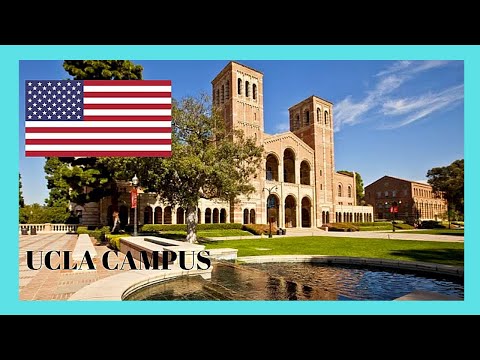
Based in warm and sunny Los Angeles, the University of California, Los Angeles (UCLA) was ranked the 31st best university in the world according to the QS World University Rankings® 2016-2017.
UCLA graduates are in the enviable position of being among the world’s most employable students fresh out of uni, as suggested by UCLA’s impressive performance in the QS Graduate Employability Rankings ® 2017.
UCLA ranks among the top 10 universities in the world for:
  • English language and literature
  • Geography, linguistics
  • Modern languages
  • Electrical and electronic engineering
  • Biological sciences
  • Medicine
  • Psychology
  • Chemistry
  • Mathematics
  • Communication and media studies
  • Education and training
  • Anthropology
  • Archaeology
  • Arts and humanities
  • Life sciences and medicine

Karolinska Institutet

Image result for Karolinska Institutet

Based in Stockholm, Karolinska Institutet (KI) offers fascinating medical and health sciences courses in English at undergraduate and postgraduate level.
Like Sweden’s capital city, KI has earned a reputation for world-leading research and innovative teaching methods. KI enjoys a particularly strong academic reputation, with a high number of citations per academic paper. It also benefits from an extremely favorable reputation with employers.
Since its inception in 1901, the Nobel Assembly at KI has been responsible for designating Nobel laureates in physiology or medicine. Students of the university continue to learn from, and network with, these Nobel laureates through frequent on-campus lectures and seminars.
Sweden is one of the world’s safest countries, and nearly 90% of its population speak English. Most of Sweden enjoys a temperate climate with four seasons. While winters are cold, summers are beautiful and warm. Stockholm, the biggest Nordic student city and Sweden’s capital, has a rich history and culture as well as a thriving business sector. It’s home to 80,000 students; 5,000 of whom are international.
Scholarships for international students are available to help finance tuition fees with KI and the Swedish Institute. Find out about important dates, selection processes and what each scholarship covers here .
KI’s student unions take a very active role in the daily life of students. When you arrive, orientation activities will help you acclimatize, while a student help desk is on hand throughout the semester to answer any queries you have. Staff will help you find accommodation, should you require assistance. The student health center features a gym and other sport facilities, as well as ecumenical prayer and contemplation rooms. Find out more about our student life here.
KI’s career service helps students find work opportunities. KI alumni have gone on to work for the World Health Organization, the Center for Advancement of Global Health, the National Neuroscience Institute, the Leibniz Institute of Environmental Medicine, and many other prestigious employers.
Helpful links
Interact with Karolinska Institutet (KI) on TwitterFacebook, and Instagram!

University of California, San Francisco

Image result for University of California, San Francisco

In recent years, scientific and bioengineering advances, Nobel prizes, an entirely new biotechnology industry, health policy research, oncogenes, prions, and the AIDS epidemic have placed UCSF in the forefront of the development of modern American biomedicine and medical education. Yet the school\’s long tradition reaches back to the very beginnings of the city of San Francisco in the Gold Rush days, and that society laid the foundations for the academic medical center that we know today. To reconnect this complex institution with its lively past, we have designed and written this narrative history, drawing upon the rich historical materials in UCSF\’s institutional archives and the work of the UCSF Campus Oral History Program.