Yale University

Image result for Yale University

Yale University is a private research university and a member of the prestigious Ivy League, a group of America’s most celebrated higher education institutions. Situated in New Haven, Connecticut, the first planned city in America, Yale was founded by English Puritans in 1701, making it the third-oldest higher education institution in the United States. 
Today, the city, which is part of the New York metropolitan area, is very much dominated by Yale, though it’s also billed as the “Cultural Capital of Connecticut”. According to the New York Times, New Haven is also extremely picturesque, with “art almost everywhere you look”.
Yale University’s central campus spans 260 acres and includes buildings from the mid-18th century. The university is organized into 14 schools: the original undergraduate college, the Yale Graduate School of Arts and Sciences and 12 professional schools. 
Undergraduates follow a liberal arts curriculum which allows you to think and learn across disciplines before deciding upon a major. Perhaps its most distinctive feature, Yale undergraduates are organized into a social system of residential colleges, which allows them to experience the cohesiveness and intimacy of a small school while still enjoying the cultural and scholarly resources of a large university.
A recently unveiled portrait of Barack Obama was by a Yale alumnus, and strolling across the Yale campus, you’ll find that you’re surrounded by public art. Be it in courtyards or plazas, lobbies or lecture halls, art at Yale inspires reflection and offers aesthetic pleasure. 
College life is similarly rich, reflecting the diversity of cultures and nationalities on campus. There’s always a packed arts calendar which includes exhibitions at world-class museums and galleries. There’s also a Tony Award-winning theater, Yale Cabaret – a theater-restaurant run by students – and hundreds of student groups, ranging from the serious to the silly. 
On top of this, you’ll also find the usual array of top quality sports facilities, a golf course and centers for tennis, polo, sailing, ice hockey, and more as well as competitive sports, with over 30 men’s and women’s varsity teams. 
To study at Yale is to join great company: four Yale graduates signed the American Declaration of Independence, and the university has educated five US presidents: William Howard Taft, Gerald Ford, George H. W. Bush, Bill Clinton and George W. Bush. It is rightly regarded as one of America and the world’s most prestigious universities, with competition to be admitted as fierce as it gets. 
Lomonosov Moscow State University

Image result for Lomonosov Moscow State University

Lomonosov Moscow State University (MSU) is the highest-ranked university in Russia, with a consistent position within the global top 150 of the QS World University Rankings®. Considered one the most prestigious universities in Russia, It houses the tallest educational building in the world, and hosts more than 47,000 students, welcoming 4,000 international students every year.

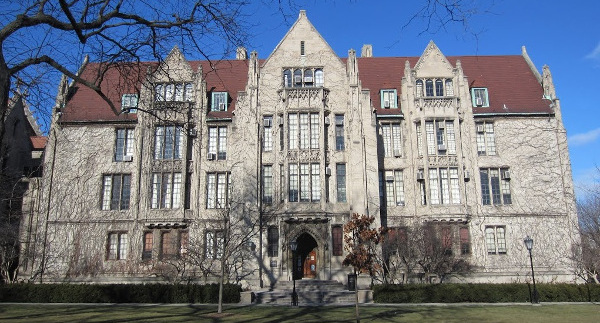
University of Chicago

Established in 1856, the University of Chicago is a private research university based in the urban center of Chicago, the third most populous city in the United States. Outside of the Ivy League, Chicago is one of America’s top universities, and holds top-ten positions in various national and international rankings. 
Beyond the arts and sciences, Chicago has a glowing reputation for its professional schools, including the Pritzker School of Medicine, the Booth School of Business, and the Harris School of Public Policy Studies. University of Chicago alumni are responsible for the development of many academic disciplines, such as sociology, economics, law, and literary criticism.  
The college’s crest sees a phoenix rising from the ashes, a reference to the fire, foreclosure, and demolition of the Old University of Chicago campus, with the current University of Chicago emerging triumphantly in its place in 1890. The old university was founded through a land endowment from the controversial senator Stephen Douglas, a supporter of slavery who authored the Kansas-Nebraska act. By contrast, the new University of Chicago was co-educational and funded through donations from wealthy Chicagoans and the oil magnet John D. Rockefeller. 
Today, the University of Chicago has approximately 16,000 students enrolled, with a male to female ratio of 56:44. A quarter of all students hail from overseas, a nod to the institution’s progressive credentials. 
Students run more than 400 clubs and societies, which consist of a typical mix of sports teams, arts, cultural and religious groups, academic and political groupings, and societies that promote eclectic common interests. Among the more famous examples are the University of Chicago bowl team, which has won 118 tournaments and 15 national championships, while the university\’s competitive Model United Nations team was the top ranked team in North America in 2013–14 and 2014–2015. 
If you have an interest in media and film, then you’re well catered for: the university is home to the longest continuously running student film society Doc Films and publishes several newspapers and magazines. Budding thespians can join renowned improvisational theater troupe Off-Off Campus, or learn how to broadcast at the university-owned radio station WHPK.
Notable faculty members past and present include 29 Nobel laureates and former US president Barack Obama. Illustrious alumni come in practically every field, including the novelists Philip Roth and Saul Bellow, political movers and shakers such as pollster Nate Silver and Obama strategist David Axelrod, pioneering balloonist Jeannette Piccard, and the fictional archaeologist Indiana Jones. 

Tsinghua University

Image result for Tsinghua University

Students looking for great engineering and computer science programs need look no further than Tsinghua University in Beijing, which since 2015 has been ranked as one of the best in the world for both disciplines. 
Tsinghua University was established in 1911 in the wake of the anti-colonialist Boxer Rebellion, which saw the US fine China $30m as punishment. In 1909, President Theodore Roosevelt negotiated with Congress a reduction in the sum, with the leftover money earmarked for university scholarships for Chinese students to study in the US. Tsinghua University was established as a preparatory school for the students’ trips abroad. 
Today, Tsinghua’s motto of “self-discipline and excellence” has taken it far. Most university rankings place Tsinghua among the best universities in China, and famous alumni include President Xi Jinping himself, who graduated with a degree in chemical engineering in 1979. Tony Blair, Henry Kissinger, and Bill Clinton are among the distinguished guests who have spoken at Tsinghua. 
The university is academically organized into 20 schools and 57 departments covering a broad range of subjects, including science, engineering, arts and literature, social sciences, medicine. Xinya College was established in 2014 as the school’s residential liberal arts college as part of a series of reforms to undergraduate education. Unlike other Tsinghua students who must choose a specific major upon enrollment, Xinya students can declare their majors at the end of their freshman year.
The campus of Tsinghua University is located in northwest Beijing, in the Haidian district, on the former site of the Qing Dynasty royal gardens. As such it retains Chinese-style landscaping as well as traditional buildings, although many of its buildings are also western in style, reflecting its American heritage. Like its archrival Peking, Tsinghua is known for having one of the most beautiful university campuses. 
On campus, students keep themselves occupied with more than just academic study (although the heavy workloads mean studying is always a priority). There are more than 110 student clubs and associations covering interests such as science and technology, health and fitness, humanities, arts and public welfare. 
Overseas students are particularly encouraged to join in the fun, with a host of extracurricular such as welcome parties, New Year’s parties, graduation parties, and visits to cultural and historical landmarks. 

University of Toronto

Image result for University of Toronto

Founded in 1827, the University of Toronto has evolved into Canada’s leading institution of learning, discovery and knowledge creation. We are proud to be one of the world’s top research-intensive universities, driven to invent and innovate.
Our students have the opportunity to learn from and work with preeminent thought leaders through our multidisciplinary network of teaching and research faculty, alumni and partners. 
The ideas, innovations and actions of more than 560,000 graduates continue to have a positive impact on the world.

Kyoto University

Image result for Kyoto University

Kyoto University is one of Asia’s leading research-oriented institutions and is famed for producing world-beating researchers, including 13 Nobel Prize laureates. 
The motto of the school, which was founded in 1897, is “freedom of academic spirit”, a value it aims to instill on the 22,000 students enrolled on its undergraduate and graduate programs. 
Kyoto ranks competitively in most major rankings, usually coming in the top two for Japan, the top 10 for Asia, and in the top 50 universities globally, making it a major player on the university scene.  
The main Yoshida campus has been at the core of the university since its founding, and is notable for its fascinating architecture, encompassing a variety of styles, from brick buildings such as the Clock Tower Centennial Hall (a symbol of the university) to modern laboratory buildings. 
Other campuses include Uji campus, which hosts research institutes, state-of-the-art laboratories and testing facilities, and Katsura campus, conceived as a “technoscience hill”. Mixing the traditional and cutting edge, there is therefore no one typical student experience at Kyoto, though what is common to all students is the sense of belonging to an academic community at the forefront of new scholarly horizons, in particular when it comes to new technologies and meeting global challenges.
For those interested in Japanese culture, the city of Kyoto will be of interest as it’s the birthplace of manga and was the capital city of Japan for over 1,000 years. Numerous cultural assets cultivated throughout its long history remain all over the city, and one in every 10 people there is a university student – by far the highest proportion of any Japanese city. 
Kyoto is also blessed with an abundance of nature, surrounded by mountains and tranquil temple gardens. Parts of the city are also a conservation hub. Compared with Osaka or Tokyo, the cost of living in Kyoto is relatively low; as the city center is fairly compact, students can travel around safely by bicycle.  

National University of Singapore (NUS)

Image result for National University of Singapore (NUS)

A leading global university centred in Asia, the National University of Singapore (NUS) is Singapore’s flagship university, which offers a global approach to education and research, with a focus on Asian perspectives and expertise.

NUS has 17 faculties and schools across three campuses. Its transformative education includes a broad-based curriculum underscored by multi-disciplinary courses and cross-faculty enrichment. Over 38,000 students from 100 countries enrich the community with their diverse social and cultural perspectives. NUS also strives to create a supportive and innovative environment to promote creative enterprise within its community.

The 17 Schools in NUS include:  
  • Arts and Social Sciences
  • Business
  • Computing
  • Continuing and Lifelong Education
  • Dentistry
  • Design and Environment
  • Duke-NUS Medical School
  • Engineering
  • Integrative Sciences and Engineering
  • Law
  • Medicine
  • Music
  • Public Health
  • Public Policy
  • Science
  • University Scholars Programme
  • Yale-NUS College

NUS takes an integrated and multi-disciplinary approach to research, working with partners from industry, government and academia, to address crucial and complex issues relevant to Asia and the world. Researchers in NUS’ Schools and Faculties, 30 university-level research institutes and centres, and Research Centres of Excellence cover a wide range of themes including: energy, environmental and urban sustainability; treatment and prevention of diseases common among Asians; active ageing; advanced materials; risk management and resilience of financial systems. The University’s latest research focus is to use data sciences, optimisation research and cyber security to support Singapore\’s Smart Nation initiative.

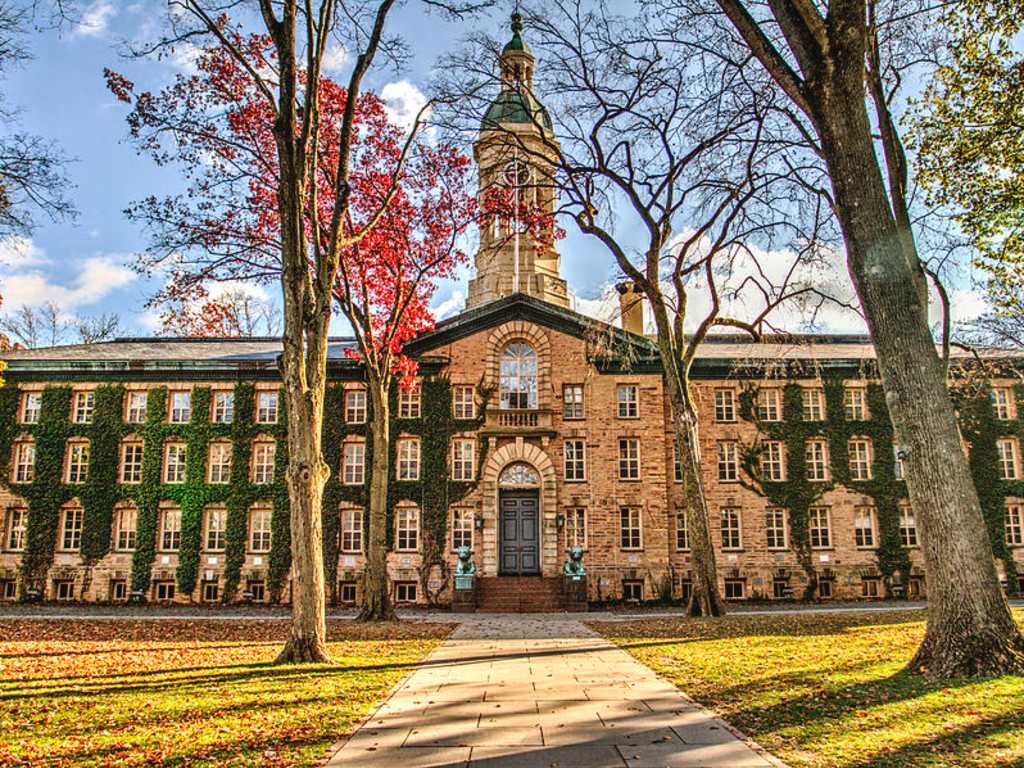
Princeton University

Image result for Princeton University

Princeton is one of the oldest and most prestigious universities in the United States. It was founded in 1746 and moved to its current site in New Jersey in 1896. 
Princeton is renowned for the spectacular greenery of its campus and for the architectural splendor of some of its landmark buildings, such as its Lewis Library, which was designed by Frank Gehry. Its student body is relatively small, with fewer than 10,000 enrolled in total, and international students make up 12 per cent of undergraduates. 
Princeton is one of the world’s foremost research universities, and has educated two US presidents, James Madison and Woodrow Wilson. Other distinguished graduates include Michelle Obama, actors Jimmy Stewart and David Duchovny, Google chairman Eric Schmidt and Apollo astronaut Pete Conrad.
Princeton was founded by New Light Presbyterians to provide training to its ministers. After the American Civil War, the college expanded, and its curriculum was overhauled. Around the turn of the 20th century, it officially became a university and its famous graduate school opened. 
Today’s Princeton provides undergraduate and graduate education in the humanities, social sciences, natural sciences, and engineering as well as offering a number of professional degrees. 
Princeton’s main campus is spread across 500 acres and has around 180 buildings, including 10 libraries. The main campus was named one of the most beautiful in the United States by New York’s Travel+Leisure magazine. Most Princeton students live, eat, study, work, and are at leisure on campus.  
The Ivy League institution guarantees accommodation to all of its undergraduate students across the four years of their degree and is committed to building a diverse campus community. Residential colleges offer a variety of academic, social, cultural and recreational programs, and opportunities abound for students to engage in interests beyond their academic study, whether that be writing for a literary publication, learning the science of beekeeping, or singing with an a capella group. 
The university is within easy reach of both New York City and Philadelphia, with the “Dinky” shuttle train providing a regular one-hour service to both cities. 
Studying at Princeton surrounded by natural beauty and architectural gems brings the best out in students. Several alumni and faculty members have been awarded Nobel prizes, and the university is consistently ranked in the top ten worldwide. Admissions are need-blind and, through a combination of grants and college jobs, few students graduate in debt – even though 60 percent of incoming students receive financial aid. 

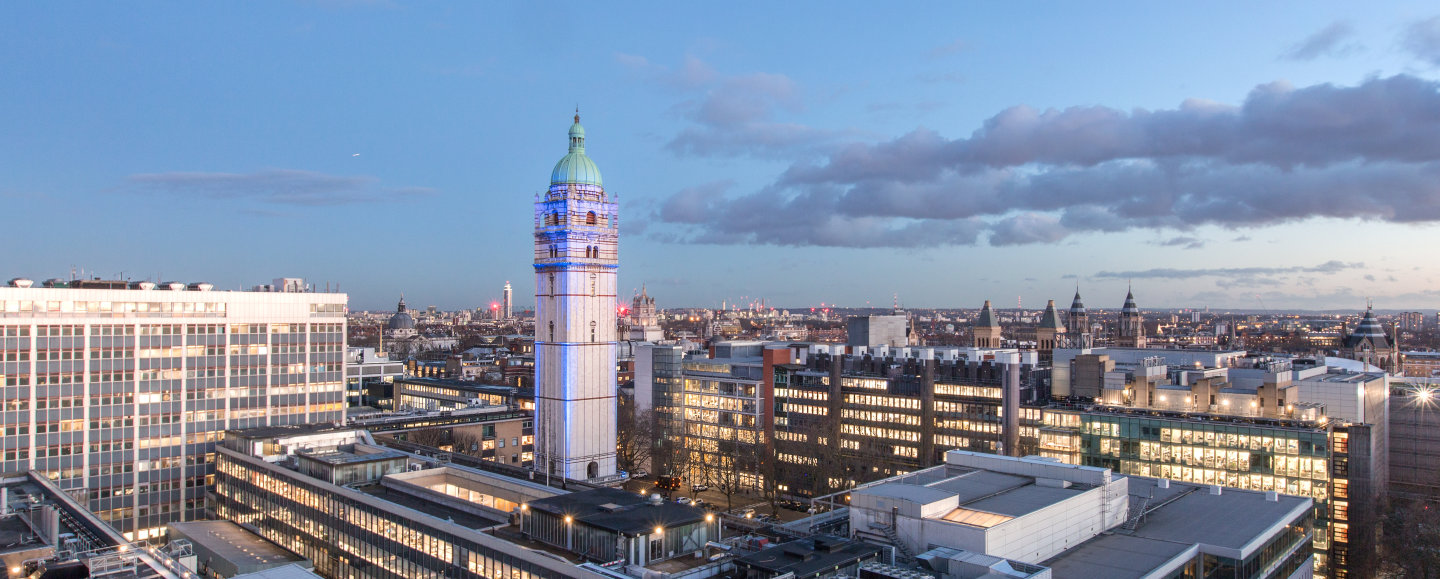
Imperial College London

Image result for Imperial College London

Ranked 8th in the world in the QS World University Rankings® 2019Imperial College London is a one-of-a-kind institution in the UK, focusing solely on science, engineering, medicine and business. Imperial offers an education that is research-led, exposing youto real world challenges with no easy answers, teaching that opens everythingup to question and opportunities to work across multi-cultural, multi-nationalteams.

Imperial is based in South Kensington in London, in an area known as ‘Albertopolis’, Prince Albert and Sir Henry Cole’s 19th century vision for an area where science and the arts would come together. As a result, Imperial’s neighbors include a number of world leading cultural organizations including the Science, Natural History and Victoria and Albert museums; the Royal Colleges of Art and Music; the English National Ballet; and the Royal Albert Hall, where all of their students also graduate.

There is plenty of green space too, including two Royal Parks (Hyde Park and Kensington Gardens) within 10 minutes’ walk of campus. Travel to and from the area is also really easy as it’s served by three Tube lines and many bus routes.

One of the most distinctive elements of an Imperial education is that students join a community of world-class researchers. The cutting edge and globally influential nature of this research is what Imperial is best known for. It’s the focus on the practical application of their research – particularly in addressing global challenges – and the high level of interdisciplinary collaboration that makes their research so effective. Read more about their research impact here.

The number of award winners, Nobel Prize holders and prestigious Fellowships (Royal Society, Royal Academy of Engineering, Academy of Medical Sciences) amongst their staff is a testament to the outstanding contributions they have made in their respective fields.

Imperial is is one of the most international universities in the world, with 59% of its student body in 2017-18 being non-UK citizens and more than 140 countries are currently represented on campus. Meanwhile, the College’s staff, like their students, are diverse in their cultural backgrounds, nationalities and experiences.
Follow Imperial on FacebookTwitterInstagram, and Snapchat (just search \”imperial college\”). 

The University of Tokyo

Image result for The University of Tokyo

Established in 1877 as the first imperial university, the University of Tokyo is one of Japan’s most storied and prestigious higher education establishments. In 2011, the university, which is nicknamed Todai, was ranked second in the world behind Harvard for the number of alumni in CEO positions at Fortune 500 companies. Also, 15 of Japan’s 62 prime ministers were educated at the University of Tokyo, and five alumni have gone on to become astronauts. 
Tokyo consists of 10 faculties and 15 graduate schools, and has 30,000 students enrolled, of which 2,100 are from overseas. Unusually for a Japanese university, it also runs undergraduate programs taught entirely in English: the International Program on Japan in East Asia and the International Program on Environmental Sciences. 
In 2014, the university’s School of Science introduced an all-English undergraduate transfer program called Global Science Course. Todai has five campuses, in the districts of Hongō, Komaba, Kashiwa, Shirokane and Nakano. 
Tokyo is a vibrant metropolis with a distinct urban character and unique culture that is ideal for growing minds and youthful adventure. The main Hongo campus occupies the former estate of the Maeda family, once the feudal lords of Kaga Province. It therefore attracts tourists due to landmarks such as Akamon (the Red Gate) and the majestic Yasuda Auditorium. It’s also where UTokyo’s annual May festival is held. 
The other campuses have more modern features. Komaba campus ¬– home to the College of Arts and Sciences, the Graduate School of Arts and Sciences, and the Graduate School of Mathematical Sciences – is home to 7,000 freshmen and sophomores. 
The undergraduate experience at the University of Tokyo is unique as it’s the only Japanese university with a system of two years of general education before students choose their major. The campus has been designated a \”center of excellence\” for three new areas of research by Japan’s Ministry of Education and Science. 

California Institute of Technology (Caltech)

Image result for California Institute of Technology (Caltech)

The California Institute of Technology (Caltech) is a world-renowned science and engineering research and education institution, located in Pasadena, California, around 11 miles northeast of downtown Los Angeles. 
Caltech has a high research output as well as many high-quality facilities such as the Jet Propulsion Laboratory (owned by NASA), the Caltech Seismological Laboratory, and the International Observatory Network.  It’s among a small group of institutes of technology in the United States primarily devoted to teaching technical arts and applied sciences, and its fiercely competitive admissions process ensures only a small number of the most gifted students are admitted.
The university was founded as a preparatory and vocational school by Amos G. Throop in 1891, with the mission “to expand human knowledge and benefit society through research integrated with education”. It became a major hub of US scientific research in the early 20th century and was instrumental to the United States’ war effort during World War II. 
Today, it is home to the Einstein Papers Project, an initiative seeking to preserve, translate and publish selected papers from the estate of Albert Einstein. It has also established an energy innovation hub that aims to discovery revolutionary methods of generating fuels directly from sunlight. 
Caltech’s 124-acre campus is within walking distance of Old Town Pasadena and the Pasadena Playhouse District, and the two locations are frequent getaways for students. Life on campus is rich with social activities, clubs, associations and recreational facilities. Intercollegiate sport is taken very seriously, with the Caltech Beavers (the beaver – nature’s engineer – is the college’s mascot) competing in 13 intercollegiate sports. 
Caltech also offers excellent opportunities for the study and performance of music, theater, and the visual arts, all activities that play a vital role in realizing Caltech’s mission to role in realizing the Institute\’s mission of \”educating outstanding students to become creative members of society\”. Providing a touch of grandeur, the Athenaeum is a stately building in the center of the campus where members can go for formal and informal dining, meetings, rendezvous and private parties. 
The balance at Caltech between a rigorous academic curriculum and activities that promote personal development ensures time spent there for students is both formative and an invaluable staging post to a successful career.  Although it may lack the reputation of Ivy League universities or the likes of Oxford and Cambridge, Caltech is undoubtedly one of the best universities in the world, a fact reflected in all the university rankings, which regularly single out technology and engineering as the school’s key academic strengths. 

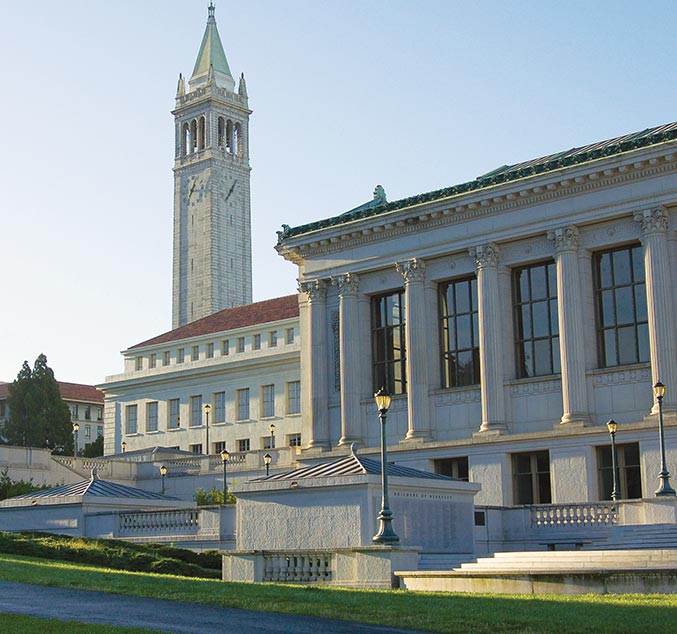
University of California, Berkeley (UCB)

Image result for University of California, Berkeley (UCB)

Founded in 1868, the University of California, Berkeley (UCB) is a public research university and the flagship institution of the ten research universities affiliated with the University of California system. 
Berkeley is one of the 14 founding members of the Association of American Universities and is home to some world-renowned research institutes, including the Mathematical Sciences Research Institute and the Space Sciences Laboratory. 
Berkeley alumni, faculty and researchers include 99 Nobel laureates, 23 Turing Award winners, and 14 Pulitzer Prize winners. Faculty member J. R. Oppenheimer led the Manhattan project to create the first atomic bomb, while Berkeley’s Nobel laureate Ernest Lawrence invented the cyclotron, through which UC Berkeley scientists and researchers discovered 16 chemical elements of the periodic table.
Berkeley started out with little more than 40 students but, as the first full-curriculum university in California, it quickly gained ground on its illustrious forebears. By the early 1940s, it had grown substantially and was ranked second only to Harvard. 
During this decade, Berkeley gained further prestige through its radiation laboratory, which was instrumental in the project to develop an atomic bomb.  During the sixties, Berkeley gained a worldwide reputation for student activism, thanks to the Free Speech Movement of 1964 and campus opposition to the Vietnam War. In 1969, the then governor of California Ronald Reagan called the Berkeley campus \”a haven for communist sympathizers, protesters, and sex deviants\”, though today’s students tend to be more politically moderate. 
The Berkeley campus encompasses approximately 1,232 acres of the bay area of San Francisco, with many of its Beaux-Arts-style buildings recognized as California Historical Landmarks. 
Three quarters of its 40,000 students are undergraduates, giving life on campus a youthful feel in vibrant, urban surrounds. Most undergraduate students live in residential halls, where they can make friends, work and play in a safe environment designed to enhance the academic experience through a culture of care. 
There are also student co-ops and not-for-profit housing cooperatives for Berkeley students, with over 1,300 students living in 17 houses and three apartment cooperatives around the Berkeley campus. Students can play sports, and join clubs and societies spanning every imaginable interest. On campus, students can visit the Lawrence Hall of Science, watch sport at the newly-renovated California Memorial Stadium, take in a noon concert, or stroll through Sproul Plaza, the social heart of Berkeley campus.

ETH Zurich – Swiss Federal Institute of Technology

Image result for ETH Zurich - Swiss Federal Institute of Technology

ETH Zurich is one of the world\’s leading universities in science and technology and is known for its cutting-edge research and innovation. It was established in 1855 as the Swiss Federal Polytechnic School, and a century and a half later the university can count over 20 Nobel Prize laureates as alumni, including the great Albert Einstein himself. 
The university, commonly known as Swiss Federal Institute of Technology Zurich, has 16 departments that offer academic education and conduct scientific research in subjects ranging from engineering and architecture to chemistry and physics. 
Education at ETH Zurich combines solid theory with practical application, and most degree programs build on strong mathematical foundations. For undergraduates the main teaching language is German, while most master\’s programs and doctoral studies are in English.
Located in Zurich, Switzerland\’s largest city, ETH Zurich is largely based on a modern main campus built on a hill in the outskirts of the town. Students at ETH have twice as many lectures as those at other Swiss institutions, but can still attend regular exhibitions, plays and concerts, as well as take advantage of the regular symposia and conferences on campus, where some of the best minds in science come to speak. 
ETH students like to exercise their bodies as well as their minds, and there are various sports events held on campus, of which the largest is an annual SOLA relay race in 14 sections, taking place over a total distance of 140 kilometers. More than 900 teams have been known to take part at once in the annual spectacle. 
Since the 1880s, students have also been able to show off their best moves at the Polyball, a classic ball event featuring a live orchestra and famous national singers, in which 10,000 dancers, music-lovers and partygoers descend on ETH’s extensively decorated main building for what is usually an unforgettable night. 


University of Oxford

Image result for University of Oxford

The University of Oxford is the oldest university in the English-speaking world, and is actually so ancient that its founding date is unknown – though it is thought that teaching took place there as early as the 11th century. 
It’s located in and around the medieval city center of Oxford, dubbed “the dreaming city of spires” by the 19th century poet Matthew Arnold, and comprises 44 colleges and halls as well as the largest library system in the UK. 
There are 22,000 students at Oxford in total, around half of whom are undergraduates, while 40 per cent are international students. A quarter of the city of Oxford’s residents are students, giving the city the youngest population in the UK. 
The University of Oxford does not have a main campus, its buildings and facilities instead being scattered around the medieval city center. Its colleges each have a distinctive character and traditions often dating back centuries. Colleges are self-governing institutions to which students usually apply directly. There are four academic divisions within Oxford University: Humanities, Mathematical, Physical and Life Sciences; Medical Sciences; and Social Sciences. The university’s particular strength is the sciences, and it is ranked number one in the world for medicine.
Oxford is a youthful and cosmopolitan city with plenty to see and do. There are dozens of historic and iconic buildings, including the Bodleian Libraries, Ashmolean Museum, Sheldonian Theatre, the cathedral, and the colleges themselves. 
Students can choose to spend their time studying or avail themselves of the many extracurricular activities available. There’s a strong musical life at Oxford, with clubs and societies spanning all genres, from jazz, through to classical and folk. Oxford is also ranked highly for sport, with its top rowers taking part every year in the world-famous boat race with the University of Cambridge on the River Thames. Drama lovers are also well catered for, with one of the largest and most vibrant university drama scenes in the country.
Oxford has an alumni network of over 250,000 individuals, including more than 120 Olympic medalists, 26 Nobel Prize winners, seven poets laureate, and over 30 modern world leaders (including Bill Clinton, Aung San Suu Kyi, Indira Ghandi and 26 UK Prime Ministers). 
It has a friendly rivalry with Cambridge for the title of best university in the UK and is regularly ranked as being one of the top three universities in the world. Notable Oxford thinkers and scientists include Tim Berners-Lee, Stephen Hawking and Richard Dawkins. 

University of Cambridge

Image result for University of Cambridge

Located in the center of the ancient city of Cambridge, 50 miles north of London, the University of Cambridge is a collegiate public research institution that serves more than 18,000 students from all corners of the globe. 
The university consists of numerous listed buildings and is divided into 31 autonomous colleges, with many of the older ones situated on the famous river Cam. Applications are made directly to the individual colleges, rather than to the university overall. You can live and are often taught within your college, receiving small group teaching sessions known as college supervisions. 
Six academic schools – Arts and Humanities, Biological Sciences, Clinical Medicine, Humanities and Social Sciences, Physical Sciences, and Technology – are spread across the university’s colleges, housing roughly 150 faculties and other institutions. 
Founded in 1209, the University of Cambridge’s 800-year history makes it the fourth-oldest university in the world and the second-oldest university in the English-speaking world. Cambridge students make up 20 percent of the town\’s population and most of the older colleges are situated near the city center. Its notable buildings give the city of Cambridge a unique character, and include King\’s College Chapel, the history faculty building designed by James Stirling and the Cripps Building at St John\’s College.
Cambridge is widely acknowledged as a vibrant place to be a student. On the academic side, the university is home to over 100 libraries, which hold more than 15 million books in total. There are also nine world-renowned arts, scientific and cultural museums such as Kettle’s Yard and the Fitzwilliam Museum, which are open to the public throughout the year, as well as a botanical garden. 
Extracurricular activities give you the chance to get involved with anything from the university’s renowned student drama societies, which spawned the likes of comedy group Monty Python, to music, politics and hundreds of other clubs and societies. The sports scene at Cambridge is huge too, with state-of-the-art facilities and over 80 sports on offer with teams for novices and experts alike. 
With its reputation for academic excellence and traditional scholarly values, the University of Cambridge often ranks among the very top universities in the world for teaching, research, and international outlook. The university has educated eminent mathematicians, scientists, politicians, lawyers, philosophers, writers, actors and heads of state. Ninety-eight Nobel laureates and 15 British prime ministers have affiliations with Cambridge as students, faculty or alumni, including the scientists Francis Crick and Frederick Sanger.