Princeton University

Image result for Princeton University

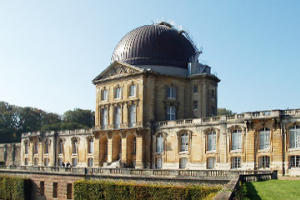
Princeton is one of the oldest and most prestigious universities in the United States. It was founded in 1746 and moved to its current site in New Jersey in 1896. 
Princeton is renowned for the spectacular greenery of its campus and for the architectural splendor of some of its landmark buildings, such as its Lewis Library, which was designed by Frank Gehry. Its student body is relatively small, with fewer than 10,000 enrolled in total, and international students make up 12 per cent of undergraduates. 
Princeton is one of the world’s foremost research universities, and has educated two US presidents, James Madison and Woodrow Wilson. Other distinguished graduates include Michelle Obama, actors Jimmy Stewart and David Duchovny, Google chairman Eric Schmidt and Apollo astronaut Pete Conrad.
Princeton was founded by New Light Presbyterians to provide training to its ministers. After the American Civil War, the college expanded, and its curriculum was overhauled. Around the turn of the 20th century, it officially became a university and its famous graduate school opened. 
Today’s Princeton provides undergraduate and graduate education in the humanities, social sciences, natural sciences, and engineering as well as offering a number of professional degrees. 
Princeton’s main campus is spread across 500 acres and has around 180 buildings, including 10 libraries. The main campus was named one of the most beautiful in the United States by New York’s Travel+Leisure magazine. Most Princeton students live, eat, study, work, and are at leisure on campus.  
The Ivy League institution guarantees accommodation to all of its undergraduate students across the four years of their degree and is committed to building a diverse campus community. Residential colleges offer a variety of academic, social, cultural and recreational programs, and opportunities abound for students to engage in interests beyond their academic study, whether that be writing for a literary publication, learning the science of beekeeping, or singing with an a capella group. 
The university is within easy reach of both New York City and Philadelphia, with the “Dinky” shuttle train providing a regular one-hour service to both cities. 
Studying at Princeton surrounded by natural beauty and architectural gems brings the best out in students. Several alumni and faculty members have been awarded Nobel prizes, and the university is consistently ranked in the top ten worldwide. Admissions are need-blind and, through a combination of grants and college jobs, few students graduate in debt – even though 60 percent of incoming students receive financial aid. 

Yale University

Image result for Yale University

Yale University is a private research university and a member of the prestigious Ivy League, a group of America’s most celebrated higher education institutions. Situated in New Haven, Connecticut, the first planned city in America, Yale was founded by English Puritans in 1701, making it the third-oldest higher education institution in the United States. 
Today, the city, which is part of the New York metropolitan area, is very much dominated by Yale, though it’s also billed as the “Cultural Capital of Connecticut”. According to the New York Times, New Haven is also extremely picturesque, with “art almost everywhere you look”.
Yale University’s central campus spans 260 acres and includes buildings from the mid-18th century. The university is organized into 14 schools: the original undergraduate college, the Yale Graduate School of Arts and Sciences and 12 professional schools. 
Undergraduates follow a liberal arts curriculum which allows you to think and learn across disciplines before deciding upon a major. Perhaps its most distinctive feature, Yale undergraduates are organized into a social system of residential colleges, which allows them to experience the cohesiveness and intimacy of a small school while still enjoying the cultural and scholarly resources of a large university.
A recently unveiled portrait of Barack Obama was by a Yale alumnus, and strolling across the Yale campus, you’ll find that you’re surrounded by public art. Be it in courtyards or plazas, lobbies or lecture halls, art at Yale inspires reflection and offers aesthetic pleasure. 
College life is similarly rich, reflecting the diversity of cultures and nationalities on campus. There’s always a packed arts calendar which includes exhibitions at world-class museums and galleries. There’s also a Tony Award-winning theater, Yale Cabaret – a theater-restaurant run by students – and hundreds of student groups, ranging from the serious to the silly. 
On top of this, you’ll also find the usual array of top quality sports facilities, a golf course and centers for tennis, polo, sailing, ice hockey, and more as well as competitive sports, with over 30 men’s and women’s varsity teams. 
To study at Yale is to join great company: four Yale graduates signed the American Declaration of Independence, and the university has educated five US presidents: William Howard Taft, Gerald Ford, George H. W. Bush, Bill Clinton and George W. Bush. It is rightly regarded as one of America and the world’s most prestigious universities, with competition to be admitted as fierce as it gets.

Stanford University

Image result for Stanford University

Located 35 miles south of San Francisco and 20 miles north of San Jose, Stanford University is in the heart of Northern California’s dynamic Silicon Valley, home to Yahoo, Google, Hewlett-Packard, and many other cutting-edge tech companies that were founded by and continue to be led by Stanford alumni and faculty. Nicknamed the “billionaire factory”, it is said that if Stanford graduates formed their own country it would boast one of the world’s largest ten economies. 
Covering 8,180 acres, Stanford has one of the largest university campuses in the US, with 18 interdisciplinary research institutes and seven schools: the Graduate School of Business; School of Earth, Energy & Environmental Sciences; Graduate School of Education; School of Engineering; School of Humanities and Sciences; Law School; and School of Medicine. 
Stanford University was founded in 1885 by California senator Leland Stanford and his wife, Jane, to “promote the public welfare by exercising an influence in behalf of humanity and civilization”. The couple’s only child had died of typhoid, and their decision to build a university on their farm was intended as a memorial. From the start the university was non-sectarian, co-educational and affordable, teaching both the traditional liberal arts and the technology and engineering that was shaping the new America at the time.  
Fast forward more than a century, and Stanford counts 19 Nobel laureates within its community and is regularly ranked among the top three universities in the world. Nicknamed “The Farm” from the days when horses roamed there, Stanford’s campus is now a thriving community of more than 11,000 creative and accomplished people from around the world. Nearly all undergraduate and 60 per cent of graduate students live on campus, so it is hardly surprising that student life is rich and diverse, with over 625 organized student groups. 
Sport is popular, with students, faculty and staff enjoying state-of-the-art recreational facilities and wellness programs. Stanford students compete in 36 varsity and 32 club sports, including baseball, football, basketball, and squash. Sports teams are referred to as the “Stanford Cardinal”.
Stanford also has a rich tradition of fostering creativity and the arts: there is a vibrant campus arts district and two world-class museums which host regular exhibitions.  Eight dining halls, a teaching kitchen and organic gardens provide the campus community with healthy, sustainable meals. The close-knit communal nature of life on campus has even given rise to “Stanford speak”, a special language only spoken on campus. 

University of California, Berkeley (UCB)

Image result for University of California, Berkeley (UCB)

Founded in 1868, the University of California, Berkeley (UCB) is a public research university and the flagship institution of the ten research universities affiliated with the University of California system. 
Berkeley is one of the 14 founding members of the Association of American Universities and is home to some world-renowned research institutes, including the Mathematical Sciences Research Institute and the Space Sciences Laboratory. 
Berkeley alumni, faculty and researchers include 99 Nobel laureates, 23 Turing Award winners, and 14 Pulitzer Prize winners. Faculty member J. R. Oppenheimer led the Manhattan project to create the first atomic bomb, while Berkeley’s Nobel laureate Ernest Lawrence invented the cyclotron, through which UC Berkeley scientists and researchers discovered 16 chemical elements of the periodic table.
Berkeley started out with little more than 40 students but, as the first full-curriculum university in California, it quickly gained ground on its illustrious forebears. By the early 1940s, it had grown substantially and was ranked second only to Harvard. 
During this decade, Berkeley gained further prestige through its radiation laboratory, which was instrumental in the project to develop an atomic bomb.  During the sixties, Berkeley gained a worldwide reputation for student activism, thanks to the Free Speech Movement of 1964 and campus opposition to the Vietnam War. In 1969, the then governor of California Ronald Reagan called the Berkeley campus \”a haven for communist sympathizers, protesters, and sex deviants\”, though today’s students tend to be more politically moderate. 
The Berkeley campus encompasses approximately 1,232 acres of the bay area of San Francisco, with many of its Beaux-Arts-style buildings recognized as California Historical Landmarks. 
Three quarters of its 40,000 students are undergraduates, giving life on campus a youthful feel in vibrant, urban surrounds. Most undergraduate students live in residential halls, where they can make friends, work and play in a safe environment designed to enhance the academic experience through a culture of care. 
There are also student co-ops and not-for-profit housing cooperatives for Berkeley students, with over 1,300 students living in 17 houses and three apartment cooperatives around the Berkeley campus. Students can play sports, and join clubs and societies spanning every imaginable interest. On campus, students can visit the Lawrence Hall of Science, watch sport at the newly-renovated California Memorial Stadium, take in a noon concert, or stroll through Sproul Plaza, the social heart of Berkeley campus.

No Authority Can Claim Privilege Not To Comply With SC Judgment: SC

With much satisfaction it has to be remarked right at the outset that in a latest, landmark and laudable judgment by a two-Judge Bench of Apex Court titled Anil Kumar v Union of India and others in Civil Appeal No. 888 of 2019 (arising out of SLP (C) 32073 of 2016) and authored by Justice Dr Dhananjaya Y Chandrachud for himself and Justice Hemant Gupta delivered on January 21, 2019 very clearly and convincingly observed that no authority can claim a privilege not to comply with its judgment. Very rightly so! Who will respect Supreme Court if any authority is given the unfettered and untrammelled power not to comply with the Supreme Court judgment? Can any authority be ever given such power? Certainly not!   
                                Needless to say, the Apex Court Bench made this extremely relevant observation as pointed above while allowing an appeal filed by an employee of the Council for Scientific and Industrial Research. Starting from the scratch, it is first and foremost pointed out in this noteworthy judgment while granting leave that, “The appellant was aggrieved by the rejection of his claim for financial upgradation by the Council for Scientific and Industrial Research (“CSIR”) with effect from 10 May 2011. He was also aggrieved by not being promoted to the post of Senior Controller of Administration/Senior Deputy Secretary in Pay Band-4 i.e. Rs. 37,400-67,000 with a grade pay of Rs. 8700 in respect of vacancies for 2013-2014 under the CSIR Recruitment & Promotion Rules for Administrative Staff, 1982.”
                                          To be sure, it is then pointed out that, “He moved the Central Administrative Tribunal, Chandigarh. The Tribunal did not find any substance in his grievance for the reason that he did not fulfil the benchmark of “Very Good” for financial upgradation. The Tribunal was of the view that CSIR is an autonomous body and that the circulars issued by the Union of India would not ipso facto apply.” 
                                      As things stood, the Bench sought to make it clear that, “The grievance of the appellant was that the failure to communicate the Annual Confidential Reports in which he had failed to meet the benchmark violated the O.Ms issued by the Department of Personnel and Training. The Tribunal rejected that contention holding that since CSIR had adopted the requirement of conveying the ACRs from a particular date in the future, the decision could not be questioned.”
                                      Simply put, the Bench then specifies that, “On the issue of promotion, it has been held that this involved a selection on the basis of performance in service and in the interview and since the Departmental Promotion Committee had graded the appellant as “good”, he was not considered for promotion. This view of the Central Administrative Tribunal was challenged before the High Court of Punjab and Haryana. By a judgment dated 13 July 2006, the writ petition filed by the Appellant was dismissed.”
                                             As it turned out, the Apex Court Bench then spells out that, “The first grievance of the appellant was that he was entitled to financial upgradation under the MACP scheme adopted by CSIR. It is not in dispute that the benchmark prescribed was “Very Good” for financial upgradation to the grade pay of Rs. 7600/- and above. CSIR, by its letter dated 30 December 2013, notified the eligibility of the appellant for the grant of financial upgradation with effect from 10 May 2011.”
                               Going ahead, it is then pointed out that, “Similarly, by its circular dated 6 February 2014, CSIR issued an All India Final Seniority List of Common Cadre Officers as on 1 January 2014. The name of the Appellant stood at Serial No. 2 in the category of Deputy Secretary/Controller of Administration. On 9 May 2014, CSIR declared the result of the exercise conducted by the Screening Committee which met on 21 April 2014. The name of the appellant did not appear in the list of officers for financial upgradation from 10 May 2011.”
                               More to the point, it is then brought out that, “The ACRs of the appellant were below the benchmark required for certain years namely 2003-2004, 2008-2009 and 2009-2010. The gradings to the appellant on 9 July 2014 to which he submitted a representation and appeared for the interview for regular promotion for 2013-2014. The grievance is that the representation was not considered.”
                               What is more, it is then also brought out in this judgment that, “When the panel for the post of Senior Deputy Secretary/Senior Controller of Administration for 2013-2014 was notified, officers junior to the appellant were empanelled for promotion. The appellant was neither granted a financial upgradation nor was he promoted as a part of the exercise of regular promotion to the higher post. The High Court affirmed the view of the Tribunal and rejected the writ petition filed by the applicant.” 
                                      Be it noted, the Bench then while citing the relevant earlier decided cases observes that, “In Dev Dutt vs. Union of India & Ors, (2008) 8 SCC 725 a two Judge Bench of this Court held that fairness in public administration and transparency require that all entries in the Annual Confidential Reports of a public servant must be communicated within a reasonable period in order to enable the employee to make a representation for upgradation. The view of the Court was that non-communication of entries in the ACRs has civil consequences since it may affect the chances of the employee for promotion and other benefits. A failure to communicate would be arbitrary. This Court held that these directions would apply to employees of statutory authorities, public sector corporations and other instrumentalities of the State, in addition to government servants.”
                       Moving ahead, it is then pointed out by the Bench that, “A three Judge Bench of this Court has in Sukhdev Singh vs. Union of India & Ors. (2013) 9 SCC 566 affirmed the correctness of the view taken in Dev Dutt (supra) noting that an earlier  three Judge Bench in Abhijit Ghosh Dastidar vs. Union of India & Ors. (2009) 16 SCC 146 had adopted the same principle. The three Judge Bench in Sukhdev Singh (supra), held thus:
              “8. In our opinion, the view taken in Dev Dutt that every entry in ACR of a public servant must be communicated to him/her within a reasonable period is legally sound and helps in achieving threefold objectives. First, the communication of every entry in the ACR to a public servant helps him/her to work harder and achieve more that helps him in improving his work and give better results. Second and equally important, on being made aware of the entry in the ACR, the public servant may feel dissatisfied with the same. Communication of the entry enables him/her to make representation for upgradation of the remarks entered in the ACR.  Third, communication of every entry in the ACR brings transparency in recording the remarks relating to a public servant and the system becomes more conforming to the principles of natural justice. We, accordingly, hold that every entry in ACR – poor, fair, average, good or very good – must be communicated to him/her within a reasonable period”.”
                                  To put things in perspective, the Apex Court Bench then points out that, “In view of the above statement of law, both the Tribunal and the High Court were in error in coming to the conclusion that CSIR being an autonomous entity and having adopted the O.Ms of the Department of Personnel and Training with effect from a specified date, the appellant could not make a grievance of the non-communication of the ACRs for the relevant period. The failure to communicate the ACRs deprived the appellant of the opportunity to submit his representation in the matter of financial upgradation. Subsequently, the appellant was furnished with an opportunity to submit his representation before his case was taken up for regular promotion, but his representation was not considered.”
                             More importantly, the Bench then states that, “The appellant did not have the benefit of submitting his representation when the Screening Committee took up the case for financial upgradation. CSIR by reason of its autonomy may have certain administrative privileges. No authority can, however, claim a privilege not to comply with a judgment of this Court. Once the law was enunciated in Dev Dutt’s case (supra), all instrumentalities of the State were bound to follow this Court. CSIR was no exception.”
                            To say the least, the Bench then further states that, “The appellant has since retired from service on 30 September 2014. The grant of MACP benefit is not a matter of right and it is after the Screening Committee finds that the officer meets the benchmark that an upgradation can be granted. Hence, we are of the view that the appellant should be granted an opportunity, within a period of four weeks from today to submit his representation in respect of the ACRs for the concerned years where he did not fulfil the benchmark for financial upgradation.”
                      Continuing in same vein, the Bench then adds that, “Upon the submission of his representation, the respondents shall consider it and communicate the outcome to the appellant within a period of two months thereafter. Based on that decision, the case of the appellant for financial upgradation shall be considered afresh. In the event his ACRs for the relevant period are upgraded, the case for financial upgradation shall be determined within a period of three months thereafter.”
                                Finally and most importantly, the Bench then concludes by observing that, “We also direct that in the event that the ACRs for the relevant period are upgraded, the case of the appellant for promotion to the post of Senior Deputy Secretary/Controller of Administration shall be considered afresh by the Departmental Promotion Committee expeditiously. This exercise shall be carried out with reference to the date on which his junior in service came to be promoted. In the event that the case of the appellant is considered favourably, he would be entitled to all consequential benefits which flow from the financial upgradation and upon the grant of regular promotion to the post of Senior Deputy Secretary. The appeal is, accordingly, allowed and the judgment of the High Court shall stand set aside. Pending application(s), if any, shall stand disposed of. No order as to costs.”
                                All said and done, there is no valid reason why any person or authority dare to question what the Supreme Court has so rightly held in this landmark and laudable case! It is about time and all authorities must comply with it unconditionally and uniformly! No authority should ever cling to the false illusion that it can afford to claim privilege not to comply with the Supreme Court judgment.
                             Bluntly put: If they still refuse to even now comply, no one but they will themselves be responsible for facing the dire consequences which would follow from such refusal and then no one can save them! Do they want such unpalatable situation to arise and suffer the dire consequences? Certainly not! So, it is better for the authorities to wake up at the earliest right now and comply unconditionally with what the Supreme Court which is the top court of India has said so explicitly!   
Sanjeev Sirohi, Advocate,
s/o Col BPS Sirohi,
A 82, Defence Enclave,
Sardhana Road, Kankerkhera,
Meerut – 250001, Uttar Pradesh.


Lieutenant General (Rtd) Cannot Be Tried In A General Court Martial Consisting Of Members Below His Rank: SC

It has to be said right at the outset that a three-Judge Bench of the Supreme Court comprising of Justice AK Sikri, Justice S Abdul Nazeer and Justice MR Shah in Ex Lt Gen. Avadhesh Prakash v. Union of India & Anr. in Criminal Appeal No. 140 of 2019 (Diary No. 12371/2018) with Civil Appeal No. 9739/2018 decided on January 24, 2019 has set aside the punishment of dismissal imposed on Ex Lt Gen Avadhesh Prakash by a General Court Martial (GCM). This has certainly shaken the defence establishment and all those who court martialled him as the top court has not just validated his stand but also held that the entire proceedings held by the said GCM stood vitiated. It also held that the retired officer would be entitled to all the benefits; pensionary or otherwise.
Lieutenant General (Rtd) Cannot Be Tried In A General Court Martial Consisting Of Members Below His Rank: SC
                          While craving for the exclusive indulgence of my esteemed readers, it must be informed here that the top court right at the outset notes that the leave to appeal is granted. It then discloses that, “We have heard learned counsel for the parties at length.” The top court was apprised of their stand by both the parties.
                                      For my esteemed readers exclusive indulgence, it must be now disclosed that the three-Judge Bench then observed that, “The relevant facts, in a nutshell, are as follows. The appellant was commissioned in the Indian Army on 20.12.1970 and promoted to the rank of Lieutenant General in October, 2007. He was appointed as a Military Secretary on 01.05.2008 at the Army Headquarters, New Delhi. During the tenure of the appellant as the Military Secretary the so-called ‘Sukna Land Scam’ case broke out in the end of the year 2010.”
                             Going forward, the Bench then observes that, “The appellant’s name figured in the Court of Inquiry on 07.01.2009. Then provisions of Rule 180 of the Army Rules, 1954 were invoked against him. The Chief of Army Staff initially directed Administrative Action against the appellant and a show cause notice dated 11.01.2010 was saved upon him.”
                                    Continuing in the same vein, the Bench then goes on to add that, “However, just two days prior to his retirement on 31.01.2010, the appellant was informed about withdrawal of the above show cause notice and initiation of disciplinary proceedings against him under the provisions of Section 123 of the Army Act, 1950. The appellant filed an O.A. before the Armed Forces Tribunal (“the Tribunal”) challenging the Court of Inquiry for non-compliance of Rule 180 of the Army Rules, Para 518 of the Defence Service Regulations (“DSR”) and change of directions. The Tribunal gave partial relief to the appellant. Against the said order of the Tribunal, the appellant approached this Court by preferring Special Leave Petition. This Court dismissed the Special Leave Petition.”
                                     To be sure, the Bench then discloses that, “The General Court Martial (“GCM”) found the appellant not guilty on the first charge. However, the GCM found the appellant guilty on charges second, third and fourth and sentenced him to “Dismissal from Service”. The appellant preferred O.A. before the Tribunal against the rejection of Post-Confirmation Petition, setting aside GCM proceedings and payment of all retiral and consequential benefits. The Tribunal, after considering the rival contentions made by the parties, came to the conclusion that the appellant is guilty of the second charge, i.e., ‘Unbecoming conduct’ under Section 45 of the Army Act and he is not proved to be guilty for charges three and four with the direction that the appellant need not be given the arrears of pension from the date of his dismissal till the date of passing the order and the same shall be given to him w.e.f. 20.12.2017, i.e., the date of pronouncement of the order. Aggrieved by the order, passed by the Tribunal, the appellant is before this Court.”
                           To put things in perspective, the Bench then points out that, “The first and foremost challenge laid by the appellant was to the validity of the composition/constitution of the GCM. It is an admitted case that the appellant was holding the position of Lieutenant General in the Army. As per the provisions of Rule 40 of the Army Rules, 1954, in his case, members of the GCM could be of the rank of Lieutenant General or above.”
                          Needless to say, it is then pointed out that, “It is an admitted position that one Lieutenant General and four Major Generals constituted the GCM. The Tribunal in the impugned order, had accepted the aforesaid position/composition and even agreed with the counsel for the appellant that the respondents could have tried to make Lieutenant Generals available from over eighty such Lieutenant Generals in the Indian Army as members of the GCM. It is also recorded that Lieutenant Generals were in fact made available for the GCM of Lt-Gen PK Rath which was held a few month earlier. Notwithstanding the same, only on the ground that the appellant had already retired as Lieutenant General, the Tribunal has come to the conclusion that it does not find any legal infirmity in the constitution of GCM as the provisions of Rule 40(2) of the Army Rules have been complied with.”
                                        While shaking its head in disbelief on the lame stand taken by the Armed Forces Tribunal (AFT), the Bench of Apex Court then minces no words in clearly and categorically holding that, “We fail to understand the aforesaid reasoning and rationale given by the Tribunal. The appellant was holding the position of Lieutenant General. Allegations which were levelled against him for which GCM was convened was in his capacity as the Lieutenant General. Merely because the appellant had retired in the meantime cannot be a ground to discard and give a go by to the provisions of Rule 40(2) of the Army Rules. Needless to mention that the aforesaid Rules had statutory force.”
                             While pooh-poohing the shoddy manner in which the AFT conducted the GCM, it is then held by the Bench that, “It is a travesty of justice that a person holding the rank of Lieutenant General is tried by the GCM which consisted of members below his rank. Such a composition cannot be countenanced in law. We are therefore, of the opinion that the GCM was not validly constituted. Once that finding is arrived at, entire proceedings held by the said GCM stand vitiated.”
                                   As it turned out, the Bench then goes on to add that, “In normal course in such a case the Court would remit the case back to the respondents to constitute a proper GCM and hold the Court Martial. However, for various reasons it is not necessary to do this exercise in the instant case. First reason is that even the said GCM had exonerated the appellant of serious charge. It had held that only three charges stood proved against the appellant. Interestingly, out of these three charges, the Tribunal, in the impugned order, has come to the conclusion that two charges could not be held to be proved. Therefore, it is only one charge that ultimately stands established against the appellant. That charge is also not of a very serious nature. In fact, before the Tribunal, the counsel for the appellant had also raised the issue of proportionality of sentence.”
                                   Not stopping here, it is then pointed out that, “It was specifically contended that the punishment of dismissal which had been imposed upon the appellant is very harsh in comparison to the punishment of “severe reprimand” given to the other officials involved in the matter. The Tribunal, however, rejected this contention. We do not find any justifiable reason for adopting this course of action when the Tribunal itself held that the punishment of dismissal imposed upon the appellant was because of three charges held against him and also, according to the Tribunal, two charges out of the said three charges also could not be treated as proved. Furthermore, the appellant has already retired from service and the only issue now pertains to the grant of pensionary benefit. Even the Tribunal had granted these pensionary benefits from the date of its order, i.e. 20.12.2017.”
                                  Finally and perhaps most importantly, it is then held that, “For all these reasons, we are of the considered view that no useful purpose would be served in remitting the case back to the authorities for fresh GCM. As a result, this appeal is allowed, the impugned order of the Tribunal is set aside. The punishment of dismissal imposed upon the appellant also stands set aside. The appellant shall be entitled to all the benefits; pensionary or otherwise, which are admissible to him in law. Such benefits shall be computed and arrears be paid to the appellant within a period of three months. Regarding Civil Appeal No. 9739/2018, it is held that, “Having heard learned counsel for the parties, we find no merit in this appeal and it is, accordingly dismissed.”
                                 All said and done, this latest, landmark and laudable judgment will always serve as the biggest warning to AFT that under no circumstances any rule should be broken while conducting GCM against such a senior officer of the rank of Lieutenant General as we have seen here and if they do then they will be responsible for their stand being rejected by the highest court. This noteworthy ruling has certainly come as a huge relief for Ex Lt General Awadhesh Prakash who was dismissed from service by the GCM for his alleged involvement in ‘Sukna Land Scam’ who now stands vindicated. The three Judge Bench of the Apex Court found no credible evidence to upheld the GCM of Ex Lt General Awadhesh Prakash and he therefore now stands acquitted and would be entitled to all the benefits as pointed above!    
Sanjeev Sirohi, Advocate,
s/o Col BPS Sirohi,
A 82, Defence Enclave,
Sardhana Road, Kankerkhera,
Meerut – 250001, Uttar Pradesh.

University of Cambridge

Image result for University of Cambridge

Located in the center of the ancient city of Cambridge, 50 miles north of London, the University of Cambridge is a collegiate public research institution that serves more than 18,000 students from all corners of the globe. 
The university consists of numerous listed buildings and is divided into 31 autonomous colleges, with many of the older ones situated on the famous river Cam. Applications are made directly to the individual colleges, rather than to the university overall. You can live and are often taught within your college, receiving small group teaching sessions known as college supervisions. 
Six academic schools – Arts and Humanities, Biological Sciences, Clinical Medicine, Humanities and Social Sciences, Physical Sciences, and Technology – are spread across the university’s colleges, housing roughly 150 faculties and other institutions. 
Founded in 1209, the University of Cambridge’s 800-year history makes it the fourth-oldest university in the world and the second-oldest university in the English-speaking world. Cambridge students make up 20 percent of the town\’s population and most of the older colleges are situated near the city center. Its notable buildings give the city of Cambridge a unique character, and include King\’s College Chapel, the history faculty building designed by James Stirling and the Cripps Building at St John\’s College.
Cambridge is widely acknowledged as a vibrant place to be a student. On the academic side, the university is home to over 100 libraries, which hold more than 15 million books in total. There are also nine world-renowned arts, scientific and cultural museums such as Kettle’s Yard and the Fitzwilliam Museum, which are open to the public throughout the year, as well as a botanical garden. 
Extracurricular activities give you the chance to get involved with anything from the university’s renowned student drama societies, which spawned the likes of comedy group Monty Python, to music, politics and hundreds of other clubs and societies. The sports scene at Cambridge is huge too, with state-of-the-art facilities and over 80 sports on offer with teams for novices and experts alike. 
With its reputation for academic excellence and traditional scholarly values, the University of Cambridge often ranks among the very top universities in the world for teaching, research, and international outlook. The university has educated eminent mathematicians, scientists, politicians, lawyers, philosophers, writers, actors and heads of state. Ninety-eight Nobel laureates and 15 British prime ministers have affiliations with Cambridge as students, faculty or alumni, including the scientists Francis Crick and Frederick Sanger.

Harvard University

Image result for harvard universityEstablished in 1636, Harvard is the oldest higher education institution in the United States, and is widely regarded in terms of its influence, reputation, and academic pedigree as a leading university in not just the US but also the world. 
Located in Cambridge, Massachusetts, three miles north-west of Boston, Harvard’s 209-acre campus houses 10 degree-granting schools in addition to the Radcliffe Institute for Advanced Study, two theaters, and five museums. It is also home to the largest academic library system in the world, with 18 million volumes, 180,000 serial titles, an estimated 400 million manuscript items and 10 million photographs. 
Like most of the United States’ pre-Civil War colleges, Harvard was founded to train clergy, but Harvard’s curriculum and student body quickly secularized, and in the 20th century admissions policy was opened up to bring in a more diverse pool of applicants. 
Now, a total of 21,000 students attend the university, each of whom at some point can be seen bustling past the famous statue of John Harvard, the university’s first benefactor and founder, which looks on benignly in the center of the campus. The bronze statue’s gleaming foot is due to almost incessant rubbing by tourists and students, who believe the act brings good luck. 
Only the academic elite can claim a place at Harvard, and the nominal cost of attendance is high – though the university’s hefty endowment is such that it can offer generous financial aid packages, which around 60 per cent of students take advantage of. 
As freshmen, students live in one of the dormitories in Harvard Yard, a prime location, and eat in the historic and picturesque Annenberg dining hall. Harvard students are active around and beyond campus, with over 400 official student societies including extracurricular, co-curricular and athletic opportunities. Whether playing on the field in Harvard Stadium, fostering entrepreneurial activities at the Harvard innovation lab or writing and editing at the daily newspaper the Harvard Crimson, student life is a rich and rewarding experience. 
Harvard\’s alumni include eight US presidents, several foreign heads of state, 62 living billionaires, 359 Rhodes Scholars, and 242 Marshall Scholars. Whether it be Pulitzer Prizes, Nobel Prizes, or Academy Awards, Harvard graduates have won them. Students and alumni have also won 108 Olympic medals between them. The university is regularly ranked number one in the world, and the consistency of its chart-topping performances shows that success is yet to breed complacency. 

Top 25 University OF QS Top University – EduINDEX Ranking 2019

Top 25 University OF QS  Top University

1. Duke University
2. University of California, Berkeley (UCB)
3. University of Toronto
4. The University of Manchester
5. Peking University
6. King\’s College London
7. University of California, Los Angeles (UCLA)
8. McGill University
9. Northwestern University
10. Kyoto University
11. Seoul National University
12. The Hong Kong University of Science and
Technology
13. London School of Economics and Political Science (LSE)
14. The University of Melbourne
15. KAIST – Korea Advanced Institute of Science & Technology
16. University of California, San Diego (UCSD)
17. New York University (NYU)

18. Fudan University
19. The University of Sydney
20. The University of New South Wales (UNSW Sydney)
21. Carnegie Mellon University
22. University of British Columbia
23. The University of Queensland
24. The Chinese University of Hong Kong (CUHK)
25. Université PSL

University of Oxford

Image result for University of Oxford Wellington Square Oxford
The University of Oxford is the oldest university in the English-speaking world, and is actually so ancient that its founding date is unknown – though it is thought that teaching took place there as early as the 11th century. 
It’s located in and around the medieval city center of Oxford, dubbed “the dreaming city of spires” by the 19th century poet Matthew Arnold, and comprises 44 colleges and halls as well as the largest library system in the UK. 
There are 22,000 students at Oxford in total, around half of whom are undergraduates, while 40 per cent are international students. A quarter of the city of Oxford’s residents are students, giving the city the youngest population in the UK. 
The University of Oxford does not have a main campus, its buildings and facilities instead being scattered around the medieval city center. Its colleges each have a distinctive character and traditions often dating back centuries. Colleges are self-governing institutions to which students usually apply directly. There are four academic divisions within Oxford University: Humanities, Mathematical, Physical and Life Sciences; Medical Sciences; and Social Sciences. The university’s particular strength is the sciences, and it is ranked number one in the world for medicine.
Oxford is a youthful and cosmopolitan city with plenty to see and do. There are dozens of historic and iconic buildings, including the Bodleian Libraries, Ashmolean Museum, Sheldonian Theatre, the cathedral, and the colleges themselves. 
Students can choose to spend their time studying or avail themselves of the many extracurricular activities available. There’s a strong musical life at Oxford, with clubs and societies spanning all genres, from jazz, through to classical and folk. Oxford is also ranked highly for sport, with its top rowers taking part every year in the world-famous boat race with the University of Cambridge on the River Thames. Drama lovers are also well catered for, with one of the largest and most vibrant university drama scenes in the country.
Oxford has an alumni network of over 250,000 individuals, including more than 120 Olympic medalists, 26 Nobel Prize winners, seven poets laureate, and over 30 modern world leaders (including Bill Clinton, Aung San Suu Kyi, Indira Ghandi and 26 UK Prime Ministers). 

It has a friendly rivalry with Cambridge for the title of best university in the UK and is regularly ranked as being one of the top three universities in the world. Notable Oxford thinkers and scientists include Tim Berners-Lee, Stephen Hawking and Richard Dawkins. 

Even Poem Can Help Save A Death Convict From Gallows

In a remarkable, bold and laudable judgment delivered by the Supreme Court in Dnyaneshwar Suresh Borkar v State of Maharashtra in Criminal Appeal No. 1411 of 2018 delivered just recently on February 20, 2019, it has vindicated what many say sometimes just casually that, “Even poem can help save a death convict from gallows”. The Apex Court has in this latest, landmark and laudable judgment commuted the death penalty of a kidnap cum murder convict who was just 22 years of age at the time of occurrence. This was mainly because the Bench concluded that the appellant could be reformed and rehabilitated as the poems written by him were most appealing and his conduct in jail was also good and there were many other reasons which could be considered rightly as mitigating circumstances that should save him from gallows.
                                  First and foremost, it must be pointed out that this commendable, courageous and classic judgment authored by Justice MR Shah for himself, Justice AK Sikri and Justice S Abdul Nazeer sets the ball rolling in para 1 wherein it is observed that, “Feeling aggrieved and dissatisfied with the impugned judgment and order dated 05.05.2006 passed by the High Court of Bombay in Confirmation Case No. 1 of 2005 with Criminal Appeal No. 618 of 2005 whereby the High Court has allowed the Confirmation Case filed by the State and dismissed the appellant’s Criminal Appeal and confirmed the conviction for the offences punishable under Section 302 of the Indian Penal Code (IPC) and confirmed the death sentence awarded by the learned Sessions Court, the accused viz Dnyaneshwar Suresh Borkar has preferred the present appeal.”
                                          For the uninitiated, it is then pointed out in para 2 that, “That the appellant herein-original accused was tried by the learned Sessions Court for the offences under Sections 302, 364 and Section 201 read with Section 34 of the IPC for having killed a minor child viz ‘Rishikesh’. That the learned Additional Sessions Judge, Pune held the appellant herein guilty for the offences punishable under Sections 302, 364 and Section 201 read with Section 34 of the IPC and awarded the capital punishment. The conviction and sentence imposed by the learned Additional Sessions Judge have been confirmed by the High Court by the impugned judgment and order. Hence the present appeal.”
                                 Simply put, it is then stated in para 3 that, “At the outset, it is required to be noted that Shri Anand Grover, learned Senior Counsel appearing on behalf of the appellant has fairly stated and conceded that so far as the conviction is concerned, the appellant is not challenging the same. However, he has prayed for to commute the capital punishment imposed by the learned Sessions Court, confirmed by the High Court. Therefore, as such the present appeal is now restricted to the sentence imposed by the learned Additional Sessions Judge of capital punishment confirmed by the High Court.”
                      More importantly, Grover then  pleaded for death penalty to be reduced to life imprisonment as is enumerated in para 4 wherein the Bench states that, “Shri Grover has pointed out the mitigating circumstances which warrant commutation of death sentence to life imprisonment. It is vehemently submitted that accused, at the time of crime, was aged of 22-23 years. That he neither have any criminal record nor was he a hardened criminal. That he was a student studying in a college without any history or misdemeanour noted in the college or in the village of his residence. That he has a widowed mother and is the eldest child. By now he has undergone 18 years of sentence without remission and with remission it would be 23 ½ years. It is submitted that conduct of the accused in the jail is very good. It is submitted that the appellant’s behaviour and conduct in jail has shown that though the appellant may have committed a crime when he was a young adult, he has used his incarceration to reflect on his actions and learnt from his mistakes. As an 18 years old boy, he was a young impressionable citizen trying to make something out of himself and in the process lost his way and made a fatal mistake. However, if there is anything the appellant’s years in prison have shown, it is that he is by no means a hardened criminal and most definitely not beyond the pale of reformation. He further submitted that during the span of 18 years in the jail, not only he has learned a lesson but he has realized the mistake committed by him and he has tried to become a civilized person and that he has completed his graduation in Bachelor of Arts (B.A.) and has also undergone training of Gandhian thoughts undertaken by Gandhi Research Foundation Jalgaon.”
                                        Be it noted, it is then noted in this same para 4 that, “It is further submitted that the poems written by the accused in the jail reflect his current mind of state and by which it can be said that he has realized the mistake committed by him at the time when he was just 22 years of age and that he is reformative. In view of the above submission and relying upon the decision of this Court in Sunil v. State of Madhya Pradesh (2017) 4 SCC 393, it is prayed to commute the death sentence to life imprisonment.”
                                 On the contrary, while opposing what Grover stated above, it is then pointed out in para 5 that, “Ms. Deepa Kulkarni learned Counsel appearing for the State has submitted that in view of the fact that the accused killed a minor child for ransom, which has ultimately affected the family members of the deceased and the manner in which the offence was committed was pre-planned, it is prayed not to show any leniency.”
                                  To be sure, after hearing both the parties, the Bench then notes in para 6 that, “We have heard the learned counsel appearing on behalf of the respective parties and the prayer made by the learned counsel appearing on behalf of the appellant to commute the death sentence to life imprisonment.”
                                  More crucially, while listing the mitigating circumstances, it is then observed in para 6 that, “Having heard learned counsel appearing on behalf of the parties on the sentence, we are of the opinion that, in the facts and circumstances of the case, capital punishment is not warranted. Striking the balance between the aggravating and mitigating circumstances, we are of the opinion that mitigating circumstances are in favour of the accused while commuting the death sentence to life imprisonment. The mitigating circumstances in favour of the accused are that:
a.  the accused at the time of commission of the offence was aged of 22 years;
b.  that, by now, he has spent 18 years in the jail;
c.   that, while in jail, his conduct is good;
d.  that, the accused has tried to join the society and has tried to become a civilized man and has completed his graduation in B.A. from jail. He has tried to become reformative;
e.  that, from the poems, written by him in the jail, it appears that he has realised his mistake which was committed by him at the time when he was of young age and that he is reformative;
f.     therefore the appellant can be reformed and rehabilitated.”
                               From the foregoing mitigating circumstances as illustrated above, it is then very rightly concluded as mentioned in para 7 that, “The above details show there is a possibility that accused would not commit similar criminal acts. That the accused would not be a continuing threat to the society. Considering the aforesaid facts and applying the law laid down by this Court in the case of Sunil (supra), we are of the opinion that in the facts and circumstances of the case, the decision of capital punishment is not warranted. We have considered each of the circumstance and the crime as well as the facts leading to the commission of the crime by the accused. Though, we acknowledge the gravity of the offence, we are unable to satisfy ourselves that this case would fall in the category of ‘rarest of rare case’ warranting the death sentence. The offence committed, undoubtedly, can be said to be brutal, but does not warrant death sentence. It is required to be noted that the accused was not a previous convict or a professional killer. At the time of commission of offence, he was 22 years of age. His jail conduct is also reported to be good.”
                                     No prizes for guessing what the Court had to conclude after considering all the facts and mitigating circumstances of the present case. It is a no-brainer that the Bench then aptly noted in para 8 that, “Considering the aforesaid mitigating circumstances and considering the decision of this Court in Bachan Singh v. State of Punjab (1980) 2 SCC 684 as well as another decision of this Court in Shyam Singh alias Bhima v. State of Madhya Pradesh (2017) 11 SCC 265 and the decision of this Court in Sunil (Supra), we think that it will be in the interest of justice to commute the death sentence to life imprisonment.”
                                Finally and perhaps far more importantly, para 9 which is the last para then winds up this entire noteworthy and commendable judgment by stating that, “In view of the reasons stated above, present appeal is allowed in part. The conviction of the accused for the offences under Sections 302, 364 and Section 201 read with Section 34 of the IPC is confirmed. However, in the facts and circumstances of the case and in view of the reasons stated above, we commute the death sentence to life imprisonment. It will be open to the accused to apply for remission to the State Government which may be considered in accordance with law and on its own merits. Present appeal is disposed of accordingly in terms of the above.”
                                   On a concluding note, it must be said that it is a very progressive and path breaking judgment which has very rightly commuted the death sentence to life imprisonment after taking into account various mitigating circumstances as illustrated above with most prominent being the poems he wrote wherein he expressed his remorse for the crime which he committed! All the courts from lowest to highest must always take into account what the 3 Judge Bench of Apex Court has laid down in this landmark, latest and laudable case so explicitly and only then deliver its judgment! All lawyers, judges, students and others must study this judgment which is not very lengthy yet very elegantly and excellently written! This is what at least I felt after reading it!
Sanjeev Sirohi, Advocate,
s/o Col BPS Sirohi,
A 82, Defence Enclave,
Sardhana Road, Kankerkhera,
Meerut – 250001, Uttar Pradesh.

Université PSL

Image result for Université PSL
Université PSL (Paris Sciences & Lettres) offers an ideal environment for the development of academic excellence, creation and innovation.

Arts, sciences and engineering are at the core of its intellectual and scientific ambition. As a global selective university, rooted in interdisciplinarity and committed to promoting talents and defending equal opportunity, PSL creates the world of tomorrow.

Université PSL : Chimie ParisTech, École nationale des chartes, École normale supérieure, École Pratique des Hautes Études, ESPCI Paris, Institut Curie, MINES ParisTech, Observatoire de Paris, Université Paris-Dauphine. 
Associates : Collège de France, Conservatoire national supérieur d’Art dramatique, Conservatoire national supérieur de Musique et de Danse de Paris, École des hautes études en sciences sociales, École française d\’Extrême-Orient, École nationale supérieure des Arts Décoratifs, Beaux-Arts de Paris, IBPC-Fondation Edmond de Rothschild, Institut Louis Bachelier, La Fémis. 
With the support of : CNRS, Inserm, Inria.

The Chinese University of Hong Kong (CUHK)

Image result for The Chinese University of Hong Kong (CUHK)
Founded in 1963, the Chinese University of Hong Kong (CUHK) is a comprehensive research university with a global vision and a mission to combine tradition with modernity, and to bring together China and the West.
Unique College System
CUHK is the only university in Hong Kong that offers a collegiate system. The nine Colleges of CUHK offer a plethora of non-formal learning opportunities to complement the formal curricula.
Academic Programmes
At CUHK, a wide range of academic programmes leading to the bachelor’s degree are organized in its eight Faculties, including ArtsBusiness AdministrationEducationEngineeringLawMedicineScience, and Social Science.
Given its geographical location, traditions, and ties, CUHK enjoys special advantages in the study of Chinese language, culture, economics, etc. Different specialties in engineering (electronic, information, automation, etc.) command world-leading positions. Its Business School, Law School, and Medical School are reputable training grounds for professionals in their respective fields as well as centres of seminal research.
Research Excellence
CUHK promotes interdisciplinary research excellence on a local, national and international scale. It has four research priorities, which are China StudiesTranslational BiomedicineInformation and Automation Technology and Environment and Sustainability. The University is a world leader in non-invasive prenatal testing theory and methodgenomic studies on plants for sustainable agriculture and food security, and network coding theory that revolutionized data transmission and network applications.
The prowess, variety and impact of research at CUHK can be further demonstrated from its establishment of five state key laboratories, past and ongoing Areas of Excellence research projects, and the many research institutes and collaborations with eminent overseas research institutions. CUHK is a member of the Worldwide Universities Network and the Association of Pacific Rim Universities.
Great Campus in a Great City
CUHK has the largest, most scenic and sustainably designed and maintained campus in Hong Kong, complete with modern learning facilities and cultural, sport, social and other amenities. Located in Shatin, the campus is conveniently connected with the MTR system to all parts of the city.

The University of Queensland

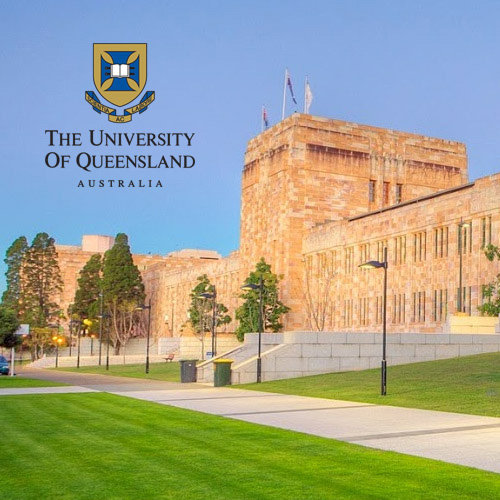
Image result for The University of QueenslandFor more than a century, The University of Queensland (UQ) has maintained a global reputation for creating positive change by delivering knowledge leadership for a better world.
UQ consistently ranks in the world’s top universities, is one of only three Australian members of the global Universitas 21, and is a founding member of the prestigious Group of Eight (Go8) universities.
More than 52,000 students study across UQ’s three beautiful campuses in South-East Queensland. This includes about 15,400 international students who contribute to UQ’s diverse, supportive and inclusive campus community. 
UQ has won more Australian Awards for University Teaching than any other university, and is committed to providing students with the best opportunities and practical experiences, empowering them with transferable knowledge and skills that will prepare them to exceed expectations throughout their careers.
UQ’s greatest assets are its 250,000 successful graduates, who include more than 13,000 PhDs. Our successful alumni network spans 170 countries. 
Our students have access to the latest and most advanced disciplinary knowledge as a result of UQ research informing our programs. With international learning opportunities, partnerships that provide support and industry insight, and inspirational teaching staff, students are encouraged to ask the questions that create change. UQ\’s beautiful campus environment matches the best higher education settings in the world, including extensive recreation and sporting facilities and world-class buildings.  
CRICOS Provider Number 00025B

University of British Columbia

Image result for University of British Columbia

Ranked as the 51st best university in the world in the QS World University Rankings® 2018, the University of British Columbia has an excellent reputation with academics and employers alike and a particularly international faculty. The University of British Columbia excels in a number of subjects, as indicated by the QS World University Rankings by Subject, including: 
  • Geography 
  • Mineral and mining engineering 
  • Sports-related subjects 
With beautiful green campuses in Vancouver and Okanagan, the University of British Columbia is home to a concert hall, a working farm, an Olympic ice hockey venue, Canada’s largest blue whale skeleton, world-class science labs for subatomic physics, and a center for interactive research in sustainability.