
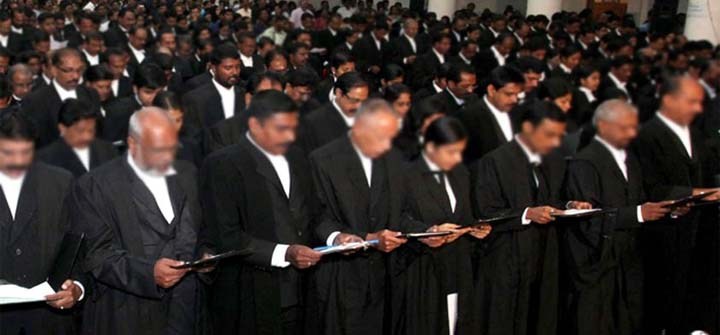
SC Designates 37 Lawyers As Senior Advocates

In a major and significant development, the Supreme Court which is the highest court in India has for the second time designated 37 lawyers as “Senior Advocates”. It goes without saying that it is a big honour for all these 37 lawyers to be designated as “Senior Advocates”. But then they deserve also as they have given their “prime years” in this noble profession of lawyer and that too right in the Apex Court itself and have certainly worked hard relentlessly to achieve it.

                                So, it goes without saying that they certainly deserve all the “applause and accolades” which they are now getting! We all as citizens of India also ought to know as to who all are these 37 lawyers who have been designated as “Senior Advocates”. They are as follows: –
1.  Madhavi Goradia Divan
2.  R. Balasubramanian
3.  Anitha Shenoy
4.  Aruneshwar Gupta
5.  Jugal Kishore Tikamchand Gilda
6.  Sanjay Parikh
7.  Preetesh Kapur
8.  Ashok Kumar Sharma
9.  Deepak Madhusudan Nargolkar
10.                   Ajit Shankarrao Bhamse
11.                   Nikhil Nayyar
12.                   S. Wasim A. Qadri
13.                   M.G. Ramachandran
14.                   Manish Singhvi
15.                   Gopal Sankaranarayanan
16.                   Mohan Venkatesh Katarki
17.                   Nakul Dewan
18.                   Devadatt Kamat
19.                   Anip Sachthey
20.                   Anupam Lal Das
21.                   G. Venkatesh Rao
22.                   Jayanth Muth Raj
23.                   Arijit Prasad
24.                   Jay Savla
25.                   Aparajita Singh
26.                   Menaka Guruswamy
27.                   Siddhartha Dave
28.                   Siddharth Bhatnagar
29.                   C.N. Sreekumar
30.                   Aishwarya Bhati
31.                   Santosh Paul
32.                   Gaurav Bhatia
33.                   Bharat Sangal
34.                   Vinay Prabhakar Navare
35.                   Manoj Swarup
36.                   Ritin Rai
37.                   Priya Hingorani.  
                           
                            Needless to say, this is the second instance of Supreme Court conferring senior designation as per the “Supreme Court Guidelines to Regulate Conferment of Designation of Senior Advocates, 2018”, notified in August 2018. It must be pointed out here that out of these 37 advocates designated as “Senior Advocates”, six are women lawyers who have made a mark for themselves by excelling. They are Aishwarya Bhati, Anitha Shenoy, Madhavi Goradia Divan, Menaka Guruswamy, Priya Hingorani and Aparajita Singh. It would be apt to know in brief about these six women lawyers now designated as “Senior Lawyers”.
                                     To be sure, Madhavi Divan is at present an Additional Solicitor General (ASG) in the Supreme Court. She was appointed ASG on December 17, 2018 and will hold office till June 30, 2020. She obtained her law degree from Pembroke College, Uniersity of Cambridge, UK and began her practice in the Bombay High Court. She has since represented two state governments – that of Gujarat and Madhya Pradesh while also being recognized as an accomplished author. Anitha Shenoy is a 1995 graduate of National Law School of India University, Bangalore and has been the standing counsel for State of Karnataka in the Supreme Court for long.
                               Furthermore, Menaka Guruswamy is a 1997 graduate of National Law School of India University, Bangalore. She read law as a Rhodes Scholar at Oxford University where she was awarded a Doctor of Philosophy in Law (D. Phil.) and as a Gammon fellow for a Masters in Law at Harvard Law School. She has worked as a human rights consultant to the United Nations and has taught at the New York University School of Law. In the Navtej Johar case which decriminalized homosexuality, she represented IIT students and graduates who belong to the LGBTQIA community. She has also assisted the Supreme Court as amicus curiae in the Manipur Extra-Judicial killings case. She has the rare honour of having her portrait unveiled at Rhodes House in Oxford University. Her name was also included in the Forbes list of 2019 trailblazers which is a great achievement.  
                                   Moving on, Aishwarya Bhati is an Advocate-on-Record. In 2017 she was appointed as Additional Advocate General of Uttar Pradesh in Supreme Court. She did not hide her true feelings and termed the “Senior Advocate” designation as a “dream come true” and also acknowledged that she was conscious of the “great responsibility” that comes with the designation.
                                Going ahead, Priya Hingorani has been in active law practice since 1990 when she was enrolled as an Advocate with the Bar Council of Delhi. Her primary practice has been in the Supreme Court of India and has also appeared in many High Courts. Aparajitha Singh was a junior to “Senior Advocates” Harish Salve and UU Lalit before starting independent practice. She had assisted the Apex Court as amicus curiae to suggest measures for curbing air pollution, which led to the ban of sale of BS III vehicles since April 2017. She was also a part of a Committee which had suggested a common working plan on rehabilitation of destitute widows.   

                             To put things in perspective, it was in September 2018 that the Supreme Court had designated 25 former High Court Judges, who started practice in Supreme Court as senior advocates. It cannot be lost on us that the guidelines are notified pursuant to the Supreme Court judgment in Indira Jaising’s case titled “Ms Indira Jaising v. Supreme Court of India Through Secretary General and others in Writ Petition (C) No. 454 of 2015 which had very clearly prescribed the parameters for designation of advocates as “senior advocates” after senior advocate Ms Indira Jaising who filed the petition pointed out that the present system of designating advocates as “senior advocates” is flawed! This was certainly a major landmark development which shall always be embedded in the golden pages of history and the contribution of Ms. Indira Jaising is certainly historic and remarkable!
                             What’s more, the guidelines empower a permanent committee called “Committee for Designation of Senior Advocates” to deal with all the matters pertaining to such conferment. This Committee shall comprise of the Chief Justice of India as its Chairperson, along with two seniormost Supreme Court Judges, Attorney General for India and a member of the Bar as nominated by the Chairperson and other members. The Committee is expected to meet at least twice in a calendar year. It will also have a Permanent Secretariat, the composition of which shall be decided by the CJI in consultation with the other members of the Committee.  
                                    Be it noted, it would be very significant to now discuss in detail the four point criteria that will play a key role in the assessment of advocates as “Senior Advocates”. Every advocate who aspires to become a “Senior Advocate” must know about this. Even otherwise it would be useful even for those not in this field to know about it so that they understand what it means to be a “Senior Advocate”. The four point criteria for assessment of advocates for senior designation is as follows: –
1.  Number of years of practice of the applicant from the date of enrolment (10 points for 10-20 years of practice, 20 points for practice beyond 20 years) – 20 points
2.  Judgments (reported and unreported), which indicate the legal formulations advanced by the Advocate in the course of proceedings of the case; pro-bono work done by the Advocate; and domain expertise of the Advocate in various branches of law – 40 points
3.  Publications by the Advocate – 15 points
4.  Test of personality and suitability on the basis of interview/interaction – 25 points
                  Application and eligibility
                          It would be useful and instructive to mention here that a recommendation in writing can be submitted by the Chief Justice of India or any other Judge of the Supreme Court of India if they are of the opinion that an advocate deserves to be conferred with the designation. An Advocate on Record (AoR) who is seeking to be conferred with the unique distinction as “Senior Advocate” may also submit an application in the prescribed format to the Secretariat. The Secretariat will invite applications from retired Chief Justices or Judges of the High Court and advocates seeking conferment of the distinction every year in the months of January and July. The notice shall be published on the official Supreme Court website, and the information would also be provided to the Supreme Court Bar Association and also to the Supreme Court Advocates-on-Record Association.    
                              As far as eligibility is concerned, it has to be borne in mind that an Advocate shall be eligible for designation as “Senior Advocate” only if he has 10 years combined standing as an advocate or a District Judge, or as a Judicial Member of any Tribunal whose qualification for eligibility isn’t less than that prescribed for a District Judge. It must also be remembered that retired Chief Justices or Judges of the High Courts are also eligible for the distinction of being designated a “Senior Advocate”.
                   Procedure for designation
                              It must be reiterated that all the applications and written proposals are to be submitted to the Secretariat which will then compile data on the applicant’s reputation, conduct and integrity, including his participation in pro bono work and the number of judgments in which the advocate appeared during the past five years. The application or the proposal would then be published on the Supreme Court website. The whole point of this exercise would be to invite the suggestions and views of other stakeholders. After the data-base on the Advocate is complied, the Advocate’s case would be put before the Committee for further scrutiny, which will assess the candidates on the basis of four-point criteria which has already been discussed above in great detail.
                                      Simply put, post such overall assessment, the Advocates candidature would then be submitted to the Full Court, which would then vote on the same. It must be noted here that the guidelines however leave no room for doubt by clarifying in no uncertain terms that the cases of retired Chief Justices and Judges of the High Courts will straightaway be sent to the Full Court for its consideration. The Rules also further specify that voting by secret ballot will not normally be resorted to in the Full Court except when “unavoidable”.
                          While continuing in the same vein, it is then added that the guidelines however do clarify that cases which are rejected by the Full Court can be considered afresh after two years and cases which are deferred can be considered after one year from such deferment. The Rules clarify that if a Senior Advocate is found guilty of conduct, which according to the Full Court disentitles the Senior Advocate to continue to be worthy of the designation, the Full Court may review its decision to designate the person concerned and recall the same. The Full Court should, however, give an opportunity of hearing to the concerned Senior Advocate before any action is taken against them.  
                                  Let me say this point blank: Each and every person who is in legal field must know how advocates are designated as “Senior Advocates” in Supreme Court. Not stopping here, it has to be said that even those who are not in legal profession must also know what it takes to become “Senior Advocates”. A humble effort has been made in this direction by me to make my esteemed readers more aware on this front. Hope that they have found it useful!
Sanjeev Sirohi, Advocate,
s/o Col BPS Sirohi,
A 82, Defence Enclave,
Sardhana Road, Kankerkhera,
Meerut – 250001, Uttar Pradesh.

Kartarpur Meet Delayed Over Khalistan Activists


It is nothing but stupidity of the highest order that politicians of India are not ready to learn any lessons from repeated betrayals by Pakistan and always indulges in day dreaming. This alone explains why inspite of so much of tension between India and Pakistan, India foolishly once again decided to trust Pakistan and go ahead with holding the second meeting with Pakistan to discuss modalities for the Kartarpur corridor! What did India get in return? Once again India was compelled to call off the meet with Islamabad on April 2 over legitimate concerns about the inclusion of pro-Khalistani activists in a Pakistani committee to facilitate Sikh pilgrims!

Why do our politicians behave so shamelessly and senselessly? Why do politicians expect that Pakistan will not play the Khalistan card to foment unrest in Punjab? Should Kartarpur corridor be opened at all under such circumstances? What has happened to our politicians?

Why can’t politicians of India nuke all relations with Pakistan and label it as “Aatankistan” as demanded by Maulana Mehmood Madani and BJP MP Rajeev Chandrashekhar long time back when he was an independent MP? Why politicians of India want to give Pakistan an opportunity to create unrest in Punjab? Why can’t we just lay off totally from Pakistan?

How can religion be above nation? How can religious interests be above national interests? Why our politicians repeatedly want to give Pakistan one more chance? Do they understand the consequences of what they do?

No wonder that on Pakistan’s 10-member panel we saw a man who demanded Sikh referendum last year. Sources said that the induction of Gopal Singh Chawla on the 10-member committee of the Pakistan Sikh Gurudwara Parbandhak Committee (PSGPC) which will “help facilitate” the visit of Indians pilgrims to the Kartarpur Sahib gurudwara. It is this same Gopal Singh Chawla who had played a key role in raising pro-Khalistan slogans and putting up posters on a Sikh referendum in November 2018 during the visit of pilgrims!

What was most shocking was that Centre decided to adopt a “relax” approach and “care a damn” approach and did not lodge any protest? Should we be proud of it? What did we get in return? Now that same Gopal Singh Chawla is on the 10-member committee of Pakistan panel! Had Centre strongly protested at the first place perhaps they had dared not bring him in the panel! But for inexplicable and undisclosed relations, Centre for the sake of Sikh pilgrims decided to bite the bullet!

Centre must stop biting the bullet! Centre must not fritter away the extreme goodwill that it has generated after the Balakot air strike among the people! What did Centre get by declaring Ramzan ka ceasefire with Pakistan and terrorists? It gave them a golden opportunity to pounce on our soldiers, kill them and behead them! Can any Indian be ever proud of this so called “Ramzan ka ceasefire”? When there is no Holi ka ceasefire or Diwali ka ceasefire or Christmas ka ceasefire then why Ramzan ka ceasefire? Does Pakistan or its army or terrorists ever care for it? They use it as a golden opportunity to kill more soldiers of ours on the border areas! Shame on our leaders who give them such a golden opportunity! One hopes that no politician will ever again place Pakistan and terrorists above nation! Terrorists have no nation yet repeatedly our leaders stupidly, shamelessly and senselessly declare “Ramzan ka ceasefire”! Terrorists have no religion then why link Ramzan with terrorists? It is for our leaders to ponder upon!

What’s more, Pakistan’s Information Minister Fawad Chaudhry not just announced Chawla’s inclusion but also went ahead to announce at last three other pro-Khalistan elements – Tara Singh, Bishon Singh and Kuljeet Singh. What could Centre do under such circumstances? India should have cancelled Kartarpur but our reaction once again was mild and we decided to just postpone talks!

Needless to say, Kartarpur corridor represents the best opportunity for Pakistan to revive militancy in Punjab. Who is allowing them to do this? Centre if it decides to go ahead with Kartarpur corridor as we all are seeing for ourselves. Who will be most happy with Kartarpur corridor? Pakistan, terrorists and the likes of Navjot Singh Sidhu whom BJP keeps criticizing so frequently yet is determined to fulfil his “dangerous and divisive” agenda of fully opening Kartarpur corridor in the name of Sikh pilgrims getting an opportunity to visit the birthsite of Guru Nanak!

To be sure, sources said that, “These developments have raised fresh concerns in India about the safety and security of pilgrims from India and misuse of the corridor for anti-India activities. India has made amply clear in the meeting and draft agreement that Kartarpur Sahib Corridor shall not be misused for any anti-India propaganda and activities. India has been strongly emphasizing on the need for foolproof security of pilgrims on Pakistani soil and demanding commitment from Pakistan to insulate them from any anti-India propaganda or activity during their visit to Gurudwara Kartarpur Sahib.”

What does Centre think it is doing? What does Centre think that Pakistan will honour its commitments of not fuelling anti-India propaganda from its soil? Why Centre places Sikh religion above India? Why is Centre not ready to learn anything from our past experiences with Pakistan?

How long will our leaders hope that Pakistan will address India’s concerns at the earliest? How long will our leaders overlook photos of dreaded slain terrorist Bhindrawale pasted all over the route to the Gurudwara Kartarpur Sahib not sparing even the Gurudwara also as we saw with our own eyes on various news channels? How long will our leaders overlook photo of Pakistan Army Chief Qamar Javed Bajwa with dreaded Khalistani terror leaders shaking hands and congratulating each other obviously for being able to fool our leaders who are not ready to see the stark reality which even an insane person can see through? It is for our leaders to decide!

At a time when our nation is on the verge of war with Pakistan, should we even think of opening the Kartarpur corridor let alone open it? Don’t we read nowadays frequently that our alert planes forced Pakistani planes to flee back when they tried to sneak into India? Should then religion be placed above nation? Sikh or Hindus or Muslims or Christians cannot be above our nation that is India!

Don’t our leaders know that Pakistan always indulges in double-speak? Don’t our leaders know that Islamabad is surreptitiously usurping land belonging to Kartarpur Singh Gurudwara in the name of developing the corridor? Don’t we know that India and Pakistan signed a pact in 1974 to facilitate visit of their pilgrims to the shrines located in each other’s territories but Kartarpur Sahib was not included despite repeated Indian requests?

Which reasonable person will ever trust Pakistan when it has been repeatedly betraying India and mercilessly killing our soldiers and not sparing even our women and children? How can BJP which proudly calls itself “party of chowkidar” and PM Narendra Modi who always proudly calls himself “chowkidar” do the stupidity most senselessly and most shamelessly of trusting Pakistan again and allowing Khalistani terrorists to misuse this route for their own dangerous and divisive agenda of “Khalistan 2020” as they keep propagating in UK, Canada, USA etc? At whose instance? Only and only BJP and PM Narendra Modi can best answer this!

All talks on Kartarpur corridor must be called off and similarly there should be no talks on opening of Sharda corridor for Hindu pilgrims or any other corridor because nation and national interest come first, always and every time and the religion and religious interest comes next, always and everytime! It is our politicians who ought to remember this always!

Sanjeev Sirohi, Advocate,

s/o Col BPS Sirohi,

A 82, Defence Enclave,

Sardhana Road, Kankerkhera,

Meerut – 250001, Uttar Pradesh.
Nations Must Make Gun Laws More Stricter

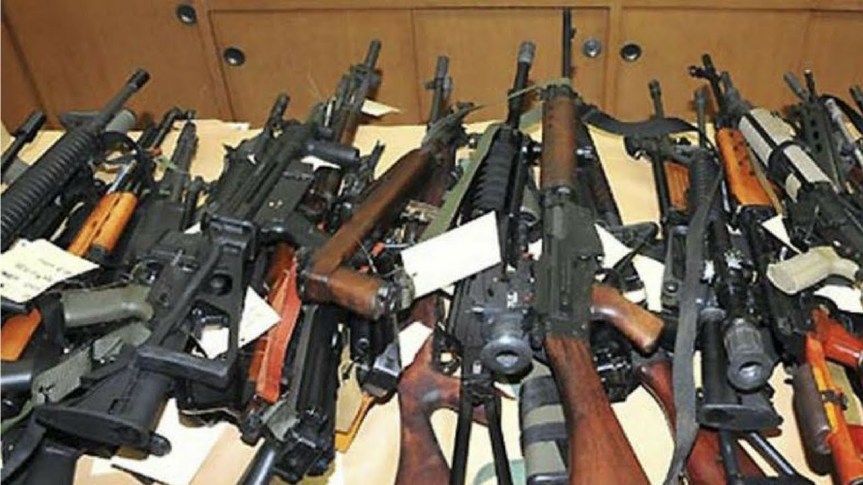
It must be said with utmost regret that due to guns being easily available in various countries we see that the most ghastly, dastardly and cowardly attack on innocent people as we saw just recently in the New Zealand city of Christchurch on a mosque in which at least 50 people were killed and 50 injured in a mass shooting on March 15, 2019. All these precious lives would not have been lost if there were more stricter gun laws in place. Gun should not be given to any person whoever applies for it without proper verification!
                                   To put things in perspective, a 28-year-old man named Brenton Tarrant has been taken into custody and charged with murder. The shooter targeted two mosques in Christchurch: the Al Noor mosque where 42 people were killed mercilessly and another at the Linwood mosque where seven people died. The alleged shooter also live-streamed his dastardly and ghastly attack on social media, most gruesomely displaying how he entered the mosque and shot worshippers as they struggled to flee. It is reported that seven Indians have also lost their lives in this cowardly and most reprehensible attack!
                                         Needless to say, in a brief press conference, New Zealand Prime Minister Jacinda Ardern called the mass murder a “terrorist attack” and said that the perpetrators held “extremist views” that have no place in New Zealand. She very rightly lamented that, “This is one of New Zealand’s darkest days.” India reiterated its unstinted support to New Zealand in its hour of crisis along with other nations.
                                     It is gratifying to learn that in the wake of the terrorist attacks at two mosques in Christchurch in New Zealand, its Prime Minister Jacinda Ardern has said that she would soon announce new gun laws. While New Zealand’s gun laws are not as restrictive as in, say, Australia, those of countries such as the US are far more relaxed. The New York Times listed what it takes to own a gun in several countries. Let us discuss some of them here apart from those listed in The New York Times. They are as follows: –
                           New Zealand
1.  Background check (criminal, medical, mental health, domestic violence records).
2.  Character references.
3.  Interview in person between authorities and applicant’s partner or next of kin.
4.  Inspection for firearm storage facilities at home.
5.  A gun safety course.
It must be pointed out here that Reuters quoted Radio New Zealand as reporting that more than 99% of applicants for a firearms licence in 2017 were successful. The country, whose population is 5 million, has an estimated 1.5 million firearms. Only owners are licensed, not weapons, so there is no monitoring of how many weapons a person may possess. This loophole must be plugged right now in the wake of the dastardly attack on a mosque which has left 50 dead! Buying hand guns and certain semi-automatic rifles requires a special permit. It is recommended that no person from now onwards should be allowed more than one gun and here too there must be proper and strict police verification. It is also recommended that vehicles should be checked at various points to ensure that no person is carrying gun especially at religious shrines and other important places.
                     Australia
1.  Must join and regularly attend a hunting or shooting club, or be a collector.
2.  Course on firearm safety and operation, written test and practical assessment.
3.  Storage that meets safety regulations.
4.  A review of criminal history, domestic violence, restraining orders and arrest history, with possible interviews of family and community members.
5.  Specific permits for specific types of weapons; wait is of at least 28 days.
                                       No doubt, these laws are some of the toughest in the world. Countries like New Zealand must emulate them to ensure that no person is ever able to carry out such ghastly attack so easily! Here it must be revealed that Australia had introduced them after a lone gunman killed 35 people in Port Arthur in 1996 using a semi-automatic AR-15 (the same weapon that was used in Christchurch), Reuters reported. Australia had banned semi-automatics, launched a gun amnesty in which tens of thousands of weapons were handed in and made it much tougher to own them. Gun owners must provide a valid reason for owning a weapon and gun clubs must inform the authorities of inactive members.
                      United States
1.  Background check for criminal convictions, domestic violence and immigration status.
2.  Many US states have additional buying restrictions, including waiting periods and expanded background checks.
3.  Where these waiting periods do not apply, an application may be cleared in days. Roughly a third of American gun owners buy guns without a background check, which federal law does not require when buying directly from a private seller. This loophole must be checked forthwith. There must be a proper background check. It is because of such loopholes that we keep listening in news that gun attacks keep happening regularly in USA.
4.  Fugitives, those convicted of a felony with a sentence exceeding 1 year, past or present and those who were involuntarily admitted to a mental facility are prohibited from purchasing a firearm unless rights restored.
5.  Forty-four states have a provision in their state constitutions similar to the Second Amendment to the United States Constitution, which protects the right to keep and bear arms. The exceptions are California, Iowa, Maryland, Minnesota, New Jersey and New York. In New York, however, it must be stated that the statutory civil rights laws contain a provision virtually identical to the Second Amendment.
6.  Additionally, the US Supreme Court held in McDonald v. City of Chicago (2010) that the protections of the Second Amendment to keep and bear arms for self-defense in one’s home apply against state governments and their political subdivisions.   
7.  More recently, the Ninth Circuit Court ruled in its 2016 decision titled Peruta v. San Diego County that the Second Amendment does not guarantee the right of gun owners to carry concealed firearms in public.    
                               Japan
1.  A firearms class and a written exam, held up to three times a year.
2.  A doctor’s certificate of mental fitness and absence of a history of drug abuse. It is a commendable provision.
3.  Firing training (permission for undertaking this course may take up to a month). One-day training class, with a firing test has to be cleared.
4.  Interview with police, whom applicant must convince why he or she needs a gun. This again is very commendable and every country must emulate it.
5.  Review of criminal history, gun possession record, employment, even personal debt and relationships with friends, family and neighbours.
6.  Application for gunpowder permit.
7.  Certificate from a dealer describing gun.
8.  Hunting licence (if hunting is purpose).
9.  Gun safe and ammunition locker that meet regulations, to be inspected by police.
10.             An additional background review.
                        Russia
1.  Hunting licence, or reasons why gun needed for self-defence which is commendable.
2.  A test of relevant laws, handling, first aid skills.
3.  A doctor’s note certifying absence of mental illness or drug history which is again very commendable.
4.  All the above before application. After applying, a background check which again is commendable.
                     China
1.  Reasons to possess a firearm.
2.  Storage at gun range, remote hunting ground or pastoral area.
3.  Demonstration of knowledge of safe gun use and storage.
4.  A background check of mental illness, criminal record and domestic violence.
5.  In China, most civilians are prohibited from keeping guns inside their homes. This is the most commendable provision and it must be emulated in countries like New Zealand and USA where incidents of violence and misuse of guns is increasing!         
                   United Kingdom (UK)
1.  In the UK, access by the general public to firearms is tightly controlled by law which is much more restrictive than the minimum rules required by the European Firearms Directive, but it is less restrictive in Northern Ireland. All countries must emulate UK.
2.  No wonder that UK has one of the lowest ratews of gun homicides in the world.
3.  Members of the public may own sporting rifles and shotguns, subject to licensing, but handguns were effectively banned after the Dunblane school massacre in 1996 with the exception of Northern Ireland.
                       Ukraine
1.  Ukraine is the only country in Europe where firearms are not regulated by statute.
2.  Citizens are permitted to own non-fully automatic rifles and shotguns as long as they are stored properly when not in use.
3.  Handguns are illegal except for target shooting and those who hold concealed carry permits.
4.  A citizen may be issued a firearms license if that person:
(i)                         is 25 years of age for rifle ownership, 21 years of age for smoothbore weapon ownership, 18 years of age for cold or pneumatic weapon ownership;
(ii)                      has no criminal record;
(iii)                   has no history of domestic violence;
(iv)                   has no mental illness or history of mental illness;
(v)                      has a good reason (target shooting, hunting, collection).
5.  Gun owners are required by Order to renew their licenses and registration of their guns every three years. Failure to comply will result in revocation as well as confiscation of guns.
6.  Concealed carry licenses are available but are not normally issued unless a threat to life is present and can be proven.
            Israel
1.  In 2018, Israel significantly loosened firearms restrictions, allowing all citizens who had undergone combat training and qualified in Advanced Infantry Training (Rifleman 07) to apply for a private handgun licence.
2.  Prior to 2018, only a small group of people were eligible for firearm licenses: certain military personnel, police officers or prison guards; residents of settlements (in the West Bank and the Golan Heights) or those who often work in such towns and licensed hunters and animal control officers.
3.  Age requirements vary. It is 21 for those who completed military service or civil service equivalent, 27 otherwise and 45 for non-citizens.
4.  Firearm license applicants must have been a resident of Israel for at least three consecutive years.
5.  Background check (criminal, health and mental history) should be passed.
6.  Applicant should establish a genuine reason for possessing a firearm (such as self-defense, hunting or sport).
7.  A weapons-training course should be passed.
8.  Those holding firearm licenses must renew them and pass a shooting course every three years.
           Kuwait
1.        Kuwait has strict firearms laws.
2.        Hunting shotguns are the most commonly licensed weapons.
3.        Handguns are only allowed for VIPs.
4.        Automatic rifles and machine guns are not legally permitted for civilian possession.
                      Lebanon
1.  Ownership of any firearm other than handguns, hunting arms and antiques is illegal and only the latter two are permitted to leave the owner’s home.
2.  Disregard for this law is prevalent.
3.  Lebanon does not officially grant the right to bear arms, but it is a firmly held cultural belief in the country.
4.  Firearms licenses are granted to certain individuals but the test is not open to the public and requires a particular need to be demonstrated.
5.  Gun control has been largely unsuccessful due to a historic gun culture and a lack of effective central government control or authority over many parts of the country.
                      Malaysia
1.        Malaysia has strict gun laws.
2.        The Arms Act (1960) requires the citizens of Malaysia to have a license for manufacture, import, export, repair or ownership of firearms.
3.        A firearm license can only be granted by the Chief Police Officer of a state.
4.        Discharging in crimes such as extortion, robbery, resisting arrest and house-breaking is punished by the death penalty.
5.        Exhibiting a firearm for any of the scheduled offences (without discharging) carries a penalty of life imprisonment and caning of not less than six strokes.
6.        Possession of unlawful firearms carries a sentence of up to fourteen years in prison and caning.
7.        While the general public cannot obtain a gun through legal means but a black market for guns does exist.
                      North Korea
1.  Firearms cannot be easily acquired.
2.  In 2009, North Korea enacted a new law strictly regulating firearms.
                     Pakistan
1.        It is very easy to acquire gun.
2.        It has permissive firearms laws compared to the rest of South Asia.
3.        It has the sixth highest number of privately owned guns in the world.
4.        The law in Pakistan does not stipulate that a gun license should be denied or revoked.
5.        Gun culture is strong in Pakistan.
6.        A license permits ownership of any number of weapons including handguns of any size and fully automatic weapons.
                               Philippines
1.           It has generally strict gun laws, though liberal in comparison to other Asia-Pacific countries.
2.           Gun control became notorious in 1972 during presidency of Ferdinand Marcos who implemented a near-prohibition of all civilian guns.
3.           Applicants must be of a minimum age of 21 years and have no history of criminal activity or domestic violence.
4.           License-holders may carry handguns in public with the acquisition of a Permit to Carry (PTC), which are granted on a may-issue basis.
5.           Applicants must demonstrate a need for a PTC like an imminent threat of danger.
6.           PTCs are typically granted to lawyers, accountants, media practitioners, cashiers, bank tellers, priests, ministers, rabbis, imams, physicians, nurses or engineers.
7.           Inspite of strict laws, gun culture is strong.
                    Kenya
1.  Gun law in Kenya is specified in the Firearms Act (Cap. 114) laws of Kenya.
2.  The Chief Licensing Officer (CLO) has discretion to award, deny or revoke firearms licenses.
3.  Applicants must be 21 years of age or older, pass a stringent background check for criminal activity, mental health and domestic violence and state bona fide reasons for their need to privately own and carry a firearm.
4.  Checks are regularly repeated with failure to pass resulting in immediate revocation of the license.
5.  Once licensed to own a gun, no additional permit is required to carry a concealed firearm.
     South Africa
1.  To apply for a firearm license in South Africa, the applicants must pass a competency test covering the specific type of firearm you are applying a license for and a test on the South African firearm laws.
2.  Once these tests are passed then the applicant need to apply for a competency certificate where the South African Police Service will perform a background check and an inspection of the premises where the firearm will be stored.
3.  After both the tests are passed and the certificates are awarded the applicant can then apply for a firearm license in the categories ranging from self-defence to professional training.
4.  Different license categories have different restrictions as for instance the amount of ammunition that the owner may hold.
                   Argentina
1.  Firearms in Argentina are restricted and regulated by ANMaC (Agencia Nacional de Materiales Controlados) since late October 2015 when said agency replaced RENAR (Registro Nacional de Armas de la Republica Argentina), both being a branch of the Ministry of Justice and Human Rights.
2.  To own a firearm in Argentina, one must be a legitimate user.
3.  Applicant must be 21 years of age or older, provide a medical certificate that certifies they are physically and mentally fit, complete a safety course, provide a legitimate means of income and undergo and pass a background check.
4.  A successful applicant is fingerprinted and issued a license which has to be renewed every five years.
5.  One may not legally fire a firearm in Argentina if they are not a legitimate user, even if that gun belongs to someone else.
6.  Once a legitimate user wants to purchase a firearm, they must provide a secure location to store the firearm(s), and give an acceptable reason for wanting a firearm – such as collecting, target shooting, hunting, business or self-defense in the home.
7.  Firearms must be purchased through a licensed dealer and registered with ANMaC.
8.  If a firearm is inherited, a re-registering form must be filed.
9.  There is no limit on the number of firearms owned so long as they are properly stored.
10.                Handguns above .32 calibre are conditional-use; fully automatic handguns are prohibited to civilians.
          
                
                    Brazil
1.  All firearms in Brazil are required to be registered.
2.  The minimum age for ownership is 25.
3.  Certificates of aptitude and mental health are required prior to the acquisition of a firearm and every three years thereafter.
4.  It is generally illegal to carry a firearm outside a residence.
5.  Executive Order No. 5.123 of 1 July 2004 allows the Federal Police to confiscate firearms which are not possessed for a valid reason.
6.  Self-defense is not considered a valid argument.
           
              Mexico
1.                       Under the Mexican Constitution, citizens and legal residents have the right to own arms, but may only carry them in accordance with police regulation.
2.                       Applicants must have a clear criminal record and proven income and residence thereby clearly implying that they cannot be homeless.
3.                       New firearms are purchased through the Ministry of Defense.
4.                       Prohibited weapons include large-calibre handguns, shotguns with barrels shorter than 25 inches (640 mm) or bore greater than 12 gauge and rifles which are fully automatic or of large caliber.
5.                       One handgun is permitted for home defense.
6.                       Collectors may be authorized to possess additional and prohibited weapons.
7.                       A carry license may be issued to those employed by private security firms or those who may be targets of crime.
             Indonesia
1.  Indonesia has generally strict gun laws.
2.  Licenses are normally only issued to civilians employed in a profession that involves firearms such as military and law enforcement, with an exception for politicians and businessmen.
3.  Applicants must be of a minimum age of 21 years to obtain a firearms license and go through a very thorough background check and mental evaluation.
4.  They must also state a bona fide reason for wanting to own a firearm, which would include hunting, target shooting, collecting security and self-defense.
5.  All firearms must be registered.
6.  Gun permits are valid for five years and may be renewed.
7.  Civilians cannot possess military weapons, but may possess long rifles.
8.  Handguns can be used only for sport shooting and hunting.   
         
             Thailand
1.  A firearm license in Thailand is granted only for self-defense, property protection, hunting or sporting use.
2.  Applicants for a firearms license must be at least 20 years of age, have a record of good behavior, have an occupation and receive income and have a permanent address in Thailand with a name “listed in the house registration specifically in the area where the applicants are applying for a license for at least six months.
3.  A license may not be issued to anyone who is a repeat offender or mentally unstable.
4.  Since October 2017 citizenship is required to purchase and use firearms.
5.  Fully automatic firearms and explosive devices are prohibited.
                       India
1.  Guns in India are strictly regulated by law.
2.  The Arms Act, 1959 and the Arm Rules 1962 prohibit the sale, manufacture, possession, acquisition, import, export and transport of firearms and ammunition unless under a license which is difficult to obtain.
3.  Licenses are valid for three years and may be renewed.
4.  The Arms Act classifies firearms into two categories: Prohibited Bore (PB) and Non-Prohibited Bore (NPB) where all semi-automatic and fully automatic firearms fall under the Prohibited Bore category.
5.  The Indian Government has a monopoly over the production and sale of firearms with the exception of some breech-loading smooth-bore shotguns of which a limited number may be produced and imported.
6.  The criteria considered during issue of NPB firearm permits are whether the applicant faces a threat to their life. PB firearms criteria are more stringent and are often for persons in government positions who face immediate danger or threats and for those whose occupation involves open threats and dangers and family members of such people.
                                        All said and done, all nations must make more stricter laws for not just buying a gun but also for keeping them. Also, those who have guns must be made to undergo compulsory thorough scrutiny and police verification. They must be made to go through medical tests and also under no circumstances should any person have more gun than one. Those who are repeated offenders should not be allowed to keep guns. Ammunition also must not be unlimited. Police must check this on regular basis. Those who are found violating the rules must be made to pay a heavy penalty and also sentenced to jail for at least five years! All this will certainly go a long way in ensuring that the dastardly killing of innocents by those who have weapons are checked to a large extent! There must be mandatory, proper and strict checking of all vehicles and all persons at all religious places at various points so that innocent devotees are never again killed in the dastardly, ghastly and cowardly manner in which we recently saw in two mosques in Christchurch in New Zealand which shook the whole world! Above all, gun laws must be made more stricter and those who have guns must be thoroughly made to undergo suitable test and proper police verification and held duly accountable! Those who are either mentally unstable or have a past criminal record must not be allowed to keep gun!                
Sanjeev Sirohi, Advocate,
s/o Col BPS Sirohi,
A 82, Defence Enclave,
Sardhana Road, Kankerkhera,
Meerut – 250001, Uttar Pradesh.