Benefits of Publishing

EDUINDEX is committed to disseminate research output to the scientific community without any hassle. Articles published under EDUINDEX Banner are freely available throughout the world, ensuring the author′s presence through his/her contribution worldwide. Since EDUINDEX is under the terms of Creative Commons Attribution License, it enables the redistribution and re-use of the original work, as we deposit them in reputed indexing databases on behalf of author.
Open Access
Open Access Through Open Access publication, authors benefit in number of ways:

  • Standards of high-quality, rapid peer-review and production
  • Enhances the visibility and presence of the author due to free 
  • dissemination and frequent citation Liberal licensing and 
  • re-use policy through Creative Commons license
  • Easy and immediate Online access High Impact factor and 
  • chances of getting cited, thus enhances the author′s API Index
Membership
Join us member EDUINDEX Annual, three or five year memberships enable individuals, academic institutions and corporate to submit any number of articles in a given year to any of the Eduindex Journals of your choice. This membership programme, apart from granting you a prestigious membership certificate. It also enables you to get waivers on registrations at our international conferences. The Corporate and institutional members can organize symposium, exhibition or stall with a complementary pass. For more details contact us membership@eduindex.org 
Language Translation
transle In today′s competitive environment, it is essential that the English language used in your paper should be of high quality. Your research study may be significant. Yet your inability to express the same in standard English may hold the chances of publication, leading to rejection. We offer you the language translation and language polishing services. We translate papers written in English into French, Chinese, Portuguese and Spanish, as per the author′s requirement.
Special Issues
special issues logo EduINDEX International journals publish Special issues to focus on unique aspects of research that advance our understanding on ongoing research. The major aim of the special issues is to expand the scope of subjects by specifically focusing the attention on an identified area out of a very broad topic and pay greater attention to it.
Articles in special issues aspires at broadening the scope of EDUINDEX International journals, by targeting precise topics of interest that highlight the research advancements in this line of work
Scientific Associations
trade association The Scientific Societies that have firm belief on EDUINDEX peer-reviewed journals have extended their staunch support to us by creating a common platform to uphold the values \”Open Access\” through the global networking community that enable collaborations, sharing of resources and working together in multifarious key areas.
Young Scientist Award
young scientist award EDUINDEX aims to acknowledge the research accomplishments of the young scientists, by conferring on them the \”Young Scientist Award\” to promising, upcoming scientists that have been actively engaged in R&D and publications in Open Access Journals. Young Scientist Award offers worthwhile incentives to Researchers that have shown great potentiality in their fields of expertise. The core mission of the Young Scientist Award is to advance scientific knowledge to address the major challenges that the society facing today.
Social networking
social site Social networking sites are created to assist the online networking. These sites are virtual communities created to enhance interaction and understanding. You can share your views on your research with a veteran researcher and enrich the idea or you can offer you views on an articles published in our journals through various social networking sites like Face book, Twitter, LinkedIn, RSS Feeds etc.
Books Publication

Pen2Print Books attracts an exclusive group of Scientists, Researchers,
Department Chairs, Directors and decision makers from a cross section
of fields like Pharma, Biotech and Health Care industries.

  • Publishing your eBook for free in most updated digital formats 
  • (Digital, HTML, PDF, 50+ Language translation)
  • Designing Cover page image for your eBook for free
  • Valuable discounts on Eduindex International Conference
  • Conference registration, which are held at all corners of the globe. 
  • Published books available at https://books.pen2print.org/
  • editor@pen2print.org 
For any further queries please do not hesitate to contact us at editor@eduindex.org

Definition of Open Access Publication

An Open Access Publication is one that meets the following two conditions:
 
The author(s) and copyright holder(s) grant(s) to all users a free, irrevocable, worldwide, perpetual right of access to, and a license to copy, use, distribute, transmit and display the work publicly and to make and distribute derivative works, in any digital medium for any responsible purpose, subject to proper attribution of authorship, as well as the right to make small numbers of printed copies for their personal use.
A complete version of the work and all supplemental materials, including a copy of the permission as stated above, in a suitable standard electronic format is deposited immediately upon initial publication in at least one online repository that is supported by an academic institution, scholarly society, government agency, or other well-established organization that seeks to enable Open Access, unrestricted distribution, interoperability, and long-term archiving (for the biomedical sciences, PubMed Central is such a repository).
 » As a member of Publisher International linking Association, PILA, Eduindex follows the Creative Commons Attribution License and Scholars Open Access publishing policies.

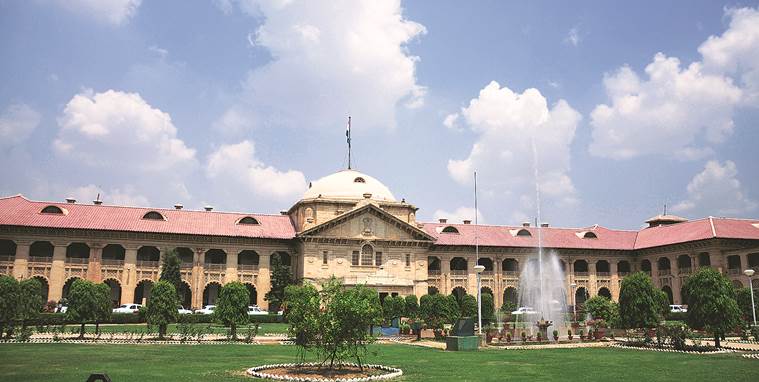
Why Should UP Have Least High Court Benches In India?

Let
me begin on a bitter note by expressing my profuse disappointment and
utmost disenchantment with the continuous and callous disregard of more
than 19 crore people living in different parts of UP which is more than
10 small states put together by Centre since 1947 till 2019! Why is it
that only Eastern UP has high court at Allahabad and a single bench at
Lucknow and all the other regions like Western UP, Bundelkhand and
Purvanchal etc have been completely disregarded and denied their
legitimate share by giving them at least one high court bench? Why no
government in Centre has ever taken any initiative to correct this worst
injustice since 1947 till now in 2019? It is UP where maximum cases of
crimes takes place and West UP alone owes for more than half of the
total cases in UP and yet it has not even a single bench of high court
even though Justice Jaswant Singh Commission headed by former Supreme
Court Judge Jaswant Singh categorically recommended bench for West UP in
early 1980s even though on its historic  recommendations benches were
created in Aurangabad in Maharashtra and Madurai in Tamil Nadu and other
places!

                                        Which
state has maximum districts in India – 75? UP! Which state sends
maximum MPs to Lok Sabha – 80? UP! Which state sends maximum MPs to
Rajya Sabha – 31? UP! Which state sends maximum members to Vidhan Sabha –
404? UP!
                                       Which
state sends maximum representation to Vidhan Parishad – 100? UP! Which
state elects maximum Mayors? Which state elects maximum representatives
at all levels? UP! Which state has maximum population which is more than
19 crore as per 2011 census even though in public rallies UP CM Yogi
Adityanath and PM Narendra Modi keep saying more than 22 crore? UP!
                                         Which
state has maximum villages more than one lakh even though no other
state has more than few thousand villages at the most? UP! Which state
has maximum poverty? UP! Which state has maximum cities which is more
than 700? UP!
                                    Which
state has maximum crime to the extent that former UN Secretary General
Ban ki moon had slammed UP as the “rape and crime capital of India”? UP!
Here too which part of UP owes for more than 52% of pending cases of UP
and yet has no high court bench? West UP! Which state has maximum
pending cases which is more than the cases of 10 states put together?
UP! Which state owes for maximum dowry deaths? UP! Which state owes for
maximum custodial deaths? UP! Which state has maximum pending cases in
lower courts more than 65 lakhs? UP!
                                    Which
state has maximum pending cases of communal violence and riots as we
saw in Muzaffarnagar in 2013, Meerut riots in 1988, Bareilly riots, Agra
riots etc all in Western part? UP! Which state has maximum pending
cases of rape, molestation, murder and other crimes against women? UP!
Which state has maximum strength of Judges both in high court at 160 and
in lower courts at 5000? UP! Which state has maximum vacancies of
Judges? UP! Which state has sent maximum PM which includes Narendra Modi
from Varanasi? UP!
                                  The
larger point that I want to make here is this: Why is it that Allahabad
High Court tops among all states when it comes to the number of pending
cases which is more than 10 lakhs whereas most of other states have not
more than one lakh cases and still Centre is busy creating more and
more high court benches for them with latest at Jalpaiguri for just a
handful of districts!  Assam till a few years ago had 7 high court
benches but after Manipur, Meghalaya and Tripura were given separate
high courts, it now stands reduced to 4! But Allahabad High Court which
is the biggest court not just in India but in whole of Asia with so vast
a jurisdiction and also one of the oldest high court in India has just
one! This is certainly most shameful!
                                Lamentably,
even small states like Sikkim, Tripura, Meghalaya, Manipur, etc with
just about 6 lakh population, 29 lakh , 36 lakh, 27 lakh have high
courts but West UP with more than 9 crore population has not even a
single bench of high court! Even Andaman and Nicobar islands with just 3
lakh population has bench but not West UP with more than 9 crore
population!  
                                              Not
just this, Centre has always ensured that this high court has maximum
vacancies of Judges which is highest in country with more than half of
seats which stands at 160 keep lying vacant! Is this fair? Is Centre not
aware that Allahabad High Court needs “special attention” and not
“special neglect”? Allahabad High Court is biggest court not just in
India but in whole of Asia with maximum High Court Judges and maximum
District Judges and also Judges at lower level still it has the least
bench in India – only one!
                                         Is
Centre not aware that Justice Jaswant Singh Commission had
categorically pointed out that West UP owes for about 57% of the total
pending cases which is more than half of the total pending cases in UP
still why its landmark recommendation to create a bench here to take
care of nearly 40 districts at Agra with circuit benches at Nainital and
Dehradun overlooked? Why not a single bench approved for UP? It must be
investigated by a retired CJI or a retired Judge of Supreme Court! 
                         Why
when Sampoornanand recommended a high court bench to be created at
Meerut in 1955 after more than 100 elected representatives met him and
convinced him of the dire need of the same did Nehru refuse? Why when
even other UP CM like ND Tiwari, Rajnath Singh and others recommended
was bench not approved? Why when bench could be created at Lucknow in
1948 could a bench not be created at Meerut which is more than 700 km
away? Why when Kapil Sibal wanted a high court bench to be created at
Meerut when he was Union Law Minister as another Union Minister RPN
Singh had disclosed but the then UP CM Akhilesh Yadav objected did
Centre not listen to its own reputed and one of the most reputed jurist
of India?   Why Centre said that the recommendation made by Law
Commission in its fourth report in 1955 recommended against creating
more benches and so West UP could not be given a bench conveniently
overlooked everything when it came to other states and kept on creating
benches there and also overlooked that the Law Commission in its 230
th report
in 2009 recommended creation of more benches yet West UP and other
parts of UP like Bundelkhand were overlooked for benches?
                            
                                 Why
Centre took no time to create 2 more high court benches for Karnataka
with just 6 crore population which is less than even West UP population
alone and which already had a bench at Hubli for just 4 and 8 districts
at Gulbarga and Dharwad respectively but for 26 districts and more than 9
crore people of West UP not a single bench was approved even though the
lawyers here keep going on strike as they did thrice like once in 2001
for 6 months from July to December and for 3 to 4 months as they did in
2014-15 and for one month as they did in 2010 and for many weeks as they
keep doing every year apart from the strikes on Saturdays for last 38
years and many times even on Wednesdays? Why Centre disregarded the most
commendable recommendation made by one of the most eminent jurist of
India – Soli J Sorabjee who as Attorney General in 2001had categorically
recommended that, “Centre is empowered to create a high court bench in
West UP without any recommendation from the Chief Justice or Chief
Minister or anyone else in this regard”? Why Centre even disregarded
what former Chairman of Supreme Court Bar Association BN Krishnamani
said that, “Only by the creation of a high court bench in any of the
districts in West UP will the people living there get real justice”?
                                     Why
Centre approves one more bench for Mumbai high court at Kolhapur for
just 6 districts which already had 3 benches at Panaji, Aurangabad and
Nagpur just recently in 2018 itself but cites 100 reasons for not
creating a single more bench for Allahabad High Court in any hook and
corner of UP leave alone West UP? Why Centre from 1947 till 2019 has
taken the stand that, “Ask anything for UP but not a high court bench as
only Lucknow deserves it”? What rubbish!  
                          If
Lucknow is capital then so are Bhopal which is capital of Madhya
Pradesh, Dehradun which is capital of Uttarakhand, Bhubaneshwar which is
capital of Odisha, Dispur which is capital of Assam, Raipur which is
capital of Chhattisgarh and Thiruvanathapuram which is capital of Kerala
yet they have neither high court nor bench! Also, Lucknow’s area
jurisdiction is just 62,00 square km and that of West UP is 98,933
square km! The number of districts which come under the jurisdiction of
Lucknow bench is just 12 and that of West UP is 26! The population of
districts under Lucknow jurisdiction stands nowhere as compared to West
UP whose population at more than 9 crore is more than any other state
except UP of which it is itself a part, Maharashtra and Bihar and here
too areawise West UP has 98,933 square km and that of Bihar is just
94,000 square km!   
                                   Why
catchy slogans like “speedy justice”, “justice at doorsteps” and “cheap
justice” not implemented for West UP and other remote areas of UP by
creating more benches here? Why Mayawati wanted high court itself for
West UP by recommending to Centre that it be made a separate state way
back in 1995 but Centre is not ready to concede even a bench for West
UP? Why is BJP a blind follower of Congress in this regard and till now
has ensured that not a single high court bench is created in any hook
and corner of UP except the one created already by Nehru 70 years ago in
1948 at Lucknow?  
                               This
despite the fact that former PM Atal Bihari Vajpayee had thundered in
Parliament way back in 1986 as Opposition Leader demanding the creation
of a High Court Bench in West UP and Yogi Adityanath who is now UP CM
also himself thundered while demanding for a High Court Bench at
Gorakhpur way back in 1998 right inside Parliament but 20 years later we
don’t see any High Court Bench anywhere being created in UP! One can
understand that Vajpayee didn’t enjoy majority but Modi has it but we
see no action forthcoming on this so far even though he is taking other
steps for UP like pompously inaugurating the 14 lane highway connecting
Delhi with Meerut and other districts of West UP in which many crores of
rupees have been spent which will reduce the time limit from Meerut to
Delhi from 2 hours to just 45 minutes which is commendable but what
about high court bench in West UP which is affecting the litigants of 26
districts most adversely due to which they are still compelled to
travel more than 700 km all the way to Allahabad whole night without
reservation many times and bear all sorts of inconveniences?  When will
action be taken on this score? Why can’t few crores be spared for
creating a bench in West UP and other needy areas of UP like in Jhansi
in Budelkhand and in Gorakhpur?
                                   It
is not for nothing that Union Minister Satyapal Singh demanded in
Parliament the creation of 5 high court benches at Meerut, Agra, Jhansi,
Gorakhpur and Varanasi but the real tragedy is that his own PM is not
listening to him and not creating even one more bench anywhere else in
UP other than the one which already exists at Lucknow! Similarly many
other BJP MPs like former Union Minister Sanjeev Baliyan, Union Minister
Gen VK Singh, Mahesh Sharma and other MPs like Rajinder Agarwal keep
demanding benches but to no avail!
                                      As
per the Section 51 of the States Reorganisation Act of 1956, the Centre
can create a high court bench in any of these 3 states – UP, Bihar and
J&K directly by bringing it up in Parliament. Centre does not need
any recommendation from State Government or the Chief Justice as has
been very wrongly propagated for many decades! What a national disgrace
that these very 3 states – Uttar Pradesh, Jammu and Kashmir and Bihar
keep on grabbing the national news headlines for all the wrong reasons
as crime incidents keep multiplying very rapidly and what is worst is
Centre’s stupid and crazy determination to not allow a single more bench
in all these 3 states!
                              It
is incomprehensible why Centre can approve 3 or 4 or 5 benches for
peaceful states like Maharashtra, Karnataka among others but not more
than one for UP which has maximum pending cases which is more than 10
states put together! Allahabad High Court must be given its due honour
and it must have maximum high court benches and not minimum! Disband all
high court benches in India if Allahabad High Court cannot be given
more benches, West UP cannot be given a bench nor can Bundelkhand or
Gorakhpur (which is CM Yogi’s constituency and where BJP just recently
lost) for people living so far away who face maximum sufferings because
of this but which no PM has ever dared to address for reasons never
disclosed!
                                      This
all-important issue directly affecting billions of litigants coming
from all sections of society is lying largely unattended and untreated
since many decades! But now not any longer! Allahabad High Court must
get its due by creating more benches for it! 
                             No
one is safe in UP! Even lawyers and those in police are themselves not
safe! Criminals know that it take ages for cases to be decided in UP as
UP has least benches in India and maximum pending cases in India! Former
UP High Court Chief Justice Dilip Babasaheb Bhosale in a case involving
rape of few women on national highway in Bulandshahr in West UP rightly
said that there is total lawlessness in UP as compared to Maharashtra
where women can travel alone in night anywhere without any fear and this
I have also seen myself at Pune from where I did LLB but see the
difference that Maharashtra has four high court benches with latest at
Kolhapur for just 6 districts  and Pune is all set to get another as CM
Devendra Fadnavis has approved it for which we all must applaud him but
Centre must create benches in UP also! When Maharashtra can get benches
in no time then why Allahabad High Court in UP which has maximum pending
cases be denied its due share? Why in last more than 70 years has a
single bench more not been added for UP?
                       Why
can’t Centre take serious steps to address this cancerous problem root
and branch and not just resort to baby steps and bandaid measures like
reducing time limit to reach Delhi by spending many crores of rupees on
creating 14 lane national highways but doing nothing at all to create
more benches anywhere in UP so that people are not compelled to travel
whole night to Allahabad? Why can’t this be done? Is it such a big deal?
Certainly not! Only political will needed! What a crying shame that
Yogi Adityanath government has the ability to bear Rs 36,000-crore for
construction of 600 km Ganga Expressway for better connectivity of
Allahabad with western districts of the state and which will be the
longest expressway in the world but it can’t spare just few crores for
creating a high court bench in West UP for which people numbering more
than 9 crore are ready to bear the expenses also!       
Sanjeev Sirohi, Advocate,
s/o Col BPS Sirohi,
A 82, Defence Enclave,
Sardhana Road, Kankerkhera,
Meerut – 250001, Uttar Pradesh. 

Drop This Episode From Your Minds And Gossips”: BCI Endorses Bobde Panel Report, Accuses The Complainant

Image result for BCI Endorses


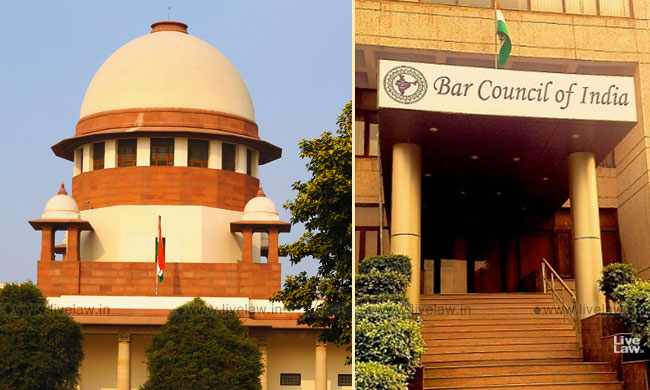
In a latest, landmark and extremely laudable decision, the Bar Council of India (BCI) which represents all the lawyers of India and lays down rules and regulations which all lawyers have to follow has clearly, courageously and convincingly endorsed in no uncertain terms the Bobde Panel Report which was prepared by the second most senior Judge of Supreme Court – Justice Sharad A Bobde along with two eminent women Judges of Supreme Court – Justice Indu Malhotra and Justice Indira Banerjee. The Bobde Panel Report after examining the charges in detail had found no substance in the allegations made by the woman complainant against the CJI Ranjan Gogoi and therefore her complaint was rejected. The incumbent CJI Ranjan Gogoi thus stands exonerated!

Needless to say, the Bar Council of India (BCI) has very rightly minced no words in directly appealing to the members of the legal fraternity, the Judges and the people of this country to rise to the occasion and come forward, get united, and be vocal to discourage negative forces which are all out to weaken the most sacred institution of judiciary! The Bar Council of India has made this most fervent and most commendable plea in the backdrop of the complaint of sexual harassment charges against CJI Ranjan Gogoi and everything that happened in its aftermath bringing judiciary in limelight in a bad way, saying rightly that judiciary is the only ray of hope for the poor people of the country. The Bar Council of India (BCI) certainly deserves to be complimented and congratulated for daring to take the bold decision to stand by the incumbent CJI Ranjan Gogoi who ever since he took oath as office has demonstrated extraordinary determination to reform the judiciary and ensure that all vacant posts for Judges in different courts are filled up at the earliest and he suo motu took action on it as we all know very well! Yet, the CJI has faced unwarranted and unbecoming criticism from a powerful section of the media without any strong basis!

To be sure, the statement from Bar Council of India says that a common advocate always feels that his first duty is to protect the institution of judiciary and that bar cannot tolerate any attempt that tears at reputation of courts of law and damages and demolishes their authority. Absolutely right! Moreover, this CJI has never once faced any iota of any sort of allegation against him of any kind and has rather himself always shown the determination to act against corruption as we saw while in his stint as Chief Justice of Punjab and Haryana High Court he ensured that a Judge involved in corruption was made to resign!

Not just this, he took all the High Courts to task right on assuming office for not filling Judges vacancies and warned them that if they fail to fill up the vacancies in a fixed time, the power of appointing Judges would be taken away from them and given to either UPSC or the Supreme Court will itself take upon itself this onerous task! This resulted in vacancies being released in huge numbers in different states and for first time in UP we saw HJS vacancies being notified twice in a year which is a record by itself! Should this not be appreciated and applauded?

Earlier we saw how vacancies came out after 2 or 3 years and in case of UPPCSJ no vacancies came out from 2007 to 2012 that is for full five years! If CJI has vowed that now this will not go on like this, should this not be appreciated or should here also question marks be raised on CJI? If I fail to clear Judges exam as I have till now then I must have the guts to admit that I have not worked hard enough instead of finding fault in CJI or in any other person and questioning the fairness of the system without any basis whatsoever! If there is one CJI whom I hold in highest esteem it is none other than this CJI Ranjan Gogoi because he has shown the urge to do what no other CJI has ever at least to the best of my knowledge ever dared to do in filling up Judges vacancies not just in Supreme Court or High Court but even in lower courts also by taking suo motu note of it and asking all High Courts to start filling up vacancies within a time limit and setting clear deadlines for it!

It is this CJI Ranjan Gogoi who inspite of qualifying for prestigious Civil Services exam opted for judiciary as he felt it to be more sacred for him. Similarly it is this CJI who had left his roaring practice in Guwahati High Court to take up Judgeship knowing it fully well that Judges get very meager pay but as Judges get more reputation, he opted for it! His whole life is an inspiration for others to follow but in one fell stroke all this has been laid to tatters which has certainly shattered him yet he has managed to control his emotions and is still discharging his duties most commendably! This alone explains why I wrote very rightly in heading in my earlier articles that, “Even God Cannot Shake My Faith In CJI Ranjan Gogoi” and “My Unflinching Faith In CJI Stands Fully Vindicated Now”!

For me, character is always more important than reputation. This is because reputation is “what people think you are” and character is “what actually you are” and “which only you yourself know that”! That is why it is rightly said that, “When you lose your reputation, you fall in the eyes of others but when you lose your character, you fall in your own eyes”!

Complaint Against CJI Is Fishy

Truth be told, while smelling foul in the modalities followed by the complainant in filing the complaint, BCI says that on examination of the complaint and the annexures and the way facts have been narrated by the complainant in her complaint, and the manner she claims to have recorded everything in her mobile while at police station, and the way she has been dealing with the police, the Courts, CBI, IB and everyone is fishy from every angle! How can this be dismissed lightly? It also says that Indians are wise enough to understand the dirty game to spoil the dignity of country’s judicial system and says further that there is now realization amongst the Indian masses that there is some backing behind the complaint against CJI and that complainant is not a “simple lady”! Which sane person can ever deny this?

To say the least, the BCI also said that, “If you examine the complaint and the annexures and see the way facts are narrated; the manner in which she claims to have recorded everything in her mobile while at police station, and the way she has been dealing with police, the Courts, CBI, IB, everyone, if one analyses these things carefully, you will find something fishy”. This observation is not made by some single, petty individual like me or anyone else but this observation has come from none other than the Bar Council of India! Will critics of CJI now question this also?

Nothing Wrong With Justice Bobde Report

It is most heartening to read in the web portal “LiveLaw” what all has been stated in detail by the BCI for which it too certainly deserves to be complimented and congratulated for the common person would not have come to know all this had it not been published by them in their website! I too have gathered most of my information from this website! BCI says in no uncertain terms that there is nothing wrong with the report of the in-house committee which has given clean chit to the CJI and that its decision is “just and proper” as it has not found any merit in allegations against the CJI.

It also says that complainant was not happy with anyone after Justice Gogoi, she started blaming and commenting against Justice NV Ramana that he favoured Justice Gogoi [being close to him] due to which Justice Ramana had to recuse himself from the case after which two very noble, fair, polite and soft spoken lady Judges were included in the in-house panel. Not stopping here she still continued raising questions and did not attend the proceedings till the end and left it mid way while casting aspersions on the fairness of the proceedings itself! How can this be condoned or justified under any circumstances?

To put it succinctly, while making a humble request to the members of the Bar, it says that Bar is duty bound to protect the democracy and protect the independence of judiciary and should desist from commenting on and criticizing each and every step of the institution of judiciary and the authorities. It makes also a request equally to the senior and other advocates of Supreme Court of India and of all the High Courts and to entire legal fraternity to stand united and fight the negative elements that destroy the credibility of institution of judiciary.

Justice Bobde A Man Of Nice Behaviour

Of course, Bar Council of India is also not happy with the way complainant has made allegations of “unfairness” against Justice Bobde Committee and says that the members of the Supreme Court and those aware of the functions of the Supreme Court know about the politeness and the nice behavior of Justice Bobde. It says that Justice Bobde is a man who always smiles and is never angry and same is true about other two lady Judges on the panel. Can anyone ever deny or dispute this? Certainly not!

As it turned out, the BCI said that, “The members who practice in Supreme Court and those who are aware of the functionings of Supreme Court are fully aware of the politeness and nice behaviour of Justice Bobde, he is a man who always smiles, we have never seen him angry; same is the case with the other two lady judges (Mrs Justice Indira Banerjee and Mrs Justice Indu Malhotra). But the complainant opted to make allegations of unfairness even against this Committee and refused to appear before this panel.” This is so strange and perhaps most baffling! This alone explains why BCI further goes on to state that, “We were of the considered opinion that the Committee should proceed ahead and the inquiry should be completed at the earliest. This could be called an attempt to scandalise the Institution. It is due to this reason that we appreciate the procedure adopted by the Committee.” There can be no denying it!

Procedure Adopted By Committee Proper And Fair

No doubt, BCI rightly says that Committee has taken the proper decision after examining the material and everything before it carefully and no one should doubt the decision of the Committee which would send a wrong signal and there would be no end to the malicious complaints against the respectable authorities discharging important functions. It says that complainant, as per her own story, was at police station for quite long time and there she demanded no legal help nor felt need for videography or audio-recording and was quite comfortable but surprisingly before the panel of three Judges of the Supreme Court, which included two ladies, the complainant allegedly felt nervous and felt the need for audio and video recording. It pointed out that, “Even the proceedings of Courts, or in camera proceedings held in chambers of Judicial officers or Hon’ble Judges are not Video-graphed. Therefore, there is nothing wrong in the procedure adopted by the Committee in this particular case. Why there should be some deviation in this special case?”

Bluntly put, the BCI sought to send an unmistakable message that, “Those who love this Institution and whose livelihood is attached to it, those who love the Constitution and our democracy, will never tolerate disrespect of our Supreme Court, High Court or our Judges by anybody.” It also made it clear that it fully respects the opinions of Justice DY Chandrachud but all those concept and suggestions expressed by him for providing liberties and legal assistance to complainant are for innocent, ignorant and helpless complainants and not for a litigant, who is apparently trying to malign the highest institution. Further, BCI said that, “There was, thus in our opinion, in this case, no need to include any other outsider or of any assistance of any Lawyer when the lady boldly came out and refused to participate in the inquiry. We are sure that Hon’ble Mr Justice Chandrachud will also agree with our view.”

End The Unfounded Controversy

As things stood, BCI said that instead of filing an FIR, Complainant had lodged her complaint with the Judges of the Supreme Court and had herself opted for the same and now that in-house committee has decided the matter, there is no justification on commenting over it or criticizing it and there should be an end to this “unfounded controversy”.

Judges Themselves Responsible For Such Unfortunate Situation

As anticipated, BCI rightly says that judiciary is itself responsible for the culture of “malicious complaints” by encouraging them. It says further that some of the totally “absurd, sentimental and reckless verdicts” of the Judges of the Supreme Court has resulted in lodging of such complaints frequently and expects practicality from Judges in future.

Going forward, BCI also gave a note of advice to Judges saying said that, “The oral testimony of the prosecutrix is enough to convict under Section 354 or 376 IPC,” Why? We are not in 18th century, that one can presume that a female will never make such allegations to falsely implicate her enemies. We have great respect for our women. But time has changed, we must keep in mind. Our Judges are expected to be practical now, they should think of common man and other respectable citizen also while deciding or dealing with such cases. They should not be guided by the sentiment or presumptions only. Always think that like 498A IPC, such cases of false implications have now become very common/very easy/rampant.”

Hope That Our Judges Will Lay Down Some Law Soon

To put things in perspective, the BCI said that, “Bar is hopeful that our Judges would now realize the problems, the mental and physical agony and harassments of the common men. So long our traditional Laws, Evidence Act were properly applied by our Law Courts, we found 90% cases resulting in acquittals; but, when our Honourable, Learned, Experienced, Knowledgeable Judges started keeping the settled principles of Evidence Act in waste paper boxes, the incidents of false implications started increasing and today we have reached to this situation.”

Limitation

Be it noted, the BCI also rightly suggested that, “When Indian Judiciary and our Legislature are treating such offences of Section 354 or 376 I.P.C. very serious, then why should not there be some period of limitation for reporting such offences? If some delay is there in lodging a case of murder, it is viewed with doubt, then why should the case of 354 or 376 I.P.C. could be taken and accepted so casually, without considering the delay factor? The delay normally very much proves and establishes that the so called prosecutrix was/is either a liar or was a consenting party. And after sometimes, when the situation changes or for blackmailing, complaints are lodged.”

Moving on, the BCI also then rightly laments that, “But our Judges have made this most vital factor of delay in such cases totally meaningless and redundant. Is it not against the set principles of our Criminal Jurisprudence? If such cases are not reported immediately, the benefit of doubt should go to the accused. What is the sense in entertaining such cases reported after several days, several weeks, several months or even for several years of alleged occurrence/story?” Also, it rightly urges that, “This is the high time, the Parliament and our Supreme Court are required to apply their mind over this important factor in the changed social scenario and degeneration of moral values.”

Appeals To Members Of Bar And Common People

What’s more, the BCI requests the members of the Bar to drop this episode from their minds and gossiping as it is causing serious harm to the institution of judiciary. Manan Kumar Mishra who is Chairman of Bar Council of India rightly urges that, “I request the members of the Bar to drop this episode from their minds and gossiping; it is causing serious harm to the Institution; one should imagine the mental agony suffered by a respectable man because of someone’s conspiracy to malign his image and/or to lay so much of undue pressure upon him.” It says candidly that, “It is the duty of the entire Legal fraternity to save and protect the institution on such occasion of crisis.” It also says explicitly that, “It is sure that not only the members of the Bar but every sensible citizen of the country will agree with the views expressed by the apex body of advocates, and will stand with the highest institution of the justice. The statement of BCI reads: “We are to save our Constitution and the Democracy. And for that purpose, the independence of the Judiciary, creation of a fearless atmosphere for the smooth discharge of functions by our Judges, would be first and foremost necessity.”

On a concluding note, it has to be said without any caveats that the BCI deserves certainly to be complimented, commended and congratulated wholeheartedly for taking such a balanced, principled and determined decision of fully endorsing the Justice Bobde panel report and also for reposing unflinching faith in the incumbent CJI Ranjan Gogoi who has always enjoyed an unblemished reputation and who never believes in giving out-of-turn hearing to even senior advocates and who believes that all advocates must adhere to rules and procedure while arguing cases and should not try to rush cases just because they are senior! BCI too feels that there is no substance in the allegations made by the complainant against the CJI Ranjan Ggoi! History will always judge BCI very lavishly on this score! Eminent and senior lawyers like Harish Salve too have posed their full faith in CJI Ranjan Gogoi and so have lawyer-turned-politicians like our Finance Minister Arun Jaitley and many others! Very rightly so!

Sanjeev Sirohi, Advocate,

s/o Col BPS Sirohi,

A 82, Defence Enclave,

Sardhana Road, Kankerkhera,

Meerut – 250001, Uttar Pradesh.

Successive Bail Applications Should Be Placed Before The Same Judge Who Considered The First One: SC

Image result for bail application


In a fresh and latest development, the Supreme Court on May 6, 2019 has in a latest, landmark and laudable judgment titled M/s Gati Limited Vs. T. Nagarajan Piramiajee & Anr. in Criminal Appeal No. 870 of 2019 [Arising out of SLP (Cri.) No. 6677 of 2018] reiterated as it has several times in the past that successive bail applications filed by an accused should be placed before the same Judge who had refused bail in the first instance, unless that Judge is not available. If that Judge is not available who had refused bail at the first instance then it can be placed before some different Judge. Both the litigants and also all the Judges must always keep this key point in mind on such cases. There can be no denying or disputing it!

To start with, this notable judgment begins by first and foremost observing in para 2 that, “This appeal is filed questioning the order dated 25.07.2018 passed by the Madurai Bench of the Madras High Court in Cri. O.P. (MD) No. 9348 of 2018 passed by the Madurai Bench of the Madras High Court in Cri. O.P. (MD) No. 9348 of 2018 granting anticipatory bail in favour of Respondent No. 1.”

To recapitulate, it is then pointed out in para 3 that, “Respondent No. 1 is the accused (hereinafter “the accused”) in Crime No. 364 of 2017 registered at SIPCOT Police Station, District Thoothukudi, Tamil Nadu for the offences punishable under Sections 420, 465, 467, 468 and 472 of the Indian Penal Code (for short “the IPC”). The allegations against the accused as found in the First Information Report (FIR) are that he had furnished two forged Bank Guarantees each amounting to Rs. 5,00,00,000/- (Rupees Five Crores) to the Appellant in lieu of the services of the Appellant. Initially, the FIR was registered for milder offences. However, the High Court passed an order directing the police to alter the offences suitably, and accordingly, the FIR was altered by adding Sections 467, 468 and 472 of the IPC. The accused was absconding during that time. The High Court directed the police to arrest him and report to the Court by 22.12.2017. Despite the same, the accused was not arrested. Ultimately, on 02.01.2018, he filed an application for anticipatory bail before the High Court as Cri. O.P. (MD) No. 288 of 2017 in the first instance. The application came to be dismissed by the High Court on 09.04.2018. Prior to the disposal of the said application by the High Court, the accused had approached this Court in SLP (Cri.) Diary No. 7830 of 2018 questioning the order of the High Court directing alteration of sections in the FIR and the same had been dismissed by this Court with the specific direction that the accused was at liberty to surrender before the Trial Court and to obtain regular bail. Despite the said order of this Court, the accused subsequently pressed his anticipatory bail application before the High Court filed as Cri. O.P. (MD) No. 288 of 2017 which, as mentioned supra, came to be dismissed by the High Court. The said order of the rejection of the application for anticipatory bail by the High Court was confirmed by this Court in SLP (Cri.) Diary No. 15986 of 2018 on 17.05.2018. Thereafter, after a lapse of merely 13 days, i.e. on 31.05.2018, the accused filed a second application for anticipatory bail bearing Cri. O.P. (MD) No. 9348 of 2018 before the High Court that too without any change in circumstance. The High Court by the impugned order granted anticipatory bail to the accused.”

To be sure, it is then pointed out in a sharp stinging remark in para 4 that, “On a perusal of the impugned order, it is clear that the High Court has not applied its mind to the merits of the matter. The High Court has not assigned any valid reason or shown any change of circumstance since the rejection of the first application for anticipatory bail, for granting anticipatory bail to the accused.” This is clearly a rap on the knuckles of the High Court which is pretty obvious. There can be no denying it.

Furthermore, it is then pointed out commendably in para 5 while citing some landmark cases that, “Another aspect of the matter deserves to be noted. The first application for anticipatory bail was rejected by a certain learned Judge, but the second application for anticipatory bail was heard by another learned Judge, though the Judge who had heard the first application was available. This Court in the case of Shahzad Hasan Khan v. Ishtiaq Hasan Khan (1987) 2 SCC 684, in a similar matter concerning filing of successive applications for anticipatory bail, made the following observations:

“5. …The convention that subsequent bail application should be placed before the same Judge who may have passed earlier orders has its roots in principle. It prevents abuse of process of court inasmuch as an impression is not created that a litigant is shunning or selecting a court depending on whether the court is to his liking or not, and is encouraged to file successive applications without any new factor having cropped up. If successive bail applications on the same subject are permitted to be disposed of by different Judges there would be conflicting orders and a litigant would be pestering every Judge till he gets an order to his liking resulting in weakening the creditability of the court and the confidence of the other side being put in issue and there would be wastage of courts time. Judicial discipline requires that such matters must be placed before the same Judge if he is available for orders…”

In State of Maharashtra v. Captain Buddhikota Subha Rao, 1989 Supp (2) SCC 605, this Court placing reliance upon Shahzad Hasan Khan (supra) observed:

“7. …In such a situation the proper course, we think, is to direct that the matter be placed before the same learned Judge who disposed of the earlier applications. Such a practice or convention would prevent abuse of the process of court inasmuch as it will prevent an impression being created that a litigant is avoiding or selecting a court to secure an order to his liking. Such a practice would also discourage the filing of successive bail applications without change of circumstances. Such a practice if adopted would be conducive to judicial discipline and would also save the Court’s time as a Judge familiar with the facts would be able to dispose of the subsequent application with dispatch. It will also result in consistency…”

At the risk of repetition, we would like to quote similar observations made by this Court on subsequent occasions. In the case of Vikramjit Singh v. State of Madhya Pradesh, 1992 Supp (3) SCC 62, this Court observed:

“3. …Otherwise a party aggrieved by an order passed by one bench of the High Court would be tempted to attempt to get the matter reopened before another bench, and there would not be any end to such attempts. Besides, it was not consistent with the judicial discipline which must be maintained by courts both in the interest of administration of justice by assuring the binding nature of an order which becomes final, and the faith of the people in the judiciary…”

To the same effect, this Court observed in M. Jagan Mohan Rao v. P.V. Mohan Rao (2010) 15 SCC 491:

“3. In view of the principle laid down by this Court, since the learned Judge who had refused bail in the first instance was available, the matter should have been placed before him. This Court has indicated that such cases of successive bail applications should be palced before the same Judge who had refused bail in the first instance, unless that Judge is not available…”

In Jagmohan Bahl and Another v. State (NCT of Delhi) and Another, (2014) 16 SCC 501 too, this Court has observed along the same lines:

“15. …when the Sixth Additional Sessions Judge had declined to grant the bail application, the next Fourth Additional Sessions judge should have been well advised to place the matter before the same Judge. However, it is the duty of the prosecution to bring it to the notice of the Judge concerned that such an application was rejected earlier by a different Judge and he was available. In the entire adjudicatory process, the whole system has to be involved. The matter would be different if a Judge has demitted the office or has been transferred. Similarly, in the trial court, the matter would stand on a different footing, if the Presiding Officer has been superannuated or transferred. The fundamental concept is, if the Judge is available, the matter should be heard by him. That will sustain the faith of the people in the system and nobody would pave the path of forum-shopping which is decryable in law”.”

What’s more, the Bench then minces no words in pointing out in para 6 that, “In the matter on hand, it is clear that the well settled principle of law enunciated in the decisions cited supra has not been followed, inasmuch as the second application for anticipatory bail was heard by a different Judge in spite of the availability of the Judge who had disposed of the first application.”

It cannot be lost on us that it is then observed in para 7 that, “Be that as it may, even on merits we do not find any reason to take a lenient view in favour of the accused. This Court vide its order dated 19.03.2018 observed that the accused is at liberty to surrender before the concerned Trial Court and obtain regular bail, but he did not choose to surrender. In any event, since there has been no change of circumstance for grant of anticipatory bail in the second application since the disposal of the first, in our considered view, the High Court was not justified in granting anticipatory bail to the accused.”

More crucially, it is then observed in para 8 that, “It may be noted that the only reason assigned by the High Court for granting anticipatory bail is that the accused has shown his bona fides towards liquidating his liability by offering an encumbered property in Survey No. 121 belonging to his father, which might fetch a sum of Rs 45 lakhs, and also by handing over demand drafts for a sum of Rs 40 lakhs in favour of the complainant. Except for this, no other reason has been assigned. Since the allegation against the accused is that he has furnished two forged Bank Guarantees worth Rs. 10 Crores in lieu of the appellant’s services, and having regard to other facts and circumstances on record, we do not find this to be a change in circumstance that justifies the order of anticipatory bail based on the second application of the accused.”

Now it is time to dwell on the concluding paras. It is held in para 9 that, “In this view of the matter, we find that the order of the High Court granting anticipatory bail to the accused is liable to be set aside, and the same stands set aside accordingly.” Lastly, it is then held in para 10 that, “The accused is directed to surrender before the concerned Trial Court and it is open for him to seek regular bail. The appeal is allowed accordingly.”

As things stand, we thus see that leave is granted. Also, the appeal is allowed in terms of the signed order. The accused is directed to surrender before the concerned Trial Court and it is open for him to seek regular bail.

All said and done, this noteworthy, latest and commendable judgment makes it absolutely clear that successive bail applications should be placed before the same Judge who considered the first one. Many case laws were cited in this notable judgment to support this logical point of view which has already been considered in exhaustive detail in the above paras. It is only when the Judge either resigns or is transferred or is not available for some other reason that the bail application can be placed before some other Judge! All courts and all Judges must always strictly adhere to what has been laid down in this landmark and latest case by none other than the top court itself so explicitly and so elegantly!

Sanjeev Sirohi, Advocate,

s/o Col BPS Sirohi,

A 82, Defence Enclave,

Sardhana Road, Kankerkhera,

Meerut – 250001, Uttar Pradesh.

Witness Can Be Called Interested Only When He/She Derives Some Benefit Seeing An Accused Person Punished: SC

Image result for interested in crime
It has to be remarked right at the outset that in a latest, landmark and laudable judgment titled Sadayappan @ Ganesan Vs. State Represented by Inspector of Police in Criminal Appeal No. 1990 of 2012 delivered on April 26, 2019 has explicitly, elegantly and eruditely ruled while rejecting a defence contention in a criminal appeal that, “The witness may be called ‘interested’ only when he/she derives some benefit from the result of a litigation in a civil case, or in seeing an accused person punished”. It was also held that, “A witness cannot be said to be ‘interested’ witness merely by virtue of being a relative of the victim.” Very rightly said!

First and foremost, this noteworthy judgment authored by Justice NV Ramana for himself and Justice Mohan M Shantanagoudar sets the ball rolling in para 1 by stipulating that, “This appeal is directed against the Judgment dated 13th December, 2011 passed by the High Court of Judicature at Madras in Criminal Appeal No. 346 of 2011 whereby the Division Bench of the High Court dismissed the appeal preferred by the appellant herein and upheld his conviction and sentence passed by the Trial Court for the offence punishable under Section 302 read with Section 34, IPC.”

Briefly stated, para 2 then envisages that, “Prosecution case in brief is that Selvam @ Thangaraj (deceased), Karuppusamy (A1) and Sadayappan @ Ganesan (A2/appellant herein) were neighbouring agricultural land owners in the village of Kandavayal who used to go together for hunting of rabbits in the nearby forest area. Around 15 years prior to the incident, the deceased Thangaraj had negotiated to buy some agricultural land from A1 and paid him Rs. 30,000/- towards the sale value and took possession of the said land. However, despite, repeated requests, A1 had never come forward for registering the sale deed in favour of the deceased. Owing to this, A1 and the deceased developed animosity towards each other. A2 – appellant herein is the adjacent landowner who always supported A1 in avoiding registration of the sale deed. Despite animosity against the deceased, A1 and A2 kept on going to the forest for hunting along with him. On May 27, 2008 at about 11 p.m., both A1 and A2 went to the house of deceased and insisted that he accompany them to the fields/forest. Eventually, the deceased went with him hesitatingly. When the deceased did not return home till 4 am in the morning, his wife – Rajamal (PW1) sent one Palanisamy (PW2 – brother of the deceased) and Govindarajan (PW3 – nephew of the deceased) to search for her husband. PWs 2 and 3, while searching for the deceased, found his dead body near the fields with bleeding injuries. They immediately rushed to PW1 and informed her of the same.”

As it turned out, it is then pointed out in para 3 that, “On a complaint given by PW1, the Sub-Inspector of Police (PW14) at Sirumugai Police Station registered the crime under Section 302, IPC and Section 25 (1B)(a) of the Indian Arms Act against the accused. The Assistant Commissioner of Police (PW15 – Pandian) took up the investigation and after completing the formalities of holding inquest and preparing inquest report (Ext.P21), sent the body of the deceased for post-mortem. On August 29, 2008 the accused appeared before the Village Administrative Officer (VAO) and confessed to committing the crime. When the VAO produced the accused with their confessional statements, at their instance recovered material objects including Single Barrel Muzzle Loading Gun (MOI), torch light with battery, blood stained and normal soil, torn clothes, lungi, towel etc. and sent them for chemical analysis. Subsequently, the learned Judicial Magistrate committed the case to the Principal District and Sessions Judge, Coimbatore who framed charges against the accused-appellant under Section 302 read with Section 34, IPC. The appellant denied the charges and claimed to be tried.”

Furthermore, it is then pointed out in para 4 that, “After an elaborate trial, the Trial Judge opined that the circumstantial evidence correlates with the accused and clearly proves that owing to prior enmity, A1 and A2, in furtherance of their common intention, committed the murder of the deceased with a gun shot from the unauthorized gun owned by accused-appellant. The Trial Court thereby found both the accused guilty and accordingly convicted the appellant herein under Section 302 read with Section 34, IPC and sentenced him to life imprisonment and also to pay a fine of Rs. 10,000 vide order dated 18.05.2011. Both the accused preferred an appeal before the High Court which was dismissed vide order dated December 13, 2011. Aggrieved thereby, both the accused preferred separate appeals before this Court. It is pertinent to state that the appeal of the A1 stood abated owing to his death during its pendency. Thus, we are now concerned only with the appeal preferred by A2.”

On one hand, it is pointed out in para 5 that, “Learned counsel appearing on behalf of the appellant contended that the courts below have incorrectly relied on the testimonies of interested witnesses who are relatives of the deceased. He submitted that the chain of circumstances connecting the appellant to the crime is incomplete. He further submitted that the courts below erred in holding that the appellant had motive to commit the alleged crime and shared a common intention with A1, inasmuch as the land dispute between A1 and the victim had already been settled amicably in the panchayat. He argued that A1, A2 and the victim were on friendly terms thereafter which is reinforced from the fact that they used to go to the forest for hunting together.”

On the other hand, it is then pointed out in para 6 that, “Learned counsel appearing for the State, however, supported the judgment of the High Court and submitted that there was no occasion for this Court to interfere with it.”

Needless to say, the Bench while observing in para 7 that, “We have heard the learned counsels for the parties and meticulously perused the material on record” then goes on to add in para 8 that, “Admittedly, the deceased A1 and A2 (appellant herein) were neighbouring agricultural landowners and used to go for hunting together. Further, there is no denial of the fact that around 15 years prior to the date of incident, the deceased and A1 had entered into a deal through which land was sold to the deceased, but the same was never registered. Additionally, record shows that A2 – the appellant herein, whose land was adjacent to that of A1, always supported A1 in the matter of delaying the registration of land in favour of the deceased. This is the factual matrix of enmity between the accused and the deceased which serves as motive for the offence. Despite this, the deceased kept on going to the forest for hunting with the accused persons. These facts are abundantly clear from the testimonies of PWs1, 2, 3, 4 and 6.”

Going forward, it is then observed in para 9 that, “Further, PW1 – wife of the deceased (complainant), who is the witness to the last seen, supported the prosecution version and deposed that two days prior to the incident she had pressed A1 to register the land, but he kept quiet and went away. She further stated that owing to this pre-existing enmity, the accused persons were motivated to eliminate her husband. Thus, on the fateful night, the accused had come armed to take the deceased along with them to the forest, a request which was acceded to by the deceased hesitatingly.”

To be sure, it is then envisaged in para 10 that, “With respect to the deposition of PWs 1, 2, 3, 4 and 6 which firmly establish the prosecution version, the learned counsel for the appellant contended that they are inter-related and interested witnesses, thus making their evidence unreliable.”

What’s more, it is then held in para 11 that, “Criminal law jurisprudence makes a clear distinction between a related and interested witness. A witness cannot be said to be an “interested” witness merely by virtue of being a relative of the victim. The witness may be called “interested” only when he or she derives some benefit from the result of a litigation in the decree in a civil case, or in seeing an accused person punished. [See: Sudhakar v. State, (2018) 5 SCC 435].”

Interestingly enough, it is then also clarified in para 12 that, “In the case at hand, witnesses may be related but they cannot be labelled as interested witnesses. A scrutiny of their testimonies which has stood the rigour of cross-examination corroborates the prosecution story.”

Truth be told, it is then revealed in para 13 that, “PW2 – brother of the deceased and PW3 – nephew of the deceased, clearly deposed that when they came to know from PW1 that the deceased did not turn up after leaving home at 11 pm on the previous night, they went in search of him and found his dead body in ‘Vaalaithope’. Similarly, PW4 – another nephew of the deceased has also deposed that upon coming to know from his brother – PW3 about the death of his uncle, he along with his mother went to ‘Vaalaithope’ where they found the dead body of the deceased. PW6 – another nephew of the deceased also deposed in his statement that when he went to Sirumugai Police Station he saw the accused persons there and witnessed their confessional statements recorded by the police. He also stated that he accompanied the police with the accused to the place of occurrence where normal and blood stained mud was collected and that he signed the observation Mahazar (Ex. P7).”

What cannot be lost on us is that it is then held very clearly and convincingly in para 14 that, “Going by the corroborative statements of these witnesses, it is discernible that though they are related to each other and to the deceased as well, their evidence cannot be discarded by simply labeling them as “interested” witnesses. After thoroughly scrutinizing their evidence, we do not find any direct or indirect interest of these witnesses to get the accused punished by falsely implicating him so as to meet out any vested interest. We are, therefore, of the considered view that the evidences of PWs 1, 2, 3, 4 and 6 are quite reliable and we see no reason to disbelieve them.”

On a different note, it is then pointed out in para 15 that, “With respect to forensic evidence, Dr. T. Jeya Singh (PW12), who conducted post mortem on the body of the deceased, found prominent injuries on the body of the deceased and opined that the deceased died due to shock and haemorrhage from multiple injuries (perforating and penetrating) which were possible due to piercing of pellets. The post mortem report and chemical analysis report confirms the gun shot and proves that the gun powder discovered on the body and clothes of the deceased was the residue of the gun (MO1). The ownership of this gun (MO1), which was discovered on the basis of his extra-judicial confession, has not been disputed by the appellant in his Section 313 Cr.P.C. statement.”

Not stopping here, it is then added in para 16 that, “The counsel appearing on behalf of the appellant agitated the genuineness and admissibility of the extrajudicial confession of the accused on the basis of which recovery of gun (MO1) was made. He questioned the same on the basis of absence of the examination of the VAO who allegedly recorded the same. It is to be noted that the record indicates that the VAO could not be examined due to his death before the commencement of the trial. However, it is clear that the said confessional statement, was sent by the VAO to the Inspector of Police along with a covering letter (Ext. P14). Moreover, the Village Assistant – PW 11, even though turned hostile, had specifically deposed that the said extrajudicial confession was recorded by the VAO.”

No doubt, it would be pertinent to also mention here that it is then held in para 17 that, “Though the prosecution case is premised on circumstantial evidence in the absence of any eye witness, the depositions of prosecution witnesses which have stood the rigour of cross-examination clearly support the prosecution version and establishes enmity between the accused and the deceased. This fact supported by PW1’s last seen evidence, her prompt complaint to the police and the forensic evidence which correlates the recovered weapon to the physical injuries on the body of the deceased proves the prosecution case beyond any reasonable doubt independent of the extrajudicial confession.”

Finally, it is held in the last para 18 that, “Thus, the High Court was justified in upholding the conviction of the appellant and did not commit any illegality in passing the impugned judgment which merits interference. Therefore, the appeal being devoid of merit stands dismissed.”

In the ultimate analysis, it has to be said with certitude that it is a very well balanced and quite reasonable judgment which gives adequate and justified reasons in its findings. It was rightly held by the Bench of Apex Court that witness can be called interested only when he/she derives some benefit seeing an accused person punished. It is rightly held that just because the witnesses are related to each other or to the deceased, they cannot on this ground alone be termed as “interested witnesses”! This must be always kept in mind by all the Judges of all Courts while deciding on such cases! There can be no denying or disputing it!

Sanjeev Sirohi, Advocate,

s/o Col BPS Sirohi,

A 82, Defence Enclave,

Sardhana Road, Kankerkhera,

Meerut – 250001, Uttar Pradesh.