Lok Sabha passes Consumer Protection Bill, 2019

The
Lok Sabha todaypassed the Consumer Protection Bill 2019 after due
consideration and discussion.The Union Minister for Consumer Affairs,
Food and Public Distribution Shri Ram Vilas Paswan said that the bill
aims at protecting the interests of consumers by establishing
authorities for timely and effective administration and settlement of
consumers’ dispute. Moving the Bill, Minister of State for Consumer
Affairs, Food and Public Distribution, Shri Raosaheb Patil Danve said
the Bill aims to simplify a number of rules. Shri Danve said consumers
do not get quick redressal of their complaints and with the passage of
the Bill, consumers will be able to get speedy justice. He said the
government aims to simplify the entire process of redressal of consumer
grievances.
Under
the Bill, there is provision for central government to set up a Central
Consumer Protection Authority (CCPA) to promote, protect and enforce
the rights of consumers and will be empowered to investigate, recall,
refund and impose penalties. It will regulate matters related to
violation of consumer rights, unfair trade practices, and misleading
advertisements. There is also a provision for class action law suit for
ensuring that rights of consumers are not infringed upon. The authority
will have power to impose a penalty on a manufacturer or an endorser of
up to 10 lakh rupees and imprisonment for up to two years for a false or
misleading advertisement. 
Salient Features of the Bill
1.         Central Consumer Protection Authority (CCPA): Executive Agency to provide relief to a class of consumers. The CCPA will be empowered to-
  1. Conduct  investigations into violations of consumer rights and institute Complaints /Prosecution
  2. Order recall of unsafe goods and services
  3. Order discontinuance of Unfair Trade Practices and Misleading  Advertisements
  4. Impose penalties on Manufactures /Endorsers /Publishers of Misleading Advertisements
2.         Simplified Dispute Resolution process
i) Pecuniary Jurisdiction enhanced to-
  • District Commission –Up to Rs1 crore
  • State Commission- Between  Rs1 crore and Rs 10 crore
  • National Commission –Above Rs.10 crore
ii) Deemed admissibility after 21days of filing
iii) Empowerment of Consumer Commission to enforce their orders
iv) Appeals only on question of law after second stage
v) Ease of approaching consumer commission
  • Filing from place of residence
  • E-filing
  • Videoconferencing for hearing 
3.         Mediation
  • An Alternate Dispute Resolution (ADR) mechanism
  • Reference to Mediation by Consumer Forum wherever scope for early settlement exists and parties agree for it.
  • Mediation cells to be attached to Consumer Forum
  • No appeal against settlement through mediation
4.         Product Liability
A
manufacturer or product service provider or product seller to be
responsible to compensate for injury or damage caused by defective
product or deficiency in services
The Basis for product liability action will be:
  • Manufacturing  defect
  • Design defect
  • Deviation from manufacturing specifications
  • Not conforming to express warranty
  • Failing to contain adequate instruction for correct use
  • Services provided arefaulty, imperfect or deficient
New Bill- Benefit to Consumers
Presently
Consumer only have a single point of access to justice, which is time
consuming. Additional swift executive remedies are proposed in the bill
through Central Consumer Protection Authority (CCPA)
Deterrent punishment to check misleading advertisements and adulteration of products
Product liability provision to deter manufacturers and service providers from delivering defective products or deficient services
Ease of approaching Consumer Commission and Simplification of Adjudication process
Scope for early disposal of cases through mediation
Provision for rules for new age consumer issues: e-commerce & direct selling
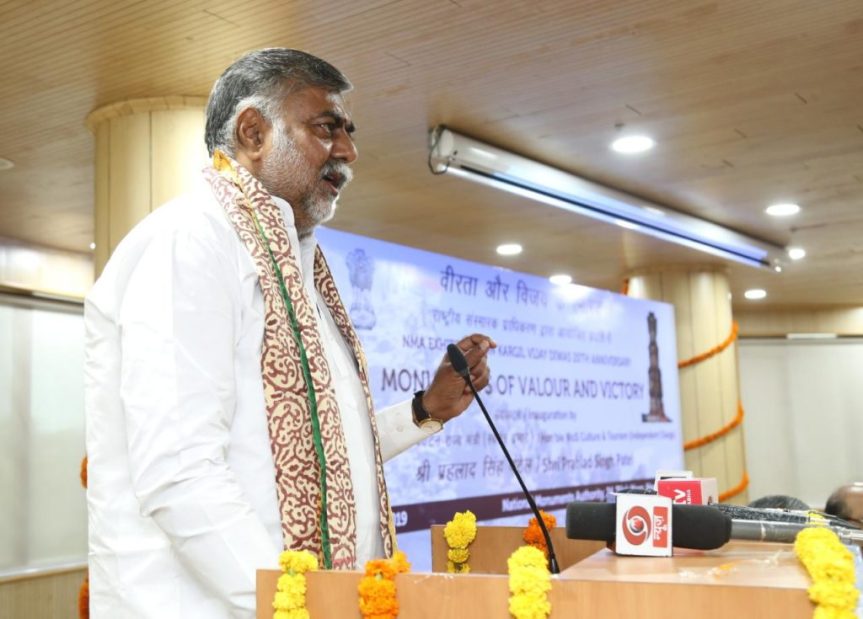
Nepali and Santhali languages in the Scheme for grant of Senior/Junior Fellowships of Culture Ministry

The
Union Minister of State for Culture and Tourism, Shri Prahlad Singh
Patel has announced to include the remaining 02 languages from the 8th 
Schedule of the Indian Constitution i.e. Nepali and Santhali in the
Sub-Field of Field “Literature” in the scheme component ‘Award of
Senior/Junior Fellowships to Outstanding Artistes in the Fields of
Culture’. The announcement was made by the Culture Minister during an
interaction with media in New Delhi today.

The
Ministry of Culture administers a scheme component namely Award of
Senior/Junior Fellowships to Outstanding Artistes in the Fields of
Culture. The fellowships are awarded for undertaking research oriented
projects.
Centre
for Cultural Resources and Training (CCRT), Dwarka is the Nodal
institute for handling the Scheme of Sr. /Jr. Fellowship till selection
process. “Literary Arts” is one of the Fields under this Scheme where
candidates can apply for research in 22 languages as their Sub-Field.
These 22 languages include the following 20 languages from the 8th Schedule of Articles 344(1) and 251 of the Indian Constitution along with English and Khasi:-
(1)
Assamese, (2) Bengali, (3) Bodo, (4) Dogri, (5) Gujarati, (6) Hindi,
(7) Kannada, (8) Kashmiri, (9) Konkani, (10) Maithili, (11) Malayalam,
(12) Manipuri, (13) Marathi, (14) Oriya, (15) Punjabi, (16) Sanskrit,
(17) Sindhi (18) Tamil, (19) Telugu and (20) Urdu.

Central Board of Secondary Education (CBSE) declares results of Central Teachers Eligibility Test (CTET) – July 2019

The
Central Board of Secondary Education (CBSE) declares results of Central
Teachers Eligibility Test (CTET) – July 2019 here today. The
12th edition of Central Teachers Eligibility Test (CTET) was conducted
on 7th July 2019 in 104 cities at 2942 centres all over country. Total
no of 114 City Coordinators, 2942 centre superintendents, 4335 observers
and 827 CBSE officials were deputed for smooth and fair conduct of
examination.

A
total no of 29.22 Lacs candidates were registered for this examination
out of which 23.77 Lacs candidates appeared in the examination.
The
result of this examination is declared in a record time of 23 days in
which 3.52 Lacs candidates declared qualified. Out of 3.52 Lacs, 2.15
Lacs from Paper -1(Primary school) & 1.37 Lacs from Paper-2 (Junior
high school) have qualified. The result is available at CTET website
i.e. www.ctet.nic.in and CBSE website i.e. www.cbse.nic.in.
The
mark sheet of candidates, who appeared in CTET examination July, 2019
will be available in the DigiLocker.  The qualifying certificate will be
uploaded in the DigiLocker & the qualified candidate will be
provided their login details on their registered mobile number.
The details of CTET July, 2019 Examination is as under:
Registered Candidates
Appeared Candidates
Qualified Candidates
Paper-I
1656091
1359478
214658
Paper-II
1266136
1017553
137172
TOTAL
29,22,227
23,77,031
3,51,830
The candidates are advised to check their result by login on website of CTET and CBSE.

Lok Sabha Passes the Code on Wages Bill, 2019

The
Lok Sabha today passed The Code on Wages Bill, 2019. While opening the
discussion for consideration and passing of the Bill,  Minister of State
(I/C) for Labour and Employment Shri Santosh Kumar Gangwar said that it
is a historic Bill which aims to transform the old and obsolete labour
laws into more accountable and transparent ones which is need of the
hour. As many as 17 present labour laws are more than 50 years old and
some of them even belong to pre-independence era.

Among
the four Acts being subsumed in The Code on Wages Bill, The Payment of
Wages Act, 1936 belongs to pre-independence era and The Minimum Wages
Act 1948 is also 71 years old. The Payment of Bonus Act, 1965 and The
Equal Remuneration Act, 1976 are also being subsumed in the Code. 
He
further said that wide consultations were held with trade unions,
employers and State governments and tripartite consultations were held
on 10th March, 2015 and 13th April, 2015. A draft
of Wage Code was made available in public domain through Ministry’s
website. Many persons gave their valuable suggestions. The Bill was
introduced in last Lok Sabha on 10 August, 2017 and was referred to
Parliamentary Standing Committee which submitted its Report on 18th December 2018. Out of 24 recommendations made by standing committee, 17 were accepted by government.
He
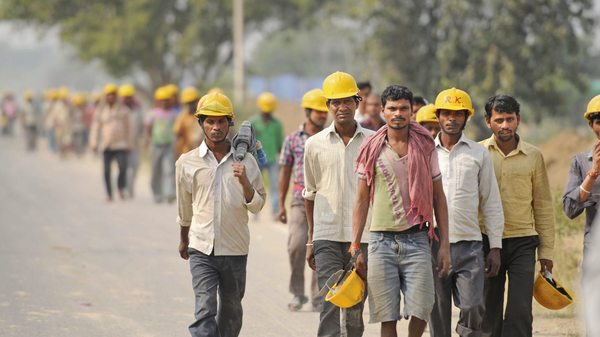
further said that the Code ensures minimum wages along with timely
payment of wages to all the employees and workers. Many unorganized
sector workers like agricultural workers, painters, persons working in
restaurants and dhabas, chowkidars etc. who were out of the ambit of
minimum wages will get legislative protection of minimum wages after the
bill becomes an Act. It has been ensured in the bill that employees
getting monthly salary shall get the salary by 7th of next
month, those working on weekly basis shall get the salary on last day of
the week and daily wagers should get it on the same day.
He
expressed hope that The Code on Wages will prove to be a milestone and
give respectable life to 50 crore unorganized sector workers. The
Minister responded to the debate in detail and thanked all the respected
members for cooperation in passing the Bill.
The salient features of the Code are as following:
The
Code on Wage universalizes the provisions of minimum wages and timely
payment of wages to all employees irrespective of the sector and wage
ceiling. At present, the provisions of both Minimum Wages Act and
Payment of Wages Act apply on workers below a particular wage ceiling
working in Scheduled
Employments only. This would ensure “Right
to Sustenance” for every worker and intends to increase the legislative
protection of minimum wage from existing about 40% to 100% workforce.
This would ensure that every worker gets minimum wage which will also be
accompanied by increase in the purchasing power of the worker thereby
giving fillip to growth in the economy. Introduction of statutory Floor
Wage to be computed based on minimum living conditions, will extend
qualitative living conditions across the country to about 50 crore
workers. It is envisaged that the states to notify payment of wages to
the workers through digital mode.

There are 12 definitions of wages in the different Labour Laws leading
to litigation besides difficulty in its implementation. The definition
has been simplified and is expected to reduce litigation and will entail
at lesser cost of compliance for an employer. An establishment will
also be benefited as the number of registers, returns, forms etc., not
only can be electronically filed and maintained, but it is envisaged
that through rules, not more than one template will be prescribed.

At present, many of the states have multiple minimum wages. Through
Code on Wages, the methodology to fix the minimum wages has been
simplified and rationalised by doing away with type of employment as one
of the criteria for fixation of minimum wage. The minimum wage fixation
would primarily based on geography and skills. It will substantially
reduce the number of minimum wages in the country from existing more
than 2000 rates of minimum wages.

Many changes have been introduced in the inspection regimes including
web based randomised computerised inspection scheme, jurisdiction-free
inspections, calling of information electronically for inspection,
composition of fines etc. All these changes will be conducive for
enforcement of labour laws with transparency and accountability.
 •
There were instances that due to smaller limitation period, the claims
of the workers could not be raised. To protect the interest of the
workers, the limitation period has been raised to 3 years and made
uniform for filing claims for minimum wages, bonus, equal remuneration
etc., as against existing varying period between 6 months to 2 years.

It can be said that a historical step for ensuring statutory protection
for minimum wage and timely payment of wage to 50 crore worker in the
country has been taken through the Code on Wages besides promoting ease
of living and ease of doing business.

Parliament passes the Muslim Women (Protection of Rights on Marriage) Bill 2019

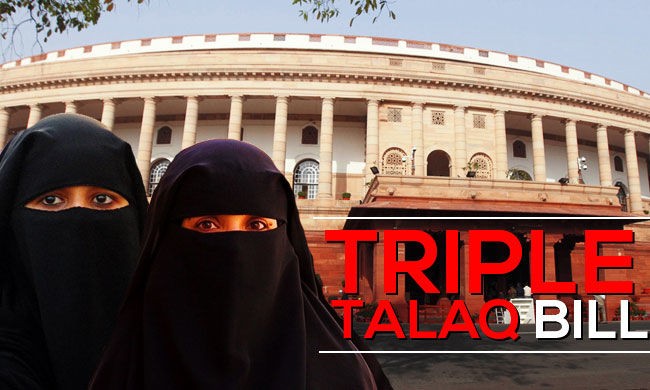
Parliament today passed the Muslim Women (Protection of Rights on Marriage) Bill 2019.

Expressing
satisfaction over this landmark moment, Union Minister for Home
Affairs, Shri Amit Shah congratulated Prime Minister Narendra Modi for
fulfilling his commitment and ensuring that a law is made to ban Triple
Talaq. 

The
Home Minister also congratulated Muslim women by saying, “On the
passage of this Bill, I congratulate the Muslim sisters across the
country on getting rid of the Triple Talaq curse. This act will free
Muslim women from the curse of this regressive practice”
Shri
Shah said that the Modi government is dedicated to protecting women’s
rights and ensuring their empowerment. This bill is a historic step to
protect the dignity of Muslim women and keep it intact. It will bring a
new era of hope and respect in the lives of Muslim women. From now on,
the door to unlimited possibilities will open for Muslim women and they
would now be able to play an effective role in the creation of ‘New
India’.
“Today
is a great day for India’s democracy. I thank all parties who supported
this historic bill”, Shri Shah said while thanking all the members of
Parliament.

Victory of Gender Justice and will Further Equality In Society: PM on the Passage of Triple Talaq Bill

PM Shri
Narendra Modi thanked all the parties and MPs who have supported the
passage of the Muslim Women (Protection of Rights on Marriage) Bill,
2019 in both Houses of Parliament. He said that they have risen to the
occasion and this step of theirs will be forever remembered in India’s
history.
In a series
of tweets he said that “An archaic and medieval practice has finally
been confined to the dustbin of history! Parliament abolishes Triple
Talaq and corrects a historical wrong done to Muslim women. This is a
victory of gender justice and will further equality in society. India
rejoices today!”
He further
tweeted that “This is an occasion to salute the remarkable courage of
those Muslim women who have suffered great wrongs just due to the
practice of Triple Talaq.The abolition of Triple Talaq will contribute
to women empowerment and give women the dignity they deserve in our
society.”

Shri Prakash Javadekar launches several e-projects of Publications Division

Union
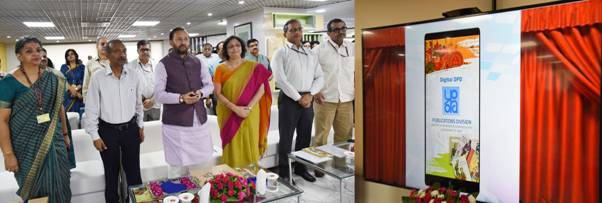
Minister Shri Prakash Javadekar launched several e-projects of
Publications Division including its redesigned dynamic website, mobile
app “Digital DPD”, e-version of Rozgaar Samachar and  e-book “Satyagrah
Geeta” during his visit to Book Gallery at Soochna Bhawan in Delhi
today.
Speaking
on the occasion, Shri Javadekar said that in line with PM Modi’s call
to citizens in ‘Mann Ki Baat’ 2.0 programme, to make reading a habit, we
should revitalise the reading culture. He also urged for the creation
of Reading Clubs in the neighbourhood to improve the reading culture. He
added that the role of Rozgar Samachar can be improved when all the job
listing including the private jobs are listed in the newspaper. He
suggested that Rozgar Samachar when distributed in the Colleges will
help the students to improve their skill sets and make them better
suited for the job market. He said that the revamped website of
Publications Division looks attractive and dynamic, updating it daily
would make the people visit the site frequently. He was happy for the
launch of a mobile app for Publications Division which would help in
improving the reading habits of people in the era of e books and Kindle.
The details of the e-projects launched is as under:
1. Redesigned Dynamic Website: The newly revamped dynamic website (www.publicationsdivision.nic.in)
with integrated payment gateway is capable of providing real time
purchase facilities as well as updated information about Publications
Division’s books and  journals. The website will facilitate ease of
purchase. All books are available on the website for sale via payment gateway of Bharatkosh.
The website has an attractive look and feel and a well planned architecture. Catalogue of books and updates
and new books’ releases are displayed prominently for effective
engagement with aesthetic layout, soothing colour, well-designed icons
with good contrast between background and text for easy viewing. The
information is organised into different sections and categories,
catering to all stakeholders, viz. readers, authors, other publishers,
printers, agents etc.,in neatly stacked lists, with proper visual
material which is easy to understand.
The website is user-friendly with easily accessible Social Media tools. It is clutter-free with effective search feature and informative menus and sub-menu. The smooth
interface provides easy interactivity in English and Hindi. It is
accessible to everyone including specially-abled persons (with a screen
reader). Easy interface for feedback and suggestions with
Facebook and Twitter links for connecting with the organisation on Social Media have also been provided.
It has a special section on Gandhi@150. This
section details with the work undertaken with special features
including special Gandhi Catalogue, link to Gandhi Heritage Portal for
reading volumes of Collected works of Mahatma Gandhi and other Gandhian
publications.
2. Mobile App “Digital DPD”:  It
is available for free download on Google Play Store and will facilitate
tapping into the growing mobile commerce potential. The Mobile App is
synced with the Digital Rights Management System to keep a check on a
piracy and integrated with the Bharatkosh payment gateway for the ease
of payments.
3. e-version of Rozgar Samachar:
Rozgar Samachar,  a corresponding version of Employment News (English),
is a prominent job journal in Hindi  providing  information about job
opportunities in Central Government including  Public Sector
Enterprises.  It also provides information and guidance about admission
and career opportunities in various streams through career-oriented
articles by experts. 
The
e-Rozgar Samachar will provide the journal in digital form and is
available @ Rs.400 for yearly subscription The e- Rozgar Samachar is
expected to fulfil the growing needs of young readers, turning to
electronic modes of communication.
4. e-book “Satyagraha Geeta”:
The heritage value book written by eminent poet Dr Kshama Rao in 1930s
in Sanskrit verses presents the life and activities of Gandhiji. As part
of Gandhi@150 commemoration, DPD procured a PDF version of the book and
prepared the e-version of the book. English translation has also been
added to ensure wider reach.  Divided in eighteen chapters (like Adhyays of Bhagwat Geeta),
Satyagraha Geeta presents Gandhi’s ideas, philosophy of life and his
methods of action in Sanskrit verse form, capturing Gandhian ethos and
tenets.