Dr. Sarvepalli Radhakrishnan: Pronam to the Legendry personality on occasion of Teacher’s Day

Since 1962, 5 September is celebrated in India as Teacher’s Day as on this day in 1888 a great scholar, philosopher, erudite person and statesman Sir Sarvepalli Radhakrishnan was born at Thiruttani, Madras Presidency of India. His many activities and assignments are too small to mention here as for this volumes are required. Even then few lines are mentioned on occasion of his birth anniversary. Among his many extensive works in the form of publications, one is Sir highlighted basic tenets and philosophy of Hinduism as well as he had copious knowledge of the Western philosophy and literatures for which many consider him a bridge-builder between India and the West.
At the very young age (33 years) in 1921, he was selected for the prestigious George V Chair in Philosophy at Calcutta University where he had proved his erudite skill. While, he was in Calcutta (now Kolkata) two volumes of Indian Philosophy were published – one in 1923 and the second was four years later. The Philosophy of Rabindranath Tagore written by Sarvepalli Radhakrishnan was also an excellent publication for which he should be applauded. 
Throughout the 1920s, Sir Radhakrishnan’s reputation as a scholar continued to grow both in India and abroad. He was invited to Oxford to give the 1926 Upton Lectures, published in 1927 as The Hindu View of Life, and in 1929 Radhakrishnan delivered the Hibbert Lectures, later published under the title An Idealist View of Life. Also he wrote commentaries on the Prasthanatraya (main primary texts of Vedanta), the Upanisads (1953), Brahma Sutra (1959) and the Bhagavadgita (1948). Dr. Radhakrishnan was awarded several top awards inter alia of which are knighthood in 1931, the Bharat Ratna, the highest civilian award in 1954 etc. He was awarded honorary membership of the British Royal Order of Merit in 1963. He was also one of the founders of Helpage India, a non-profit organisation for elderly underprivileged in India.
Dr Shankar Chatterjee
Former Professor & Head (CPME),NIRD & PR ( Govt. of India), Hyderabad,  India
Former Associate Professor, Eritrea

Former Assistant Prof, Govt. Degree College, Tripura, India
Former Senior Planning Officer, Govt of Assam, India 
PRESENT ADDRESS
Prof. Shankar Chatterjee 
Lidom Villa, No.13
Peranchuru, Bandlaguda(Jagir), Hyderabad-5000091

Government Notifies Strict Provisions Of Motor Vehicle (Amendment) Act 2019

It is most heartening to learn that as per an official release, the Government has notified 63 provisions of the Motor Vehicles Amendment Act 2019 including the ones dealing with enhanced penalties for various traffic offences. The new clauses would come into effect from September 1, 2019. The Ministry of Road Transport and Highways said in a statement that these are provisions which require no further amendments in the Central Motor Vehicles Rules 1989. The 63 clauses deal with various provisions like penalties, licences, registration and National Transport Policy among others. 
Needless to say, we earlier saw how Parliament passed the Motor Vehicles (Amendment) Bill. This Bill was introduced in Lok Sabha on July 15, 2019 by the Minister for Road Transport and Highways – Nitin Gadkari. The Lok Sabha had passed the Bill on July 23, 2019. The Rajya Sabha had passed the Bill on July 31, 2019. Earlier we saw how the legislation on this which was previously introduced in 2017 could not be passed in Rajya Sabha and lapsed with the dissolution of the 16th Lok Sabha 
As it turned out, the Bill was passed in Rajya Sabha with three key amendments and so it had to be sent back to the Lok Sabha for approval. The President gave his assent to the Bill on August 9, 2019. The Bill contains all such provisions that will ensure Indian roads are made more safer. Presently, we all know that India records maximum road accidents in the world and maximum people die in India from such accidents! Union Road Transport and Highways Minister Nitin Gadkari was candid enough to concede in Lok Sabha that more than 1.50 lakh people die and 5 lakh people injured annually in road accidents. 
Let us now briefly discuss some of the salient provisions of this Motor Vehicles (Amendment) Bill which has now become an Act after being passed by both Houses of Parliament. It will help us in understanding better what exactly the new law postulates to check road accidents. Some of the important salient provisions of this new law are as follows:- 
1. It makes Aadhaar mandatory for getting a driving licence and vehicle registration.
2. For deaths in hit-and-run cases, the government will provide an enhanced compensation under Section 161 of Rs 2 lakh or more to the victim’s family out of the scheme fund and Rs 50,000 in case of bodily injury. Presently, we see that the amount is just Rs 25,000 in case of death and Rs 12,500 in case of bodily injury. 
3. In traffic violations by juveniles, the guardians or owner of the vehicle would be held responsible unless they prove that the offence was committed without their knowledge or they tried to prevent it. A penalty of Rs 25,000 with 3 years imprisonment can be imposed under Section 199. The registration of the motor vehicle in question will be cancelled. The juvenile will be tried under the Juvenile Justice Act. The newly proposed Section 199A imposes liability on guardian or the owner of the vehicle responsible for an accident caused by the juvenile. 
4. It incorporates provisions for protection of good Samaritans. Those who come forward to help accident victims will be protected from civil or criminal liability. It will be optional to them to disclose their identity to the police or medical personnel. 
5. The minimum fine for drunk driving under Section 185 has been increased from Rs 2000 to Rs 10,000.
6. The fine for dangerous driving under Section 184 has been increased from Rs 1000 to Rs 5000.
7. Now driving without a licence under Section 181 will attract a minimum fine of Rs 5000 as against Rs 500 at present.
8. The fine for over-speeding under Section 183 will go up from Rs 400 at present to Rs1000 for LMV and Rs 2000 for Medium passenger vehicle.
9. Not wearing seatbelt would under Section 194B attract a fine of Rs 1000 as against Rs 100 at present.
10. Talking on mobile phone while driving would now attract a fine of Rs 5000 up from Rs 1000 at present.
11. A Motor Vehicle Accident Fund will provide compulsory insurance cover to all road users in India for certain types of accidents. This has been introduced under Section 164B which is to be augmented by a special tax or cess. The Fund is to be utilized for giving immediate relief to victims of motor accidents and also hit and run cases. The compensation paid out of this Fund shall be deductible from the compensation which the victim may get in future from the Tribunal.
12. It will be mandatory to alter vehicles to make them suitable for specially abled people.
13. Contractors, consultants and civic agencies will be accountable for faulty design, construction or poor maintenance of roads leading to accidents.
14. A time limit of six months has been specified for an application of compensation to the Claims Tribunal with regard to road accidents.
15. Now the cap on liability for third-party insurance has been removed. The 2016 Bill had capped the maximum liability at Rs 10 lakh in case of death and Rs 5 lakh in case of grievous injury.
16. The time limit for renewal of driving licence is increased from one month to one year before and after the expiry date.
17. The government can recall vehicles whose components or engine do not meet the required standards. Manufacturers can be fined up to Rs 500 crore in case of sub-standard components or engine.
18. The penalty for motor vehicles is proposed to be increased by 10 percent every year.
19. The new law now mandates the recall of defective motor vehicles if the defect may cause a threat to the environment, or the driver or other people on the road. In such a case, the recalled vehicle’s manufacturer will have to :
(i) Reimburse the vehicle owner the full cost of the vehicle.
(ii) Replace the defective vehicle with another vehicle of similar make. 
20. The new law now very rightly and commendably provides for the setting up of a National Road Safety Board by the Central Government as per Section 215D for advising on matters related to road safety. The National Road Safety Board will be now required to advise the Central and State Governments on all aspects of road safety and traffic management including registration and licensing of vehicles, standards of motor vehicles, standards for road safety and promotion of new vehicle technology.
21. Now the condition to undergo “driver refresher training course” for reviving license after suspension/revocation under Section 19, and also for compounding of traffic offences under Section 200 has been introduced. 
22. A provision has been suggested to regulate the licensing of cab aggregators, by amending Section 93 of the Act, and also by introducing definition of “aggregator” under Section 2(1A).
23. Through amendment to Section 200, punishment in the form of ‘Community Service’ can be imposed for traffic violations. The newly proposed Section 2(4A) defines ‘Community Service’ as unpaid work which a person is required to perform as a punishment for an offence committed under this Act. 
24. The newly proposed Section 198A imposes liability on contractor, concessionaire or designated authority when their failure to follow prescribed design and standards results in death or injury.
25. The amendment makes non-receipt of premium one of the specified conditions, which would enable the insurer to seek exoneration from the liability by virtue of new section proposed as Section 150 2(c). 
26. The newly proposed Section 88A empowers the Central Government to frame schemes for inter-state permits and make schemes for national, multi-nodal and inter-state transportation of goods or passengers. 
27. As per the present law we find that a claim for personal injury would abate on the death of the claimant, and would not survive to his estate, due to the operation of Section 306 of the Indian Succession Act. The claim would survive to the estate only if death had nexus with the injuries, and only in such cases the legal heirs would be entitled to come on record and continue with the prosecution of the claim. But the amendment cures that loophole by incorporation of a new sub-section, Section 166(5), with a non-obstante clause which stipulates that the right of a person to claim compensation for injury in an accident shall, upon the death of the person injured, survive to his legal representatives, irrespective of whether the cause of death is relatable to or had any nexus with the injury or not. 
28. The newly introduced Section 66A empowers the Central Government to develop a “National Transportation Policy”, for establishing a framework for grant of transport permits. The Section directs the Central Government to consult the State Governments before formulation of policy.
29. The penalty for violation under Section 177 was Rs 100 but now it has been raised to Rs 500.
30. The penalty for violation under new Section 177A pertaining to rules of road regulation has also been enhanced from Rs 100 to Rs 500.
31. The penalty for travelling without ticket under Section 178 has been raised from Rs 200 to Rs 500.
32. The penalty for disobedience of orders of authorities under Section 179 has been raised from Rs 500 to Rs 2000.
33. The penalty for unauthorized use of vehicles without licence under Section 180 has been raised from Rs 1000 to Rs 5000.
34. The penalty for driving despite disqualification under Section 182 has been increased from Rs 500 to Rs 10,000.
35. The penalty for oversize vehicles under Section 182B is Rs 5000.
36. Now for offences committed by enforcing authorities under Section 210B twice the penalty can be imposed under the relevant Section.
37. The power of officers to impound documents as stipulated in Section 206 provides for suspension of driving licenses under Sections 183, 184, 185, 189, 190, 194C, 194D and 194E.
38. Now the fine for driving without insurance under Section 196 has been increased from Rs 1000 to Rs 2000.
39. Now not providing way for emergency vehicles will be punished with fine of Rs 10,000 under Section 194E.
40. Now penalty for not wearing helmet has been increased from Rs 100 to Rs 1000 along with disqualification for 3 months for licence under Section 194D.
41. Now penalty for overloading of two wheelers has been raised from Rs 100 to Rs 2000 along with disqualification for 3 months for licence under Section 194C.
42. Now overloading which earlier under Section 194 was punishable with Rs 2000 and Rs 1000 per extra tonne will now be punishable with Rs 20,000 and Rs 2000 per extra tonne. 
43. Now overloading of passengers under Section 194A will be punished with Rs 1000 per extra passenger.
44. The penalty for vehicles without permit which earlier was upto Rs 5000 under Section 192A has now been enhanced upto Rs 10,000. 
45. The penalty for aggregators (violation of licencing conditions) under Section 193 will be ranging from Rs 25,000 to Rs 1,00,000.
To conclude, it is most heartening and most refreshing to learn that many new amendments have been made in the Motor Vehicles Act which was first enacted in 1988. They were necessary also as more than 31 years have flown under the bridge. We have discussed by and large all the important provisions under the new law. More stricter laws and more stricter penalties for violations of rules was the crying need of the hour. But enacting strict laws alone is just not enough. Implementing them with equal vigour is the real solution to increasing road accidents and this alone can help in containing this deadly malaise which is responsible for the maximum deaths in the whole world in our country alone! The violators must be taken to task and should not be let off lightly so that a loud and clear message goes to one and all that, “Be you ever so high, the law is above you. If you dare to violate the law, the long arms of law will catch you and you will not be able to smirk it by wielding your money power or muscle power or political power under any circumstances”! It goes without saying that only then will the people start respecting law truly in the real sense! 
Sanjeev Sirohi, Advocate,
s/o Col BPS Sirohi,
A 82, Defence Enclave,
Sardhana Road, Kankerkhera,
Meerut – 250001, Uttar Pradesh.


Judicial Service – HC Can’t Modify/Relax Instructions Issued By Public Service Commission: SC

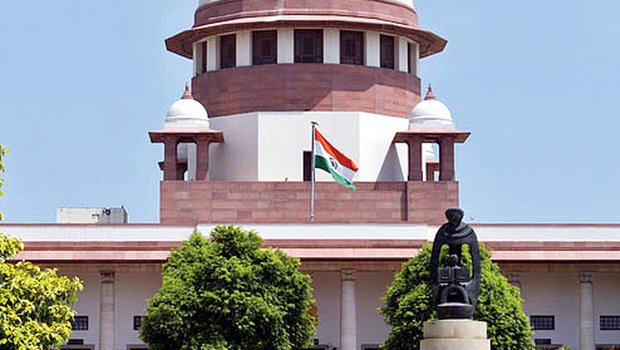
In a noteworthy and commendable judgment titled The State of Tamil Nadu & Ors Vs G Hemalathaa & Anr in Civil Appeal No. 6669 of 2019 (Arising out of SLP (C) No. 14093 of 2019) delivered by the Supreme Court on August 28, 2019, a strict, stern and strong message has been sent to all the High Courts by reiterating that in judicial service, the High Court can’t modify/relax instructions issued by the Public Service Commission. The Apex Court has clearly, categorically and convincingly observed that instructions issued by the Public Service Commissions to the candidates are mandatory and to be strictly complied with and the High Courts cannot relax/modify these instructions. This notable judgment serves to send an unmistakable message that all candidates must strictly comply with the instructions issued by the Public Service Commissions and if they don’t comply then even High Court too can’t grant them relief!
To start with, this latest, landmark and laudable judgment authored by Justice L Nageswara Rao for himself and Justice Hemant Gupta sets the ball rolling in para 1 by first and foremost pointing out in para 1 about G Hemalathaa that, “The Respondent is an Advocate enrolled in the Bar Council of Tamil Nadu. The Tamil Nadu Public Service Commission (for short, ‘the Commission’) issued a Notification dated 09.04.2018 inviting applications from eligible candidates for filling up 320 vacancies to the posts of Civil Judges in the Tamil Nadu State Judicial Service. The Respondent was successful in the preliminary examination conducted on 09.06.2018. The written test was conducted on 11th and 12th August, 2018. Results of the written test were announced on 19.09.2018 and the name of the Respondent did not appear in the list of successful candidates. Interviews were conducted from 27.09.2018 to 05.10.2018 and the final results of successful candidates were published on 05.12.2018. The Respondent came to know that another candidate belonging to the same community to which she belongs (Most Backward Class) was selected in spite of her performance not being satisfactory. The Respondent made a representation to the Commission to furnish her marks in the written examination. On 07.01.2019, the Commission conveyed to the Respondent that her Law Paper I written examination was invalidated in view of violation of the instructions to Applicants (hereinafter referred to as ‘the Instructions’) issued by the Commission.”
Needless to say, what we then see unfolding in para 2 is this: “The Respondent filed a Writ Petition in the High Court for a direction to declare her result and appoint her as a Civil Judge, provided she has secured more marks than the last selected candidate in the Most Backward Class category. The High Court directed the Commission to announce the result of the Respondent in Law Paper-I of the main written examination. If she was found qualified, the Commission was directed to conduct the interview of the Respondent as a special case. The Commission was further directed to complete the exercise and announce the final result of the Respondent within a period of four weeks from the date of the judgment. Being dissatisfied with the said judgment of the High Court, this appeal is filed.” 
Moving on, it is then pointed out in para 3 that, “The Respondent contended before the High Court that she did not violate any of the conditions stipulated by the Commission. She complained that the Commission wrongfully invalidated her Law Paper-I. The High Court summoned the answer sheets and found that the Respondent had underlined the answer sheet with pencil at several places in Law Paper-I. The High Court was also of the opinion that such marking was in clear violation of Instruction 22 (1)(II) of the Instructions issued by the Commission which prohibits candidates from using a pencil for any purpose. Instruction 22 (1)(II) provides that:
“Penalty for violation of Commission’s instruction in the descriptive type examination. 
The answer books of the applicants will be invalidated/marks deducted/debarred for violations of any one or more of the instructions, besides initiating criminal action wherever necessary.
I Invalidation.
II. Usage of whitener, sketch pens, pencil, colour pencils, multi-colour pens, Crayons or any other writing materials, for any purpose.””
On the one hand, para 4 brings out that, “When the Respondent was confronted by the High Court by showing the answer sheet, she submitted that it may have been done inadvertently and due to anxiety. The Respondent pleaded for leniency and prayed that a direction may be given to the Commission to declare her as having been successful in the main examination. The High Court accepted the submission of the Respondent that the underlining of some portions of the answer sheet in pencil was done unwittingly and inadvertently and that she did not gain any advantage from such marking. Being of the view that the Respondent cannot be disqualified for a mistake committed inadvertently, the High Court allowed the Writ Petition.” 
On the contrary, para 5 then states that, “Mr. R. Venkatramani, learned Senior Counsel for the Appellant submitted that the instructions given to candidates taking examinations for selection to the post of Civil Judges clearly bars the candidates from using a pencil in any manner. The instructions given to the candidates are mandatory and cannot be relaxed. Mr. Venkatramani contended that the initial stand taken by the Respondent that she did not use the pencil disentitles her from the relief sought for. No lenient view can be taken in cases of violation of the mandatory instructions as the order in favour of the Respondent will be treated as a precedent. If the Respondent is given the relief sought for the other candidates who have been disqualified will also claim the same relief.”
Going forward, para 6 then brings out that, “Ms. V. Mohana, learned Senior Counsel appearing for the Respondent vehemently argued that we should not exercise our discretion under Article 136 of the Constitution of India. According to her, there is no substantial question of law in the S.L.P. warranting our interference. She submitted that an error was committed by the Respondent which was rightly condoned by the High Court. She made a fervent appeal to us that the career of a meritorious backward class candidate should not be nipped at the bud.”
It cannot be lost on us that it is then envisaged in para 7 that, “We have given our anxious consideration to the submissions made by the learned Senior Counsel for the Respondent. The instructions issued by the Commission are mandatory, having the force of law and they have to be strictly complied with. Strict adherence to the terms and conditions of the instructions is of paramount importance. The High Court in exercise of powers under Article 226 of the Constitution cannot modify/relax the instructions issued by the Commission (M. Vennila v. Tamil Nadu Public Service Commission, (2006) 3 Mad. LJ 376).”
Bluntly put, it is then made clear in para 8 that, “The High Court after summoning and perusing the answer sheet of the Respondent was convinced that there was infraction of the instructions. However, the High Court granted the relief to the Respondent on a sympathetic consideration on humanitarian ground. The judgments cited by the learned Senior Counsel for the Respondent in Taherakhatoon (D) By LRs v. Salambin Mohammad (1999) 2 SCC 635 and Chandra Singh and Others v. State of Rajasthan and Another (2003) 6 SCC 545 in support of her arguments that we should not entertain this appeal in the absence of any substantial questions of law are not applicable to the facts of this case.” 
While rapping the High Court on its knuckles for wrongly granting relief to the Respondent, the Bench of Apex Court did not mince any words to say clearly and categorically in para 9 that, “In spite of the finding that there was no adherence to the instructions, the High Court granted the relief, ignoring the mandatory nature of the instructions. It cannot be said that such exercise of discretion should be affirmed by us, especially when such direction is in the teeth of the instructions which are binding on the candidates taking the examinations.”
Be it noted, para 10 then also brings out that, “In her persuasive appeal, Ms. Mohana sought to persuade us to dismiss the appeal which would enable the Respondent to compete in the selection to the post of Civil judge. It is a well-known adage that, hard cases make bad law. In Umesh Chandra Shukla v. Union of India (1985) 3 SCC 721, Venkataramiah, J. held that:
“13… exercise of such power of moderation is likely to create a feeling of distrust in the process of selection to public appointments which is intended to be fair and impartial. It may also result in the violation of the principle of equality and may lead to arbitrariness. The cases pointed out by the High Court are no doubt hard cases, but hard cases cannot be allowed to make bad law. In the circumstances, we lean in favour of a strict construction of the Rules and hold that the High Court had no such power under the Rules.””
Furthermore, it is then pointed out in para 11 that, “Roberts, CJ. In Caperton v. A.T. Massey 556 U.S. 868 (2009) held that:
“Extreme cases often test the bounds of established legal principles. There is a cost to yielding to the desire to correct the extreme case, rather than adhering to the legal principle. That cost has been demonstrated so often that it is captured in a legal aphorism: “Hard cases make bad law.””
Most significantly, it is then held in para 12 that, “After giving a thoughtful consideration, we are afraid that we cannot approve the judgment of the High Court as any order in favour of the candidate who has violated the mandatory instructions would be laying down bad law. The other submission made by Ms. Mohana that an order can be passed by us under Article 142 of the Constitution which shall not be treated as a precedent also does not appeal to us.”
Finally, it is then held in the last para of this noteworthy judgment that, “In view of the aforementioned, the judgment of the High Court is set aside and the appeal is allowed.” Very rightly said! There can be no denying or disputing it!
On a concluding note, it must be said in all fairness that this noteworthy and praiseworthy judgment by the Supreme Court sends out a very clear, categorical and unmistakable message that rules laid down by the Public Service Commission cannot be given a go by under any circumstances even by the High Court and they have to be strictly complied with always! No doubt, the Apex Court has also very rightly laid down that strict adherence to the terms and conditions of the instructions issued by the Public Service Commission to the candidates are mandatory and are of paramount importance! All the High Courts while ruling in such sensitive matters must always keep this latest, landmark and extremely laudable judgment always in mind! There can be no two opinions on it! 
Sanjeev Sirohi, Advocate,
s/o Col BPS Sirohi,
A 82, Defence Enclave,
Sardhana Road, Kankerkhera,
Meerut – 250001, Uttar Pradesh.

Vice President Releases Special issue of think India Quarterly on Faiz Ahmed Faiz

The
Vice President of India Shri M. Hamid Ansari  said that it had been observed that the poetry
of Faiz Ahmad Faiz blends skilfully classical sobriety and artistry with modern
incisiveness and ruthlessness of expression in exposing to light the turmoil
and revolutionary urges of the time.essing after releasing Special issue of
Think India” quarterly on Faiz Ahmad Faiz at a function here today, he opined
that Romance and revolution thus
became part of the same impulse and, in Faiz’s own words, “gham-e-jaana aur
gham-e-douran eik hi tajrabe ke do pehlu hain”. 
The resulting mix is overpowering;
it accounts for the popularity of Faiz in the subcontinent and beyond.
Shri Ansari said that the previous week had been a spiritually
uplifting one for him personally. On Friday he was in Dhakka participating in
the joint Bangladesh-India celebration of Rabindranath Tagore’s 150th birth anniversary. Today, he is here
to release this volume. Two great poets, both born Indian, who used the medium
of verse to reflect on issues of wider concern. One thought in evolutionary
terms, the other in revolutionary ones. The menu of options, a teasing one, was
laid bare.
Following
is the text of the Vice President’s address
:
            “I am happy to be here today to
participate in the release of the Faiz Centenary number of Think India.
It brings together writings and impressions of a good number of shaidaa ee yaan-e-Faiz the world over
and would be of particular value to the younger, post-Faiz, generation.
            This
week has been a spiritually uplifting one for me personally. On Friday I was in
Dhakka participating in the joint Bangladesh-India celebration of Rabindranath
Tagore’s 150th birth anniversary. Today, I am here to release this
volume. Two great poets, both born Indian, who used the medium of verse to
reflect on issues of wider concern. One thought in evolutionary terms, the
other in revolutionary ones. The menu of options, a teasing one, was laid bare.
            It
has been observed that the poetry of Faiz Ahmad Faiz blends skilfully classical
sobriety and artistry with modern incisiveness and ruthlessness of expression
in exposing to light the turmoil and revolutionary urges of the time. Romance
and revolution thus became part of the same impulse and, in Faiz’s own words, “gham-e-jaana aur gham-e-douran eik hi
tajrabe ke do pehlu hain”.
The resulting mix is overpowering; it accounts
for the popularity of Faiz in the subcontinent and beyond.
Faiz saheb’s verses challenge authoritarian
edifices and evoke hope for a better tomorrow:
Kahaan hai manzil-e-raahe tamanna hum bhi dekhen gai
Yeh shab hum par bhi guzre gi, yeh farda hum bhi dekhen
gai
Theher ai dil , jamaal-e-roo-e- zaiba hum bhi dekhain gei
Again, in the well
known lines of Tarana:
Darbaar-e-watan main 
ek din sub jaane wale jaaen ge
Kooch apni saza to pohnchen ge, kooch apni jaza le jaaen
ge
Ai khak nasheeno, uth baitho, woh waqt qareeb aa pahuncha
hai
Jab takht  giraae
ja ain ge, jab taaj uchale jaa en ge
And, there are
expressions of despair emanating from the harsh experience of life:
Himmat-e-ilteja nahin baaqi—Zabt ka howsala nahin baaqi
Ho chuka khatm ahd-e-hijr o wisal—Zindagi main maza
nahin baaqi
Or
Jo chal sako to chalo ke raahe wafa bahut mukhtasar
hui hai
Muqaam hai ab koi na manzil, faraaz-e-daar o rasan se
pehle.
            The time Faiz Ahmad Faiz spent in
jail produced some of his most evocative verses. He explained it convincingly: Jail khana, aashqi ki tarah, khud eik
bunyaadi tajraba hai,jis main fikr aur nazar ka eik aadh naya dareecha khud
bakhud khul jaa ta hai.
            The volume before us also brings
forth some delectable episodes in the life of Faiz. One relates to his meeting
with Jazbi in Lucknow
in 1936. Another to how, on being recruited in the public relations department
of the army in World War II, he developed a motivational approach for the
soldiers and for which he received an OBE.
            One of the contributors to this
volume has summed up the sentiments of many who read and cherish Faiz: “He
makes us feel good about ourselves. He makes our lives bearable. He gives us a
glimpse of hope.”
            One last word before I conclude. In
November 1984, I was wandering in Urdu Bazar and acquired a collection of Faiz
entitled Waraq Waraq. It was edited
in 1975 by a distinguished predecessor of mine in this office, the late Shri
Krishan Kant. In an erudite Introduction, he dwelt on various aspects of the
poet’s work. I will share with you his concluding lines:
Bharat main jahan Urdu kasm-pursi ke aalam main hai,
nai nasl Faiz ke kalam ko surma samajh kar aankhon se lagaati hai. Mehnat aur
sarmay ki kash ma kash ka shaoor jun jun awam main barhta jai ga, aane wali
naslain usai ek aham tareeki aur funni dastawaiz ke taur par harz-e-jaan banaen
ge.  

            The poetry of Faiz Ahmad Faiz earned
him immortality in his lifetime. It is incumbent on us, all of us, to pass on
this precious heritage to succeeding generations. D.P. Tripathi ji has earned
our gratitude by bringing forth this collection of writings”.

Courtesy: https://pib.gov.in/newsite/PrintRelease.aspx?relid=72053

Shri Sharad Pawar Released Think India Quarterly

Shri Sharad Pawar, Union Minister of Agriculture and Food Processing Industries released the special issue of Think India Quarterly
on Indian Agriculture. While appreciating the effort, he remarked that
thinking is not an easy task as it requires in-depth study and
understanding of the issue with all ramifications. Shri Pawar raised
some of the important issues and challenges before Indian Agriculture
in his speech. He reminded the contribution of stalwarts such as Dr C
Subramaniam, Shri Jagjivan Ram ji, Dr B P Pal and others who made
significant contributions in accelerating agricultural growth in India
which ultimately led to globally acclaimed green revolution.  Shri Pawar
reiterated the need to make Indian Agriculture more profitable through
processing and marketing initiatives and offering remunerative prices
to farmers.
Shri Sharad Pawar Released Think India Quarterly
Dr M S Swaminathan, noted thinker and Member of Parliament,
highlighted the enormous employment potential of the agricultural
sector despite the slow growth while presiding over the function. Dr
Swaminathan advocated a judicious blending of technology with policy
intervention to make a difference in the Indian Agriculture. He pointed
out the huge untapped potential of agricultural growth in eastern part
of the country which can be developed as an asset in the food security
of the nation.
Dr (Ms) Syeda Hameed, Member (Health Grp, Gender & Equity Grp), Planning Commission, emphasized the important role of Mahila Sashaktikaran Yojana in agriculture and rural development of the country, which needs to be extended to far and wide areas across social groups.
Think India Quarterly is an initiative of Vichar Nyas
Foundation which is a modest attempt to re-emphasize the value of ideas
in both understanding and changing society, culture and politics. The
special issue on Indian Agriculture, edited by D. P. Tripathi, presents
thought provoking articles on various facets of Indian agriculture by a
galaxy of thinkers and innovators.
The release function was attended by policy planners, academia, media and other stakeholders in agriculture.