Women Politics

Women in politics in the cutting edge time are underrepresented in many
nations around the world. Ladies have insufficient open doors in social
interest, particularly in taking a stab at political rights and power in
the administration and diverse institutions. This verifiable
inclination still perseveres, in spite of the fact that ladies are
progressively being politically chosen to be heads of state and
government. All through the world ladies face deterrents to their
investment in governmental issues. These boundaries are to be found in
winning social and financial routines, just as in existing political
structures.
 Women, as the traditional essential overseers of youngsters,
frequently have a more unmistakable job than men in upholding for kids,
bringing about a twofold profit as far as the advantages of women
representation. Women delegates advance women rights, yet additionally
advance the privileges of kids.

Chidambaram Getting No Respite From Courts

It is really astonishing to learn that the former Finance Minister of India who is also an eminent and senior Supreme Court lawyer – P Chidambaram has been refused anticipatory bail by the Delhi High Court just recently in INX Media Scam Case pertaining to corruption and money laundering! What is even more astonishing is that this has happened notwithstanding that P Chidambaram was represented by a battery of senior and eminent lawyers led by stalwarts like Kapil Sibal and Abhishek Manu Singhvi! What is most astonishing is that Justice Sunil Gaur who authored the latest judgment delivered by the Delhi High Court in the case titled P Chidambaram Vs Central Bureau Of Investigation in Bail Appln. 1316/2018 & Cri. M.A. 10976/2018 And Bail Appln. 1713/2018 & Cri. M.(B) 1163/2018 in P Chidambaram Vs Directorate Of Enforcement, Delhi has minced just no words to observe that this was a “classic case of money laundering”. He also said point blank that facts of the case reveal that the petitioner is the king pin or the key conspirator.
Be it noted, just a day after the Delhi High Court denied P Chidambaram’s plea for anticipatory bail in two cases of alleged corruption and money laundering linked to INX Media, he also failed to get a respite from the Supreme Court despite the urgency cited by his lawyers and his legal team comprising of senior advocates Kapil Sibal, Vivek Tankha, Salman Khurshid and others to take up his petition for interim bail before a Supreme Court Bench of Justices NV Ramana, Mohan M Shantanagoudar and Ajay Rastogi in Court No. 3. Even as the CBI and ED issued separate lookout notices for him who remained missing – Chidambaram’s counsel was informed by the Supreme Court Registrar that the plea had been listed for Friday. Congress party chief spokesperson Randeep Surjewala while talking about Supreme Court’s refusal to accede to Chidambaram’s plea for an urgent hearing said that in his years as a practising lawyer, he had never seen “technicalities in the Supreme Court registry coming in the way of fundamental rights”. He questioned that, “Can a small technicality prevent the honourable Supreme Court, whom every citizen respects and looks upto, refuse to even hear cases.” 
It may be recalled that on May 15, 2017, the CBI registered an FIR alleging irregularities in the FIPB clearance for INX Media to receive overseas funds of Rs 305 crore in 2007 during Chidambaram’s tenure as Finance Minister in the UPA government. In 2018, the ED lodged a money laundering case. In its submissions, the CBI alleged that Indrani and Peter Mukerjea had made a payment of $5 million and $4.50 lakh to Mr Chidambaram in 2007-08 and 2008-09, respectively, for settling issues related to violation of the Foreign Exchange Management Act (FEMA) by their former companies, INX Media and INX News. Sibal and Singhvi argued that the FIPB approval to INX Media was given by six Secretary-level officers but no action had been taken against them. 
While countering the defence allegations, the Solicitor General of India Tushar Mehta said that the former Minister needed to be questioned on the money trail, alleging that he had played a key role. Mehta said that the CBI had to interrogate Mr Chidambaram in custody as he was non cooperative and evasive in replies in the corruption case of monumental magnitude and the agency was not extorting his confession. The court has allowed Mr Chidambaram’s family and lawyers to meet him for half an hour every day during his custody.
We also saw how a Delhi court allowed the CBI to take Chidambaram into its custody for four days in connection with its probe into the alleged corruption in the INX Media case. Special Judge Ajay Kumar Kuhar while remanding him in custody till August 26 said in a 10-page order that, “It is impressed upon the investigating agencies to ensure that the personal dignity of the accused is not violated in any manner. Considering all the facts and circumstances of the case as brought to the notice of the court, I am of the view that police custody remand of accused P Chidambaram is justified.” He also made it clear that, “The allegations made against accused are serious in nature and there cannot be a dispute with the fact that a detailed and in-depth investigation is required in the present case.”
It is well known that in the INX Media case, the company’s promoters – Peter and Indrani Mukerjea who are now in jail for allegedly killing Indrani’s daughter from an earlier marriage had allegedly approached Chidambaram to get foreign investment clearances. Indrani turned approver in this case and gave a testimony against Chidambaram which largely form the basis of the CBI case against him. Founded in 2006 by the Mukerjeas, INX Media made an application seeking clearance to a foreign investment proposal on March 13, 2007. The application was made to the Chairman of the Foreign Investment Promotion Board (FIPB) which was an erstwhile inter-ministerial body that was responsible for processing FDI proposals. It was chaired by the Economic Affairs Secretary and had other permanent members including the Secretaries of the Department of Industrial Policy and Promotion, Commerce, Economic Relations in the Ministry of External Affairs and Overseas Indian Affairs. 
Be it noted, the company had proposed to get FDI worth Rs 4.62 crore, which was cleared by the FIPB with an approval from then Finance Minister Chidambaram. But in violation of the conditions, the company got Rs 305 crore with a premium of Rs 800 per share. This ostensibly created suspicion which prompted the Income tax (IT) department to issue a letter to the FIPB demanding a probe into the matter. To wriggle out of this crisis, the company entered into a criminal conspiracy with Karti Chidamabram who is the minister’s son and the promoter of Chess Management to get the issue addressed amicably by influencing public servants in the FIPB, according to an FIR filed by the CBI. 
What followed next was that INX Media was advised by the FIPB to file a fresh application for the downstream investment already made in the company. CBI alleged that the request of the IT department to probe the matter was also scuttled and the Finance Ministry not only granted fresh proposals, but also “misinformed the investigation” being conducted by the IT department. It has further alleged that an amount of Rs 10 lakh was paid to Advantage Strategic for management consultancy charge towards the FIPB notification and clarification. The company also generated invoices of Rs 3.5 crore towards INX Media.
Truth be told, according to CBI, Advantage Strategic is indirectly controlled by Karti, which has been strongly denied by him and his father. It is also alleged that INX Media promoters Indrani Mukherjea and Peter paid $5 million and $4,50,000 US dollar to Chidambaram in 2007-08 and 2008-09, respectively for settling the issues relating to violation of FEMA. Special Judge Ajay Kumar Kuhar went on to say that allegations of payment being made to the accused in the year 2007-08 and 2008-09 are specific and categorical. In his order, he further said that, “The trail of this money, if so paid, is to be ascertained. No doubt it is a case, to a large extent based on documentary evidence, but those documents need to be traced and their value and their worth for the purpose of the investigation in this case is to be ascertained.”
On his part, Chidambaram said that neither he nor any member of his family had been made an accused in the INX Media case. He said no chargesheet had been filed in the case and the FIR by the CBI did not impute any wrongdoing by him. He said that he will respect the law even if it is applied with an “unequal hand” by the investigating agencies.
In conclusion, it may well be said that it is a big setback for P Chidambaram as Delhi High Court has not just declined his bail plea but also has not hesitated in bluntly saying that facts of the case prima facie reveal that the petitioner is the king pin or the key conspirator. It is because of this adverse order that CBI proceeded ahead to arrest him from his house. Not just this, even the Special CBI Court after hearing both the sides gave the custody of P Chidambaram to CBI for four days till August 26. But P Chidambaram who has also appealed in the Supreme Court is still hoping to get some respite from it. Let’s wait and see what happens finally! But one thing is for sure: P Chidambaram who is a former Finance Minister as also former Home Minister has handled many important portfolios in the UPA regime is facing troubled waters which he has never faced before but he is also determined to not give up so easily! Many top and eminent lawyers of the Supreme Court like Kapil Sibal, Abhishek Manu Singhvi and others are defending him with full gusto and he himself is a senior lawyer of Supreme Court and certainly he won’t allow his legal acumen to not be fully utilized in his own case! This is certainly the toughest challenge of his high-profile life that he has faced till now as odds are heavily stacked against him and his son Karti! Only time will tell what happens finally in his case! We have to keep our fingers crossed till then!
Sanjeev Sirohi, Advocate,
s/o Col BPS Sirohi,
A 82, Defence Enclave, 
Sardhana Road, Kankerkhera,
Meerut – 250001, Uttar Pradesh.

Digital Media

Digital media can be made, seen, circulated, changed and saved on
advanced hardware gadgets. Digital media frequently appears differently
in relation to print media. This type of media has a noteworthy
expansive and complex effect on society and culture. Joined with the
Internet and individualized computing, digital media has caused
problematic development in distributing, news coverage, advertising,
etc. Digital Media is a mix of innovation and substance, and building
advanced media items requires groups of experts with different
aptitudes, including specialized abilities, aesthetic aptitudes,
scientific and creation coordination abilities. 
These abilities should
be adjusted in a group, with all colleagues concentrated on making the
best client experience.  Digital media has likewise presented new
difficulties to copyright and licensed innovation laws, encouraging an
open substance development in which content makers deliberately
surrender a few or the majority of their legitimate rights to their
work.

Fake News

Fake news is a kind of sensationalist reporting or purposeful publicity
that comprises of intentional disinformation or deceptions spread by
means of customary print and communicate news media or online social
media. The incorrect information is frequently brought about by
correspondents paying hotspots for stories, an exploitative practice
called checkbook news coverage. Digital news has brought back and
expanded the use of fake journalism. The news is then frequently
resonated as falsehood in online life however at times discovers its way
to the predominant press also. 
The significance of fake news has
expanded in post-truth legislative issues. For news sources, the
capacity to pull in watchers to their sites is important to create web
based publicizing income. Simple access to online commercial income,
expanded political polarization, and the prominence of web-based social
networking, basically the Facebook News Feed, have all been embroiled in
the spread of phony news, which contends with genuine news stories.
Fake news is composed and distributed for the most part with the goal to
deceive so as to harm an office, substance, or individual, as well as
addition monetarily or politically, frequently utilizing dramatist,
unscrupulous, or by and large created features to build readership.
Likewise, misleading content stories and features win promoting income
from this action

Photojournalism

Social media encourages you interface
up with individuals everywhere throughout the world. The positive impact
of online networking on kids incorporates, adapting new things,
interface with more distant family and companions. It gives powerful
stage to upgrading tyke’s information. Web based life rouse youngsters
to show signs of improvement at correspondence and supports opportunity
of self-articulation. Online networking encourages the advancement of
specialized ability and handy comprehension of innovation in the tyke.
The impermeability of social media guarantees that there is no control
on the extent of data. Such circumstances can prompt kids chancing upon
disgusting, unsafe or realistic sites that may influence their reasoning
procedure.
Digital harassing is
another developing pattern among internet based life sites. Cyber bully
can have perilous and conceivably lethal impacts. It claims numerous
exploited people every year.

Numerous children are affected by the ground-breaking promoting they see
via social media sites, and it unequivocally impacts their purchasing
propensities. These youngsters and their folks should know about how
they are focused on so more brilliant decisions can be made around their
ways of managing money. Investing an excess of energy can likewise
influence your youngster contrarily and regularly lead to web based life
dependence. Enslavement can show itself as different indications and
may even influence your youngster’s physical health. An excess of social
media can influence the kid’s capacity to create solid relational
connections. The children are flexible, and the torrential slide of data
can overpower them. Even though there are positive effects of social
media on children but on the other side the social media sites have
negatively affected the minds of children.

TIME!

What is time? The passing seconds, hours and
days? The past, the present and the future?
We do not
exactly know, yet. But the concept of time has been around in all
civilizations, Religion, philosophy, science even poetry and arts. The concept
of time has always been there.  After all
it is the time that spends us. Nobody sane (and human) can ignore thinking
about this.
By common
sense, we all understand there was a past, there is a present and most likely
there will be a future. The events are interconnected the past affects the
present and the present will affect the future.
There is a
causality, and anything can only affect the future events it cannot have any
impact on the past.
Such
concept also make it interesting to think about paradoxes when we consider the
time travel.

Concept of time in Philosophy
and Religion

All religions deal with the concept of time in
their own way. While some are quite similar, others differ from each other. But
most of them go like, at t=0; God created the stars, earth etc. He set the
things in motion. Some religions also talk about cyclicity of time. How eras
come and go. And how they will come again. They talk about a past- where we did
something, and we are being rewarded or punished for it now. It also talks
about how our present behavior will influence our future.
Time helps religion to establish a good
behaviour norm in society. It helps them calm the quirky minds who would
otherwise fall into despair or revolt.
Astrology, which hovered very closely between
religion, philosophy and sometimes even science, is a way to predict one’s
future based on one’s past and present.

Concept of time in Science

Time was considered absolute and sacrosanct in
the world of physics until Einstein came along in the early 20th
century. What he said was something more fundamental and purer about the nature
of the universe. His entire reasoning was based on the logic that “laws of
physics would be same for everyone irrespective of their nature of
(non-accelerated) motion.”
This therefore posed a new challenge. From
different experiments and observations, we had found that speed of light
remains constant through all conditions. So, if somebody is moving and still
observing the same speed of light as we do- then they must experience the space
and the time differently.
This opened up a new branch of science. Time
cannot be absolute. Every observer will experience it differently so that their
experience about the laws of physics remain same. It further goes on to talk
about the factors of time dilation, space dilation etc. It also gave raise to
topics of paradoxes like “Twin brother paradox”.

Conclusion

Time is definitely a fabric that helps us
understand a lot about the universe. But, as physics puts it, perhaps our
experiences of physical laws are more fundamental than the time itself. And
that goes in sync with philosophy also.
You may be 50 years old, but how many days have
you lived? How many days do you remember? Only that part is the meaningful
life.
As an old dialogue goes-
“Do not count the life in days but count the
days in life.”

Being Human: An evolutionary Story (Part 1)

How did we get here?
Sometimes this is the most important question
one can ask oneself. Corporations, individuals and even nations do this
introspection. But most of the time this is done post a failure to draw lessons
and improve in future. But what if we do not know what failure looks like?
For example, we have generation(s) who think
that they were happier in their childhood, in their villages, living the lives
of their parents. Nothing stops them from going back to that world, from
burning their mobile phones and deactivating their Facebook accounts. But
nobody does. We march forward- even when we know we have left our happiest
habitat. What kind of success is this? Why do we move in wrong direction
despite having all the signs that happiness lied the other way? Are human
beings destined to be doomed?

Chapter 1: Making of the Human

Humans were a nobody among
thousands more powerful species 70000 years ago. How did we climb so high so
fast? Brains you say- but that does not help against lions or floods. Human
beings learned to make and use stone tools thousands of years later. Brains may
be the reason for our might today, but it definitely was not for many thousands
of years.
The ingredients of the rise of
humans is a perfect story of butterfly effect.
It all started with human’s
ability to speak. The voice box moved up in the throat allowing us to generate
thousands of different sounds- much more than any animal ever before. We
started producing sounds, talking to each other, gossiping, adding more details
to our communications. If we wanted to inform a fellow human being that a group
of lions is approaching, we did not just say lions like most other animals did.
We added much more information- how many, what age, how hungry, what gender?
This helped us prepare well, prepare for defense and counterattacks.
We started creating stories, that
we would pass on to our children, and they to their children and so on. Our
knowledge was not limited by knowledge of one individual- as it was in case of
most other animals- but our knowledge was the collective knowledge of our
present tribes and our forefathers. If one human being invented fire, no one
else ever had to do it again! The knowledge would automatically come through
tribe, through generations! Thus, humans had more time to learn new things, and
expand horizons. If we are sitting today in a comfy room on a laptop- it is on
the shoulder of millions of our fellow humans and forefathers that we are
sitting.
And of all things, how it
started- Habit of gossiping!

This is also interesting to note that this
evolution was kind of counter intuitive. The upward movement of voice box meant
that we ran a risk of choking. We developed ability to cough a few thousand of
years later. So, this seems like a counterintuitive step of evolution. Or,
perhaps the habit and need of gossiping is far deeper inside us than we know….

Hindi as a National Language

Annual Hindi Diwas

14th September has been designated
as “Hindi Diwas”- meaning “Hindi Day”. Authors, speakers and various
contributors of different capacity towards promotion of Hindi, are recognized
and awarded on this day. Like many other festivals and days of the country,
this day has also lost its meaning and purpose. But even while this day has
failed to achieve anything significant, it always manages to achieve one thing-
that is attracting the supporters and criticisers of “Hindi as a National
Language”.
This year, the feud got kicked off by Home
Minister Amit Shah, while he was speaking at a ceremony on Hindi. He said, “While
diversity in languages is the strength of our nation, a national language
needed so that foreign languages and cultures do not overpower our own”.
He recognized Hindi as the most capable national language candidate.  Of course, this got twisted by all degrees by
various leaders for their interests. But Honorable Home Minister is not the
first person to say this. Many greater leaders have said similar things and
more passionately. Mahatma Gandhi- who was perhaps the first true National
Leader, said exactly similar things. Even his first language was not Hindi.
Interestingly, Hindi is not first language of Home Minister either. So, it is
interesting to understand why Hindi brings out such divisions? Why some
non-native speakers of Hindi vouch for Hindi, while others fight it fiercely.

History of Indian
Languages

Art XVII of the Constitution of India designates
Hindi as the official language of the Union and a clause “or in
English” is added for carrying out daily official work. Though English was
to be phased out in 15 years post the implementation of the constitution, but
such proposals have faced severe protests from non-Hindi speaking states.
In addition to official language, constitution
also recognizes 22 scheduled languages- English is not part of this list. Below
is the count of language wise speakers as per the Census 2011.
Language
Speakers (in lakhs, 2011)
Hindi
5280
Bengali
972
Marathi
830
Telugu
811
Tamil
690
Gujarati
555
Urdu
507
Kannada
437
Odia
375
Malayalam
348
Punjabi
331
Assamese
153
Maithili
136
Santali
73
Kashmiri
68
Nepali
29
Sindhi
27
Dogri
26
Konkani
22.5
Manipuri
18
Bodo
14.8
Sanskrit
0.2

What should be our way
forward?

As you can see, Hindi is the largest language
spoken by almost 40% Indians. If you add Hindi-family languages together, the
count would be even higher. So naturally Hindi has the highest potential of
becoming the language that can thread the pearls of India.
So why are there protests? Welcome to democratic
freedom!
Every voice matters. So does every choice. Why
would anyone give up their choice unless they see any gain from it? And this
cannot be done by force or law. That is where policymakers have been making
mistake. Hindi does not offer any more advantage than the other Indian
languages as far as work is concerned. In fact, the widely availability of
texts, research and other materials in English- makes English more efficient
language than most other languages of the world. There is no harm or shame in
acknowledging this.
So, in such scenario, what role Hindi can play?
Well, English can be language of minds, but matters of heart belong to Hindi.
There is no better option than this. But encouraging matters of heart is
totally different from encouraging matters of mind.
The pure Hindi is hardly spoken by a handful of
people in informal environment. There are tens of thousands of dialects of
Hindi and they all come to together in this beautiful language. We have
incorporated words from Awadhi, Brij, Magahi, Maithili, Bhojpuri, Punjabi,
Marathi, Bengali, Urdu, Farsi and even English. We will have to go further- we
can incorporate more languages. This can only happen when interaction between
two different cultures happen more often. School meets, sports meet, Melas and
other such informal gatherings can be the perfect way to do this.
Hindi deserves to be the language of hearts,
and this cannot be done formally. We have to be informal, experimental and
open-minded about this. Otherwise petty politicians will keep using this topic
as to create divide in the society.

Hindi is the language of coexistence. Its growth will never be at the cost of any other language: Shri Amit Shah

Union Minister of Home Affairs Shri Amit Shah graced the Hindi Divas Samaroh 2019 as Chief Guest today at Vigyan Bhawan in New Delhi. Also present on the dais were Ministers of State for Home Affairs Shri Nityanand Rai and Shri G Kishan Reddy, as well as Secretary and Joint Secretary, Department of Official Language.
Shri Shah said that while unity in diversity is India’s defining trait, a common language is needed as a culturally unifying factor. Shri Shah remarked that even Gandhi ji and Sardar Patel, who forged a united India, appealed to people to accept Hindi as the national language. Shri Shah lauded the work done by the Department of Official Language in popularizing Hindi, and appealed to citizens to work towards making Hindi the most widely used language in the world. Shri Shah also emphasized Hindi as a factor that unites India.
Shri Shah appealed to all to get connected with Hindi. He noted the unanimous consensus for Hindi as national language in the Constituent Assembly, in spite of the Assembly’s sheer diversity. He said that this decision was an important factor in ensuring cultural unity of India. Noting on the linguistic richness of India, he said that the nation was home to 122 languages and more than 19500 dialects.
Shri Shah said that a country that forgets its language kills its cultural existence. Language connects us to the roots of the nation. Addressing the youth of India, Shri Shah called for introspection and said that if we lose our language, we will be cut off from our culture. He asserted that the richest languages of the world belong to India. The depth of Indian languages is unparalleled, because of the equally unparalleled depth of Indian culture. 
Shri Shah said that we must leave the inferiority complex towards Hindi and our other languages that has set in due to colonial hangover. He called for greater use of the national language in all aspects of life. He said that only when we understand the importance of Hindi, can it thrive and prosper. He said that we must be proud of our language. Noting the role played by teachers in the growth of languages, he said that teachers and educators must instil a sense of pride about Hindi in students.
Shri Shah said that while diversity in languages is the strength of our nation, a national language needed so that foreign languages and cultures do not overpower our own. He proclaimed that next year, the Hindi Divas Samaroh would be a public program, as Hindi belongs to the people. He said that the Government would take Hindi Divas outside Delhi, and would celebrate a Hindi Saptah across the country. He called Hindi the heart and soul of the freedom struggle.
Shri Shah noted Vinoba Bhave’s love for Hindi and Gandhi ji’s assertion that a nation is mute without its national language. He said that our power to express our culture will die in the absence of our national language. Quoting Dr. Ram Manohar Lohiya, Shri Shah said that without Hindi, democracy is not possible in India. The language of the state should be that which people can understand. He remembered Purushottamdas Tandon, who proclaimed national language to be the lifeblood of a nation.
Shri Shah remembered former Prime Minister Shri Atal Bihari Vajpayee as the first Minister of External Affairs to give a speech in Hindi at the United Nations in 1977. He hailed this as a seminal step to break the inferiority complex of Indians with respect to Hindi. He also hailed former Minister of External Affairs Sushma Swaraj’s contribution to the global growth of Hindi, who encouraged the UN to use more Hindi, including on Social Media. This eventually led to the Hindi Twitter account of the UN.
Praising the Prime Minister’s commitment to Hindi, he noted that  wherever the Prime Minister addressed expatriates, he spoke in Hindi. Shri Shah noted that the Prime Minister addressed even the  UN General Assembly and the World Economic Forum in Davos in Hindi, making him the first head of government to address WEF in a national language other than English. 
Shri Shah called upon institutions and individuals to be committed to the growth and use of Hindi. He spoke of the need to proliferate Hindi in technical fields like medicine, engineering and law. He expressed confidence that Hindi would have reached ever greater heights by 2024 elections. He asserted that the growth of Hindi will never be at the cost of any other language and added that Hindi is the language of coexistence.
Speaking on the occasion, Minister of State Shri G Kishan Reddy said that while Telugu was his mother tongue, he had equal love for Hindi. He said that a mother tongue and national language must go together. He noted that the Constituent Assembly accepted Hindi as a national language, as it had been the unifying thread between cultures,  religions and regions during the freedom struggle. He called Hindi a source of self-pride for the country. He noted the famous Tamil poet Subramania Bharathi’s love for Hindi. He added that Hindi is India’s greatest social and cultural heritage and is emerging as a powerful cultural capital of India. He remarked that even multinational firms were accepting Hindi as a functional language. He noted the growing popularity of Hindi with India’s films, and said that the growth of Hindi on the global stage adds to India’s soft power. He advocated a greater use of IT for the development and popularization of Hindi.
Minister of State Shri Nityanand Rai said that languages are the souls of societies and nations. People express themselves in their languages. He added that Hindi consists of our emotions and aspirations, and acts as a connecting language for the whole of India. He called Hindi the symbol of India’s democratic system and said that our nation’s identity depends on the strength and popularity of our national language. He noted that the Constitution has given us the responsibility of the growth and development of Hindi and called for greater use of Hindi in the official work of Union Government and that of various regional languages in the official work of State Governments. He said that Antyodaya is our goal, and Hindi plays a vital role in achieving that goal, as it is the commonest language of communication across the nation. 
Shri Shah launched the E-Saral Hindi Vakya Kosh and E-Maha Shabda Kosh Mobile App, both initiatives of the Department of Official Language that aim to harness information technology for the growth of Hindi. He awarded Rajbhasha Gaurav Puraskar and Rajbhasha Kirti Puraskar to government departments and public sector units respectively for their contribution to Hindi.

The 15th Finance Commission meets with the Ministry of Women and Child Development

The 15th Finance Commission headed by Shri N.K. Singh and including Members and senior officials of the Commission held a meeting with the Union  Minister for Women & Child Development Smt. Smriti Z Irani and her team of senior officials of the Ministry of WCD.
  
The Ministry’s proposals for enhanced allocations for its important schemes covering Anganwadi Services, Poshan, Women Welfare, Women Safety, Women Empowerment were discussed in details.
Among its major recommendation for the consideration of the Commission: 
  • The Ministry of WCD has requested the 15th Finance Commission to include gender Budgeting in its fiscal devolution formula. 
  • In the Commission’s Vertical Devolution the Ministry has requested for prioritizing gender concerns within schemes/ programmes – with a minimum compulsory allocation of 25% to 40%.
  • In its horizontal devolution the Commission has been requested to incorporate gender criteria (Child Sex Ratio and Female Labour Force Participation) as a criteria for horizontal devolution of funds between States. 
  • The Commission has also been asked to provide for basic and performance grants under which additional activities could be added to current activities of Local Bodies for promoting gender equality.
The Ministry of WCD has also called for: 
  • Incentivizing performance: States with better performance in Women Education/ Health Outcomes/ LFPR/ Nutritional Outcomes may be considered for incentive grants.
  • Fiscal Equalization: Gap funding for States to reach normative levels of social sector spending.
  • Enhanced Funding: up from 1% to 1.5% of the Union Budget for WCD.
  • Development of CDI/ GDI based on International Practice.
  • Revamped indicator for women participation in workforce.
  • Increased allocation for Health and Education.
  • Reservation of certain percentage of funds for Women centric development works by local bodies.
  • Increased funding for capacity building of elected women representatives.
  • Women & Wataer: Jal Shakti Abhiyan / Augmentation of Water Resources.
  • Mechanism for single data source for SDGs with Annual Measurements.
The Commission has noted all the issues raised by the Ministry and has assured that they would look into all of them carefully while framing its  report to the Union Government

JALDOOT’ will encourage people’s participation for Water Conservation

Union Minister for Environment, Forest & Climate Change and Information & Broadcasting, Shri Prakash Javadekar said today that ‘Jaldoot’ is a unique initiative and it will take the message of water conservation to masses.  After flagging off  the ‘Jaldoot’  a travelling exhibition arranged by Regional Outreach Bureau , Pune under the Ministry of Information and Broadcasting, Mr. Javadekar said that Jaldoot will visit 8 districts of Maharashtra in next 2 months will also tell about the work done by the government in last 100 days. The exhibition highlights bold initiatives and decisive actions taken by the government.   
 
The Jaldoot will travel trough Pune , Ahmadngar, Nashik, Jalgaon , Buldhana, Amravati  and Solapur districts. Mr Javadekar further said that Modi government has given the priority for water conservation; a new ministry of Jalshakti has been formed to ensure that there will not be scarcity of water in the country. The central government is committed to provide water to every household by 2024 he added. On this occasion ‘Swachhta’ oath was administered by Shri Javadekar to participants. Shri Javadekar also appreciated the exhibition prepared for this.  
 
Shri Girish Bapat, Member of Parliament ,Smt Supriya Sule, Member of Parliament , Shri Satyendra Sharan, Director General, Regional Outreach Bureau, Shri R . N. Mishra Director General Press Information Bureau West Zone, Shri D J Narein ADG , Shri Santosh Ajmera Joint Director ROB Pune and other dignitaries were present.   
Jaldoot: Backgrounder
  • The Hon’ble Prime Minister, has launched the campaign on ‘Janshakti se Jalshakti’ abhiyan. The people are to join hands for water conservation and create a jan-andolan along the lines of the Swachh Bharat Mission, to save water and secure the future.
  • To tackle the water crisis looming the country, the Government of India launched the JALSHAKTI ABHIYAN, a water conservation campaign focusing on 1592 stressed blocks in 256 districts across the country.
  • The Regional Outreach Bureau, ROB, with its headquarter at Pune for Maharashtra and Goa region is the office under the Ministry of Information and Broadcasting, Government of India. It takes care of various outreach activities and development communication needs of the Central Government.
  • ROB in association with MSRTC (Maharashtra State Road Transport Corporation) is launching the Jaldoot campaign. The ROB has redesigned the bus, to create the Jaldoot : Travelling Exhibition on Jalshakti Abhiyan. The exhibition consists of various information display panels and Audio-Visual components. The Song &Drama Division cultural troupes and artists travelling along the bus would create awareness about the Government’s initiative.
  • The field units at those locations would have different activities like competitions, rallies, cultural programmes on the side-lines of visit of the bus, in order to create awareness on water conservation efforts.
  • The JALSHAKTI ABHIYAN focus on five key aspects:
  • Water Conservation and Rain Water Harvesting
  • Renovation of Traditional and other Water Bodies
  • Reuse of Water and Recharging of structures
  • Watershed Development
  • Intensive Afforestation

Nine Lakh Youth from Pune have benefitted from MUDRA Scheme: Union Minister Shri Prakash Javadekar

Nine Lakh Youth from Pune have benefitted from Mudra Scheme, schemes like Bharatnet, Ayushman Bharat, Pradhan Mantri Matrutv Vandana Yojana too are making rapid progress, said Union Minister for Environment, Forest & Climate Change and Information & Broadcasting, Shri Prakash Javadekar. He was speaking after the first meeting of District Development Co-ordination and Monitoring Committee (DISHA) in Pune, which took place today under the chairmanship of Shri Javadekar.
The Minister said, “Meetings of Disha are held to plan for the schemes, and monitor their execution. Mudra scheme is making rapid progress in the district and 9 lakh youths from district have been allotted loans worth Rs 8000 crore under it. Out of 58 railways stations in Pune division, 46 have been equipped with wifi facility. 5 Escalators too have been installed.”
“The Passport Seva Kendra in Baramati has distributed 5000 passports so far and has made the life of layman easier. Passport seva kendras have been started at 50 places in 5 districts. Bharatnet has given optical fibre connections to 790 Gram Panchayats in district and among them 155 have wifi facility, with average daily use of 20 GB. The schools are being provided with sports material and sports hour too will be made compulsory in schools”, Shri Javadekar added.
The Minister further said that National Health Mission comprising Ayushman Yojana and othe schemes has succeeded in reducing the Infant Mortality rate, Maternal Mortality rate, birth rate and death rate in Pune. “60,000 women in Pune have so far benefitted from Pradhan Mantri Matrutva Yojana.The target for building of toilets has also been achieved and the ranking of Pune in Swachhta has jumped from 10th place to 2nd place. The anganwadis are making rapid progress due to participation of people”.
While wishing the people on the occasion of Hindi Divas, Shri Javadekar reiterated the government policy of promoting all regional languages. He allayed the fear of local languages dying out and cited the increasing use of Hindi on the internet. He further said, rarely ever is such linguistic diversity seen in any other country. 
Members of Parliament Shri Girish Bapat and Smt Supriya Sule were also present on the occasion.

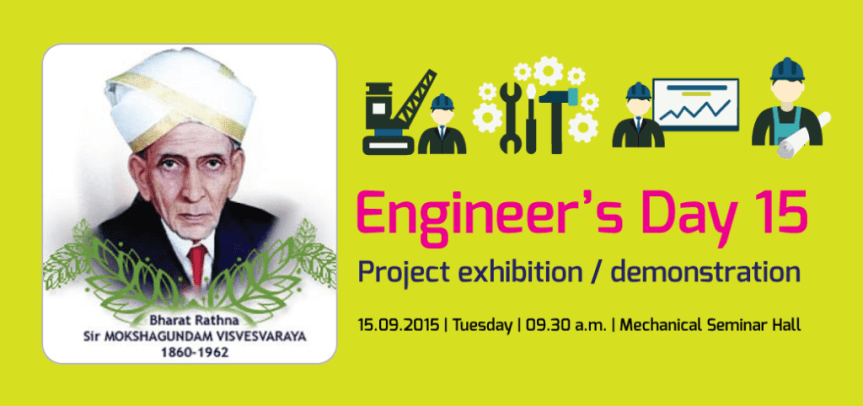
Engineers’ Day

The Prime Minister, Shri Narendra Modi has greeted engineers on Engineers’ Day. The Prime Minister also paid tributes to Sir M. Visvesvaraya on his birth anniversary.
“Engineers are synonymous with diligence and determination. Human progress would be incomplete without their innovative zeal. Greetings on Engineers Day and best wishes to all hardworking engineers. Tributes to the exemplary engineer Sir M. Visvesvaraya on his birth anniversary”, the Prime Minister said.

September 15 is celebrated every year in the country as “Engineers’ Day” to commemorate the birthday of the legendary engineer Sir MokshagundamVisvesvaraya. Sir Visvesvaraya, an eminent Indian engineer and statesman was born in a remote village of Karnataka, the State that is incidentally now the Hitech State of the country. Due to his outstanding contribution to the society, Government of India conferred “Bharat Ratna” on this legend in the year 1955. He was also called the precursor of economic planning in India. His learned discourse on economic planning in India, Planned Economy for India and Reconstructing India, was the first available document on the planning effort of the country and it is still held as the parent source matter for economic planners. A theme of national importance is chosen every year by the National Council of the Institution and deliberated at its various State/Local Centres to educate the engineering fraternity in general and the society in particular. This year the National Council of the Institution has selected the theme as “Engineering Challenges for Knowledge Era

Photojournalism

Photojournalism is a specific type of journalism that utilizes pictures
so as to recount to a news story. It is presently typically comprehended
to allude just to even now pictures, yet at times the term likewise
alludes to video utilized in communicate news coverage. Photojournalism
is recognized from other close parts of photography by consenting to an
unbending moral system which requests that the work be both fair and
fair-minded while recounting to the story in carefully journalistic
terms. 
Photojournalists make pictures that add to the news media, and
help networks associate with one other. Photojournalists must be very
much educated and proficient about occasions happening directly outside
their entryway. They convey news in an innovative arrangement that isn’t
just educational, yet additionally engaging. Photojournalism began to
come to fruition when picture takers could without much of a stretch
transport cameras into combat areas.

Death of a Committed IAS officer – B.N. Yugandhar

On 13 September 2019, country has lost a dedicated IAS officer (retired) of 1962 batch, Sri Bukkapuram Nadella Yugandhar, popularly known as B.N. Yugandhar, who served in many important positions in Union Government including Prime Minister’s Office and the Planning Commission. He also worked as Director Lal Bahadur Shastri National Academy of Administration, Mussoorie. Sri Yugandhar is from Anantapur district of Andhra Pradesh. It is known to all that great son of India, Sri Neelam Sanjiva Reddy who served as Sixth President of India was also from Anantapur district. 
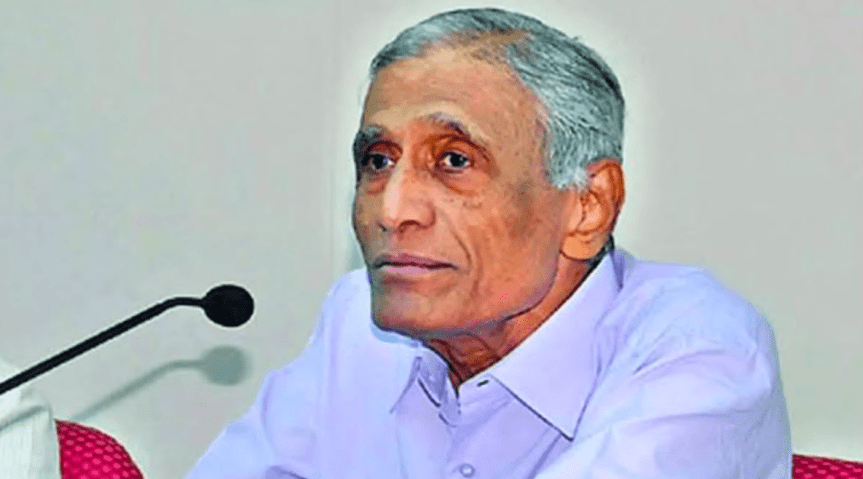
In 2014, Sri BN Yugandhar’s life added a ‘feather in the cap’ when his erudite son Sri Satya Nadella became CEO of Microsoft. It is pertinent to mention that Microsoft founder Bill Gates was all praises for Sri Satya Nadella, saying “he has successfully charted a course for making the most of the opportunities created by technology and helped the IT giant to stand out in the computing industry”. Sri B.N. Yugandhar reached at the zenith because of his dedication, sincerity and hardwork. He was popular in the country not only among the officials but among the common persons also. When he was Secretary Rural Development in the Government of India, he with his team used to visit different regions of the country to assess and review rural development programmes implemented in their respective state and thus accountability for everyone is assured. And in those days progress of self-employment, wage employment and housing programmes of Ministry of Rural Development, Government of India in all the states were creditable. During his tenure few praiseworthy steps taken by him inter alia, were: 
He was instrumental for institutionalise money flow for watershed development direct to districts from the Central government, bypassing states so that time can be saved.
He played a pivotal role in the SC/ST special component plans — where resources were exclusively allotted to them
As member of Planning Commission, Sri Yugandhar was instrumental in getting an entire chapter on disability issues included in the Plan. 
He worked for upliftment of the marginalised sections of the society and to improve life in rural India. In this regard by quoting Poguri Chennaiah of AP Vyavasaya Vruthidarula Union, it may be stated that “He was instrumental in 30,000 acres passing on to farmers in Anantapur when he was the collector. The issue had festered for years with farmers tilling the land that was on paper classified as government land. Once we brought the issue to his notice, it was solved in three months”.
He authored some books on decentralised planning, land reforms and rural development. After his retirement on superannuation, he for a short period of time served in the National Institute of Rural Development and Panchayati Raj (NIRD&PR), Hyderabad which (NIRD&PR) is an autonomous organisation under the Union Ministry of Rural Development. It is a premier national centre of excellence in rural development and Panchayati Raj. In addition to the main campus at Hyderabad, the Institute has North-Eastern Regional Centre at Guwahati, Assam.
While serving at NIRD&PR, Sri Yugandhar has proved his academic brilliancy for which many faculty members were inspired. Although he left for heavenly abode on 13 September 2019 but his contributions both tangible and intangible will never be erased. 
Dr Shankar Chatterjee
Former Professor & Head (CPME),NIRD & PR ( Govt. of India), Hyderabad,  India
Former Associate Professor, Eritrea

Former Assistant Prof, Govt. Degree College, Tripura, India
Former Senior Planning Officer, Govt of Assam, India 
PRESENT ADDRESS
Prof. Shankar Chatterjee 
Lidom Villa, No.13
Peranchuru, Bandlaguda(Jagir), Hyderabad-5000091