The Qualities of a Change-Maker

Improving educational quality ends up being about change rather than tinkering with some elements. 

What then are the qualities of those involved in bringing about this change? 

Here are my guesses. As can be expected, this is a long wish-list! I need your help to identify which ones are really important. And suggestions, too, about how to generate these qualities in the people we work with.
A change-maker:
  1. is sharp, can quickly see what needs to be changed, and has effective ways of helping others see this too, but without getting into a conflict!
  2. can spot opportunities for introducing change
  3. does not have a sense of hierarchy; does not discriminate
  4. has a sense of humour, which gives her/him the ability to live with the difficulties and slow pace of change
  5. at the same time, s/he can take quick decisions and act fast if needed
  6. is aware that he may himself by a victim of the old ways of thinking and living; so is constantly examining himself and trying to improve himself
  7. can help a person see what is wrong without feeling bad or without that person feeling he is being disliked.
  8. has a sense of strategy – that is, of actions that will slowly, perhaps indirectly, bring about the change desired, in stages
  9. is honest and has the greatest accountability to herself, on behalf of those she works for
  10. is aware that there will be some conflicts, and has a plan and ability to deal with this; if necessary, generates conflict, though in a calibrated manner
  11. is aware that his role is that of enabling others to deliver rather than deliver on their behalf
  12. knows how long change takes, and does not give up
  13. Can work as a team member, and also get others to work as a team – for which, helps by:
  • Sharing goals

  • Sharing information

  • Recognizing, utilizing and balancing the strengths and weaknesses of the group

  • Ensuring recognition as a team


What kind of process would help develop these qualities? 
What kind of reflection, debate and conversation do you think is needed? 
And can it be done in the kind of time-frames we usually have?

Contesting Cribbing

If you\’re a person working to improve the educational system in a country like ours, here\’s something you\’ll recognize: whether it\’s journalists or academics, colleagues from NGOs or \’well-wishers\’ of children, everyone is pretty good at \’problem pointing\’. They\’re really good at telling us exactly how BAD things are. Numerous articles, speeches, social media entries, research pieces, presentations, and even protests, copiously crib about a range of ills affecting education : how the system is dysfunctional, teachers are absent, accountability is missing, children aren\’t learning, process is dated, children are oppressed, administration is rigid, policies are rich but unimplemented, how the disadvantaged continue to get a raw deal right through… Recognize it? I do, for some of this is what I do as well!


But here\’s the rub – all this elaboration on what is wrong (some of it is serious research that is credible as well), how far has it helped find exactly what to do. That is, what to do which would help us get rid of the problems being pointed out. Don\’t get me wrong, I\’m all for the growing numbers of those who are able to detail their dissatisfaction at the continued limitations of our education system. It\’s just that I\’m unable to learn enough from it to know what needs to be done.


Because when one gets down to the doing, a whole lot of other things unfold that you were not quite prepared for. Turns out dealing with diversity is not exactly easy, and most of the pat suggestions don\’t really hold in face of the actual ground realities. Turns out that poor (or even exploitative) governance is such an all-pervading reality that what we can do in / through education just pales in front of it (try sitting in a district education office for a day if you don\’t believe me). Turns out that our \’log frames\’, strategies, plans and spreadsheets capture something in our mind but all of it simply crumbles when the actual implementation takes place. It\’s often noticed that some of the best experts, especially those from the universities, are usually eager to help in the planning and the evaluation – but not the part that comes in between, i.e. the implementation!


So I\’ve come to the unfortunate conclusion that a great proportion of those involved tend to complain mainly because it is the easiest thing to do. Just like many newspaper sections talk of potholes on the roads, delayed or poor services, or lack of facilities (usually in a self-righteous tone that includes phrases such as \’even 60 years after independence\’ – you get the picture). All this in the hope that saying what is wrong will somehow make it go away. As if it really does! 


Where does all this leave us? To my mind, it leaves us with a lot of cribbing all around us. Every day we continue to read, hear, powerpoint and wordprocess an overdose of shortcomings. Such solutions as are offered are usually: 

  • trite (\’there should be accountability\’ – which is easy to say, of course) or 
  • platitudinous  (\’teachers should be dedicated to their vocation\’) or 
  • superficial (\’implement play way method!\’ – makes one\’s skin crawl) or 
  • autocratic (\’strictly monitor these damned teachers, don\’t let them get away\’ ) or 
  • misguided (\’pay teachers more / less if their students learn more / less\’ – you can see how this will favour the already advantaged, isn\’t it) or 
  • even desperate and daft (\’put a web cam in every class\’).


I\’m doing the same, of course, cribbing. But let me try to redeem myself by making a few (hopefully) concrete suggestions:


  • The first thing is to recognize the huge potential of all this cribbing. It represents an enormous and growing \’cognitive surplus\’ that can be put to better use to further what the \’cribber\’ is interested in – actual improvement.
  • Along the lines of wikipedia, bring out a collective, well-organised and evolving situational analysis to which people can keep contributing. This will help generate a more structured, well-rounded understanding that might increase the likelihood of finding effective strategies.This should include a critique of the kind of superficial solutions mentioned earlier, with case studies of the difficulties they landed in or the actual improvement they brought about. An analysis of serious efforts and the difficulties faced would help bring about a nuanced problematization.
  • Those involved in change efforts could find ways of identifying any \’cribber\’ who shows potential, and involve her/him in actual improvement processes – either the process would improve or the cribbing would be contained.
  • Publicize and set standards for the kind of writing that is deemed as being helpful. This is not easy at all – but the degree to which the social discourse on education is getting overwhelmed by this collective bemoaning (and the resultant diversion from / inability to actually address the issues) is now making it imperative that we find a way out. Any news channel / newspaper could initiate this by developing a policy paper on how to cover the social sector and then actually following it. Once an example is set, others would follow suit (simply because the initiating body would come out looking better, and therefore be likely to grab a bigger share of sensible eyeballs). 
You might feel that I\’ve totally mis-read the situation, that we need more people to actually be pointing out what is going wrong. Well, point away – but that\’s no guarantee it will make the problem go away!

When Is It GOOD To Get Angry?

Have you ever noticed that we get angry (or at least show it) only with those who we think are weaker than us? Thus it seems OK for parents or teachers to be angry with children, for officers and trainers to shout at teachers. But if children are angry with adults, even if they are in the right and the adult is in the wrong, it is considered NOT OK! And teachers, when upset with their so-called \’superiors\’ either keep quiet or make some sort of mild protest. Only occasionally does it boil over, and when it does, it is again considered NOT OK!
So what is the view we should take? Is it a good idea not to get angry at all? This is the advocated position of many. In fact there are training programmes (including those for teachers) on anger management (i.e., about managing the anger we show to those who we consider our \’inferiors\’). These include things called \’positive discipline\’ and \’emotional punishment\’ – as if it is OK to do the same old thing in another way.
 In case this is not clear, the \’same old thing\’ means the belief that it is OK for adults to have power over children, or for some to be considered \’superiors\’ of others. The \’anger management\’ and \’positive\’ approach does not question this right to discipline or punish – it only says \’do it less violently please, but do it because you have a right to do it.\’ Something wrong there, isn\’t it?
The other approach would be – get angry wherever you should! That is, if you are in the right, get angry with your boss or with the adult (if you are a child or an adolescent), if they are in the wrong. Do I hear you clicking your tongue again? Something doesn\’t sound QUITE OK about this, isn\’t it? How can those who are \’below\’ scream at those who are \’above\’? You fear it will lead to conflict, division and general breakdown of order (i.e. of who should listen to whom).
Hmm, perhaps this kind of all-round getting angry business won\’t really help. We\’re too scared of it anyway.

But it also seems there are areas where we SHOULD GET ANGRY – and we don\’t. When a child is molested or deprived or hurt or demeaned – we don\’t see much anger. When teachers who really want to teach better and teach differently are ridiculed to the extent that they give up trying to improve – we see NO anger. When a girl is brutalized (or even killed) because she refused to get married at 14, we don\’t seethe with anger! When an education system is run year after year and the children who\’ve invested their entire childhood in it, emerge without any learning to show for it – we are simply not consumed with anger!

The Tsunami We Don\’t Always See

Our hearts go out to the sufferings of people in Japan. The pictures of the tsunami rushing in and engulfing everything in sight, wreaking havoc – will stay with us. Our sympathies and support should – and will – be available to help our fellow human beings in whatever way we can.
Our horror – and the desire to do something – would obviously be even more if we saw something similar happening all around us. And in a way something similar is happening all around us, only it is not as dramatic as a physical tsunami, making it a little difficult to be noticed by most people. It is what I would call the tsunami of poor quality of education that is hitting a million schools and tens of millions of children, its impact likely to be visible over the years rather than right now, instantly, in front of our eyes.
The Tsunami Around Us
No this is not alarmist, but an effort to put across a real picture and the urgency with which it needs to be recognized and acted upon. Every day, in hundreds of thousands of locations across the country, children make their way to the school. Around a quarter of them may find their teacher not there. This number alone is staggering, ranging as it would between one and two million teachers. MILLION! And if each teacher has 30 children in his class, you can estimate the number but not really conceive how enormous it is. And it is huge not just in terms of numbers, but for each child who loses a day of learning, and does so for many days every month, it is incalculable.
Had the facilities or the teachers not been available we could have cried over our fate in terms of being an underdeveloped country. But having the infrastructure (over 98% children have a school within a kilometre, and most buildings are not bad) and teachers actually in place (though the number of vacancies is still very large) – it is horrifying to watch or at least it should be, for there doesn\’t seem to be a sense of horror, or as much of it as would shake the country into action.
However the story doesn\’t end there. It is when \’teaching\’ takes place that the impact on children is often at its greatest. Decades ago, the Yashpal Committee\’s report on The Burden of the School Bag had detailed the \’burden of incomprehension\’ a majority of children bear. And it is difficult to see if things have changed dramatically, despite changed curricula, textbooks, the use of TLM, evolving assessment patterns, new training programmes… The number of children attending school – and their diversity – too has grown in leaps and bounds, while the approach to handling their needs has remained fairly static. Hence, survey after survey shows that – despite a degree of improvement – we continue to be far from the levels of learning desired (and possible).
But it is when it comes to the process that the greatest deadening effect takes place. Rote memorization, \’explanation\’ ina language not necessarily understood by children, a disregard for the needs of children who are too poor to be able to attend regularly, (an often active) discrimination in the classroom, are the lot of a majority of our children. If you doubt this, all you have to do is visit any 10 government schools in different locations, especially those away from \’headquarters\’.
This is not to say that all government schools are bad and that the \’bad\’ is restricted to government schools. It is to point out that even if only a third of schools are like the ones described above (and the number is surely more than that), it adds up to literally hundreds of thousands of schools and tens of millions of children – a slow tsunami of poor quality education that is surely wreaking havoc on the potential of our children, our country.
Dealing With It
So after all this panic, what do we do?
As in any disaster, stay calm! First recognize that there is a problem and accept that something must be done about it.
Second, realize that you are the right person to do something about it. Anyone is, everyone is. Every small action counts. Even if you smile at a child, say an encouraging word to a teacher, raise this issue with friends, relatives and colleagues, you are doing something.
Third, if you are willing to be more proactive or are already active, please do look at the urgency of the situation. Children cannot wait for us to learn or get our act together slowly. We need to quickly:
  • Establish the minimum conditions that must obtain. These are well laid out in the RTE (Right to Education) and its rules. Raise this issue wherever you can, and directly with the school or education authorities.
  • Encourage and support the community and the school management committees (SMCs) drawn from among the community to become more active. You can help in setting them up, in record keeping, in setting the agenda, in follow up, in helping ensure that teachers take them seriously and that they in turn don\’t take an adversarial position vis-à-vis teachers. You can use your position to ensure that the educational agenda is not hijacked by the money-making or power-gaining agenda.

If you are a Head Teacher, supervisor, CRC-BRC / district level teacher educator or officer:
  • Model the kind of behaviour you want from teachers
  • Share practical steps they can take in their classes, especially in terms of activity-based teaching (see the many entries in this blog for support)
  • Encourage teachers to be innovative, support them. If they ask questions, don\’t be dismissive (pass on the questions here if you can answer them!)

If you are a planner / policy-maker / decision- maker, please start by not dismissing what you have just read here. It is real, and it is happening – and it\’s on a gargantuan scale. On any given day, the number of children who are in school and not learning is more than the population of many countries – and it is a shame. What kind of performance standards can you set in place? What kind of outcomes can you insist on? How can you prepare the institutions and the system to deliver this, monitor them effectively and enable an ongoing improvement? Once again, the many entries in this blog would be helpful – and you could always share issues you would like others to provide suggestions / inputs on.
As surely as Japan will recover from the huge earthquake and the devastating tsunami, we can deal with this too. But first we have to see it as an emergency and address it. With all our might.

The Tsunami We Don\’t Always See

Our hearts go out to the sufferings of people in Japan. The pictures of the tsunami rushing in and engulfing everything in sight, wreaking havoc – will stay with us. Our sympathies and support should – and will – be available to help our fellow human beings in whatever way we can.
Our horror – and the desire to do something – would obviously be even more if we saw something similar happening all around us. And in a way something similar is happening all around us, only it is not as dramatic as a physical tsunami, making it a little difficult to be noticed by most people. It is what I would call the tsunami of poor quality of education that is hitting a million schools and tens of millions of children, its impact likely to be visible over the years rather than right now, instantly, in front of our eyes.
The Tsunami Around Us
No this is not alarmist, but an effort to put across a real picture and the urgency with which it needs to be recognized and acted upon. Every day, in hundreds of thousands of locations across the country, children make their way to the school. Around a quarter of them may find their teacher not there. This number alone is staggering, ranging as it would between one and two million teachers. MILLION! And if each teacher has 30 children in his class, you can estimate the number but not really conceive how enormous it is. And it is huge not just in terms of numbers, but for each child who loses a day of learning, and does so for many days every month, it is incalculable.
Had the facilities or the teachers not been available we could have cried over our fate in terms of being an underdeveloped country. But having the infrastructure (over 98% children have a school within a kilometre, and most buildings are not bad) and teachers actually in place (though the number of vacancies is still very large) – it is horrifying to watch or at least it should be, for there doesn\’t seem to be a sense of horror, or as much of it as would shake the country into action.
However the story doesn\’t end there. It is when \’teaching\’ takes place that the impact on children is often at its greatest. Decades ago, the Yashpal Committee\’s report on The Burden of the School Bag had detailed the \’burden of incomprehension\’ a majority of children bear. And it is difficult to see if things have changed dramatically, despite changed curricula, textbooks, the use of TLM, evolving assessment patterns, new training programmes… The number of children attending school – and their diversity – too has grown in leaps and bounds, while the approach to handling their needs has remained fairly static. Hence, survey after survey shows that – despite a degree of improvement – we continue to be far from the levels of learning desired (and possible).
But it is when it comes to the process that the greatest deadening effect takes place. Rote memorization, \’explanation\’ ina language not necessarily understood by children, a disregard for the needs of children who are too poor to be able to attend regularly, (an often active) discrimination in the classroom, are the lot of a majority of our children. If you doubt this, all you have to do is visit any 10 government schools in different locations, especially those away from \’headquarters\’.
This is not to say that all government schools are bad and that the \’bad\’ is restricted to government schools. It is to point out that even if only a third of schools are like the ones described above (and the number is surely more than that), it adds up to literally hundreds of thousands of schools and tens of millions of children – a slow tsunami of poor quality education that is surely wreaking havoc on the potential of our children, our country.
Dealing With It
So after all this panic, what do we do?
As in any disaster, stay calm! First recognize that there is a problem and accept that something must be done about it.
Second, realize that you are the right person to do something about it. Anyone is, everyone is. Every small action counts. Even if you smile at a child, say an encouraging word to a teacher, raise this issue with friends, relatives and colleagues, you are doing something.
Third, if you are willing to be more proactive or are already active, please do look at the urgency of the situation. Children cannot wait for us to learn or get our act together slowly. We need to quickly:
  • Establish the minimum conditions that must obtain. These are well laid out in the RTE (Right to Education) and its rules. Raise this issue wherever you can, and directly with the school or education authorities.
  • Encourage and support the community and the school management committees (SMCs) drawn from among the community to become more active. You can help in setting them up, in record keeping, in setting the agenda, in follow up, in helping ensure that teachers take them seriously and that they in turn don\’t take an adversarial position vis-à-vis teachers. You can use your position to ensure that the educational agenda is not hijacked by the money-making or power-gaining agenda.

If you are a Head Teacher, supervisor, CRC-BRC / district level teacher educator or officer:
  • Model the kind of behaviour you want from teachers
  • Share practical steps they can take in their classes, especially in terms of activity-based teaching (see the many entries in this blog for support)
  • Encourage teachers to be innovative, support them. If they ask questions, don\’t be dismissive (pass on the questions here if you can answer them!)

If you are a planner / policy-maker / decision- maker, please start by not dismissing what you have just read here. It is real, and it is happening – and it\’s on a gargantuan scale. On any given day, the number of children who are in school and not learning is more than the population of many countries – and it is a shame. What kind of performance standards can you set in place? What kind of outcomes can you insist on? How can you prepare the institutions and the system to deliver this, monitor them effectively and enable an ongoing improvement? Once again, the many entries in this blog would be helpful – and you could always share issues you would like others to provide suggestions / inputs on.
As surely as Japan will recover from the huge earthquake and the devastating tsunami, we can deal with this too. But first we have to see it as an emergency and address it. With all our might.

The Tsunami We Don\’t Always See

Our hearts go out to the sufferings of people in Japan. The pictures of the tsunami rushing in and engulfing everything in sight, wreaking havoc – will stay with us. Our sympathies and support should – and will – be available to help our fellow human beings in whatever way we can.
Our horror – and the desire to do something – would obviously be even more if we saw something similar happening all around us. And in a way something similar is happening all around us, only it is not as dramatic as a physical tsunami, making it a little difficult to be noticed by most people. It is what I would call the tsunami of poor quality of education that is hitting a million schools and tens of millions of children, its impact likely to be visible over the years rather than right now, instantly, in front of our eyes.
The Tsunami Around Us
No this is not alarmist, but an effort to put across a real picture and the urgency with which it needs to be recognized and acted upon. Every day, in hundreds of thousands of locations across the country, children make their way to the school. Around a quarter of them may find their teacher not there. This number alone is staggering, ranging as it would between one and two million teachers. MILLION! And if each teacher has 30 children in his class, you can estimate the number but not really conceive how enormous it is. And it is huge not just in terms of numbers, but for each child who loses a day of learning, and does so for many days every month, it is incalculable.
Had the facilities or the teachers not been available we could have cried over our fate in terms of being an underdeveloped country. But having the infrastructure (over 98% children have a school within a kilometre, and most buildings are not bad) and teachers actually in place (though the number of vacancies is still very large) – it is horrifying to watch or at least it should be, for there doesn\’t seem to be a sense of horror, or as much of it as would shake the country into action.
However the story doesn\’t end there. It is when \’teaching\’ takes place that the impact on children is often at its greatest. Decades ago, the Yashpal Committee\’s report on The Burden of the School Bag had detailed the \’burden of incomprehension\’ a majority of children bear. And it is difficult to see if things have changed dramatically, despite changed curricula, textbooks, the use of TLM, evolving assessment patterns, new training programmes… The number of children attending school – and their diversity – too has grown in leaps and bounds, while the approach to handling their needs has remained fairly static. Hence, survey after survey shows that – despite a degree of improvement – we continue to be far from the levels of learning desired (and possible).
But it is when it comes to the process that the greatest deadening effect takes place. Rote memorization, \’explanation\’ ina language not necessarily understood by children, a disregard for the needs of children who are too poor to be able to attend regularly, (an often active) discrimination in the classroom, are the lot of a majority of our children. If you doubt this, all you have to do is visit any 10 government schools in different locations, especially those away from \’headquarters\’.
This is not to say that all government schools are bad and that the \’bad\’ is restricted to government schools. It is to point out that even if only a third of schools are like the ones described above (and the number is surely more than that), it adds up to literally hundreds of thousands of schools and tens of millions of children – a slow tsunami of poor quality education that is surely wreaking havoc on the potential of our children, our country.
Dealing With It
So after all this panic, what do we do?
As in any disaster, stay calm! First recognize that there is a problem and accept that something must be done about it.
Second, realize that you are the right person to do something about it. Anyone is, everyone is. Every small action counts. Even if you smile at a child, say an encouraging word to a teacher, raise this issue with friends, relatives and colleagues, you are doing something.
Third, if you are willing to be more proactive or are already active, please do look at the urgency of the situation. Children cannot wait for us to learn or get our act together slowly. We need to quickly:
  • Establish the minimum conditions that must obtain. These are well laid out in the RTE (Right to Education) and its rules. Raise this issue wherever you can, and directly with the school or education authorities.
  • Encourage and support the community and the school management committees (SMCs) drawn from among the community to become more active. You can help in setting them up, in record keeping, in setting the agenda, in follow up, in helping ensure that teachers take them seriously and that they in turn don\’t take an adversarial position vis-à-vis teachers. You can use your position to ensure that the educational agenda is not hijacked by the money-making or power-gaining agenda.

If you are a Head Teacher, supervisor, CRC-BRC / district level teacher educator or officer:
  • Model the kind of behaviour you want from teachers
  • Share practical steps they can take in their classes, especially in terms of activity-based teaching (see the many entries in this blog for support)
  • Encourage teachers to be innovative, support them. If they ask questions, don\’t be dismissive (pass on the questions here if you can answer them!)

If you are a planner / policy-maker / decision- maker, please start by not dismissing what you have just read here. It is real, and it is happening – and it\’s on a gargantuan scale. On any given day, the number of children who are in school and not learning is more than the population of many countries – and it is a shame. What kind of performance standards can you set in place? What kind of outcomes can you insist on? How can you prepare the institutions and the system to deliver this, monitor them effectively and enable an ongoing improvement? Once again, the many entries in this blog would be helpful – and you could always share issues you would like others to provide suggestions / inputs on.
As surely as Japan will recover from the huge earthquake and the devastating tsunami, we can deal with this too. But first we have to see it as an emergency and address it. With all our might.

The Tsunami We Don\’t Always See

Our hearts go out to the sufferings of people in Japan. The pictures of the tsunami rushing in and engulfing everything in sight, wreaking havoc – will stay with us. Our sympathies and support should – and will – be available to help our fellow human beings in whatever way we can.
Our horror – and the desire to do something – would obviously be even more if we saw something similar happening all around us. And in a way something similar is happening all around us, only it is not as dramatic as a physical tsunami, making it a little difficult to be noticed by most people. It is what I would call the tsunami of poor quality of education that is hitting a million schools and tens of millions of children, its impact likely to be visible over the years rather than right now, instantly, in front of our eyes.
The Tsunami Around Us
No this is not alarmist, but an effort to put across a real picture and the urgency with which it needs to be recognized and acted upon. Every day, in hundreds of thousands of locations across the country, children make their way to the school. Around a quarter of them may find their teacher not there. This number alone is staggering, ranging as it would between one and two million teachers. MILLION! And if each teacher has 30 children in his class, you can estimate the number but not really conceive how enormous it is. And it is huge not just in terms of numbers, but for each child who loses a day of learning, and does so for many days every month, it is incalculable.
Had the facilities or the teachers not been available we could have cried over our fate in terms of being an underdeveloped country. But having the infrastructure (over 98% children have a school within a kilometre, and most buildings are not bad) and teachers actually in place (though the number of vacancies is still very large) – it is horrifying to watch or at least it should be, for there doesn\’t seem to be a sense of horror, or as much of it as would shake the country into action.
However the story doesn\’t end there. It is when \’teaching\’ takes place that the impact on children is often at its greatest. Decades ago, the Yashpal Committee\’s report on The Burden of the School Bag had detailed the \’burden of incomprehension\’ a majority of children bear. And it is difficult to see if things have changed dramatically, despite changed curricula, textbooks, the use of TLM, evolving assessment patterns, new training programmes… The number of children attending school – and their diversity – too has grown in leaps and bounds, while the approach to handling their needs has remained fairly static. Hence, survey after survey shows that – despite a degree of improvement – we continue to be far from the levels of learning desired (and possible).
But it is when it comes to the process that the greatest deadening effect takes place. Rote memorization, \’explanation\’ ina language not necessarily understood by children, a disregard for the needs of children who are too poor to be able to attend regularly, (an often active) discrimination in the classroom, are the lot of a majority of our children. If you doubt this, all you have to do is visit any 10 government schools in different locations, especially those away from \’headquarters\’.
This is not to say that all government schools are bad and that the \’bad\’ is restricted to government schools. It is to point out that even if only a third of schools are like the ones described above (and the number is surely more than that), it adds up to literally hundreds of thousands of schools and tens of millions of children – a slow tsunami of poor quality education that is surely wreaking havoc on the potential of our children, our country.
Dealing With It
So after all this panic, what do we do?
As in any disaster, stay calm! First recognize that there is a problem and accept that something must be done about it.
Second, realize that you are the right person to do something about it. Anyone is, everyone is. Every small action counts. Even if you smile at a child, say an encouraging word to a teacher, raise this issue with friends, relatives and colleagues, you are doing something.
Third, if you are willing to be more proactive or are already active, please do look at the urgency of the situation. Children cannot wait for us to learn or get our act together slowly. We need to quickly:
  • Establish the minimum conditions that must obtain. These are well laid out in the RTE (Right to Education) and its rules. Raise this issue wherever you can, and directly with the school or education authorities.
  • Encourage and support the community and the school management committees (SMCs) drawn from among the community to become more active. You can help in setting them up, in record keeping, in setting the agenda, in follow up, in helping ensure that teachers take them seriously and that they in turn don\’t take an adversarial position vis-à-vis teachers. You can use your position to ensure that the educational agenda is not hijacked by the money-making or power-gaining agenda.

If you are a Head Teacher, supervisor, CRC-BRC / district level teacher educator or officer:
  • Model the kind of behaviour you want from teachers
  • Share practical steps they can take in their classes, especially in terms of activity-based teaching (see the many entries in this blog for support)
  • Encourage teachers to be innovative, support them. If they ask questions, don\’t be dismissive (pass on the questions here if you can answer them!)

If you are a planner / policy-maker / decision- maker, please start by not dismissing what you have just read here. It is real, and it is happening – and it\’s on a gargantuan scale. On any given day, the number of children who are in school and not learning is more than the population of many countries – and it is a shame. What kind of performance standards can you set in place? What kind of outcomes can you insist on? How can you prepare the institutions and the system to deliver this, monitor them effectively and enable an ongoing improvement? Once again, the many entries in this blog would be helpful – and you could always share issues you would like others to provide suggestions / inputs on.
As surely as Japan will recover from the huge earthquake and the devastating tsunami, we can deal with this too. But first we have to see it as an emergency and address it. With all our might.

The Tsunami We Don\’t Always See

Our hearts go out to the sufferings of people in Japan. The pictures of the tsunami rushing in and engulfing everything in sight, wreaking havoc – will stay with us. Our sympathies and support should – and will – be available to help our fellow human beings in whatever way we can.
Our horror – and the desire to do something – would obviously be even more if we saw something similar happening all around us. And in a way something similar is happening all around us, only it is not as dramatic as a physical tsunami, making it a little difficult to be noticed by most people. It is what I would call the tsunami of poor quality of education that is hitting a million schools and tens of millions of children, its impact likely to be visible over the years rather than right now, instantly, in front of our eyes.
The Tsunami Around Us
No this is not alarmist, but an effort to put across a real picture and the urgency with which it needs to be recognized and acted upon. Every day, in hundreds of thousands of locations across the country, children make their way to the school. Around a quarter of them may find their teacher not there. This number alone is staggering, ranging as it would between one and two million teachers. MILLION! And if each teacher has 30 children in his class, you can estimate the number but not really conceive how enormous it is. And it is huge not just in terms of numbers, but for each child who loses a day of learning, and does so for many days every month, it is incalculable.
Had the facilities or the teachers not been available we could have cried over our fate in terms of being an underdeveloped country. But having the infrastructure (over 98% children have a school within a kilometre, and most buildings are not bad) and teachers actually in place (though the number of vacancies is still very large) – it is horrifying to watch or at least it should be, for there doesn\’t seem to be a sense of horror, or as much of it as would shake the country into action.
However the story doesn\’t end there. It is when \’teaching\’ takes place that the impact on children is often at its greatest. Decades ago, the Yashpal Committee\’s report on The Burden of the School Bag had detailed the \’burden of incomprehension\’ a majority of children bear. And it is difficult to see if things have changed dramatically, despite changed curricula, textbooks, the use of TLM, evolving assessment patterns, new training programmes… The number of children attending school – and their diversity – too has grown in leaps and bounds, while the approach to handling their needs has remained fairly static. Hence, survey after survey shows that – despite a degree of improvement – we continue to be far from the levels of learning desired (and possible).
But it is when it comes to the process that the greatest deadening effect takes place. Rote memorization, \’explanation\’ ina language not necessarily understood by children, a disregard for the needs of children who are too poor to be able to attend regularly, (an often active) discrimination in the classroom, are the lot of a majority of our children. If you doubt this, all you have to do is visit any 10 government schools in different locations, especially those away from \’headquarters\’.
This is not to say that all government schools are bad and that the \’bad\’ is restricted to government schools. It is to point out that even if only a third of schools are like the ones described above (and the number is surely more than that), it adds up to literally hundreds of thousands of schools and tens of millions of children – a slow tsunami of poor quality education that is surely wreaking havoc on the potential of our children, our country.
Dealing With It
So after all this panic, what do we do?
As in any disaster, stay calm! First recognize that there is a problem and accept that something must be done about it.
Second, realize that you are the right person to do something about it. Anyone is, everyone is. Every small action counts. Even if you smile at a child, say an encouraging word to a teacher, raise this issue with friends, relatives and colleagues, you are doing something.
Third, if you are willing to be more proactive or are already active, please do look at the urgency of the situation. Children cannot wait for us to learn or get our act together slowly. We need to quickly:
  • Establish the minimum conditions that must obtain. These are well laid out in the RTE (Right to Education) and its rules. Raise this issue wherever you can, and directly with the school or education authorities.
  • Encourage and support the community and the school management committees (SMCs) drawn from among the community to become more active. You can help in setting them up, in record keeping, in setting the agenda, in follow up, in helping ensure that teachers take them seriously and that they in turn don\’t take an adversarial position vis-à-vis teachers. You can use your position to ensure that the educational agenda is not hijacked by the money-making or power-gaining agenda.

If you are a Head Teacher, supervisor, CRC-BRC / district level teacher educator or officer:
  • Model the kind of behaviour you want from teachers
  • Share practical steps they can take in their classes, especially in terms of activity-based teaching (see the many entries in this blog for support)
  • Encourage teachers to be innovative, support them. If they ask questions, don\’t be dismissive (pass on the questions here if you can answer them!)

If you are a planner / policy-maker / decision- maker, please start by not dismissing what you have just read here. It is real, and it is happening – and it\’s on a gargantuan scale. On any given day, the number of children who are in school and not learning is more than the population of many countries – and it is a shame. What kind of performance standards can you set in place? What kind of outcomes can you insist on? How can you prepare the institutions and the system to deliver this, monitor them effectively and enable an ongoing improvement? Once again, the many entries in this blog would be helpful – and you could always share issues you would like others to provide suggestions / inputs on.
As surely as Japan will recover from the huge earthquake and the devastating tsunami, we can deal with this too. But first we have to see it as an emergency and address it. With all our might.

The Tsunami We Don\’t Always See

Our hearts go out to the sufferings of people in Japan. The pictures of the tsunami rushing in and engulfing everything in sight, wreaking havoc – will stay with us. Our sympathies and support should – and will – be available to help our fellow human beings in whatever way we can.
Our horror – and the desire to do something – would obviously be even more if we saw something similar happening all around us. And in a way something similar is happening all around us, only it is not as dramatic as a physical tsunami, making it a little difficult to be noticed by most people. It is what I would call the tsunami of poor quality of education that is hitting a million schools and tens of millions of children, its impact likely to be visible over the years rather than right now, instantly, in front of our eyes.
The Tsunami Around Us
No this is not alarmist, but an effort to put across a real picture and the urgency with which it needs to be recognized and acted upon. Every day, in hundreds of thousands of locations across the country, children make their way to the school. Around a quarter of them may find their teacher not there. This number alone is staggering, ranging as it would between one and two million teachers. MILLION! And if each teacher has 30 children in his class, you can estimate the number but not really conceive how enormous it is. And it is huge not just in terms of numbers, but for each child who loses a day of learning, and does so for many days every month, it is incalculable.
Had the facilities or the teachers not been available we could have cried over our fate in terms of being an underdeveloped country. But having the infrastructure (over 98% children have a school within a kilometre, and most buildings are not bad) and teachers actually in place (though the number of vacancies is still very large) – it is horrifying to watch or at least it should be, for there doesn\’t seem to be a sense of horror, or as much of it as would shake the country into action.
However the story doesn\’t end there. It is when \’teaching\’ takes place that the impact on children is often at its greatest. Decades ago, the Yashpal Committee\’s report on The Burden of the School Bag had detailed the \’burden of incomprehension\’ a majority of children bear. And it is difficult to see if things have changed dramatically, despite changed curricula, textbooks, the use of TLM, evolving assessment patterns, new training programmes… The number of children attending school – and their diversity – too has grown in leaps and bounds, while the approach to handling their needs has remained fairly static. Hence, survey after survey shows that – despite a degree of improvement – we continue to be far from the levels of learning desired (and possible).
But it is when it comes to the process that the greatest deadening effect takes place. Rote memorization, \’explanation\’ ina language not necessarily understood by children, a disregard for the needs of children who are too poor to be able to attend regularly, (an often active) discrimination in the classroom, are the lot of a majority of our children. If you doubt this, all you have to do is visit any 10 government schools in different locations, especially those away from \’headquarters\’.
This is not to say that all government schools are bad and that the \’bad\’ is restricted to government schools. It is to point out that even if only a third of schools are like the ones described above (and the number is surely more than that), it adds up to literally hundreds of thousands of schools and tens of millions of children – a slow tsunami of poor quality education that is surely wreaking havoc on the potential of our children, our country.
Dealing With It
So after all this panic, what do we do?
As in any disaster, stay calm! First recognize that there is a problem and accept that something must be done about it.
Second, realize that you are the right person to do something about it. Anyone is, everyone is. Every small action counts. Even if you smile at a child, say an encouraging word to a teacher, raise this issue with friends, relatives and colleagues, you are doing something.
Third, if you are willing to be more proactive or are already active, please do look at the urgency of the situation. Children cannot wait for us to learn or get our act together slowly. We need to quickly:
  • Establish the minimum conditions that must obtain. These are well laid out in the RTE (Right to Education) and its rules. Raise this issue wherever you can, and directly with the school or education authorities.
  • Encourage and support the community and the school management committees (SMCs) drawn from among the community to become more active. You can help in setting them up, in record keeping, in setting the agenda, in follow up, in helping ensure that teachers take them seriously and that they in turn don\’t take an adversarial position vis-à-vis teachers. You can use your position to ensure that the educational agenda is not hijacked by the money-making or power-gaining agenda.

If you are a Head Teacher, supervisor, CRC-BRC / district level teacher educator or officer:
  • Model the kind of behaviour you want from teachers
  • Share practical steps they can take in their classes, especially in terms of activity-based teaching (see the many entries in this blog for support)
  • Encourage teachers to be innovative, support them. If they ask questions, don\’t be dismissive (pass on the questions here if you can answer them!)

If you are a planner / policy-maker / decision- maker, please start by not dismissing what you have just read here. It is real, and it is happening – and it\’s on a gargantuan scale. On any given day, the number of children who are in school and not learning is more than the population of many countries – and it is a shame. What kind of performance standards can you set in place? What kind of outcomes can you insist on? How can you prepare the institutions and the system to deliver this, monitor them effectively and enable an ongoing improvement? Once again, the many entries in this blog would be helpful – and you could always share issues you would like others to provide suggestions / inputs on.
As surely as Japan will recover from the huge earthquake and the devastating tsunami, we can deal with this too. But first we have to see it as an emergency and address it. With all our might.

How Do We Measure Change?

We repeatedly find ourselves saying that working on improving education implies change. That is because the very core of education – in terms of key relationships, processes and the critical outcomes desired – itself is expected to undergo a transformation. Some of the biggest differences expected are in terms of
  • undoing the existing hierarchy,
  • increasing accountability,
  • evolving the role of the key stakeholders such as children and community from passive to active,
  • in fact even a reversal of the notion of the \’beneficiary\’ (especially after the RTE, children and the community are the reasons why the education system exists; and teachers, educational officers and others in the system are the beneficiaries in that they get their salaries because children have a right to education)
  • preparing children for life rather than just for examinations.


Thus it is not just a case of revision in components such as curriculum or textbooks or training or assessment but bringing about much deeper changes that will then manifest themselves in the different components. Change, therefore, in the underpinnings or the foundations themselves, implies major shift in emphasis, ways of working, the means used, the technical and human / social capabilities required, and a myriad other things. All this adds up to one word: change.

Much has been said on the issue of what this change is and the different ways of bringing it about (and more will appear too). But the one unresolved question confronting us is: how will we know if real change is actually happening, and to what extent? Is there any way in which we can capture / describe and \’measure\’ such deep change? As of now, the question really has us stumped. Any suggestions? 

What happens when you seriously try to empower children, teachers and community through large scale education initiatives?

The pervasive notion that \’nothing has been done in education in India\’ could not be further from the truth. In fact not only has a great deal been done, but its consequences have been faced over decades. In particular, what follows applies to introducing educational designs based on local context, using the experiences and strengths of the stakeholders, creating a situation where they play an active role in determining and implementing processes.


Though obviously much must have been done over the decades till the 80s, my experience ranges from mid-80s, when I was part of a team working on such classroom practices, textbooks and educational designs from 1986 onwards. Implementation of the programme called Prashika (Prathamik Shiksha Karyakram) focused on marginalised groups, with the team living in a tribal area as well as in a rural, deprived pocket and introducing the innovation in government primary schools. The work in Prashika was pathbreaking in many, many ways (integration of 5 subjects at the primary level, incorporation of multiple local languages, a hugely localised textbook/workbook that could only be completed with each child contributing, called Khushi-Khushi – still not matched anywhere, I believe). It provided hope that much was possible despite the difficulties faced and informed many of the later efforts that followed, both in the government and the NGO sector.


Later in DPEP – particularly Kerala, Assam, Karnataka, Haryana, UP, Bihar, TN, Nagaland and later with SSA Gujarat further work was done. Localised training, contexualisable textbooks (some really brilliant stuff still not matched anywhere – and that\’s a professional opinion), teacher determined assessment system, involvement of community knowledge, children constructing local histories / local environment books, peer learning and assessments, textbooks that would be \’complete\’ only along with a set of 50 district-specific books kept in the school library…. many, many innovative and large scale measures were conceived and actually implemented using a strategically developed implementation plan. 


In each first five states we were able to see 2-3 years of implementation, development of hundreds / thousands of teachers who implemented contextualised learning, a high degree of in-class practice backed by supportive, localisable material. These states changed their position in the national achievement surveys too, with Kerala rising to the top (it had been fairly close to the bottom before this, below Bihar in the first national survey). In the case of Gujarat, field testing was done in 630 schools, researched by MSU Baroda with very encouraging findings. 


However, as long as we were not visibly successful there were no problems. When change began to be visible on some scale and a palpable sense of energy was witnessed among teachers and communities, alarm bells began to ring. in each of these states, the powers that be – especially at state level, state institutions, administrations, political parties – found that this went against the command-and-control structures conducive to them being able to assert their authority. Schools didn\’t want to be told what to teach when and how – they had their own plans. Empowered teachers / school heads / even some VECs refused to kowtow to mediocre ideas or corruption oriented bosses – leading to huge conflicts all over the place. Unfortunately these never got reported, recorded or researched. The results were mass scale transfers, cases against state project directors who encouraged this (Kerala SPD was charge sheeted, Karnataka SPD given punishment posting in North Karnataka, Assam SPD sent to conflict zone during worst riots, Bihar SPD transferred to PHED and later kept without posting), the re-casting of State Resource Groups from those selected for tested capabilities to those stocked with ex-officio positions, the emasculation of the BRC-CRC structures from genuine teacher support institutions into data collection centres (believe it or not, we did have functional BRCs CRCs at one time!), the centralisation of powers away from the VECs and re-casting into SMCs with a different function, and major shift in recruitments away from districts to states (in one state the Education Minister held a Recruitment Mela in a stadium to personally appoint 3000 para-teachers). 


Interestingly, Prashika in MP faced a similar adminstrative backlash and was closed down.


Yes, like it or not, this is what ideas of empowerment through education come up against – and they fall short not because of lack of any purity in the idea itself or absence of rigour, but because after a point when it goes into implementation an idea is something else, and not its original pure self. You might look at the actual work and find it is not \’up to the standard\’ – yet when trying to create it for those who need education the most, other aspects need to be taken into account. Basically, empowering the weak is clearly seen by the strong as disempowering them – and the empire strikes back! One of the outcomes is that a few years later, it appears as if nothing has been done, and people gear themselves up to again come up with \’innovative\’ ideas, often weaker than might already have been tried, uninformed by the past.

Janmejoy Patel

Yes, it is basically a question of how serious the govts are regarding implementation of RTE. Do they have required amount of political will or commitment? Are they willing to allocate adequate funds & invest in education? Once these factors are settled, there is no private school good enough to rival our schools in quality. But will the politicos do so on their own? No hope since none of them has any stake involved. Unless forced to.

How to Self Publish a Book That Earns

Want to know how to publish a book that earns big?
That’s the dream for a lot of freelancers. Right? Figure out how to self publish a book. List it on Amazon. And piles of money start rolling in.
Here’s the brutal truth about making money with your book…it usually doesn’t work like that.
There’s far too many writers with great ideas who think: “If I self-publish a book, lots of people will buy it.”
I wish it were that easy. If you want to learn how to self publish a book that earns big, a great idea and great writing are just the beginning.
When I self published my first book, I made a couple thousand dollars, and gained a small following of fans. But then something happened that helped me turn my book into a revenue-generating machine that earned $125K in one night.
Want to learn how to self publish a book that earns big? Let me pull back the curtain to show you how it’s done.

5 book-marketing strategies to earn big

When you’re ready to jump in and learn how to self publish a book, writing is the easy part for most freelancers.
After that, there’s lots of easy-to-use resources to format your book and get it on Amazon and other sites that sell books.
It’s the steps that come after publishing that can make all the difference in how much money you make.
Come up with a marketing plan that generates buzz, sells copies, and opens the door to more writing opportunities, and you can make a lot.
It’s hard work, but it’s worth it. Here’s how I did it:

1. Personally thank people who helped you

This should be part of your book…the Acknowledgements page. Thank all the people who inspired you, helped you, or played a part in the process of getting your book published (family, friends, teachers, co-workers, mentors, and your publishing team). Then:
  • Reach out with a phone call, email, or letter and personally thank each person.
  • Invite them as special guests to your book launch
  • Ask them to pre-order, and send a signed copy, or sign it in person
Note: I sold 215 books this way and earned $3,225 from pre-sales.

2. Host a book signing event

Connect with a bookstore in your area and coordinate a book signing party. The traditional book-reading and signing event works. But you could also get a little more creative. 
I hosted a catered event and sold tickets at different price points for a signed copy of the book, VIP time with me, gift bags, and hand-written thank-you notes.

3. Attend book fairs and festivals

You’ll have to adjust your schedule to make this work, but it’s worth it. You’ll sell books, meet lots of people, and keep adding to your growing list of fans. I got people to stop by my table by playing a short trailer about my book, then striking up a conversation.

4. Market your book everywhere you go

I made T-shirts with three conversation-starter messages:
  • Ask Me About My Book!
  • My BOOK is awesome!
  • Guess what? I wrote a book!
I wore them everywhere, and sold books from my back pack and the trunk of my car at the mall, gas stations, and parking lots.

5. Turn your book into a play or speaking event

If you’ve totaled my earnings from books sales so far, it’s a whopping $8,325. Not bad for a self-published novel. But those aren’t the kind of earnings that deserve a standing ovation. I wanted more.
I got sucked into reading Amazon reviews and comments about my book, Dark Clouds: A Charm City Family’s Struggle. Comments like: “You painted such a vivid picture of the characters in the book, I felt like I knew them and could see them.”
And that’s when I had the light-bulb moment to take my characters from page to stage.
This wasn’t an easy undertaking. But by the time the curtain closed, my book earned $125K in one night. Here’s how I did it:
  • Hire a consultant. I hired the godfather of urban theater, Shelly Garrett, to help me turn my book into a play. Find a writing coach or mentor you can trust, who knows the ropes, maybe has connections in your niche. It’s an investment you won’t regret.
  • Write and rewrite. I turned my 211-page novel into a 90-page script. Write a book, then consider ways to turn it into another revenue source as a class, course, play, or speaking event.
  • Use crowdfunding sites to test your idea and pre-sell tickets. 
  • Document the process. When auditions began, we documented the process in reality-TV style on YouTube to generate buzz. If you’re not producing a play, document the process you write about in your book, and share it on social platforms.
  • Buy traditional advertising time (radio and TV). Ads for the play aired on radio stations and TV stations in select cities where the play would be performed. This makes sense as long as you predict you’ll make a profit after advertising costs.
  • Coordinate radio and TV appearances. You could hire an agent to do this for you, or just get on the phone and make some calls. Put yourself out there, and see what happens.
  • Purchase billboard advertising in select cities where the play would be performed. (Same as buying traditional advertising time.)
  • Sell Tickets on Groupon and Ticketmaster. It’s one more way to get in front of more people.
  • Buy Facebook ads to promote the play to your target audience. I spent $500 on Facebook ads.
  • Sell T-shirts, books, and playbills. This was easy, because it was a lot like my book launch.
  • Sell VIP after-party tickets. Have an interesting story to tell, unique perspective, or mad skills? People will pay to spend time with you.

Marketing: The secret to earning big from self publishing

Book sales went up. And offers for interviews, TV-show appearances, and business opportunities came rolling in.
Got an idea for a book? Start there. Write and self publish. Market your book, and look for other ways to monetize it. Turn it into a play, a speaking event, a class, or a course. If I can do it, so can you.


SC Issues Slew Of Directions To Curb Air Pollution

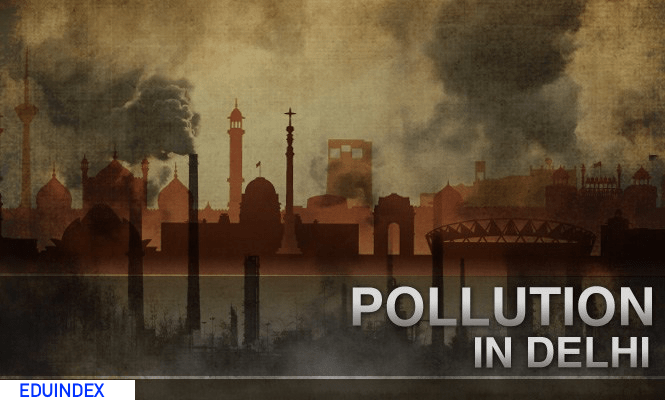
We all know fully well that air pollution in Delhi and even adjoining regions like several districts of West UP are crossing all limits and this year even in districts adjoining Delhi like Meerut where air pollution was never felt so much as is now being felt. Delhi is obviously the worst affected and this is most concerning for our nation as it is the national capital of India. India’s reputation in containing air pollution right in the capital itself is at stake and it is high time that a host of strong steps are taken in the right direction to ensure that it is checked immediately.

It must be mentioned here that the Apex Court Bench of Justices Arun Mishra and Deepak Gupta on November 4, 2019 took up the issue of air pollution in Delhi-NCR in the wake of the Environment Pollution Control Authority (EPCA) declaring a public health emergency taking note of the severely deteriorated air quality. First and foremost, it is pointed out by the Bench that, “We have heard Mr Bhrelal who has pointed out about irrigation. We have also heard some experts from the Ministry and the IIT and learned senior counsel for the parties and Amicus Curiae.” 
Without wasting any time, the ball is then set rolling by pointing out that, “Today everyone is concerned about level of pollution in Delhi and NCR region. This is not something new, every year this kind of piquant situation arises for a substantial period. It is compounded by the fact that year to year in spite of various directions issued by High Court, other authorities including this Court, the State Governments, Government of NCT of Delhi and the corporations of Delhi and nearby States are not performing their duties as enjoined upon them. This is a shocking state of affairs in which we are put as on today. This is blatant and grave violation of right to life of the sizable population by all these actions and the scientific data which has been pointed out indicates that life span of the people is being reduced by this kind of pollution which is being created and that people are being advised not to come back to Delhi or to leave the Delhi due to severe pollution condition which has been created. There cannot be large scale exodus. People have to perform their duty in Delhi also and people cannot be evacuated from Delhi being a capital city. We are at a loss to understand why we are not able to create a situation in which this kind of pollution does not take place, that too in a routine manner every year. Obviously, it is writ large that the State Governments, Government of NCT of Delhi and civic bodies have miserably failed to discharge their liability as per the Directive Principles of State Policy which have found statutory expression, they are being made statutory mockery and also the directions of this Court and High Courts in this regard are being violated with impunity.”
Why should heavy fine not be imposed on the respective State Governments and those civic bodies who have failed utterly to discharge their liability as enshrined in the Directive Principles of State Policy? Why should they be allowed to get away freely or lightly? Why should they not be taken to task forthwith?
Without mincing any words, the Bench then goes forth to very rightly point out in simple and straight language that, “Time has come when we have to fix the accountability for this kind of situation which has arisen and is destroying right to life itself in gross violation of Article 21 of the Constitution of India. No farmer can be said to be having a right under the guise that he is not having sufficient time to use the stubble for the purpose of manure, since they have less time between two crops, cutting and sowing of next crop. As such, they cannot by burning it in their fields, put life of sizeable population in jeopardy.” Farmers too must understand their responsibility which they owe to the nation! Centre and respective State Governments too must do all that they can to ensure that the farmers are helped in every possible manner to help dispose of the remains without polluting the atmosphere! They have so far not done enough adequately in this direction!
Furthermore, it is then pointed out in the next para that, “It is apparent from the satellite images which has been produced before us for the period 30.10.2019 to 04.11.2019. The satellite image clearly indicates that in Punjab there is widespread stubble burning which has taken place as compared to Haryana, in which only in four districts it has taken place. There is some burning in Western U.P. also. It could not have taken place even in a singular district or gram panchayat area as we live in a civilized country in which such kind of activities which create such menacing pollution not only in the area concerned but to the neighbouring States also, by ill-effects of that people cannot be left to die or to suffer various ailments.”
While apportioning liability on all, it is then held by the Bench in the next para that, “Everybody has to be answerable including the top state machinery percolating down to the level of gram panchayat. The very purpose of giving administration power up to the panchayat level is that there has to be proper administration and there is no room for such activities. The action is clearly tortuous one and is clearly punishable under statutory provisions, besides the violation of the Court’s order. In the circumstances, as widespread stubble burning has taken place, we direct the States of Punjab and Haryana and adjoining State of Uttar Pradesh where there is blatant violation which has taken place, to halt it. We direct the Chief Secretaries of the States of Punjab, Haryana and Uttar Pradesh to be present in this Court on 06.11.2019 and Chief Secretary of Government of NCT of Delhi.” 
Not stopping here, it is then further added very rightly in the next para while issuing strict directions that, “We direct the Chief Secretaries of the State Governments, District Collectors, Tehsildars, Director General, IG/SP and other police officers of the area of concerned police station and the entire police machinery to ensure that not even a single incident takes place of stubble farming henceforth. If it is found that any stubble burning has been made not only that person doing it will be hauled up for the violation of the order passed by this Court but the entire administration, right from the Chief Secretary, Commissioner, Collector and all other concerned functionaries and Panchayats. Gram Pradhan/Sarpanch Panchayat are also directed to ensure that no such stubble burning takes place.” 
What’s more, it is then further strongly observed in the next para that, “Let the State Governments of Punjab, Haryana and Uttar Pradesh and officials also explain that why they should not be asked to pay the compensation for tortuous liability as they have acquiesced and due to their failure in preventing stubble burning which is in utter violation of the Public Trust doctrine, why they should not be held liable to compensate, and also the incumbents who are burning the stubble in spite of clear restrictions imposed by this Court and statutory prohibition.” In other words, the Apex Court has made it abundantly clear that it is not just the farmers who indulge in stubble burning who will be held accountable but also the State Governments of Punjab, Haryana and Uttar Pradesh will have to be held accountable for not doing enough to check air pollution in their respective states and allowing stubble burning with impunity by not taking any strict action against those indulging in it!
As if this is not enough, it is then also further added in the next para while fixing accountability that, “We also direct the Sarpanch of each and every Panchayat and SHO of the concerned area to prepare inventory of the incumbents who have burnt the stubbles in their fields. We also direct the Sarpanch, Gram Panchayat as well as the concerned police of the area and local administration including the Collector and all subordinate authorities to ensure that no further stubble burning takes place. In case, any stubble burning takes place responsible machinery from top to bottom and Sarpanch, Gram Panchayat shall be liable for tortuous act and for not complying with the order passed by this Court and let the Gram Panchayat also advise forthwith the villagers not to involve in stubble burning anymore and take appropriate action.” Very rightly so! Unless accountability is fixed and very strict action is taken against all those violating the rules, we cannot control air pollution under any circumstances no matter how much day dreaming we continue to indulge in! This was exactly what eminent and senior Supreme Court lawyer and former Solicitor General of India – Harish Salve also very rightly pointed out while talking in a news channel! 
Be it noted, the Bench then very rightly directs and underscores in the next para that, “We also direct the State Governments, Central Government as well as the Government of NCT of Delhi to take immediate steps to take care of the emergent situation due to air pollution which has taken place. No doubt about it that everybody knows the situation, let the steps be taken forthwith with the help of the experts. We direct the Government of NCT of Delhi as well as various corporations to work in tandem and to see that waste and garbage which is contributing to air pollution is tackled at war level. The efforts should be made right from today without any loss of time.”
Each and every one of us who stay in India must adhere to what the top court has said so rightly, elegantly and commendably! If we abide by what the top court has said, we would only be improving not just our own lives but also other lives and the lives of the coming generations! No time should be wasted on this score as the Apex Court has rightly emphasised!
While elaborating further, it is then pointed out by the Bench that, “Let the EPCA consider as it was suggested by Ms. Aprajita Singh, learned senior counsel and the learned Amicus Curiae that diesel vehicle should not enter the Delhi. Let the EPCA immediately take the steps in this regard as may be considered appropriate as it has the power to do the needful taking care of the emergent situation.”
Going forward, it is then envisaged that, “With respect to demolition and construction activities we direct that no demolition and construction activities take place in Delhi and NCR region. In case it is found that such activity is done, the local administration as well as the municipal authorities including the Zonal Commissioners, Deputy Zonal Commissioners shall be personally held responsible for all such activities. They have to act in furtherance of the Court’s order and to ensure that no such activity takes place.”
It must be brought out here that the Bench then adds that, “We are informed that use of coal based industries have been stopped. In case any violation of this is found the concerned person including Zonal Deputy Commissioner would be liable for violation of the order of this Court and liable to be punished for contempt of Court.”
Coming to odd/even scheme, the Bench then notes that, “It was also pointed out by Mr. Sanjiv Sen, learned senior counsel, that during odd/even scheme in Delhi more use of two wheelers has taken place and they are being plied more causing equal pollution, as such no useful purpose is being served by stopping the use of certain vehicles only on the basis of odd and even numbers. He has also pointed out that it would be appropriate to stop the use of diesel vehicle, in case it is necessitated as the diesel vehicles cause more pollution as compared to petrol and CNG vehicles. Let the Government of NCT of Delhi explain this aspect and file the data in this regard in the Court on the basis of the previous experience and whether if three wheelers and taxies are plying more on road during such restriction and relevant data be placed.” Definitely, if this is done carefully and correctly, we would come know the real picture on air pollution! 
Briefly stated, while questioning the Odd/Even Scheme sponsored by the Delhi state government, it is then mentioned in the next para that, “During Odd/Even Scheme what is the difference being caused by stopping use of four wheelers when various other contributing factors are not taken care of by Government of NCT of Delhi.”
To put things in perspective, the Bench rightly points out the reasons for air pollution that, “As per the Air Quality Inspection Construction and Demolition Activities in Delhi/NCR region causing damage in Noida, Faridabad, Gurugram, Ghaziabad as well as instances of Delhi have also been mentioned.
1. Construction and demolition.
2. There is open dumping of waste/garbage.
3. Unpaved road/pit.
4. Road dust.
5. Garbage burning.
6. Traffic congestion.
As it turned out, the Bench then holds that, “We direct that construction, demolition and activities be stopped forthwith as well as garbage burning. In case, any person is found in construction and demolition activity and garbage burning in Delhi and NCR region, he/she shall be penalized. Any person doing construction and demolition activity in violation of this order, shall be penalized with Rs. 1 Lac for such activity. For garbage burning he/she shall be penalized with Rs. 5,000/- and besides liable for violation of the order passed by this Court to be dealt with in accordance with law.”
Moving on, the Bench then further holds that, “With respect to open dumping of waste and garbage, we direct the Government of NCT of Delhi as well as the concerned Municipal Corporation to chalk out immediate plan and to ensure that waste and garbage to be removed to safe places forthwith and also to ensure that no open dumping takes place. We direct Zonal Deputy Commissioner to be responsible with other officers in this respect. Let road-maps be prepared so as to provide proper amenities in order to prevent open dumping of waste and garbage, and be placed before this Court within four weeks.” 
Now come to think of roads, the Bench on this score lays down that, “For taking care of the road dust let water sprinklers/dust suppressors be used on the roads. An IIT expert suggested about the appropriate water pressure for the sprinklers. At what pressure water should be sprinkled so as to reduce the pollution and dust so that it does not add to the pollution. Let the Corporations act on advice of the expert of the IIT. Such roads where traffic congestion is more, let traffic plan be also prepared in such a manner so that there is no extra burden on a particular road so that traffic congestion is taken care of. It is for the concerned traffic authorities to take immediate steps in this regard.”
More importantly, it is then observed in the next para that, “Since we are fixing the liability on the person responsible for inaction at the village level as well as three States in the NCR regions as well as Delhi, let the widest publicity by all means of publication i.e. Television, Media, newspapers, Radio be made. In Gram Panchayats by beat of drums also and other modes to ensure that villagers are made aware of their responsibility and liability towards the other humans so that they do not involve in such acts. Let the Gram Panchayat, police station, district and taluk levels by the concerned administration take steps in this regard. Let the State Governments also take the requisite steps to extinguish the stubbles which are burning and for that let State Level High Level Committee meet forthwith and take appropriate decision and implement it. Steps taken be informed to this Court on 06.11.2019 by the concerned Chief Secretaries of the three States and Government of NCT of Delhi.”
No less important is what is then stated in next para that, “Let the concerned authorities of EPCA meet forthwith and take a call in this regard with respect to industrial activities which are causing pollution on how to control it. We also direct all pollution control Boards of three States and Government of NCT of Delhi that polluting industries/activities against norms are put to halt forthwith.”
In addition, it is also then directed that, “It was also submitted by M/s. Sanjiv Sen and Gopal Sankaranarayanan, learned senior counsel that in certain States generators are also being used which increase pollution mainly due to cut off in the electricity supply. Generators in Delhi also add to pollution in Delhi as well as in NCR region. Let the State Governments and Government of NCT of Delhi ensure that electricity is not cut so that generators are not used and let no generators be used till next day of hearing except in emergency/healthcare services.”
Last but not the least, it is then held that, “Let the State Governments, NCT of Delhi and also the Government of India prepare a road map for preventing this kind of situation in future and be placed before this Court, within three weeks. Let the Action Taken Report be submitted within four weeks. Directions/order to be effective unless otherwise ordered.”
In conclusion, it is high time and there is no reason why Centre, Delhi government and governments of neighbouring states of Delhi like Punjab, UP and Haryana among others should not obey strictly the directions laid down by this top court in this latest, landmark and extremely laudable judgment. There is no reason why pollution of air can’t be controlled if the commendable directions laid down by the Apex Court in this noteworthy case are followed in letter and spirit. We all also must as good citizens do our best to contribute as much as possible to control air pollution as it is we ourselves who are worst affected by it! 
Sanjeev Sirohi, Advocate,
s/o Col BPS Sirohi,
A 82, Defence Enclave,
Sardhana Road, Kankerkhera,
Meerut – 250001, Uttar Pradesh.


What Do We Actually \’Celebrate\’ In Our Schools?

\’So, you\’re \’celebrating\’ again.\’
\’Yes, it\’s Independence Day tomorrow.\’
\’Oh, so another round of ritualistic speeches?\’
\’What do you mean, ritualistic speeches?\’
\’You know what I mean. The same old \’important\’ people will be called. They will be welcomed, garlanded and they will walk around, feeling even more self-important.\’
\’You\’re being very unkind, you know.\’
\’But close to the truth, isn\’t it?\’
\’I\’m not sure if this is really ritualistic…\’
\’No, it is what follows afterwards…. The same formal atmosphere will be created. Children will sit in neat rows and told not to talk too much. The LIP (or your Local Important Person) will be praised, invited to give us the benefit of his wisdom, children will be asked to shush, and then the LIP will give the same speech as every year – you are the future of the country… freedom is very important.. our great leaders were so very great… you must work hard… you must try to like the great people of the past… And all this while instead of experiencing freedom on Independence Day of India, children will be sitting bored, stiff, not allowed tomove around or talk or express themselves….\’
\’You\’re being really harsh!\’\’
\’OK, tell me, didn\’t you hear the same speeches when you were a child?\’
\’Ye-es.\’
\’Did you really enjoy those celebrations? Were they a celebration for you?\’
\’Actually, to be honest, no, not really.\’
\’Aren\’t you surprised that the same speeches are being made even now?\’
\’Yeah, now that you mention it…\’
\’And shouldn\’t children be more like the leaders of tomorrow rather than the leaders of long past. After all, every kid is not going to experience walking 17 kilometres to school!\’
\’Hmm… something to think about, there. And come to think of it, why was every great man\’s school 17 kilometres away?\’
\’See, it\’s getting you too!  And when it comes to – no, no, better not to say that.\’
\’Well you can tell me… I\’m not going to shout at you!\’
\’I know you won\’t. But I don\’t want you to feel depressed either.\’
\’Come on, I can handle it. Tell me what you were going to say.\’

\’Well, if you insist. The thing is, children attend all these functions year after year, experience the same thing over and over again. And what do they learn? They learn that they don\’t matter. Their job is to listen. Their role is to be passive, not think for themselves. And look at you – you were a child who once found these functions boring but you are organizing exactly the same kind of function again! Independence Day isn\’t quite an experience in Independence, isn\’t it? My thesis is that these National Day type of \’celebrations\’ only teach us to be slaves, to accept that we have no freedom to be different or better, to allow ourselves to be defined by the limited vision of those limited adults who were similarly made limited by the experience they went through as children themselves…. Hey, you\’re suddenly very silent now. This is not look good… come on, say something.\’
\’What do I say? I\’m feeling so…\’
\’So… what?\’
\’So depressed!\’
————————————————-
What do you think about the other \’celebrations\’ we have in our schools? Is the birthday of a child celebrated \’more\’ or differently or better than that of other children whose families are considered to be less important or not influential?
What are the festivals celebrated in schools? Whose festivals are left out? Many communities / religious groups never see their festivals even discussed in school? What do they feel about it? And what do they \’learn\’ from this?
On Sports Day, do most children have the scope to participate and gain something? Or is only the \’victory\’ of a  few celebrated again and again? And what do the rest learn from this?
And on Results Day, whose achievements stand out? And what does everyone learn from this? (Maybe CCE will make a difference here?)
Perhaps all these celebrations, in the end, make us realise that their isn\’t much about us that is worth celebrating. When I was younger I would have said that this happens even though the intention is quite different. But now, a little more battered and older, I think the intention was always this – to make you realise that only a few can be \’important\’ persons worth celebrating, not you.
————————————————-
So what should we celebrate in our schools?
For starters, children and learning. Simply the presence of every child is worth celebrating (rather than \’Oh God, another one!\’). And how to celebrate? By smiling, by welcoming, by genuinely talking with the child, giving space to her questions, by looking for ways to ensure she is comfortable, involved and engaged in an actual learning.
Children will ask unexpected questions, offer different points of view, find innovative ways of doing things, or help each other… celebrate this. Point out what they have done which is so good, and why it is so.
There will be times when those who usually \’fall behind\’ will make an effort, come up with something of their own (of course, only if you ensure they have the opportunity to do so). Celebrate their efforts, point out their good parts, and indicate what else they can do that will earn them similar \’celebration\’.
If you find a fellow teacher, a staff member, a parent, an SMC member who is doing something successfully and contributing to children and the school, that\’s worth celebrating.
And on Independence Day? Start a few days before. Discuss with children what Independence Day means to us. Ask them how they think it should be celebrated. Come up with ideas that puts the children in the front, not adults or LIPs. Maybe they make drawings and posters related to freedom. Maybe they hold a debate on what freedom means and whether we really are a free people. Maybe they decide not to do a \’function\’ in the  school at all and instead spend time with children who are unable to be in school because they are not really free…And maybe they will learn something very different from such \’celebrations\’ than we did.