Detention For Adults?

To all those who are convinced that the non-detention policy is harming education…
Children’s apparent lack of learning becomes an issue mainly because it is easy to see that they have missed out on something. The fact that at a younger age learning is very fast and that clear milestones are available helps us perceive this – and therefore apply all kinds of expectations, tactics, at times even coercion to ‘ensure’ learning – one such being the detention system which, many believe, is needed in order to maintain ‘quality’. By making children lose a year because we couldn’t ensure their learning (and blaming them for it), we feel we can generate the fear required to make them ‘serious’ and learn.
If we are convinced about this, why should it apply only to school education? What if we could lay out clear benchmarks for adults to learn and grow – in general as well as in the work they do. Certainly it is possible to have a life-long ‘curriculum’ with two-year benchmarks (over their entire careers, and even post retirement) for educationists and curriculum developers, teachers, HMs, government officials, managers, businessmen, fathers and mothers (and grandparents), journalists, artists, municipal staff, auditors, accountants, administrators, intelligence agents and politicians. What if there was a ‘detention system’ (in terms of not being allowed to be promoted or get a pay increase or being sent back to some lower ‘grade’)? Yes, in some government jobs there is an ‘efficiency bar’ and the supposed HR policies and internal competition are expected to sort this out. But do they?
Can we as a nation claim that we have, every year, demonstrated the improvement required to declare ourselves ‘promoted’ to the next level (whatever that is)?
And what happens when police are unable to reduce crimes, leaders are unable to ensure the welfare of the poor, systems are unable to deliver basics such as electricity / water / education / health, or societies are unable to get men to have basic respect for women?

So, What Now? Knowing the 7 Myths of Highly Ineffective Education Systems, What Do We Do?

Continuing to live with these myths is to deny ourselves the opportunity to succeed, especially for those who need education the most. The first step is to accept that these notions have indeed affected our work in trying to bring about better education. Acknowledging this is not a sign of defeat but of learning.
After acknowledgement, however, come reflection – and small steps. 

Here are some small steps that all of us can take: 
  1. Discuss these ‘myths’ and related issues with as many people as you can. Question and contest them, or support them, with your experiences, facts and data from your sphere.
  2. If you are in any way connected with education – as a student, parent, teacher, CRC-BRC, official or resource person, NGO worker or decision-maker, make one small change every month which in some way empowers children or teachers or HMs. (Our team, Ignus PAHAL, will soon be producing a poster presenting a graded list of these small, doable changes at the school level.)
  3. Talk with as many stakeholders as possible and within reach (and in the limited time available) about what they would like. They might suggest things they could do – and a small beginning may be made to a partnership in bringing about improvement that is gettable. It may be a better way to help children wash their hands before the mid-day meal, or managing to start the school 10 minutes earlier so that learning time increases, or ensuring used textbooks are circulated better, or working out how you may share your expertise with children or teachers.
  4. Find something interesting you can share with children. It may be a news item (e.g. did you know that for some reason, the MHRD – and some of the other ministries of education in the country – face a problem with monkeys troubling them?), or an interesting story you’ve read or know (but no moral tales please!) or a suggestion for something they can try out (e.g. making a paper plane turn in a predicted direction) or find out (e.g. why the inner margin of a textbook page is wider than the outer margin – okay, that is too easy but you get the idea).
  5. Find a way to convert complex educational ideas into simpler forms so that a person with no background in education or no access to ‘high’ language may understand it. E.g. ‘non-detention is not the same as non-evaluation, and that by detaining children we are making them pay the price for the system’s failure and also supporting the idea that it is fear which leads to learning’. Can you find a way to make this idea easy to understand for millions of teachers, parents, SMC members and others? (You can guess why this statement was selected as the example…)
  6. Use your mobile – call up a teacher, or text her an idea or send your appreciation. With children, use the stop-watch, camera and calendar in your phone to do activities. If you know an official and have a good enough relationship, make him or her uncomfortable by reading out sections of this article (don’t get into a bitter argument – a gentle, understanding approach may be more useful!).
  7. Finally, please add to the discussion on these 7 Myths and, perhaps more importantly, to the list of suggestions.
But all these are very small things, you might say. They can’t achieve much. Well, not if many, many, many of us are doing them! Perhaps it’s a myth too that only when some large government programme is in action can change take place. This ignores local ingenuity and the sheer numbers that can make government efforts look feeble – or boost them to make them actually succeed. Towards this, your views and ideas may be more powerful than you imagine. And that’s not a myth!

550 Birth Anniversary of Guru Nanak Dev & the Golden Temple

On this date of 12
November 2019, 550 birth anniversary of Guru Nanak Dev ji is being celebrated
across the world particularly in India and Pakistan with full dedication,
devotion and gaiety.
    His sayings and messages are still relevant
and will also continue till the day human beings survive. I am quoting from one
of his sayings which has greatly influenced me, “There is but One God. His name
is Truth; He is the Creator. He fears none; he is without hate. He never dies;
He is beyond the cycle of births and death. He is self-illuminated. He is
realized by the kindness of the True Guru. He was True in the beginning; He was
True when the ages commenced and has ever been True. He is also True now”.
Another one, “Even Kings and emperors with heaps of wealth and vast dominion
cannot compare with an ant filled with the love of God”.

    Guru Nanak ji was born at present place of Nankana Sahib, near Lahore of Pakistan.
According to various literatures and beliefs, the birth and initial years of
Guru Nanakji’s life were marked with
many astonishing incidents that validated that Nanak ji was born with divine
power.
 Guru Nanak Dev ji later on settled down at Kartarpur (now in Pakistan) which was
founded by him in 1522 and spent the rest of his life there (1522-1539). Kartarpur is now great news in the world
as 3-kilometre  corridor which connects Darbar Sahib in Kartarpur with Dera Baba
Nanak shrine in Gurdaspur district of
Punjab (India) has  allowed pilgrims’
mainly Sikh pilgrims’ direct access to the historic Gurdwara Darbar Sahib in
Kartarpur
, where Guru Nanak Dev
passed away. Hope this corridor will bring peace in the region so that no
mothers have to lose their sons or children had to suffer because death of
their fathers. Guru Nanak Dev ji long ago rightly said, “Dwell in peace in the
home of your own being, and the Messenger of Death will not be able to touch
you”.       
  Although Guru Nanak ji was the founder of
Sikhism and the first of the ten Sikh Gurus but all the other Gurus had done
excellent work for human beings. In this context, the Golden Temple is a
glaring example. The Golden Temple of Amritsar (Sri Harmandir Sahib) is not only a central religious place of the
Sikhs, but also a symbol of human brotherhood and equality. Everybody
irrespective of caste, creed, religion or race can visit the place.
Regarding the Temple it
may be mentioned that, as advised by Sri Guru Amar Dass Ji (3rd Sikh Guru), Sri Guru Ram Dass Ji (4th Sikh Guru)
started the digging of Amrit Sarovar
(Holy Tank) of Sri Harmandir Sahib in
1577 A.D., which was later on brick-lined by Sri Guru Arjan Dev Ji (5th Sikh Guru) on 15 December, 1588 and he
also started the construction of Sri Harmandir
Sahib
. Sri Guru Granth Sahib
(scripture of the Sikhs) was first installed at Sri Harmandir Sahib on 16 August 1604 A.D.
     The Golden Temple (Sri Harmandir Sahib Amritsar) has a unique
Sikh architecture. Built at a level lower than the surrounding land level, the Gurudwara teaches the lesson of
egalitarianism and humility. The four entrances of this holy shrine from all
four directions signify that people belonging to every walk of life are equally
welcome. The Sikhs and others of different religions all over the world daily
visit Sri Harmandir Sahib.  
    The author had the opportunity to visit
holy Golden Temple (Sri Harmandir
Sahib) in August 2017. So the author’s first visit to Golden Temple created different
feelings in the mind and heart of the author as everywhere selfless service was
observed- whether serving of food, water, cleaning of utensils, making of roti etc. were concerned. It is
heartening to mention by quoting Hindustan Times, 19th May 2016,
epaper, that “The Golden Temple (Harmandir
Sahib) in Amritsar has been ranked number 3 in the country on the travellers’
choice landmarks list of a leading travel planning and booking site
TripAdvisor. Surrounded by a holy ‘sarovar’,
its construction was completed in 1604 and presently runs one of the largest
free kitchens in the world, which serves an average of 1,00,000 people daily”.

Dr Shankar Chatterjee
Former Professor & Head (CPME),NIRD & PR ( Govt. of India), Hyderabad,  India
Former Associate Professor, Eritrea
Former Assistant Prof, Govt. Degree College, Tripura, India
Former Senior Planning Officer, Govt of Assam, India

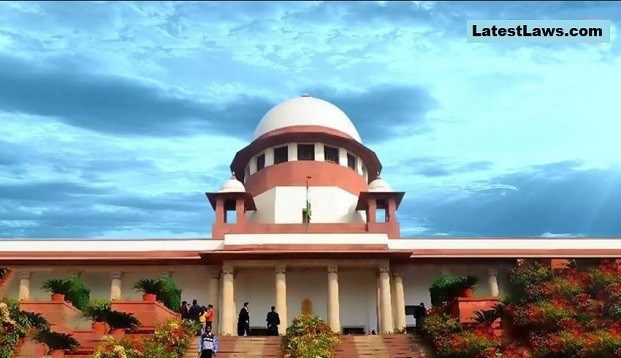
Interim Mandatory Injunctions Can Be Granted After Giving Opportunity Of Hearing To Opposite Side: SC

It has to be stated right at the outset before stating anything else that in a latest, landmark and laudable judgment titled Dr Syed Afzal (Dead) Through Lrs. & Ors. Vs Rubina Syed Faizuddin & Ors in Civil Appeal Nos. 8447-8449 of 2019 (Arising out of SLP (C) Nos. 25368-25370/2019), the Supreme Court has clearly and convincingly observed that the Civil Courts while considering the application seeking interim mandatory injunction in long pending cases, should grant opportunity of hearing to the opposite side. In other words, the Apex Court has sought to make it abundantly clear in this noteworthy case that interim mandatory injunctions can be granted after granting opportunity of hearing to the opposite side. Very rightly so!

While granting leave, this notable judgment delivered by a Bench of Apex Court comprising of Justice NV Ramana and Justice V Ramasubramanian on November 4, 2019, first and foremost sets the ball rolling by observing that, “Aggrieved by an interim order passed in three interlocutory applications, pending a Regular Appeal arising out of a preliminary decree for partition, the legal representatives of one of the plaintiffs in the suit have come up with the present appeals.”

To put things in perspective, the Bench then after hearing both sides says that, “We have heard Mr. Kapil Sibal, learned senior counsel appearing on behalf of the appellants and Mr. Ranjit Kumar, learned senior counsel appearing on behalf of respondent Nos. 1 to 5.” The Bench then goes on to clarify that, “Service of notice on the other respondents is not necessary as these appeals arise out of an order passed in the interlocutory applications filed before the High Court by respondent Nos. 1 to 5 alone.”

Needless to say, it is then brought out that, “The appellants herein are the legal representatives of one Dr. Syed Afzal, who along with his brother Syed Hamza, filed a suit – O.S. No. 123 of 1997 in the Court of the IX Additional Chief Judge, City Civil Court, Hyderabad for partition and separate possession of their lawful shares in the suit schedule properties. By a judgment dated 24.09.2012, the trial court granted a preliminary decree for partition.”

As it turned out, the Bench then notes that, “Aggrieved by the preliminary decree for partition, defendant Nos. 26 to 30 (respondent Nos. 1 to 5 herein) filed a Regular Appeal in CCCA No. 18 of 2013 on the file of the High Court of Judicature at Hyderabad. Initially, the High Court granted an interim stay of all further proceedings pursuant to the preliminary decree, but the same was later modified confining the stay only to the passing of final decree. The appeal is still pending and the interim order staying the passing of final decree is in force.”

To put it succinctly, it is then disclosed that, “During the pendency of the appeal, respondent Nos. 1 to 5 herein moved three interlocutory applications – I.A. Nos. 3, 4 and 5 of 2019 praying inter alia for (i) an interim mandatory injunction directing respondent Nos. 27, 35, 37 and 38 in the appeal to remove their henchmen from Item Nos. 2 and 3 of the decree schedule properties (ii) an injunction restraining the respondents in the appeal from interfering with their alleged peaceful possession of Item Nos. 1 to 7 of the decree schedule properties and (iii) a direction to grant police and to them for removing the so-called henchmen of respondent Nos. 27, 35, 37 and 38 from Item Nos. 2 and 3 of the decree schedule properties.”

To say the least, the Bench then points out that, “It appears that all the three interlocutory applications were filed on 14.10.2019 and the same were listed for hearing on 16.10.2019. According to the appellants herein, they sought time to file counter affidavits in all the three interlocutory applications. However, the High Court passed an order on 16.10.2019 granting an interim mandatory injunction as well as police aid. Therefore, contending that without granting an opportunity of hearing, an interim mandatory injunction and police aid have been granted, the appellants have approached this Court with the instant appeals.”

More importantly, it is then rightly pointed out that, “It is obvious from the impugned order that what was granted was only by way of interim measure and the interlocutory applications are not finally disposed of. We are informed that the interlocutory applications are likely to be listed before the High Court next week. Therefore, at this stage, we do not wish to enter into the merits of the dispute, as the same may prejudice either of the parties. Suffice it to say that the regular appeal pending before the High Court is of the year 2013 and the applications, out of which the present appeals arise, are of the year 2019. These applications are purportedly necessitated by the events that allegedly happened in the recent past. Therefore, this was not a case where an ad-interim mandatory injunction and police aid were required to be granted without affording an opportunity to the appellants herein to file a counter affidavit and to put forth their case.”

Most importantly, it is then very rightly observed that, “It is true that the Civil Court is not powerless to grant interim mandatory injunction, as such a power has been recognised by this Court in a long line of decisions, the important among them being Dorab Cowasji Warden vs. Coomi Sorab Warden & Ors, (1990) 2 SCC 117. But it does not mean that the same could be granted even without an opportunity to the other side, especially when the main appeal is pending for the past six years. By the impugned order, the High Court has not only granted an interim mandatory injunction, but also granted police aid, leaving all the interlocutory applications lifeless, though the applications are technically pending.”

Finally and perhaps no less importantly, it is then held that, “Therefore, we are of the considered view that the impugned order is liable to be set aside and the High Court should be allowed to decide the interlocutory applications on merits after allowing the appellants herein to file a counter affidavit. Accordingly, the appeals are allowed and the impugned order is set aside. The High Court is requested to permit the appellant herein to file a counter affidavit in all the three interlocutory applications. The High Court is further requested to hear both sides and dispose of the applications in accordance with law, preferably within a period of four weeks. In the meantime, both the parties shall maintain status quo, as it exists today, till the disposal of the interlocutory applications.”

On a concluding note, it may well be said with a considerable degree of satisfaction that the Apex Court has very rightly held that it is true that the Civil Court is not powerless to grant interim mandatory injunction as the Court has itself recognized in many cases, the most prominent being Dorab Cowasji Warden vs. Coomi Sorab Warden & Ors, (1990) 2 SCC 117. But the Court also in the same breath does not miss out in holding that it does not mean that the same could be granted even without an opportunity to the other side, especially when the main appeal is pending for the past six years. All the courts must always abide by what the Apex Court has held so clearly and convincingly in this landmark, latest and laudable judgment while adhering to what was held earlier also in similar such cases as has already been pointed out which deserves to be emulated also!

Sanjeev Sirohi, Advocate,

s/o Col BPS Sirohi,

A 82, Defence Enclave,

Sardhana Road, Kankerkhera,

Meerut – 250001, Uttar Pradesh.