Dr. Harsh Vardhan inaugurates 6th National Summit on Good, Replicable Practices and Innovations in Public Health Care Systems.

This NHM National Summit is a celebration of ideas, innovations and knowledge sharing and we all must take back these and ensure that we implement at-least a few of them” said Dr. Harsh Vardhan, Union Minister for Health & Family Welfare as he inaugurated the Sixth National Summit on Good, Replicable Practices and Innovations along with Union Minister of State for Health & Family Welfare Shri. Ashwini Kumar Choubey, Shri. Vijay Rupani, Chief Minister, Gujarat, Shri. Nitinbhai Ratilal Patel, Dy. CM & Minister of Health & Family Welfare, Gujarat and Dr. Vinod K Paul, Member (Health), NITI AAYOG at Gandhinagar (Gujarat), today.
Calling the Summit as the aggregating ground of new ideas, t

houghts and expression, the Union Health Minister stated “MoHFW endeavors to foster cross learning amongst the State Governments, NGOs, Healthcare organizations and other academic institutions so that these work in concordance to achieve the overarching public health goals.” Dr. Harsh Vardhan suggested that similar to the National NHM Summit, the States also can have State/Regional conferences for sharing of knowledge within the districts. “Let the national knowledge and ideas be transmitted to the districts level health workers, functionaries through the state/regional conferences”. He added that in addition to presenting best practices, states must also emulate and roll out the best practices from other states. He stressed the importance of self-auditing for performance assessment.

Dr. Harsh Vardhan also highlighted the noteworthy achievements in the health sector during the past few years such as Ayushman Bharat, Telemedicine, NHP 2017, Medical Education, and Health Systems Strengthening.
Shri. Ashwini Kumar Choubey, Minister of State for Health & Family Welfare appreciated the efforts made by the Centre and States to reach out to the beneficiaries and provide access to quality healthcare services. He said that “The Summit provides a valuable platform for sharing of knowledge and experiences. This will immensely contribute to meeting our health outcomes”. He also highlighted the initiatives taken for providing preventive, promotive, affordable and quality healthcare services including AYUSH services.
Dr. Vinod K Paul, Member (Health), NITI AAYOG addressing the summit emphasized the importance of system level change for greater strides in healthcare and termed NHM as great program for healthcare delivery to the populace. He said ”There are seven building blocks for the future advances in the health sector- focused stewardship, adequate finance, capable HR, health commodities, service delivery which is equity & quality driven, information systems, and community participation for social and behavior change.”
The Summit saw the launch of SAANS campaign i.e. “Social Awareness and Action to Neutralise Pneumonia Successfully” to control Pneumonia. This campaign will mobilize people’s for protecting and preventing children from pneumonia; and health personnel, governments & other stakeholders to prioritize treatment towards the control of Pneumonia — one of the most fatal childhood illnesses. Under the SAANS campaign, new interventions have been included like a child suffering from Pneumonia will be treated with pre-referral dose of Amoxicillin by ASHA; Pulse Oximeter will be used at the Health and Wellness Centre for identification of low oxygen levels in the blood and if required treated by use of Oxygen. The initiative also aims to create mass awareness about the most effective solutions for pneumonia prevention like breast feeding, age appropriate complementary feeding, immunization, good quality air etc.
The web portal for home based care of children including newborn visited by ASHA, was also launched at the Summit. This portal has all the resource materials (training materials, IEC videos, audios, banners, posters etc.) for the home visits of ASHAs. The portal will also be used to monitor the progress of programs regarding home visits by ASHAs and referral of sick newborns, an intervention considered globally as game changer to improve child survival and also improve nutritional status and overall development of children.
The dignitaries also unveiled the Coffee Table Book documenting the Good and Replicable Practices presented during the Summit. Dr. Harsh Vardhan along with other dignitaries acknowledged the exemplary progress of States and Union Territories in key health indicators and programme areas by presenting them with awards for excellent performance.
The Ministry of Health & Family Welfare, GoI holds National Summit on Good, Replicable Practices and Innovations in Public Healthcare Systems in India annually to recognize, showcase and document various best practices and innovations adopted by States and UTs for addressing their public health challenges and to improving their health outcomes though better implementation of programmes under National Health Mission (NHM). More than 300 participants attended the summit. At the summit 37 good practices were presented and 73 emerging good practices were showcased in the form of poster presentations.
Also present at the event were senior officers from MoHFW; State Health Secretaries and NHM MDs; Health Care Officers from almost all States and Union Territories along with Programme Officers, heads of Programme Divisions, MoHFW; Development Partners; Civil Society representatives and other healthcare organizations.
***

Central GST Delhi-West Commissionerate unearthed racket of issuance of fake invoices

Central GST Delhi-West Commissionerate has unearthed racket of issuance of fake invoices without actual supply of goods and services by M/s Royal Sales India and 27 other dummy companies.  Two persons have been arrested in this matter and remanded to judicial custody for 14 days by Duty Magistrate, Patiala house Courts, New Delhi. The accused were found to be operating 28 fake companies to facilitate fraudulent Input Tax Credit (ITC), thus defrauding the exchequer. Prima facie, fraudulent ITC of about Rs 108 Crore has been passed on using invoices involving amount of Rs 900 Crore. Final duty is subject to outcome of the investigation.

On basis of search at various suppliers & recipients of goods of the said firms, it was revealed that Modus operandi of these 28 bogus firms involved obtaining GST registration of fake firms all across Delhi using KYC documents of lowly paid individuals and generating goodless invoices and e-way bills of these firms. On preliminary scrutiny, it was seen that the inward supplies of the said firm were not in correlation with outward supplies. All these firms have resorted to sale or cause effect of sale of goods, by issuing good-less invoices and on collection of the payment by cheque, pay back in cash to the party in question. This is done in order to facilitate these firms under investigation to avail Input Tax Credit for offsetting any likely tax liability and in some cases availing IGST refund etc.
Till now, 15 buyer firms have already admitted their liability vide their Voluntary Statement and further deposited voluntarily approx Rs.1.30 Crore towards ITC wrongly availed, Interest and Penalty under Section 74(5) of CGST Act, 2017 till date. Further, approx. Rs 1.58 Crore has been frozen in Bank Accounts of these fake firms.
Therefore, both accused have committed offence under the provisions of Section 132(1)(b) and (c) of CGST Act 2017, which are cognizable and non-bailable under section 132(5) being punishable under Section 132(1)(i) of the said Act and have been remanded to judicial custody for 14 days on 15.11.2019. Investigations are underway to identify key beneficiaries of this fraud and to further recover GST involved.
***********

MIG fighter Aircraft Crashes near Goa Both Pilots Safe

At about noon on 16 Nov 2019, a MiG-29K twin seater aircraft, on a routine training sortie, encountered a flock of birds after take off from the naval Air Base at Dabolim Goa.

The pilot observed that the left engine had flamed out and the right engine had caught fire. Attempts to recover the aircraft following the standard operating procedures were unsuccessful due to nature of emergency. The pilot, showing huge presence of mind, pointed the aircraft away from populated areas and both pilots ejected safely. An inquiry to investigate the cause of accident has been instituted by the Navy. The pilots Capt M Sheokhand and Lt Cdr Deepak Yadav are safe and have been recovered. There has been no loss of life or damage to property on ground.

*****

Union Minister of Consumer Affairs, Food & Public Distribution Shri Ram Vilas Paswan releases Water Quality Report for State Capitals & Delhi as analysed by BIS

Delhi
Objective is not to demotivate anyone rather it is to encourage State Governments to ensure quality potable tap water is provided to all – Shri Ram Vilas Paswan
The Union Minister of Consumer Affairs, Food and Public Distribution Shri Ram Vilas Paswan has always exhorted providing quality products to consumers which includes providing clean & safe drinking water for all. This is also in line with Jal Jeevan Mission, announced by Prime Minister Shri Narendra Modi which aims to provide tap water to all households by 2024. In order to ensure that clean and safe drinking water is provided to all, Department of Consumer Affairs decided to undertake a study through the Bureau of India Standards (BIS) on the quality of piped drinking water being supplied in the country and also rank the States, Smart Cities and even Districts based on the quality of tap water.
In the first phase, the samples of drinking water were drawn from various locations across Delhi and in the second phase samples were drawn from  20 State capitalsand sent for testing as per Indian Standard 10500:2012 (Specification for DrinkingWater) as set by the BIS. Tests were conducted on various parameters such asOrganoleptic and Physical Tests,Chemical test, Toxic substances and Bacteriological tests in the first stage. A vast majority of the samples have failed to comply with the requirements of IS 10500:2012 in one or more parameters.
In Delhi, all the 11samples drawn from various places did not comply with the requirements of the Indian Standard& failed on several parameters.All the 10 samples drawn from Mumbai were found to comply with the requirements. In the cities of Hyderabad, Bhubaneshwar, Ranchi, Raipur, Amravati and Shimla, one or more samples did not comply with the requirements of the Standard and none of the samples drawn from 13 of the State Capitals i.e. Chandigarh,Thiruvananthapuram, Patna, Bhopal, Guwahati, Bengaluru, Gandhinagar, Lucknow, Jammu, Jaipur, Dehradun, Chennai, Kolkata complied with the requirements of the Indian Standard.
Addressing media after releasing the report, Shri Paswan said that all should get clean drinking water and that is the objective of this activity. He said that the objective is not to demotivate anyone rather it to encourage State Governments to ensure quality potable tap water to all citizens. Shri Paswan further added that in the third phase, samples from Capital cities of North Eastern States and SmartCities identified by Ministry of Housing and Urban Affairs have been drawn and are being tested. The result of these are expected by 15th January 2020. While in the fourth phase, it is proposed to test samples drawn from all the district headquarters of the country and their testing is planned to be completed by 15th August 2020.Shri Paswan also said that the Union Government wants to make BIS Standards mandatory for Tap Water so as to ensure quality drinking water for all households.
*****

4 day long National Agrochemicals Congress concludes with recommendations for safe and judicious pesticide use in the country

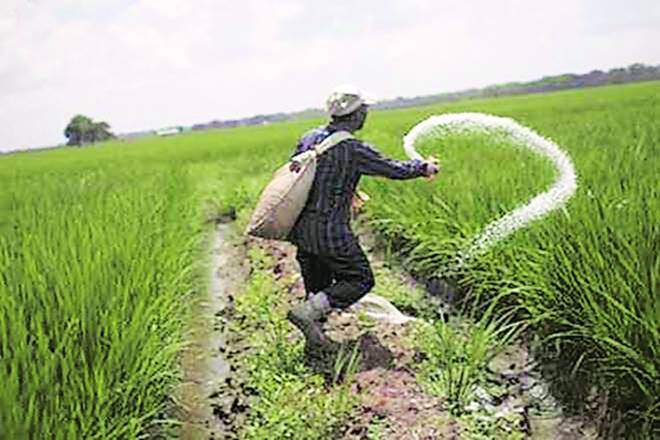
The four day long National Agrochemicals Congress with the theme Country’s Status on Various Fronts of Agrochemicals concluded here today. The plenary sessions had deliberations on Issues and Concerns of Agrochemicals for sustainable farming. Recommendations from the congress included labelling of pesticide indicating the mode of action, status of country’s preparedness in invasive exigencies, to rethink on restrictive banning of pesticides in view of risk based considerations, policy regarding data protection of imported technical pesticides, policy for introduction of safe nano-formulations and empowerment of farmers through training and extension.

In the concluding session, Prof. Ramesh Chand, Member NitiAyog outlined the importance of responsible use of agrochemicals utilising precision technologies to reduce wastageof applied chemicals into environments.Prof. Chand advised the stakeholders to discourage false claims about agrochemicals and tackle the spread of wrong perception in public about agrochemicals. He exhorted agrochemicals scientists and microbiologists to workout on chemical and microbial interventions to transform biomass waste into a wealth.
DrTrilochanMohapatra, DG ICAR addressing the session said that agrochemicals will continue to play a major input in agriculture to meet the crop production targets and we must strive to ensure its safe and judicious use. He requested the scientists to comprehensively work upon the aspects of nano-pesticide approach to ensure safety of humans, livestock and environment.
Speaking at the session, Dr. Ashok Dalwai, CEO NRAAsaid that there is a need for reorientation in the thought process of society with regard to agrochemicals and experts have a big role in this exercise. He emphasized upon liberalization of registration procedures, enforcement of regulations at state level and access to technical pesticides.
This was the first ever National Agrochemicals Congress and this will hereafter be conducted in three years. The Congress is conducted in view of the role chemical pesticides still continue to play in pest management as more and more target specific and environment friendly products are being introduced. The benefits of pesticide use are high relative to their risks. New concepts in crops, human health, resource management, nanotechnology, smart formulations and related sciences are likely to boost agricultural productivity. With this background, current status of agrochemicals on various fronts have been collated for researchers and policy makers in order to ensure agriculture grow in a sustainable manner.
***

ECI to establish a Visiting Chair on Interdisciplinary Approach to Electoral Studies in memory of former CEC Sh T N Seshan

To commemorate and celebrate Sh T N Seshan’s special connect with the young and aspiring India, Election Commission of India has decided to establish and fund a Visiting chair on interdisciplinary approach to Electoral Studies in the Centre for Curriculum Development at India international institute of Democracy and Election Management( IIIDEM ), New Delhi from 2020-2025. The Chair will be mentored by Sh N Gopalaswami Former CEC.
Chief Election Commissioner Sh Sunil Arora today announced this decision while delivering the Keynote address at the Institute of Law, NIRMA University, Ahmedabad. President of NIRMA University, Dr Karsanbhai K Patel, Sh.Umesh Sinha Secretary General ECI, Vice Chancellor-Dr. Anup Singh, Dr Purvi Pokhariyal, Director, Institute of Law, faculty and students were present on the occasion. Sh Arora had been invited by the University on the occasion of Law Conclave organized in memory of the legendary Constitutional expert, economist and jurist par excellence Shri Nani Palkhiwala.  
Speaking on the occasion Sh Arora said “Sh T N Seshan’s enduring contribution to the cause of probity, transparency and integrity in various aspects of the electoral process in India has made his name synonymous with electoral best practices worldwide. In his memory thus ECI would establish the Chair. It shall be our endeavour to ensure that the Chair becomes fully functional during the next academic session  August- September, 2020.” The detailed modalities of the establishment of the Chair shall be worked out by Sh. Umesh Sinha, Secretary General, Sh. Dharmendra Sharma, DG IIIDEM and Mona Sreenivas, Director ECI and will be presented to the Commission by March 15, 2020. The Visiting Chair programme will be targeted to young academics with proven track record in fields relatable to electoral studies. The Chair will also be expected to curate one National Level Seminar on specific aspects of Electoral Studies. The Visiting Chair will also supervise designing and development of interdisciplinary curriculum/ modules for further training and research at the IIIDEM.
photo.jpg         
Delivering his lecture on Electoral law – its evolution and practice in India, Chief Election Commissioner said “Coincidentally, the 70th Anniversary of the adoption of the Constitution of India on 26th November, 1950 is close at hand, affording an opportunity for all of us to deliberate upon the path ahead”.
Sh Arora said “Our Constitution is a living document. In many ways, it is also an evolving document which has endured the test of times. From its very inception, the Constitution has spelt, for each and every Indian, a vocabulary of rights, entitlements, duties as well as the trinity of equality, freedom and dignity which make life meaningful” CEC said. The Election commission, like any institution, has to constantly reinvent itself in order to confront new and emerging challenges”, CEC stated.
 Shri Arora said “The electoral journey has been remarkable. Yet we cannot sit on past laurels. The Commission is committed to bring more reforms to ensure that the process become more in sync with the times, the current technologies and enhanced voter participation. Recently, the concept of Absentee voters has been made part of our process. We hope to have more than one qualifying dates for eligibility of voters. We have large number of overseas population and we need to devise a mechanism to facilitate their participation in the electoral process. We also need to work harder to curb the menace of money power, misinformation and to check the criminal elements in the arena of elections.” He added that “the roots of democracy run deep in our consciousness. So does an inherent sense of what constitutes right and wrong. Given this, I can say with conviction that the voter of this country is no longer naïve, passive recipient in the play of political democracy. Despite the fact that voting is not compulsory, more than 67% people come out to vote especially the women, senior citizens and persons with disability. “The strength lies in “We the People”. It is the collective power of the People that is invoked through the Constitution” Sh Arora emphasized.

Journalism is a pious mission for the cause of nation – Vice President

The Vice President, Shri M. Venkaiah Naidu today urged the media to not color news with views and stressed the need to maintain objectivity, fairness and accuracy. “The neutrality and sanctity of newsrooms should be upheld at all times”, he said.
Speaking at an event organized by Press Council of India on the occasion of National Press Day, in New Delhi today, he said that the cardinal principle of journalism is to present fair, objective, accurate and balanced information to the reader and viewer without journalists assuming the role of the gatekeepers.
The Vice President further said that this has become all the more critical in the present times after the advent of the ‘fake news’ phenomenon and the huge impact the social media is creating. “Sensationalism, biased coverage and paid news have become the modern-day afflictions of the media, he said adding that under no circumstances can slanted and opinionated reporting be termed as ‘interpretative reporting’.
Shri Naidu expressed concern over the fact that business groups and even political parties setting up newspapers and TV channels to further their interests.“With this the core values of journalism are getting eroded”, he said.
Maintaining that freedom and responsibility cannot be considered as inseparable, he opined that media must not only act as the watchdog to protect democracy but must also act as the true champion of the underdog. It has to be in the vanguard of fighting the ills that are plaguing the society.
The Vice President said that media landscape has transformed dramatically over the years and so have the values of journalism. In the past, journalism was treated as a mission for the nation’s service. Talking about the present state of affairs, he asked journalists’ bodies like PCI to do a serious introspection.

Shri Naidu said that time has come for media bodies to come out with a code of conduct for journalists. “In view of the critical role journalism plays in protecting democracy and in serving the larger good of the society, we should strengthen this important fourth pillar by ensuring that ‘truth’ is never compromised”, he added.
Noting that mobile phones are revolutionizing the manner in which we share information, he said every smart phone user has become a potential journalist. “No doubt, the internet and mobile telephony have democratized the availability of information. However, the glut of information is also generating fake news and fake narratives”, he added cautioning that, “journalists must guard against such news and fake narratives as they can be used by vested interests to create dissensions and divisions in our pluralistic society”.
The Vice President also appealed to media to provide greater space to development news andimportant sectors such as agriculture.
Admitting that legislations alone can not bring desired change, he called upon the media to play a positive role in creating public opinion on the need to eradicate corruption and social evils like gender and caste discrimination. “We have seen the positive impact created by the media in promoting the campaign for a Clean India”, he said.
Talking about the abrogation of Article370, he said that it was only a temporary provision which was removed by the Parliament with huge majority. He appealed to Indian journalistic community to convey the right facts to the world about Kashmir.
During this occasion, the Vice President also gave away the awards to the winners of ‘National Awards for Excellence in Journalism 2019’ under various categories.Eminent journalist Shri Gulab Kothari was awarded the prestigious ‘Raja Ram Mohan Roy Award’ for his outstanding journalism.
Shri Naidu also released three publications namely – the Directory of Press Council of India since 1966, the updated Norms of Journalistic Conduct Edition -2019 and a souvenir, ‘Reporting-Interpretation–A journey’  on the occasion.
Union Minister, Shri Prakash Javadekar, PCI Chairperson, Justice Chandramauli Kumar Prasad, Convener, Jury Committee and Member, PCI, Shri Jai Shankar Gupta and Secretary, PCI, Smt. Anupama Bhatnagar were among the dignitaries who graced the occasion. Representatives from various foreign countries such as Bangladesh, Nepal, Bhutan and Myanmar also attended the event.
Following is the full text of the speech –
“I am indeed extremely delighted to be amidst you all and share my views on the occasion of the National Press Day, which symbolizes the important role played by a free and responsible press.
It was on this day in 1966, the Press Council of India, a quasi-judicial body, started functioning as a watchdog body.
I am happy that several journalists in different areas are being honored for excellence in journalism today. My congratulations to all the winners!
Dear sisters and brothers,
Ever Since the launch of the first newspaper in India-‘The  Bengal Gazette’ by James Augustus Hickey in 1780, the presshas been playing an outstanding role in empowering the people.
The press played a pioneering and stellar role in inspiring the masses to fight against the Britishduring the freedom struggle and in strengthening the democratic foundations in the country since Independence. The nationalist role played by the newspapers and journals contributed in no small measure to influencing and moulding the public opinion during the freedom struggle.  However, during the Emergency, barring few exceptions like ‘The Indian Express’, ‘The Statesman’ and ‘The Mainstream’, the response of the Indian press by and large was muted during the Emergency.
The blank editorial published by The Indian Express during Emergency, under the leadership of Ramnath ji, was perhaps one of the strongest protests ever published against censorship in India.
It spoke more loudly than any words could have.
When asked about his fight for the truth in the face of stiff resistance, Ramnath Goenka ji was reported to have said : “I had two options–to listen to the dictates of my heart or my purse. I chose to listen to my heart”.
The media landscape has transformed dramatically over the years and so have the values of journalism. In the past, journalism was treated as a mission and those who wielded the pen were committed to ethics and highest standards of journalism. They used to work with undiminished enthusiasm and were overzealous in protecting its values.
The topic chosen for discussion on National Press Day this year–“Reporting-Interpretation–A journey” is quite appropriate. News used to be news in the past and it was neither interpreted nor misinterpreted.News and views were easily distinguishable.
The times have changed and so have the trends. These days, there appears to be a very thin dividing line between news and views. The news story is not only interpreted in tune with the management’s line of thinking, but the treatment it gets conveys a lot.
Occasionally, we do find that even important and newsworthy developments do not merit place on the front page and are rather buried in the inside pages.
The cardinal principle of journalism is to present fair, objective, accurate and balanced information to the reader and viewer without journalists assuming the role of the gatekeepers.
Fortunately for us there are a number of journalists who follow these principles. And that is what makes the Indian media so credible and unshackled by constraints.
However, there are aberrations like in any system. It is one thing to provide an insightful analysis of a news development by substantiating it with facts and figures and another thing to build a story on conjecture. The essential challenge is when this trend tends to become a new normal. Under no circumstances can slanted and opinionated reporting be termed as “interpretative reporting”.
Perhaps, it would be appropriate here to recall the views of Mahatma Gandhi on newspapers. He had said:“One of the objects of a newspaper is to understand popular feeling and to give expression to it; another is to arouse among the people certain desirable sentiments; and the third is fearlessly to expose popular defects.”
Instead of giving expression to popular feeling, some newspapers these days are giving expression to coloured and partisan views.For instance, reading any one major newspaper in the past used to give a fairly good understanding of what was happening around the country and the world. But it is not the case now. One will have to read a minimum of four to five major newspapers to get a complete sense of the current developments. Same is the case with the news channels.
Time and again, I have urged the media to not color news with views and stressed the need to maintain objectivity, fairness and accuracy. The neutrality and sanctity of newsrooms should be upheld at all times.
This has become all the more critical in the present times after the advent of the ‘fake news’ phenomenon and the huge impact the social media is creating.
With the electronic and social media providing news by the minute with alerts and flashes on smart phones, journalists will have to exercise greater caution and guard against ‘fake news’, disinformation and misinformation.
Sensationalism, biased coverage and ‘’paid news’’ have become the modern-day afflictions of the media.
With business groups and even political parties setting up newspapers and TV channels to further their interests, the core values of journalism are getting eroded.
Without delving further into the reasons for the present state of affairs, I would like journalists’ bodies like yours to do a serious introspection.
In such a context, freedom and responsibility of the media acquire far greater significance than ever before. Freedom and responsibility cannot be considered as inseparable and are inter-dependent on each other. The media has the onerous responsibility to not only provide unadulterated and correct information, but also educate the people on their rights as well.
It should also be remembered that freedom of media is not absolute and is circumscribed by certain reasonable restrictions relating to security of State, public order, decency or morality, defamation and contempt of court and sovereignty and integrity of India.
It should also be noted that during sensitive developments, vested interests use the social media to spread fake news and disinformation.
Finally, media must not only act as the watchdog to protect democracy but must also act as the true champion of the underdog. It has to be in the vanguard of fighting the ills that are plaguing the society. 
The media must also provide greater space to development news andimportant sectors such as agriculture.
Since the press has the power to influence public opinion, the credibility of newspapers in particular and the media in general is extremely crucial. A newspaper with credibility will gain the trust of the readers and has the chance to establish long-standing relationship with them.
In view of the huge influence in shaping the public opinion, the role of mass media assumes greater significance in the present era. It can play a positive role in creating public opinion on the need to eradicate corruption and social evils like gender and caste discrimination. The investigative journalism that uncovered the Watergate scandal and the subsequent downfall of an American President is still fresh in memory. There are many instances in which the media and of late the social media played a critical role—take the example of Egyptian uprising some years ago.
We have seen the positive impact created by the media in promoting the campaign for a ‘Clean India’. Thus, I feel that the press, TV and even the social media must educate the people on important health issues such as lifestyle changes and growing incidence of Non Communicable Diseases.
Of course, mobile phones are revolutionizing the manner in which we share data, information and visuals. With the number of smart phone users crossing 450 million in the country, every smart phone user has become a potential journalist. In fact, there are many instances where smart phone users have become “citizen journalists and virtually provided breaking news alerts to TV news channels. No doubt, the internet and mobile telephony have democratized the availability of information. However, the glut of information is also generating fake news and fake narratives. Journalists must guard against such news and fake narratives as they can be used by vested interests to create dissensions and divisions in our pluralistic society.
Apart from enforcing self-regulation, the media must ensure that the core values of accuracy, fairness, objectivity, news worthiness and independence are never compromised.Instead of focusing on negativity, it is important for newspapers in a country like India to accord importance to development journalism.
May be the time has come for media bodies to come out with a code of conduct for journalists. In view of the critical role journalism plays in protecting democracy and in serving the larger good of the society, we should strengthen this important fourth pillar by ensuring that “truth” is never compromised.
I compliment the Press Council of India for its role in promoting responsible journalism in the country.
Jai Hindi!”
*****


The Seven Myths of Highly Ineffective Education Systems – Myth # 5 of 7

Myth # 5 – Teachers can improve by following instructions given to them by their seniors
This is an extension of the previous myth, except it operates between officials/supervisors  and teachers. The notion is that the teacher is merely a cog in the wheel, lower down in the hierarchy, and the best way to get him to improve is to make him comply with instructions from above.  Apart from the fact that the instructions from above often tend to be problematic, it is also true that many of them don’t get implemented at all. At best, teachers can be made to comply with rules such as coming on time, or turning in a certain amount of work – but they can’t be made to like children, or smile at them, or feel like coming to work every day and radiating this enthusiasm to students and colleagues. That is only possible if the system seeks a partnership with teachers, treats them as fellow stakeholders and engages with them on a more equal footing.
As the experience of RTE shows, instructions, rules and even laws that make lack of compliance justiciable – are insufficient to bring about the required change. They are simply the wrong instrument for the purpose. (I’ve written about coercive and generative power elsewhere.)
 So what is the way in which teachers change?

From \’Teacher Condemnation\’ to \’System Condemnation\’?

Years ago, it was felt that the root of all problems in education is the teacher. In fact, the MLLs (Minimum Levels of Learning, which served as the de fact national curriculum framework) in the late 80s and early 90s were designed to ensure \’teacher accountability\’ in terms of the minimum that would be achieved. A popular programme, Rishi Valley\’s multi-grade teaching  (adopted/adapted as \’activity based learning\’ in many states) actually originated from the desire to get children to be able to learn without needing the teacher (which is why there is so much of self learning in it).

People still continue to condemn the teacher and hold him responsible for all the ills in education. However, with the proliferation of so many \’reports\’ on education all around, there is now a great sense of intolerance towards the education system itself. The belief seems to be that not only government teachers and schools but the government education system itself is condemnable. Among NGOs, academics, commentators, researchers and intellectuals the general notion seems to be gathering steam that everything and everyone in the government system is the problem!

But what is a system if not the people in it, the way they work and the frame within which they work? From that point of view, I have to say that some of the finest people I\’ve come across are \’system\’ people. Every year I get the chance to work with thousands of teachers who I see putting in 12-14 hour days when others from outside the system (e.g. NGOs) fade away after only 8 hrs of input. This is not to say everything is OK with the system or the policies or the people – it\’s just point out that a black and white view doesn\’t help. And that just as it is not possible to change a teacher while condemning him, it is not likely to be possible to improve a system while condemning it!

From \’Teacher Condemnation\’ to \’System Condemnation\’?

Years ago, it was felt that the root of all problems in education is the teacher. In fact, the MLLs (Minimum Levels of Learning, which served as the de fact national curriculum framework) in the late 80s and early 90s were designed to ensure \’teacher accountability\’ in terms of the minimum that would be achieved. A popular programme, Rishi Valley\’s multi-grade teaching  (adopted/adapted as \’activity based learning\’ in many states) actually originated from the desire to get children to be able to learn without needing the teacher (which is why there is so much of self learning in it).

People still continue to condemn the teacher and hold him responsible for all the ills in education. However, with the proliferation of so many \’reports\’ on education all around, there is now a great sense of intolerance towards the education system itself. The belief seems to be that not only government teachers and schools but the government education system itself is condemnable. Among NGOs, academics, commentators, researchers and intellectuals the general notion seems to be gathering steam that everything and everyone in the government system is the problem!

But what is a system if not the people in it, the way they work and the frame within which they work? From that point of view, I have to say that some of the finest people I\’ve come across are \’system\’ people. Every year I get the chance to work with thousands of teachers who I see putting in 12-14 hour days when others from outside the system (e.g. NGOs) fade away after only 8 hrs of input. This is not to say everything is OK with the system or the policies or the people – it\’s just point out that a black and white view doesn\’t help. And that just as it is not possible to change a teacher while condemning him, it is not likely to be possible to improve a system while condemning it!

From \’Teacher Condemnation\’ to \’System Condemnation\’?

Years ago, it was felt that the root of all problems in education is the teacher. In fact, the MLLs (Minimum Levels of Learning, which served as the de fact national curriculum framework) in the late 80s and early 90s were designed to ensure \’teacher accountability\’ in terms of the minimum that would be achieved. A popular programme, Rishi Valley\’s multi-grade teaching  (adopted/adapted as \’activity based learning\’ in many states) actually originated from the desire to get children to be able to learn without needing the teacher (which is why there is so much of self learning in it).

People still continue to condemn the teacher and hold him responsible for all the ills in education. However, with the proliferation of so many \’reports\’ on education all around, there is now a great sense of intolerance towards the education system itself. The belief seems to be that not only government teachers and schools but the government education system itself is condemnable. Among NGOs, academics, commentators, researchers and intellectuals the general notion seems to be gathering steam that everything and everyone in the government system is the problem!

But what is a system if not the people in it, the way they work and the frame within which they work? From that point of view, I have to say that some of the finest people I\’ve come across are \’system\’ people. Every year I get the chance to work with thousands of teachers who I see putting in 12-14 hour days when others from outside the system (e.g. NGOs) fade away after only 8 hrs of input. This is not to say everything is OK with the system or the policies or the people – it\’s just point out that a black and white view doesn\’t help. And that just as it is not possible to change a teacher while condemning him, it is not likely to be possible to improve a system while condemning it!

From \’Teacher Condemnation\’ to \’System Condemnation\’?

Years ago, it was felt that the root of all problems in education is the teacher. In fact, the MLLs (Minimum Levels of Learning, which served as the de fact national curriculum framework) in the late 80s and early 90s were designed to ensure \’teacher accountability\’ in terms of the minimum that would be achieved. A popular programme, Rishi Valley\’s multi-grade teaching  (adopted/adapted as \’activity based learning\’ in many states) actually originated from the desire to get children to be able to learn without needing the teacher (which is why there is so much of self learning in it).

People still continue to condemn the teacher and hold him responsible for all the ills in education. However, with the proliferation of so many \’reports\’ on education all around, there is now a great sense of intolerance towards the education system itself. The belief seems to be that not only government teachers and schools but the government education system itself is condemnable. Among NGOs, academics, commentators, researchers and intellectuals the general notion seems to be gathering steam that everything and everyone in the government system is the problem!

But what is a system if not the people in it, the way they work and the frame within which they work? From that point of view, I have to say that some of the finest people I\’ve come across are \’system\’ people. Every year I get the chance to work with thousands of teachers who I see putting in 12-14 hour days when others from outside the system (e.g. NGOs) fade away after only 8 hrs of input. This is not to say everything is OK with the system or the policies or the people – it\’s just point out that a black and white view doesn\’t help. And that just as it is not possible to change a teacher while condemning him, it is not likely to be possible to improve a system while condemning it!

From \’Teacher Condemnation\’ to \’System Condemnation\’?

Years ago, it was felt that the root of all problems in education is the teacher. In fact, the MLLs (Minimum Levels of Learning, which served as the de fact national curriculum framework) in the late 80s and early 90s were designed to ensure \’teacher accountability\’ in terms of the minimum that would be achieved. A popular programme, Rishi Valley\’s multi-grade teaching  (adopted/adapted as \’activity based learning\’ in many states) actually originated from the desire to get children to be able to learn without needing the teacher (which is why there is so much of self learning in it).

People still continue to condemn the teacher and hold him responsible for all the ills in education. However, with the proliferation of so many \’reports\’ on education all around, there is now a great sense of intolerance towards the education system itself. The belief seems to be that not only government teachers and schools but the government education system itself is condemnable. Among NGOs, academics, commentators, researchers and intellectuals the general notion seems to be gathering steam that everything and everyone in the government system is the problem!

But what is a system if not the people in it, the way they work and the frame within which they work? From that point of view, I have to say that some of the finest people I\’ve come across are \’system\’ people. Every year I get the chance to work with thousands of teachers who I see putting in 12-14 hour days when others from outside the system (e.g. NGOs) fade away after only 8 hrs of input. This is not to say everything is OK with the system or the policies or the people – it\’s just point out that a black and white view doesn\’t help. And that just as it is not possible to change a teacher while condemning him, it is not likely to be possible to improve a system while condemning it!

Unexpected and Unintended – Consequences of Curriculum and Material Development Processes

It was in the fourth workshop in Nagaland, in 2000, that participants stopped me and said they had something to share. All the education stuff they were learning was certainly very useful but what they valued far more was this: People from all the 16 tribes of the state were present in one room and, for the first time, they said, were not fighting! The process had somehow led all of them to feel like a family and they cherished this even more than the curriculum that was emerging from it.
How did this happen, I wondered. It was not being attempted (and in fact there was not even the awareness that something like this was required in the first place). So what went right? A little probing led to the realization that not being aware of who was from which tribe or occupied what social / professional position, the facilitation process could not distinguish between participants – no one was treated as being more ‘important’ or ‘different’.
A second feature was that much of the process revolved around generating a common set of experiences such as activities, school observations, classroom trialling, and intensive group discussions around key questions that had a larger canvas while also affecting state-specific decisions and implementation. The opportunity to evolve a common vision, agree upon the aims and objectives around which the curriculum would be built and developing consensus around the practical means to be adopted – all this led to ‘feeling like a family.’
Could this effect – that had happened ‘by mistake’ – actually be deliberately implemented? That is, could disparate groups who believed they had conflicting interests be brought together to ‘feel like a family’ through a consciously implemented version of this process?
It was not long before an opportunity to test this presented itself – in Afghanistan.
…Continued in Afghanistan
‘My brother from India,’ said a fearsome-looking senior member of the National Resource Group in Kabul, part of the Teacher Empowerment Programme, in 2003-04. It was the first effort to implement a country-wide in-service teacher training programme after the war. ‘My brother from India, do you know that we have in our group some people who are bandits! And we have to develop training with them!’
Before I could respond, another equally fierce gentleman thumped his desk, stood up and bellowed, ‘Our professor from India, when we were fighting the Russians in the mountains, some people were sitting in luxury in the USA!’ No one else seemed discomfited by this except me. How do you work with a group where members seemed intent on settling long-standing personal scores through you?
Once again it was really useful not to know who was exactly what. During the security briefing, I had been given a small chart depicting the various factions that had been at war with each other and now comprised the post-war nation. I had carefully put the chart away without looking at it. And had then thought about the kind of questions would work with this gathering of conflicting factions.
Therefore, as in many other places, the first question the participants got to work on was: ‘What games did you play as a child? And can you name at least 40 of them?’ In just a few moments the mood in the group had changed dramatically. People were gesturing, doing actions of the games they were describing, prodding each other to remember the names of the games they could recall, smiling more and more as their childhood seeped up and transported them into another time when they didn’t have this animosity. From then on, over the next several months, the process continued, with the fearsome gentlemen becoming less and less ferocious till they were actually good friends, and contributed greatly to the outcomes. Along with them, whatever factions that might have been there within the group also shed such reservations as they might have had about the ‘others’. By the end, in fact, it really was difficult to make out the groups that might have been there earlier….
And in a very different setting
Could there be a more difficult situation than Afghanistan? Actually, there could. During the thick of the LTTE-Sri Lankan Army war, I found myself in a workshop for writers, about half of whom were Tamil with the other half being Sinhala. Tamil writers arrived late to the venue, a few hours away from Colombo, as they had been held up again and again along the way by police and other security authorities – on the ground that they were Tamils moving around. One of the writers had just learnt that his brother had been arrested by the Sri Lankan police, on suspicion. Tamil and Sinhala writers were clearly unwilling to mix; in fact, there were many who did not know the other group’s language or English. It was the sensitivity displayed by the organizers and all others present that enabled the workshop to be held at all. However, a sense of awkwardness and whispered conversations pervaded the atmosphere and made it difficult to start.
Working through interpreters, one for each language, the challenge was to have a group that achieved some degree of comfort with each other and would relax sufficiently to enable a creative process to flow. Listening to lectures from the facilitator, however wonderful, was unlikely to achieve this. In this case the strategy of not knowing who was who was obviously not going to work…
What did work, however, was the use of ‘idea triggers’, which are ways to get people to think of things they otherwise would not. For example, take two completely unrelated words (such as ‘rocket’ and ‘goat’) and see if you can make a long and interesting sentence (at least 10 words long) that contains both the words. (Try this out a few times with the same two words and see what happens). Or, take an ordinary object – such as a spoon – and think of a place where it will usually never be found (e.g. on a branch high up on a tree) – and think of how it got there, what happened afterwards – and you will soon begin to get a story in your head.
As these ‘triggers’ began to be used, the ‘writer’ in the participants began to come to the fore. They bounced ideas off each other, laughing at the ridiculous and funny juxtapositions that were cropping up, teasing them into ideas for stories, applauding each others\’ creativity and slowly forgetting that that they were two peoples affected by being on the opposite sides of an ongoing war…

From \’Teacher Condemnation\’ to \’System Condemnation\’?

Years ago, it was felt that the root of all problems in education is the teacher. In fact, the MLLs (Minimum Levels of Learning, which served as the de fact national curriculum framework) in the late 80s and early 90s were designed to ensure \’teacher accountability\’ in terms of the minimum that would be achieved. A popular programme, Rishi Valley\’s multi-grade teaching  (adopted/adapted as \’activity based learning\’ in many states) actually originated from the desire to get children to be able to learn without needing the teacher (which is why there is so much of self learning in it).

People still continue to condemn the teacher and hold him responsible for all the ills in education. However, with the proliferation of so many \’reports\’ on education all around, there is now a great sense of intolerance towards the education system itself. The belief seems to be that not only government teachers and schools but the government education system itself is condemnable. Among NGOs, academics, commentators, researchers and intellectuals the general notion seems to be gathering steam that everything and everyone in the government system is the problem!

But what is a system if not the people in it, the way they work and the frame within which they work? From that point of view, I have to say that some of the finest people I\’ve come across are \’system\’ people. Every year I get the chance to work with thousands of teachers who I see putting in 12-14 hour days when others from outside the system (e.g. NGOs) fade away after only 8 hrs of input. This is not to say everything is OK with the system or the policies or the people – it\’s just point out that a black and white view doesn\’t help. And that just as it is not possible to change a teacher while condemning him, it is not likely to be possible to improve a system while condemning it!