Are You An \’Education Survivor\’?

If you\’re reading this you obviously went through the education system. And maybe you are among those who are grateful that your school days were lovely. And that what you learnt is being put to use every day.

Or maybe not.

Conduct a group discussion with people (friends, colleagues, family members), around their school days. You will find a mix of smiles, frowns and giggles — and the frowns will usually be about their experiences inside the classroom. Almost everyone has a story of how they were wrongly punished or discriminated against or didn\’t receive their just dues for something or the other. Around half the people will recall the oppression they felt at different times — examinations, punishment being handed out, the subject/s they could make neither head nor tail of, the quiet acceptance by their families that they would be mediocre and their own realization that they would not be \’good enough\’ in a number of things.

Cut to the present, and many of them (now quite successful in life) will also be saying : \”Why did we learn all those things? And even what I studied in college, what am I doing with it now?\”

These are the symptoms of the \’education survivor\’. Are you one of them? Are there really as many of them around as my dire prediction indicates? Is it only our tendency to wallow in self-pity? Or just the usual, superficial user-critique of education? Finally, is school education really something like a dreadful disease (or at least a dreadful experience) which leaves behind \’survivors\’?

Are You An \’Education Survivor\’?

If you\’re reading this you obviously went through the education system. And maybe you are among those who are grateful that your school days were lovely. And that what you learnt is being put to use every day.

Or maybe not.

Conduct a group discussion with people (friends, colleagues, family members), around their school days. You will find a mix of smiles, frowns and giggles — and the frowns will usually be about their experiences inside the classroom. Almost everyone has a story of how they were wrongly punished or discriminated against or didn\’t receive their just dues for something or the other. Around half the people will recall the oppression they felt at different times — examinations, punishment being handed out, the subject/s they could make neither head nor tail of, the quiet acceptance by their families that they would be mediocre and their own realization that they would not be \’good enough\’ in a number of things.

Cut to the present, and many of them (now quite successful in life) will also be saying : \”Why did we learn all those things? And even what I studied in college, what am I doing with it now?\”

These are the symptoms of the \’education survivor\’. Are you one of them? Are there really as many of them around as my dire prediction indicates? Is it only our tendency to wallow in self-pity? Or just the usual, superficial user-critique of education? Finally, is school education really something like a dreadful disease (or at least a dreadful experience) which leaves behind \’survivors\’?

Are You An \’Education Survivor\’?

If you\’re reading this you obviously went through the education system. And maybe you are among those who are grateful that your school days were lovely. And that what you learnt is being put to use every day.

Or maybe not.

Conduct a group discussion with people (friends, colleagues, family members), around their school days. You will find a mix of smiles, frowns and giggles — and the frowns will usually be about their experiences inside the classroom. Almost everyone has a story of how they were wrongly punished or discriminated against or didn\’t receive their just dues for something or the other. Around half the people will recall the oppression they felt at different times — examinations, punishment being handed out, the subject/s they could make neither head nor tail of, the quiet acceptance by their families that they would be mediocre and their own realization that they would not be \’good enough\’ in a number of things.

Cut to the present, and many of them (now quite successful in life) will also be saying : \”Why did we learn all those things? And even what I studied in college, what am I doing with it now?\”

These are the symptoms of the \’education survivor\’. Are you one of them? Are there really as many of them around as my dire prediction indicates? Is it only our tendency to wallow in self-pity? Or just the usual, superficial user-critique of education? Finally, is school education really something like a dreadful disease (or at least a dreadful experience) which leaves behind \’survivors\’?

Are You An \’Education Survivor\’?

If you\’re reading this you obviously went through the education system. And maybe you are among those who are grateful that your school days were lovely. And that what you learnt is being put to use every day.

Or maybe not.

Conduct a group discussion with people (friends, colleagues, family members), around their school days. You will find a mix of smiles, frowns and giggles — and the frowns will usually be about their experiences inside the classroom. Almost everyone has a story of how they were wrongly punished or discriminated against or didn\’t receive their just dues for something or the other. Around half the people will recall the oppression they felt at different times — examinations, punishment being handed out, the subject/s they could make neither head nor tail of, the quiet acceptance by their families that they would be mediocre and their own realization that they would not be \’good enough\’ in a number of things.

Cut to the present, and many of them (now quite successful in life) will also be saying : \”Why did we learn all those things? And even what I studied in college, what am I doing with it now?\”

These are the symptoms of the \’education survivor\’. Are you one of them? Are there really as many of them around as my dire prediction indicates? Is it only our tendency to wallow in self-pity? Or just the usual, superficial user-critique of education? Finally, is school education really something like a dreadful disease (or at least a dreadful experience) which leaves behind \’survivors\’?

Are You An \’Education Survivor\’?

If you\’re reading this you obviously went through the education system. And maybe you are among those who are grateful that your school days were lovely. And that what you learnt is being put to use every day.

Or maybe not.

Conduct a group discussion with people (friends, colleagues, family members), around their school days. You will find a mix of smiles, frowns and giggles — and the frowns will usually be about their experiences inside the classroom. Almost everyone has a story of how they were wrongly punished or discriminated against or didn\’t receive their just dues for something or the other. Around half the people will recall the oppression they felt at different times — examinations, punishment being handed out, the subject/s they could make neither head nor tail of, the quiet acceptance by their families that they would be mediocre and their own realization that they would not be \’good enough\’ in a number of things.

Cut to the present, and many of them (now quite successful in life) will also be saying : \”Why did we learn all those things? And even what I studied in college, what am I doing with it now?\”

These are the symptoms of the \’education survivor\’. Are you one of them? Are there really as many of them around as my dire prediction indicates? Is it only our tendency to wallow in self-pity? Or just the usual, superficial user-critique of education? Finally, is school education really something like a dreadful disease (or at least a dreadful experience) which leaves behind \’survivors\’?

These teachers really need to learn how to teach – HELP!

These images capture the teachers\’ attempts to generate the appearance active learning without actually teaching in this way (on a daily, regular basis). At least this is my reading of the pictures. What do you think? Are these teachers really running active classrooms where children will learn well? And what would you do if you were on hand to help the teacher?

Raksha Mantri Shri Rajnath Singh meets US Secretary of Defence Dr Mark T Esper on the sidelines of ADMM-Plus in Bangkok

Raksha Mantri Shri Rajnath Singh held a bilateral meeting with US Secretary of Defence Dr Mark T Esper on the sidelines of ASEAN Defence Ministers’ Meeting-Plus (ADMM-Plus) in Bangkok today. Expressing happiness on the growing relationship between India and US, Raksha Mantri said, the bilateral cooperation between the two sides has grown across a wide range of sectors including defence and security, economy, energy, counter-terrorism and people-to-people ties.
Shri Rajnath Singh added that there is growing convergence between India and US in the Indo-Pacific region and India’s vision for Indo-Pacific is for a free & open, peaceful, prosperous and inclusive region supported by a rules-based order and respect for sovereignty and territorial integrity. Association of Southeast Asian Nations (ASEAN) is central to India’s vision of Indo-Pacific. Both countries are working together in the area of Maritime security including elements such as joint exercises, Humanitarian Assistance and Disaster Relief (HADR) operations and Maritime Domain Awareness.
The two Ministers also discussed a number of other issues concerning regional security and bilateral defence cooperation. The meeting ended on a positive note and Raksha Mantri looked forward to have substantial discussions during the forthcoming 2+2 dialogue in Washington DC later next month.
Later, in a tweet, Shri Rajnath Singh described his meeting with US Secretary of Defence as excellent. “We talked about ways to expand defence cooperation between India and the United States,” he tweeted.
***

Raksha Mantri Shri Rajnath Singh holds various bilateral meetings on the sidelines of ADMM-Plus in Bangkok

Raksha Mantri Shri Rajnath Singh is in Thailand’s capital Bangkok to attend the 6thASEAN Defence Ministers’ Meeting-Plus (ADMM-Plus). Today, on the sidelines of ADMM-Plus, Raksha Mantri held bilateral meetings with US Secretary of Defence Dr Mark T Esper, Deputy Prime Minister of Thailand General Prawit Wongsuwan, Defence Minister of Japan Mr Taro Kono, Defence Minister of Australia Ms Linda Reynolds and Defence Minister of New Zealand Mr Ron Mark.In the deliberations, Shri Rajnath Singh reviewed the entire gamut of bilateral defence relations with the respective leaders and discussed ways to further improving the ties.
It was Raksha Mantri’s first meeting with US Secretary of Defence. Both the leaders expressed satisfaction over the increasing defence engagements between the two countries and looked forward to meeting again for the 2+2 meeting in Washington DC later next month. Shri Rajnath Singh also discussed the regional security situation and shared with Dr Mark Esper India’s vision and perspective on the Indo-Pacific.
In his meeting with Deputy Prime Minister of Thailand General Prawit Wongsuwan, Raksha Mantri discussed wide-range of issues pertaining to bilateral relations between India and Thailand. Raksha Mantri complimented the Deputy Prime Minister of Thailand for the successful conduct of activities during the year as the chair of ADMM-Plus and ASEAN for 2019. Shri Rajnath Singh also apprised General Prawit Wongsuwan about the Act East policy of the Government of India and the centrality of ASEAN in the Indo-Pacific policy.
Raksha Mantri’s meeting with the Defence Minister of Japan Mr Taro Konowas also his first with the leader. Both of them will meetagain in New Delhi for the 2+2 meeting scheduled later this month. Both the leaders had a detailed discussion on adding further momentum to India-Japan defence cooperation. They expressed satisfaction over the defence engagements and exercises between the Armed Forces.
Shri Rajnath Singh also met his counterparts from Australia and New Zealand and discussed ongoing defence cooperation and potential areas for enhanced engagement. The Australia Defence Minister is likely to visit New Delhi early next year during the Raisina dialogue.
The ADMM-Plus meeting will be held tomorrow in which Defence Ministers of 18 ADMM-Plus countries will take part.
***

What does ‘Education For Freedom’ mean to You?

Usually, it seems to mean: to become free from want. In the sense of being able to stand on one’s own feet, by being able to earn a livelihood or having a job (much more the last, in our case). But what education seems to be doing, in our context at least, is to create wants.
Just because a person has crossed, say, secondary education, ‘traditional’ work no longer seems to be enough for him, whether he has been prepared for any other career or not. And of course if a person does get a job, the desire to be more and more like the ‘educated’ and upwardly mobile – leads to more and more and more wants…
At the other end of the spectrum of views on this, freedom from want is seen as getting rid of the wants! When education is more religious and ‘environmental’, it helps a person realize that his wants are really few and that he is at his most free when helping others, and reducing from the earth the burden of bearing him. A nation of ascetics is an interesting idea but probably not a very desirable one!

So that leaves us the vast space in between the two extreme views (of ‘want more’ and ‘want nothing) on ‘education for freedom’. Where do you find yourself on this? Is this the lens from which to look at ‘education for freedom’? Is this even a worthwhile question in our times? What do you think?

Prime Minister attends All Parties Leaders Meeting ahead of Winter Session of Parliament beginning tomorrow

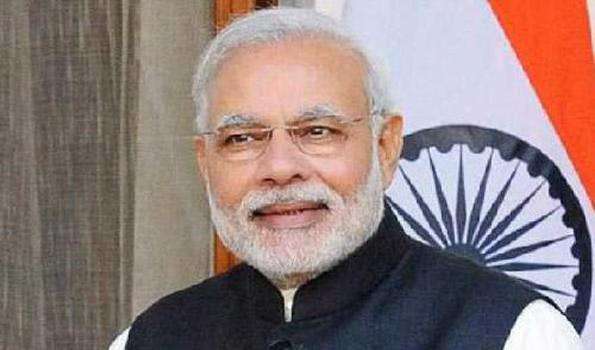
Prime Minister Shri Narendra Modi attended the All Parties Leaders meeting here today. Leaders from all major political parties were present on this occasion and they put forth their views on the upcoming session of Parliament.
In his remarks, Prime Minister observed that this session of the Parliament will be a special occasion for it will mark the 250th session of the Rajya Sabha and expressed his happiness that special events and activities were being planned to mark this occasion. Prime Minister emphasized that the 250th session of the Upper House provided a unique opportunity for highlighting the unique strengths of the Indian Parliament as well as the Indian Constitution, in providing an overarching framework of governance institutions for a diverse country like India. The backdrop of the session being held as India celebrates the 150th birth anniversary of the Father of the Nation Mahatma Gandhi also made it a unique and special occasion. 
Prime Minister, while responding to specific issues raised by the representatives of various political parties said that the Government would work together with all parties in a constructive manner to address pending legislations and frame policy solutions for specific issues related to environment and pollution, the economy, the agricultural sector and farmers, and the rights of women, youth and the less privileged sections of society. 
Prime Minister also complemented the Presiding officers of the two Houses for smooth running of the last session of Parliament and observed that this had helped to create a positive impact amongst the people about the functioning of the legislative arm of Government. In this regard, Prime Minister made a particular mention of the energetic participation by first term members of Parliament on discussions related to diverse issues and expressed the hope that constructive engagement between the Treasury and opposition benches will make the present session a successful and productive one.
***

The Real Issue With Tech In Ed

If doctors\’ interest and ability in diagnosing and helping patients improve were limited, if the medicines themselves were not always known to work, and if the patients didn\’t have much ability to pay – how much do you think \’tech\’ would work? Moreover, if \’tech\’ took over the mistakes usually made by teachers, it would work even less, isn\’t it?
This is what is happening in the case of \’technology in education\’….
Vendors can be excused for touting their \’solutions\’ as real solutions – educators and decision-makers are the ones to be blamed for willingly falling into the trap of believing that technology will motivate teachers, overcome corruption, deal with the hierarchies that operate at the point of learning and perpetuate the hegemony of a few, tailor education to the needs and the experiences of the marginalized, solve the issue of huge and increasing diversity that teachers face, and overcome the indifference of the political / administrative establishment to poor educational performance.
A common finding in an analysis of most tech in ed efforts would likely show that after the initial enthusiasm and perhaps even use, the actual interaction / utilisation declines – eventually, it lies locked up or disused or misused (teachers use computers as a means of keeping children busy while they do something else). Sometimes a new wave of tech in ed displaces the old one but then neither end up making a sufficient difference.
It\’s not as if technology cannot make a difference, but it needs to be thought through differently. Usually, the thought process is – \’what can we do with tech\’? This is like saying: \’now that we have a car, where should we go?\’ You might end up going somewhere you didn\’t want to go. Instead, the question should be – \’what do we desperately want to do / need to do (and why), in which technology can play a part?\’ Examples of this are relatively rare!

Lachit Borphukan: Great Patriot and Dedicated Army General

Time to time in India many great legendry personalities and patriots were born as India’s civilisation is one of the oldest in the world and the country is endowed with all types of resources including human resource. So many foreigners invaded India at times.
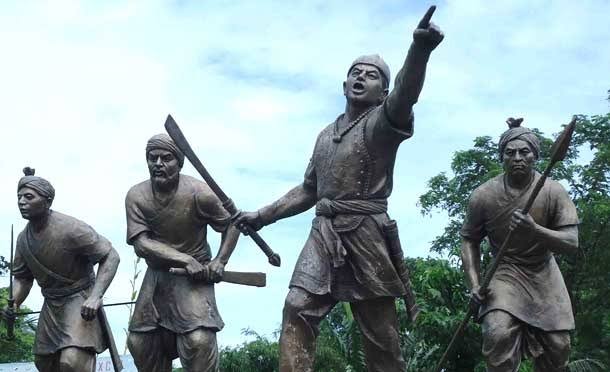
One of them is Lachit Borphukan who was born on 24 November 1622 at Gargaon (near Sivasagar of Assam). His courage and dedication, no Indians in general and people of north-east in particular can forget. In commemorative of his dedication, every year on 24 November Lachit Divas (Lachit Day) is celebrated across the State (Assam) as well as the victory of the Ahom Army at the Battle of Saraighat (now near Guwahati). Today his statue may be seen in many places of Assam including at National Defence Academy (NDA), Khadakwasla of Maharashtra. Also the best passing out cadet of National Defence Academy – the Lachit Borphukan Gold Medal- is conferred in his name every year from 1999.
Lachit Borphukan
Lachit Borphukan’s name and Ahom rule are closely associated. It is pertinent to mention that, Ahom rule started in upper part of Assam (popularly known as Upper Assam) in 1228 with the entering of a person named Sukaphaa with his followers, a Tai prince originally from Mong Mao (which is now included within the Dehong-Dai Singhpho Autonomous Prefecture of Yunnan in Peoples Republic of China). He established his relation with the local persons by making them friends. It is believed that Sukaphaa and his people helped by imparting knowledge and practical demonstration to the local people for cultivation of wet rice which earlier were not known to them thoroughly. With the pace of time, Ahom kings expanded their base in other parts of Assam. As religious faith Hinduism influenced Ahom and Assamese language gained popularity all over the State. Literatures show Ahom rulers never neglected their defense base rather they gave importance for the protection of their territory, as sequel time to time different invaders attacked Assam but could not succeed. Against the back-drop, it may be mentioned that in 1962, our leaders could not anticipate strong defense-force after independence as sequel China took the advantage triggering lot of damage to our properties, killing of our soldiers, forcefully occupying land etc. However, Ahom rule continued up to 1826, and after the Treaty of Yandaboo with the British, Assam was under British rule.
As mentioned already during Ahom rule, a great army general as well as a patriot Lachit Borphukan was born. The people of India remember Lachit Borphukan because of his valour, sincerity, patriotism and dedication for which the Battle of Saraighat (a naval battle) needs to be mentioned here. The Battle was fought in 1671 between the Mughal Empire (led by Raja Ramsingh I), and the Ahom Kingdom (led by Lachit Borphukan) on the Brahmaputra river at Saraighat, now in Guwahati. The various literatures reveal that the Ahom Army was not strong in comparison to the Mughal Army in spite of this, by meticulous uses of the terrain, guerrilla tactics, psychological warfare, military intelligence etc., the Mughal Army was defeated. The Battle of Saraighat was the last battle in the major attempt by the Mughals to spread their rule into Assam. The most memorable event of the Battle was that Lachit Borphukan beheaded his own maternal-uncle who was also with him during the war. The incident happened like this, to foil the attack Lachit ordered to construct an earthen wall for fortification under the supervision of his own maternal uncle within the night. When Lachit came at mid-night to take stock of the situation, he found his maternal uncle was telling others to have nap because of mid-night. Lachit became furious and immediately, beheaded his maternal uncle in presence of all the persons uttering, “My maternal uncle is not greater than my country”. In Assamese the famous saying is “Desotkoi Momai Dangor Nohoi”. That night with Lachit’s initiative (in spite he had fever), the fort was completed. This is reflected as his sincerity, seriousness, dedication and patriotism. He was great hero, a great patriot and a great Army General.
Dr Shankar Chatterjee
Former Professor & Head (CPME),NIRD & PR ( Govt. of India), Hyderabad,  India
Former Associate Professor, Eritrea
Former Assistant Prof, Govt. Degree College, Tripura, India
Former Senior Planning Officer, Govt of Assam, India 

Five Books Written In Five Ways by Piyush Goel – Miracle Man of India

1.Mirror Imaged Shree Mad BhagvadGita (Pen)
Piyush Goel has a unique art, he can write words in mirror image Piyush Goel can write words in mirror image in two languages Hindi and English.
He has completed “World First Mirror Image Book Shreemad BhagvadGita”, all 18 chapters, 700 verses in two languages Hindi and English.Besides all of these he has completed “ShreeDurga Saptsatti” in Sanskrit Languages,ShreeSai Satcharitra in two languages Hindi and English,Sundar Kand (two times).
Mirror Imaged Shree Mad BhagvadGita
2. Needle Write Book “Madhushala”(Needle)
To read a book in front of a mirror ,reading then mirror very hard.People asked Piyush to read your mirror imaged books,mirror is necessary, he replied “Yes”.
After a lot of thinking an idea stuck into his mind “Why should i not write a book with Needle.Then he started writing “Madhushala”,a book of Harbans Rai Bachchan,father of Amitabh Bachchan,Legend of Indian
Cinema,now no need of Mirror.(Mirror image but no need of mirror).
2-needle-book
3. Book “Gitanjali”written with Mehndi Cone(Mehdi Cone)
Piyush always think “DO SOMETHING NEW”,because of this thinking,he make a project and work on it.Whenever he has spare time and bring out the work at the end and this is the result of “Gitanjali”a book of Noble Literate Rabindra Nath Tagore,completed with the help of Mehndi Cone.
3-mehandi-book
4. Book “PiyushVani” with the help of Iron Nail (Iron Nail)
Imagination and Creativity brings new things to the world, Piyush started writing “PiyushVani” one of his own published book, written on A-4 size Aluminium Sheet with the help of “Iron Nail”.(Mirror image but no need of mirror).
4-piyushvani
5. Book ‘Panchtantra”with the help of Carbon Paper (Carbon Paper)
Recently Piyush Goel completed “Vishnu Sharma”,s “Panchtantra” 5 tantras ,41 stories with the help of Carbon Paper,on one page both the words(mirror/non mirror) appeared in front and in the reverse.(Mirror image but no need of mirror).
5-panchtantra

Legal Article Offence Of Attempt To Rape Can Be Attracted Even If Accused Had Not Undressed Himself: SC

It is imperative to mention right at the beginning that the Supreme Court just recently on November 20, 2019 in a latest judgment titled Chaitu Lal vs State of Uttarakhand in Criminal Appeal No. 2127 of 2009 has upheld the conviction of a man under Section 376 read with Section 511 of the Indian Penal Code for attempt of rape of a woman. The Apex Court has minced no words to make it clear that the attempt to commit an offence begins when the accused commences to do an act with the necessary intention. Very rightly so!
To start with, the ball is set rolling in para 1 of this noteworthy judgment authored by Justice NV Ramana for himself and Ajay Rastogi by first and foremost pointing out that, “The present criminal appeal arises out of the impugned order dated 27.03.2009 passed by the High Court of Uttarakhand at Nainital in Criminal Appeal No. 144 of 2006 whereby the High Court dismissed the appeal of the appellant and confirmed the order dated 08.05.1992, passed by the Sessions Judge, Chamoli in S.T. No. 36 of 1991 convicting the accused for offences under Section 354 and Section 511 read with Section 376 IPC. The accused was sentenced to undergo rigorous imprisonment of one year for commission of offence under Section 354 IPC and he was further sentenced to undergo two years Rigorous Imprisonment and pay a fine of Rs. 200/- for commission of offence under Section 511 read with Section 376 IPC.”
To recapitulate, the background of this case is then explained in para 2 which states that, “The brief facts according to the prosecution are that the complainant-victim is the aunt of the accused-appellant. The accused-appellant had earlier also committed indecent behavior with the complainant-victim, which is the subject matter of another criminal proceeding. On 12.01.1991, the accused-appellant after seeing the complainant-victim alone took advantage of the same and attempted to molest her. On the same date at around 10:00 P.M while the complainant-victim along with her daughters was sleeping in her house, the accused-appellant entered into the house of the victim in a drunken state. While the complainant-victim was getting up from her bed, the accused-appellant pounced upon her making her fall into the bed. The accused-appellant thereafter lifted her petticoat, sat upon her and attempted to commit rape. Upon hearing the noise, the daughter of the complainant-victim (P.W.2) got up and beseeched the accused-appellant to let go of her mother. Upon hearing the commotion, certain other villagers interfered, accused-appellant ran away after threatening the complainant-victim. Thereafter, the complainant-victim narrated the entire incident to her husband, pursuant to which they approached the Court of the CJM to file the complaint on 16.01.1991.”
While elaborating further, it is then envisaged in para 3 that, “The trial court, vide order dated 08.05.1992, convicted the accused-appellant for offence under Section 354, pursuant to which he was directed to undergo one-year rigorous imprisonment. He was further convicted for offence under Section 511 read with Section 376 IPC and was directed to undergo rigorous imprisonment for two years and to pay a fine of Rs. 200/-. Aggrieved, the accused-appellant approached the High Court in Criminal Appeal No. 144 of 2006. The High Court vide impugned judgment dated 27.03.2009 dismissed the appeal and upheld the order of conviction passed by the trial court. Aggrieved by the aforesaid dismissal, the accused-appellant approached this Court by way of present appeal.”
While elaborating on the points favouring the accused-appellant, it is then stated in para 4 that, “The counsel on behalf of the accused-appellant submitted that accused-appellant has been framed by the complainant-victim pursuant to certain existing enmity. Further, it was pleaded that the FIR was registered with a delay of 3 days and the prosecution has failed to explain the same. Lastly, the evidence of the witnesses does not suggest any liability for offence under Section 511 read with Section 376 of IPC.”
As opposed to what has been stated in para 4, para 5 then points out that, “On the contrary, the counsel for the State has supported the concurrent judgments of conviction passed against the accused-appellant.” 
After listening patiently, the Bench then observes in para 6 that, “Heard counsel appearing for both parties. In the present case, the statement rendered by the complainant-victim (P.W.1) is corroborated by the daughter of the complainant-victim (P.W.2) who is an eye-witness to the said incident, husband of the complainant-victim (P.W.3) and independent witness Sohan Lal (P.W.4). The courts below have observed that although these witnesses were subjected to lengthy cross-examination, they have remained persistent in their statements and there was no material contradiction so as to raise any doubt regarding their credibility.” 
Even more important, para 7 then discloses that, “The statement of the complainant-victim reveals that the accused-appellant had attempted to molest her on numerous occasions. In order to attract culpability under Section 354 IPC, the prosecution has to prove that the accused applied criminal force on the victim with the intention of outraging her modesty. In the case at hand, prior to the commission of the offence, the accused-appellant had attempted to molest the complainant-victim on the same day itself. Later that night, the accused-appellant forcibly entered the house of the complainant-victim in a drunken state, being aware about the absence of her husband. Thereafter, the accused-appellant, exerting criminal force, pounced upon the complainant-victim and forcibly lifted her petticoat. Although, the complainant-victim pleaded the accused to stop considering the fact that she was his aunt; he responded stating, it does not matter to him. The aforesaid action of the accused-appellant is sufficient to prove his culpability.”
What’s more, it is then enumerated in defence of accused-appellant in para 8 that, “The counsel of the accused-appellant has pleaded that the actions of the accused-appellant do not constitute the offence under Section 511 read with Section 376, as the accused-appellant had not committed any overt act such as any attempt to undress himself in order to commit the alleged act. This Court in the case of Aman Kumar and Anr. V. State of Haryana, (2004) 4 SCC 379 held that-
“11. In order to find an accused guilty of an attempt with intent to commit a rape, court has to be satisfied that the accused, when he laid hold of the prosecutrix, not only desired to gratify his passions upon her person, but that he intended to do so at all events, and notwithstanding any resistance on her part…””
It cannot be lost on us that it is then very rightly underscored in para 9 that, “The attempt to commit an offence begins when the accused commences to do an act with the necessary intention. In the present case, the accused-appellant pounced upon the complainant-victim, sat upon her and lifted her petticoat while the complainant-victim protested against his advancements and wept. The evidence of the daughter (P.W.2) also reveals that she pleaded with the accused-appellant to spare her mother. In the meantime, hearing such commotion, other villagers intervened and threatened the accused of dire consequences pursuant to which the accused ran away from the scene of occurrence. Here, the evidence of independent witness Sohan Lal (P.W.4) assumes significance in corroborating the events on the date of occurrence, wherein he has averred that at around 10:00 p.m. he heard noise coming from the house of complainant-victim, pursuant to which he saw the accused-appellant’s wife holding his neck coming out from the house of the complainant-victim. P.W.4 had also overheard the complainant-victim complaining that the accused-appellant was quarreling with her.” 
Equally important if not more is what is then most rightly stated in para 10 that, “Herein, although the complainant-victim and her daughter were pleading with the accused to let the complainant-victim go, the accused-appellant did not show any reluctance that he was going to stop from committing the aforesaid offence. Therefore, had there been no intervention, the accused-appellant would have succeeded in executing his criminal design. The conduct of the accused in the present case is indicative of his definite intention to commit the said offence.” 
While not accepting the contention of the accused-appellant, it is then disclosed in para 11 that, “The counsel on behalf of the accused-appellant placed reliance upon the case of Tarkeshwar Sahu v. State of Bihar (Now Jharkhand), (2006) 8 SCC 560 to claim the benefit of acquittal for offence under Section 511 read with Section 376 of IPC. But on careful perusal of the aforesaid decision in the backdrop of facts and circumstances of the present case, both the cases are distinguishable as in the case cited above, it is clearly noted that the accused failed at the stage of preparation of commission of the offence itself. Whereas in the present case before us the distinguishing fact is the action of the accused-appellant in forcibly entering the house of the complainant-victim in a drunken state and using criminal force to lift her petticoat despite her repeated resistance.”
Going forward, while not accepting the delay plea of the accused-appellant, it is then pointed out in para 12 that, “Further, the plea of the accused-appellant regarding the delay in registering the FIR has been duly considered by both the courts below. It has been duly noted that the husband of the complainant-victim (P.W.3) was staying in Nandprayag while the incident occurred in the remote village of Salna. Subsequent to the incident, the complainant-victim first travelled to meet her husband (P.W.3). After narrating the said incident to him, she further travelled to register a complaint before Chief Judicial Magistrate, Chamoli, which is again far off from the place of occurrence. Considering the aforesaid factual scenario, the delay in registering the FIR does not affect the case of the prosecution adversely.”
Finally and perhaps most importantly, it is then held in para 13 that, “Considering the facts and circumstances, the guilt of the accused-appellant has been established beyond doubt. In our opinion, therefore, the courts below have rightly convicted and sentenced the accused. In view of the aforesaid observations, the appeal lacks merit and is accordingly dismissed.” Very rightly so!
In conclusion, it may well be stated that the sum and substance of this noteworthy judgment is that the offence of attempt to rape can certainly be attracted even if the accused had not undressed himself as the attempt to commit an offence begins when the accused commences to do an act with the necessary intention as has been very rightly pointed out in the beginning also! In this leading case we saw how the accused-appellant did not show any reluctance to commit the crime and this despite the irrefutable fact that the complainant-victim and her daughter were pleading with the accused to let the complainant-victim go as has been very rightly pointed out earlier also in para 10. So the accused was without doubt rightly convicted in this case as it was accompanied by the credible testimony of an independent witness Sohan Lal (P.W.4) also!
Sanjeev Sirohi, Advocate,
s/o Col BPS Sirohi,
A 82, Defence Enclave,
Sardhana Road, Kankerkhera,
Meerut – 250001, Uttar Pradesh.


PM congratulates President-elect of Sri Lanka Mr. Gotabaya Rajapaksa over telephone

Prime Minister Shri Narendra Modi congratulated President-elect of Sri Lanka Mr. Gotabaya Rajapaksa over telephone on his electoral victory in the Presidential elections held in Sri Lanka yesterday.
Conveying the good wishes on behalf of the people of India and on his own behalf, the Prime Minister expressed confidence that under the able leadership of Mr. Rajapaksa the people of Sri Lanka will progress further on the path of peace and prosperity and fraternal, cultural, historical  and civilisational ties between India and Sri Lanka will be further strengthened. The Prime Minister reiterated India’s commitment to continue to work with the Government of Sri Lanka to these ends.
Mr. Rajapaksa thanked the Prime Minister  for his good wishes. He also expressed his readiness to work with India very closely to ensure development and security.
The Prime Minister extended an invitation to Mr. Rajapaksa to visit India at his early convenience. The invitation was accepted.
***