
When you give

“Thus, when you give to the needy, sound no trumpet before you, as the hypocrites do in the synagogues and in the streets, that they may be praised by others. Truly, I say to you, they have received their reward. But when you give to the needy, do not let your left hand know what your right hand is doing, so that your giving may be in secret. And your Father who sees in secret will reward you” (Matthew 6:2-4).

Although giving to the needy necessarily involves another person, the act of giving still is largely between ourselves and God. In Jesus’ day, giving to the needy did not involve charitable organizations, income tax deductions, and other technicalities. Today the government allocates money to help the needy. As a result, some people lobby the government for more help or for different kinds of help. Hundreds of other organizations also help the needy; they are funded by contributions, which they seek to raise in a variety of ways. Not all the needy get the help they need from the government and from charities. Some beg on the roadsides for money, and others travel from church to church asking for money. Some are truly poor and needy. Others have chosen poverty and begging as a way of life. Many are under the control of addictions or other mental disorders. All the same, in the United States today, more ways of helping the needy exist than ever before in any time or any place.

Because there are so many ways to offer help to the needy—and because we all receive frequent reminders of the help that is needed—we easily forget that the help we give to others is a secret part of our relationship with God. The Lord has given most of us more than we need so we have the privilege of sharing what we have with others. We begin by helping the members of our family and those nearest to us. We continue by seeing what we can do to assist the needy person who crosses our paths. Merely handing out money does not meet the needs of all the needy. Instead, we can provide food for the hungry, shelter for the homeless, clothing for those who lack clothing, and time to visit those who are sick or in prison or lonely. We have different opportunities to serve our Lord by helping the least of our neighbors. When we choose to give to charities, we take time to think—maybe even do some research—to make sure that our money, our time, and our resources are accomplishing the greatest good possible.

If we try to keep for ourselves everything the Lord has provided us, we sin against God and against our neighbors. When we waste our resources—even when we carelessly give to liars and con artists—we sin against God and against our neighbors who have real needs. (Yes, Jesus did say, “Give to everyone who asks.” At the same time, Jesus wants us to be wise stewards of the property he has entrusted to us. He wants each of us to do the most good possible with what we have.) Jesus stresses that, when we give to the needy to call attention to ourselves, we sin. Being self-centered about the help we give to others taints our giving, keeping it from being recognized by God as a good work.

We sin every day. We need God’s forgiveness every day. God forgives us every day. He sends us forgiveness as surely as he sends us daily bread, more than we need, so we can share what we have with others. Jesus sets an example for us to follow. When he healed the sick, he told them not to talk about it. He told them to keep the healing secret. Even today, as Jesus meets our needs for daily bread and daily forgiveness, he does it in a way that other people do not notice. Often, his gifts even escape our attention!

Because our sins are forgiven each day, we are free to be like Jesus. We are free to use what we have to help others. After all, God gave us more than we need so that our help given to others is part of our relationship with God. As we help, we are free to help quietly, so the matter remains secret between ourselves and God. J.
What\’s your favourite advice to facilitators/trainers of teachers?

Over the years, you\’ve taken part in workshops, training programmes, meeting, on-site coaching – either as participant or as facilitator or trainer. Maybe you have even trained trainers or prepared them in different ways. So what\’s your favourite advice to anyone involved with training and facilitation? 

What\’s your favourite advice to facilitators/trainers of teachers?

Over the years, you\’ve taken part in workshops, training programmes, meeting, on-site coaching – either as participant or as facilitator or trainer. Maybe you have even trained trainers or prepared them in different ways. So what\’s your favourite advice to anyone involved with training and facilitation? 

What\’s your favourite advice to facilitators/trainers of teachers?

Over the years, you\’ve taken part in workshops, training programmes, meeting, on-site coaching – either as participant or as facilitator or trainer. Maybe you have even trained trainers or prepared them in different ways. So what\’s your favourite advice to anyone involved with training and facilitation? 

What\’s your favourite advice to facilitators/trainers of teachers?

Over the years, you\’ve taken part in workshops, training programmes, meeting, on-site coaching – either as participant or as facilitator or trainer. Maybe you have even trained trainers or prepared them in different ways. So what\’s your favourite advice to anyone involved with training and facilitation? 

What\’s your favourite advice to facilitators/trainers of teachers?

Over the years, you\’ve taken part in workshops, training programmes, meeting, on-site coaching – either as participant or as facilitator or trainer. Maybe you have even trained trainers or prepared them in different ways. So what\’s your favourite advice to anyone involved with training and facilitation? 

What\’s your favourite advice to facilitators/trainers of teachers?

Over the years, you\’ve taken part in workshops, training programmes, meeting, on-site coaching – either as participant or as facilitator or trainer. Maybe you have even trained trainers or prepared them in different ways. So what\’s your favourite advice to anyone involved with training and facilitation? 

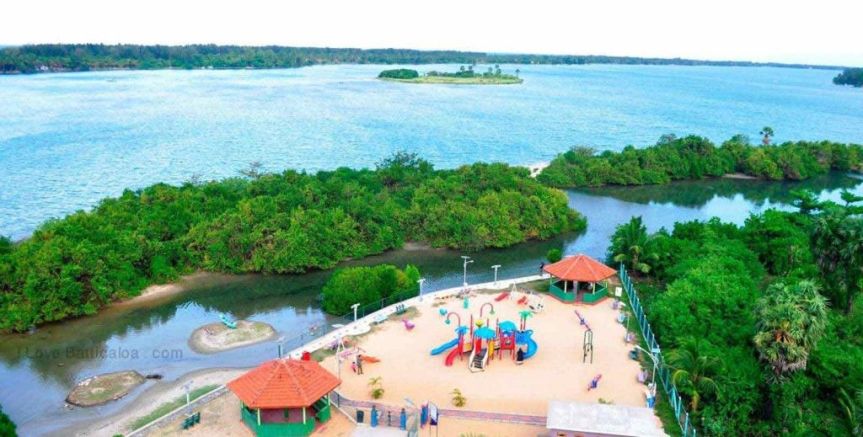
Batticaloa District of Sri Lanka endowed with Pristine Beauty

My visit in Sri Lanka in two occasions – one in first part of March 2018 and another was in November 2019 has greatly fascinated me.  I could get more insight about the Island and its people and culture as well as seen many places. Everywhere wonderful people with pristine beauty and peace can be observed. In this article , few points about Batticaloa District (visited in last part of November 2019) and my interaction with senior district official Mr M. Uthayakumar ( district head) officially called Government Agent or District Secretary are highlighted. He was very through about the Governments’ programmes, an erudite person and a dynamic officer.

Let me start first with Sri Lanka and in view of this, few lines about Sri Lanka’s socio-economic conditions are presented.   Sri Lanka is spread over to an area of 65,000 square kilometres home of little more than 2 crore people. It has to be appreciated that country’s socio-economic development is better than many countries. In this regard by referring, Rural Development Statistics, 2016-17 prepared by National Institute of Rural Development and Panchayati Raj popularly known as (NIRD&PR, an Organisation of Government of India), Hyderabad few particulars on Sri Lanka are presented. Annual population growth rate of Sri Lanka during 2010-15 was 0.8 per cent with crude birth rate 17.6 per 1,000 people and death rate 6.2 per 1,000. Infant mortality per 1000 live births was 8.2 in 2013 while mortality rate under five years of age was 9.6. Average life expectancy at birth (2015 data) in general was 75 years- male 71.7 years and female 78.4 years.  Literacy is important for the development of people and effective literacy skills open the doors to more educational and employment opportunities so that people are able to pull themselves out of poverty and chronic underemployment.  The statistics show adult literacy rate (15 years and above) in the country during 2005-13 was 91.2 per cent. Whereas youth literacy rates (15-24 years) for male and female during the same period were 97.7 and 98.6 years respectively.  While I was in the country talked to cross section of youths, educated persons and observed youths were more interested in study discouraging child marriage. The married persons prefer two children.

As already mentioned, in November 2019, I visited Batticaloa District and interacted with senior district official Mr M. Uthayakumar also many local residents. The district is located at eastern side of Sri Lanka. The data provided by the district officials based on 12 April 2019 publication, reveal that the total land area of the district is 2610 square kilometres and inland water area is 224 square kilometres and thus total area of the district is 2854 square kilometres. The Batticaloa Lagoon, beach, old Catholic Church and Hindu temples are attracted places from tourism pint of view.

The total population of the district was 603,192 and male and female were – 296,513 and 306,679 respectively indicating more female than male.  Further the data reveal that 72.2 per cent were Sri Lankan Tamil, 26.3 per cent Sri Lankan Muslim (they also speak Tamil), rests Sinhalese and Burgers.

The district had a total of 177,440 families (as mentioned earlier total population 603 192) and of these 31,946 families were headed by woman member (18%). A little more than 83, 000 (in actual figure 83,091) families were dependant on agriculture and paddy is the main crop with average yield was around 4000 kilograms per hectare. Altogether 23,726 families were eking out their livelihoods through fishing both Sea and Lagoon. Therefore, it is evident that primary sector, covering agriculture and fishing, was the source of livelihood for 106,817 families (60 per cent). Further, the data reveal that total milk production in a year was to the tune of 95 lakh litres which were available from three main source viz. cows, buffaloes and goats.  There were no large industry till the day of visit but as medium scale industry there were four garments factories in the district. In addition, there were 11, A-category Tourism hotels. The district had little more poverty than the national average – (11.3% in the district) against the national average of 4.1 per cent (as per 2016 report).

During my visit to the district, I had interacted with many persons all in unison praised Indians as peaceful country. Many goods are imported from India so they expressed their happiness with the quality. I also personally feel, people across Sri Lanka (after my two visits) are amicable and hospitable to Indians. Sri Lanka is a worthy place for visit as peace prevails in the country and many of the places have its own importance from tourism point of view. Also Sri Lankan’s tea, coffee, cashew and fish curry have greatly attracted me.

Dr. Shankar Chatterjee

Former Professor& Head (CPME)

NIRD &PR (Govt. of India), 

Hyderabad-500 030

Telangana, India 

Email <shankarjagu@gmail.com>


Politics and the average Chinese

The man in the street simply does not care ! At least politically !!
In a country of 1.2 billion, such a sweeping  statement is an outrageous generalisation. But it is broadly true. The average Chinese does not care because (a) what is the real choice (b) she has very little access to information that is even remotely political in nature and (c) she doesn’t seem to be hugely interested anyway
And this is despite a startling fact; the country with the maximum number of protests from citizens is actually China ! On any given day, there are probably 800 odd protests happening throughout China. If there is such vigorous activity, how come the assertion that the average Joe (Mrs Li) doesn’t care ?
Two sweeping statements can be made about the average Chinese’s views (a) she believes (and it does not matter where or who she is) that the local government is utterly corrupt and inefficient
and (b) she believes that the central leaders in Beijing are extremely efficient, working hard for the country, are the best humans on earth and if only they knew of their specific problem, it would be instantly fixed.
All the protests are predominantly on local issues, and mostly against land grabs by local officials. It is therefore mainly economic in nature, not political. There are simply no political protests of any sort.
A major issue in China is that public opinion is greatly hampered because of virtually no access to true political information. The following is the information environment in which the average Chinese lives
– There are no independent newspapers at all. Foreign newspapers are mostly not available.
– There is only government TV . No foreign channels, except in top end hotels. Even those are censored – can you believe that CNN’s broadcast to China is routed through a Chinese government controlled satellite !
– All films are subject to censorship. Foreign films are severely limited in number and if you have anything remotely political in your film, fat chance of being cleared. Ditto books. Ditto music. Pirated DVDs are freely available but then the market is mostly for sexually explicit stuff rather than political content.
– The Great Firewall of China, behind which the internet sits in a parallel universe, is one of the most remarkable operations of all. The Hall of Fame of sites that are completely banned and inaccessible from China includes Facebook, Twitter, YouTube, Google plus, Maps, Docs, Picasa, Dropbox, Flickr, ….. I can keep going. Every one of these have local equivalents which are of course severely censored by the authorities
– The Chinese are avid users of social media, but only on domestic providers. These are hugely monitored by armies of machines, men and software. Every offending post is deleted . If you realise that there are half a billion internet users in China and they are as active as anybody in online activities, you can imagine the scale at which censorship takes place.
Consequently, the average Chinese is poorly informed on political matters and therefore has limited and not fully informed views. In any social gathering in the West (even more so in India), the conversation will turn political. Not so in China.  Mao has been glorified as “70% right” – very few of the younger generation know anything about the horrors of the Great Leap Forward and the Cultural Revolution. The Tiananmen incidents of 1989 have been airbrushed from history – when I lived in China I was amazed that my colleagues knew virtually nothing about what happened.
The sum total of all this is that public opinion in China is less intense and formed than in virtually any other country. Therefore the Party and the government are under less pressure than anywhere else. You see, the true check on any government in any country is not judiciary , or the constitutional checks and balances – it is really public opinion  represented by the media. In China, that check does not exist. The Chinese have made a pact with the Party – give us continuous economic advancement and we won’t care about the politics. Thus far, that pact has held good.

The Seven Myths That Make Education Difficult To Improve

Systems tend to lead double lives – at a conceptual level they might be brilliant, with wonderfully competent and committed people leading them. Yet at the ground level, what is in operation may be entirely different. Thus despite terrific policy and capability at policy/decision-making levels in the health sector, what common people might be heard saying is: “It is better to pay through your nose at a private clinic, than to die for free at the government hospital.”
For the people, the ‘system’ comprises of those representatives they meet at the district, block, cluster and village level, and occasionally those at the state levels. To understand the situation, try asking a group of educational administrators about the finer aspects of TA-DA rules and how they apply them, and you will find they can animatedly discuss them for about two hours. But raise the issue of why children are not learning (which is actually their real responsibility) and you will get a different response… (It’s true, isn’t it?)
This is what tends to happen to any system  (or even organization) over time – ultimately it’s own nuances, requirements, procedures, structures and powers (or power) become its main concerns, with the reason for its very existence slowly dimming in the memory of its functionaries. Thus: 
  • teachers/CRC-BRC must spend more time collecting data even at the cost of teaching or improving learning, or 
  • every school must follow the given framework for its School Development Plan (because the need to compile the plans at the block level is more important than the need for it to be appropriate for that school), or 
  • every HT must maintain records for the officials \’above\’ even if it means she will not have time to support her teachers in improving the classroom process. 


It is as if children, teachers, HTs, SMCs all exist to feed the machinery ‘above’ which has to ‘control’ them, and ‘give’ them resources (from mid-day meals to teachers to textbooks to in-service training, from which often a ‘cut’ may be taken), ‘allow’ them to take decisions such as which would be the most convenient time for most children to attend school, ‘monitor’ the work of teachers, ‘test’ the learning of students, and ‘grant’ the privilege of education.
What the RTE implies is that it is those who get their salaries because of children who are the real ‘beneficiaries’ – which includes all the administrators, supervisors, inspectors, monitors, institutions, departments, ministries.  It is they who are accountable to children and teachers, or would be if they really existed for education.
As mentioned, give them enough time and systems end up existing more to perpetuate themselves – and the status quo within – rather than the purpose for which they are created. Try making a change in the way things are organised within a system and you might find it responds with a kind of ferocious energy it fails to display when similar urgency is required in its primary objective. For instance, if it were declared that an educationist rather than an IAS officer will head the Department of Education, you will get a lot more activity in the system (to prevent that) than if you declared (as is well known) that most children are failing to attain grade level learning across the country. 

Finally, systems exist to preserve the hold of the powerful. Issues that affect the middle classes or those more privileged get inordinate attention in the system. Thus nursery school admissions in private schools in Delhi are a big issue, or the allocation for poor children in elite private schools is endlessly discussed, or the class 10 board exam being needed (by children from better off families)… but the death of a 100+ children in a mid-day-meal from a poor section of society, or the low levels of  service in deprived areas or chronically low learning levels despite much money being invested – fail to receive that kind of attention.

For those seeking to make a dent in the system, it would be healthier to have a more \’aware\’ notion of what the education system really exists for. The puny strategies we use to make things better are unlikely to serve as even pinpricks to the system.

We have to leave the teacher in the classroom, isn\’t it?

Parimal Patel, a CRC coordinator from Gujarat, faced the following difficulty. To which there are no easy answers, but here\’s an attempt. Feel free to add your views!
Parimal Patel
Two days ago, I had a discussion in my cluster to make school history and to make school bio-data (which was made by me for my school by spending extra time in the school). Teachers liked  my idea but said that that in which time they would make it? They have had a lot of work since June. I\’m asking this question because this is only one example – but there are so many policy-makers and the worker is only one. If we want quality we have to leave teacher in the classroom, isn\’t it? Please think about it – this is a more difficult question in primary education than any other.

Subir\’s response

Parimal (and many other friends struggling with the same problem) – you are right that the worker is one and policy makers are many, and all of them are trying to get the worker to do something or the other! So what can be done? Here are a few points for you all to consider:
  • The curriculum development process is one very important way to create a framework and common understanding so that the different decision-makers and policy-makers can think in a coordinated way. In the next few months this will be shared across the state and a process to coordinate accordingly will start. In the beginning, though, you can expect a lot of struggle, since everyone will not agree on what the SRG has developed! Be prepared for different ideas all trying to occupy the same place. 
  • When we work in the field, we do have to keep in mind specific actions. At the same time, don\’t worry if the teacher does not do what you are asking for – AS LONG AS HE/SHE IS WORKING TOWARDS THE SAME OBJECTIVE. The problem arises when the objectives themselves are different (as will happen this year in the Gunotsav). 
  • The need to leave the teacher to work in the classroom is really important. We have opposite views about what is happening: some claim the teacher has got too many non-teaching tasks, and some say that the teacher is simply not spending the time in the class. Which view is the correct one? I think both are. People like me will keep on working with policy makers to ensure that non-teaching tasks are reduced, and other colleagues at field level will have to keep on working to ensure that teachers do spend the time available in the classroom. 
  • I like the idea of the school bio-data. Maybe it does not have to be done in one go. How about putting up a chart or board, and letting teachers, children, even community members add things to it when they have the time. Then, perhaps after a month, in the morning assembly this can be shared (it is not necessary to keep doing the same things in morning assembly every day!). Different classes could be given the tasks in different subjects, related to the school bio-data (in language – do the writing work; in maths – make maps, tables with data; in social studies – trace the history; in drawing – make pictures of different aspects of the school, etc.). So making it a project, spreading it over time, and connecting it with ongoing processes might help. This has to do with how we imagine different things being done. 
  • Finally, pl also read the post on \’How Teachers Change\’, and also \’How Teachers Learn\’ in my blog.

We have to leave the teacher in the classroom, isn\’t it?

Parimal Patel, a CRC coordinator from Gujarat, faced the following difficulty. To which there are no easy answers, but here\’s an attempt. Feel free to add your views!
Parimal Patel
Two days ago, I had a discussion in my cluster to make school history and to make school bio-data (which was made by me for my school by spending extra time in the school). Teachers liked  my idea but said that that in which time they would make it? They have had a lot of work since June. I\’m asking this question because this is only one example – but there are so many policy-makers and the worker is only one. If we want quality we have to leave teacher in the classroom, isn\’t it? Please think about it – this is a more difficult question in primary education than any other.

Subir\’s response

Parimal (and many other friends struggling with the same problem) – you are right that the worker is one and policy makers are many, and all of them are trying to get the worker to do something or the other! So what can be done? Here are a few points for you all to consider:
  • The curriculum development process is one very important way to create a framework and common understanding so that the different decision-makers and policy-makers can think in a coordinated way. In the next few months this will be shared across the state and a process to coordinate accordingly will start. In the beginning, though, you can expect a lot of struggle, since everyone will not agree on what the SRG has developed! Be prepared for different ideas all trying to occupy the same place. 
  • When we work in the field, we do have to keep in mind specific actions. At the same time, don\’t worry if the teacher does not do what you are asking for – AS LONG AS HE/SHE IS WORKING TOWARDS THE SAME OBJECTIVE. The problem arises when the objectives themselves are different (as will happen this year in the Gunotsav). 
  • The need to leave the teacher to work in the classroom is really important. We have opposite views about what is happening: some claim the teacher has got too many non-teaching tasks, and some say that the teacher is simply not spending the time in the class. Which view is the correct one? I think both are. People like me will keep on working with policy makers to ensure that non-teaching tasks are reduced, and other colleagues at field level will have to keep on working to ensure that teachers do spend the time available in the classroom. 
  • I like the idea of the school bio-data. Maybe it does not have to be done in one go. How about putting up a chart or board, and letting teachers, children, even community members add things to it when they have the time. Then, perhaps after a month, in the morning assembly this can be shared (it is not necessary to keep doing the same things in morning assembly every day!). Different classes could be given the tasks in different subjects, related to the school bio-data (in language – do the writing work; in maths – make maps, tables with data; in social studies – trace the history; in drawing – make pictures of different aspects of the school, etc.). So making it a project, spreading it over time, and connecting it with ongoing processes might help. This has to do with how we imagine different things being done. 
  • Finally, pl also read the post on \’How Teachers Change\’, and also \’How Teachers Learn\’ in my blog.

We have to leave the teacher in the classroom, isn\’t it?

Parimal Patel, a CRC coordinator from Gujarat, faced the following difficulty. To which there are no easy answers, but here\’s an attempt. Feel free to add your views!
Parimal Patel
Two days ago, I had a discussion in my cluster to make school history and to make school bio-data (which was made by me for my school by spending extra time in the school). Teachers liked  my idea but said that that in which time they would make it? They have had a lot of work since June. I\’m asking this question because this is only one example – but there are so many policy-makers and the worker is only one. If we want quality we have to leave teacher in the classroom, isn\’t it? Please think about it – this is a more difficult question in primary education than any other.

Subir\’s response

Parimal (and many other friends struggling with the same problem) – you are right that the worker is one and policy makers are many, and all of them are trying to get the worker to do something or the other! So what can be done? Here are a few points for you all to consider:
  • The curriculum development process is one very important way to create a framework and common understanding so that the different decision-makers and policy-makers can think in a coordinated way. In the next few months this will be shared across the state and a process to coordinate accordingly will start. In the beginning, though, you can expect a lot of struggle, since everyone will not agree on what the SRG has developed! Be prepared for different ideas all trying to occupy the same place. 
  • When we work in the field, we do have to keep in mind specific actions. At the same time, don\’t worry if the teacher does not do what you are asking for – AS LONG AS HE/SHE IS WORKING TOWARDS THE SAME OBJECTIVE. The problem arises when the objectives themselves are different (as will happen this year in the Gunotsav). 
  • The need to leave the teacher to work in the classroom is really important. We have opposite views about what is happening: some claim the teacher has got too many non-teaching tasks, and some say that the teacher is simply not spending the time in the class. Which view is the correct one? I think both are. People like me will keep on working with policy makers to ensure that non-teaching tasks are reduced, and other colleagues at field level will have to keep on working to ensure that teachers do spend the time available in the classroom. 
  • I like the idea of the school bio-data. Maybe it does not have to be done in one go. How about putting up a chart or board, and letting teachers, children, even community members add things to it when they have the time. Then, perhaps after a month, in the morning assembly this can be shared (it is not necessary to keep doing the same things in morning assembly every day!). Different classes could be given the tasks in different subjects, related to the school bio-data (in language – do the writing work; in maths – make maps, tables with data; in social studies – trace the history; in drawing – make pictures of different aspects of the school, etc.). So making it a project, spreading it over time, and connecting it with ongoing processes might help. This has to do with how we imagine different things being done. 
  • Finally, pl also read the post on \’How Teachers Change\’, and also \’How Teachers Learn\’ in my blog.

We have to leave the teacher in the classroom, isn\’t it?

Parimal Patel, a CRC coordinator from Gujarat, faced the following difficulty. To which there are no easy answers, but here\’s an attempt. Feel free to add your views!
Parimal Patel
Two days ago, I had a discussion in my cluster to make school history and to make school bio-data (which was made by me for my school by spending extra time in the school). Teachers liked  my idea but said that that in which time they would make it? They have had a lot of work since June. I\’m asking this question because this is only one example – but there are so many policy-makers and the worker is only one. If we want quality we have to leave teacher in the classroom, isn\’t it? Please think about it – this is a more difficult question in primary education than any other.

Subir\’s response

Parimal (and many other friends struggling with the same problem) – you are right that the worker is one and policy makers are many, and all of them are trying to get the worker to do something or the other! So what can be done? Here are a few points for you all to consider:
  • The curriculum development process is one very important way to create a framework and common understanding so that the different decision-makers and policy-makers can think in a coordinated way. In the next few months this will be shared across the state and a process to coordinate accordingly will start. In the beginning, though, you can expect a lot of struggle, since everyone will not agree on what the SRG has developed! Be prepared for different ideas all trying to occupy the same place. 
  • When we work in the field, we do have to keep in mind specific actions. At the same time, don\’t worry if the teacher does not do what you are asking for – AS LONG AS HE/SHE IS WORKING TOWARDS THE SAME OBJECTIVE. The problem arises when the objectives themselves are different (as will happen this year in the Gunotsav). 
  • The need to leave the teacher to work in the classroom is really important. We have opposite views about what is happening: some claim the teacher has got too many non-teaching tasks, and some say that the teacher is simply not spending the time in the class. Which view is the correct one? I think both are. People like me will keep on working with policy makers to ensure that non-teaching tasks are reduced, and other colleagues at field level will have to keep on working to ensure that teachers do spend the time available in the classroom. 
  • I like the idea of the school bio-data. Maybe it does not have to be done in one go. How about putting up a chart or board, and letting teachers, children, even community members add things to it when they have the time. Then, perhaps after a month, in the morning assembly this can be shared (it is not necessary to keep doing the same things in morning assembly every day!). Different classes could be given the tasks in different subjects, related to the school bio-data (in language – do the writing work; in maths – make maps, tables with data; in social studies – trace the history; in drawing – make pictures of different aspects of the school, etc.). So making it a project, spreading it over time, and connecting it with ongoing processes might help. This has to do with how we imagine different things being done. 
  • Finally, pl also read the post on \’How Teachers Change\’, and also \’How Teachers Learn\’ in my blog.

We have to leave the teacher in the classroom, isn\’t it?

Parimal Patel, a CRC coordinator from Gujarat, faced the following difficulty. To which there are no easy answers, but here\’s an attempt. Feel free to add your views!
Parimal Patel
Two days ago, I had a discussion in my cluster to make school history and to make school bio-data (which was made by me for my school by spending extra time in the school). Teachers liked  my idea but said that that in which time they would make it? They have had a lot of work since June. I\’m asking this question because this is only one example – but there are so many policy-makers and the worker is only one. If we want quality we have to leave teacher in the classroom, isn\’t it? Please think about it – this is a more difficult question in primary education than any other.

Subir\’s response

Parimal (and many other friends struggling with the same problem) – you are right that the worker is one and policy makers are many, and all of them are trying to get the worker to do something or the other! So what can be done? Here are a few points for you all to consider:
  • The curriculum development process is one very important way to create a framework and common understanding so that the different decision-makers and policy-makers can think in a coordinated way. In the next few months this will be shared across the state and a process to coordinate accordingly will start. In the beginning, though, you can expect a lot of struggle, since everyone will not agree on what the SRG has developed! Be prepared for different ideas all trying to occupy the same place. 
  • When we work in the field, we do have to keep in mind specific actions. At the same time, don\’t worry if the teacher does not do what you are asking for – AS LONG AS HE/SHE IS WORKING TOWARDS THE SAME OBJECTIVE. The problem arises when the objectives themselves are different (as will happen this year in the Gunotsav). 
  • The need to leave the teacher to work in the classroom is really important. We have opposite views about what is happening: some claim the teacher has got too many non-teaching tasks, and some say that the teacher is simply not spending the time in the class. Which view is the correct one? I think both are. People like me will keep on working with policy makers to ensure that non-teaching tasks are reduced, and other colleagues at field level will have to keep on working to ensure that teachers do spend the time available in the classroom. 
  • I like the idea of the school bio-data. Maybe it does not have to be done in one go. How about putting up a chart or board, and letting teachers, children, even community members add things to it when they have the time. Then, perhaps after a month, in the morning assembly this can be shared (it is not necessary to keep doing the same things in morning assembly every day!). Different classes could be given the tasks in different subjects, related to the school bio-data (in language – do the writing work; in maths – make maps, tables with data; in social studies – trace the history; in drawing – make pictures of different aspects of the school, etc.). So making it a project, spreading it over time, and connecting it with ongoing processes might help. This has to do with how we imagine different things being done. 
  • Finally, pl also read the post on \’How Teachers Change\’, and also \’How Teachers Learn\’ in my blog.