Forgiveness

“For if you forgive others their trespasses, your heavenly Father will also forgive you, but if you do not forgive others their trespasses, neither will your Father forgive your trespasses” (Matthew 6:14-15).

In his model prayer, Jesus had us promise to forgive those who sin against us. Now he reinforces that message with a strong warning. These verses frighten some Christians. Can we really lose the forgiveness of God by refusing to forgive another person?

These verses are spoken within the context of the higher expectations Jesus has for us. He says, “When you give… when you pray… when you fast….” He expects us to do these things; he does not make them optional. In the same way, Jesus assumes that because we are forgiven, we will forgive. His blessings have changed our lives; they are making us more like Jesus.

When we refuse to be like Jesus, forgiving the trespasses of those who sin against us, we block the flow of forgiveness through our lives. When a river is dammed, the water behind the dam often stagnates. Jesus warns us of a similar thing that happens in our spiritual lives. When we are unable to forgive as Jesus forgives, we can cause our own spiritual lives to become stagnant and to die.

However, holding a grudge is not the unforgivable sin. Jesus died to rescue us from that sin as well as from all our other sins. We do not earn forgiveness from Jesus by forgiving others. His forgiveness is a blessing; it is a gift. It is not earned. Yes, we can lose that forgiveness by continuing to sin without wanting to change. When we prefer our sins to our Savior, we lose that Savior; he becomes, instead, a Judge. But saying we can lose his forgiveness does not imply that we can earn his forgiveness. In the matter of God’s forgiveness and our obedience to his commands, God always makes the first move. God always goes first.

In the prayer, Jesus employs this order: “Forgive us our trespasses, as we forgive those who trespass against us.” God forgives first, and then we imitate him. God does not limit himself to our level, our ability to forgive. He forgives first, setting the standard, and then he invites us to be like him, offering us the strength to follow his lead.

Let’s imagine that someone has done something dreadful that hurt you. How can you forgive? Not from the goodness of your own heart, but only from the power of God’s gift. Jesus suffered and died on the cross to pay for all sins, including sins that hurt you. When you forgive the sinner who hurt you, you are sharing the promise of Jesus. When you refuse to forgive, you are keeping secret the life-changing promise from Jesus, a promise that every sinner needs to hear.

We cannot make ourselves more forgiving by trying harder to forgive. That road leads nowhere but to despair. We become more forgiving by drawing closer to Jesus, by remembering what he has done, and by believing his promises. When we remember that we are forgiven even for our failures to forgive—since forgiveness is a gift and not something we earn—then we become able to forgive those who sin against us. J.

Andhra Pradesh tops in organizing Fit India School Week more than 21,000 schools receive FIT India flag

Prime Minister Narendra Modi’s clarion call has laid a wonderful foundation to the FIT India movement, launched on August 29 this year. In his popular radio show Mann Ki Baat, Modi, on 24th November, urged all the schools to celebrate Fit India Week in December and get themselves enrolled in the Fit India Star Rankings.

The Fit India School week has so far been organized by 26,845 schools. Andhra Pradesh tops the chart with 13,839 Fit India Schools celebrating FIT India Week. Karnataka and Uttar Pradesh are distant second & third with 1,967 and 1,504 schools respectively.

During this week, various activities like Yoga, free-hand exercises, sports competitions, painting competitions, and essay and debate competitions on fitness were organized by the schools to emphasise on the importance of fitness in a student’s life.

Currently, the Fit India Flag has been obtained by 21,344 schools. Again, Andhra Pradesh leads the movement with a whopping 8,117 – the highest number of Fit India-ranked schools across India. It is followed by Karnataka with 5,989 schools.

Some of the schools have demonstrated their commitment in a very creative way like Arwachin International School, New Delhi – they have created a song for FIT INDIA, which has been composed and sung by the faculty and students itself. Similarly, Kendriya Vidyalaya of Sector 8, R K Puram has put up a unique show of fitness acts with its students. N.Netra of Zee Litera School, Karur, Tamil Nadu and R.Tejaswi of Saibaba Central School, Andhra Pradesh have impressed everyone with their phenomenal artwork on the topic.

The Fit India School Ranking system is the first-ever fitness rating for schools introduced in India. Under this, the schools are given a Fit India Flag and 3-star and 5-star rating, depending on the fitness levels of the students and teachers, infrastructure available and their participation in fitness activities.  Obtaining FIT India Flag is precondition for getting FIT India school ranking.


Shri Mansukh Mandaviya hands over Citizenship certificates issued by Government of India to 7 Pakistani Refugees in Kutch, Gujarat today

The Union Minister of State for Shipping (IC) and Chemical & Fertilizers Shri Mansukh Mandaviya today handed over the Citizenship certificates issued by Government of India to 07 Pakistani refugees in Kutch, Gujarat. He met the Pakistani refugees, who have taken shelter in Gujarat’s Morbi and Kutch districts of Gujarat.

On this occasion, he said that the Citizenship Amendment Act will provide a new opportunity in life to the minorities who faced religious persecution in Pakistan, Bangladesh and Afghanistan. It is Modi Government’s efforts to offer them a dignified life in India after they faced extreme harassment for so many years in those countries, Shri Mandaviya added.


Refugee families gathered on the occasion celebrated the event with cheer and joy of a festival and Union Minister of State Shri Mansukh Mandavia had a meal with the refugee Sodha family in Kidana village.


EChO Network launched to catalyze cross-disciplinary leadership in India; will train educators and students in interdisciplinary manner

EChO Network, a national program to provide a template for cross-disciplinary leadership in India with the specific focus of increasing research, knowledge, and awareness of Indian ecology and the environment was launched yesterday in New Delhi by Prof. K Vijay Raghavan, Principal Scientific Adviser to the Government of India.

Speaking at the launch programme, Prof. Vijay Raghavan said India has recently embarked on a number of national-level efforts to promote ecological and environmental research on the subcontinent; however, there remains a lacuna of trained scientists with interdisciplinary skills and collaborative mindset. We need to train a new generation of educators and students who can identify and solve problems in an interdisciplinary manner and who can listen to our natural world and tackle real-world problems in medicine, agriculture, ecology, and technology and I am convinced this network will inspire an entirely new approach to Indian education and exploration necessary for the post-technological world said Prof. VijayRaghavan.

India faces unprecedented threats to its human environmental and ecosystems, solving which requires a confluence of India’s strong technological expertise and knowledge of the natural world itself. EChO Network would develop a national network to catalyse a new generation of Indians who can synthesize interdisciplinary concepts and tackle real-world problems in medicine, agriculture, ecology, and technology. With no precedent for such a network anywhere in the world, EChO Network establishes a new platform to change how science is embedded in our modern society.

Through interactive sessions with citizens, industry, academia, and the government, the Network will identify gaps in knowledge regarding selected topics in human and environmental ecosystems. The program will then train postdoctoral leaders in research and outreach on these topics, while also incorporating current public and private efforts into a national network. It would then go on to establishing nation-wide awareness in these issues through public discourse and education for citizens, industry, and government with information exchange at all educational levels. Over time EChO Network intends to create an international distributed institute comprising individuals housed within industry, government, private, and academic sectors, combining their expertise and resources collectively to tackle large scale problems.

The initiative has drawn in partners from Government, industry and academia, with the Office of the Principal Scientific Adviser to the Govt. of India steering the program under the guidance of Prof. Shannon Olsson, Director, EChO Network. Bill and Melinda Gates Foundation, Hindustan Unilever Limited, RoundGlass, India Climate Collaborative, Ashoka Trust for Research in Ecology and the Environment (ATREE), and Centre for Cellular and Molecular Platforms (C-CAMP) are the founding partners of the EChO Network.

This is a mission of hope remarked Prof. Olsson at the launch programme. He further said that throughout his career in India, he has met countless individuals working hard to make a positive difference for Indian ecosystems. The purpose of this Network he informed is to bring all those together to share knowledge and synergize efforts under the umbrella of science. In order to do this, we need leaders who are trained to communicate across different sectors of society, this is the goal of the EChO Network said Prof. Olsson.


Another chance to eligible Multiple Disability (MD) ‘Divyangjan’ Level-1 candidates to rectify disability option for Railway jobs

It may be recalled that Railway Recruitment Boards (RRBs) had advertised through their centralized CEN 02/18 notification for around 63000 vacant Level-1 posts in early February,2018. Consequent to the notification of the revised Divyangjan Act (RPWD Act, 2016) and orders of the Hon’ble Delhi High Court in a case filed by an organization for one of the Divyangjan categories, a corrigendum was issued on Feb 28, 2018. An extended one month window was provided to enable the Divyangjan categories included in the revised Act, including candidates with identified Multiple Disabilities (MD) to apply for the examination. Around 1.17 crore candidates including around 1.54 lakh Divyangjan appeared at the Computer based written tests. The number of vacancies reserved for Divyangjan  is over 2400, with around equal number reserved for the four Disability categories of Locomotor Disability (LD), Visually Impaired (VI), Hearing Impaired (HI), and Multiple Disability (MD). MD refers to candidates having more than one Disability among the other three Categories of LD, VI and HI.

The vacant posts notified for any Zonal Railway are being filled in as per merit position among those who have opted for that zonal Railway and have secured the minimum qualifying threshold marks and qualified in the Physical Efficiency Tests (PET) conducted by the Railway Recruitment Cells (RRC) of the respective Zonal Railways. Divyangjan candidates have not only been fully exempted from PET, but have been accorded 2 marks relaxation in minimum qualifying cut-offs as well. Their final selection, subject to Document Verification and Medical Examination, is therefore based on their merit position in the Computer Based Tests for their Disability category and Zonal Railway they had opted for.

While over 1025 Divyangjan candidates have already been finally selected and several more candidates’ cases are under verification/medical examination, it has been observed that the MD category has remained mostly unfilled in all Zonal Railways. It is a fact that this Category has been included as per the revised Act fairly recently and the CEN 02/2018 is among the earliest recruitment notifications to incorporate this Disability Category.

In this context, several Divyangjan candidates & groups have represented that due to unfamiliarity with the revised Categorisation and application protocol, they have filled in only Single Disability (either LD or VI or HI) option in the application form, instead of two or more of the Disabilities that they are affected with. Due to this inadvertent exercise of option, such candidates have therefore been considered only against the respective single Disability Category of LD or VI or HI as per option, and not as MD to which they actually belong.

The above representation has been considered in the Ministry of Railways, and it has been decided to allow a window period for such candidates to represent for considering them against MD Category vacancies. Accordingly, those eligible Divyangjan MD candidates who actually have more than one benchmark Disability among the three single Disability categories of LD, VI and HI but have inadvertently opted for only a single Disability Category in their application forms for the Level-1 CEN 02/2018 recruitment notification will now get another chance to be considered against unfilled MD Category vacancies of the Railway zone they had originally opted for. Such eligible Divyangjan MD candidates, who have a score of 38 or more in the written Computer Based Test (28 or more for Divyangjan of SC/ST/non-creamy layer OBC) will be able to represent to the RRC of the Zonal Railway they had opted for with proof of their belonging to MD Category. The notification and format for representation is scheduled to be available in the relevant RRC/RRB websites from 23rd December 2019 for around a fortnight. From amongst the eligible applications so received and scrutinised, shortlisting for further processing for filling up the unfilled MD vacancies will be done as per merit position. Indicative notice has already been published in newspapers for advance information of the eligible MD Category Divyangjan in this regard.

Indian Railways continues to remain committed to the cause of empowerment of Divyangjan and in following all applicable laws and provisions in this regard in letter and spirit. The dispensation being adopted above is an illustrative example in this regard.


Dharmendra Pradhan Gives “3-I Mantra for Economic Growth”; Says Imagination, Intellect And Innovation Will Drive India Towards $5 Trillion Economy

Minister of Petroleum and Gas & Steel Shri Dharmendra Pradhan today participated in the 92nd Annual Session of FICCI in New Delhi.Giving 3-I mantra of India’s growth, Shri Pradhan said that Intellect, Imagination and Innovation will drive India towards a $5 trillion economy. Wealth creators of the country will have to play an important role in this transition, he added.

Speaking about the  Government’s efforts to improve business climate in the country, Shri Pradhan said, “We believe in the principle of Minimum Government, Maximum Governance. Improving Ease of Doing Business is one of our key priorities. Reforms measures undertaken by the Government has shown tremendous results.”

About transformation in rural India, the Minister said, “Rural India is undergoing transformation. PM KISAN Yojana is working towards increasing purchasing capacity in rural India. Our Government is working to ensure housing for all, piped water supply to every household and electricity to every household.”

Speaking about India’s energy landscape, he said, “We are on our way to become world’s largest energy consumer. We will use a combination of conventional fuel and other more sustainable options to create a balanced energy mix. We will also explore other new and sustainable sources of energy like Hydrogen. Technology, innovation will play an important role in this. “

ShriPradhanalso said that India is moving towards a gas based economy and investments of about $100 bn is underway in India’s energy infrastructure including renewables. About bio energy, he said, “India has 600 million MT of biomass. On one hand we are ensuring the highest standards of sustainability through BS-VI, on the other hand, we have made a roadmap to convert this bio to energy.5000 plants are going to be set up for this. Oil and Gas PSUs are giving uptake guarantee and price stability. This will also be an answer to the problem of environment pollution.”

Regarding the steel sector, Shri Pradhan said, “India is the 2nd largest steel producer in the world. Ensuring raw material security, affordability and import diversification are some of our key priorities. We are targeting to become net exporter of steel. Recently, we launched Steel Import Monitoring System which will contribute towards this goal.”

YB/SK


“Private sector is coming in a big way to tap the potential of J&K”, says Dr. Jitendra Singh

The Minister of State for Development of North Eastern Region (I/C), Prime Minister’s Office, Personnel, Public Grievances & Pensions, Atomic Energy and Space, Dr. Jitendra Singh has said the private sector is making a beeline for investment in the Union Territory of Jammu and Kashmir. “Within two months of the changed administrative landscape in the newly carved out Union Territory, the private sector is coming in a big way to tap the potential of the youth and economy”, he said during a presentation made by Shri Shyamal Mukherjee, Chairman, PricewaterhouseCoopers (PWC), a leading multinational consultancy firm, here today.


PWC is soon to undertake a campus recruitment campaign at Jammu University, Katra. It will undertake similar campus placement exercises in University of Kashmir and NIT, Srinagar; IIM, IIT and Govt. College of Engineering & Technology in Jammu and Institute of Technology, Zakura besides the UT of Ladakh. Shri Mukherjee said the PWC will not only tap the local talent in J&K UT, but also provide mentorship for students and career counselling besides enhancing employability skills. “Initially, the campaign will run for graduate & post-graduate students, but slowly such programmes will be launched at 10+2 level”, said Shri Mukherjee. Imparting soft skills and behavioural workshops are also in the pipeline”, he added.

Lauding PWC for taking the lead, Dr. Jitendra Singh said this campaign will not result in any additional burden to the exchequer as there is no financial liability for the UT Administration. “The psychological hurdle of Article 370 was so huge the private industry was reluctant to invest in the erstwhile state of J&K”, the Minister said. “Now that this barrier has been breached under the able leadership of the Prime Minister Shri Narendra Modi, the opportunities for development and prosperity are opening up”, he added.

Dr. Jitendra Singh directed the officials to firm up the proposal and roll out the campaign in consultation with Secretary, Higher Education.

Last month a Regional Conference on ‘Replication of Good Governance Practices in UTs of J&K and Ladakh”, was organized in Jammu, as a precursor to the upcoming initiatives which will be undertaken in these two UTs of J&K and Ladakh under the leadership of the Prime Minister Shri Narendra Modi.


Year Ender 2019 Ministry of Heavy Industry

The automobile industry is one of the key drivers of the Indian economy. Since the liberalization of the sector in 1991 by way of allowing 100 percent FDI through automatic route, Indian automobile sector has come a long way. Today, there is a presence of almost every global auto manufacturer in the country. All categories of vehicles like two-wheeler, three-wheeler, passenger cars, light commercial vehicles, Trucks, Buses, Tractors and heavy Commercial vehicles are produced in the country. India is the largest manufacturer of 2W and 3W and 4th largest manufacturers of passenger cars in the world. Total turnover of the Indian Automobile Industry during 2018-19 was about 118 Billion USD (Rs 8.2 Lakh Crore), which constitutes 7.1% of the country’s total GDP, 27% of Industrial GDP and 49% of Manufacturing GDP. This industry is one of the largest employers and provides about 37 million direct and indirect jobs. The current annual sale of vehicles of all categories is about 26 million (2018-19) which is slated to increase by more than 3 times to about 84.5 million by 2030.

Import of crude oil to the tune of billions of liter per year and associated emission of millions tons of CO2 and other pollutants are some of the main challenge being faced by the country which is directly related to Automobile sector. Presently, India is facing an acute air pollution crisis and 14 of the top 20 most polluted cities in the world are in India.

To address these challenges, different stakeholder departments of the Government are devising strategies like tightening of CAFÉ Norms, introduction of BS VI compliant vehicles by leapfrogging from BS IV to BS VI directly, Fuel efficiency norms for heavy duty commercial vehicles, Start rating for the vehicles and so on. Promotion of Electric Mobility, which has Zero Tail pipe emission is an efforts of the government in this direction to reduce oil dependency and also to reduce vehicular pollution from the cities.

Embracingelectric mobility on large scale is imperative to tackle the various crisis arising due to pollution and giving the citizens of India a better quality of life.

Electric & Hybrid Mobility:

Government of India approved the National Mission on Electric Mobility (NMEM) in 2011 and subsequently National Electric Mobility Mission Plan 2020 (NEMMP 2020) was unveiled in 2013 by the Prime Minister.

The NEMMP 2020 is a National Mission document providing the vision and the roadmap for the faster adoption of electric vehicles and their manufacturing in the country. This plan has been designed to enhance national fuel security, to provide affordable and environmentally friendly transportation and to enable the Indian automotive industry to achieve global manufacturing leadership. It is one of the most important and ambitious initiatives undertaken by the Government of India that has the potential to bring about a transformational paradigm shift in the automotive and transportation industry in the country. This plan was a culmination of a comprehensive collaborative planning for promotion of hybrid and electric mobility in India through a combination of policies aimed at gradually ensuring a vehicle population of about 6-7 million electric/hybrid vehicles in India by the year 2020 along with a certain level of indigenisation of technology ensuring India’s global leadership in some vehicle segments.

As part of the NEMMP 2020, the Government approved the scheme titled ‘Faster Adoption and Manufacturing of Electric (&Hybrid) Vehicles in India’ (FAME India) in March, 2015 for an initial period of 2 years from 01stApril, 2015 with an aim to reduce dependency on fossil fuel and to address issues of vehicular emissions. The Scheme has been extendedfrom time to time till 31st March, 2019 with total outlay to Rs. 895 crore. The 1st Phase of FAME India Scheme was implemented through four focus areas namely (i) Demand Creation, (ii) Technology Platform, (iii) Pilot Project and (iv) Charging Infrastructure.

Demand creation is aimed at incentivizing the buyers of xEVsthrough providing demand incentives, leading to an upfront reduced purchase price at the time of purchase of vehicle at dealer level. The component of pilot projects envisaged trial of new technologies, business models etc. with special focus on public transportation. The technology platform under the scheme has been under execution in tandem with theDepartment of Science and Technology (DST) where PPP projects for development of EV (Electric Vehicle) technologies have been approved. Charging Infrastructure component envisages installation of charging station in different cities depending upon the uptake of electric vehicles in the country.

Achievements under Phase-1 of FAME India scheme:

Although the FAME Scheme was described as pilot scheme at the time of sanction before consideration of main scheme as envisage in NEMMP 2020, this scheme was very successful in creating the major policy discourse on Electric Mobility among all stakeholders including different departments of Government of India and State Governments.

Some of the quantitative and qualitative success of this scheme is as given below.

In this Phase of the Scheme about 2.8 lakh hybrid and electric vehicles are supported by way of demand incentive amounting to about Rs 359 crore resulting in saving of about 50 million liters of fuel and reduction of about 124 million Kg of CO2.

Projects worth about Rs. 158 Crores are sanctioned for the technology development projects like establishment of testing Infrastructure, setting up of ‘Centre of Excellence’ for Advanced Research in electrified transportation, Battery Engineering etc. to various organisations / institutions like Automotive Research Association of India (ARAI), IIT Madras, IIT Kanpur, Non Ferrous Material Technology Development Centre (NFTDC) and Aligarh Muslim University (AMU).

Under this scheme, DHI has sanctioned 425 electric and hybrid buses to various cities in the country with total cost of about 300 Crores. Out of 425 e-buses, 400 are received and deployed in various cities such as Indore, Lucknow, Guwahati, J&K, Kolkata, Hyderabad, Shimla andMumbai. Remaining 25 no of e-buses at Mumbai are expected to be deployed by end of this month.

Under charging infrastructure, Government of India has sanctioned about 500 charging stations / infrastructure in cities like Bangalore, Chandigarh, Jaipur and NCR of Delhi. Department of Heavy Industry also entrusted the task of making three expressways fully E-vehicle friendly by way of establishment of charging infrastructure at regular intervals to its public sector undertakings like BHEL and REIL. These highways are Delhi-Chandigarh, Delhi-Jaipur and Mumbai-Pune Expressways. Out of these recently Delhi – Chandigarh highway is declared as first expressway of the country which is E-vehicle friendly expressway.

FAME India Scheme Phase II:

Based on the outcome and experience of the FAME India Scheme, the second Phase of FAME Scheme was finalised and notified on 8thMarch 2019 with the approval of Union Cabinet. Second phase of thescheme commenced from 1st April 2019 with an outlay of Rs. 10,000 Crorefor a period of 3 years. This scheme has 3 components. namely –

a) Demand Incentives:

b) Charging Infrastructures:

c) Administrative Expenditure including Publicity, IEC Activities:

Salient features of FAME India Scheme Phase II:

This phase aims to generate demand by way of supporting 7090 e-Buses, 5 lakh e-3 Wheelers, 55000 e-4 Wheeler Passenger Cars (including Strong Hybrid) and 10 lakh e-2 Wheelers.

With greater emphasis on providing affordable &environment friendly public transportation options for the masses, the scheme will be applicable mainly to vehicles used for public transport or those registered for commercial purposes for all segment of vehicles.

For e-2W segment, this scheme is also applicable to privately owned registered e-2W also.

Depending upon offtake of different category of e-Vehicles, the provision has been made in the scheme for inter as well as intra segment wise fungibility.

Scheme is applicable to only those xEVs, which is fitted with advanced chemistry battery.

Scheme is applicable to only those vehicles, which is defined as Motor Vehicle as per CMVR and eligible to registered with Road Transport Authority.

In this phase, the demand incentive is linked to battery capacity i.e. Rs. 10,000/KWh for all eligible Vehicles except e-Buses (for which the incentive is Rs. 20,000/KWh), subject to capping at certain percentage of cost of eligible Vehicles [i.e. 40% for e-Bus and at 20% for all other categories of eligible Vehicle].

Demand incentive is extended to only those vehicles having ex-factory prices less than the threshold value.

Further, keeping in view market and technology trends in batteries, a provision has been made for revision of demand incentives from time to time under the scheme.

The incentive is applicable to vehicles manufactured in India as per phase manufacturing program issued by the department. Only OEMs which have achieved 40% localization level in case of 4W and Buses and 50% localization in case of 2W and 3W are only eligible to get incentives.

Performance under FAME India scheme Phase II:

OEMs and Vehicle Models: So far, 13 OEMs have registered their 39 EV Models [2W= 14; 3W=11 & 4W=14] for availing benefit of demand incentives under Phase-II of FAME Scheme. So far about 5500 EVs have been sold to the eligible user of the electric vehicle.

Sanction of Electric Buses: In order to promote electric mobility in public transport, Department has invited the proposal from cities and state transport corporations through an Expression of Interest for deployment of Electric Buses under Operation cost model basis. After examining the proposal department has sanctioned of 5595 no of e-buses to 64 cities for intra-city and intercity operations across 26 states/UT under the Scheme. These buses will runabout 4 billion Kilometer distance during their contract periodand are expected to save cumulatively about 1.2 billion litersof fuel over the contract period, which will result into avoidance of 2.6 million tonnes of CO2 emission.

Sanction of Charging Infrastructure: To address the issue of range anxiety, department has issued an Expression of Interest (EoI) inviting Proposals from Urban Local Bodies (ULBs)/municipal corporations, PSUs (State/Central) and public/private entities desirous for deployment of EV charging infrastructure in different states/cities for availing incentives under Fame India Scheme Phase II. About 100 proposals are received in response to the EoI for deployment of about 7000 charging stations in above cities. All proposals are under examination and sanction of charging station across the cities will be issued shortly.

Other initiatives to promote Electric Mobility:

In addition to FAME India scheme Phase II, different wings of Government is working to promote electric mobility in the country. Some of the major action in this regards are as given below.

GST on EVs is reduced to 5% from the current rate of 12%.

Government has extended an additional income tax deduction of Rs 1.5 Lakh on interest paid on loans to the buyers of Electric Vehicle to buy EVs is provided.

Ministry of Power has allowed sale of electricity as ‘service’ for charging of electric vehicles. This would serve as an incentive to attract investments into charging infrastructure.

Ministry of Road Transport Highways (MoRTH) issued notification regarding exemption of permit in case of battery operated commercial vehicles.

MoRTH has issued a notification for Green Number plate for the use of Electric Vehicles.

Ministry of Finance has revised the custom duty on the EV components to promote local manufacturing of these components.

Challenges faced in wider adoption of EVs

(i) Lack of awareness among people

(ii) Range anxiety

(iii) High capital cost of EVs as compared to ICE vehicle

(iv) Sub-Par performance of EVs as compared to ICE vehicle

(v) Recycling of battery

Way Forward:

Government is working on following initiatives to promote electric mobility.

Sanction of about 1000 charging stations in various cities in response to Expression of Interest issued by Department of Heavy Industry

Issue of fresh Expression of Interest for inviting proposals fromeligible public entities for installation of charging infrastructure on major identified highways.

Monitoring timely deployment of 5595 electric buses sanctioned under the schemes to 64 cities and eight State Transport corporations.

Publicity activities to promote public to adopt electric mobility.

Issue of fresh EOI for sanction of additional buses to the states/cities for intra city and intercity operations.

Department of Public Enterprises

Government of India is granted Maharatna status to Power Grid Corporation of India limited and Hindustan Petroleum Corporation limited which will enable the Boards of these CPSEs to exercise greater Financial and operational powers and facilitate expansion of operation in the global market.

Bharat Heavy Electricals Limited(BHEL), a Maharatnacompany

BHEL took the following initiatives of Commissioning India’s first Lithium-ion based Space Grade Cell manufacturing facility at BHEL Bengaluru, utilizing technology developed by ISRO. It also commissioned manufacturing facilities for gates & dampers to meet emission norms for coal-based power plants.

BHEL supplied special Tanks, Rigs, Batteries and Solar Panels for ISRO’S Chandrayaan modules a significant contribution by the company in the space programme of the country.

For the first time BHEL received order for 25 nos of 5000 HP electric locos (WAG-7 type) with regenerative braking system from Indian Railways.

DPE is monitoring the capital expenditure (CAPEX) by CPSEs & other Government organizations where target is more than Rs. 500 crore. This has resulted in better spending for infrastructure projects by the CPSEs and other Government organizations. The CAPEX achievement of these organizations has increased to Rs. 2,05,368 crore in first six months of 2019-20 as compared to Rs. 1,94,331 crore in first half of previous year (increase of 5.69%). CAPEX review meetings have been conducted on 03.09.2019 and 05.09.2019 in respect of 16 CPSEs.




Repayment of 8.19% GS 2020

The repayment of following securities is due as per details given below:

Table: Details of GoI Securities maturing in the month of January, 2020
Sl. No. Name of Security Scheduled Date of Repayment Effective date of Repayment No Interest Accrual from scheduled date of Repayment
(1) (2) (3) (4) (5)
1. Repayment of 8.19% GS 2020 January 16,2020

(Thursday)

January 16,2020

(Thursday)

January 16,2020

(Thursday)


The outstanding balance under both the securities will be repayable on the effective date of repayment as indicated in column 4 of above table.In the event of a holiday being declared on effective day of repayment by any State Government under the Negotiable Instruments Act, 1881, the Loan/s will be repaid by the paying offices in that State on the previous working day.

As per sub-regulations 24 (2) and 24(3) of Government Securities Regulations, 2007 payment of maturity proceeds to the registered holder of Government Security held in the form of Subsidiary General Ledger or Constituent Subsidiary General Ledger account or Stock Certificate shall be made by a pay order incorporating the relevant particulars of his bank account or by credit to the account of the holder in any bank having facility of receipt of funds through electronic means. For the purpose of making payment in respect of the securities, the original subscriber or the subsequent holders of such Government Securities, shall submit the relevant particulars of their bank account well in advance. However, in the absence of relevant particulars of bank account / mandate for receipt of funds through electronic means, to facilitate repayment of the Loan on the due date, holders may tender the securities, duly discharged, at the Public Debt Offices, Treasuries / Sub-Treasuries and branches of State Bank of India (at which they are enfaced / registered for payment of interest) 20 days in advance of the due date for repayment.


Full details of the procedure for receiving the discharge value may be obtained from any of the aforesaid paying offices.


****

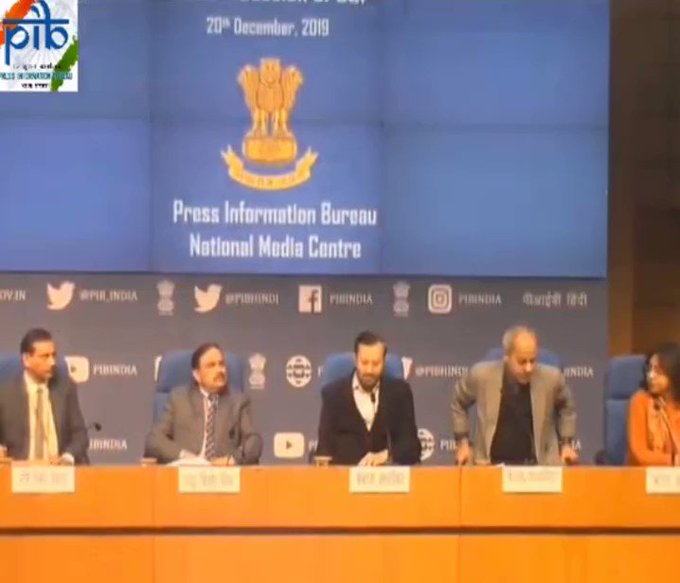
Outcome of COP25 balanced, with the exception of Climate Finance issues: Shri Prakash Javadekar

The 25th Session of the Conference of the Parties (COP 25) to the United Nations Framework Convention on Climate Change (UNFCCC) was held under the Presidency of Chile in Madrid, Spain on 02nd – 15th December 2018. The conference, which was expected to conclude on 13th December, was extended till 15th December 2019 to arrive at a consensus on a range of issues, particularly Article 6 of Paris Agreement, Warsaw International Mechanism for Loss and Damage associated with Climate Change Impacts and climate finance.

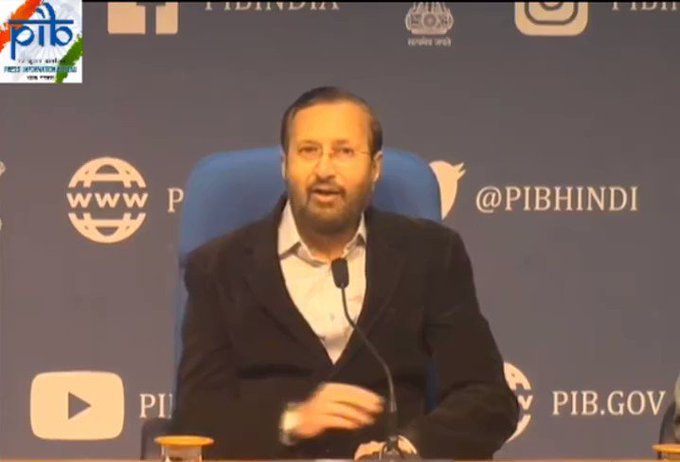
Addressing a Press Conference in New Delhi today, Union Environment Minister, Shri Prakash Javadekar said that with the exception of climate finance issues, overall, India considers the outcome of COP 25 a balanced outcome which addresses concerns of all Parties, especially the developing countries and provides the necessary building blocks for successful implementation of the UNFCCC and its Paris Agreement.

PC Pic.jpg

“India engaged constructively in the negotiations while protecting India’s key interests including consideration of principles of  equity and Common but Differentiated Responsibilities and Respective Capabilities (CBDR-RC); need for enhanced means of implementation, including climate finance, technology transfer at affordable costs and capacity building support, from developed to developing countries in accordance with their obligations under the UNFCCC and Paris Agreement.”, said Shri Javadekar

PIB India

@PIB_India

India’s efforts to mitigate climate change, and to conserve environment was appreciated at the recently held 25th session of the Conference of Parties to the United Nations Framework Convention on Climate change: Union Minister @PrakashJavdekar @moefcc @India4Climate

Embedded video

47 people are talking about this

“Prime Minister ,Shri Narendra Modi has increased the target for renewables from 175 Giga Watts to 450 Giga Watts at the recent UN Climate Action Summit. India is simultaneously progressing on solar, biomass and wind energy”, said the Union Minister.

PIB India

@PIB_India

Prime Minister @narendramodi has increased the target for renewables from 175 Giga Watts to 450 Giga Watts at the recent UN Climate Action Summit. India is simultaneously progressing on solar, biomass and wind energy: Union Min. @PrakashJavdekar @moefcc @India4Climate

Embedded video

161 people are talking about this

The COP 25 decision, titled Chile Madrid Time for Action, emphasizes the continued challenges that developing countries face in accessing financial, technology and capacity-building support, and recognizes the urgent need to enhance the provision of support to developing country Parties for strengthening their national adaptation and mitigation efforts. The decision also recalls the commitment made by developed country Parties to a goal of mobilizing jointly USD 100 billion per year by 2020 to address the needs of developing country Parties. On the issue of global ambition for combating climate change, the decision adopted provides for a balanced and integrated view of ambition that includes not only efforts for climate change mitigation, but also for adaptation and means of implementation support from developed country parties to developing country parties.

Some of the Key issues discussed at COP25 are enlisted below:-

Pre-2020 implementation and ambition gaps: On the matter of Pre-2020 gaps in commitments and actions of developed countries under Kyoto Protocol, India, along with other developing countries, was successful in ensuring further work on it. The COP 25 decision provides for assessing the pre-2020 gaps through round tables at COP 26 in Glasgow, with written submissions from Parties. UNFCCC secretariat will prepare a summary report of the pre 2020 gaps in mitigation action and means of implementation support by developed country parties that had commitments under the Kyoto Protocol.

Summary of these roundtables will serve as an input for the second periodic review of the long-term global goal under the Convention, which will start in 2020 and conclude in 2022. The decision on Periodic Review ensures that it will assess the overall aggregated effect of the steps taken by Parties in order to achieve the long-term global goal in the light of the ultimate objective of the Convention, in accordance with the relevant principles and provisions of the Convention and on the basis of the best available science.

Article 6 under the Paris Agreement: the guidance for Article 6 for market and non-market mechanisms could not be agreed due to divergences among Parties. However, India was successful in protecting its key positions in the last draft decision text presented including on transition of Clean Development Mechanism under Kyoto Protocol to the post-2020 period and provision of share of proceeds from market mechanisms as well as cooperative approaches, for adaptation fund to address the climate change adaptation  needs of developing countries. India insisted that fundamental principles of market reliability and parity between Article 6.2 and Article 6.4 must be preserved. India’s concerns are reflected in the draft texts that will be negotiated in further meetings of the COP. India argued for incentivizing private sector through Article 6.4 with adequate returns without requirement of adjusting Nationally Determined Contributions (NDC) that are country driven.

Enhanced Transparency Framework (Monitoring, Reporting and Verification): in the discussions on technical elements under transparency, India argued for a robust transparency framework for both action and support provided by developed to developing countries. Further the common formats should operationalize flexibility for developing countries to reflect the principle of differentiation. Discussion on this matter will continue in the next COP26.

Warsaw International Mechanism (WIM) for Loss and Damage: under the review of WIM for loss and damage associated with Climate Change Impacts, the decision recognizes urgency of scaling-up of action and support, as appropriate, including finance, technology and capacity-building, for developing countries for averting, minimizing and addressing loss and damage, including from Green Climate Fund (GCF). The decision also established the Santiago network for catalyzing technical assistance for implementation of relevant approaches at in developing countries.

Adaptation: On adaptation related matters, India has been stressing on parity between mitigation and adaptation. The COP 25 decision recalls that the provision of scaled-up financial resources should aim to achieve a balance between adaptation and mitigation, taking into account country-driven strategies, and the priorities and needs of developing country Parties, considering the need for public and grant-based resources for adaptation.

Technology development and transfer: On technology related matters, the adopted decision requests the Technology Executive Committee (TEC) and the Climate Technology Centre and Network (CTCN) to continue to implement their mandates with strengthened efforts on all themes of the technology framework. GCF has also been requested to collaborate with CTCN and TEC for strengthening cooperative action on technology development and transfer at different stages of the technology cycle.

India also made a presentation on its second Biennial Update Report (BUR) submitted to UNFCCC in December 2018 under the Facilitative Sharing of Views (FSV) process. The key highlight of India’s second BUR is the achievement of 21% reduction in emission intensity of its Gross Domestic Product over the period of 2005-2014.

India hosted an ‘India Pavilion’ at COP-25 which was a major attraction amongst the visitors that included delegates from different parts of the world, UN agencies etc. The theme of the pavilion was ‘150 years of celebrating the Mahatma’ and it was designed to depict Mahatma Gandhi’s life and messages around sustainable living.


https://i0.wp.com/indiaatcop25.org/wp-content/uploads/2019/12/ACA_1347-min-scaled.jpg  


GK

Curtain Raiser : Army Technology Seminar

ARTECH Seminar was launched in 2016 as part of overall vision of ‘Make in India’ of Hon’ble Prime Minister and is conducted every year as part of events leading to Army Day celebrations. The seminar is the flagship event of Indian Army which sets the agenda for focus areas of harvesting indigenous capabilities in the Defence sector.

ARTECH platform provides an opportunity to practitioners of military operations, policy makers in Ministry of Defence, industry and academia to put forth their contemporary Defence related capabilities. It is also a forum for innovators in uniform to showcase their products and offer these to industry to refine & productionise.

The fifth edition of ARTECH is being organised by Indian Army on ‘Technologies for Non Contact Warfare’ which will be organised on 23 December 2019 at Manekshaw Centre, Delhi Cantonment.

Speakers from varied fields of industry, academia, think tanks, subject matter experts, users and policy makers have been invited to address the seminar. ARTECH will be of immense value with participation by industry leaders, individual innovators, startups and academicians.

There is a select equipment display planned during the seminar by industry, academia, innovators in uniform and startups, DRDO and DPSUs.

Note : programme of work is enclosed for reference


Three combinations get automatic approval under CCI Green Channel

The Competition Commission of India (CCI) received the following three Green Channel combinations filed under sub-section (2) of Section 6 of the Competition Act, 2002 (Act) read with regulation 5A of the Competition Commission of India (Procedure in regard to the transactions of business relating to combinations) Regulations, 2011 (Combination Regulations):

  1. Acquisition of IDBI Asset Management Ltd. (IAML) and IDBI MF Trustee Company Ltd. (IMTL) by Muthoot Finance Limited (MFL) [filed on 16th December, 2019]

The notification relates to the acquisition of 100% equity shares of both IAML and IMTL by MFL. MFL, a non-deposit taking NBFC registered with the RBI and provides secured and unsecured loan (financing) against collateral of gold jewellery to companies and individuals. IAML’s principal activity is to act as an asset management company to the IDBI Mutual Fund. IMTL acts as the trustee company of IDBI MF in India. IDBI Bank holds 100% shareholding in IMTL.

Summary of the Proposed Combination is available at: https://www.cci.gov.in/sites/default/files/notice_order_summary_doc/C-2019-12-710.pdf 

  1. Acquisition of Adani Electricity Mumbai Limited (AEML) and Adani Electricity Mumbai Services Limited (AEMSL) by Qatar Holding LLC (QH) [filed on 19th December, 2019]

The notification relates to the acquisition by QH of 25.1% equity shares of AEML and AEMSL from Adani Transmission Limited.  QH, registered as a FPI with SEBI, is an investment holding company of Qatar Investment Authority (QIA).  AEML is the licensee for an integrated power distribution, transmission and generation business. AEMSL is a newly incorporated entity and is currently not engaged in any business activity. AEMSL intends to provide certain captive services to AEML and ATL.

Summary of the Proposed Combination is available at

https://www.cci.gov.in/sites/default/files/notice_order_summary_doc/C-2019-12-712.pdf


  1. Acquisition of GVK Airport Holdings Limited (GVKAHL ) by Green Rock B 2014 Limited (Green Rock), National Investment and Infrastructure Fund (NIIF) and Indo-Infra Inc. (Indo-Infra) [filed on 19th December, 2019]

The notification relates to acquisition of shares of, and control over, GVKAHL (and / or of its affiliates) and through GVKAHL (and / or through its affiliates), control over GVKAHL’s subsidiaries, Mumbai International Airport Limited (MIAL) and Navi Mumbai International Airport Private Limited (NMIA) by Green Rock, NIIF, and Indo-Infra. Green Rock, a trustee of Green Stone Trust has made certain investments in India and does not carry out any business activities directly in India. NIIF is an alternative investment fund with a focus to provide long-term capital to the country’s infrastructure sector. Indo-Infra is a holding company and part of the PSP group. PSP is a Canadian Crown corporation established by the Canadian Parliament under the Public Sector Pension Investment Board Act. GVKAHL is an affiliate of the GVK group. GVKAHL is a holding company for MIAL and its subsidiaries and joint ventures, and is also intended to engage in the business of developing infrastructure facilities and investing in companies directly or indirectly developing, operating and managing airports.

Summary of the Proposed Combination is available at

https://www.cci.gov.in/sites/default/files/notice_order_summary_doc/C-2019-12-713.pdf

The Proposed Combinations filed under sub-section (2) of Section 6 of the Act read with regulations 5A of the Combination Regulations (i.e. notice for approval of Combinations under Green Channel) shall be deemed to have been approved upon filing and acknowledgement thereof.

CCI Green Channel

The CCI introduced an automatic system of approval for combinations under ‘Green Channel’. Under this process, the combination is deemed to have been approved upon filing the notice in the prescribed format. This system would significantly reduce time and cost of transactions and thereby contributing towards ease of doing business in India.


Delhi Postal Circle makes special arrangements for acceptance of X-Mas/New Year Greetings Mail

Delhi Postal Circle has made special arrangements for acceptance of X-Mas/New Year Greetings Mail at 34 Post Offices and 2 RMS Offices at Railway Stations as given below from 18.12.2019 to 07.01.2020. Separate reception counters are being set up at these Post Offices. Members of public are Welcome to post their X-Mas/New Year Greetings Mail at these collection centers. These centers are made available in addition to the existing centres already functioning.

S.No. Name of Post Office S.No. Name of Post Office
1. Ashok Vihar HPO 19. New Delhi GPO
2. Civil Lines PO 20. New Sabzi Mandi PO
3. Chanakyapuri PO 21. Naraina Ind. Estate HPO
4. Delhi GPO 22. Patel Nagar PO
5. Delhi Cantt. PO 23. Paschim Vihar PO
6. Hauz Khas PO 24. Ramesh Nagar HPO
7. Indraprasta HO 25. Rohini PO
8. Janakpuri PO 26. R.K. Puram Sector 5 PO
9. Krishna Nagar HPO 27. R.P. Bhawan PO
10. Karol Bagh PO 28. Sansad Marg HPO
11. Keshav Puram/Onkar Nagar PO 29. Sarojini Nagar HPO
12. Kalkaji HPO 30. SRT Nagar PO
13. Lodi Road HPO 31. Seelampuri PO
14. Lajpat Nagar PO 32. Sriniwaspuri PO
15. Malviya Nagar PO 33. Saraswati Vihar PO
16. Malka Ganj PO 34. R.K. Puram (Main) PO
17. Mehrauli PO 35. Delhi R.S. TMO (Delhi Rly Station)
18. Mayapuri PO 36. New Delhi R.S. TMO (New Delhi Rly Station)

***

Innovation & Infrastucture will help India to become USD 5 trillion economy: Piyush Goyal

The Indian Railway splans to invest USD 700 billion through partnerships, joint ventures and collaborations to strengthen the infrastructure and reach the farthest corners of the country in the next 12 years said the Commerce and Industry& Railways Minister Piyush Goyal in New Delhi today. He was addressing ASSOCHAM which is celebrating 100 years.He was addressing ASSOCHAM about Strengthening India’s Global Positioning in New Delhi today.

In his address the Commerce and Industry Minister urged Indian Industry to be in constant dialogue with the Government so that all the problems and hurdles that industry and business face today may be dealt with so that the Government’s commitment for a better India, for the 1.3 billion aspirational citizens who are looking for a better quality of life, can be met at the earliest.

Government of India will be a facilitator and an enabler for industry and entrepreneurship to ensure that harassment at the hands of government functionaries both at the centre and the states comes to an end said the Minister. For this he urged ASSOCHAM with its 4 lakh plus members to give feedback that will help Government both at the Centre and the States to look at regulatory, non-regulatory, judicial and any other impediments that are roadblocks for industry and entrepreneurship.

Commerce and Industry Minister urged industry to adopt and encourage innovation by funding research and development and work closely with academia so that India may become a true innovation nation where startups can flourish and become positive disruptors in industry by creating more jobs for the youth of the country. He gave the example of the United States of America and China that have more than 4,200 and more than 1,200 researchers respectively and India has only 216 number of researchers per million people.

Commerce and Industry Minister congratulated ASSOCHAM in its centenary year and appreciated the commendable work it has done for a century for Indian industry and business.


Chairman 15th Finance Commission holds meeting with the CM Andhra Pradesh

The Chairman Fifteenth Finance Commission Shri N K Singhmet  theChief Minister of Andhra Pradesh, Shri Y S Jagan Mohan Reddy in Vijaywada on 19th December, 2019 and discussed various issues specific to state finances for the award period of the Commission from 2021 to 2026.  Shri Reddy highlighted the State’s fiscal challenges arising out of the bifurcation of the erstwhile Andhra Pradesh and stressed on the requirement of financial management by the new State Government.

While stating that the new State Andhra Pradesh was the most backward among all the southern States, the Chief Minster urged the support of theCommission to rebuild the governance systems from scratch. He also stressed on the need to support the newly initiated unique welfare schemes, Navaratnalu, in order to achieve the Sustainable Development Goals, Polavaram Project, and other flagship projects to cover all backward districts in Rayalaseema and North Coastalparts of the State. The CM also briefed the Chairman  about the newly created Village Secretariats of the State.

Shri Reddy listedout the  commitments made in the State Reorganisation Act  along with the demand for Special Category status to the State and requested the Commission to recommend immediate stepsby the Centre to release all pending dues to the State to ensure that the progress of the new State is not hampered.

The State Government officials made a detailed presentation on the fiscal situation of the State and sought about Rs. 5 lakh crore as Revenue deficit grant, increased limits for borrowings and waiving off the past liabilities of the State on account of NSSF loans.

The Chairman, Shri N K Singh assured that all issues raised by the State government would be carefully examined and duly considered and the Commission will continue its dialogue with the State. However, he advised the State to make serious efforts to invest the scarce resources in the areas which would ensure future stream of income. He was accompanied by Arvind Mehta, Secretary and other officials of the Finance Commission.