

 |
| Source: ASIDE 2015 |
Community college students everyday interact with a range of materials: handouts, worksheets, outlines, templates, PowerPoints, etc. From the simplest to the most complex, these resources are sometimes the primary conduits for information and training. The design of these materials, therefore, matters. The visual presentation of instructional tools can make the difference between detachment and engagement, between reticence and retention.
 |
| Source: ASIDE, Tommy McCall |
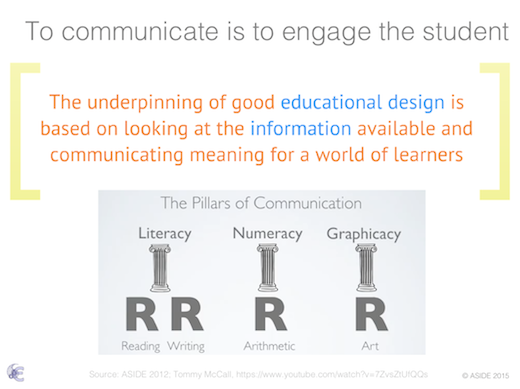
In creating both tangible and digital presentations for college learners, educators can ask themselves about the desired purpose, audience, and format of their materials. Similarly, considerations of layout, font, color, and alignment can make positive differences in conveying crucial concepts. A few notions to keep in mind include:
- Visual media bombard the modern eye
- Images increase the level of engagement and retention
- Design creates meaning and relationships
- The eye reads many types of “texts”
- Simple tools and techniques can aid understanding
- Emphasis, typography, hue, layout, and balance are key
 |
| Source: ASIDE 2015 |
We recently had the privilege of discussing these ideas with the faculty of the Department Of Reading And Basic Education at Nassau Community College (NCC) in New York. It was a pleasure speaking to them for their spring professional development. Our session was entitled, “The Benefits Of Good Design: Simple Strategies For Creating Elegant and Effective Materials To Engage Students.” All of the slides, links, and resources from our presentation can be found here.

 Eduindex