

 |
| Source: Bored Panda |
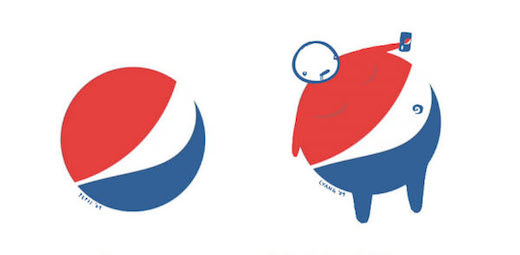
We admit that we’re fanatical about the power of logos to expand student learning. A logo packs a world of meaning into a tidy visual icon. Corporate and candidate logos combine precise elements, such as color, text, strategy, replicability, malleability, recognition, branding, and loyalty. For students, if they can unpack these multiple tiers of significance, then they can truly grasp the messages stowed within each succinct icon. This is visual and cultural literacy at its best.
 |
| Source: Lawrence Yang |
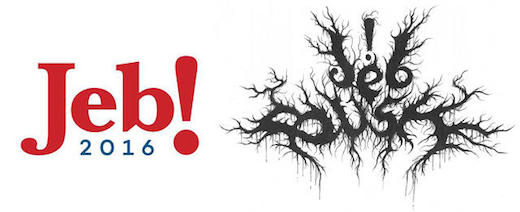
In our classes, we have used logos with students to develop media literacy, to explore visual civics, and to trace Olympic history. One of the ideal uses for emblems, though, lies in visual satire. Visual satire twists familiar images to convey ironic or satirical takes on society. By warping commonplace trademarks, artists (or students) can create “anti-logos.” An anti-logo turns the intended message of an insignia on its head, using the expected visual components to springboard to a higher level of parody and meaning.
 |
| Source: Visual News |
Recently, anti-logos have popped up in all sorts of places:
- Mocking bombastic presidential candidates
- Expressing outrage at universal rights violations
- Tweaking corporations over health and human effects
In lessons, teachers can invite students to create their own anti-logos. Kids can choose an established symbol and then sketch a redesign – perhaps for famous novels, historical eras, scientific discoveries, or Fortune 500 businesses.
This activity incorporates five different rungs of higher-order thinking:
- Understanding the essential components of a company’s, country’s, or person’s identity
- Crafting a persuasive point of view about the topic to communicate
- Designing a new version of the logo with a clear graphic representation and visual metaphor
- Manipulating efficient language to tweak the original wording or intent
- Incorporating the subtle art of satire to exaggerate or caricature the original message
 |
| Source: Fast Company, Christophe Szpajdel |
Especially in the world of civics and government, a student’s ability to lampoon a candidate’s logo can provide a prime avenue for research into current events and for the development of individual political opinions.
 |
| Source: Viktor Hertz |
EdSurge and Flocabulary have recently partnered, in fact, to redesign the traditional logo for a “teacher.” The familiar symbol of a bespectacled adult pointing to a blackboard seems out of date for modern, student-centered classrooms. They invite anyone to submit a new graphic via Twitter (@EdSurge) to rebrand the image of today’s educator. It reminds us of earlier efforts to rebrand education and the next generation learners.
 |
| Source: Viktor Hertz |
For more ideas about teaching with logos, check out:

 Eduindex