cognitive, social and teacher presence and PLEs

This posting is in response to Derek Wenmouth\’s diagram – OLE a school perspective – illustrating a school-based PLE. This is currently being discussed in a very interesting online discussion seminar run by Derek Wenmouth and Derek Chirnside on SCOPE.

It strikes me in all this talk about personal learning ecologies and personal learning environments (PLEs) that we are paying a lot of attention to the structure of the system. I am currently exploring how Derek\’s proposed system can help with learning. At the moment the diagram represents a mish mash of ways to collect together content – very important but not enough to stimulate engagement and reflection and deep learning.

Inherent in the use of some of the tools e.g. blogs, is a belief that communication will happen but I think we need to look carefully at this. Just because we keep a blog does not mean that someone will give us feedback on the content. We could also have a collection of tools in a system such as that proposed by D and have no interaction at all with another human being. At least in a classroom, there is a teacher to guide or control the learning.

My question is how can a PLE incorporate teacher presence and scaffolded learning and still enable the learners to have autonomy in their choices?

Is a PLE only really any good for the development of a cognitive presence online? i.e. information processing and can this truly happen without discourse and input from another human? Does a PLE automatically stimulate social interaction? I have found that there is no guarantee of a social presence i.e. interaction with other students, and even if this occurs and is unguided and unstructured, how much learning actually occurs? I believe that if any system such as a PLE is to succeed, teacher presence is very important. There is more about the ideas of cognitive, social and teacher presence in an article called:

Farmer, J. (2004). Communication dynamics: Discussion boards, weblogs and the development of communities of inquiry in online learning environments. In R. Atkinson, C. McBeath, D. Jonas-Dwyer & R. Phillips (Eds), Beyond the comfort zone: Proceedings of the 21st ASCILITE Conference (pp. 274-283). Perth, 5-8 December. http://www.ascilite.org.au/conferences/perth04/procs/farmer.html

Actual example of the use of social networking tools and strategies in a course.In a course where I co-teach design for flexible learning, we have encouraged participants to set up their own PLEs using a blog, del.icio.us account, mailing list and wiki as the backbone. They also have access to a LMS discussion and content on a course wiki,and are encouraged to use a range of open source software e.g. audacity for audio, gimpshop and gimp for image manipulation, CMap and Gliffy for mindmapping, and web-based tools e.g. Flickr (images), BubbleshareslideshareYoutubebliptv. There is variable take-up. Some really explore and try out lots of things to design and create resources and a learning space for themselves, others sit on the fringes.

The blogs which each student is required to keep and the course wiki and mailing list, and del.ici.ous accounts depend very much on an active teacher presence to keep the participants linked and motivated. It also depends on these items being connected to the course assessment. The tools are there, but without facilitation by the \”teachers\” the participants tend to learn in isolation apart from when they come together for f2f workshops.

We have found that unless guidance is provided by the \”teachers\” very few of them provide feedback to each others\’ blogs, contribute to the wiki or del.ici.ous account or contribute meaningful discussion to the mailing list.


Manifesto for Teaching Online – Transforming Assessment

This is one of the statements from the Manifesto for Teaching Online (Clara O\’Shea, 2012) discussed during the presentation: Assessment and the Manifesto for Teaching Online. This was the start of the online Transforming Assessment  webinars series – Rethinking assessment in a participatory digital world – Assessment 2.0. A recording will be available soon on the site.

In this project researchers from the University of Edinburgh investigated writing, assessment and feedback practices in a MSc in E-Learning programme. Students used blogs and wikis for their writing, some was peer-assessed once the students became familiar with how to blog. Clara  also said during her presentation that seeing how others are developing their arguments gives a better sense of how the ideas are unfolding. Feedback has an important role in this process. Affirming feedback as well as questions encourages students to respond more analogically – reflectively.

I also like another statement: \”A routine of plagiarism detection structures-in a relation of distrust.\” Clara believes that students need to be taught how to write well and cite correctly, and a culture of blame is not helpful. She also mentioned that the design of the assessments is key in preventing plagiarism I have to say that I agree. Clara wants us to take the Manifesto apart and discuss the statements….feedback in my opinion needs to stimulate critical thinking and extend students\’ knowledge and that is why I believe in giving formative feedback on summative assessments. It takes more work but the students are more likely to learn and develop a deeper knowledge of the concepts….more so than they might by just passing.

Visual Civics: Designing A Candidacy – Hillary Clinton

Source: Hillary For America


More ink has been spilt over Hillary Clinton’s campaign logo than on all of the other candidates’ emblems combined. Much of the commentary has come from exasperated Democrats, who are gnashing their teeth and throwing up their hands at the inexplicably chunky symbol that Clinton’s team devised. Twitter went gonzo over the medieval, early-1980s graphic. A “@HillaryLogo” parody account quickly sprung up from the folks at Cold Spark Media to lob satirical grenades about the motif’s perceived inelegance. Other outlets were cautiously more complimentary, while still pointing out the stiffness of the overall archetype.

All of this attention and consternation, however, actually proved the genius of Clinton’s design. In politics, all press is good press. In branding, recognizability is the raison d’être. The laser-focused media spotlight meant that in an unbelievably short time, a vast viewing public got a good look at the former Secretary of State’s presidential campaign. The accusations of over-simplicity were in fact its brilliance. Like the iconic 2008 rising-sun “O” of then-candidate Barack Obama, this instantly recognizable “H” gave Clinton an immediate leg up on any other team’s marketing efforts.

Source: Hillary For AmericaMark Kingsley, UnderConsideration


The Clinton logo features a lust red arrow pointing rightward atop a sans-serif, palatinate blue “H.” Designed by Michael Bierut of Pentagram, the sharp, block arrow and the single, spartan letter together recall the simplest of auto-shapes in Microsoft Word. The badge has been compared to everything from the FedEx logo to the “Hospital” sign to the Cuban flag.

For several years now, we have used the concepts of logos and branding in our classes to teach visual civics. As avid consumers of visual media, our students become engaged with social studies and political science through the dynamic interactions of advertising, bumper stickers, and presidential insignia. In the last election cycle, we invited kids to rate presidential logos on each banner’s ability to communicate candidate values and campaign themes. When our middle schoolers checked out Clinton’s 2016 design, they immediately grasped its message of forward progress. They also astutely pointed out that with Clinton’s widespread name recognition, she needed little more than an “H” to connect with voters.


The greatest asset of Clinton’s icon is its flexibility. It can be easily modified to adorn any type of placard or attire. It can be quickly customized to suit any constituency. The campaign has already incorporated a variety of incarnations in its mailings, tweets, and policy proposals. If fact, a quick search of “Hillary logo” in Google Images reveals the impressive malleability of Clinton’s crest (albeit in some not-safe-for-work incarnations).

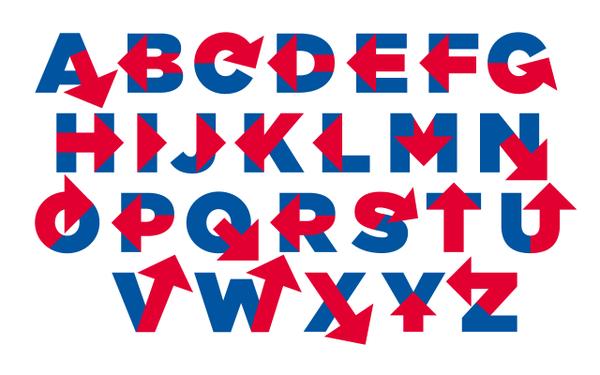
The surest signs of a symbol’s effectiveness are its subsequent imitations and derivations. Graphic designer Rick Wolff, for example, created an entire tongue-in-cheek alphabet in a new #Hillvetica font. Other designers immediately started redrafting the “H” logo into more contemporary styles (here and here). Political cartoonists had a field day incorporating the block arrow into their Clinton commentaries.

Source: Rick Wolff


If the purpose of a logo is to establish a relationship between the product and the consumer, then Clinton’s brand succeeds in spades. Its almost instantaneous market saturation proves its potency. Whether this identifiability leads to an electoral college victory, however, is unknown. But for now, the other campaigns are playing catch-up in the logo department.

For further ideas about using visual civics in the classroom, check out:

Short Essay on \’Most Important Person in My Life\’ (227 Words)

The most important person in my life is my mother. She does everything for me. She is very adorable and caring. My mother is a housewife. She is one of the people I respect and love the most. For me, my mother is the best mother in the world.

My mother is a kind-hearted woman. She takes time for me from her busy schedule. She helps me in studies and even plays with me. My mother teaches me more than any one else. She struggles a lot but never loses her patience and always makes a faith in herself. She not only inspired me the strength to overcome hardships in my life, but also provided me with valuable lessons of life.

My mother always shown me the right path for me. She is a diligent and determined woman. She always helps me in need. She loves me very much and supports me in everything I do or think to do. The most important thing is that she has helped me and I know that she will also do it further because she loves and bothers me a lot as compared to anyone. She gave me a lesson to appreciate this life as precious gift of ordinary life and enjoy it with happiness as she is the only one who brought me to this beautiful world.

! THANK U MOM! 

Short Essay on \’Most Important Person in My Life\’ (227 Words)

The most important person in my life is my mother. She does everything for me. She is very adorable and caring. My mother is a housewife. She is one of the people I respect and love the most. For me, my mother is the best mother in the world.

My mother is a kind-hearted woman. She takes time for me from her busy schedule. She helps me in studies and even plays with me. My mother teaches me more than any one else. She struggles a lot but never loses her patience and always makes a faith in herself. She not only inspired me the strength to overcome hardships in my life, but also provided me with valuable lessons of life.

My mother always shown me the right path for me. She is a diligent and determined woman. She always helps me in need. She loves me very much and supports me in everything I do or think to do. The most important thing is that she has helped me and I know that she will also do it further because she loves and bothers me a lot as compared to anyone. She gave me a lesson to appreciate this life as precious gift of ordinary life and enjoy it with happiness as she is the only one who brought me to this beautiful world.

! THANK U MOM! 

Short Essay on \’Most Important Person in My Life\’ (227 Words)

The most important person in my life is my mother. She does everything for me. She is very adorable and caring. My mother is a housewife. She is one of the people I respect and love the most. For me, my mother is the best mother in the world.

My mother is a kind-hearted woman. She takes time for me from her busy schedule. She helps me in studies and even plays with me. My mother teaches me more than any one else. She struggles a lot but never loses her patience and always makes a faith in herself. She not only inspired me the strength to overcome hardships in my life, but also provided me with valuable lessons of life.

My mother always shown me the right path for me. She is a diligent and determined woman. She always helps me in need. She loves me very much and supports me in everything I do or think to do. The most important thing is that she has helped me and I know that she will also do it further because she loves and bothers me a lot as compared to anyone. She gave me a lesson to appreciate this life as precious gift of ordinary life and enjoy it with happiness as she is the only one who brought me to this beautiful world.

! THANK U MOM! 

Short Essay on \’Most Important Person in My Life\’ (227 Words)

The most important person in my life is my mother. She does everything for me. She is very adorable and caring. My mother is a housewife. She is one of the people I respect and love the most. For me, my mother is the best mother in the world.

My mother is a kind-hearted woman. She takes time for me from her busy schedule. She helps me in studies and even plays with me. My mother teaches me more than any one else. She struggles a lot but never loses her patience and always makes a faith in herself. She not only inspired me the strength to overcome hardships in my life, but also provided me with valuable lessons of life.

My mother always shown me the right path for me. She is a diligent and determined woman. She always helps me in need. She loves me very much and supports me in everything I do or think to do. The most important thing is that she has helped me and I know that she will also do it further because she loves and bothers me a lot as compared to anyone. She gave me a lesson to appreciate this life as precious gift of ordinary life and enjoy it with happiness as she is the only one who brought me to this beautiful world.

! THANK U MOM! 

Short Essay on \’Most Important Person in My Life\’ (227 Words)

The most important person in my life is my mother. She does everything for me. She is very adorable and caring. My mother is a housewife. She is one of the people I respect and love the most. For me, my mother is the best mother in the world.

My mother is a kind-hearted woman. She takes time for me from her busy schedule. She helps me in studies and even plays with me. My mother teaches me more than any one else. She struggles a lot but never loses her patience and always makes a faith in herself. She not only inspired me the strength to overcome hardships in my life, but also provided me with valuable lessons of life.

My mother always shown me the right path for me. She is a diligent and determined woman. She always helps me in need. She loves me very much and supports me in everything I do or think to do. The most important thing is that she has helped me and I know that she will also do it further because she loves and bothers me a lot as compared to anyone. She gave me a lesson to appreciate this life as precious gift of ordinary life and enjoy it with happiness as she is the only one who brought me to this beautiful world.

! THANK U MOM! 

Short Essay on \’Most Important Person in My Life\’ (227 Words)

The most important person in my life is my mother. She does everything for me. She is very adorable and caring. My mother is a housewife. She is one of the people I respect and love the most. For me, my mother is the best mother in the world.

My mother is a kind-hearted woman. She takes time for me from her busy schedule. She helps me in studies and even plays with me. My mother teaches me more than any one else. She struggles a lot but never loses her patience and always makes a faith in herself. She not only inspired me the strength to overcome hardships in my life, but also provided me with valuable lessons of life.

My mother always shown me the right path for me. She is a diligent and determined woman. She always helps me in need. She loves me very much and supports me in everything I do or think to do. The most important thing is that she has helped me and I know that she will also do it further because she loves and bothers me a lot as compared to anyone. She gave me a lesson to appreciate this life as precious gift of ordinary life and enjoy it with happiness as she is the only one who brought me to this beautiful world.

! THANK U MOM! 

Short Biography of \’Rani Lakshmibai\’ (220 Words)

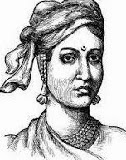
\’Rani Lakshmibai\’ was born on November 19, 1835 at Kashi. Her father\’s name was Moropant. Her mother\’s name was Bhagirathi Devi. Laxmi\’s childhood name was Manikarnika but affectionately she was called Manu in her childhood.

Rani Lakshmibai was married to Gangadhar Rao in 1842. Gangadhar Rao was the king of Jhansi. In 1851, the Rani had a son; he unfortunately died when he was barely four months old. Raja Gangadhar Rao could not bear the shock and after a long illness, he died on November 21, 1853.

Jhansi became a major center of the revolt of 1857. Rani Lakshmibai of Jhansi, began to strengthen security and started a volunteer army. Ordinary people also contributed to the revolt. In 1857, the kings of the neighboring state of Jhansi, Orchha and Datia attacked. Rani Lakshmibai defeated them successfully. In March 1858 the British army besieged the city of Jhansi. But Rani, with her adopted son Damodar Rao was able to escape. Rani died on June 18, 1858.

Rani Lakshmibai was the great heroine of the First War of Indian Freedom. She was the embodiment of patriotism, self-respect and heroism. Her life is a thrilling story of womanliness, courage, adventure, deathless patriotism and martyrdom. Rani Lakshmibai was the real meaning of the ideal heroine. She was proud of not just India but the world\’s women. 

Short Biography of \’Rani Lakshmibai\’ (220 Words)

\’Rani Lakshmibai\’ was born on November 19, 1835 at Kashi. Her father\’s name was Moropant. Her mother\’s name was Bhagirathi Devi. Laxmi\’s childhood name was Manikarnika but affectionately she was called Manu in her childhood.

Rani Lakshmibai was married to Gangadhar Rao in 1842. Gangadhar Rao was the king of Jhansi. In 1851, the Rani had a son; he unfortunately died when he was barely four months old. Raja Gangadhar Rao could not bear the shock and after a long illness, he died on November 21, 1853.

Jhansi became a major center of the revolt of 1857. Rani Lakshmibai of Jhansi, began to strengthen security and started a volunteer army. Ordinary people also contributed to the revolt. In 1857, the kings of the neighboring state of Jhansi, Orchha and Datia attacked. Rani Lakshmibai defeated them successfully. In March 1858 the British army besieged the city of Jhansi. But Rani, with her adopted son Damodar Rao was able to escape. Rani died on June 18, 1858.

Rani Lakshmibai was the great heroine of the First War of Indian Freedom. She was the embodiment of patriotism, self-respect and heroism. Her life is a thrilling story of womanliness, courage, adventure, deathless patriotism and martyrdom. Rani Lakshmibai was the real meaning of the ideal heroine. She was proud of not just India but the world\’s women. 

Short Biography of \’Rani Lakshmibai\’ (220 Words)

\’Rani Lakshmibai\’ was born on November 19, 1835 at Kashi. Her father\’s name was Moropant. Her mother\’s name was Bhagirathi Devi. Laxmi\’s childhood name was Manikarnika but affectionately she was called Manu in her childhood.

Rani Lakshmibai was married to Gangadhar Rao in 1842. Gangadhar Rao was the king of Jhansi. In 1851, the Rani had a son; he unfortunately died when he was barely four months old. Raja Gangadhar Rao could not bear the shock and after a long illness, he died on November 21, 1853.

Jhansi became a major center of the revolt of 1857. Rani Lakshmibai of Jhansi, began to strengthen security and started a volunteer army. Ordinary people also contributed to the revolt. In 1857, the kings of the neighboring state of Jhansi, Orchha and Datia attacked. Rani Lakshmibai defeated them successfully. In March 1858 the British army besieged the city of Jhansi. But Rani, with her adopted son Damodar Rao was able to escape. Rani died on June 18, 1858.

Rani Lakshmibai was the great heroine of the First War of Indian Freedom. She was the embodiment of patriotism, self-respect and heroism. Her life is a thrilling story of womanliness, courage, adventure, deathless patriotism and martyrdom. Rani Lakshmibai was the real meaning of the ideal heroine. She was proud of not just India but the world\’s women. 

Short Biography of \’Rani Lakshmibai\’ (220 Words)

\’Rani Lakshmibai\’ was born on November 19, 1835 at Kashi. Her father\’s name was Moropant. Her mother\’s name was Bhagirathi Devi. Laxmi\’s childhood name was Manikarnika but affectionately she was called Manu in her childhood.

Rani Lakshmibai was married to Gangadhar Rao in 1842. Gangadhar Rao was the king of Jhansi. In 1851, the Rani had a son; he unfortunately died when he was barely four months old. Raja Gangadhar Rao could not bear the shock and after a long illness, he died on November 21, 1853.

Jhansi became a major center of the revolt of 1857. Rani Lakshmibai of Jhansi, began to strengthen security and started a volunteer army. Ordinary people also contributed to the revolt. In 1857, the kings of the neighboring state of Jhansi, Orchha and Datia attacked. Rani Lakshmibai defeated them successfully. In March 1858 the British army besieged the city of Jhansi. But Rani, with her adopted son Damodar Rao was able to escape. Rani died on June 18, 1858.

Rani Lakshmibai was the great heroine of the First War of Indian Freedom. She was the embodiment of patriotism, self-respect and heroism. Her life is a thrilling story of womanliness, courage, adventure, deathless patriotism and martyrdom. Rani Lakshmibai was the real meaning of the ideal heroine. She was proud of not just India but the world\’s women. 

Short Biography of \’Rani Lakshmibai\’ (220 Words)

\’Rani Lakshmibai\’ was born on November 19, 1835 at Kashi. Her father\’s name was Moropant. Her mother\’s name was Bhagirathi Devi. Laxmi\’s childhood name was Manikarnika but affectionately she was called Manu in her childhood.

Rani Lakshmibai was married to Gangadhar Rao in 1842. Gangadhar Rao was the king of Jhansi. In 1851, the Rani had a son; he unfortunately died when he was barely four months old. Raja Gangadhar Rao could not bear the shock and after a long illness, he died on November 21, 1853.

Jhansi became a major center of the revolt of 1857. Rani Lakshmibai of Jhansi, began to strengthen security and started a volunteer army. Ordinary people also contributed to the revolt. In 1857, the kings of the neighboring state of Jhansi, Orchha and Datia attacked. Rani Lakshmibai defeated them successfully. In March 1858 the British army besieged the city of Jhansi. But Rani, with her adopted son Damodar Rao was able to escape. Rani died on June 18, 1858.

Rani Lakshmibai was the great heroine of the First War of Indian Freedom. She was the embodiment of patriotism, self-respect and heroism. Her life is a thrilling story of womanliness, courage, adventure, deathless patriotism and martyrdom. Rani Lakshmibai was the real meaning of the ideal heroine. She was proud of not just India but the world\’s women. 

Short Biography of \’Rani Lakshmibai\’ (220 Words)

\’Rani Lakshmibai\’ was born on November 19, 1835 at Kashi. Her father\’s name was Moropant. Her mother\’s name was Bhagirathi Devi. Laxmi\’s childhood name was Manikarnika but affectionately she was called Manu in her childhood.

Rani Lakshmibai was married to Gangadhar Rao in 1842. Gangadhar Rao was the king of Jhansi. In 1851, the Rani had a son; he unfortunately died when he was barely four months old. Raja Gangadhar Rao could not bear the shock and after a long illness, he died on November 21, 1853.

Jhansi became a major center of the revolt of 1857. Rani Lakshmibai of Jhansi, began to strengthen security and started a volunteer army. Ordinary people also contributed to the revolt. In 1857, the kings of the neighboring state of Jhansi, Orchha and Datia attacked. Rani Lakshmibai defeated them successfully. In March 1858 the British army besieged the city of Jhansi. But Rani, with her adopted son Damodar Rao was able to escape. Rani died on June 18, 1858.

Rani Lakshmibai was the great heroine of the First War of Indian Freedom. She was the embodiment of patriotism, self-respect and heroism. Her life is a thrilling story of womanliness, courage, adventure, deathless patriotism and martyrdom. Rani Lakshmibai was the real meaning of the ideal heroine. She was proud of not just India but the world\’s women.