Using Technology To Turn Historical Photographs Into Animated Wonders

Source: Alexey Zakharov


Educators have always sought to add visual interest to their lessons, to support learning modalities and to provide illustrative examples of the topics under consideration. From postcards to prints, from filmstrips to YouTube, the power of pictures and movies to aid learning is undeniable. Now, various digital tools and editing applications are enlivening \”flat\” images in thrilling fashion. The animation of historical photos is bringing primary sources to life in ways unimagined by teachers and students a decade ago.

 \”The Old New World\” (Photo-based animation project) from seccovan on Vimeo.

Often called 2.5D, or \”the Parallax Effect,\” the rendering of motion within a still photograph allows the eye to traverse the image in a more fully realized manner. The forced examination of details, as foregrounds and backgrounds snap into focus, invites viewers to explore the entire depth of field. In adding movement to static characters, the past becomes relevant as observers imagine the seconds preceding and succeeding the camera\’s shutter. A crescendo of action added to a familiar scene places the spectator within the historical moment. Each detail now becomes tangible and palpable. Each setting contains nuance and fluidity.


Even more interesting for educators to consider are the ways these adaptations of primary sources reinforce the critical questions about dealing with pictorial artifacts: What role does the photographer or editor play in staging a photo? What is intentionally included, removed, or modified within a scene? Is any artificial capture of a moment truly \”real,\” and how much scholarly skepticism should students lend to every research source?


Adobe Photoshop, After Effects, and Audition are some of the most common tools to render photographs and paintings from 2D to 3D. The History Channel (and several truck commercials) use these effects regularly in their productions. Some excellent tutorials exist (where else?) on YouTube to practice creating these styles of videos (here and here).

 Fukushima – Images by Rebecca Lilith Bathory from chris lavelle on Vimeo.

At their most advanced, these animations ask us to reconsider the historical and the artistic record as changeless constants. At their most basic, however, these videos are just neat. They are inviting and clever. They lure in students and others to enjoy the study of history even more.


For other ideas about creating animations, check out:


Short Biography of ‘Nelson Mandela’ (294 Words)

‘Nelson Mandela’ was born on July 18th, 1918 in the village of Mvezo in Umtata, then a part of South Africa’s Cape Province. His story symbolizes a lifestyle struggle against apartheid in South Africa. It was a terrible form of institutionalized racism that held the South African society in it’s grip for a long time. It was not easy for Mandela to fight against it, as he too was among those who were oppressed by the system.

Before becoming actively involved in the anti-apartheid struggle, Mandela survived many years of his life as a subject of colonialism. As a child in Africa, Mandela was a victim of the European colonial project which involved ‘civilizing’ indigenous communities by silencing African ways of life in favour of a Euro-centric culture.

In the early 1960’s, Mandela was imprisoned for his stand against the racist laws of the government. He stayed in prison for nearly three decades but refused to compromise his position, which was to fight for justice and equality for all people.

A courageous and uncompromising hero, Mandela was a man of principles, strength and integrity. In 1994, he led the country to the end of apartheid and was elected the first black president of South Africa. He served as President of South Africa from 1994 to 1999. After he retired from public life, Mandela continued to embody the hopes and dreams of a free and equal world. He died on December 5th, 2013 at the age of 95 at Johannesburg, South Africa.

Nelson Mandela received more than 250 honours, including the 1993 Nobel Peace Prize, the US Presidential Medal of Freedom, the Soviet Order of Lenin and the Bharat Ratna. Today, Nelson Mandela, popularly known as ‘Madiba’ in South Africa, is a household name all over the world.

Chief of the Air Staff Air Chief Marshal RKS Bhadauria visits NCC Republic Day Camp

Chief of the Air Staff Air Chief Marshal RKS Bhadauria visited the National Cadet Corps (NCC) Republic Day Camp 2020 at Delhi Cantt today. The Chief of Air Staff inspected the Guard of Honour presented by the NCC cadets from the Army, Navy and Air Force. This was followed by a Band Display by the cadets.

The Chief of the Air Staff also inspected the well laid out ‘Flag Area’, prepared by the cadets from all 17 NCC Directorates, depicting various social awareness themes. He was given a brief by the cadets on their respective models.

Air Chief Marshal RKS Bhadauriavisited the ‘Hall of Fame’, a proud possession of the NCC, with display of rich archival collection of alumni photographs, models, motivational and other visual delights of the three wings of the NCC.Later, the Chief of the Air Staff and other distinguished guests witnessed a cultural programme by the cadets.

In his address, Air Chief Marshal RKS Bhadauria lauded the stellar role played by NCC in shaping the youth of the nation,enabling them to shoulder the responsibilities of building a strong India. He assured the NCC of the continued support of the Indian Air Force in conduct of its Air Wing activities.

***

Prime Minister Dedicates Four Refurbished Heritage Buildings in Kolkata to the Nation

The Prime Minister Shri Narendra Modi dedicated to the nation Four Refurbished Heritage Buildings in Kolkata today. These are Old Currency Building, the Belvedere House, the Metcalfe House and the Victoria Memorial Hall. The Union Minister of State (Independent Charge) for Culture and Tourism, Shri Prahlad Singh Patel and Governor of West Bengal Shri Jagdeep Dhankhar were also present on this occasion.

Photo Caption: The Prime Minister, Shri Narendra Modi addressed at the dedication ceremony of the four refurbished Heritage Buildings to the nation, in Kolkata.


Speaking on the occasion, Prime Minister termed it as a special day, as it begins a nationwide campaign to preserve India’s art, culture and heritage, and to Reinvent, Rebrand, Renovate and Rehouse them. Shri Modi said that India always wanted to protect and modernize its cultural heritage and structures. It is with this spirit that the Union Government has taken up the endeavour to develop India as major centre of Heritage Tourism in the World. He mentioned that five 5 Iconic Museums in the country will be made in keeping with the International standards. This is being started from the Indian Museum in Kolkata, which is one of the oldest museums in the world, he added.

Kindly click the link for the full speech of Prime Minister


Photo caption: The Prime Minister Shri Narendra Modi unveiled the ‘Ardhnarishwar’ sculpture at Old Currency Building in Kolkata in the presence of the Union Minister of State (I/C) for Culture and Tourism, Shri Prahlad Singh Patel and Governor of West Bengal Shri Jagdeep Dhankhar.


Speaking on the occasion the Union Minister of State (Independent Charge) for Culture and Tourism, Shri Prahlad Singh Patel said that it is a great privilege that the Prime Minister is dedicating these historical and heritage buildings in Kolkata to the Nation. The minister lauded the dedicated efforts of the officials of the Culture Ministry which helped the refurbished structures to come into being within the stipulated period. The renovated four heritage buildings are now open for the public. Our museum and the objects placed in it are the heritage of all of us. We all need to take care of them together, he added. Shri Patel also praised the art-works curated Old Currency Building, named Ghare Baire, from where the Prime Minister dedicated three other iconic and historical buildings of Kolkata, namely, Belvedere House, Victoria Memorial Hall and Metcalfe House.

Kindly click the link for details of the renovated heritage buildings


*****

Ordinance promulgated for amendment of MMDR Act and CMSP Act; paves way for growth in Coal and Mining sector

The ordinance for amendment in the MMDR Act 1957 and the CMSP Act 2015 has been promulgated. The Union Cabinet had earlier approved the amendments intending to open up new areas of growth in the coal & mining sector.

The amendments in the Acts would enable the following:

  1. Enhancing the  ease of doing business
  2. Democratization of coal mining sector by opening it up to anyone willing to invest.
  3. Offering of unexplored and partially explored coal blocks for mining through prospecting license-cum-mining Lease (PL- cum-ML).
  4. Promoting Foreign Direct Investment in the coal mining  sector by removing the restriction and eligibility criteria for participation.
  5. Allowing of successful bidder/allottee to utilise mined coal in any of the plant of its subsidiary or holding company
  6. Attracting large investment in coal mining sector as restrictions of end use has been dropped.

The details are as given below:

  1. Amendments in respect of Ministry of Coal

Amendment 1:            To provide for allocation of coal blocks for composite prospecting licence-cum-mining lease (PL-cum-ML)

Earlier, there was no provision for grant of composite prospecting licence-cum-mining lease (PL-cum-ML) in respect of coal/ lignite. A coal / lignite block could be either be allocated for PL or for ML. The Amendment has enabled the allocation of coal blocks for composite prospecting licence-cum-mining lease (PL-cum-ML) which will help in increasing of the inventory of coal/ lignite blocks for allocation. Coal blocks with different grades and in a wide geographical distribution will now be available for allocation.

The Sections involved were Section 4(2), 5(1), 8(4), 8(8), 8(9) and 31(2)(b) of the CMSP Act and Section 11A and 13(2) of the MMDR Act

Amendment 2:            Clarifying the power of Central Government to specify the purpose of allocation and that ‘any’ company can participate

There was lack of clarity earlier in the language of the provisions in the Acts leading to restrictive interpretation of the eligibility conditions in the auction. It has now been clarified that any company selected through auction/ allotment can carry on coal mining operation for own consumption, sale or for any other purposes, as may be specified by the Central Govt. allowing wider participation and competition in auction.

Thus, the companies which do not possess any prior coal mining experience in India but are financially strong and or have mining experience in other minerals or in other countries can now participate in auction of coal/lignite blocks. This would also allow the implementation of the 100% FDI through automatic route for sale of coal.

The Sections involved are 11A of the MMDR Act and Section 4(2) and 5(1) of the CMSP Act.

Amendment 3:            Flexibility in deciding the end use of Schedule II and III coal mines

Hitherto, the Schedule II and III coal mines could only be auctioned to companies that are engaged in specified end use. Now, the omission of sub-section (3) of Section 4 of CMSP Act has provided flexibility to the Central Govt. in deciding the end use of Schedule II and III coal mines under the CMSP Act. This would allow wider participation in auction of Schedule II and III coal mines, for a variety of purposes such as own consumption, sale or for any other purpose, as may be specified by the Central Govt.

Amendment 4:            Termination of the allocations made under the CMSP Act, their reallocation and compensation

The CMSP Act and the CMSP Rules were silent on subsequent allocation of coal mines upon termination of allocations made under the Act as well as rights and liabilities of the allottee, whose allocation has been terminated. With the amendment of Section 8 (insertion of sub section (13), (14) and (15) in CMSP Act), it is has become possible to provide for allocation of the coal mine to next successful bidder or allottee, subsequent to termination of its allocation along with the matters incidental to it. The Act now also provides for compensation to the allocattee whose allocation has been terminated.

Amendment 5:            Appointment of Designated Custodian in mines under production:

Earlier, there was no provision for appointment of designated custodian for management of the mines under production whose vesting/ allotment order has been cancelled. By amending the Section 18 of the CMSP Act, it is now possible for appointment of designated custodian for management of the mines, apart from Schedule II mines, which have come under production and whose vesting/ allotment order has been cancelled. It therefore addresses the issue of management and operation of the mines after their termination, which have come under production.

Amendment 6:            Dispensing with the requirement of previous approval in certain cases

With the amendment of the Section 5 and 17A of the MMDR Act, the repetitive and redundant provision requiring previous approval of Central government even in cases where the allocation or reservation of coal/ lignite block has been made by the Central Govt. itself has been done away with. This would significantly reduce the  time taken for operationalisation of coal/ lignite mines.

Amendment 7:            Entitlement to successful allocattee to utilise the coal mined in plants of Holding and Subsidiary company:

Earlier a successful allocattee was entitled to utilise the mined coal only in any of its plants. With the amendment of  Section 20(2)of the CMSP Act now the reference of Holding company and Subsidiary company has been added. This would make the successful bidder/allottee entitled to utilise mined coal in any of its plants or plants of its subsidiary or holding company.

Amendment 8:  Certain Consequential and clarificatory Amendments:

Certain consequential and clarificatory amendments were required in language of various provisions for smooth implementation of the CMSP Act. Section 9 and 20(1) of the CMSP Act have now been amended which has resulted in the clarification of language of Section 9 (related to priority of disbursal) Further, language of Section 20(1) has been clarified to avoid any arrangement between two coal linkage holders as the same is not subject matter of the CMSP Act.

  1. Amendments in respect of Ministry of Mines

Amendment 1:            Insertion of new section 4B (after section 4A) to enable the Central Govt. to prescribe conditions for ensuring sustained production by the holder of mining leases, who have acquired rights/approvals/clearances etc. transferred from the previous lessee, as per the provisions under section 8B, which is incorporated in this amendment:

The pre-amended MMDR Act, provided a time period of two years for the new lessee for starting the mining operation, whereas the newly introduced section 8B of this Act, provides for deemed acquiring of valid rights /approvals /clearances by the new lessee. The objective of the amendment is to ensure the continuity of production of minerals. Hence, there is need to specify the conditions for production by the new lessee, who will avail benefits of section 8B. Further, the Central Government derives power to prescribe the conditions for the new lessees to commence production without prejudice to the time period of two years for starting the production prescribed in Section 4A.

Amendment 2:            Amendment of Section 8A by introducing a proviso to clarify the intent of Section 8A(4) of the MMDR Act:

The previous section 8A(4) of the MMDR Act provided for auction of leases on the expiry of the lease. There existed scope for ambiguity about initiating the advance action/process  by the State Government for notifying the expiring leases for auction. With the amendment it has  been clarified that State Government can take up advance steps for auction of blocks before the expiry of lease period. This would ensure that the production of the minerals from such blocks can be seamlessly continued.

Amendment 3:            Provisions to ensure that the successful bidder of mining leases expiring under Section 8A(5) & 8A(6), shall acquire all valid rights / approvals / clearances; for a period of two years and within which period he/she shall apply for fresh licence:

The working mining leases of Odisha are expiring during 2020. These leases produced about 58 Million Tonne of iron ore, 1.80 Million Tonne of chromite and 0.77 Million Tonne of manganese during the year 2018-19.  Statutory clearances required to start the mining operations for the new leases have to be granted expeditiously to enable the new lessees to continue the mining operations.

The new lessee has to obtain 20 approvals to start the mining operations, of which 9 are related to different Central Govt. Ministries and the remaining are from the State Government. In normal course, the minimum time period required to obtain these approvals vary from two to three years. This whole process would delay the commencement of mining operations by the new lessees. Any delay in commencing the mining operations by the new lessee would adversely  affect the mineral production in the country, which in turn would impact the important downstream industries like steel, cement etc.

With the insertion of new section 8B (after section 8A) of the MMDR Act, the successful bidders of the mining leases expiring under section 8A(5) & 8A(6) of the MMDR Act, deemed to have acquired all valid rights/ approvals/ clearances/ licenses and the like; for a period of two years and can start mining operation without loss of time. Seamless continuance of mining operations is in public interest as this will prevent disruption in supply of raw material (mineral) to the industries.

The above amendments (1,2&3) pertaining to Mines will promote ease of doing business and will benefit the holders of auctioned brown field mining leases on expiry of their lease period starting from March 2020 and then from March 2030.

Amendment 4:            Provisions to enable the holders of Non-Exclusive Reconnaissance permit of deep seated minerals and other minerals of the national interest to obtain composite licence (PL-cum-ML) or Mining Lease:

The previous legislative provisions did not allow the non-exclusive reconnaissance permit holders to apply for mining lease. The private participation in exploration was therefore negligible. In order to enhance exploration of deep seated minerals a facilitating environment has been envisaged to be provided with the insertion of new proviso after sub-section 2 of section 10C. This amendment would allow NERP holders of deep seated minerals or any minerals of the national interest to apply for composite licence (PL-cum-ML) or Mining Lease. This would hence augment the exploration of the deep seated minerals and minerals of national interest, some of which are strategically important for the country.

Amendment 5:            Empowers the Central Government to frame rules in respect of newly introduced sections:

The difficulty of the Central Govt. which had to derive power to make rules to implement the provision of the amended Act has now been removed with the insertion of new clauses in sub-section 2 of section 13. This would give the Central Government power to frame subordinate legislation to implement the intent of the Ordinance.

*******

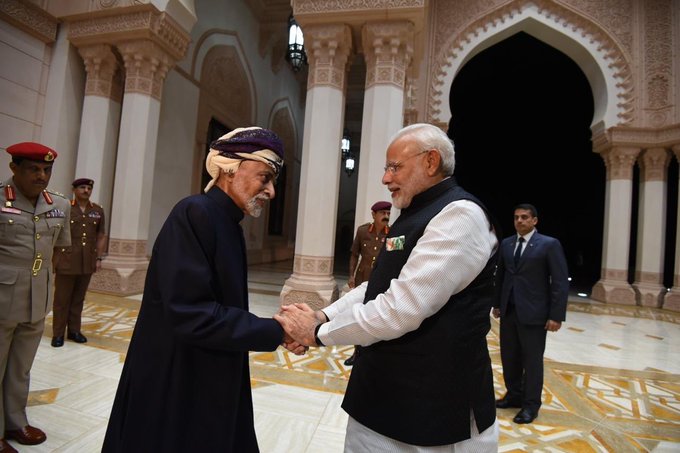
PM condoles the passing away of His Majesty Sultan Qaboos bin Said al Said

The Prime Minister Shri Narendra Modi has condoled the passing away of His Majesty Sultan Qaboos bin Said al Said.

“I am deeply saddened to learn about the passing away of His Majesty Sultan Qaboos bin Said al Said. He was a visionary leader and statesman who transformed Oman into a modern and prosperous nation. He was a beacon of peace for our region and the world.

Sultan Qaboos was a true friend of India and provided strong leadership for developing a vibrant strategic partnership between India and Oman. I will always cherish the warmth and affection I received from him. May his soul rest in peace”, the Prime Minister said.

Narendra Modi

@narendramodi

I am deeply saddened to learn about the passing away of His Majesty Sultan Qaboos bin Said al Said. He was a visionary leader and statesman who transformed Oman into a modern and prosperous nation. He was a beacon of peace for our region and the world.

View image on Twitter
6,569 people are talking about this

****

PM condoles loss of lives due to road accident in Kannauj, UP

The Prime Minister, Shri Narendra Modi has condoled the loss of lives due to a road accident in Kannauj, Uttar Pradesh.

“उत्तर प्रदेश के कन्नौज में हुए भीषण सड़क हादसे के बारे में जानकर अत्यंत दुख पहुंचा है। इस दुर्घटना में कई लोगों को अपनी जान गंवानी पड़ी है। मैं मृतकों के परिजनों के प्रति अपनी संवेदनाएं प्रकट करता हूं, साथ ही घायलों के शीघ्र स्वस्थ होने की कामना करता हूं।“ , Prime Minister said.

Narendra Modi

@narendramodi

उत्तर प्रदेश के कन्नौज में हुए भीषण सड़क हादसे के बारे में जानकर अत्यंत दुख पहुंचा है। इस दुर्घटना में कई लोगों को अपनी जान गंवानी पड़ी है। मैं मृतकों के परिजनों के प्रति अपनी संवेदनाएं प्रकट करता हूं, साथ ही घायलों के शीघ्र स्वस्थ होने की कामना करता हूं।

9,375 people are talking about this

*****

PM Dedicates Four Refurbished Heritage Buildings in Kolkata To the Nation

The Prime Minister Shri Narendra Modi dedicated to the nation Four Refurbished Heritage Buildings in Kolkata today. These are Old Currency Building, the Belvedere House, the Metcalfe House and the Victoria Memorial Hall.

Speaking on the occasion, Prime Minister termed it as a special day, as it begins a nationwide campaign to preserve India’s art, culture and heritage, and to Reinvent, Rebrand, Renovate and Rehouse them.

Centre of Heritage Tourism for the World:

Shri Modi said that India always wanted to protect and modernize its cultural heritage and structures. It is with this spirit that the Union Government has taken up the endeavour to develop India as major centre of Heritage Tourism in the World.

He mentioned that five 5 Iconic Museums in the country will be made in keeping with the International standards. This is being started from the Indian Museum in Kolkata, which is one of the oldest museums in the world, he added.

Shri Modi said that inorder to generate resources, take care of the management of these iconic cultural heritage centres, the union government is considering to launch Indian Institute of Heritage Conservation which would be given the status of a deemed university.

Prime Minister said the renovation work of four Iconic Galleries of Kolkata-  Old Currency Building, Belvedere House, Victoria Memorial and Metcalfe House has been completed. He also said that Government is taking efforts towards developing Belvedere House into a Museum of the World.

Shri Modi said that Government of India is contemplating to set up a museum of “Coinage & Commerce” at the Indian Government Mint in Kolkata.

Biplabi Bharat

Prime Minister said , “3 of the 5 galleries of Victoria Memorial were closed for a long time and that it is not a good situation. We are now trying to restart them, It is my urge that some space should also be provided for showcasing India’s Freedom fighters. I feel it should be called “Biplabi Bharat”. Here we can showcase leaders like Subhas Chandra Bose, Aurobindo Ghosh, Ras Behari Bose, Khudi Ram Bose, Bagha Jatin, Binoy, Badal, Dinesh etc”

He said keeping in mind the decades old sentiments of India towards Subhas Chandra Bose a museum had been set up at the Red Fort in Delhi and that an island in the archipelago of the Andaman & Nicobar had been named after him.

Tributes to Iconic Leaders of Bengal 

Prime Minister said in the new era, the iconic leaders and sons of soil of West Bengal who dedicated their lives for the freedom of the country should be paid proper tributes.

“Now we are celebrating the 200th Birth Anniversary of Shri Ishwar Chandra Vidyasagar. Similarly the year 2022 when India celebrates its 75th Independence, is also the 250th birth anniversary of renowned social reformer and educationist Shri Raja Ram Mohan Rai. We need to remember his efforts in uplifting the self confidence of the country, his efforts in promoting welfare of youth, women and girl child. In this spirit we should celebrate his 250th birth anniversary as a festival of grandeur.”

Preserving Indian History

Prime Minister said that preserving Indian Heritage, India’s Great Leaders, India’s History is one of the main aspect of Nation Building.

“It is very sad that the History of India written during the British regime had left out many important aspects out of it. I would like to quote what Gurudev Rabindranath Tagore wrote in 1903, ‘ India’s history is not what we study and memorize for our exams. It only talks about how people from outside have tried to conquer us, how children tried to kill their fathers and how brothers fought among themselves for the throne. This kind of depiction of history does not talk about how the Indian citizens, Indian people were living. It does not give them any importance’ “.

“Gurudev also said, ‘ Whatever may be the strength of the storm, more important is how the people who faced it dealt with it.’

“Friends this quote of Gurudev reminds that those historians have only seen the storm only from outside. They have not gone inside the houses of those who were facing the storm. Those who see it from outside have no understanding of how the people were dealing with it then”.

“Many such issues of the country were left behind by these historians”, he said.

“During that period of instability and war, who were keeping up the conscience of the country, who were carrying our great traditions to the next generations”

“This was done by our art, our literature, our music, our saints, our monks”

Promoting Indian Tradition and Culture

“One witnesses special traditions related to various types of art and music in every corner of India. Similarly the influence of intellectuals and saints is also visible in every region of India. These individuals, their ideas, different forms of art and literature have enriched the history. These great personalities have led some of the biggest social reforms in the history of India. The path shown by them still inspires us today.”

“The Bhakti movement was enriched by the songs and thoughts of several social reformers. Sant Kabir, Tulsidas, and several others played a key role in awakening the society.”

Prime Minister said, “We must remember what Swami Vivekananda had said during his interaction at Michigan University- ‘The present century might be yours, but the 21st century will belong to India’. We must continue working hard to fulfill his vision.

***

PM Modi attends 150th anniversary celebration of Kolkata Port Trust in Kolkata; launches Interactive Light & Sound Show of Rabindra Setu

Prime Minister Shri Narendra Modi attended the 150th anniversary celebration of Kolkata Port Trust in Kolkata today. On the occasion, He launched the Interactive Light & Sound Show of Rabindra Setu (Howrah Bridge) in Kolkata. He also witnessed an amazing cultural programme at the venue, marking the inauguration of facade lighting.

Governor of West Bengal Shri Jagdeep Dhankhar,  Chief Minister Ms. Mamata Banerjee and other dignitaries were present on the occasion.

The new decorative lighting of the Rabindra Setu has  650 power-efficient LED and spotlight fittings for a programmable multi-colour lighting including a show that will sync with music. The lights will give the bridge, which is considered an engineering marvel, a more heritage look. The new interactive show is expected to help attract tourists and locals.

Rabindra Setu was commissioned in 1943. 75 year anniversary of Rabindra Setu was celebrated last year. It is an engineering marvel as it does not have nuts and bolts, but was formed by riveting the whole structure. It consumed 26,500 tonnes of steel, out of which 23,000 tonnes of high-tensile alloy steel.

***

Text of PM’s address at the dedication of Four Refurbished Heritage Buildings in Kolkata, to the NationText of PM’s address at the dedication of Four Refurbished Heritage Buildings in Kolkata, to the Nation

देवियों और सज्जनों, संस्कृति और साहित्य की तरंग और उमंग से भरे कोलकाता के इस वातावरण में आकर मन और मस्तिष्क आनंद से भर जाता है। ये एक प्रकार से मेरे लिए खुद को तरोताज़ा करने का और बंगाल की वैभवशाली कला और संस्कृति को पहचानने का  उसे नमन करने का अवसर है।  साथियों, अभी थोड़ी देर पहले जब आकर, सांस्कृतिक कार्यक्रमों को देखकर बहुत सी पुरानी यादें ताज़ा हो गईं। तब लड़कपन का समय था, जीवन को, जीवन के रहस्यों को, उसकी उलझनों-सुलझनों, जैसे हर किशोर के मन में रहता है; मेरे मन भी रहता था। बहुत कुछ जानने की उत्‍कंठ इच्‍छा रहती थी। कई सारे सवाल होते थे, और ढेर सारे जवाब होते हैं, उसमें से कई जवाब ढूंढना भी बड़ा कठिन होता था।  उन सवालों के समाधान के लिए, स्‍पष्‍टता के लिए कभी इधर तो कभी उधर किसी खोज में लगे रहते थे। और तब उस उम्र में ये कोलकाता की भूमि, ये बेलूरमठ की पवित्र मिट्टी मुझे खींच करके ले आती थी।

आज जब आपके बीच में था, इन सब चीजों को देखता था तो मन उन्‍हीं भावों से भर जाता था। और ये प्रदर्शनी, ऐसा लग रहा था जैसे मैं उन पलों को स्वयं जी रहा हूं जो उन महान चित्रकारों, कलाकारों, रंगकारों ने रचे हैं, जीए हैं। बांग्लाभूमि की, बंगाल की मिट्टी की इस अद्भुत शक्ति, मोहित करने वाली महक को नमन करने का ये मेरा अवसर है। इससे जुड़े अतीत और वर्तमान के सभी जनों को भी मैं आदरांजलि अर्पित करता हूं।

साथियो, आज पश्चिम बंगाल सहित भारत की कला, संस्कृति और साहित्‍य के क्षेत्र में एक बहुत महत्‍वपूर्ण दिवस है, बहुत बड़ा दिन है। भारत की कला, संस्‍कृति अपने heritage को 21वीं सदी के अनुसार संरक्षित करने और उनको Reinvent, Rebrand, Renovate और Rehouse करने का राष्ट्रव्यापी अभियान आज पश्चिम बंगाल की इस मिट्टी से शुरु हो रहा है। इस अभियान का बहुत बड़ा लाभ कोलकाता को, पश्चिम बंगाल को तो मिलना ही मिलना है। इसके लिए पश्चिम बंगाल के आर्ट और कल्‍चर से जुड़े आप सभी साथियों को, और कला, संस्‍कृति के लिए समर्पित बंगाल की जनता को मैं बहुत-बहुत बधाई देता हूं।

साथियों, परंपरा और पर्यटन, ये दो ऐसे विषय हैं जिनका हमारी हैरिटेज से और हमारे इमोशंस से, हमारी पहचान से सीधा कनेक्ट है। केंद्र सरकार का ये प्रयास है कि भारत के सांस्कृतिक सामर्थ्य को दुनिया के सामने नए रंग-रूप में रखे, ताकि भारत दुनिया में हैरिटेज टूरिज्म का बड़ा सेंटर बनकर उभरे। हैरिटेज टूरिज्म का पश्चिम बंगाल सहित पूरे देश के पर्यटन उद्योग को मजबूत करने में बहुत बड़ा रोल होगा। इससे पश्चिम बंगाल समेत पूरे देश में रोज़गार के अनेक अवसर भी बनेंगे। इस कार्यक्रम के बाद रविंद्र सेंतु-हावड़ा ब्रिज को पर्यटकों के लिए और आकर्षक बनाने के लिए, इंटरेक्टिव लाइट एंड साउंड सुविधा भी शुरू होने जा रही है।

साथियों, देश की हमेशा से ये इच्छा रही है कि अपने सांस्कृतिक प्रतीकों का संरक्षण भी हो और उनका आधुनिकीकरण भी हो। इसी भावना के साथ जुड़ते हुए केंद्र सरकार देश की ऐतिहासिक इमारतों को Renovate कर रही है, Refurbish कर रही है। शुरुआत कोलकाता, दिल्ली, मुंबई, अहमदाबाद और वाराणसी की धरोहरों से की जा रही है। इन इमारतों में नई गैलरी, नई एक्जीबिशंस, थियेटर, ड्रामा और म्यूजिक कंसर्ट्स के लिए ज़रूरी इंफ्रास्ट्रक्चर तैयार किया जा रहा है। ये भी तय किया गया है कि देश के 5 Iconic Museums को International Standard का बनाया जाएगा। इसकी शुरुआत विश्व के सबसे पुराने म्यूजियम में से एक, Indian Museum Kolkata से की जा रही है। इसके अलावा दिल्ली, चेन्नई, हैदराबाद, श्रीनगर में मौजूद म्यूज़ियम्स को भी अपग्रेड किया जा रहा है। साथियों, देश की इन धरोहरों को संजोने, संवारने और इनका सुंदरीकरण तो ज़रूरी है ही, इनकी देखरेख और मैनेजमेंट के लिए ज़रूरी रिसोर्स का भी निर्माण करना होगा। इसी को देखते हुए ‘इंडियन इंस्टीट्यूट ऑफ हैरिटेज कंज़रवेशन’ का निर्माण और उसको डीम्ड यूनिवर्सिटी का दर्जा देने पर विचार किया जा रहा है।

साथियों, कोलकाता, भारत के सर्वोच्च सांस्कृतिक केंद्रों में से एक रहा है। आपकी भावनाओं के अनुसार अब कोलकाता की इस समृद्ध पहचान को नए रंग-रूप में दुनिया के सामने लाने के प्रयास किए जा रहे हैं। कोलकाता की 4 Iconic Galleries, Old Currency Building हो, बेल्वेडेयर हाउस हो, विक्टोरिया मेमोरियल हो या फिर मेटकाफ हाउस हो, इनके नवीनीकरण का काम पूरा हो चुका है। बेल्वेडेर को म्यूज़ियम ऑफ द वर्ल्ड बनाने का विचार कई बार सामने आ चुका है। अब हमारे प्रयास उसी तरफ हैं। एक विचार यहां जो भारत सरकार की टकसाल है, उसको Museum of Coinage & Commerce के रूप में विकसित करने का भी है।

साथियों, विक्टोरिया मेमोरियल की 5 गैलरी में से 2 Galleries का लंबे समय से बंद रहना, सही स्थिति नहीं है। बीते कुछ समय से इनको खोलने के प्रयास हो रहे हैं। मेरा ये भी आग्रह रहेगा कि जो तीसरी गैलरी है उसमें आज़ादी के आंदोलन में बंगाल के क्रांतिकारी योगदान को जगह दी जाए।

बिप्लॉबी भारत नाम से म्यूज़ियम बने, जिसमें नेताजी सुभाषचंद्र बोस, ऑरबिंदो घोष, रास बिहारी बोस, खुदी राम बोस, देशबंधु, बाघा जतिन, बिनॉय, बादल, दिनेश, ऐसे हर महान सेनानी को यहां जगह मिलनी चाहिए। साथियों, स्वतंत्रता के बाद के दशकों में जो हुआ, नेताजी सुभाष चंद्र बोस से जुड़ी जो भावनाएं देश के मन में थीं, वो हम सभी भली-भांति जानते हैं। देश की उसी भावना का सम्मान करते हुए नेताजी के नाम पर लाल किले में म्यूज़ियम बनाया गया, अंडमान, निकोबार द्वीप समूह में एक द्वीप का नामकरण नेताजी के नाम पर किया गया।  जब आज़ाद हिंद सरकार के 75 वर्ष पूरे हुए तो लाल किले में ध्वजारोहण का सौभाग्य मुझे खुद मिला। नेताजी से जुड़ी फाइलों को सार्वजनिक करने की मांग भी बरसों से हो रही थी, जो अब पूरी हो चुकी है।

साथियों, नए वर्ष में, नए दशक में अब देश को लगता है कि पश्चिम बंगाल के अन्य सपूतों के योगदान को भी उचित सम्मान मिलना ही चाहिए। अभी हम सभी ईश्वर चंद्र विद्यासागर जी की 200वीं जन्मजयंति मना रहे हैं। इसी तरह 2022 में जब भारत की आज़ादी के 75 वर्ष होंगे, तब एक और सुखद संयोग बन रहा है। साल 2022 में महान समाज सुधारक और शिक्षाविद राजा राममोहन राय की 250वीं जन्मजयंति आने वाली है। देश के आत्मविश्वास को जगाने के लिए, समाज में बेटियों, बहनों, युवाओं को गरिमा देने के लिए उनके जो प्रयास रहे हैं, उस विरासत को आगे बढ़ाना ज़रूरी है। उनके 250वें जन्मजयंति वर्ष को हम एक पर्व के तौर पर मनाएं, ये हम सभी का कर्तव्य है।

साथियों, देश की विरासत का संरक्षण, हमारे महान व्यक्तित्वों, हमारे इतिहास का यही चित्रण, राष्ट्र निर्माण का प्रमुख अंग होता है। ये बहुत दुर्भाग्यपूर्ण रहा कि अंग्रेजी शासन के दौरान और स्वतंत्रता के बाद भी देश का जो इतिहास लिखा गया, उसमें इतिहास के कुछ अहम पक्षों को नजरअंदाज कर दिया गया।

साथियों, गुरुदेव टैगोर ने 1903 के अपने एक लेख में जो लिखा था, मैं उसका जिक्र आज बंगाल की इस पवित्र धरती पर जरूर करना चाहता हूं। उन्होंने लिखा था- “भारत का इतिहास वो नहीं है जो हम परीक्षाओं के लिए पढ़ते और याद करते हैं। कुछ लोग बाहर से आए, पिता बेटे की हत्या करता रहा, भाई-भाई को मारता रहा, सिंहासन के लिए संघर्ष होता रहा यह भारत का इतिहास नहीं है। इस इतिहास में इस बात तो वर्णन ही नहीं है कि तब भारत के नागरिक, भारत के लोग क्या कर रहे थे? क्या उनका कोई अस्तित्व ही नहीं था”।

साथियों, गुरुदेव ने अपने लेख में एक बहुत महत्वपूर्ण उदाहरण भी दिया था आंधी और तूफान का। उन्होंने लिखा था कि “चाहे जितना भी तूफान आए, उससे भी ज्यादा अहम होता है कि संकट के उस समय में, वहां के लोगों ने उस तूफान का सामना कैसे किया”।

साथियों, गुरुदेव ने इस बात का ध्यान दिलाया था कि इतिहासकारों ने उस तूफान को घर के बाहर से ही देखा। जो लोग उस तूफान से निपट रहे थे, वो इतिहासकार उनके घर में गए ही नहीं। अब जो बाहर से देखेगा, वो तो सिर्फ तूफान ही देख पाएगा न !!! उस तूफान से, तब वहां के समाज ने, वहां के सामान्य मानवी ने कैसे मुकाबला किया इस पर इतिहासकारों की नजर ही नहीं पड़ी”। ऐसे में भारतवर्ष के इतिहास की बहुत सारी बातें, पीछे ही छूट गईं।

साथियों, हमारे देश के इतिहास और उसकी विरासत पर दृष्टि डालें, तो कुछ लोगों ने उसे सत्ता के संघर्ष, हिंसा, उत्तराधिकार की लड़ाई तक ही सीमित कर दिया था। लेकिन इन सबके बीच, जैसा गुरुदेव ने भी कहा था, इतिहास का जो एक और पहलू है वो बहुत ज्यादा महत्वपूर्ण है। आज मैं उसकी भी चर्चा आपके बीच करना चाहता हूं।

साथियों, अस्थिरता के उस दौर में, हिंसा के माहौल में, उसका सामना करना, राष्ट्र की चेतना को जागृत रखना, उसे संभालना, उसे अगली पीढ़ियों तक पहुंचाना भी तो महत्वपूर्ण था। दशक दर दशक, पीढ़ी दर पीढ़ी, शताब्दी दर शताब्दी ये कार्य किसने क्या? हमारी कला, हमारे साहित्य, हमारे संगीत, हमारे बौद्धिकजनों, हमारे संतों, हमारे दार्शनिकों ने। और इसलिए, भारत के हर कोने में आपको अलग-अलग तरह की कला और संगीत से जुड़ी विशेष परंपराएं देखने को मिलेंगीं। भारत के हर क्षेत्र में आपको बौद्धिकजनों, संतजनों का प्रभाव देखने को मिलेगा। इन व्यक्तियों ने, उनके विचारों ने, कला और साहित्य के अलग-अलग स्वरूपों ने, इतिहास को अपने ही तरीके से समृद्ध किया है। और आप सभी ये भी भली-भांति जानते हैं कि ऐसे महान व्यक्तित्वों ने, भारत के इतिहास के कुछ सबसे बड़े सामाजिक सुधारों का नेतृत्व किया। भारत को आदि शंकराचार्य, थिरुनावुक्कारासार जैसे कवि संतों का आशीर्वाद मिला। अंदाल, अक्का महादेवी, भगवान बशवेश्वर, गुरु नानक देव जी द्वारा दिखाया गया मार्ग, आज भी हमें प्रेरणा देता है। जब भारत के अलग-अलग हिस्सों में भक्ति आंदोलन चला तो उस लंबे के कालखंड में अनेक संतों और सुधारकों के गीतों, विचारों ने उसे समृद्ध किया। संत कबीर, तुलसीदास जी, एकनाथ जी, नामदेव जी, संत तुकाराम जी समाज को जागृत करते रहे। हिन्‍दुस्‍तान का कोई कोना ऐसा नहीं था कि जहां उस कालखंड में इस प्रकार के महापुरुष कार्यरत न हों। समाज परिवर्तन के लिए राजा राममोहन राय जी और ईश्‍वरचंद्र विद्यासागर जी के प्रयास आज भी उतने ही प्रेरणादायी हैं। इसी तरह हम ज्योतिबा फुले, सावित्रीबाई फुले, गांधी जी, बाबा साहेब आंबेडकर, ऐसे अनेक व्यक्तित्वों को भारत को, भारत के इतिहास को समृद्ध करते हुए देखते हैं।

सामाजिक सुधार, समाज की कुरीतियों के खिलाफ आवाज उठाना, उस दौर में महिला सशक्तिकरण के लिए इतनी कोशिशें करना, ये राष्ट्र की चेतना को जागृत रखने के ही तो प्रयास थे। और जितने भी नाम आप देखें, बहुत से नाम मैं नहीं भी ले पाया, लेकिन उन्होंने साहित्य को, कला को, संगीत को ही अपने संदेशों का माध्यम बनाया। यही है कला-संगीत-साहित्य की ताकत। उन्होंने हथियारों की शक्ति से नहीं, जनशक्ति से परिवर्तन लाने का इतिहास रचा। शस्‍त्र के सामने शास्‍त्र का सामर्थ्‍य उन्‍होंने दिखा दिया।

साथियों, किसी भी भूभाग की आत्मा का प्रतिनिधित्व वहां के लोगों की भावनाएं करती हैं। गीत, संगीत, कला-साहित्य के माध्यम से जो कहा जाता है, वही जनभावनाएं होती हैं। राजनीतिक और सैन्यशक्ति तो अस्थाई होती है, लेकिन कला और संस्कृति के जरिए जो जनभावनाएं अभिव्यक्त होती हैं, वो स्थाई होती हैं। और इसलिए, अपने समृद्ध इतिहास को, अपनी धरोहर को संजोकर रखना, उनका संवर्धन करना भारत के लिए, हर भारतवासी के लिए बहुत महत्वपूर्ण है। यही एक ऐसी संपदा है जो हमें दुनिया के दूसरे देशों से अलग करती है।

साथियों, संस्कृति की रक्षा करने के विषय में डॉक्टर श्‍यामप्रसाद मुखर्जी ने कहा था- “हमें तकलीफ इस बात की नहीं है कि पश्चिमी ज्ञान के दरवाजे हमारे लिए खुले। तकलीफ इस बात की है कि ये ज्ञान हम पर, भारतीय संस्कृति के साथ समझौता करते हुए थोपा गया। आवश्यकता इस बात की थी कि दोनों में एक समन्वय हो जिसमें भारतीय संस्कृति को नजरअंदाज न किया जाए, उसे समाप्त न किया जाए”। डॉक्टर मुखर्जी की ये बात उस दौर में भी महत्वपूर्ण थी और आज भी प्रासंगिक है। हमें दुनिया की हर संस्कृति से कुछ न कुछ सीखने को मिल सकता है, लेकिन इसका भी ध्यान रखना होगा कि भारतीय संस्कृति के मूल्यों पर आंच न आए।

साथियों, बांग्ला भूमि में पैदा हुए, पले-बढ़े सपूतों ने, संतों ने भारत की समृद्ध सांस्कृतिक विरासत के महत्व को हमेशा समझा है, उसे Intellectual नेतृत्व दिया है। आसमान में भले ही एक ही चांद चमकता हो, लेकिन दुनिया को भारत की चमक दिखाने के लिए पश्चिम बंगाल ने अनेक चंद्र दिए हैं। नेताजी सुभाष चंद्र, शरत चंद्र, बंकिम चंद्र, ईश्वर चंद्र, जगदीश चंद्र, केशव चंद्र, बिपिन चंद्र, ऐसे अनेक चंद्र ने भारत की पहचान को और प्रकाशित किया है।

चैतन्य महाप्रभु से लेकर राजा राम मोहन राय, स्वामी विवेकानंद और गुरुदेव रबिंद्रनाथ टैगोर जी ने पूरी दुनिया और संपूर्ण भारत को जगाने का काम किया है। इन सभी महापुरुषों ने पूरी दुनिया को बताया कि भारत असल में क्या है और उसकी असली ताकत क्या है। इन्होंने भारत को भी ये ऐहसास कराया कि हमारी असली पूंजी हमारी संस्कृति है, अतीत का हमारा ज्ञान-विज्ञान है। नज़रुल इस्लाम और लालन फकीर की कविताओं ने और सत्यजीत रे की फिल्मों ने भी इस सोच को विस्तार दिया है।

साथियों, भारत के ज्ञान-विज्ञान और पुरातन पहचान से देश और दुनिया को परिचित कराने का काम जो बंगाल की मिट्टी ने किया है, उस परिपाटी को New India में भी जीवित रखने का दायित्व आप सभी का है, यहां के युवाओं का है। ये सही समय है जब यहां से हर क्षेत्र में नई और सक्षम लीडरशिप तैयार करें, जो पूरी दुनिया में भारत का प्रतिनिधित्व कर सके। हम सभी को स्वामी विवेकानंद जी की वो बात हमेशा याद रखनी है, जो उन्होंने मिशिगन यूनिवर्सिटी में कुछ लोगों से संवाद के दौरान कही थी।

स्वामी विवेकानंद ने उन्हें कहा था- “अभी वर्तमान सदी भले ही आपकी है, लेकिन 21वीं सदी भारत की होगी”। स्वामी विवेकानंद के उस विश्वास को, उस संकल्प को सिद्ध करने के लिए हम सभी, प्रत्येक देशवासी को पूरी शक्ति से निरंतर काम करते रहना चाहिए। और इस अभियान में, जब पश्चिम बंगाल के बौद्धिक वर्ग, आप सभी साथियों की ऊर्जा, आपका आशीर्वाद मिलेगा, तो संकल्पों को सिद्ध करने की गति भी और बढ़ जाएगी। मैं खुद और केंद्र सरकार भी आपके हर कदम, आपकी हर कोशिश के साथ खड़ा होने का प्रयास करेंगे, आपसे सीखने का भी प्रयास करेंगे। आपने जिस आत्मीयता के साथ आज इस महत्‍वपूर्ण अवसर पर आपके बीच आ करके कुछ बात करने का अवसर दिया, आपने जो  सत्कार किया, सम्‍मान किया, इसके लिए भी मैं आप सबका हृदय से बहुत-बहुत आभार व्‍यक्‍त करता हूं।  मैं देशवासियों से भी आग्रह करूंगा कि आप कोलकाता जब आएं तो इन चारों Iconic स्‍थान पर जरूर जाएं। हमारे उन महापुरुषों के उस कालखंड के चिंतन को, उनकी कला को, उनकी भावनाओं को, उस समय के जनमानस की अभिव्‍यक्ति को आप देखें, जाने, और दुनिया को जताएं। बहुत-बहुत धन्‍यवाद।

*****

Our Education system should reflect India’s cultural values, history and heritage: VP

The Vice President of India, Shri M Venkaiah Naidu today asserted that there was a need to Indianize the education system without distorting any historical facts.
Speaking at the 21st Graduation Day Ceremony of Srimad Andavan Arts and Science College, Tiruchirappalli in Tamil Nadu, Shri Naidu said that respecting elders, Guru, nature and all faiths was part of the Indian culture.   He said that Indian family system was the strongest USP as it molds children and youngsters into tolerant and socially conscious individuals.

He said that the education system should reflect India’s cultural values, history, and heritage.

The inspiring stories of valour and sacrifices of legendary freedom fighters like Veerapandian Kattabomman, Tiruppur Kumaran, Basaveshawara and Alluri Seetharamaraju should be included in the text books.

Urging the students to face the 21st century challenges effectively by upgrading their skills and enhancing their knowledge, he said it was time to reorient the education system to prepare students to be globally competitive.

Referring to schemes like Skill India, Make in India, Digital India and Startup India, the Vice President said that these programs offered immense opportunities for youngsters to showcase their talent and entrepreneurial skills.

“As the country marches ahead in the quest to become a 5 trillion dollar economy, our energetic, innovative and entrepreneurial youth will have a major role to play in achieving that goal,” he added.

The Vice President urged the private sector to join hands with the government in strengthening education, healthcare and other sectors in the rural areas to end the urban-rural divide.

Stressing the need to impart the spirit of voluntarism and service among students from childhood, Shri Naidu said that every student should become socially responsible and participate in community services in tune with India’s age old philosophy of share and care.

He suggested encouraging students to take part in activities such as NSS and NCC as it would promote team spirit and camaraderie
Expressing concern over the rising incidence of Non-Communicable Diseases (NCDs) due to changing lifestyles and dietary habits, Shri Naidu advised the youngsters to avoid junk food. He also wanted them to stay healthy by participating in regular physical activities.

Earlier, on his way to Srimad Andavan College, the Vice President got down from his car, to watch the majestic Cauvery.  He called for collective efforts to protect and rejuvenate all rivers as they are the lifeline of human civilization.

The Minister for Tourism, Govt of Tamil Nadu, Thiru. Vellamandi Natarajan, the Chairman, National Executive Committee, Andavan Ashram, Shri R.Rajagopal, the Secretary and Correspondent, Shri CA. Ammangi V. Balaji, Chairman SRPVT, Shri N. Gopalaswami, Board of Trustees, Director, Principal, Staff and Students of Srimad Andavan Arts and Science College were present.

***

Gender Equality and Women Empowerment in India.

The Vice President of India, Shri M. Venkaiah Naidu said today that music was at the core of India’s cultural heritage and it not only provides solace but also unites and connects people.

Inaugurating 173rd Aradhana Festival of Sri Thyagaraja at Thiruvaiyaru in Thanjavur district today, he observed thatart unites hearts and added that music, painting and art were important facets of our civilization.

Calling for preservation and protection of our unique cultural heritage, he said “Our culture and values are our identity. It is what makes us unique. It is what has earned us the respect of the whole world”.

Paying rich tributes to Saint Composer, Thyagaraja, he described himas one of the greatest music maestros of India. “Sadguru Thaygaraja is one among the most revered 18th Century Trinity of composers–the others being Shyama Sastry and Sri Muthuswami Dikshithar”, he added.

The Vice President said that Saint Thyagaraja’s contributions to the enrichment of our cultural heritage cannot be quantified or estimated. He not only embodied ethical and philosophical truths in his songs but also put them into practice in his daily life. His style was simple, beautiful, and charming, which appealed to the learned and laymen alike, Shri Naidu stressed.

Praising Saint Thyagaraja as the composer of countless immortal kritis in various ragas, Shri Naidu said that Sri Thyagaraja’s compositions were treasures for the world of Music and would live in our hearts forever. “His heart poured out his Bhakti for Lord Rama and his songs are full of bhava/emotion that melts your heart”, he observed.

Lauding the tradition of conducting the festival of Thyagaraja Aradhana every year, he said that there was a growing interest and participation in the annual event to pay tributes to Saint Thyagaraja .

He also called upon the schools and educational institutions to sensitize children to the diverse elements of our rich culture. From reading the Jataka tales to experiencing the architectural marvels of ancient India, they must be encouraged to explore the various fascinating facets of our culture and learn life lessons from them, VP said.

Stressing the need to take the treasures of our culture to future generations, the Vice President said that they must know of the stalwarts like Saint Tyagaraja and must be proud of their glorious cultural inheritance. They must not forget their roots and must draw inspiration from its brilliance, he added.

The Vice President complimented the Thyagabrahma Mahotsava Sabha Shri Moopanar’s family for maintaining the tradition of conducting Annual Aradhana Festivals every successive year.

Thiru Vellamandi N.Natarajan, The Minister for Tourism, Govt of Tamil Nadu, Shri G.K. Vasan, President of the Thyagabrahma Mahotsava Sabha, Shri A.K. Palanivel, Secretary of the Sabha and Shri V. Raja Rao, Secretary of the Sabha, were among those who graced the occasion.

The following is the full text of the speech:

I am very happy to be here at the 173rd Aradhana Festival of Sri Thyagaraja at Thiruvaiyaru, a holy place on the banks of river Cauvery. It is heartening to note that this tradition has been maintained for 173 years and that year after year, there is growing interest and participation in this Aradhana festival that pays tributes to Saint Thyagaraja.

As we pay tributes to one of the greatest music maestros of India, we celebrate his life, his compositions and, his unparalleled legacy.

Saint Thyagaraja was, beyond any doubt, a stalwart, one of the tallest figures in the world of music.

The contributions of Saint Thyagaraja to the enrichment of our cultural heritage cannot be quantified or estimated.

It is infinite in its resonance.

His compositions which have been cherished over centuries will continue to be treasured by the young and the old for all time to come.

I compliment the Thyagabrahma Mahotsava Sabha for maintaining the tradition of conducting Annual Aradhana Festivals.

I am confident this Aradhana Festival will inform and remind all who participate, of a golden which marked a high point in the history of classical music in India.

My dear sisters and brothers,

In the turbulent times that we live in, it is comforting and invigorating to pause and reflect on our unique cultural heritage.

India is one of the most ancient civilizations of the world and is home to astounding cultural diversity. Indian culture, often described as an amalgamation of several cultures, spans across the Indian subcontinent and has been influenced by a history that is several millennia old.

Many elements of India’s diverse culture, such as relegions, philosophy, cuisine, languages, dance, music, yoga and movies, have a profound impact world over.

There is no doubt that ‘art unites hearts’. Music is among those elements of our culture that have great potential to unite people, to help us connect and understand each other.

From the first lullaby that is lovingly sung by mother to her child, music penetrates almost every part of our life, our work, our relationships and even the way we worship the almighty.

Music, in its pure form, is spiritual nourishment for our souls.

It is at the core of our cultural and age old heritage.

Our classical music, which has its origin in the Vedas, is said to be a gift of God himself; it is ‘Nadabrahma’, the sound of God, the music that pervades the universe.

Saint Thyagaraja is the composer of countless immortal kritis in various ragas. Most of his compositions are in Telugu, a sweet language which has been described as a suitable language for music by Mahakavi Subrahmanya Bharati.

Born in Thiruvarur in 1767 to Sri Ramabrahmam and Sitammal, Sri Thyagaraja settled down in the holy town of Thiruvaiyaru, where he learned music under the tutelage of Shri Sonti Vennkataramana Sastri.

A composer of kritis in rare ragas, Saint Thyagaraja, a Rama Bhakta, made his devotion to Lord Rama the theme for almost all of his kritis. As his heart poured out his Bhakthi for Lord Rama the songs are full of bhava/emotion that melts your heart. The conversation between a bhaktha and the God are profound messages to mankind .

Many of his compositions in Telugu are rendered as centre pieces in the concert by artistes young and old and  convey  the beauty of the raga as well as the emotional content so well making the listeners go into raptures . In singing his compositions such as మోక్షము గలదా (Mokshamu Galada) or వందనము రఘునందనా (Vandanamu Raghunandana) the bhava rules supreme!

Ramabhakthi and nadopasana were the two cardinal features of his compositions. He realized that music, in all its aspects, formed part of nadayoga.

In his songs, he reveals the supremacy of nadayoga as a means of realisation of God.

Another important contribution of Saint Thyagaraja to music lies in his improvisation of sangathis in kirthanas. His style was simple, beautiful, and charming, which appealed to the learned and laymen alike.

It is the richness of the raga bhava of his compositions that gives him a place amongst the greatest composers of music.

Saint Thyagarajanot only embodied ethical and philosophical truths in his songs but also put them in practice in his daily life.

He rejected riches and opted for austerity. The pious soul felt that a poor and honest life spent in ‘nadopasana’ was preferable to chasing earthly pleasures and riches.

This philosophy of life has been revealed in his famous song, (నిధి చాలా సుఖమా?)“Nidhi chalaa sukhama?”

His followers believed that he was a re-incarnation of Sage Valmiki.

When he attained the lotus feet of Sri Rama on Pushya Bahula Panchami Day in 1847, his mortal remains were interred on the left bank of River Cauvery with the honour and religious rites due to a Sanyasi.

Sadguru Thaygaraja is one among the most revered  18 th Century Trinity of composers –the others being Shyama Sastry and Sri Muthuswami Dikshithar.The majestic Pancharathna Krithis – the five gems in five ragas are sung with utmost devotion by all musicians coming together from various parts of India and the World  in the Annual Aradhana .A Brindavan was erected over that spot and his disciples started performing the Aradhana every year on Bahula Panchami day at the Samadhi.

All the disciples of Saint Thyagaraja were deeply devoted to him, but the contributions of Bangalore Nagaratnam Ammal are worth mentioning.

She was an ardent devotee of Saint Thyagaraja. I am happy to know that befitting the memory of Nagaratnam Ammal, it is in front of her mandapam that musicians now perform during the Aradhana.

Thyagaraja’s compositions are truly treasures for the world of Music  and will live in our hearts forever.After all these years, if we congregate at this holy place even today to pay our humble respects to Saint Thyagaraja every successive year, it is because of the yeomen services rendered by Shri Moopanar’s family and the past and present Office-bearers of the Sabha to the memory of Sri Thyagaraja and to the Thyagabrahma Mahotsava Sabha.

I am happy to know that Shri G.K. Moopanar was associated with the Sabha as its President from 1966 for 36 years and that it was during his days of Presidentship that the Sabha rose to great heights and the Aradhana became an international festival.

After his demise, the legacy was carried on by his brother Shri G.Rangasamy Moopanar who has been spearheading the development of the Sabha and its activities for 18 long years successfully.

Now, the mantle of Presidentship of the Sabha has passed on to Shri G.K. Vasan. Having observed the performance of Shri Vasan, in public life, in Parliament, and in Government, and also going by his meticulous planning to make this Aradhana festival a grand success, I am sure the Sabha is in very safe hands.

I am confident that he will take the Aradhana festival to greater heights in the time to come.

My dear sisters and brothers,

Our culture and values are our identity. It is what makes us unique. It is what has earned us the respect of the whole world.

The philosophy of our civilization has always been that of ‘vasudhaiva kutumbakam’. We have always embraced the whole world as our own. ‘Sarve Jana Sukhino Bhavanthu’ has always been our prayer.

We must protect this ancient culture and the immortal, humanitarian values that are our legacy.

The most effective way to ensure this is to take the treasures of our culture to future generations. They must know of the stalwarts like Saint Tyagaraja and must be proud of their glorious cultural inheritance. They must draw inspiration from its brilliance and unite to chart a path forward for the nation.

Our schools and educational institutions must strive to sensitize children to the diverse elements of our culture. From reading the Jataka tales to experiencing the architectural marvels of ancient India, they must be encouraged to explore the various fascinating facets of our culture and learn life lessons from them.

Our future generations must never forget their roots. But they also must not be confined by it.

Mahatma Gandhi once said that “Nothing can be farther from my thought than that we should become exclusive or erect barriers. But I do respectfully contend that an appreciation of other cultures can fitly follow, never precede, an appreciation and assimilation of our own”.

I hereby declare the 173rd Thyagaraja Aradhana Festival open.

I am hopeful that it will succeed in taking the treasures of India classical music to future generations.

Vanakkam.

Thank You!Jai Hind!

***

Short Article on \’Care should be taken in Selection of Books\’ (170 Words)

It is one thing to own a library; it is quite another to use it wisely. I have often been astonished how little care people devote to the selection of what they read.

Books, we know, are almost innumerable: our hours of reading are alas! very few. And yet many people read almost by hazard. They will take any book they chance to find in a room at a friend\’s house; they will buy a novel at a railway stall if it has an attractive title, indeed. I believe in some cases even the binding affects that choice.

The selection is, no doubt, far from easy. I have often wished someone would recommend a list of hundred good books. If we had such lists drawn up by a few good guides, they would be most useful. I have indeed sometimes heard it said that in reading everyone must choose for himself, but this reminds me of the recommendation not to go into the water till you can swim. 

Short Article on \’Care should be taken in Selection of Books\’ (170 Words)

It is one thing to own a library; it is quite another to use it wisely. I have often been astonished how little care people devote to the selection of what they read.

Books, we know, are almost innumerable: our hours of reading are alas! very few. And yet many people read almost by hazard. They will take any book they chance to find in a room at a friend\’s house; they will buy a novel at a railway stall if it has an attractive title, indeed. I believe in some cases even the binding affects that choice.

The selection is, no doubt, far from easy. I have often wished someone would recommend a list of hundred good books. If we had such lists drawn up by a few good guides, they would be most useful. I have indeed sometimes heard it said that in reading everyone must choose for himself, but this reminds me of the recommendation not to go into the water till you can swim. 

Short Article on \’Care should be taken in Selection of Books\’ (170 Words)

It is one thing to own a library; it is quite another to use it wisely. I have often been astonished how little care people devote to the selection of what they read.

Books, we know, are almost innumerable: our hours of reading are alas! very few. And yet many people read almost by hazard. They will take any book they chance to find in a room at a friend\’s house; they will buy a novel at a railway stall if it has an attractive title, indeed. I believe in some cases even the binding affects that choice.

The selection is, no doubt, far from easy. I have often wished someone would recommend a list of hundred good books. If we had such lists drawn up by a few good guides, they would be most useful. I have indeed sometimes heard it said that in reading everyone must choose for himself, but this reminds me of the recommendation not to go into the water till you can swim.