innovation JISC online conference

Innovating eLearning 2006 JISC online conference
A couple of entries really caught my eye and very much match with some of the isssues our institution is currently facing. Peter Miller – University of Liverpool
pointed us to the idea of Shared Learning Contexts (SLCs) which are described in Scott Wilson\’s blog at  The diagram of the SLC illustrates a learner-centred model using open source technologies.

Geoff Stead\’s statement summed it up really – \”VLE fervor has put shackles on a lot of creativity from people like ourselves who earn a living using technology to service learning. Five years ago we were creating learning tools that assisted low-literacy learners to find their voice and publish themselves online. We created project-based environments to share problems and strategies for dealing with low maths skills. But these things are impossible within SCORM (the standard VLE materials need to comply with) Almost 100% of the demand we get for resources to support learning need to fit into the lowest common denominator of VLEs … namely: a single thread of learning objects, each one insular, curriculum mapped, with no connection to the learning process, no inbuilt dialog / saving / thought origination for the student. So yes, they have provided an excuse for less adventurous staff to hide behind. But they have also imposed a set of standards on all purchasing that have ended out stamping out a lot of creativity that was previously embedded in the resources as well. And all with the best intent! \”

Some of the replies to this statement, referred to the usefulness of VLEs for staff new to eLearning. My thought on this is that we have basically trained people up to expect the VLE or Learning Management System approach whereas if the use of a variety of tools could have been \”sold\” to staff early on – through really good resourcing and support – we wouldn\’t all be caught up in using the corporate, expensive, proprietary tools. Tools which suit the company not the teachers and learners.

There was a very good article on one of the discussions – an evaluation of the use of blogging in a course related to technology.

Reflecting on professional practice by Annette Odell, University of East London. \”Applications of Learning Technologies\” is an accredited professional development course. Assessment is by means of a portfolio of work built up during the course and a key component within this is a reflective log, kept online using a blog.

This presentation describes the use of blogs on this context; briefly discusses different uses of blogs; reflects on personal experience with using blogs for different purposes and why the \’reflective blog\’ appears to be a consistently successful use; discusses factors that promote success and problems to be oversome; and summarises the participants\’ perspective on the value of keeping a reflective blog within this course and as part of their professional development record.

Online session flexible learning examples

The evening online session about examples of flexible learning provided some lively discussion. You might like to watch and listen to the Elluminate recording of the class discussion about some examples of flexible learning. Jennifer and I decided to structure the session around a four-pronged design approach – content, communication, activities and assessment. This concept is illustrated in the diagram. The Australian Flexible framework eLearning planning section in particular Designing e-learning was used to illustrate these concepts as well as our own examples. Under the Gallery of strategies there are four key tasks involved in designing and delivering courses:

These are very similar to my four-pronged design approach. Often teachers tend to be content-centric whereas, in my opinion it is more important to focus on the interaction. I provided an example of using a project-based assessment I use in my teaching. There are several parts to the assessment including a project plan for evaluating an eLearning resource or course, conducting the evaluation and analysing the results, and writing the report. The assessment is all directly applicable to the context in which students are working and works well. They learn the principles of evaluation through doing the evaluation project.

The use of web-conferencing using Elluminate was an example in action of how effective synchronous online communication can be when participants are separated by geographical distances. I really liked Jennifer\’s description about the use of work-based assessments in vet nursing where techniques and skills are videoed when students are doing them in \”real vet clinics\”. Then they are sent to the lecturers for marking.

I also mentioned the use of concept-mapping activities to help students reflect and link their ideas. These can be quite engaging for students who prefer visual means of expressing themselves as opposed to writing blocks of text.
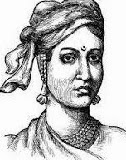
Short Essay on \’Rani Lakshmibai Jayanti: 19 November\’ (145 Words)

\’Rani Lakshmibai Jayanti\’ is celebrated on 19th November every year. It is the birth anniversary of Rani Lakshmibai. Rani Lakshmibai was born on 19th November, 1835 at Kashi. Her father\’s name was Moropant. Her mother\’s name was Bhagirathi Devi. Laxmi\’s childhood name was Manikarnika but affectionately she was called Manu in her childhood.

Rani Lakshmibai was the great heroine of the First War of Indian Freedom. She was the embodiment of patriotism, self-respect and heroism. Her life is a thrilling story of womanliness, courage, adventure, deathless patriotism and martyrdom. Rani Lakshmibai was the real meaning of the ideal heroine. She was proud of not just India but the world\’s women.

Rani Lakshmibai Jayanti is celebrated grandly in the whole country. On this occasion, cultural events, speeches and seminars are organized at many places. \’Deepdan\’ and \’Mashalyatra\’ are also held at number of places on this day.  

Short Essay on \’Rani Lakshmibai Jayanti: 19 November\’ (145 Words)

\’Rani Lakshmibai Jayanti\’ is celebrated on 19th November every year. It is the birth anniversary of Rani Lakshmibai. Rani Lakshmibai was born on 19th November, 1835 at Kashi. Her father\’s name was Moropant. Her mother\’s name was Bhagirathi Devi. Laxmi\’s childhood name was Manikarnika but affectionately she was called Manu in her childhood.

Rani Lakshmibai was the great heroine of the First War of Indian Freedom. She was the embodiment of patriotism, self-respect and heroism. Her life is a thrilling story of womanliness, courage, adventure, deathless patriotism and martyrdom. Rani Lakshmibai was the real meaning of the ideal heroine. She was proud of not just India but the world\’s women.

Rani Lakshmibai Jayanti is celebrated grandly in the whole country. On this occasion, cultural events, speeches and seminars are organized at many places. \’Deepdan\’ and \’Mashalyatra\’ are also held at number of places on this day.  

Short Essay on \’Rani Lakshmibai Jayanti: 19 November\’ (145 Words)

\’Rani Lakshmibai Jayanti\’ is celebrated on 19th November every year. It is the birth anniversary of Rani Lakshmibai. Rani Lakshmibai was born on 19th November, 1835 at Kashi. Her father\’s name was Moropant. Her mother\’s name was Bhagirathi Devi. Laxmi\’s childhood name was Manikarnika but affectionately she was called Manu in her childhood.

Rani Lakshmibai was the great heroine of the First War of Indian Freedom. She was the embodiment of patriotism, self-respect and heroism. Her life is a thrilling story of womanliness, courage, adventure, deathless patriotism and martyrdom. Rani Lakshmibai was the real meaning of the ideal heroine. She was proud of not just India but the world\’s women.

Rani Lakshmibai Jayanti is celebrated grandly in the whole country. On this occasion, cultural events, speeches and seminars are organized at many places. \’Deepdan\’ and \’Mashalyatra\’ are also held at number of places on this day.  

Short Essay on \’Monument I Like Most\’ (118 Words)

I have visited many monuments but the beauty of Taj Mahal attracted me the most. Taj Mahal is the monument I like most and its my favourite monument. 

The Taj Mahal can be referred to as a symbol of eternal love since Shah Jahan built it for his beloved queen upon her death in 1631 A.D. 

It is located in Agra, Uttar Pradesh, India and considered one of the Seven Wonders of the World. The Taj Mahal was built by Emperor Shah Jahan as a Mausoleum for his wife Empress Mumtaz Mahal. 

It\’s matchless beauty draws visitors from all parts of the world. The Taj Mahal got the highest ranking among the seven wonders of the world after 

Short Essay on \’Monument I Like Most\’ (118 Words)

I have visited many monuments but the beauty of Taj Mahal attracted me the most. Taj Mahal is the monument I like most and its my favourite monument. 

The Taj Mahal can be referred to as a symbol of eternal love since Shah Jahan built it for his beloved queen upon her death in 1631 A.D. 

It is located in Agra, Uttar Pradesh, India and considered one of the Seven Wonders of the World. The Taj Mahal was built by Emperor Shah Jahan as a Mausoleum for his wife Empress Mumtaz Mahal. 

It\’s matchless beauty draws visitors from all parts of the world. The Taj Mahal got the highest ranking among the seven wonders of the world after 

Short Essay on \’Monument I Like Most\’ (118 Words)

I have visited many monuments but the beauty of Taj Mahal attracted me the most. Taj Mahal is the monument I like most and its my favourite monument. 

The Taj Mahal can be referred to as a symbol of eternal love since Shah Jahan built it for his beloved queen upon her death in 1631 A.D. 

It is located in Agra, Uttar Pradesh, India and considered one of the Seven Wonders of the World. The Taj Mahal was built by Emperor Shah Jahan as a Mausoleum for his wife Empress Mumtaz Mahal. 

It\’s matchless beauty draws visitors from all parts of the world. The Taj Mahal got the highest ranking among the seven wonders of the world after 

Good Interactive Design Taps Into Student Engagement

Source: Inequality Is

It goes without saying that in the world of our students today static doesn’t cut it. We get it, and we’ve abandoned many old PowerPoints, moved away from textbooks, and discarded our opus of worksheets. That’s why we are constantly on the prowl to find resources to help make learning participatory. When content is combined with good design, it provides a context for stronger understanding; when the design of information is interactive, it prompts students to engage with the material in a physical way.

Each of the interactive infographics below offer students active ways to connect with content. Each one is designed slightly differently, but they all hook users into wanting to know more.

Inequality Is

In this interactive infographic about income inequality, the audience is made to feel that the issue is “personal,” and it’s hard not to stay engaged when the user is told how much they will earn based on gender, age, education, and ethnicity. It also allows for custom comparisons that instantly adjust on the screen.  Check out the video under the “created” link, adjust income distribution under \”real,\” or head over to “fixable” for some possible solutions to the issue. Inequality Is is an eye-opening way for students see the correlation between education and personal income.

Source: Inequality Is

Evolution Of Insight

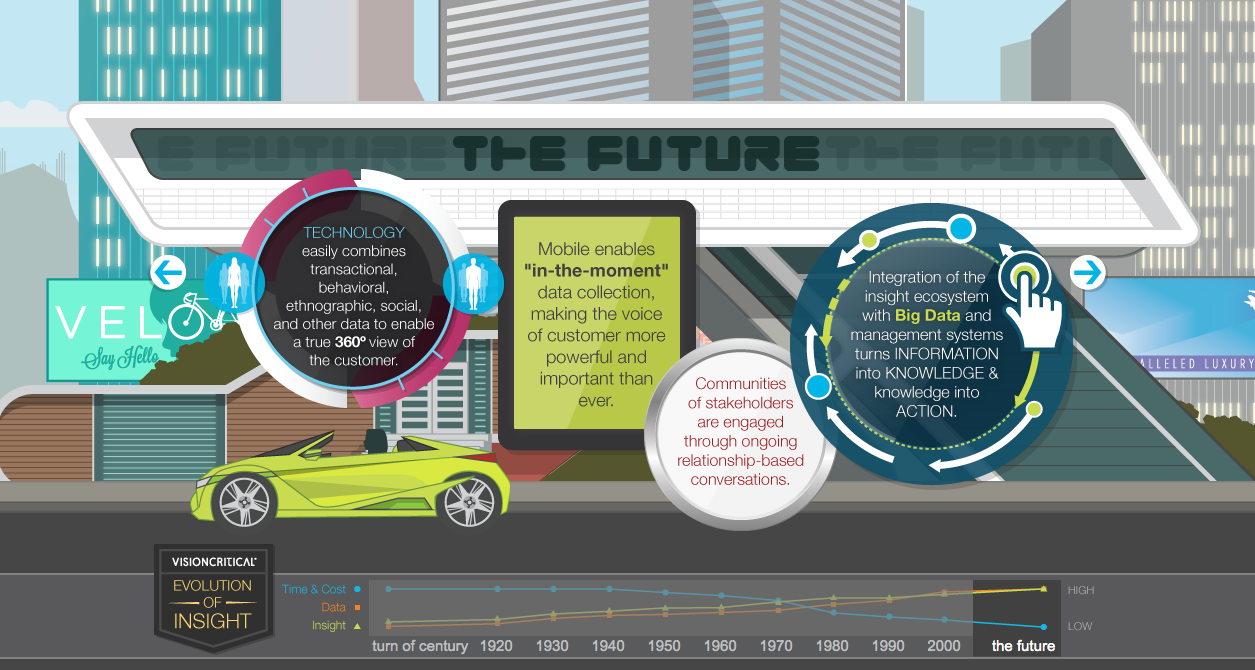
This interactive infographic tells the story of market research using a timeline to navigate from 1890 to today. As participants travel through the decades, they learn how the growth of consumer research began from the early development of public opinion polls and focus groups to the age of big data today. It provides just enough useful bits of information for students to grasp the history of media and marketing. Evolution of Insight is a good resource for media literacy lessons, or in discussions on the ethical uses of gathering data.
Source: Evolution Of Insight

115 Years Of American Homes

This interactive is designed as if the user is taking a road trip looking at homes across the decades. In this case, the design is conducive to the timeline of travel, and with each new era the car transforms to adjust to the style of the decade. There are also interesting tidbits of information regarding fashion, home furnishing, and more as the user travels through time. Use this website in social studies classes to make historical comparisons between then and now, or perhaps even to predict what’s next.

Source: 115 Years Of American Homes


Designing content to be interactive elevates the participatory part of what modern learners want. The more active they are in the pursuit, the more likely the content will stick.

For other resources please visit The Benefits Of Good Design
Creating Logos With Students – Understanding Visual Metaphor And Symbolic Meaning

Source: DesignMantic (click for full-size image)

Logos are short-hand, visual cues that companies use to evoke their brands. Effective logos represent automatic associations between a corporation and a customer. They connect a unique icon with an emotional reaction.

This type of tidy pictorial design can also be employed to winning effect in the classroom. Students can use logos to study visual metaphors and symbolic meanings. They can experiment with thesis and synthesis, in boiling down a range of meanings into a concise, original image.

Source: ASIDE 2015

History students, for example, can sketch logos to embody specific presidents or time periods. We had our U.S. history classes brainstorm logos for the era of the Great Depression. The designs featured in this post range from a juxtaposition of the Empire State Building going up while the stock market goes down, to a financial Dust Bowl of lost dollars.

In studying literature, learners can similarly design logos to accompany a book or a character. It’s no surprise that the Hunger Games mockingjay pin became so popular among fans. Science students can draft logos for key principles or elements, or global thinkers can draw emblems to capture current events.

Source: ASIDE 2015

By translating their understanding into self-created icons, students can climb a level in their comprehension, from decoding to encoding. They can capture the essential significance or recurring tropes via clever designs that will in turn help educate their peers.

Steps for creating logos with students:

  1. Begin by having learners identify logos and brands from current media. We use these sheets of letters and symbols as games to get students excited and to introduce the range of possibilities.
  2. Invite students to rank their favorite logos and explain why some stand out in their minds. For example, we had children rate the logos of presidential candidates in 2012.
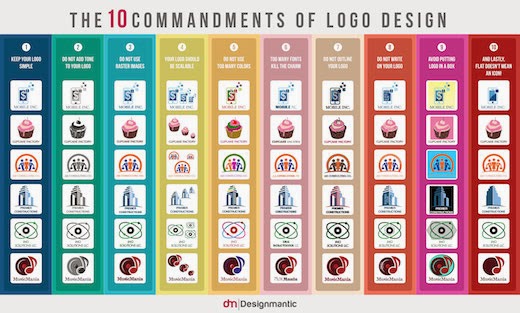
  3. Introduce some tips for contemporary design. DesignMantic has a helpful infographic of the “10 Commandments Of Logo Design.” FastPrint also offers a terrific infographic about “How To Design The Perfect Logo.”
  4. Ask them to brainstorm the key characters, themes, or takeaways that they would want a logo to evoke.
  5. Finally, give them a range of tools to use, from hands-on pen and paper to visual apps like Pencil by FiftyThree.
Source: FastPrint

Above all, a logo should present a clear, somewhat unexpected relationship between picture and subject. The video below, “49 Years Of Super Bowl Logos,” reveals how images can evolve with the times to add layers of significance.

For further ideas, we recommend:
Short Biography of ‘Chandrasekhara Venkata Raman’ (C V Raman) (200 Words)

‘Sir C. V. Raman’ was born on 7 November 1888 at Thiruvanaikoil, Tiruchirappalli, Madras Province, India. His full name was Chandrasekhara Venkata Raman. He was the son of R. Chandrasekhara Iyer and Parvati Ammal (Saptarshi Parvati). His father was a lecturer in mathematics and physics at Presidency College in Madras. 

C. V. Raman passed his B.A. examination in 1904 in first place and won the gold medal in physics, and in 1907 he gained his M.A. degree with the highest distinctions.

Sir C. V. Raman was an Indian physicist whose work was influential in the growth of science in India. He was the first Indian scientist to be honoured with the prestigious Nobel Award in Physics in the year1930. 

His discovery ‘Raman effect’ or ‘Raman scattering’ is popularly known as an inelastic scattering of a photon.He was honoured with a large number of honorary doctorates and memberships of scientific societies. He died on 21 November 1970 at the age of 82 at Bangalore. 

National Science Day is celebrated in India on February 28 each year to mark the discovery of the Raman effect by Indian physicist Sir Chandrasekhara Venkata Raman on 28 February 1928. 

Short Essay on ‘Flower I Like Most’ (130 Words)

Among the flowers I like Lotus the most. The Lotus is scientifically known as ‘Nelumbo Nucifera’. It is a sacred flower and occupies a unique position in the art and mythology of ancient India and has been an auspicious symbol of Indian culture since time immemorial. It is also the national flower of India.
Lotus flower is found only in two colours that are pink and white. The flower grows in murky waters and rises on a long stalk above the surface to bloom glorious. It is a beautiful flower which symbolises divinity, fertility, wealth, knowledge and not to forget enlightenment. Untouched by the impurity, lotus symbolises the purity of heart and mind. According to Hindu mythology Lotus is m

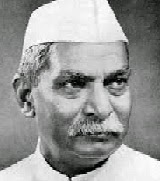
Short Biography of \’Dr. Rajendra Prasad\’ (251 Words)

\’Rajendra Prasad\’ was born on 3rd December, 1884 in the Ziradei village, Siwan district of Bihar, India. His father\’s name was Mahadev Sahai, who was a scholar of Sanskrit and Persian languages. His mother\’s name was Kamleshwari Devi, who was a religious woman.

After the completion of elementary education, Rajendra Prasad went to study at T.K. Ghosh\’s Academy in Patna. He joined the Presidency College, Calcutta in 1902. Once an examiner wrote on his answer sheet \’examinee is better than examiner\’. It proves that he was a great scholar. Rajendra Prasad served in various educational institutions as a teacher. He joined the High Court of Bihar and Odisha as a lawyer in 1916.

Rajendra Prasad was a good political leader, lawyer, statesman and social worker. He took active part in the freedom movements of India. He joined the Indian National Congress in 1911. He was elected as the President of the Indian National Congress during the Bombay session in October 1934. He was sent to Jail many times. He was elected the President of Constituent Assembly on 11 December 1946. Dr. Rajendra Prasad was elected the first President of the Republic of India.

Dr Rajendra Prasad died on 28 February 1963. His death was a great loss for the nation. He was subsequently awarded the Bharat Ratna, the India\’s highest civilian award. He authored many books. He was a great educationist and a man of world fame. High principles and ideals of Dr. Rajendra Prasad will always alive to show the right path.