PM pays tributes to Netaji Subhas Chandra Bose on his Jayanti

The Prime Minister Shri Narendra Modi has paid tributes to Netaji Subhas Chandra Bose on his Jayanti.

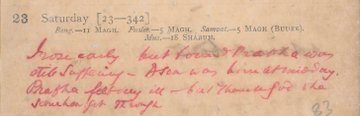
“On 23rd January 1897, Janakinath Bose wrote in his diary, “A son was born at midday.” This son became a valorous freedom fighter and thinker who devoted his life towards one great cause- India’s freedom. I refer to Netaji Bose, who we proudly remember on his Jayanti today.

India will always remain grateful to Netaji Subhas Chandra Bose for his bravery and indelible contribution to resisting colonialism. He stood up for the progress and well-being of his fellow Indians” the Prime Minister said.

Narendra Modi

@narendramodi

On 23rd January 1897, Janakinath Bose wrote in his diary, “A son was born at midday.”

This son became a valorous freedom fighter and thinker who devoted his life towards one great cause- India’s freedom.

I refer to Netaji Bose, who we proudly remember on his Jayanti today.

View image on Twitter
9,555 people are talking about this

Narendra Modi

@narendramodi

India will always remain grateful to Netaji Subhas Chandra Bose for his bravery and indelible contribution to resisting colonialism. He stood up for the progress and well-being of his fellow Indians.

Embedded video

11.6K people are talking about this

***

To Participate in At Home with Tribal Artists, NCC cadets, NSS Volunteers and Tableaux Artists

Prime Minister, Shri Narendra Modi will meet and interact with the 49 Children who are winners of the Pradhan Mantri Rashtriya Bal Puraskar 2020, tomorrow i.e January 24, 2020.

The 49 awardees are from various of states of India including one each from Jammu & Kashmir, Manipur and Arunachal Pradesh.

The children are winners in the fields of art & culture, Innovation, Scholastic, Social Service, Sports and Bravery.

Government of India acknowledges children as one of the most important partners in nation-building. Their hopes and aspirations are to be acknowledged and their achievements are to be rewarded.

Although every child is precious and his or her achievements have to be appreciated, there are some whose achievements will serve as an inspiration to many others.

Towards this end the Government gives these awards every year to recognize exceptional achievements of our children in various fields.

Any child with an exceptional achievement in the fields of innovation, scholastic achievements, social service, arts & culture, sports and bravery can apply for the award. Also, any person who knows about a meritorious achievement by a child can recommend this child for the award. A high-level committee selects the winners after careful consideration of each application.

President of India, Shri Ram Nath Kovind, presented the Pradhan Mantri Rashtriya Bal Puraskar yesterday, i.e January 22, 2020.

At Home with Tribal Artists, NCC Cadets, NSS Volunteers & Tableaux Artists

The Prime Minister would also interact with over 1730 Tribal Artists, NCC Cadets, NSS Volunteers and Tableaux Artists who are going to participate in the Republic Day Parade in a At Home event on the 24th Of January, 2020.


VRRK/ VJ

Time to revisit our history textbooks – Vice President

The Vice President, Shri M. Venkaiah Naidu today said that time has come to revisitour history textbooks and to give adequate importance to freedom fighters from all parts of the country.

Unveiling the statue of NetajiSubhash Chandra Bose in Raj Bhawan, Chennai, on the occasion of his Birth Anniversary today, the Vice President said that the history should inspire our children and they should read the life stories of the heroes of our freedom struggle.

Shri Naidu expressed disappointment that many of the stalwarts of Indian independence movement, such as SardarVallabhbhai Patel, NetajiSubhash Chandra Bose, Veer Savarkar, Shri Chidambaram Pillai, Subramania Bharti, AlluriSeetharamaRaju and VeerapandiyaKattabomman did not find adequate place in our history text books.

He further said that the history should be comprehensive and re-capture our past glory and instill a sense of pride in India’s rich culture and heritage.

Referring to the sufferings underwent by several freedom fighters at Cellular Jail including Veer Savarkar, the Vice President said that some people are trying to belittle their contributions, either due to ignorance or due to their leanings.

Calling upon the youth to take inspiration from the life of NetajiSubhash Chandra Bose, Shri Naidu asked themto strive towards building a progressive, harmonious and inclusive India.

The Vice President also said that Netaji’s vision and his nationalistic outlook can be an important guiding light for building a New India.

Referring to the diversity of philosophies and approaches in our freedom struggle, the Vice President said it was a bouquet of individual and collective actions, ranging from peaceful satyagraha to more organized resistance.

“Even as Gandhiji was turning ‘ahimsa’ into a powerful weapon of our struggle, the likes of Bhagat Singh and Subhash Chandra Bose continued with their efforts of unsettling the British”, he said.

Although Gandhiji was not in favor of Netaji’s militant approach, he respected him and once referred to him as the ‘patriot of patriots’.

Highlighting his leadership of Azad Hind Fauj, Shri Naidu said that Netaji Bose unfurled the Tricolor in Port Blair on 30th December 1943 and declared Andaman and Nicobar Islands to be the first Indian Territory to be free from British Raj.

Recalling the close connection of the people of Tamil Nadu with Indian National Army, the Vice President paid rich tributes to Shri MuthuramalingaThevar who was a close confidante of Netaji.

“Shri MuthuramalingaThevar was an influential leader who was instrumental in establishing Shri Subhash Chandra Bose’s strong presence in Tamil imagination”, Shri Naidu said. Shri MuthuramalingaThevar also launched a Tamil Weekly Nethaji and was one of the founding pillars of Forward Bloc.

He had played an instrumental role in mobilizing huge support for INA, VP said.

He also lauded the daredevilry of Lakshmi Swaminathan who had had set up the Rani of Jhansi Regiment in INA and came to be known as Captain Lakshmi Sahgal.

Expressing pride in the fact that we Indians are inheritors of a five thousands years old civilization, Shri Naidu highlighted that Netaji firmly believed in our civilizational values and its history. This history should form the bedrock of our national pride and collective self-confidence, he added.

Lauding the Government’s decision to declassify all records and files associated with Netaji, the Vice President said that researchers will now be able to delve deep into his life and come up with many more meaningful publications on the life story of this great patriot.

The statue of NetajiSubhash Chandra Bose unveiled in Raj Bhawan, Chennai today has been sponsored by BharatiyaVidyaBhawan.

The Governor of Tamil Nadu, Shri BanwariLalPurohit, Chief Minister of Tamil Nadu, Shri Edappadi K. Palaniswami, Speaker of Tamil Nadu Legislature Assembly, Shri P. Dhanapal, Deputy Chief Minister, Shri O. Paneerselvam,Chairman of BhartiyaVidyaBhawan N. Raviwere among the dignitaries who graced the occasion at Raj Bhawan.

Following is the full text of the speech –

“I am pleased to unveil the statue of NetajiSubhash Chandra Bose — one of the most illustrious sons of mother India. His clarion call of ‘Give me blood, and I shall give you freedom’ inspired millions to fight for the nation. He still lives in our hearts.

We in India are the inheritors of the legacy of a great civilization that is more than five thousand years old and had faced several upheavals and tumultuous moments throughout history.

A major landmark in the modern history of our country is the gaining of Independence from British rule.

Given the riches of our motherland, many had set their eyes on our country from the Huns to the English, Our freedom struggle was marked by a variety of philosophies, thoughts, and approaches. It was a bouquet of individual and collective actions, ranging from peaceful satyagraha to more organized resistance.

As the struggle was still to acquire force, momentum and mass acknowledgment, Gandhiji returned to India in 1915 and gave it a direction and collective identity.

Even as Gandhiji was turning ‘ahimsa’ into a powerful weapon of our struggle, the likes of Bhagat Singh continued with their efforts of unsettling the British.

Netaji was another leader, who had left an indelible imprint on the freedom struggle—he had stirred the imagination of millions of countrymen through his thoughts, words, and deeds.

Shri Subhash Chandra Bose or ‘Netaji’, as he is fondly known as, is one of the most revered freedom fighters of India. His charismatic personality made him a natural leader, especially among the youth.

Shri Subhash Chandra Bose was the son of a wealthy and prominent Bengali lawyer.

In his youth, he was deeply influenced by Swami Vivekananda’s teachings and was known for his patriotic zeal.

He studied at the prestigious Presidency College, Calcutta, from which he was expelled for nationalistic activities in 1916. He later graduated from the Scottish Churches College and went to London, where he passed the Indian Civil Service examination in 1920. However, he had resigned from the coveted service in April 1921 and hurried back to India as the struggle for independence gathered momentum.

Netaji joined the non-cooperation movement started by Gandhiji and became a youth educator, journalist, and commandant of the volunteers of Bengal.

He was arrested and jailed several times and deported for his nationalistic activities. In 1938, Netaji was elected president of the Indian National Congress and formed a National Planning Committee, which formulated a policy of broad industrialization.

Although he was supportive of Mahatma Gandhi’s ideals initially, the two leaders gradually drifted apart. Netaji along with the younger group of leaders wanted ‘complete self-rule and without any compromise’ for India whereas the older, more moderate leadership was in favor of the ‘dominion status for India within the British rule’.

Although Gandhiji was not in favor of Netaji’s militant approach, he respected him and once referred to him as the ‘patriot of patriots’.

Netaji founded the All India Forward Bloc in a bid to unify the more radical elements in the struggle for independence but was again incarcerated in 1940. He refused to remain in prison at this crucial period of India’s history and went on a fast to death.

The British government had to relent and was forced to release him.

Inspired by Shri Subhash Chandra Bose, Azad Hind an Indian Provisional government was formed by Indian nationalists in exile in 1943 in Singapore with the support of Japan. Bose also took leadership of the Azad Hind Fauj.

On 6th November 1943, the then Prime Minister of Japan had declared in the Tokyo Assembly of Greater East Asiatic Nations that the Andaman and Nicobar Islands would be transferred to the provisional Government, Azad Hind.

The Japanese imperial forces were in occupation of these islands from 23rd March 1943 during the World War.

NetajiSubhash Chandra Bose unfurled the Tricolor in Port Blair on 30th December 1943 and declared Andaman and Nicobar Islands to be the first Indian Territory to be freed from British Raj.

Netaji was the Supreme Commander of Azad Hind Fauj and head of the state of the provisional government of Azad Hind.

Let me now touch upon the connection of the people of this State with the INA. As you all are aware, if there was one individual instrumental in establishing Shri Subhash Chandra Bose’s strong presence in Tamil imagination, it has got to be MuthuramalingaThevar.

He was an influential leader and a close confidante of Netaji. He was also one of the founding pillars of Forward Bloc and had played an instrumental role in mobilizing huge support for INA. He also launched a Tamil Weekly Nethaji.

Of course, the daredevilry of Lakshmi Swaminathan (famously known as Captain Lakshmi Sahgal) is well known. She had set up the Rani of Jhansi Regiment in INA and came to be known as Captain Lakshmi Sahgal (her husband Prem Kumar Sahgal also served in the INA). Another Tamil Malaysian woman, JanakyAthiNahappan, Malaysian freedom fighter and social activist, RasammahBhupalan also joined Rani of Jhansi regiment. As a 14 year old, Janaky once attended a rally of Bose and was so enthralled by his idealism that she handed over her expensive earring to INA as a part of fund raising drive.

I recently visited the 150-foot high flag mast built to commemorate the 75th Anniversary of the unfurling of the National Flag by Netaji, at Port Blair in Andaman and Nicobar. The Prime Minister, Shri NarendraModi had unfurled the Tricolor at the 150-foot high mast at Port Blair in 2018.

Netaji firmly believed in our civilization and its values and its history which should form the bedrock of our national pride and collective self-confidence. He was spiritual and an intellectual genius.

NetajiSubhash Chandra Bose was one of the tallest leaders of India’s struggle for independence. I pay my humble tributes to this great son of India on the occasion of his birth anniversary today.

I also pay my respects today to all the freedom fighters, including Veer Savarkar, who had bravely fought against the British in the face of the most daunting odds. Veer Savarkar was given two life sentences and imprisoned for 10 years in the infamous cellular jail, where he was subjected to inhuman treatment.

Unfortunately, some people are trying to belittle his invaluable contribution to the nationalistic cause and the freedom struggle.

I feel that our history textbooks must highlight the life stories of our national icons like SardarVallabhbhai Patel, NetajiSubhash Chandra Bose, Veer Savarkar, Shri Chidambaram Pillai, Subramania Bharti and AlluriSeetharamaRaju who were not given due recognition. We must continue to take inspiration from their sacrifices and strive to build a strong, inclusive, progressive, peaceful and harmonious nation.

My dear sisters and brothers,

India has been independent for more than seven decades now.

Certainly, substantial progress has been achieved on all fronts during these decades.

But much more needs to be done. Pockets of poverty, illiteracy, inequality, poor infrastructure, poor sanitation, and social evils continue to haunt us.

We have to build an India where every Indian has an equal opportunity and inspired by a shared and common sense of pride. Let’s build an India, where every Indian is empowered through education, health and economic opportunities to unleash his or her inner and creative energies for the individual and common good.

As we seek to surmount the contemporary challenges to build a ‘New India’, there is so much to draw from the life and struggle of Netaji, his vision and his nationalistic outlook.

Today, India is at a cusp of transformation. It has the largest youth population in the world-65 percent of its population is below 35 years of age.

This youth population will determine India’s future.

We must channelize the creative energy of this tremendous youth population into creative pursuits for nation-building.

Netaji was a very popular youth icon. Very few leaders have inspired the youth of our country like Netaji has. He can be the guiding light for the Indian youth of the 21st century.

I urge the youth of our nation to take inspiration from his life, his adherence to discipline, his dedication to the cause at hand, his courage and conviction, his resilience and his uncorrupted idealism.

He was a man of action as well as thought.

To a certain extent, the details of his life are shrouded in mystery. The government has recently declassified all records and files associated with Netaji and made them available to the National Archives of India.

This is indeed a laudable step. More researchers will now be able to delve deep into his life and come up with many more meaningful publications on the life story of this great patriot and his relentless struggle for freeing India from the clutches of the British.

The government has also opened a Subhash Chandra Bose museum at the iconic Red Fort to mark the leader’s 122nd birth anniversary in 2019.

Such memorials and symbols such as this statue will keep the memory of Netaji alive in the consciousness of this nation.

On the 123rd Birth Anniversary of this great patriot, I bow my head in reverence to the great soul.

Thank You!

Jai Hind!”

*****

General Duty Medical Officers of The Central Health Services Attending 4th Foundation Training Programme Call on The President

General Duty Medical Officers (GDMOs) of the Central Health Services attending the 4th Foundation Training Programme at the National Institute of Health and Family Welfare, called on the President of India, Shri Ram Nath Kovind, today (January 23, 2020) at Rashtrapati Bhavan.

Addressing the young doctors, the President said that our country has made great strides in providing healthcare to our people. Diseases such as polio and smallpox, which once claimed so many lives, have been defeated. Our immunisation programme is gaining strength. We have brought down the Maternal Mortality Rate and Infant Mortality Rate. Yet, we still face many challenges and have a long way to go in evolving a holistic healthcare system, one which is uniformly affordable and accessible to our citizens both in rural and urban areas. In this regard, it is a matter of satisfaction that the government has made Universal health coverage a priority. The rollout and success of the Ayushman Bharat Yojana is a critical step in this direction. We have to keep building on this great momentum and doctors will play an important role in doing so.

The President said that the disease burden in our country is undergoing an evolution. We have to tackle widespread diseases such as TB, malaria and dengue, and at the same time deal with the rising incidence of lifestyle diseases like diabetes, obesity, hypertension, depression etc.  He urged doctors to work towards a multidisciplinary approach to health – from prevention, wellness, cure, community empowerment to research and innovation.

The President said that as doctors, they can play a major role in encouraging healthy lifestyles. We can address the increasing stress in our lives with regular exercises and physical activity, practicing Yoga and Meditation. Doctors can be a major influencer in promoting such lifestyles and bringing about a culture of wellness.

Click here to see the President’s speech 


***

“Presently students are likely to face much bigger challenges than their predecessors. Hence, educators must equip students with knowledge that will help them face challenges squarely.” —Professor M.S. Rao

“Presently students are likely to face much bigger challenges than their predecessors. Hence, educators must equip students with knowledge that will help them face challenges squarely.” —Professor M.S. Rao
Vision 2030: One Million Global Leaders

Facilitating flexible learning

Today three of us ran a workshop about facilitating flexible learning: how to give great feedback and still have a LIFE.

Overall, I think it went well. Lots of discussion and questions and people were keen to make contact at the end of the class….always a good sign.

It appears that the title and the content offered were timely. There was a big contingent from one school who have a push on to put courses online. This was excellent. They did have concerns, however, about how to get their content online. They were advised to work with the programme developers, and offered assistance to have people work alongside them, but not do it for them. The mentality is still there to get stuff on Blackboard, rather than thinking how they would like to present content and activities, and what technologies could assist.

There was some discussion about models where content is handed over to a team to create resources. Leigh made a good point about models he had seen which didn\’t work and had cost lots of money. He believes it is best to start with finding resources which already exist and can be re-used…if possible. This makes a lot lof sense. 

Some institutions which are heavily in to distance education – open polytechnic, UK, Athabasca university have production units but this makes sense. Open university in NZ used to do this as well, but has found it is more cost effective to enable staff to take charge of their courses and they have moved to Moodle. It would be interesting to talk to someone and find out how it is actually going.

The total number who enrolled was 13 but 3 people didn\’t turn up. The group were very interested and gave positive evaluations.

I started the workshop off with an overview of facilitating online learning…well I sort of took charge of it really…we did brainstorm how we would approach it earlier in the week, but the actual content we presented was up to us individually. At the 11th hour, I felt the need to slap together some slides…too many bullet points..but for next time I will develop some concept maps.Hey I can try out CMAP.

I will try and get them done before this group finishes their online discussion. This will continue on until the end of the second week in May. Easter in the middle sort of interrupts the flow. The timing for the next workshop will be better. And hey next time we will try out Elluminate for the initial session.

People liked the different cases we presented. Merrolee had lots of practical advice and talked about how she managed the online discussion. It is good for people to hear the nitty gritty stuff from someone so experienced…well I am too. I talked about how assessment was linked in strongly to the discussions. We gave tips for managing prolific postings and motivating people to go online. I really have to do something about the amount of content in the evaluating eLearning for best practice course though…I will definitely be going with the learner-generated model for next year. hopefully i will still be teaching it then.

Leigh gave a very insightful overview of alternatives such as egroups, and how they are very useful platforms for handing over ownership of material to students….giving them something they can take away with them when they leave their 3 yr programmes…when they are locked out of the institutional platforms. Some of the OTs were very intrigued with the idea of having a community of practitioners able to remain in contact about professional issues.

It will take time but the ideas are filtering through. All we need are enthusiastic staff who act as \”hotpoints\” in their schools and talk about what they are doing to others. I do love running workshops with staff, and seeing the lightbulbs come on.

The next offerings will need to be a practical show and tell with staff demonstrating what they are doing. Oh when to schedule all these? We have two visiting speakers coming in May and June, Peter Mellow (AUT) on the Study Txt mobile learning project – article. Also John Milne (Massey) who is coming to work with us on the TEC eLearning guidelines an ECDF project. Exciting stuff.

Using video for flexibility

If you wish to create videos for your teaching and learning and include this approach in your flexible learning plan, the emphasis is on what sort of videos you would create and why they will increase flexibility for your students\’ learning and for your teaching. You also need to build in time to search for material which is already avaialble on the web – Youtube, blip.tv etc – a general Google search for video on your topic of choice will bring up a lot of material I am sure.

Considerations to include in your plan – remember you do not have to create them for this course just make a plan for how to create them and why you have chosen the approach and what you need to do to make it happen.

Also think about how the use of videos in your teaching and learning environment will address:
* access & equity – format of the videos and where they will be stored, who will access them and how etc,
cultural sensitivity/diversity – learning preferences of your students, universal design etc;
* sustainability – cost of producing – resourcing, time, equipment (departmental capex can be used for development to pay a design student for example who can help with production and editing), your time – also think about the place they will be stored and how easy this is to do, ease of linking to them.

Storage
Should the videos be stored on an open website such as Youtube, Blip.tv or on a passworded site such as Unitube or Moodle where they are not as accessible but more secure. However they may get \”locked away causing problems later on when people try and find them to reuse them. They may even end up re-creating them again. Is this sustainable in the long term?

This is just the tip of the iceberg cos there are other options as well such as vodcasting/podcasting – broadcasting video clips to which students can subscribe. They can do this if you put them on a blog or on blip.tv or Youtube by subscribing to your vids. You could also create video clips on your mobile and send them directly to a web site.

The bonus is that if using video and uploading them to blip.tv or Youtube, students could subscribe to your videos and download them directly from there to an ipod or other portable player for viewing in the field. How cool is that!?

Short Essay on \’Indira Gandhi Jayanti: 19 November\’ (265 Words)

\’Indira Gandhi Jayanti\’ is celebrated on 19th November every year. It is the birth anniversary of Indira Gandhi. Indira Gandhi was born on 19th November, 1917 in Allahabad, Uttar Pradesh, India. Her full name was \’Indira Priyadarshini Gandhi\’. She was the only child of Jawaharlal Nehru and Kamla Nehru. Her father, Jawaharlal Nehru led India\’s political struggle for independence from British rule, and became the first Prime Minister of India.

Indira Gandhi took active part in the freedom struggle of India. She became the President of the Congress party. In May 1964, Indira Gandhi became minister of information and broadcasting in Lal Bahadur Shastri\’s government. She became the third Prime Minister of India. She became Prime Minister after the death of Lai Bahadur Shastri. She served from 1966 to 1977. She was married to Feroz Gandhi and had two sons- Rajiv and Sanjay. She was assassinated on 31st October, 1984.

Indira Gandhi was the first lady Prime Minister of India. During her Prime Minister ship, India won the war against Pakistan in 1971. In 1962, during the Chinese-Indian border war, she coordinated civil defense activities. She was a great social worker and had introduced several schemes for the country. Indira Gandhi was a true patriot and will always be remembered as a bold Prime Minister of India.

Indira Gandhi Jayanti is celebrated grandly in the whole nation. Lots of work are carried out to celebrate this day. On this day conferences, seminars and speeches are held at various places. The struggles and contributions of Indira Gandhi are highlighted. Cultural programmes are also held at many educational institutions. 

Short Essay on \’Indira Gandhi Jayanti: 19 November\’ (265 Words)

\’Indira Gandhi Jayanti\’ is celebrated on 19th November every year. It is the birth anniversary of Indira Gandhi. Indira Gandhi was born on 19th November, 1917 in Allahabad, Uttar Pradesh, India. Her full name was \’Indira Priyadarshini Gandhi\’. She was the only child of Jawaharlal Nehru and Kamla Nehru. Her father, Jawaharlal Nehru led India\’s political struggle for independence from British rule, and became the first Prime Minister of India.

Indira Gandhi took active part in the freedom struggle of India. She became the President of the Congress party. In May 1964, Indira Gandhi became minister of information and broadcasting in Lal Bahadur Shastri\’s government. She became the third Prime Minister of India. She became Prime Minister after the death of Lai Bahadur Shastri. She served from 1966 to 1977. She was married to Feroz Gandhi and had two sons- Rajiv and Sanjay. She was assassinated on 31st October, 1984.

Indira Gandhi was the first lady Prime Minister of India. During her Prime Minister ship, India won the war against Pakistan in 1971. In 1962, during the Chinese-Indian border war, she coordinated civil defense activities. She was a great social worker and had introduced several schemes for the country. Indira Gandhi was a true patriot and will always be remembered as a bold Prime Minister of India.

Indira Gandhi Jayanti is celebrated grandly in the whole nation. Lots of work are carried out to celebrate this day. On this day conferences, seminars and speeches are held at various places. The struggles and contributions of Indira Gandhi are highlighted. Cultural programmes are also held at many educational institutions. 

Short Essay on \’Indira Gandhi Jayanti: 19 November\’ (265 Words)

\’Indira Gandhi Jayanti\’ is celebrated on 19th November every year. It is the birth anniversary of Indira Gandhi. Indira Gandhi was born on 19th November, 1917 in Allahabad, Uttar Pradesh, India. Her full name was \’Indira Priyadarshini Gandhi\’. She was the only child of Jawaharlal Nehru and Kamla Nehru. Her father, Jawaharlal Nehru led India\’s political struggle for independence from British rule, and became the first Prime Minister of India.

Indira Gandhi took active part in the freedom struggle of India. She became the President of the Congress party. In May 1964, Indira Gandhi became minister of information and broadcasting in Lal Bahadur Shastri\’s government. She became the third Prime Minister of India. She became Prime Minister after the death of Lai Bahadur Shastri. She served from 1966 to 1977. She was married to Feroz Gandhi and had two sons- Rajiv and Sanjay. She was assassinated on 31st October, 1984.

Indira Gandhi was the first lady Prime Minister of India. During her Prime Minister ship, India won the war against Pakistan in 1971. In 1962, during the Chinese-Indian border war, she coordinated civil defense activities. She was a great social worker and had introduced several schemes for the country. Indira Gandhi was a true patriot and will always be remembered as a bold Prime Minister of India.

Indira Gandhi Jayanti is celebrated grandly in the whole nation. Lots of work are carried out to celebrate this day. On this day conferences, seminars and speeches are held at various places. The struggles and contributions of Indira Gandhi are highlighted. Cultural programmes are also held at many educational institutions. 

\’Letter for Change of Address in LIC Policy\’

To.
The Sr. Branch Manager.
City –Branch Office,
L.I.C. of India,
Lucknow

Sir,

Sub.: Change of Address of Policy Holder
Ref.: Policy Number –XXXXXXXXX

The applicant is the policyholder of above numbered policy of your branch.

The address of policyholder is changed now.

Therefore it is requested that the address of the applicant be changed in your records for future correspondence.

Old Address of Policy Holder: 
House Number-XXX
Gomti Nagar,  
Lucknow-226010 
New Address of Policy Holder
House Number-XXX
Indira Nagar,
Lucknow-226016

Thanks.

Lucknow                                                                                                 Yours’ Sincerely,
Date: 12.02.2014                                                                                          XXX

\’Letter for Change of Address in LIC Policy\’

To.
The Sr. Branch Manager.
City –Branch Office,
L.I.C. of India,
Lucknow

Sir,

Sub.: Change of Address of Policy Holder
Ref.: Policy Number –XXXXXXXXX

The applicant is the policyholder of above numbered policy of your branch.

The address of policyholder is changed now.

Therefore it is requested that the address of the applicant be changed in your records for future correspondence.

Old Address of Policy Holder: 
House Number-XXX
Gomti Nagar,  
Lucknow-226010 
New Address of Policy Holder
House Number-XXX
Indira Nagar,
Lucknow-226016

Thanks.

Lucknow                                                                                                 Yours’ Sincerely,
Date: 12.02.2014                                                                                          XXX

\’Letter for Change of Address in LIC Policy\’

To.
The Sr. Branch Manager.
City –Branch Office,
L.I.C. of India,
Lucknow

Sir,

Sub.: Change of Address of Policy Holder
Ref.: Policy Number –XXXXXXXXX

The applicant is the policyholder of above numbered policy of your branch.

The address of policyholder is changed now.

Therefore it is requested that the address of the applicant be changed in your records for future correspondence.

Old Address of Policy Holder: 
House Number-XXX
Gomti Nagar,  
Lucknow-226010 
New Address of Policy Holder
House Number-XXX
Indira Nagar,
Lucknow-226016

Thanks.

Lucknow                                                                                                 Yours’ Sincerely,
Date: 12.02.2014                                                                                          XXX