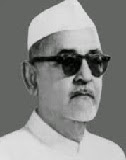
Short Biography of \’Dr. Zakir Hussain\’ (210 Words)

\’Dr. Zakir Hussain\’ was born on 8 February, 1897 at Hyderabad, India. His father\’s name was Fida Hussain Khan. His mother\’s name was Naznin Begum. His father died when he was only ten years old and his mother died when he was only fourteen years old.

Zakir Hussain took his early education at Etawah of Uttar Pradesh State. He received his doctorate in economics from the University of Berlin in 1926. Zakir Hussain took active part in the freedom struggle of India.

Zakir Hussain became the Governor of Bihar from 1957 to 1962. He became the second Vice President of India from 1962 to 1967. He was elected President of India and became the third President of India on 13 May 1967. During his presidential tenure Zakir Hussain died on 3 May 1969.

Dr. Zakir Hussain was the first Muslim President of India. He was the first Indian President to die in office. He was a great educationist and intellectual. He was awarded the Bharat Ratna, India\’s highest national honour, in 1963. A great humanist he served the national interests and secularism in the capacity of an educationist. Among the modern Indian thinkers, and more particularly among the nationalist Muslim leaders, the name of Dr. Zakir Hussain is always remembered with great respect. 

Short Biography of \’Dr. Zakir Hussain\’ (210 Words)

\’Dr. Zakir Hussain\’ was born on 8 February, 1897 at Hyderabad, India. His father\’s name was Fida Hussain Khan. His mother\’s name was Naznin Begum. His father died when he was only ten years old and his mother died when he was only fourteen years old.

Zakir Hussain took his early education at Etawah of Uttar Pradesh State. He received his doctorate in economics from the University of Berlin in 1926. Zakir Hussain took active part in the freedom struggle of India.

Zakir Hussain became the Governor of Bihar from 1957 to 1962. He became the second Vice President of India from 1962 to 1967. He was elected President of India and became the third President of India on 13 May 1967. During his presidential tenure Zakir Hussain died on 3 May 1969.

Dr. Zakir Hussain was the first Muslim President of India. He was the first Indian President to die in office. He was a great educationist and intellectual. He was awarded the Bharat Ratna, India\’s highest national honour, in 1963. A great humanist he served the national interests and secularism in the capacity of an educationist. Among the modern Indian thinkers, and more particularly among the nationalist Muslim leaders, the name of Dr. Zakir Hussain is always remembered with great respect. 

Short Biography of \’Dr. Zakir Hussain\’ (210 Words)

\’Dr. Zakir Hussain\’ was born on 8 February, 1897 at Hyderabad, India. His father\’s name was Fida Hussain Khan. His mother\’s name was Naznin Begum. His father died when he was only ten years old and his mother died when he was only fourteen years old.

Zakir Hussain took his early education at Etawah of Uttar Pradesh State. He received his doctorate in economics from the University of Berlin in 1926. Zakir Hussain took active part in the freedom struggle of India.

Zakir Hussain became the Governor of Bihar from 1957 to 1962. He became the second Vice President of India from 1962 to 1967. He was elected President of India and became the third President of India on 13 May 1967. During his presidential tenure Zakir Hussain died on 3 May 1969.

Dr. Zakir Hussain was the first Muslim President of India. He was the first Indian President to die in office. He was a great educationist and intellectual. He was awarded the Bharat Ratna, India\’s highest national honour, in 1963. A great humanist he served the national interests and secularism in the capacity of an educationist. Among the modern Indian thinkers, and more particularly among the nationalist Muslim leaders, the name of Dr. Zakir Hussain is always remembered with great respect. 
Short Essay on \’Bhai Dooj\’ (80 Words)

\’Bhai Dooj\’ is a famous festivals of Hindus. It is celebrated on the second day of Shukla Paksha in the month of Karthik according to Hindu Calendar. Bhai Dooj normally falls two days after Diwali festival.

On this day, sisters pray and wish for the long life, health, wealth and prosperity of their brothers. The brothers in return takes a lifelong vow to protect their sisters. On the day of Bhai Dooj, brothers and sisters reaffirm their pious bonds of affection.

Short Essay on \’Bhai Dooj\’ (80 Words)

\’Bhai Dooj\’ is a famous festivals of Hindus. It is celebrated on the second day of Shukla Paksha in the month of Karthik according to Hindu Calendar. Bhai Dooj normally falls two days after Diwali festival.

On this day, sisters pray and wish for the long life, health, wealth and prosperity of their brothers. The brothers in return takes a lifelong vow to protect their sisters. On the day of Bhai Dooj, brothers and sisters reaffirm their pious bonds of affection.

Short Essay on \’Bhai Dooj\’ (80 Words)

\’Bhai Dooj\’ is a famous festivals of Hindus. It is celebrated on the second day of Shukla Paksha in the month of Karthik according to Hindu Calendar. Bhai Dooj normally falls two days after Diwali festival.

On this day, sisters pray and wish for the long life, health, wealth and prosperity of their brothers. The brothers in return takes a lifelong vow to protect their sisters. On the day of Bhai Dooj, brothers and sisters reaffirm their pious bonds of affection.

Short Essay on \’Season I Like Most\’ (157 Words)

Among the seasons I like Rainy Season the most. The Rainy Season comes after the Summer Season. This season begins in the middle of June, and continues upto September in India. According to Hindu Calendar this season is felt in the months of Asaadha and Shravana. The Rainy Season begins in India when the South West Monsoon winds begin to blow over this country. During the season, the sky is generally overcast with cloud. The Rainy Season comes after the Summer Season, so, this season brings relief to the burning earth scorched in the summer heat.

The Rainy Season bring the Nature back to life. This Season is helpful to us in many ways. The soil becomes wet and the leaves of trees soothed and nourished with new drops of water. Trees look more and more green. It is a is a good season for cultivation. We enjoy rains. Sometimes, rains come along with lightning and thunder. 
 

Short Essay on \’Season I Like Most\’ (157 Words)

Among the seasons I like Rainy Season the most. The Rainy Season comes after the Summer Season. This season begins in the middle of June, and continues upto September in India. According to Hindu Calendar this season is felt in the months of Asaadha and Shravana. The Rainy Season begins in India when the South West Monsoon winds begin to blow over this country. During the season, the sky is generally overcast with cloud. The Rainy Season comes after the Summer Season, so, this season brings relief to the burning earth scorched in the summer heat.

The Rainy Season bring the Nature back to life. This Season is helpful to us in many ways. The soil becomes wet and the leaves of trees soothed and nourished with new drops of water. Trees look more and more green. It is a is a good season for cultivation. We enjoy rains. Sometimes, rains come along with lightning and thunder. 
 

Short Essay on \’Season I Like Most\’ (157 Words)

Among the seasons I like Rainy Season the most. The Rainy Season comes after the Summer Season. This season begins in the middle of June, and continues upto September in India. According to Hindu Calendar this season is felt in the months of Asaadha and Shravana. The Rainy Season begins in India when the South West Monsoon winds begin to blow over this country. During the season, the sky is generally overcast with cloud. The Rainy Season comes after the Summer Season, so, this season brings relief to the burning earth scorched in the summer heat.

The Rainy Season bring the Nature back to life. This Season is helpful to us in many ways. The soil becomes wet and the leaves of trees soothed and nourished with new drops of water. Trees look more and more green. It is a is a good season for cultivation. We enjoy rains. Sometimes, rains come along with lightning and thunder. 
 

PM chairs the 32nd PRAGATI interaction

Prime Minister Shri Narendra Modi chaired the first PRAGATI meeting of the year 2020, today. It marked Prime Minister’s thirty-second interaction through PRAGATI – the ICT based multi-modal platform for Pro-Active Governance and Timely Implementation, involving Central and State governments.

In today’s PRAGATI meeting, PM discussed a total of eleven items, out of which nine are delayed projects. These nine projects, worth over Rs. 24,000 crores, are spread over nine states viz. Odisha, Telangana, Maharashtra, Jharkhand, Bihar, Karnataka, Andhra Pradesh, Kerala and Uttar Pradesh and three Union ministries. These include three from the Ministry of Railways, five from the Ministry of Road Transport and Highways and one from the Ministry of Petroleum and Natural Gas.

Progress under insurance schemes- PMJJBY and PMSBY schemes reviewed

Prime Minister in the meeting, reviewed the performance with regard to in grievances related to insurance schemes under Department of Financial Services viz. ‘Pradhan Mantri Jeevan Jyoti Bima Yojana’ (PMJJBY) and ‘Pradhan Mantri Suraksha Bima Yojana’(PMSBY).

Prime Minister also reviewed the progress under Crime and Criminal Tracking Network and Systems (CCTNS) project- a comprehensive and integrated system for effective policing through e-Governance.

In the previous thirty-one PRAGATI interactions, Prime Minister has reviewed a total of 269 projects with a total investment of Rs. 12.30 lakh crores. Prime Minister has also reviewed the resolution of grievance redressal related to 47 government programmes and schemes across 17 diverse sectors.

***

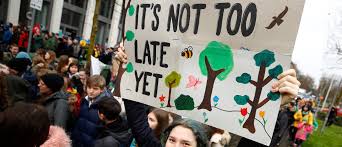
Address Climate Change Immediately―Share if You Care!

Can you imagine the planet in the 22nd century based on the current research findings? Can you imagine the status of precious humans and animals and their health conditions in the 22nd century?  You will find precious animals extinct and humans suffering from several health disorders and encountering unknown diseases.  If you want to prevent such a terrible future for humans and extinction of animals you must take appropriate steps immediately and earnestly. In fact, we are too late to take appropriate measures and implement the right strategies to check climate change. But it is better late than never. 
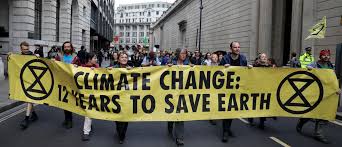
Climate change is a major issue globally. Global organizations and nonprofits have taken a serious note of it to ensure ecology and keep the planet safe for future generations. Unfortunately, the outcome is not effective as per the desired objectives because nations are not effective in implementing and people are not aware of its adverse effects.
Measures to Check Climate Change
It is a well-admitted fact that the earth has warmed up in some regions and got colder in other regions. You cannot blame the sun for it. It is the people who must own responsibility for their actions, improve their attitudes and adjust their behaviors to keep the planet safe. Here are some measures to be taken to ensure the mother planet safe. Don’t exploit nature. Live within your means. Use light bulbs that use less energy and more efficient heating and cooling systems. Avoid using plastic items. Be environment conscious. An integrated effort from all stakeholders including environmentalists, scientists, global organizations, nonprofits, and people is essential to combat climate change.
Conclusion
Each person must plant one sampling and maintain it regularly. As parents care for their children and see them growing every individual must care for the planted sampling and enjoy growing it into a tree. To conclude, mother nature is impartial and connects people irrespective of their communities and cultures. Hence, love mother nature and protect it for future generations.

Quality education and learning

In a discussion today at work about quality processes I remembered the model of education which has been successful for Athabasca university in Canada. Their enrolments have increased many fold because people can enrol for gap courses to complete qualifications they are taking at other universities etc.
Also students can enrol any time and at any stage of a course. To enable this flexible learning, Athabasca has a well resourced production team which goes through a strict quality control process to create high quality learning resources for distance students. The team comprises designers – educational and graphic, technical staff, editors, content experts, a project manager and others.
Once courses are developed for flexible/online modes, student support is well sychronised and tutors are employed to teach the courses which academics had a hand in developing as content experts. The academic staff merely oversee their courses and spend their time conducting research which increases the reputation of the university. Plus they are spreading the word and helping others to produce quality online learning.
For example, several staff have written a book on the Theory and Practice of Online Learning and it is freely available under a Creative Commons licence at:  The book is edited by Terry Anderson and Fathi Elloumi (2003).
It provides an overview of educational theory, strategic approaches and infrastructure, technologies, development of courses, team projects, copyright, teaching, support for discussions and learners, library support, quality.
I guess this model gauges quality by the enrolment rates and the reputation of the university. Academic staff become well known because their ideas and research is of a high standard and they get time to undertake research and present and write scholarly articles. This means they are up to date with current trends and in turn this raises the reputation of the university which then attracts students.
The research reputation of an institution does influence the status of institutions in the international arena and I guess this is what has happened with places such as Harvard, Cambridge, Stanford and Oxford. All you need is a few high status researchers and the place goes up in lights…and of course the ability to attract the rich and famous.

Field trip – stone walls and landscape construction

Today I got out from under the fluorescent lights, and went on a field trip to see what Alan Ferguson and his landscape construction students were building. I followed Alan’s instructions to their secret location in Leith Valley, and knew I was in the right spot when I saw the team of 13 students busily working outside. The first sign that landscaping was in progress were the two stone pillars at the entrance to the property. They look magnificent and have a very stylish wrought iron gate attached. As part of the current project, students were building stone walls in the front yard of a very attractive villa. These are part of a small terraced garden.
It was interesting to watch Alan moving between the different students to help them in their different tasks. His teaching was like watching a conductor leading an orchestra – instead this time the stones were the music. Everyone had a different role in the team. Some students were carefully fitting parts of the stone jigsaw together, and others were cementing stones in place. Some students were wheeling barrows full of concrete for sealing the wall, or gravel for the walled garden, while others were conferring about the look of the wall and noting the irregularities.Everyone was a cog in the wheel. They were either working with someone else to decide on the best way to place a rock, or smooth the cement, or they were bringing materials for others to use. Some were practicing their skills in communication.
This was group work in action in an authentic situation. The practical construction work is underpinned by theory about the materials, and the principles of constructing a stone wall. The walls I saw were built from irregularly-shaped rocks, which were not easy to place, and some of those rocks looked pretty heavy. There was also chipping and shaping required as very few rocks fit neatly into the right spot in a wall. I am not sure of the correct terms for this process. And to add to the real live experience, while they worked on the walls, a few chickens wandered around to check things out. At one stage, a “wild” rabbit hopped past, pursued by one of the student’s children. That’s what I call flexible – working in a real location, amongst the livestock, and with a child in tow. Luckily the sun was shining though it got brisk when it disappeared behind the hill. If Alan hadn’t supported this flexibility, the student would have missed a day in class, and some pretty valuable hands on learning.
The construction of the stone walls and structures at the location in Leith Valley has been a three year project. Different groups of students have had the opportunity to work for a real client. Each group has constructed an aspect of the wall for the landscaped garden. Ideally, Alan would like to be able to teach the students to build stone structures like this on-site at the polytechnic, to take some of the pressure off having to have the walls “perfect” for a client.
As he said “That way they can make mistakes and it doesn’t matter, … they learn best by making mistakes”. Perhaps there is a compromise – some building on-site (which they already do when its wet) and some “real location” work – though the timeframes are tight as there are lots of things to learn for the Landscape Construction certificate.
The programme is one year long, and since it was changed to a unique programme and is not embedded in Horticulture, it is attracting students who are mainly interested in landscape construction. Apparently, this has helped with motivation levels as they are learning topics relevant to their path of study. I got a chance to talk to some of the students when they were having a breather and watching Alan sprinkling part of the wall and path to help the sand settle. A couple of students said they were looking forward to getting jobs so they could use their landscape construction skills. One student was intending to return to the landscaping firm for whom he had previously worked. The key to the skills they students were learning, according to Alan, was being able to practice the skills. What they were learning was just the start and required lots of practise.
I wonder if Alan would consider getting the students to build virtual stone walls to practice what they were learning in theory, before they went out on site to work? Not quite the same though is it? It really is about getting your hands dirty and wet, and braving the real outdoors, and learning from mistakes. Great work Alan, I really enjoyed “going on location”.