Shri DV Sadananda Gowda launches the “APNA UREA – SonaUgle” brand of HURL

The Union Minister for Chemicals and Fertilizers, Shri D.V. Sadananda Gowda launched the “APNA UREA – SonaUgle” brand of Hindustan Urvarak&Rasayan Limited (HURL) at a function here today. On the occasion, he also unveiled the Company’s logo.

HURL is Joint Venture Company promoted by the three Maharatna Companies i.e. Coal India Limited (CIL), NTPC Limited (NTPC) and Indian Oil Corporation Limited (IOCL) as the lead promoters with FCIL and HFCL as other two partners.

With the objective of making the country self-reliant in Urea, the Governmentapproved in 2016 the revival of three sick Urea plants located at Gorakhpur, Sindri and Barauni. The task of the revival of these three Units has been undertaken by HURL. “The Prime Minister has directed for the revival of five major sick/shutdown fertilizer plants, three of which have been undertaken by HURL. The other two plants at Ramagundam and Talcherwill also commence production soon,” said Shri Gowda. “We are importing 70-80 LMT fertilizer every year. After the commissioning of these five units, the total production of Urea will increase by 63.5 Lakh Metric Tonne Per Annum (LMTPA),” he added.

Lauding HURL for setting in place the delivery system and supply chain ahead of schedule, the Minister encouraged the Company’s Board to continue the momentum and hoped the commissioning of the three plants will also be advanced.

Speaking on the occasion, the Secretary, Department of Fertilizers, Shri ChhabilendraRoul stressed on the balanced use of fertilizers including organic ingredients and micro-nutrients.

The HURL is being looked as a major emerging player in Urea market due to revival of the three closed units in 2021 having total installed production capacity of 38.1 LMT of Neem Coated Urea per annum. The Company will establish and operate state-of-the-art environment friendly and energy efficient Natural Gas based new Fertilizer Complexes with the annual installed capacity of 1.27 MMTPA neem coated Urea at each of the three locations which are expected to be commissioned in February 2021 (Gorakhpur, UP) and May 2021 (Barauni and Sindri). The feedstock to the plants i.e. Natural Gas will be supplied by GAIL under the Pooled Price Mechanism.

The commissioning of the HURL’s three Units in the states of UP, Bihar and Jharkhand will open forward and backward linkages for business activity in the Eastern part of India. It will be instrumental in opening new avenues for generation of income and employment in the Eastern part of our country.

The other two Urea Units being revived are Ramagundam unit by M/s. Ramagundam Fertilizers & Chemicals Limited (RFCL), a Joint Venture of National Fertilizers Limited (NFL), EIL & FCIL, and Talcher unit by M/s. Talcher Fertilizers Limited (TFL), a Joint Venture of Rashtriya Chemicals & Fertilizers Limited (RCF), CIL, GAIL & FCIL.

The details of the expected commissioning dates of the above units are as follows:


Units Expected commissioning

Date

Barauni (Bihar) May, 2021


Ramagundam (Telangana) December, 2019


Gorakhpur (Uttar Pradesh) February, 2021


Sindri (Jharkhand) May, 2021


Talcher (Odisha) September, 2023


India’s average urea import is to the tune 63.12 LMT while the average total production of urea in the country is around 241 LMT and the total consumption (Sales) is 305.48 LMT approximately. The gap is fulfilled through imports.


*****
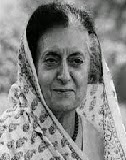
Short Biography of \’Indira Gandhi\’ (210 Words)

\’Indira Gandhi\’ was born on 19th November, 1917 in Allahabad, Uttar Pradesh, India. Her full name was \’Indira Priyadarshini Gandhi\’. She was the only child of Jawaharlal Nehru and Kamla Nehru. Her father, Jawaharlal Nehru led India\’s political struggle for independence from British rule, and became the first Prime Minister of India.

Indira Gandhi was mostly taught at home. She also studied at \’Vishwa Bharti\’ in Shantiniketan. She took active part in the freedom struggle of India. She became the President of the Congress party. In May 1964, Indira Gandhi became minister of information and broadcasting in Lal Bahadur Shastri\’s government.

Indira Gandhi became the third Prime Minister of India. She became Prime Minister after the death of Sri Lai Bahadur Shastri. She served from 1966 to 1977. She was married to Sri Feroz Gandhi and had two sons- Rajiv and Sanjay.She was assassinated on 31st October, 1984.

Indira Gandhi was the first lady Prime Minister of India. During her Prime Minister ship, India won the war against Pakistan in 1971. In 1962, during the Chinese-Indian border war, she coordinated civil defense activities. She was a great social worker and had introduced several schemes for the country. Indira Gandhi was a true patriot and will always be remembered as a bold Prime Minister of India. 

Short Biography of \’Indira Gandhi\’ (210 Words)

\’Indira Gandhi\’ was born on 19th November, 1917 in Allahabad, Uttar Pradesh, India. Her full name was \’Indira Priyadarshini Gandhi\’. She was the only child of Jawaharlal Nehru and Kamla Nehru. Her father, Jawaharlal Nehru led India\’s political struggle for independence from British rule, and became the first Prime Minister of India.

Indira Gandhi was mostly taught at home. She also studied at \’Vishwa Bharti\’ in Shantiniketan. She took active part in the freedom struggle of India. She became the President of the Congress party. In May 1964, Indira Gandhi became minister of information and broadcasting in Lal Bahadur Shastri\’s government.

Indira Gandhi became the third Prime Minister of India. She became Prime Minister after the death of Sri Lai Bahadur Shastri. She served from 1966 to 1977. She was married to Sri Feroz Gandhi and had two sons- Rajiv and Sanjay.She was assassinated on 31st October, 1984.

Indira Gandhi was the first lady Prime Minister of India. During her Prime Minister ship, India won the war against Pakistan in 1971. In 1962, during the Chinese-Indian border war, she coordinated civil defense activities. She was a great social worker and had introduced several schemes for the country. Indira Gandhi was a true patriot and will always be remembered as a bold Prime Minister of India. 

Short Biography of \’Indira Gandhi\’ (210 Words)

\’Indira Gandhi\’ was born on 19th November, 1917 in Allahabad, Uttar Pradesh, India. Her full name was \’Indira Priyadarshini Gandhi\’. She was the only child of Jawaharlal Nehru and Kamla Nehru. Her father, Jawaharlal Nehru led India\’s political struggle for independence from British rule, and became the first Prime Minister of India.

Indira Gandhi was mostly taught at home. She also studied at \’Vishwa Bharti\’ in Shantiniketan. She took active part in the freedom struggle of India. She became the President of the Congress party. In May 1964, Indira Gandhi became minister of information and broadcasting in Lal Bahadur Shastri\’s government.

Indira Gandhi became the third Prime Minister of India. She became Prime Minister after the death of Sri Lai Bahadur Shastri. She served from 1966 to 1977. She was married to Sri Feroz Gandhi and had two sons- Rajiv and Sanjay.She was assassinated on 31st October, 1984.

Indira Gandhi was the first lady Prime Minister of India. During her Prime Minister ship, India won the war against Pakistan in 1971. In 1962, during the Chinese-Indian border war, she coordinated civil defense activities. She was a great social worker and had introduced several schemes for the country. Indira Gandhi was a true patriot and will always be remembered as a bold Prime Minister of India. 

Short Essay on \’Guru Gobind Singh Jayanti\’ (200 Words

\’Guru Gobind Singh Jayanti\’ is a famous festival of Sikhs. It is celebrated as the birthday of tenth and the last Guru of Sikhs Gobind Singh ji. Guru Gobind Singh was born at Patna, Bihar, India, on December 22, 1666. Guru Gobind Singh Jayanti generally falls in December or January or sometimes twice within a year as it is calculated according to Hindu Bikrami Calendar, which is based on the lunar calendar.

Guru Gobind Singh was the tenth and last guru of Sikhs after his father, Guru Tegh Bahadur. Guru Gobind Singh gained great stature as both Saint and soldier a leader of firm spiritual principles and intense devotion to God. He was inspired to write many powerful spiritual compositions that infused a martial spirit in the people.

This day witnesses large processions and special prayer gatherings at all Gurudwaras. It is a religious celebration in which prayers for prosperity are offered. People sing devotional songs during the procession and share sweets and cold drink or sharbat among the adults and children. Special dishes that are unique to this occasion are prepared and served during the festivities. 

Short Essay on \’Guru Gobind Singh Jayanti\’ (200 Words

\’Guru Gobind Singh Jayanti\’ is a famous festival of Sikhs. It is celebrated as the birthday of tenth and the last Guru of Sikhs Gobind Singh ji. Guru Gobind Singh was born at Patna, Bihar, India, on December 22, 1666. Guru Gobind Singh Jayanti generally falls in December or January or sometimes twice within a year as it is calculated according to Hindu Bikrami Calendar, which is based on the lunar calendar.

Guru Gobind Singh was the tenth and last guru of Sikhs after his father, Guru Tegh Bahadur. Guru Gobind Singh gained great stature as both Saint and soldier a leader of firm spiritual principles and intense devotion to God. He was inspired to write many powerful spiritual compositions that infused a martial spirit in the people.

This day witnesses large processions and special prayer gatherings at all Gurudwaras. It is a religious celebration in which prayers for prosperity are offered. People sing devotional songs during the procession and share sweets and cold drink or sharbat among the adults and children. Special dishes that are unique to this occasion are prepared and served during the festivities. 

Short Essay on \’Guru Gobind Singh Jayanti\’ (200 Words

\’Guru Gobind Singh Jayanti\’ is a famous festival of Sikhs. It is celebrated as the birthday of tenth and the last Guru of Sikhs Gobind Singh ji. Guru Gobind Singh was born at Patna, Bihar, India, on December 22, 1666. Guru Gobind Singh Jayanti generally falls in December or January or sometimes twice within a year as it is calculated according to Hindu Bikrami Calendar, which is based on the lunar calendar.

Guru Gobind Singh was the tenth and last guru of Sikhs after his father, Guru Tegh Bahadur. Guru Gobind Singh gained great stature as both Saint and soldier a leader of firm spiritual principles and intense devotion to God. He was inspired to write many powerful spiritual compositions that infused a martial spirit in the people.

This day witnesses large processions and special prayer gatherings at all Gurudwaras. It is a religious celebration in which prayers for prosperity are offered. People sing devotional songs during the procession and share sweets and cold drink or sharbat among the adults and children. Special dishes that are unique to this occasion are prepared and served during the festivities. 

Short Essay on \’Sudha Chandran\’ (212 Words)

\’Sudha Chandran\’ was born on 21 September 1964 in Kerala, India. She got her higher education from Mumbai, India. Sudha Chandran was born in a middle class family living in Mumbai, India. At the stage of three, she started learning Indian Classical Dance. Soon she became one of the most promising pupils of Bharat Natyam, a Classical Dance form.

Sudha had just turned sixteen when she and her parents set off on a vacation to South India. On their return journey, their bus was hit by a truck. It was a terrible accident and Sudha had fractured her leg. Unfortunately, the fractured foot got infected and lastely removed. She was fitted with an artificial foot.

Sudha resumed dance lessons. It was not easy at all with artificial foot. Her strong will and hard work paid off. Very soon she started dancing in front of an audience again. Soon she became very popular. Inspired by her story, in 1982 \’Mayuri\’, a Telugu film was made. She acted in the film herself. Later, in 1986, it was remade in Hindi, and called \’Nache Mayuri\’. After that she acted in many other films, too. Her television serials are also screened in several countries.

Sudha Chandran is much more than an a

Short Essay on \’Sudha Chandran\’ (212 Words)

\’Sudha Chandran\’ was born on 21 September 1964 in Kerala, India. She got her higher education from Mumbai, India. Sudha Chandran was born in a middle class family living in Mumbai, India. At the stage of three, she started learning Indian Classical Dance. Soon she became one of the most promising pupils of Bharat Natyam, a Classical Dance form.

Sudha had just turned sixteen when she and her parents set off on a vacation to South India. On their return journey, their bus was hit by a truck. It was a terrible accident and Sudha had fractured her leg. Unfortunately, the fractured foot got infected and lastely removed. She was fitted with an artificial foot.

Sudha resumed dance lessons. It was not easy at all with artificial foot. Her strong will and hard work paid off. Very soon she started dancing in front of an audience again. Soon she became very popular. Inspired by her story, in 1982 \’Mayuri\’, a Telugu film was made. She acted in the film herself. Later, in 1986, it was remade in Hindi, and called \’Nache Mayuri\’. After that she acted in many other films, too. Her television serials are also screened in several countries.

Sudha Chandran is much more than an a

Short Essay on \’Sudha Chandran\’ (212 Words)

\’Sudha Chandran\’ was born on 21 September 1964 in Kerala, India. She got her higher education from Mumbai, India. Sudha Chandran was born in a middle class family living in Mumbai, India. At the stage of three, she started learning Indian Classical Dance. Soon she became one of the most promising pupils of Bharat Natyam, a Classical Dance form.

Sudha had just turned sixteen when she and her parents set off on a vacation to South India. On their return journey, their bus was hit by a truck. It was a terrible accident and Sudha had fractured her leg. Unfortunately, the fractured foot got infected and lastely removed. She was fitted with an artificial foot.

Sudha resumed dance lessons. It was not easy at all with artificial foot. Her strong will and hard work paid off. Very soon she started dancing in front of an audience again. Soon she became very popular. Inspired by her story, in 1982 \’Mayuri\’, a Telugu film was made. She acted in the film herself. Later, in 1986, it was remade in Hindi, and called \’Nache Mayuri\’. After that she acted in many other films, too. Her television serials are also screened in several countries.

Sudha Chandran is much more than an a

GeM Samvaad Roundtable with Ministries/Departments and CPSEs

GeM Samvaad, a two month long national outreach programme was launched on 17th December 2019 to reach out to stakeholders across the country and also local sellers in order to facilitate on-boarding of local sellers on the marketplace while catering to specific requirements and procurement needs of buyers.

The outreach programme took off from 19th December 2019 and during the launch week the States of Karnataka, Uttarakhand, Himachal Pradesh and Andhra Pradesh were covered.

GeM Samvaad is being conducted in all States and Union Territories. After the first four states the outreach programme has been held in J & K on 5th January, Ladakh on 7th January, Assam and Bihar on 9th January and in Chandigarh on 8th January 2020. All the outreach programmes witnessed overwhelming participation of buyers and sellers. GeM senior officers are steering the programmes. They are also interacting with buyers and sellers attending the events. Arrangements for the outreach programmes including logistics are made by the respective State Governments. The target is to reach out to all stakeholders and learn from their experiences on their usage of GeM portal. Through this outreach programme, GeM expects to make the actual users aware about the new features and functionalities of the portal and collect feedback, which is the first step towards GeM’s ‘Voice of Customer’ initiative.

A Roundtable with Ministries/Departments & Central Public Sector Enterprises (CPSEs) was held on 14 January 2020 in New Delhi as part of GeM Samvaad. It was chaired by Secretary, Department of Commerce, Government of India and CEO GeM.


More than 100 participants including Financial Advisors & nodal officers of Ministries, Departments, and representatives of CPSEs participated in the Roundtable and shared their feedback, challenges and suggestions.

Commerce Secretary highlighted the need for full utilization of the potential of GeM. He stated that Rule 149 of GFR and directives of the Department of Public Enterprises make the procurement of goods and services by Ministries and CPSEs mandatory for goods and services available on GeM and the same should not be violated.

GeM is continuously working to bring all the items on-board and buyers should accelerate this process by providing specifications of categories and asking sellers to onboard GeM. He further emphasized the importance of timely payments to sellers and stated that buyers should ensure payments to sellers on time.

State Departments and Organizations and Public Sector Enterprises (PSEs) have been using GeM for their buying needs. Sellers from the States are also benefitting through the access to national Public Procurement market using the portal. Through GeM Samvaad the marketplace is looking forward to receiving feedback from users which will be used for making improvements and advancements in the system.

GeM has more than 15 lakh products and around 20,000 services, more than 3 lakh registered sellers and service providers and more than 40,000 Government buyer organizations. In its short journey of three years, GeM has processed more than 28 lakh orders worth Rs. 40,000 crores in Gross Merchandise Value out of which 50% has been transacted by MSMEs.


***

MM/ SB

(Release ID: 1599643) Visitor Counter : 388

DGTR initiates 34 anti-dumping, 6 safeguard investigations in 2019-20

Directorate General of Trade Remedies (DGTR) initiated 34 anti-dumping (AD) investigations (both fresh and review), 4 countervailing duty investigations, and 6 safeguard investigations during the period from 01.04.2019 to 31.12.2019. Final Findings in 14 anti-dumping investigations, 4 countervailing duty investigations and Provisional Findings in 5 investigations were issued during this period.


Time taken in issue of final findings from the date of initiation, has come down to 234 days in 2019 – 2020 from 478 days in 2014-15.


Year Average number of days taken to issue Finding (excluding NSR and CVD cases)
2012-13 410
2013-14 432
2014-15 478
2015-16 434
2016-17 395
2017-18 407
2018-19 281
2019-20* (upto 31.12.2019) 234


Average time taken to initiate an Anti-Dumping investigation has also come down to 33 days in 2019-20 as compared to 43 days in 2018-19.

DGTR has also started using all available options for providing relief against unfair trade practices like the first ever Safeguard Quantitative Restrictions investigation on imports of Iso-propyl Alcohol initiated under the FTDR Act, 2002 on 04.11.2019; three Bilateral Safeguard Investigations initiated (Refined Bleached Deodrized Palmolien against Malaysia; Phthalic Anhydride and Polybutadiene Rubber against Korea); two global Safeguard investigations initiated under the Custom Tariff Act, 1997 (Phenol and Single Mode Optical Fibre) and nine Countervailing Duty investigations completed and five are underway.

Anti-circumvention provision was introduced in Customs Tariff Act, 1975 for Counter-vailing Duty (CVD) investigations. Rules of circumvention for AD and CVD are being simplified for providing relief to the domestic industry so that increased instances of circumvention in AD/CVD can be addressed. Six cases of anti-circumvention have been completed so far.

DGTR has initiated outreach programmes to sensitize stakeholders about the available trade remedy measures. The outreach programmes were conducted by officers of DGTR in Gurugram on 25.06.2019, Mumbai from 26.09.2019 to 27.09.2019 and Ahmedabad on 13.12.2019.

Training programmes were held during August-September, 2019 to sensitize the officers of Indian Trade Service, Indian Cost Accounts Service and officers from select Administrative Ministries regarding the available trade remedial measures.

Commerce and Industry Minister held a stakeholder meeting on Regulatory Instruments for formulation and implementation of an effective Trade Policy and Development Strategy on 11.09.2019. A help desk and Facilitation Centre were established on 23.09.2019 to facilitate optimal utilization by different stakeholders of available trade remedial measures aimed at curbing unfair trade. A total of 62 different issues have been dealt by the Centre since its setting up in September, 2019.

DGTR has launched an online portal – ARTIS (Application for Remedies in Trade for Indian industry and other Stakeholders) on 30.09.2019 to enhance transparency, efficiency and provide expedited relief to the domestic producers for different trade remedies like anti-dumping duty, safeguard duty and countervailing duty. Applicants can also monitor the current status of their applications through this portal. The portal will be further improvised so that it can in real terms bring about transformative change in the process of filing, tracking and monitoring the Trade Remedy applications.


***

A Team consisting of Mr. Ruud De Mooij, Division Chief, Mr. Arbind Modi, Senior Economist and Ms. Li Lui, Economist from the Tax Policy Division of theInternational Monetary Fund (IMF), Fiscal Affairs Department,gave a presentation to the 15th Finance Commission on “resource mobilization over the next five years”, today. Some members of the Finance Commission’s Economic Advisory Council also participated in the discussions, which was chaired by Sh. N.K. Singh, Chairman,Finance Commission. The discussions were centered around options for improving the tax resources of the general government, with special focus on improving the revenue realization from the GST. It was presented that the current collections are significantly below an estimated revenue frontier for the country, arrived at using robust panel data analysis of comparator countries. It was further discussed that rationalization of the rate structure as well as improvements in compliance and collection efficiency of GST and other taxes can move India much closer to the frontier. Policy options to achieve this improvement were also discussed. **** MC (Release ID: 1599734) Visitor Counter : 494 Read this release in: Hindi

The Union Minister for Chemicals and Fertilizers, Shri D.V. Sadananda Gowda launched the “APNA UREA – SonaUgle” brand of Hindustan Urvarak&Rasayan Limited (HURL) at a function here today. On the occasion, he also unveiled the Company’s logo.

HURL is Joint Venture Company promoted by the three Maharatna Companies i.e. Coal India Limited (CIL), NTPC Limited (NTPC) and Indian Oil Corporation Limited (IOCL) as the lead promoters with FCIL and HFCL as other two partners.

With the objective of making the country self-reliant in Urea, the Governmentapproved in 2016 the revival of three sick Urea plants located at Gorakhpur, Sindri and Barauni. The task of the revival of these three Units has been undertaken by HURL. “The Prime Minister has directed for the revival of five major sick/shutdown fertilizer plants, three of which have been undertaken by HURL. The other two plants at Ramagundam and Talcherwill also commence production soon,” said Shri Gowda. “We are importing 70-80 LMT fertilizer every year. After the commissioning of these five units, the total production of Urea will increase by 63.5 Lakh Metric Tonne Per Annum (LMTPA),” he added.

Lauding HURL for setting in place the delivery system and supply chain ahead of schedule, the Minister encouraged the Company’s Board to continue the momentum and hoped the commissioning of the three plants will also be advanced.

Speaking on the occasion, the Secretary, Department of Fertilizers, Shri ChhabilendraRoul stressed on the balanced use of fertilizers including organic ingredients and micro-nutrients.

The HURL is being looked as a major emerging player in Urea market due to revival of the three closed units in 2021 having total installed production capacity of 38.1 LMT of Neem Coated Urea per annum. The Company will establish and operate state-of-the-art environment friendly and energy efficient Natural Gas based new Fertilizer Complexes with the annual installed capacity of 1.27 MMTPA neem coated Urea at each of the three locations which are expected to be commissioned in February 2021 (Gorakhpur, UP) and May 2021 (Barauni and Sindri). The feedstock to the plants i.e. Natural Gas will be supplied by GAIL under the Pooled Price Mechanism.

The commissioning of the HURL’s three Units in the states of UP, Bihar and Jharkhand will open forward and backward linkages for business activity in the Eastern part of India. It will be instrumental in opening new avenues for generation of income and employment in the Eastern part of our country.

The other two Urea Units being revived are Ramagundam unit by M/s. Ramagundam Fertilizers & Chemicals Limited (RFCL), a Joint Venture of National Fertilizers Limited (NFL), EIL & FCIL, and Talcher unit by M/s. Talcher Fertilizers Limited (TFL), a Joint Venture of Rashtriya Chemicals & Fertilizers Limited (RCF), CIL, GAIL & FCIL.

The details of the expected commissioning dates of the above units are as follows:


Units Expected commissioning

Date

Barauni (Bihar) May, 2021


Ramagundam (Telangana) December, 2019


Gorakhpur (Uttar Pradesh) February, 2021


Sindri (Jharkhand) May, 2021


Talcher (Odisha) September, 2023


India’s average urea import is to the tune 63.12 LMT while the average total production of urea in the country is around 241 LMT and the total consumption (Sales) is 305.48 LMT approximately. The gap is fulfilled through imports.


*****
RCJ/PK

(Release ID: 1599732) Visitor Counter : 595

Finance Commission gets presentation from IMF on Resource Mobilisation for the Next Five Years

A Team consisting of Mr. Ruud De Mooij, Division Chief, Mr. Arbind Modi, Senior Economist and Ms. Li Lui, Economist from the Tax Policy Division of theInternational Monetary Fund (IMF), Fiscal Affairs Department,gave a presentation to the 15th Finance Commission on “resource mobilization over the next five years”, today. Some members of the Finance Commission’s Economic Advisory Council also participated in the discussions, which was chaired by Sh. N.K. Singh, Chairman,Finance Commission.

The discussions were centered around options for improving the tax resources of the general government, with special focus on improving the revenue realization from the GST. It was presented that the current collections are significantly below an estimated revenue frontier for the country, arrived at using robust panel data analysis of comparator countries. It was further discussed that rationalization of the rate structure as well as improvements in compliance and collection efficiency of GST and other taxes can move India much closer to the frontier. Policy options to achieve this improvement were also discussed.

****

MC

(Release ID: 1599734) Visitor Counter : 494

Read this release in: Hindi

India’s communication satellite GSAT-30 launched successfully

India’s  latest  communication  satellite  GSAT-30  was  successfully  launched  from the  Spaceport  in  French  Guiana  during  the  early  hours  today. The  launch  vehicle  Ariane  5  VA-251  lifted  off  from  Kourou  Launch  Base,  French Guiana  at  2:35  am  IST  carrying  India’s  GSAT-30  and  EUTELSAT  KONNECT  for Eutelsat,  as  scheduled.

After  a  flight  lasting  38  minutes  25  seconds,  GSAT-30  separated  from  the Ariane  5  upper  stage  in  an  elliptical  Geosynchronous  Transfer  Orbit.

With  a  lift-off  mass  of  3357  kg,  GSAT-30  will  provide  continuity  to  operational services  on  some  of  the  in-orbit  satellites.  GSAT-30  derives  its  heritage  from ISRO’s  earlier INSAT/GSAT  satellite  series  and  will  replace  INSAT-4A  in  orbit.

“GSAT-30  has  a  unique  configuration  of  providing  flexible  frequency  segments and  flexible  coverage.    The  satellite  will  provide  communication  services  to Indian  mainland  and  islands  through  Ku-band  and  wide  coverage  covering  Gulf countries,  a  large  number  of  Asian  countries  and  Australia  through  C-band” ISRO Chairman  Dr K Sivan  said. Dr.  Sivan  also  said  that  “GSAT-30  will  provide  DTH  Television  Services, connectivity  to  VSATs  for  ATM,  Stock-exchange,  Television  uplinking  and Teleport  Services,  Digital  Satellite  News  Gathering  (DSNG)  and  e-governance applications.  The  satellite  will  also  be  used  for  bulk  data  transfer  for  a  host  of emerging  telecommunication  applications.”

ISRO’s  Master  Control  Facility  (MCF)  at  Hassan  in  Karnataka  took  over  the command  and  control  of  GSAT-30  immediately  after  its  separation  from  the launch  vehicle.  Preliminary  health  checks  of  the  satellite  revealed  its  normal health.

In  the  days  ahead,  orbit-raising  manoeuvres  will  be  performed  to  place  the satellite  in  Geostationary  Orbit  (36,000  km  above  the  equator)  by  using  its  onboard  propulsion  system.   During  the  final  stages  of  its  orbit  raising  operations,  the  two  solar  arrays  and  the antenna  reflectors  of  GSAT-30  will  be  deployed.    Following  this,  the  satellite  will be  put  in  its  final  orbital  configuration.    The  satellite  will  be  operational  after  the successful  completion  of  all  in-orbit  tests.

*****

RCJ/PK

(Release ID: 1599635) Visitor Counter : 1258

Read this release in: Urdu , Hindi , Marathi , Bengali , Malayalam