Short Essay on \’Discipline\’ (171 Words

Discipline is an important virtue in one\’s life. Discipline means complete obedience to certain rules and regulations. Life without discipline is just like a house without a roof. It is absolutely essential for successful life.

Discipline is the structural and fundamental unit of a successful person. It is essential for us in home, for soldiers in battlefield, for students in school, for players in playground. A team of experienced players often lose the match because of indiscipline in the team. A horrible battle can be won by a disciplined army.

Discipline is very important in a student\’s life. He must obey his teachers, must abide by the rules of school. He should be sincere, dedicated, firm and focus his goals. If he violates, then he suffers a great deal in his future.

As a student is the future of our country, so, he needs to be very punctual to his routine, hard working, healthy and fit. Discipline demands self-control and dedication. It let to the formation of a good society and nation as well. 

\’Valentine\’s Day: 14 February\’ (156 Words)

\’Valentine\’s Day\’ is celebrated on 14th February every year. It is celebrated in the memory of martyrdom of Saint Valentine. Initially the day was celebrated in USA and UK only but now a days it is celebrated in many countries around the world.

Several martyrdom stories were invented for the various Valentines that belonged to February 14. One of the most popular stories says that Saint Valentine was imprisoned. During his imprisonment, he healed the daughter of his jailer, Asterius. Before his execution he wrote her a letter signed \’Your Valentine\’. Therefore, the day is celebrated in remembrance of the martyrdom of the priest for love.

Valentine\’s Day is gaining its popularity in India day by day. In India, this day got prominence from the year 1992 but now it is much popular among the young lovers in India. Valentine\’s Day symbols that are used today include the heart-shaped outline, doves, and the figure of the winged Cupid.

\’Valentine\’s Day: 14 February\’ (156 Words)

\’Valentine\’s Day\’ is celebrated on 14th February every year. It is celebrated in the memory of martyrdom of Saint Valentine. Initially the day was celebrated in USA and UK only but now a days it is celebrated in many countries around the world.

Several martyrdom stories were invented for the various Valentines that belonged to February 14. One of the most popular stories says that Saint Valentine was imprisoned. During his imprisonment, he healed the daughter of his jailer, Asterius. Before his execution he wrote her a letter signed \’Your Valentine\’. Therefore, the day is celebrated in remembrance of the martyrdom of the priest for love.

Valentine\’s Day is gaining its popularity in India day by day. In India, this day got prominence from the year 1992 but now it is much popular among the young lovers in India. Valentine\’s Day symbols that are used today include the heart-shaped outline, doves, and the figure of the winged Cupid.

\’Valentine\’s Day: 14 February\’ (156 Words)

\’Valentine\’s Day\’ is celebrated on 14th February every year. It is celebrated in the memory of martyrdom of Saint Valentine. Initially the day was celebrated in USA and UK only but now a days it is celebrated in many countries around the world.

Several martyrdom stories were invented for the various Valentines that belonged to February 14. One of the most popular stories says that Saint Valentine was imprisoned. During his imprisonment, he healed the daughter of his jailer, Asterius. Before his execution he wrote her a letter signed \’Your Valentine\’. Therefore, the day is celebrated in remembrance of the martyrdom of the priest for love.

Valentine\’s Day is gaining its popularity in India day by day. In India, this day got prominence from the year 1992 but now it is much popular among the young lovers in India. Valentine\’s Day symbols that are used today include the heart-shaped outline, doves, and the figure of the winged Cupid.

Build It – Project-Based Learning In Full Bloom

Source: ASIDE 2016

The library makerspace was in full bloom this year, giving our students an amazing opportunity to learn by doing. They were encouraged to use a variety of applications to explore different ways to demonstrate their academic abilities as they related to curricula thematic units. The finished products were anything but projects; they combined informational, visual, and spatial literacies, and they actively pushed students to think critically and solve problems.

Source: ASIDE 2016

As with any project-based learning experience, it required collaboration. The nursery, Kindergarten, second-grade teachers, and librarians worked together to design an interactive, hands-on unit to engage students on multiple levels throughout the process. The following projects represent a symphony of parts, but most of all, they could not have culminated into this extraordinary learning experience for the students without an incredible group of dedicated friends and colleagues.

Source: ASIDE 2016

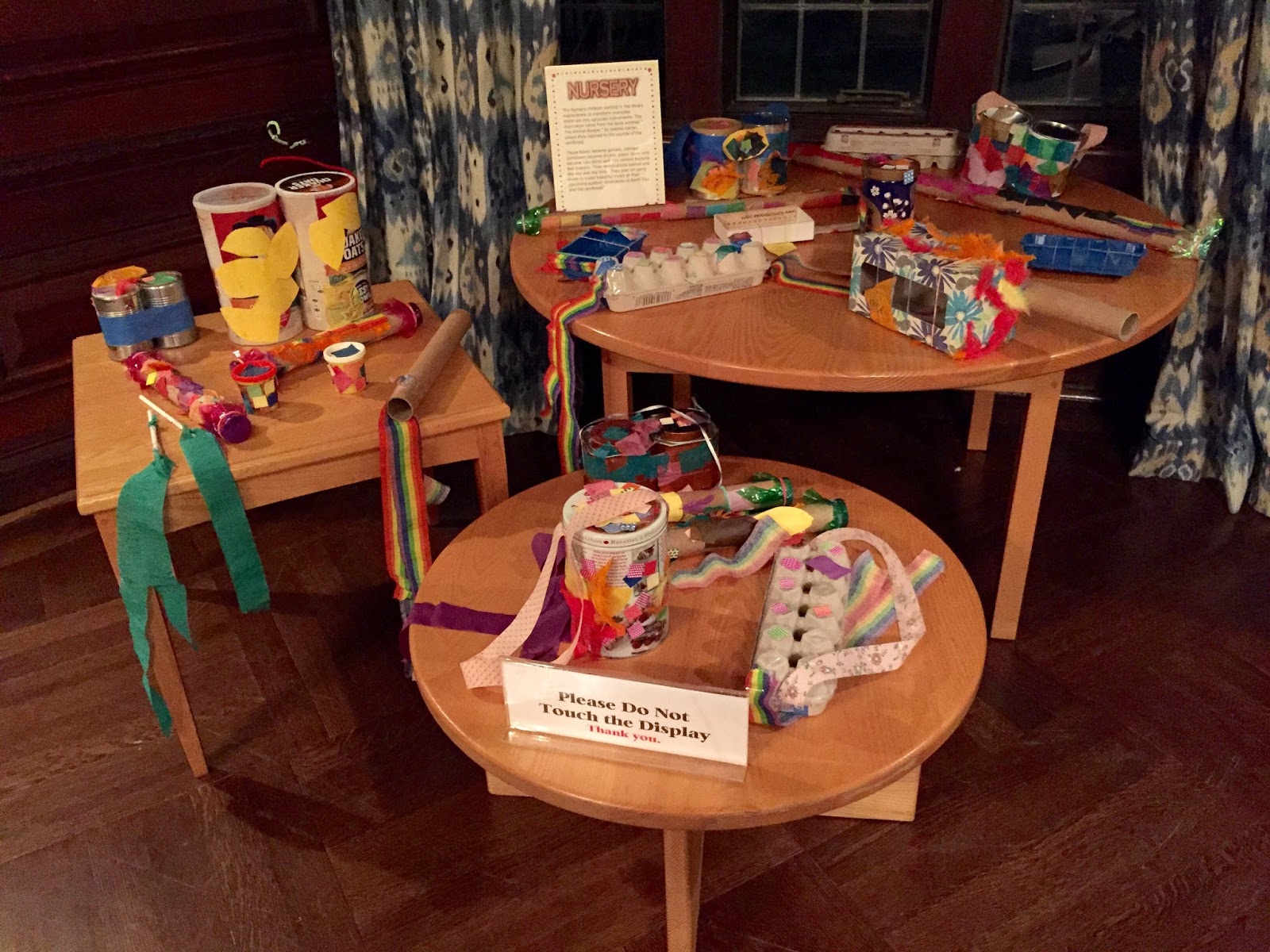
Teachers Elizabeth Wakhale and Lori Zwick described it this way: “The nursery children worked in the library makerspace with librarian, Stephanie Temple, to transform everyday materials into upcycled instruments. The inspiration came from the book entitled The Animal Boogie, by Debbie Harter, where they listened to the sounds of the rainforest. Tissue boxes became guitars, oatmeal containers became drums, paper towel rolls became rain sticks, and egg cartons became bell shakers. Their imaginations soared, and the sky was the limit.” The children will play their musical instruments in their outdoor celebration of Earth Day and the rainforest in the campus amphitheater at the end of the week.

Source: ASIDE 2016

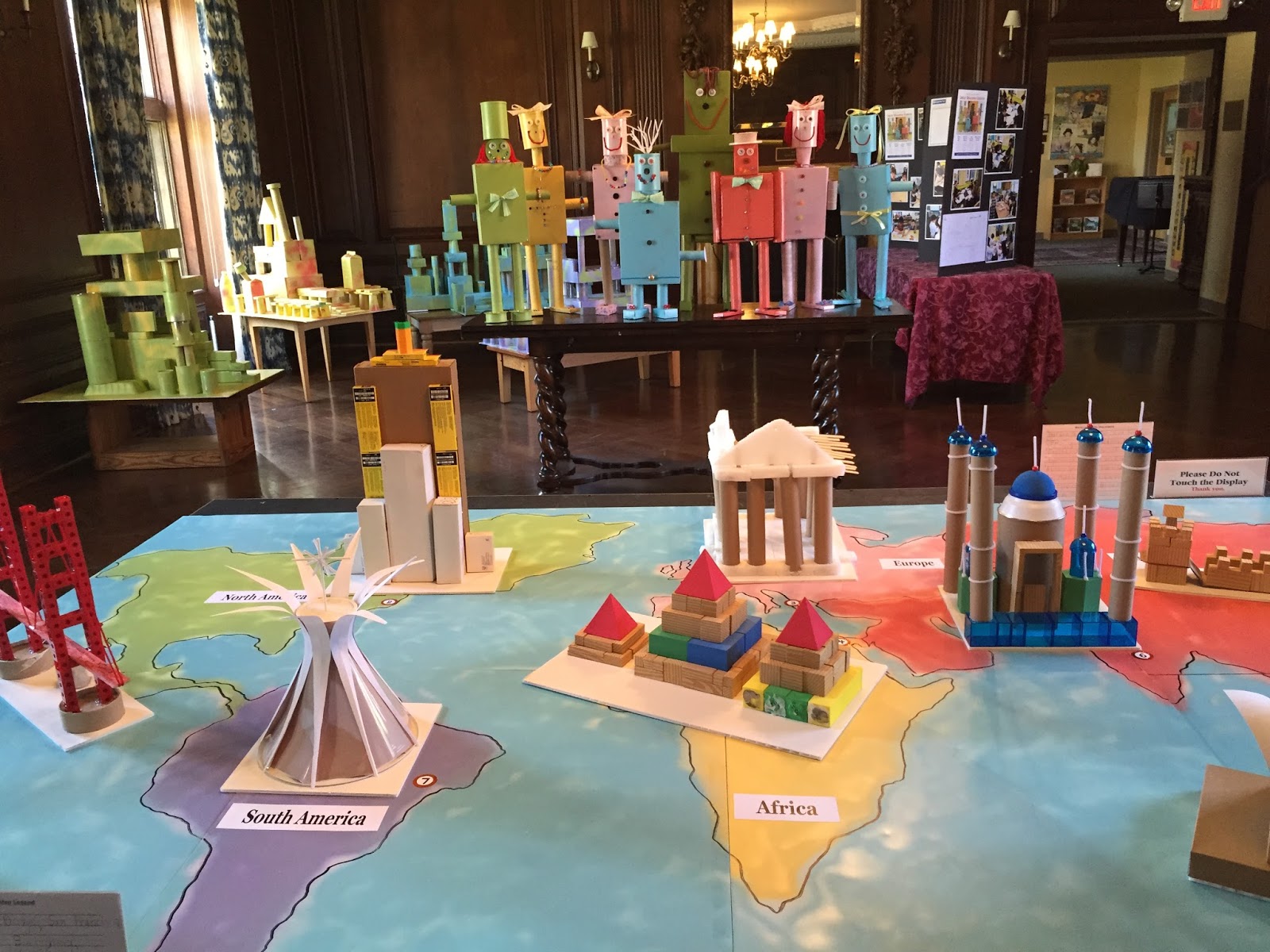
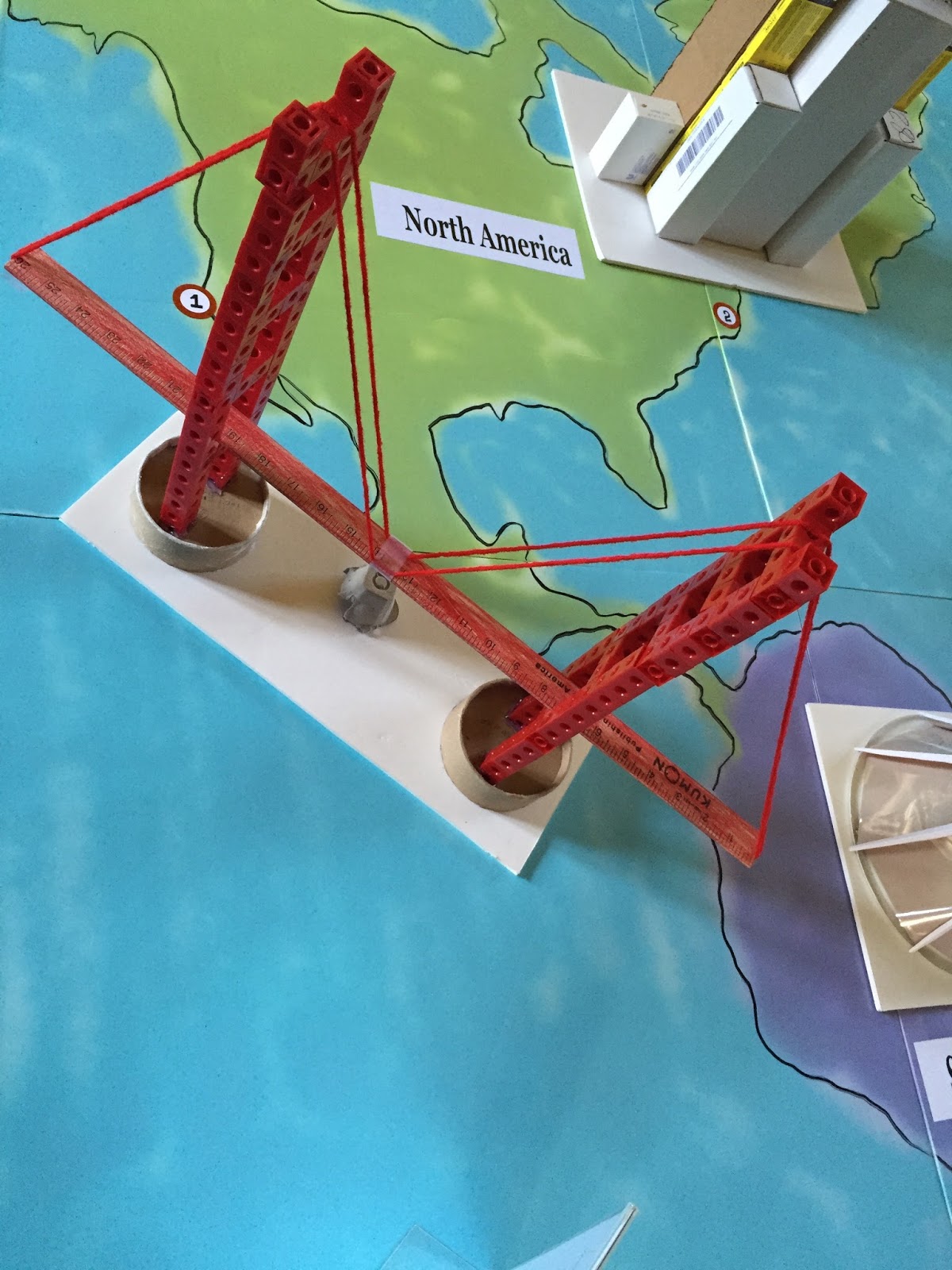
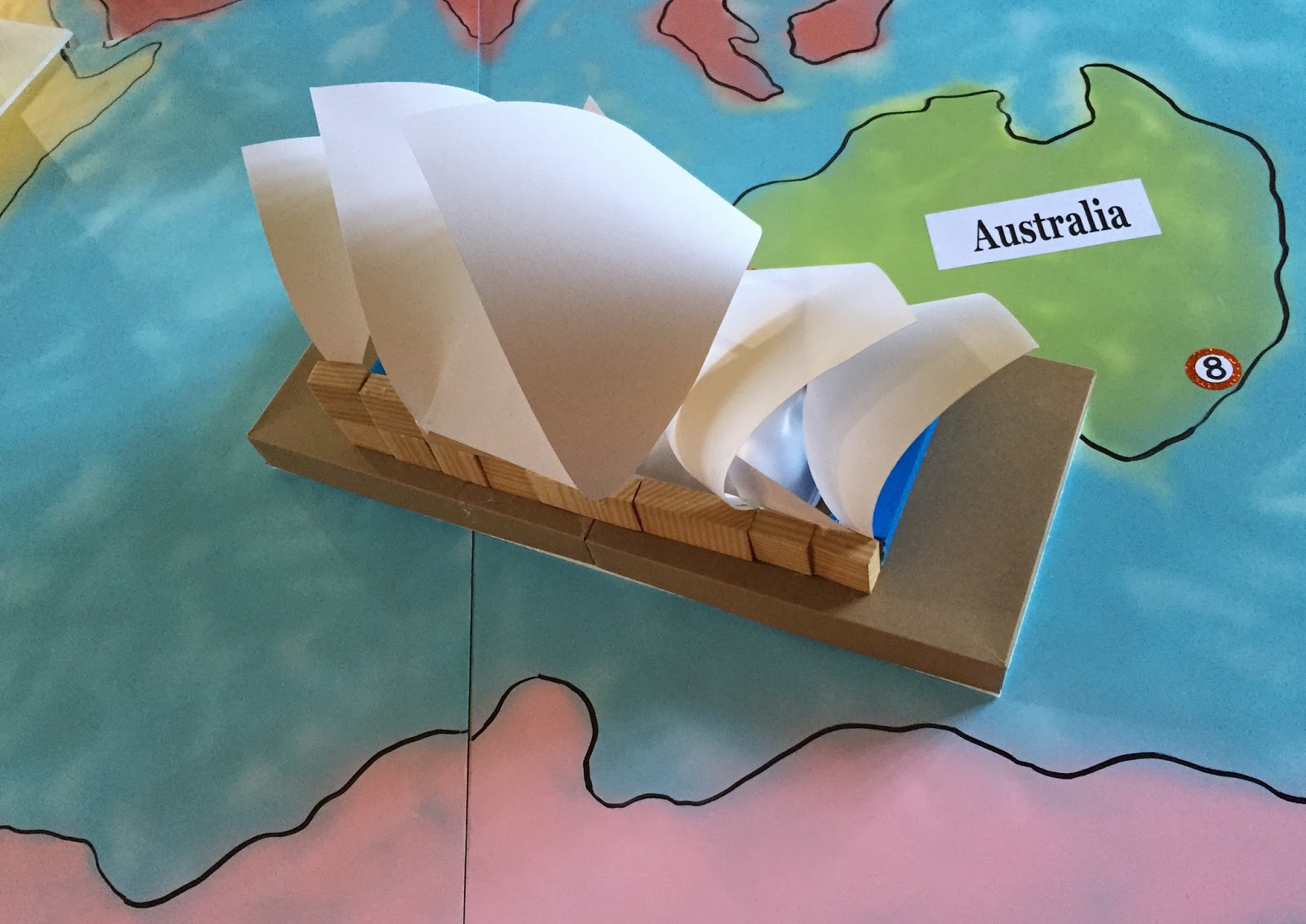
The students in Kindergarten used engineering skills to create blue prints of world landmarks by deconstructing the shapes of buildings, finding the materials they needed to build them, and erecting the structures in three-dimensional forms. Geography was an integral part of the learning process. The students studied the continents and made map keys to mark where each of the landmarks was located.

The Kindergarteners learned about community helpers with their teachers Marybeth Horne and Jessica Shippos. This project was a way for them to see how community builders must have worked together to construct important cultural landmarks. “It was amazing to see how the students carefully deconstructed the different geometric shapes for their blueprints to figure out they materials they needed to build their own creations,” said librarian, Stephanie Temple.

Source: ASIDE 2016


Source: ASIDE 2016

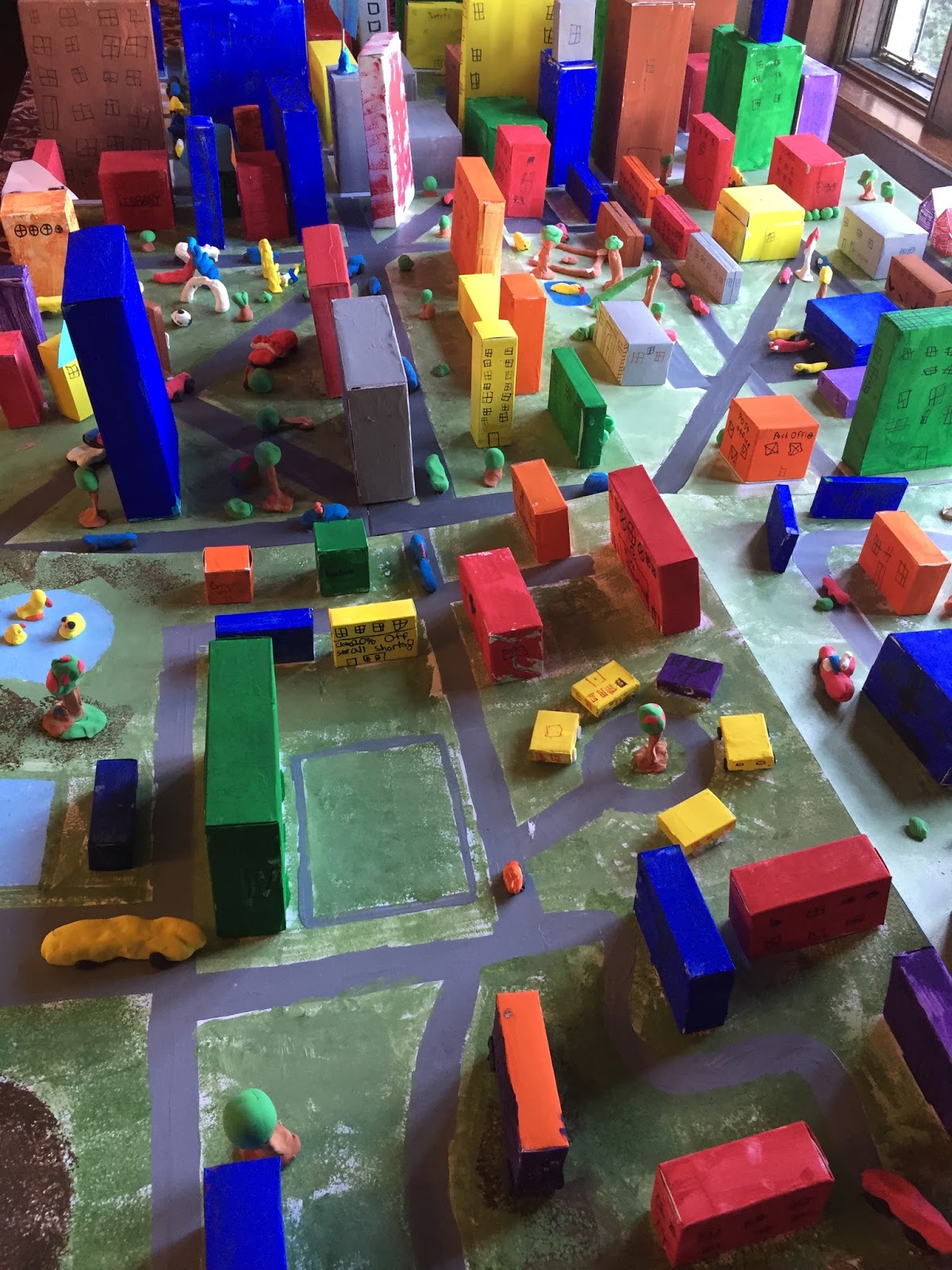
The second graders became urban planners and architectural engineers to answer the question, “Where Do People Live?” They used a variety of visual tools such as sketchnotes and mapping to plan their physical urban, suburban, and rural communities. This involved visually transferring a two-dimensional map into a three-dimensional environment.

The second grade teachers, Stefani Rosenthal and Jessica Raffaele, had the students document the communities by taking photographs on their iPads. They imported the images into the Book Creator app in which they reflected in writing on the needs of a community and the type of community in which they would like to live. It was a perfect combination of “High Tech, High Touch.”

Source: ASIDE 2016

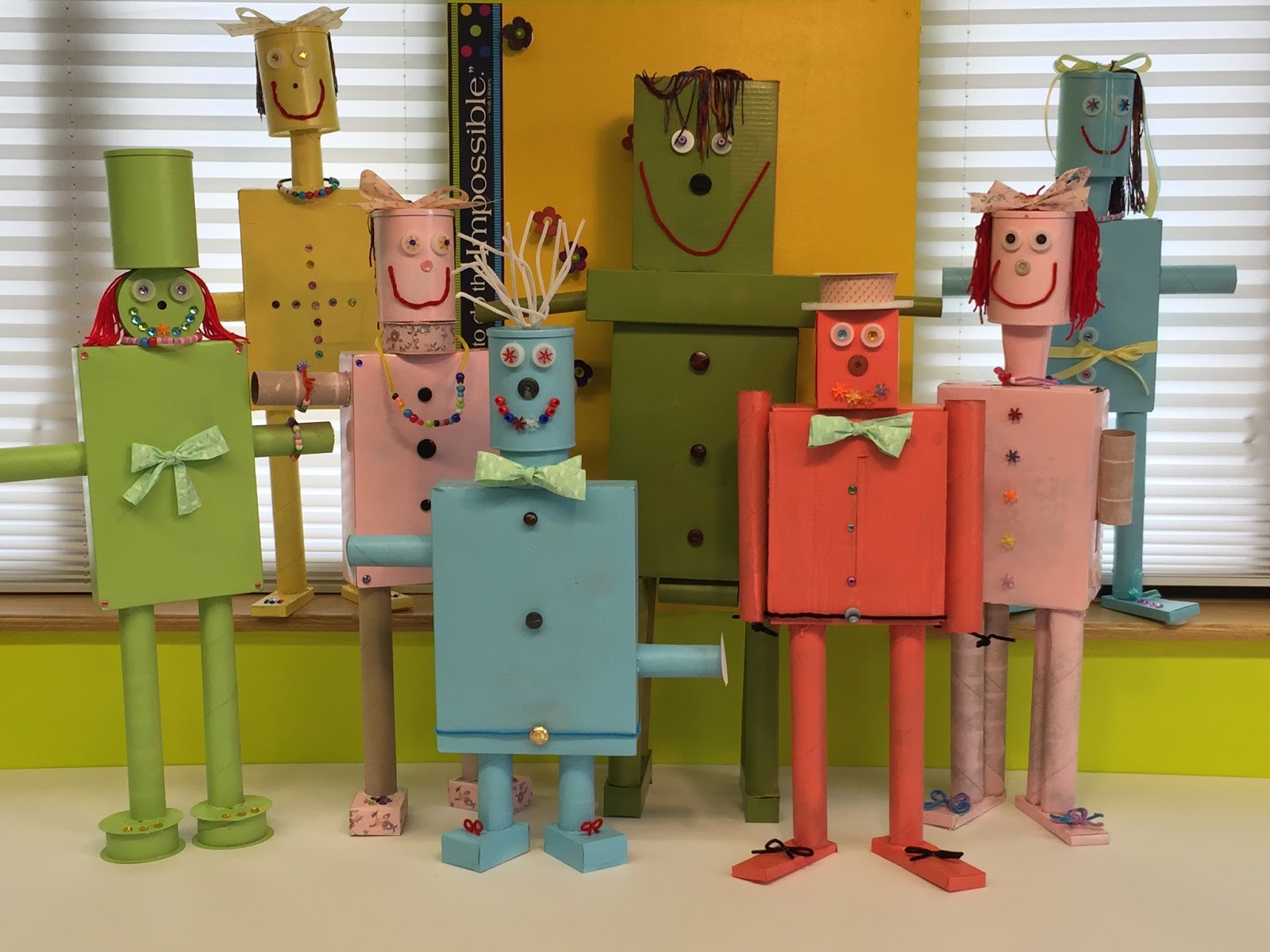
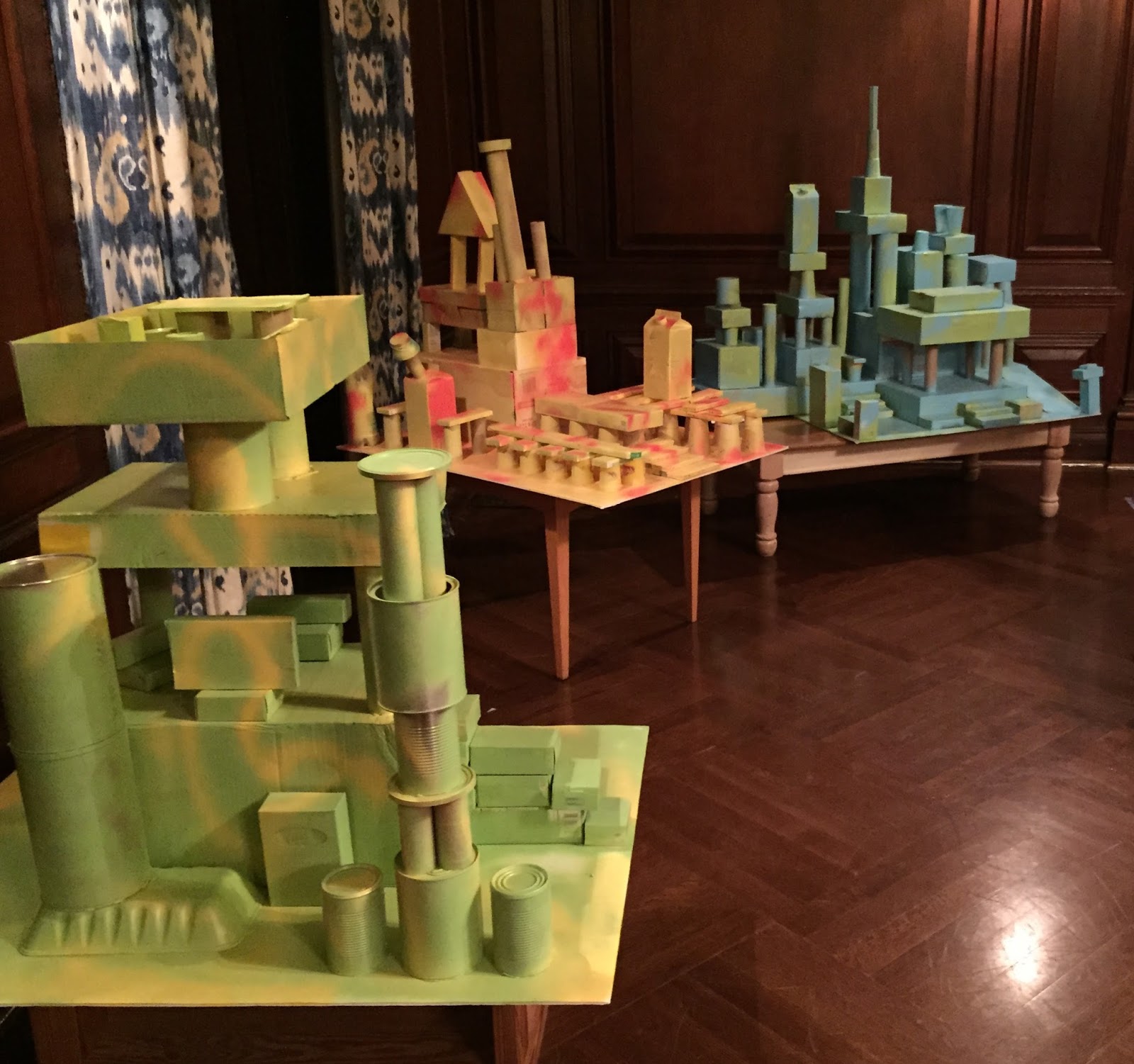
Our “Build It” after school program was also a big hit. The whimsical robots and imaginary landscapes captured the hearts and minds of everyone. It was an amazing experience for the students to see their handiwork on display. It was the school hot spot for the week, with lots of photo opportunities with their creations.

Most of all, nothing limited their creativity. When the exhibition opened, the students could not have been prouder, nor could we.

SXSWEdu 2015: Education For All – How Far Have We Come?

Source: TES Global

An important and undeniable thrust of the 2015 SXSWEdu conference has been the attempt to reconcile the nation’s educational inequalities. Marquee panels and sofa conversations alike have centered on this notion of access – access to college, to technology, to careers, to mentors, to professional development, to contemporary learning tools.

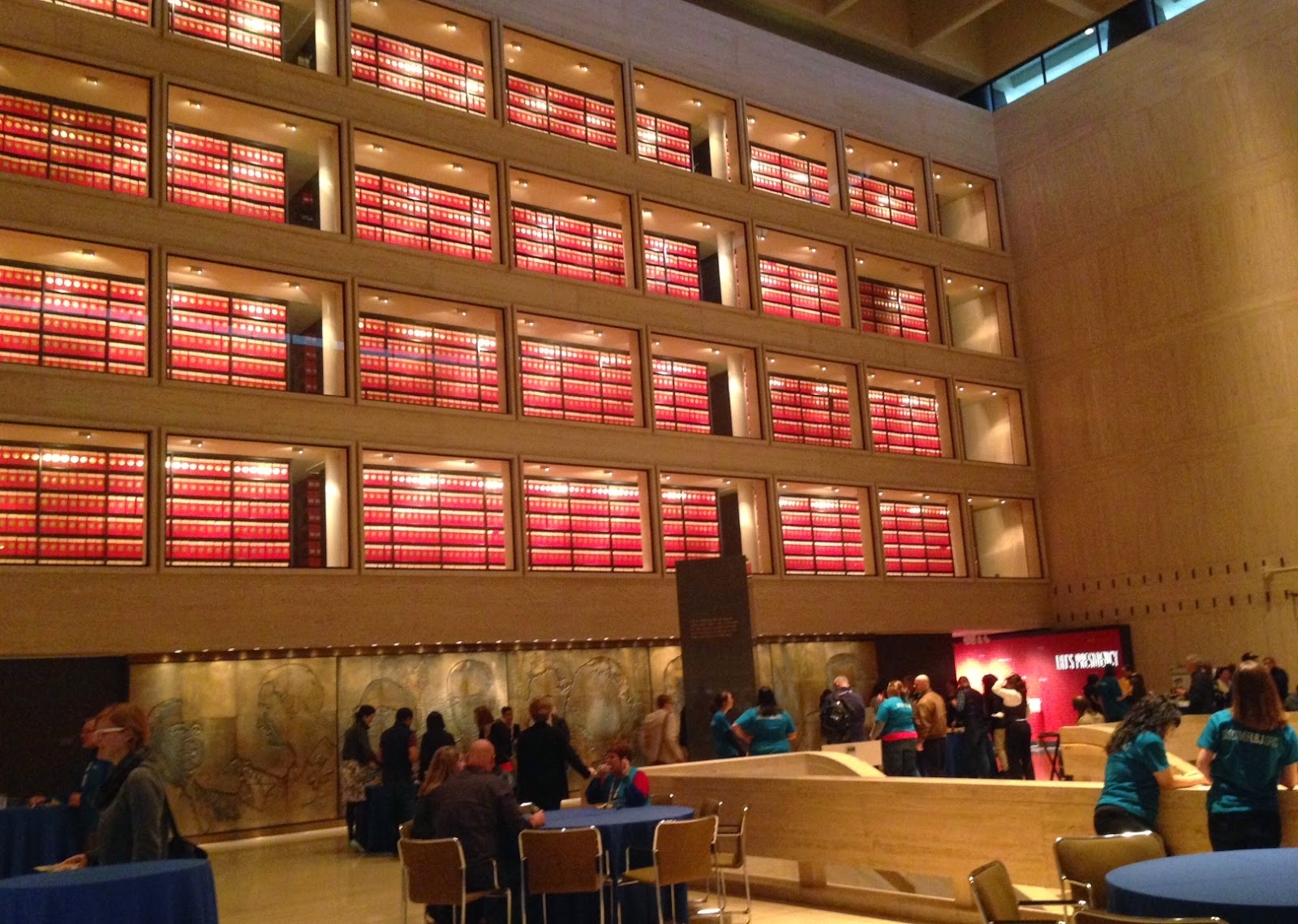
Last night’s reception at the Lyndon Baines Johnson Presidential Library made this theme immediate in bringing together historians and educators to commemorate the 50th anniversary of the Voting Rights Act.
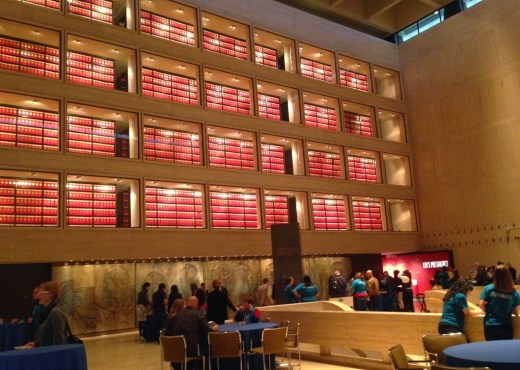
Source: LBJ Presidential Library, ASIDE 2015

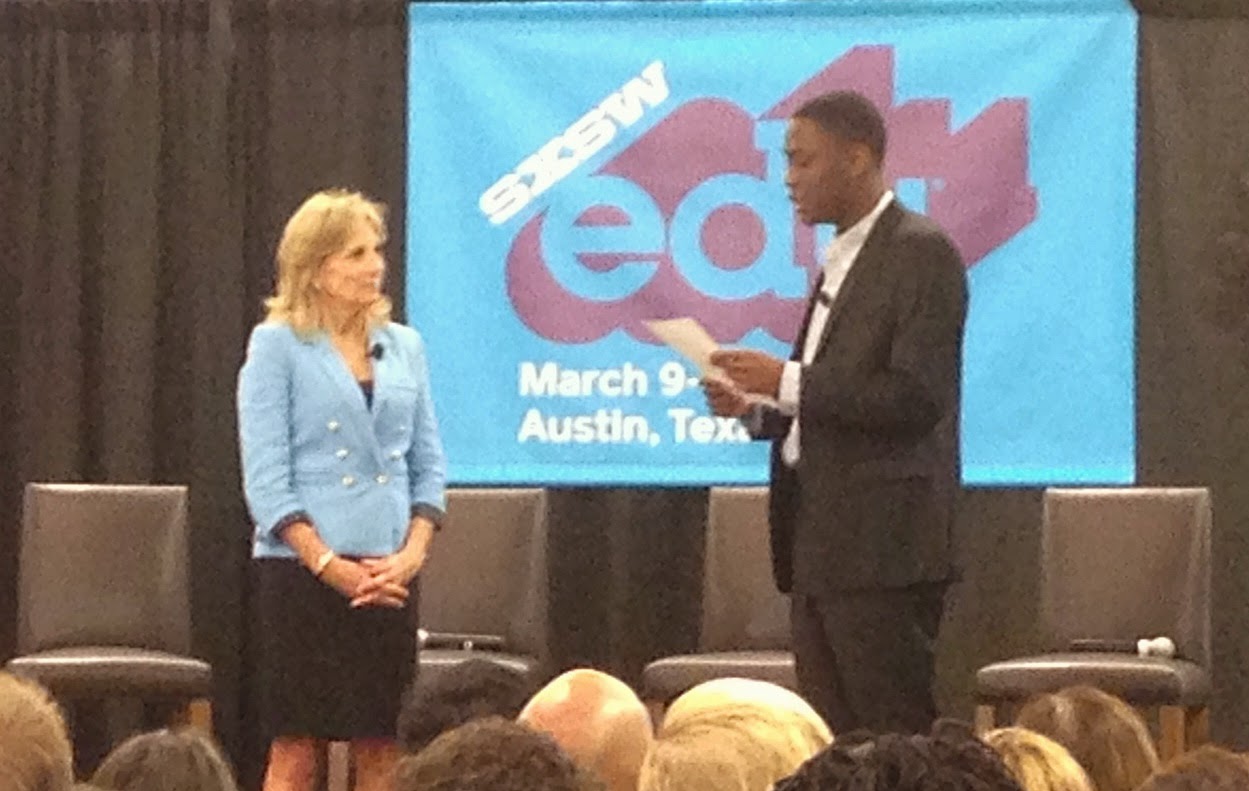
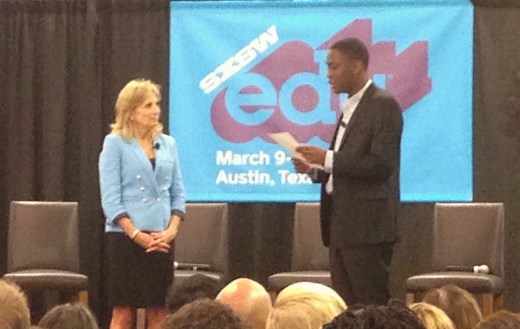
This morning, Second Lady Of The United States Dr. Jill Biden kept this dialogue moving forward in leading a summit by the Bill & Melinda Gates Foundation about redesigning higher education to fuel student success. Dr. Biden noted that education is the great equalizer, the basis for a better life. For this reason, she stressed, “Teaching is not what I do. It’s who I am.”

A panel discussion later with Jamie CasapTimothy Jones, and Isis Stephanie Cerda focused more intently on the need for diversity within educational technology. Similar messages emerged in workshops on “Equal Opportunity For Deeper Learning,” “My Brother’s Keeper: One Year Later,” and “Teaching A New Narrative For Black Male Achievement.”
Source: ASIDE 2015

An equally critical thread appeared in the number of talks about empowering girls and women in technology and entrepreneurship. For example, EdTechWomen was named this year’s official SXSWEdu Change Maker. Other titles included: “Women Disruptors 2.0,” “Paying It Forward: Leveraging Today’s Female Voice,” “Empowering Girls And Women To Lead,” “Digital Diversity: Minority Women In EdTech,” and “EdTech For Educational Inclusion.”

Another highlight of the day was Kristin Ziemke’s and Cheryl Boes’ presentation of innovative project examples to engage young learners with voice, choice, and audience. Their use of easy apps and elementary blogging revealed the many avenues that let children demonstrate understanding in exciting, authentic ways.

A later workshop featured a panel of thought leaders who promoted creativity in schools. They championed “less talking and more doing.” The speakers paraded both theoretical and tangible ways to inspire kids as imaginative thinkers. As Jonathan Plucker, Professor at the University Of Connecticut, noted, “creativity is about constraints.” A teacher’s task, therefore, is to help students identify constraints and then decide which ones to get rid of, which ones to ignore, and which ones to live with.

Ultimately, after a day of education and introspection, of creativity and contemplation, we recalled John Ashbery’s lines from Three Poems, which speak to the impossibility of certainty and the elusiveness of knowing:

“The term ignorant is indeed perhaps an overstatement, implying as it does that something is known somewhere, whereas in reality we are not even sure of this: we in fact cannot aver with any degree of certainty that we are ignorant. Yet this is not so bad; we have at any rate kept our open-mindedness — that, at least, we may be sure that we have — and are not in any danger, or so it seems, of freezing into the pious attitudes of those true spiritual bigots whose faces are turned toward eternity and who therefore can see nothing.” 

Short Biography of ‘Sudha Chandran’ (212 Words)

‘Sudha Chandran’ was born on 21 September 1964 in Kerala, India. She got her higher education from Mumbai, India. Sudha Chandran was born in a middle class family living in Mumbai, India. At the stage of three, she started learning Indian Classical Dance. Soon she became one of the most promising pupils of Bharat Natyam, a Classical Dance form.

Sudha had just turned sixteen when she and her parents set off on a vacation to South India. On their return journey, their bus was hit by a truck. It was a terrible accident and Sudha had fractured her leg. Unfortunately, the fractured foot got infected and lastly removed. She was fitted with an artificial foot.

Sudha resumed dance lessons. It was not easy at all with artificial foot. Her strong will and hard work paid off. Very soon she started dancing in front of an audience again. Soon she became very popular. Inspired by her story, in 1982 ‘Mayuri’, a Telugu film was made. She acted in the film herself. Later, in 1986, it was remade in Hindi, and called ‘Nache Mayuri’. After that she acted in many other films, too. Her television serials are also screened in several countries.

Sudha Chandran is much more than an actor or a dancer– She is a living legend. 

Short Essay on ‘Game I Like Most’ (140 Words)

There are many outdoor and indoor games but I like Hockey the most. Hockey is the most interesting outdoor game to me, because there is too much life in it. It keeps a player always busy physically as well as mentally. It is a very popular game all over the world. Hockey is also the national sport of India.

Hockey is a sport in which two teams play against each other by trying to maneuver a ball into the opponent’s goal using a hockey stick. In present, there are many forms of Hockey ie. Field hockey, Ice hockey, Roller hockey, Sledge hockey and Street hockey.

In Hockey India has an impressive record with many Olympic gold medals. The Golden Era of hockey in India was the period from 1928 – 1956 when India won 6 consecutive gold medals in the Olympic Games.

\’Tips to Policyholders of LIC\’ (280 Words)

  • Enquire with your agent about new innovative plans devised by LIC. 
  • Intimate LIC of India your E-mail address, Telephone number, Mobile number and Fax number for faster communication on matters relating not only to your policy services like premium reminders, claim alerts but also to update you on new plan/ services being offered by LIC.  
  • Maturity proceeds can be reinvested in attractive products of LIC viz. investment oriented products like LIC\’s Market Plus, Profit Plus, LIC\’s Bima Nivesh, Bima Bachat or Pension Schemes like New Jeevan SurakshaI, LIC\’s Jeevan AkshayVI etc. 
  • In case of any complaint, the full policy details with the name of the servicing branch may be provided for quick disposal of the complaint.  
  • LIC has launched an Enterprise Portal where policyholder can register and get information about his policy as well as products of LIC on portal itself.  
  • Make use of various services available with the help of Information Technology initatives elaborated.  
  • Check the nomination status under the policy and intimate changes, if any, for speedy settlement of claims.  
  • Pay the premiums in time (wherever possible, using facility of Metro/ Wide Area Network/ Internet/ Online Payment/ ATM\’s of Corporation Bank and Axis Bank and ECS).  
  • Revive the policy in case it has lapsed, so that the valuable insurance cover is kept intact.  
  • Review periodically the insurance needs of self and the family so that adequate insurance protection is ensured.

\’Tips to Policyholders of LIC\’ (280 Words)

  • Enquire with your agent about new innovative plans devised by LIC. 
  • Intimate LIC of India your E-mail address, Telephone number, Mobile number and Fax number for faster communication on matters relating not only to your policy services like premium reminders, claim alerts but also to update you on new plan/ services being offered by LIC.  
  • Maturity proceeds can be reinvested in attractive products of LIC viz. investment oriented products like LIC\’s Market Plus, Profit Plus, LIC\’s Bima Nivesh, Bima Bachat or Pension Schemes like New Jeevan SurakshaI, LIC\’s Jeevan AkshayVI etc. 
  • In case of any complaint, the full policy details with the name of the servicing branch may be provided for quick disposal of the complaint.  
  • LIC has launched an Enterprise Portal where policyholder can register and get information about his policy as well as products of LIC on portal itself.  
  • Make use of various services available with the help of Information Technology initatives elaborated.  
  • Check the nomination status under the policy and intimate changes, if any, for speedy settlement of claims.  
  • Pay the premiums in time (wherever possible, using facility of Metro/ Wide Area Network/ Internet/ Online Payment/ ATM\’s of Corporation Bank and Axis Bank and ECS).  
  • Revive the policy in case it has lapsed, so that the valuable insurance cover is kept intact.  
  • Review periodically the insurance needs of self and the family so that adequate insurance protection is ensured.

\’Tips to Policyholders of LIC\’ (280 Words)

  • Enquire with your agent about new innovative plans devised by LIC. 
  • Intimate LIC of India your E-mail address, Telephone number, Mobile number and Fax number for faster communication on matters relating not only to your policy services like premium reminders, claim alerts but also to update you on new plan/ services being offered by LIC.  
  • Maturity proceeds can be reinvested in attractive products of LIC viz. investment oriented products like LIC\’s Market Plus, Profit Plus, LIC\’s Bima Nivesh, Bima Bachat or Pension Schemes like New Jeevan SurakshaI, LIC\’s Jeevan AkshayVI etc. 
  • In case of any complaint, the full policy details with the name of the servicing branch may be provided for quick disposal of the complaint.  
  • LIC has launched an Enterprise Portal where policyholder can register and get information about his policy as well as products of LIC on portal itself.  
  • Make use of various services available with the help of Information Technology initatives elaborated.  
  • Check the nomination status under the policy and intimate changes, if any, for speedy settlement of claims.  
  • Pay the premiums in time (wherever possible, using facility of Metro/ Wide Area Network/ Internet/ Online Payment/ ATM\’s of Corporation Bank and Axis Bank and ECS).  
  • Revive the policy in case it has lapsed, so that the valuable insurance cover is kept intact.  
  • Review periodically the insurance needs of self and the family so that adequate insurance protection is ensured.

Fuel conservation mega campaign of PCRA Saksham 2020 launched

Saksham’, an annual one-month long fuel conservation mega campaign of Petroleum Conservation Research Association (PCRA) under the aegis of Ministry of Petroleum and Natural Gas, was launched today by Dr. M.M Kutty, Secretary, Ministry of Petroleum& Natural Gas in a function held in Delhi.

Dr. M.M Kutty, during his address, emphasized the importance of petroleum products for our country and the dire need for actions leading towards fuel conservation.  He stressed upon the importance of programs like Saksham wherein general public is involved in various activities. He said “Prosperity and higher living standards are driving energy demand in India.  By mid 2020s India will be the world’s largest growth market accounting for 25% of global energy demand growth.Today 83% of India’s crude oil requirement is met through import. The earnest efforts for petroleum conservation can help us to reduce the huge import burden.  Every drop of oil saved will contribute to saving of foreign exchange.  We also require to address the issues of climate change.  Through SAKSHAM we intend to deliver a strong message that sustainable future demands conservation of natural resources. “


The Secretary gave away the prizes to the winners of Essay, Quiz and Painting competitions for the National Level Competition-2019 which has seen a phenomenal record participation of more than 1.48 Crore students from school of all education boards of the country. The winners get Japan Study tour, Laptops, Tablets &Cash prizes and the win may help in motivating the youth of our country towards understanding their critical role in spreading the awareness about fuel conservation. The awards were also given away to the oil companies and their state level coordinators for their contribution in the fields of fuel conservation. The winning entries of the painting competition displayed in the gallery on the occasion amazed the dignitaries for the wonderful ideas and creativities depicted in the paintings.


On this occasion, the secretary also flagged-off the publicity vans of PCRA which shall visit different states covering the rural side as well, spreading messages about fuel conservation awareness through interactive audio, video creatives and print displays.


During Saksham-2020, various interactive programs and activities are being planned by PCRA. Public Sector upstream/downstream Oil & Gas companies under the able guidance of Ministry of Petroleum and Natural Gas are conducting various activities like ‘Saksham’ Cycle Day, Cyclothons, Workshops for drivers of commercial vehicles, Seminars for housewives/cooks on adopting simple fuel saving measure, Nationwide campaign through Radio, TV, Digital Cinemas, Outdoor etc. with a focus on reaching out to various segments of fuel users. PCRA is effectively utilizing the social media platforms for various customized campaigns through Facebook, Twitter, MyGov platform an endeavour to spread its reach amongst the masses.

‘Saksham’ a flagship program of PCRA and Oil PSUs under the guidance of Ministry of Petroleum and Natural Gas is an initiative for adding values to the various efforts being made in the country for saving fuel.


****

Minister of State for HRD Shri Sanjay Dhotre concludes His 5-day tour to North-East, West Bengal and Odisha

Minister of State for Human Resource Development (HRD), Communications and Electronics and Information Technology concluded his five-day tour of Assam, Tripura, West Bengal, and Odisha with a visit to the Jawahar Navodaya Vidyalaya (JNV) Cuttack, Odisha. He interacted with students and teachers of the school on different aspects of students’ life in the school, and also had lunch with them. The Minister told the students not to take pressure of any exam and enjoy their childhood, with curisosity towards their surroundings. He also told the students to watch Pariksha Pe Charcha on 20th Jan 2020 at 1100 am, wherein the  Prime Minister will have interaction with school students from across the country on the issues related to examination.

During this interaction, the Minister also spoke about India’s diverse culture and importance of ‘Unity in Diversity’ and highlighted Ek Bharat Shreshtha Bharat campaign among the students. Odisha is paired with Maharashtra under the Ek Bharat Shreshtha Bharat campaign. He exhorted the students to become the active agents in the protection of environment, and to avoid using ‘Single-use Plastic’.

During this tour, the Minister also visited Kendriya Vidylayas at Guwahati and Agartala and interacted with the students and teachers. He also visited India’s Monsoon monitoring ST RADAR of SAMEER at Guwahati and subsequently IIT Guwahati and reviewd its functioning.

He also chaired a conference of all NITs in North East at Agartala, Tripura and interacted with Directors of all NITs in North East on technology start-ups and entrepreneurship, for better future prospects for youth of North-East India. The conference was also attended by senior officials of Ministry of Electronics and IT, and its organisations  Software Technology Parks of India (STPI) and National Institute of Electronics and Information Technology (NEILIT)

During this tour, he also reviewed the progress of improvement in mobile coverage in remote areas of North-East India, status of broadband connectivity in villages, and functioning of Postal Banks and other activities of Department of Posts in the North East. Subsequently, he also visited C-DAC (Centre for Development of Advanced Computing) at Kolkata and reviewed the products developed by it for improving the life of common man. In Bhubaneswar, he visited NIC Data Centre and reviewed its functioning.

*****

Minister of State for HRD Shri Sanjay Dhotre concludes His 5-day tour to North-East, West Bengal and Odisha

Minister of State for Human Resource Development (HRD), Communications and Electronics and Information Technology concluded his five-day tour of Assam, Tripura, West Bengal, and Odisha with a visit to the Jawahar Navodaya Vidyalaya (JNV) Cuttack, Odisha. He interacted with students and teachers of the school on different aspects of students’ life in the school, and also had lunch with them. The Minister told the students not to take pressure of any exam and enjoy their childhood, with curisosity towards their surroundings. He also told the students to watch Pariksha Pe Charcha on 20th Jan 2020 at 1100 am, wherein the  Prime Minister will have interaction with school students from across the country on the issues related to examination.

During this interaction, the Minister also spoke about India’s diverse culture and importance of ‘Unity in Diversity’ and highlighted Ek Bharat Shreshtha Bharat campaign among the students. Odisha is paired with Maharashtra under the Ek Bharat Shreshtha Bharat campaign. He exhorted the students to become the active agents in the protection of environment, and to avoid using ‘Single-use Plastic’.

During this tour, the Minister also visited Kendriya Vidylayas at Guwahati and Agartala and interacted with the students and teachers. He also visited India’s Monsoon monitoring ST RADAR of SAMEER at Guwahati and subsequently IIT Guwahati and reviewd its functioning.

He also chaired a conference of all NITs in North East at Agartala, Tripura and interacted with Directors of all NITs in North East on technology start-ups and entrepreneurship, for better future prospects for youth of North-East India. The conference was also attended by senior officials of Ministry of Electronics and IT, and its organisations  Software Technology Parks of India (STPI) and National Institute of Electronics and Information Technology (NEILIT)

During this tour, he also reviewed the progress of improvement in mobile coverage in remote areas of North-East India, status of broadband connectivity in villages, and functioning of Postal Banks and other activities of Department of Posts in the North East. Subsequently, he also visited C-DAC (Centre for Development of Advanced Computing) at Kolkata and reviewed the products developed by it for improving the life of common man. In Bhubaneswar, he visited NIC Data Centre and reviewed its functioning.

*****

Shri Amit Shah presides over signing of Historic Agreement to end the Bru-Reang Refugee Crisis; Around 34,000 Internally Displaced People to be settled in Tripura

Union Minister for Home Affairs, Shri Amit Shah presided over the signing of an agreement between Government of India, Governments of Tripura and Mizoram and Bru-Reang representatives in New Delhi today, to end the 23-year old Bru-Reang refugee crisis. Present on the occasion were Chief Minister of Mizoram, Shri Zoramthanga, CM of Tripura, Shri Biplab Kumar Deb, Chairman, NEDA, Shri Himanta Biswa Sarma, Chairman, TIPRA, Shri Pradyot Kishore Debbarma, representatives of Bru tribes, along with senior officers.


BRU1.jpg


This historic agreement is in line with PM Modi’s vision for the progress of the North East and the empowerment of the people of the region. Ever since taking office, PM Modi has initiated numerous policy level interventions that have improved infrastructure, connectivity, economic growth, tourism and social development of the region.

Briefing the media, Shri Shah said that under the dynamic leadership of Prime Minister Shri Narendra Modi a permanent solution has been arrived to this long standing issue of rehabilitating thousands of Bru-Reang people in Tripura and they can now look towards a bright future. Under the new agreement, he informed, around 34,000 Bru refugees will be settled in Tripura and would be given aid from the Centre to help with their rehabilitation and all round development, through a package of around Rs 600 crores. These people would get all the rights that normal residents of the States get and they would now be able to enjoy the benefits of social welfare schemes of Centre and State governments. The settlement has been reached after detailed discussions held by Union government with the State governments of Mizoram and Tripura and the representatives of Bru tribes and it was decided that the Bru refugees, he added.


BRU2.jpg


The Home Minister informed that under the new arrangement, each of the displaced families would be given 40×30 sq.ft. residential plots, in addition to the aid under earlier agreement of a fixed deposit of Rs. 4 lakhs, Rs. 5,000 cash aid per month for 2 years, free ration for 2 years and Rs. 1.5 lakhs aid to build their house. The government of Tripura would provide the land under this agreement.

Shri Shah mentioned about how the North East is being put on the track of fast paced development under the leadership of Shri Narendra Modi. He talked about the recent surrender of 88 armed insurgents of the NLFT(SD) group and assimilating them into the mainstream. This major step, along with the Bru-Reang agreement today, is important milestones in bringing fast paced development to the State of Tripura. Soon, a lasting peace would be established in the whole of the North East under Prime Minister’s leadership, he added.


Background

In 1997, following ethnic tension, around 5,000 families comprising around 30,000 Bru-Reang tribals were forced to flee Mizoram and seek shelter in Tripura. These people were housed in temporary camps at Kanchanpur, in North Tripura.

Since 2010, Government of India has been making sustained efforts to permanently rehabilitate these refugees. The Union government has been assisting the two State governments for taking the care of the refugees. Till 2014, 1622 Bru-Reang families returned to Mizoram in different batches.

On 3rd July, 2018, an agreement was signed between the Union government, the two State governments and representatives of Bru-Reang refugees, as a result of which the aid given to these families was increased substantially. Subsequently, 328 families comprising of 1369 individuals returned to Mizoram under the agreement. There had been a sustained demand of most Bru-Reang families that they may be allowed to settle down in Tripura, considering their apprehensions about their security.

*****