\’Present Status of LIC of India\’ (491 Words)

Life Insurance Corporation of India was created on 1st September, 1956, with the objective of spreading life insurance much more widely and in particular to the rural areas with a view to reach all insurable persons in the country, providing them adequate financial cover at a reasonable cost.

LIC had 5 zonal offices, 33 divisional offices and 212 branch offices, apart from its corporate office in the year 1956. Since life insurance contracts are long term contracts and during the currency of the policy it requires a variety of services need was felt in the later years to expand the operations and place a branch office at each district headquarter. Re-organization of LIC took place and large numbers of new branch offices were opened. As a result of re-organisation servicing functions were transferred to the branches, and branches were made accounting units. It worked wonders with the performance of the corporation. It may be seen that from about 200.00 crores of New Business in 1957 the corporation crossed 1000.00 crores only in the year 1969-70, and it took another 10 years for LIC to cross 2000.00 crore mark of new business. But with re-organisation happening in the early eighties, by 1985-86 LIC had already crossed 7000.00 crore Sum Assured on new policies.

Today LIC functions with 2048 fully computerized branch offices, 109 divisional offices, 8 zonal offices, 992 satallite offices and the Corporate office. LIC’s Wide Area Network covers 109 divisional offices and connects all the branches through a Metro Area Network. LIC has tied up with some Banks and Service providers to offer on-line premium collection facility in selected cities. LIC’s ECS and ATM premium payment facility is an addition to customer convenience. Apart from on-line Kiosks and IVRS, Info Centres have been commissioned at Mumbai, Ahmedabad, Bangalore, Chennai, Hyderabad, Kolkata, New Delhi, Pune and many other cities. With a vision of providing easy access to its policyholders, LIC has launched its SATELLITE SAMPARK offices. The satellite offices are smaller, leaner and closer to the customer. The digitalized records of the satellite offices will facilitate anywhere servicing and many other conveniences in the future.

LIC continues to be the dominant life insurer even in the liberalized scenario of Indian insurance and is moving fast on a new growth trajectory surpassing its own past records. LIC has issued over one crore policies during the current year. It has crossed the milestone of issuing 1,01,32,955 new policies by 15th Oct, 2005, posting a healthy growth rate of 16.67% over the corresponding period of the previous year.

From then to now, LIC has crossed many milestones and has set unprecedented performance records in various aspects of life insurance business. The same motives which inspired our forefathers to bring insurance into existence in this country inspire us at LIC to take this message of protection to light the lamps of security in as many homes as possible and to help the people in providing security to their families. 
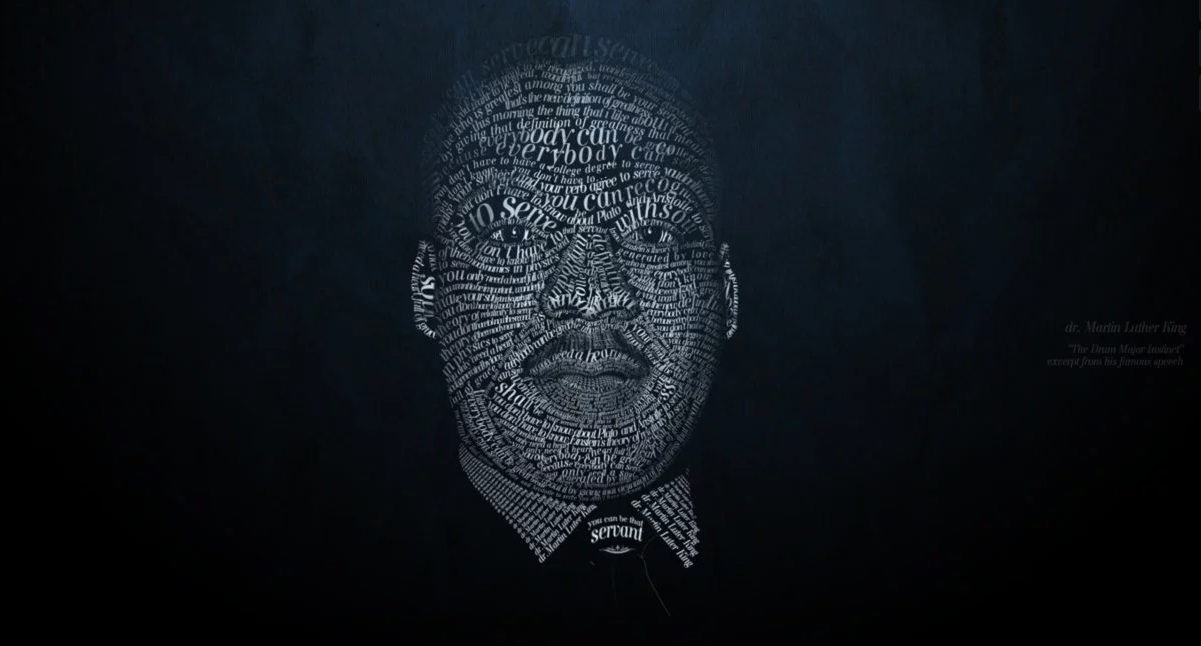
The Power Of Visual Rhetoric – Using Kinetic Typography To Learn About Black History & Civil Rights

Source: Versa


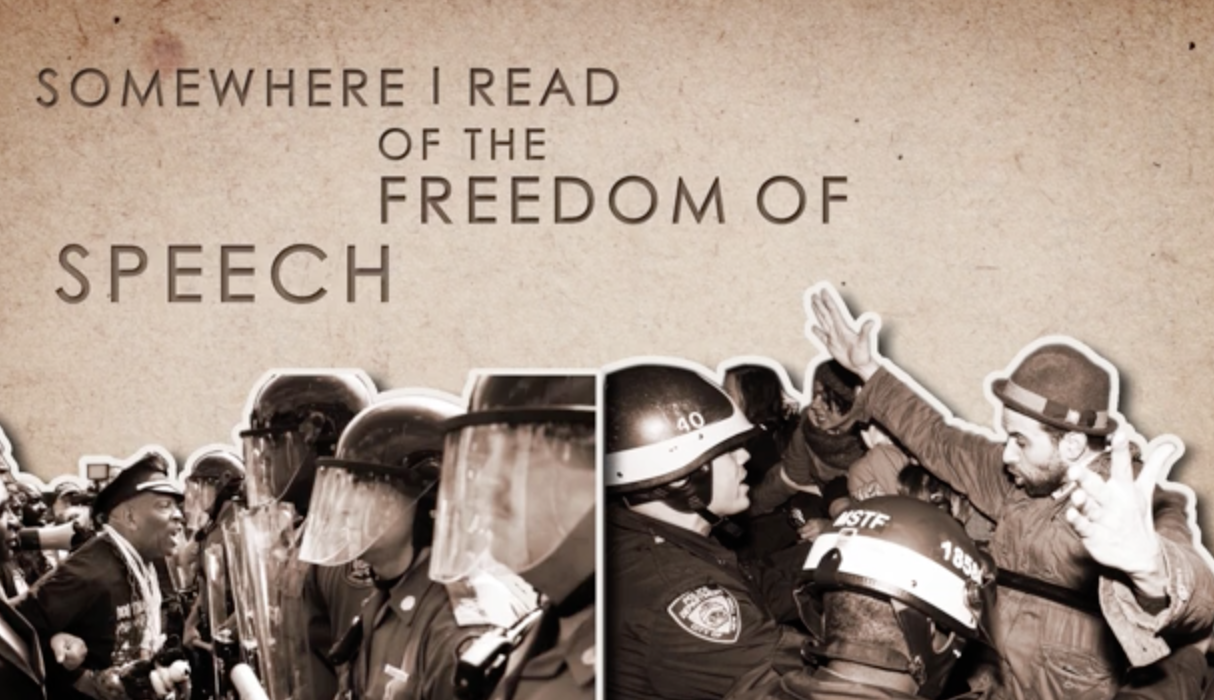
Kinetic typography and motion graphics are bringing to life the soaring oratory of the Civil Rights Era like never before. During the 1950s and 60s, many landmark speeches stood out in their power to persuade the conscience of a generation. The Reverend Dr. Martin Luther King, Jr., in particular, crafted brilliant language to inspire a burgeoning movement and to convince an at-time reluctant populace. During February’s African American History Month, the words of Dr. King are widely studied. Yet rarely before has the rhetoric of his writings emerged in such vivid portrayal as in the motion graphics below.

Kinetic typography is the combination of motion and text. Via animation, fonts take on lives of their own, scaffolding or cascading across canvases with the addition of music and/or narration. The zoom of calligraphy and the staccato of letters become at once mesmerizing and educational.

Dr. King’s addresses, when read quietly for homework, do feature his eloquent use of classical references and repetition. In silence, however, they do not achieve their most compelling effect. Like Shakespeare, his verses are meant to be heard, to be experienced, to be savored.

Source: Ryan Blackwell


When Dr. King’s words appear in the dynamic interplay of typefaces on the screen, the music and color and locomotion all elevate his passages to new heights. They take on an urgency, a potency of expressiveness, and a linguistic might. They crystalize the commitment of the freedom fighters pushing for fair housing, fair employment, fair public service. They honor the ardor of those who sacrificed much for so many.

The three videos in this post contain engrossing representations of Dr. King’s most moving rhetoric. In each case, he builds phrases and arguments in a powerful crescendo about human dignity and natural rights. His “I Have A Dream” speech may be his most famous, yet his final speech, “I’ve Been To The Mountaintop,” and his final sermon, “The Drum Major Instinct,” may together feature his most masterful craftsmanship with verbiage and values, rights and reason. By adding motion, the designers of these videos bring Dr. King’s messages to life.

The Drum Major Instinct (visualization by Versa)


 Martin Luther King (kinetic typography) from versa on Vimeo.

I\’ve Been To The Mountaintop (visualization by Ryan Blackwell)


I Have A Dream (visualization by Deco, EMAV 2012)


For more resources and ideas about lessons for African American History Month, check out \”Let\’s Talk About Race.\”

Collaborative Hearts And Minds Help Kids Cope

Source: ASIDE 2015

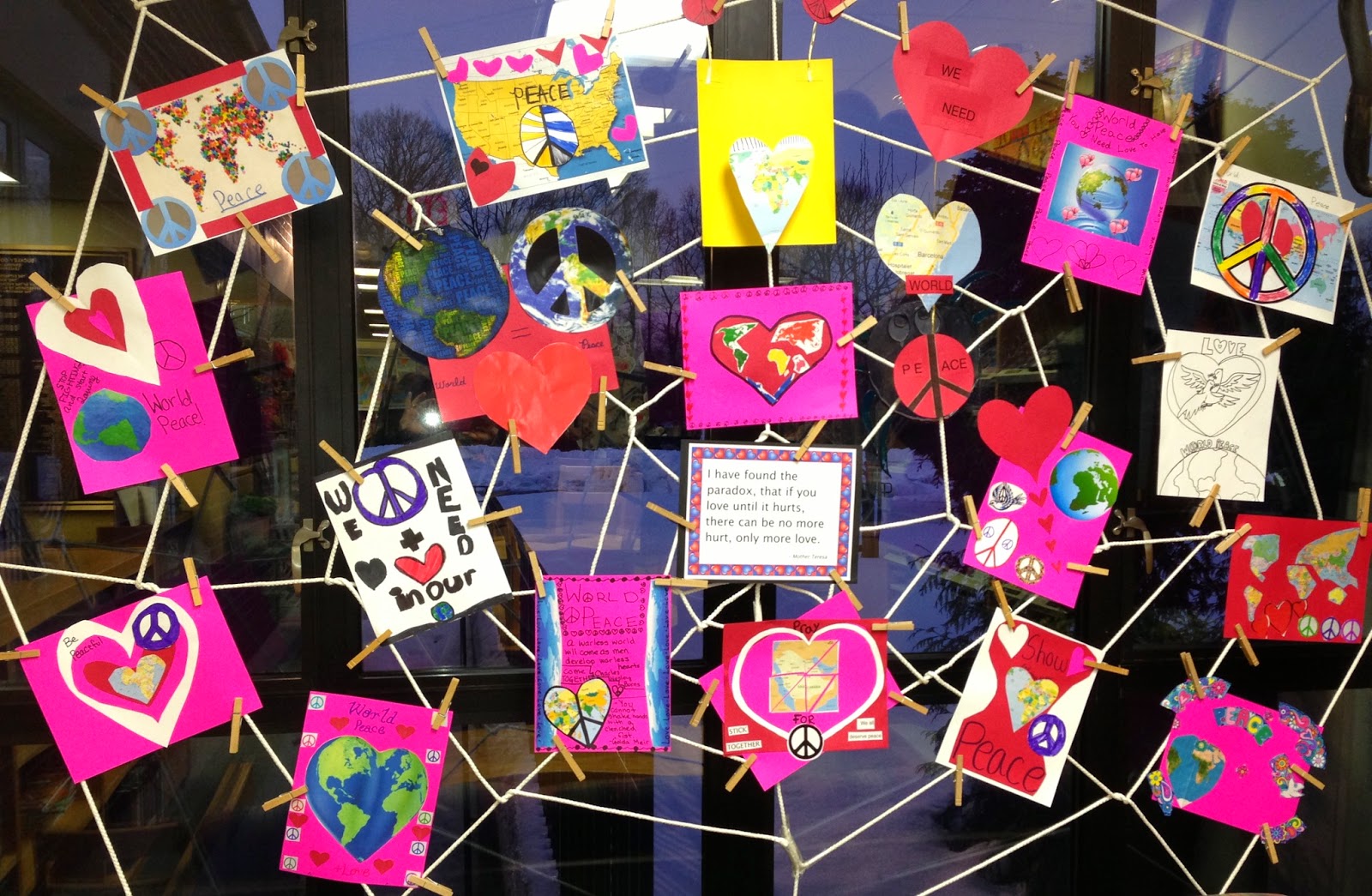
With the increasing questions we received from our sixth graders about the abhorrent news this past week, we realized they needed to do something to make them feel they were sending a positive message to help the world be a more peaceful place. Eleven- and twelve-year-olds hear the news, and most have far more access to content than their parents realize. Their questions abound and need an outlet. As middle school educators, we know this.

Source: ASIDE 2015

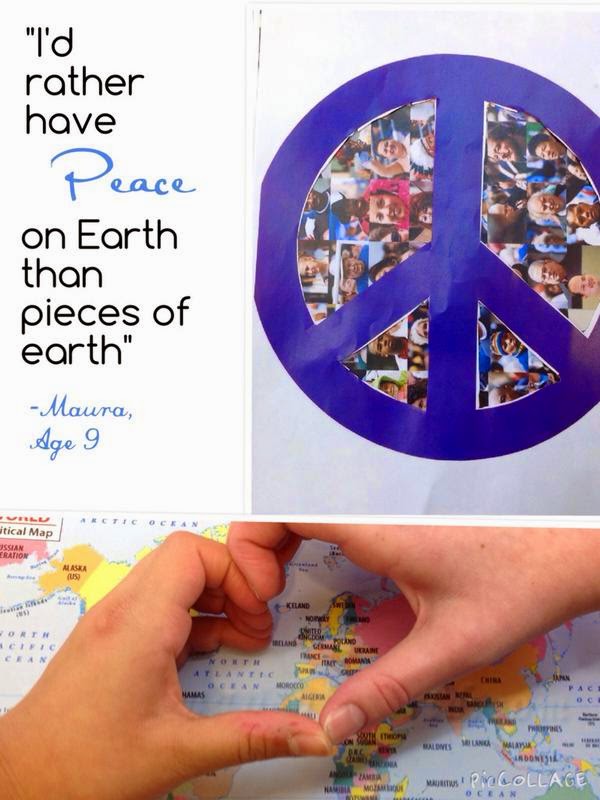
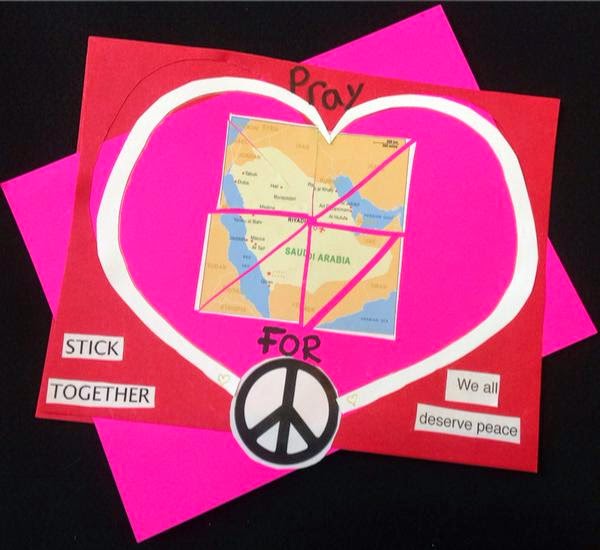
So with our friend and colleague, Francine Wisnewski (@fwisnewski), we decided to bring hearts and minds together to let the kids create a message to share on social media and with the school community. We asked them that each finished design somehow include a heart, map, and peace sign. That’s it. How they incorporated the criteria and with whom they worked, or not, was up to them.

We cherish the flexibility in our curricula that allows us to stop everything to promote mindfulness with our learners. It does not matter that the schedule listed math and history; we pulled the kids together to address their concerns about world conflict and violence.

Source: ASIDE 2015

We continually try to build the hearts and minds of our young learners to be peace builders, peacemakers, and peacekeepers. As adults, we understand the turmoil in the world, and sometimes we just have to stop to help them cope. It’s worth every minute. If we don’t, we lose the power of positive thinking that the world so much needs.

For other resources, please see:

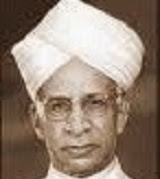
Short Biography of ‘Dr. Sarvepalli Radhakrishnan (S. Radhakrishnan)’ (150 Words)

‘Sarvepalli Radhakrishnan’ was born on 5 September 1888 at a village near Thiruttani, India. His father’s name was Sarvepalli Veeraswami and his mother’s name was Sitamma. He was married to Sivakamu.

Dr. Sarvapalli Radhakrishnan was a staunch believer of education, and was the well-known diplomat, scholar and ideal teacher. He was a great Philosopher and also a teacher. He was also a great freedom fighter. He had a deep love for the profession of teaching. When India became independent in 1947, Radhakrishnan was elected as the first Vice President of India in 1952. He was elected as the second President of India after Dr. Rajendra Prasad. He died on 17 April 1975.

In India, ‘Teacher’s Day’ is celebrated on 5th September each year. It is the birth date of Dr. Sarvepalli Radhakrishnan. Teachers’ day is celebrated as a mark of tribute to the contribution made by teachers to the society. On this day teachers selected from schools and colleges are invited by the President of India and honoured by giving a certificate of recognition along with some cash prize. The award given by the President is called the National Award for Teachers, which is a great honour to the humble teachers. 

Short Essay on ‘Festival I Like Most’ (188 Words)

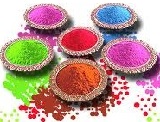
Many festivals are celebrated all over the year in India but I like Holi festival the most. Holi is one of the greatest festival of Hindus. It is a festival of colours. This festival falls on a full moon day in Phalgun Month of Hindu Calender. I like it most because this festival brings lot of joy and happiness.

The story behind the Holi festival is that there was a king named Hiranya kashyap, he had a son, Prahlad, a holy spirit and highly devoted to God but Prahlad’s devotion enraged Hiranya kashyap and he planned to kill his own son. He asked her sister Holika, who was immune to fire, to sit in fire taking Prahlad in her lap. Fortunately Prahlad, who was blessed by Lord, was saved and Holika was burnt to ashes.

Holi is also a festival of love and unity and celebrates the triumph of good over evil. The festival is celebrated with lot of pomp in north India. After a fun filled and exciting day, the evenings are spent in sobriety when people meet friends and relatives and exchange sweets and festive greetings. 
 

Short Essay on \’Chhath Puja\’ (250 Words)

\’Chhath Puja\’ is a famous festival of Hindus. It is celebrated in Bihar and Uttar Pradesh and many other parts of India. It is also followed in some parts of West Bengal, Jharkhand, Odisha, Assam and also Mauritius and Nepal. It is celebrated mainly among the Bhojpuri and Maithali speaking people. Chhath Puja takes place during 6th day (Shasthi) lunar fortnight (Shukla Paksha) of Karthik month according to Hindu Calendar. It generally falls in the month of October-November. The festival lasts for four days.

Chhath Puja is also known as Dala Chhath. In this important festival setting Sun (dawn) is worshiped. The festival is observed with the faith that the Sun God fulfills wishes if \’araghya\’ is offered with complete dedication and devotion. It is a festival connected with purity, devotion to the Sun God who is considered as the source of life on this earth and is regarded as the deity who fulfills all our wishes. The festival is with an aim to express thanks to Sun God for offering energy to earth continuously enabling the environment suitable for the people to live. Along with the Sun God people worship \’Chhathi Maiya\’ on this day.

On this festival devotees assemble at the ghats at rivers and ponds and take a holy dip before preparing offerings (Prasad). The main constituent of the offerings are Thekua, which is a wheat based cake. Offerings are preferably cooked on earthen Chulha (oven). During the offerings, offerings are contained in small, semicircular pans woven out of bamboo strips called soop. 

Short Essay on \’Chhath Puja\’ (250 Words)

\’Chhath Puja\’ is a famous festival of Hindus. It is celebrated in Bihar and Uttar Pradesh and many other parts of India. It is also followed in some parts of West Bengal, Jharkhand, Odisha, Assam and also Mauritius and Nepal. It is celebrated mainly among the Bhojpuri and Maithali speaking people. Chhath Puja takes place during 6th day (Shasthi) lunar fortnight (Shukla Paksha) of Karthik month according to Hindu Calendar. It generally falls in the month of October-November. The festival lasts for four days.

Chhath Puja is also known as Dala Chhath. In this important festival setting Sun (dawn) is worshiped. The festival is observed with the faith that the Sun God fulfills wishes if \’araghya\’ is offered with complete dedication and devotion. It is a festival connected with purity, devotion to the Sun God who is considered as the source of life on this earth and is regarded as the deity who fulfills all our wishes. The festival is with an aim to express thanks to Sun God for offering energy to earth continuously enabling the environment suitable for the people to live. Along with the Sun God people worship \’Chhathi Maiya\’ on this day.

On this festival devotees assemble at the ghats at rivers and ponds and take a holy dip before preparing offerings (Prasad). The main constituent of the offerings are Thekua, which is a wheat based cake. Offerings are preferably cooked on earthen Chulha (oven). During the offerings, offerings are contained in small, semicircular pans woven out of bamboo strips called soop. 

Short Essay on \’Chhath Puja\’ (250 Words)

\’Chhath Puja\’ is a famous festival of Hindus. It is celebrated in Bihar and Uttar Pradesh and many other parts of India. It is also followed in some parts of West Bengal, Jharkhand, Odisha, Assam and also Mauritius and Nepal. It is celebrated mainly among the Bhojpuri and Maithali speaking people. Chhath Puja takes place during 6th day (Shasthi) lunar fortnight (Shukla Paksha) of Karthik month according to Hindu Calendar. It generally falls in the month of October-November. The festival lasts for four days.

Chhath Puja is also known as Dala Chhath. In this important festival setting Sun (dawn) is worshiped. The festival is observed with the faith that the Sun God fulfills wishes if \’araghya\’ is offered with complete dedication and devotion. It is a festival connected with purity, devotion to the Sun God who is considered as the source of life on this earth and is regarded as the deity who fulfills all our wishes. The festival is with an aim to express thanks to Sun God for offering energy to earth continuously enabling the environment suitable for the people to live. Along with the Sun God people worship \’Chhathi Maiya\’ on this day.

On this festival devotees assemble at the ghats at rivers and ponds and take a holy dip before preparing offerings (Prasad). The main constituent of the offerings are Thekua, which is a wheat based cake. Offerings are preferably cooked on earthen Chulha (oven). During the offerings, offerings are contained in small, semicircular pans woven out of bamboo strips called soop. 

Meeting by Cabinet Secretary on “Novel Coronavirus” outbreak

Cabinet Secretary today (27.1.2020) reviewed the situation arising out of“Novel Coronavirus” outbreak in China.

2.      Secretaries in the  Ministries of Health, External Affairs, Civil Aviation, Labour, Defence, I&B and Member-Secretary, National Disaster Management Authority, DG(Armed Forces Medical Services) attended the Meeting.

3.      Cabinet Secretary was informed that till yesterday 137 flights have been screened (total cumulative passengers 29707).

4.      Samples of 12 passengers were referred to NIV Pune.  No positive case has been reported so far.

5.      Following actions are being taken:

Ministry of Civil Aviation

(i)      issue of instruction to airlines for managing and notifying anybody reporting illness on all flights with direct or indirect connectivity to China.

(ii)      facilitate in-flight announcements and

(iii)     distribution of health cards to all flights with direct or indirect connectivity to China.

Ministry of Home Affairs

To ensure that integrated check posts initiate screening of visitors across Nepal border. States have been requested to provide health staff for these check posts. SSB/ BSF/Immigration officers manning integrated check posts have been sensitized.

Ministry of Shipping

To initiate entry screening at the International ports having traffic from China.

6.      Health Ministry also held a review meeting earlier today with Chief Secretaries to review the preparedness and screening in 5 states having border with Nepal.  They have been asked to ensure that community level monitoring of passengers is undertaken through health staff.

7.      It was decided that steps may be taken to prepare for possible evacuation of Indian nationals in Wuhan. Accordingly, Ministry of External Affairs will make a request to the Chinese authorities.

8.      Ministry of Civil Aviation and Ministry of Health will make arrangements for transport and quarantine facilities respectively.

***

SC

Shri Amit Shah presides over signing of Historic Comprehensive Bodo Settlement Agreement to end the over 50 year old Bodo Crisis

Union Minister for Home Affairs, Shri Amit Shah presided over the signing of a historic agreement between Government of India, Government of Assam and Bodo representatives, in New Delhi today, to end the over 50-year old Bodo crisis. Further, a permanent solution has been found out for the problem that has cost the region over 4000 lives.

Present on the occasion were Chief Minister of Assam, Shri Sarbananda Sonowal, Convenor, NEDA and Assam Minister, Shri Himanta Biswa Sarma, Chief Executive Member of BTC, Shri  Hagrama Mohilary, representatives of Bodoland Territorial Council (BTC), All Bodo Students Union (ABSU), United Boro People Organization (UBPO), National Democratic Front of Bodoland (NDFB) factions – Gobinda Basumatary, Dhirendra Boro, Ranjan Daimary, B. Saoraigwra, along with senior officers from Union Ministry of Home Affairs and the Government of Assam.

With this agreement, over 1500 armed cadres will abjure violence and join the mainstream. A Special Development Package Rs. 1500 crores over three years will be given by the Union Government to undertake specific projects for the development of Bodo areas.


Speaking on the occasion, Shri Shah called this momentous occasion as the harbinger of a golden future for Assam, and that it was a direct consequence of Prime Minister Shri Narendra Modi’s policy of focusing on North-East region’s development. The fruition of this vision can also be seen in the Bru-Reang agreement signed on January 16, 2020 to end the humanitarian crisis in Meghalaya and Tripura, recent surrender of 644 armed cadres in Assam and surrender of 88 armed NLFT cadres in Tripura to bring them to mainstream, in addition to today’s agreement.

Shri Shah said that Assam’s territorial integrity is assured with this agreement, as every single Bodo group has come on board. He noted that while earlier the states of North East used to feel neglected, Modi government ensured that a Union Minister visited the region every week in order to ensure effective implementation of Government schemes and timely completion of infrastructure projects.


The Home Minister added that this agreement is another success of Prime Minister’s vision of ‘Sab ka Saath, Sab ka Vikas, Sab ka Vishwas’, as with this agreement, Assam’s road to development has been cleared. Ever since assuming office, Shri Modi has initiated numerous policy level interventions that have improved infrastructure, connectivity, economic growth, tourism and social development of the region.

Talking on the salient features of the agreement, Shri Shah said that the objective of the MoS is to increase the scope and powers of the BTC and to streamline its functioning; resolve issues related to Bodo people residing outside Bodoland Territorial Area Districts (BTAD); promote and protect Bodo’s social, cultural, linguistic and ethnic identities; providing legislative protection for the land rights of tribals; ensure quick development of tribal areas and rehabilitate members of NDFB factions.

The Minister said that in the past, not being satisfied with the settlements of 1993 and 2003, the Bodos have been consistently demanding more powers. A comprehensive and final resolution to their demands has been arrived at, while retaining the territorial integrity of the state of Assam. After Modi government came to power, intensive discussions were held since August 2019 with ABSU, NDFB factions and other Bodo organizations to reach a comprehensive solution to end the decades old Bodo movement.


IMG_0048.JPG   IMG_0060.JPG


After the agreement, the NDFB factions will leave the path of violence, surrender their weapons and disband their armed organizations within a month of signing the deal. The Union Government and the Government of Assam will take necessary measures to rehabilitate over 1500 cadres of NDFB (P), NDFB (RD) and NDFB (S), as per the laid down policy of the government.

The current agreement proposes to set up a commission under Section 14 of the Sixth Schedule to the Constitution of India, which will recommend the inclusion or exclusion of tribal population residing in villages adjoining BTAD areas. In this commission, besides State government there will be representatives from ABSU and BTC. It will submit its recommendation within six months from the date of notification.


The Government of Assam will establish a Bodo-Kachari Welfare Council as per existing procedure. The Assam government will also notify Bodo language as an associate official language in the state and will set up a separate directorate for Bodo medium schools. The present settlement has proposal to give more legislative, executive, administrative and financial powers to BTC.

*****

Health Secretary reviews preparedness of Ministries/Depts and States on Coronavirus through video conference

Ms. Preeti Sudan, Secretary (HFW) chaired a video conference (VC) with Chief Secretaries and DG (Police) of the five states bordering Nepal (Uttarakhand, Uttar Pradesh, Bihar, West Bengal and Sikkim) and Pr. Secretary (H) of other states/UTs, to review their preparedness for prevention and management of coronavirus. Shri Ajay Bhalla, Secretary (Home), Dr.Balram Bhargava, Secy (DHR), Shri G.V.V. Sarma, MemberSecy (NDMA), Dr Gangakhedkar, Scientist (ICMR), Ms. Rubina Ali, JS (M/O Civil Aviation), Shri R K Agarwal,JS (Ports), M/O Shipping also joined the VC.

Secretary (H) also informed the states/UTs that Dr Harsh Vardhan, Union Minister of Health & Family Welfare is closely and regularly monitoring the status of preparedness. The Union Health Minister has written to Chief Ministers of the five States bordering Nepal, and to Chief Ministers of other States/UTs, requesting them to personally review preparedness measures in the matter.

In response to the confirmed case of Novel Coronavirus in Nepal, India has stepped up the vigil at the border of Nepal. Secretary (HFW) reviewed the preparedness of these bordering states in terms of orientation of health and other agencies; adherence of various prevention &management protocols; awareness regarding prevention of coronavirus among the people being screened and those transiting the border with Nepal; self-reporting by these people; isolation wards; protective gear etc. The States have informed that they have made all necessary arrangements for screening of people transiting across the border. They also informed that travel advisories, other guidelines and protocols issued by the Health Ministry have been also widely disseminated. Orientation of the Sashastra Seema Bal (SSB), the medical personnel, and health officials has also been conducted. Awareness drives are being undertaken through miking, distribution of leaflets and signages at the border check posts. Secretary (H) has also advised for Special Gram Sabhas to be organised in coordination with Dept of Panchayati Raj over this week for enhancing awareness regarding the coronavirus diseases, its symptoms, preventive measures, reporting etc.in the border villages. She also advised them to coordinate with the Hotels Association for wider self-reporting by travellers from Nepal visiting religious and other tourist places in these states.

Secretary (HFW) informed that passengers are being screened at 7 airports, and risk communication and self-declaration at 12 other Airports. She advised the states to ensure that medical officers are deputed to coordinate with the airport authorities, while tertiary hospitals are also identified for these airports. She also advised the states to ensure that protocols for contact tracing, and timely collection and transportation of samples from suspected cases to NIV, Pune is followed. States need to assess requirement of personal protection equipment, masks etc., and undertake necessary procurement to ensure sufficient supply, she stated. Secretary (H) assured states of all support from the Health Ministry, including orientation of medical personnel/staff and other agencies through regular video conferencing. States have been advised to depute a nodal officer for coordinating the efforts of the different agencies within the states, and to regularly update progress to the Union Health Ministry.

Sh. Ajay Kumar Bhalla, Secretary, Home Affairs interacted with DGP of the States/UTs and guided them on key steps to be taken up in the bordering areas, in coordination with the Health Dept. The Shipping Ministry informed that necessary communication has been sent to the national port authorities. They were also directed to follow up with the Inland Waterways Authority of India, and coordinate with the maritime states. NDMA has been requested to share its guidelines and other relevant information with the state authorities.

****

MV

Cabinet Secretary reviews the preventive measures on “Novel Coronavirus” outbreak

Cabinet Secretary today (27.1.2020) reviewed the situation arising out of “Novel Coronavirus” outbreak in China.

2.      Secretaries in the Ministries of Health, External Affairs, Civil Aviation, Labour, Defence, I&B and Member-Secretary, National Disaster Management Authority, DG (Armed Forces Medical Services) attended the Meeting.

3.      Cabinet Secretary was informed that till yesterday 137 flights have been screened (total cumulative passengers 29707).

4.      Samples of 12 passengers were referred to NIV Pune.  No positive case has been reported so far.

5.      Following actions are being taken:

Ministry of Civil Aviation

(i)      issue of instruction to airlines for managing and notifying anybody reporting illness on all flights with direct or indirect connectivity to China.

(ii)      facilitate in-flight announcements and

(iii)     distribution of health cards to all flights with direct or indirect connectivity to China.

Ministry of Home Affairs

To ensure that integrated check posts initiate screening of visitors across Nepal border. States have been requested to provide health staff for these check posts. SSB/ BSF/Immigration officers manning integrated check posts have been sensitized.

Ministry of Shipping

To initiate entry screening at the International ports having traffic from China.

6.      Health Ministry also held a review meeting earlier today with Chief Secretaries to review the preparedness and screening in 5 states having border with Nepal, in addition to Pr. Secretaries (Health) of other states.  They have been asked to ensure that community level monitoring of passengers is undertaken through health staff.

7.      It was decided that steps may be taken to prepare for possible evacuation of Indian nationals in Wuhan. Accordingly, Ministry of External Affairs will make a request to the Chinese authorities.

8.      Ministry of Civil Aviation and Ministry of Health will make arrangements for transport and quarantine facilities respectively.


***

CBIC has a big role in India’s rise in Ease of Doing Business rankings : Shri Anurag Thakur

Union Minister of State for Finance & Corporate Affairs, Shri Anurag Singh Thakur has expressed confidence that with concerted efforts of the Central Board of Indirect Taxes & Customs (CBIC), India would further improve its position in ranking for Ease of Doing Business. While addressing at Investiture Ceremony & International Customs Day 2020 here today, Shri Thakur said that India has risen in the Ease of Doing Business Rankings by being transparent, accountable and logical. This rise in rankings is due to the efforts of the officers of CBIC as Trading Across Borders is one of the key parameter of the rankings and it is credit to the efforts of CBIC that this key parameter has performed.

While stressing on harnessing technology for faster resolution, the Minister said that technology plays an important role by ensuring efficiency, transparency and accountability. Shri Thakur appreciated the response of Custom officials to dynamics of changing ecosystem worldwide. Customs are doing well because they work as a team besides adapting and evolving, especially in a large and diverse country like India.

He said the 2020 theme of International Customs Organisation itself highlights the changing nature and role of customs today. The theme of International Customs Day, celebrated on 26th January every year, is dedicated to the contribution of Customs towards a sustainable future where social, economic, health and environmental needs are at the heart of our actions, with the slogan “Customs fostering Sustainability for People, Prosperity and the Planet”.

Shri Thakur gave away the awards to CBIC Officers & Staff for their meritorious services on the occasion of Investiture Ceremony & International Customs Day. Presidential Award of Appreciation Certificates and World Customs Organization (WCO) Certificates of Merit Award were also presented to the distinguished officers of the CBIC.

Dr. Ajay Bhushan Pandey, Revenue Secretary, also spoke about the thrust on enhancing trade facilitation and the role of other stakeholders including participating government agencies. Revenue Secretary emphasized on use of technology in ensuring Ease of Doing Business.

Dr. John Joseph, Chairman CBIC, while congratulating the awardees highlighted recent key initiatives taken by the Customs for enhancing trade facilitation in line with the Action Plan for implementing the Trade Facilitation Agreement of the WTO ratified by India.  He also complimented the officers for their dedicated work especially in the area of preventing smuggling of environmentally sensitive items, flora and fauna. Chairman CBIC said that officers of CBIC are fully committed towards hassle free trade and taking India to newer heights in Ease of Doing Business rankings.

Shri O. P. Dadhich, Principal Chief Commissioner of Customs Delhi Zone presented the vote of thanks.

The following officers received the Presidential commendation.

  1. Exceptionally Meritorious Service rendered at the Risk of Life
  1. Shri Afaq Ahmad Giri, Assistant Director, Directorate of Revenue Intelligence (DRI) Regional Unit, Jammu;
  2. Shri Lalthanliana, Senior Intelligence Officer, DRI Regional Unit, Aizawl;
  3. Shri Ranjeet Singh, Senior Intelligence Officer, DRI Regional Unit, Jammu;

B.  Specially Distinguished Record of Service

  1. Shri Bankey Behari Agrawal, Principal Chief Commissioner, Central Goods and Services Tax & Central Excise (CGST & CEX) and Customs Zone, Hyderabad;
  2. Shri Pramod Kumar Singh, Principal Commissioner, CGST & CEX Zone, Jaipur;
  3. Shri Ashish Varma, Principal Additional Director General, DRI Zonal Unit, Ahmedabad;
  4. Shri Vimal Kumar Srivastava, Additional Director General, National Academy of Customs, Indirect Taxes & Narcotics (NACIN), Faridabad;
  5. Shri Subhash Agrawal, Commissioner of Customs, Mumbai –II Customs Zone, Mumbai;
  6. Dr. Satish S. Dhavale, Additional Director, Risk Management Centre for Customs, Directorate General of Analytics and Risk Management, Mumbai;
  7. Shri Nagendra Kumar Mishra, Additional Commissioner, CGST & CEX Zone, Ranchi;
  8. Shri Hardeep Batra, Additional Commissioner, World Customs Organisation Cell, CBIC, New Delhi;
  9. Shri Sachin Jain, Additional Commissioner, CGST & CEX Zone, New Delhi;
  10. Shri Rahul Ramesh Nangare, First Secretary, High Commission of India, London;
  11. Shri Parmod Kumar, Additional Commissioner, Tax Research Unit, CBIC, New Delhi;
  12. Ms. Sucheta Sreejesh, Additional Director, DRI Headquarters, New Delhi;
  13. Shri Gauri Shankar Sinha, Director, Goods and Services Tax Council, New Delhi;
  14. Shri Satish Pandurangarao Pattapu, Deputy Director, DRI Zonal Unit, Mumbai;
  15. Shri Rajeev Kumar Arora, Assistant Commissioner, Directorate General of Taxpayer Services, New Delhi;
  16. Shri. Ashok Kumar Gautam, Assistant Director, Directorate General of Human Resource Development (DGHRD), New Delhi;
  17. Shri S. Kalyan Iyer, Assistant Commissioner, Directorate General of Systems & Data Management, Chennai;
  18. Shri. Krishnamachari Srinivasan, Assistant Commissioner, CGST & CEX Zone, Chennai;
  19. Shri Jitender Kumar Sharma, Superintendent, Directorate of Logistics, New Delhi;
  20. Shri Vijay C. Bellary, Superintendent, CGST & CEX Zone, Bengaluru;
  21. Shri Haresh G. Parecha, Superintendent, CGST & CEX Zone, Mumbai;
  22. Shri Rakesh Bhargava, Senior Intelligence Officer, Directorate General of Goods & Services Tax Intelligence (DGGI) Zonal Unit, Ludhiana;
  23. Shri Ram Niwas, Senior Intelligence Officer, DGGI Zonal Unit, Chandigarh;
  24. Shri R. Srivatsan, Superintendent, NACIN, Chennai;
  25. Shri Vinod V. Pisharody, Senior Intelligence Officer, DRI Zonal Unit, Mumbai;
  26. Shri Krishnakant Gupta, Superintendent, Directorate General of Taxpayer Services (DGTS) Zonal Unit, Ahmedabad;
  27. Shri Shasidharan, Senior Intelligence Officer, DRI Zonal Unit, Cochin.
  28. Shri Srusti Rameswara Baba, Senior Intelligence Officer, DGGI Zonal Unit, Pune;
  29. Shri Dilip Singh Bisen, Senior Intelligence Officer, DGGI Zonal Unit, Mumbai;
  30. Shri Somit Das, Senior Intelligence Officer, DRI Zonal Unit, Kolkata;
  31. Shri K. Amudhaganesh, Senior Intelligence Officer, DRI Zonal Unit, Chennai;
  32. Shri A Shanmugaraj, Senior Intelligence Officer, DRI Regional Unit, Coimbatore;
  33. Shri Vijay Prakash Verma, Senior Intelligence Officer, DGGI Zonal Unit, Jaipur;
  34. Shri Sanjeev Kumar Bhalla, Intelligence Officer, DRI Headquarters, New Delhi;
  35. Shri Rohit Issar, Intelligence Officer, DGGI, New Delhi;
  36. Ms. Hem Lata, Senior Private Secretary, DRI Headquarters, New Delhi;
  37. Ms. Neerja Sharma, Senior Private Secretary, DGGI Headquarters, New Delhi;
  38. Ms. Nita Chirag Shah, Senior Private Secretary, DRI Zonal Unit, Ahmedabad;
  39. Ms. Radha Vijaykumar, Administrative Officer, DRI Zonal Unit, Chennai;
  40. Shri Vinod Joshi, Tax Assistant, Tax Research Unit, CBIC, New Delhi;
  41. Shri S. Nageswaran, Driver Special Grade, DGGI Headquarters, New Delhi;
  42. Shri Jaspal Chauhan, Driver Grade-I, DRI Headquarters, New Delhi;
  43. Shri M. Shanthaveerappa, Head Havaldar, DGGI Zonal Unit, Bengaluru.


  1. World Customs Organisation (WCO) Certificate of Merit


OFFICERS of CBIC

    1. Sh Rajan Chaudhary, Commissioner, Chennai-I, Chennai.
    2. Sh R K Mishra, Commissioner, JNCH, Mumbai Zone-II, Mumbai
    3. Sh Manish Kumar, Joint Commissioner, Directorate of           International Customs, New Delhi
    4. Sh Aneish P. Rajan, Joint Commissioner, Customs Preventive, Kochi.
    5. Dr. Subhash Yadav, Joint Director RMCC, Mumbai
    6. Sh Praveen Kumar Bali, Deputy Commissioner, TRU, CBIC, New Delhi
    7. Sh Kshitij Jain, Deputy Director, DG Systems, New Delhi
    8. Dr. Swati Bhanwala, Deputy Director, OSD (Land Customs), CBIC, New Delhi
    9. Dr. Anees Cherkunnath, Deputy Director, Directorate of Logistics, CBIC, New Delhi
    10. Ms. Anchita Pandoh, Deputy Commissioner, ACC Export, New  Delhi
    11. Sh Babu Lal Meena, Deputy Commissioner, Single Window, CBIC, New Delhi
    12. Sh Gyanender Saxena, Chemical Examiner Gr II, Customs Laboratory, Mumbai
    13. Sh Bibekananda Panda, Superintendent, WCO Cell, CBIC, New Delhi
    14. Sh Mukesh Bihari Pathak, Superintendent, Customs (Preventive), Jodhpur
    15. Sh Arghya Bhattacharya, Senior Intelligence Officer, DRI, KZU, Kolkata
    16. Sh Devanand P. Dhawa, Suprintendent, Customs (Preventive), Jamnagar
    17. Sh Upendra Kumar Vashishtha, Inspector (Examiner) DGHRD, New Delhi


Officers from other Government Agencies:


  1. Sh S B Singh, Deputy Director General, National Informatics Centre, New Delhi
  2. Sh Navin Kumar Vidyarthi, Indian Statistical Service, Director, TRU, CBIC, New Delhi


Recipient from Private Sector:


  1. Sh. P.S. Atree, M/s P.S. Atree & Company Pvt. Ltd., Customs Broker, New Delhi.


****

Auction for Sale (Re-Issue) of ‘6.17% GS 2021’, Auction for Sale (Re-Issue) of ‘7.27% GS 2026’, Auction for Sale (Re-Issue) of ‘6.45% GS 2029’, Auction for Sale (Re-Issue) of ‘7.62% GS 2039’, and Auction for Sale (Re-Issue) of ‘7.63% GS 2059’

The Government of India has announced the Sale (re-issue) of (i) ‘6.17 per cent  Government Stock, 2021’  for a notified amount of Rs 2,000 crore (nominal) through price based auction, (ii) ‘7.27 per cent  Government Stock, 2026’  for a notified amount of  Rs 2,000 crore (nominal) through price based auction, (iii) ‘6.45 per cent  Government Stock, 2029’  for a notified amount of Rs 5,000 crore (nominal) through price based auction, (iv)‘7.62 per cent  Government Stock, 2039’  for a notified amount of  Rs 1,000 crore (nominal) through price based auction, and (v) ‘7.63 per cent  Government Stock, 2059’  for a notified amount of Rs 4,000 crore (nominal) through price based auction. Subject to the limit of Rs 14,000 crore, being total notified amount, GoI will have the option to retain additional subscription up to Rs 1,000 crore each against anyone or more of the above securities. The auctions will be conducted using multiple price method. The auctions will be conducted by the Reserve Bank of India, Mumbai Office, Fort, Mumbai on January 31, 2020 (Friday).

Up to 5% of the notified amount of the sale of the stocks will be allotted to eligible individuals and Institutions as per the Scheme for Non-Competitive Bidding Facility in the Auction of Government Securities.

Both competitive and non-competitive bids for the auction should be submitted in electronic format on the Reserve Bank of India Core Banking Solution (E-Kuber) system on January 31, 2020. The non-competitive bids should be submitted between 11.30 a.m. and 12.00 noon and the competitive bids should be submitted between 11.30 a.m. and
12.30 p.m.

The result of the auctions will be announced on January 31, 2020 (Friday) and payment by successful bidders will be on February 03, 2020 (Monday).

The Stocks will be eligible for “When Issued” trading in accordance with the guidelines on ‘When Issued transactions in Central Government Securities’ issued by the Reserve Bank of India vide circular No. RBI/2018-19/25 dated July 24, 2018 as amended from time to time.

****

RM/KMN

Southern Naval Command celebrates 71st Republic Day

A Ceremonial Parade of the Southern Naval Command (SNC) was held at the Station Parade Ground, Venduruthy inside Naval Base, Kochi to commemorate the Nation’s 71st Republic Day. The parade was reviewed by Vice Admiral AK Chawla, PVSM,AVSM, NM, VSM, ADC, Flag Officer Commanding-in-Chief (FOC-in-C)Southern Naval Command (SNC) and comprised 24 platoons, including six armed platoons. The President’s Colour awarded to the Southern Naval Command was also paraded on the occasion, accompanied by a 50 men Guard of Honour. Prior arriving on Parade, the Commander-in-Chief paid floral tributes to the martyrs by laying a wreath at the War Memorial. All naval ships in harbour at Kochi were also ‘Dressed Overall’, with various signal flags displayed from their masthead to both stem and stern (throughout from forward to aft) to mark the festive occasion.

The Parade was commanded by Commander SS Bose. The Parade was accompanied by the SNC band playing stirring martial music. The Flag Officer Commanding-in-Chief, while addressing the parade, spoke of the significance of the Republic Day for the Nation and the role of armed forces in nation building. He stressed on the fact that the security situation in and around our country remains uncertain and with our adversaries making constant endeavours to undermine our integrity and development, maintaining the operational readiness of our ships and aircraft is of paramount importance.

The award of distinguished service medals to 04 officers of the Southern Naval Command by the President of India was also announced by the Government on the occasion of Republic day, which included Param Vishisht Seva Medal (PVSM) to Vice Admiral AK Chawla, FOC-in-C (South) Vishisht Seva Medal (VSM) to Rear Admiral Tarun Sobti, Deputy Commandant of Indian Naval Academy (INA), at Ezhimala, Commodore Ajith V Kumar, Chief Controller of Aeronautical Quality Assurance and Commodore RR Ayyar, Group Commander NCC, Ernakulam.