
Short Essay on \’Jai Prakash Narayan (JP Narayan)\’ (200 Words)

\’Jai Prakash Narayan\’ was born on October 11, 1902 in the village of Sitabdiara, Bihar, India. His father\’s name was Harsu Dayal Srivastava and mother\’s name was Phul Rani Devi. His father Harsu Dayal Srivastava was a junior official in the State Government Department. He was married to Prabhavati Devi in 1920.

Popularly known as \’Lok Nayak\’, Jai Prakash Narayan was a great freedom fighter and political leader. He was a leader (Nayak) of the people (Lok). He was dedicated social worker and took part in the Bhoodan Movement to give land to the poor and landless people of India. He is remembered especially for leading the opposition to Indira Gandhi in the 1970s and for giving a call for peaceful Total Revolution. He was an author too. His essay, \’The present state of Hindi in Bihar\’ won a best essay award. Lok Nayak Jai Prakash Narayan was awarded posthumously India\’s highest civilian award, the \’Bharat Ratna\’ in 1999. He was also awarded by \’Ramon Magsaysay Award\’ in 1965.

Jai Prakash Narayan died on 8 October 1979 in Patna, Bihar, India. He was a great Indian Hero and will always be remembered as the true patriot and sarvodaya leader of
Short Essay on \’Jai Prakash Narayan (JP Narayan)\’ (200 Words)

\’Jai Prakash Narayan\’ was born on October 11, 1902 in the village of Sitabdiara, Bihar, India. His father\’s name was Harsu Dayal Srivastava and mother\’s name was Phul Rani Devi. His father Harsu Dayal Srivastava was a junior official in the State Government Department. He was married to Prabhavati Devi in 1920.

Popularly known as \’Lok Nayak\’, Jai Prakash Narayan was a great freedom fighter and political leader. He was a leader (Nayak) of the people (Lok). He was dedicated social worker and took part in the Bhoodan Movement to give land to the poor and landless people of India. He is remembered especially for leading the opposition to Indira Gandhi in the 1970s and for giving a call for peaceful Total Revolution. He was an author too. His essay, \’The present state of Hindi in Bihar\’ won a best essay award. Lok Nayak Jai Prakash Narayan was awarded posthumously India\’s highest civilian award, the \’Bharat Ratna\’ in 1999. He was also awarded by \’Ramon Magsaysay Award\’ in 1965.

Jai Prakash Narayan died on 8 October 1979 in Patna, Bihar, India. He was a great Indian Hero and will always be remembered as the true patriot and sarvodaya leader of
Short Essay on \’Jai Prakash Narayan (JP Narayan)\’ (200 Words)

\’Jai Prakash Narayan\’ was born on October 11, 1902 in the village of Sitabdiara, Bihar, India. His father\’s name was Harsu Dayal Srivastava and mother\’s name was Phul Rani Devi. His father Harsu Dayal Srivastava was a junior official in the State Government Department. He was married to Prabhavati Devi in 1920.

Popularly known as \’Lok Nayak\’, Jai Prakash Narayan was a great freedom fighter and political leader. He was a leader (Nayak) of the people (Lok). He was dedicated social worker and took part in the Bhoodan Movement to give land to the poor and landless people of India. He is remembered especially for leading the opposition to Indira Gandhi in the 1970s and for giving a call for peaceful Total Revolution. He was an author too. His essay, \’The present state of Hindi in Bihar\’ won a best essay award. Lok Nayak Jai Prakash Narayan was awarded posthumously India\’s highest civilian award, the \’Bharat Ratna\’ in 1999. He was also awarded by \’Ramon Magsaysay Award\’ in 1965.

Jai Prakash Narayan died on 8 October 1979 in Patna, Bihar, India. He was a great Indian Hero and will always be remembered as the true patriot and sarvodaya leader of

Short Essay on \’Jai Prakash Narayan (JP Narayan)\’ (200 Words)

\’Jai Prakash Narayan\’ was born on October 11, 1902 in the village of Sitabdiara, Bihar, India. His father\’s name was Harsu Dayal Srivastava and mother\’s name was Phul Rani Devi. His father Harsu Dayal Srivastava was a junior official in the State Government Department. He was married to Prabhavati Devi in 1920.

Popularly known as \’Lok Nayak\’, Jai Prakash Narayan was a great freedom fighter and political leader. He was a leader (Nayak) of the people (Lok). He was dedicated social worker and took part in the Bhoodan Movement to give land to the poor and landless people of India. He is remembered especially for leading the opposition to Indira Gandhi in the 1970s and for giving a call for peaceful Total Revolution. He was an author too. His essay, \’The present state of Hindi in Bihar\’ won a best essay award. Lok Nayak Jai Prakash Narayan was awarded posthumously India\’s highest civilian award, the \’Bharat Ratna\’ in 1999. He was also awarded by \’Ramon Magsaysay Award\’ in 1965.

Jai Prakash Narayan died on 8 October 1979 in Patna, Bihar, India. He was a great Indian Hero and will always be remembered as the true patriot and sarvodaya leader of

Short Essay on \’Jai Prakash Narayan (JP Narayan)\’ (200 Words)

\’Jai Prakash Narayan\’ was born on October 11, 1902 in the village of Sitabdiara, Bihar, India. His father\’s name was Harsu Dayal Srivastava and mother\’s name was Phul Rani Devi. His father Harsu Dayal Srivastava was a junior official in the State Government Department. He was married to Prabhavati Devi in 1920.

Popularly known as \’Lok Nayak\’, Jai Prakash Narayan was a great freedom fighter and political leader. He was a leader (Nayak) of the people (Lok). He was dedicated social worker and took part in the Bhoodan Movement to give land to the poor and landless people of India. He is remembered especially for leading the opposition to Indira Gandhi in the 1970s and for giving a call for peaceful Total Revolution. He was an author too. His essay, \’The present state of Hindi in Bihar\’ won a best essay award. Lok Nayak Jai Prakash Narayan was awarded posthumously India\’s highest civilian award, the \’Bharat Ratna\’ in 1999. He was also awarded by \’Ramon Magsaysay Award\’ in 1965.

Jai Prakash Narayan died on 8 October 1979 in Patna, Bihar, India. He was a great Indian Hero and will always be remembered as the true patriot and sarvodaya leader of

Short Essay on \’Jai Prakash Narayan (JP Narayan)\’ (200 Words)

\’Jai Prakash Narayan\’ was born on October 11, 1902 in the village of Sitabdiara, Bihar, India. His father\’s name was Harsu Dayal Srivastava and mother\’s name was Phul Rani Devi. His father Harsu Dayal Srivastava was a junior official in the State Government Department. He was married to Prabhavati Devi in 1920.

Popularly known as \’Lok Nayak\’, Jai Prakash Narayan was a great freedom fighter and political leader. He was a leader (Nayak) of the people (Lok). He was dedicated social worker and took part in the Bhoodan Movement to give land to the poor and landless people of India. He is remembered especially for leading the opposition to Indira Gandhi in the 1970s and for giving a call for peaceful Total Revolution. He was an author too. His essay, \’The present state of Hindi in Bihar\’ won a best essay award. Lok Nayak Jai Prakash Narayan was awarded posthumously India\’s highest civilian award, the \’Bharat Ratna\’ in 1999. He was also awarded by \’Ramon Magsaysay Award\’ in 1965.

Jai Prakash Narayan died on 8 October 1979 in Patna, Bihar, India. He was a great Indian Hero and will always be remembered as the true patriot and sarvodaya leader of

Digital information literacy

I have to prepare an outline for an online module on digital information literacy for the eCDF OIL project.

Digital information literacy is also called fluency, and I like the definition I found on the 21st Century information fluency project website.
This site also has micromodules – small tutorials about information literacy.

Digital Information Fluency (DIF) is the ability to find, evaluate and use digital information effectively, efficiently and ethically. DIF involves knowing how digital information is different from print information; having the skills to use specialized tools for finding digital information; and developing the dispositions needed in the digital information environment.

As well as the definition there is a useful diagram.

Therefore in a module geared up to help users gain skills in digital information literacy, the following needs to be covered:

  • Language and the meaning of terms used for digital searching e.g. subscription-based and free networked datasets, networked information – abstracting and indexing services, full-text material and digitised collections, access points, interfaces, search syntaxes
  • Terms used for digital material e.g. learning objects, resource-based, multimedia etc
  • Range of interfaces for accessing digital information – databases, datasets, electronic libraries, Internet, other multimedia – problem-solving so users can navigate sources and understand their scope
  • Formats of digital information – text, audio, video, images, blogs, wikis etc.
  • Portals, search engines, RSS feeds, subject gateway – catalogue, or directory, of internet resources e.g. OMNI Examples of several subject gateways via the OMNI website plus Internet tutorials on how to find information effectively and Internet detective.
  • Resource Discovery Network (RDN) and web collections and sub-collections e.g. JISC collections
  • Digital repositories e.g. OSLOR, Aeshare, Australian Flexible framework toolboxes
  • FOSS (free and open source software) – examples relevant to information literacy e.g. Diigo ( a web-based annotating tool), blogger, google etc.
  • Digital tools for searching – search engines, subject directories, gateways etc.
  • Data sets e.g. Citation Index, databases, data centres
  • Examples of online resources e.g. NZ National library, British library online gallery – world\’s oldest printed book \”Diamond Sutra\”, wikipedia
  • Publishing on the web, digital publications
  • Intellectual property and options for copyright – creative commons, JISC models, copyright licensing Ltd.

This module will need to be linked to search strategies, evaluating and ethics modules.

How to convince students to share their ideas on a blog

Is a blog a good or a bad thing for sharing ideas with your classmates? Lets deal with the good stuff first. Blogs are a great way to share information – websites, photos, videos, the latest gossip, and of course your ideas, and what you are learning in class. Here are some examples of blogs to get you thinking.

It can be interesting to find out more about the people sitting opposite you in class – what they are interested in and what they believe in. So it is a good way to get to know each other better. You will probably be pleasantly surprised to read about others\’ hidden talents. It is a good way to see things from different angles and reading what others have written helps you to do this. And to state the obvious, blogging really can help your writing, and your learning especially when your classmates give you helpful hints.

Posting on a blog can also help you to express the ideas you might be too shy to say out loud. It is good practice for learning to express your ideas too. It is really cool when someone reads what you have written and leaves you a comment. Just knowing others are interested in your thoughts is a real confidence booster.And of course, it is a great way for your teachers to give you feedback about your work, and to challenge you to think. 

Sure it can be scary when you start to think that others will read what you have written, but it can also be addictive seeing how many people are reading your posts, and who is leaving comments.  The more you do it the easier it is and the better you get at doing it.

The main thing to remember is to be respectful to each other when leaving comments, and it is a great way to show that you are interested in their work. By posting to a blog and sharing what you are learning, you are hopefully going to have fun and do some learning at the same time. So you can learn from each other if you share your work with the class as well as the teachers, and if your blog is open on the web you might even get some interesting people looking at your work. 

It is also possible to set up a mobile blog where you can send texts, images and video directly to your blog….but that is another story, and one for you to explore. When you get really good at blogging you might even be able to attract advertising and make some money – lots of people do….but that is something for after class.

April Fool’s Day – A Little Bit Of History

Source: History Channel


With cabin fever at an all time high in our students from what seems to be the never-ending chilly weather, we fully expect to get our fair share of practical jokes today on April Fool’s Day. We will no doubt try a few pranks ourselves on them as well.

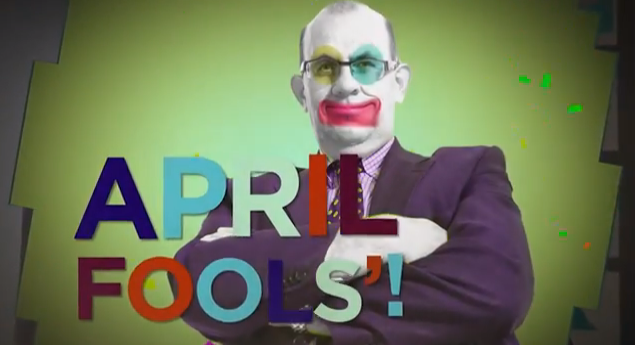
But, as history teachers, we inevitably look for ways to give them a little bit of history about the day. The “Ask History: April Fools” video produced by the History Channel has the answers to how practical jokes became associated with April 1, complete with a little prank at the end.


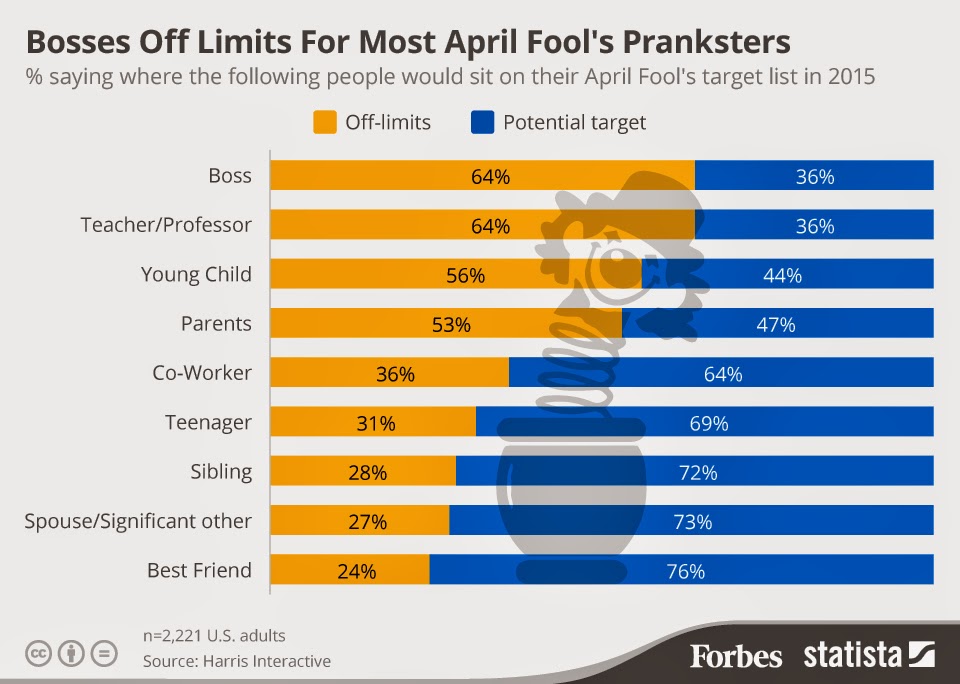
For a little April Fool’s Day math, check out this graphic from Forbes on who is most likely to get fooled. By all accounts from the Harris poll survey, bosses are safe. We wonder if that will pan out for teachers, too. It might be a good opportunity to poll the students electronically using Kahoot to see whom they would put on their lists.

Short Essay on \’Harry Houdini\’ (141 Words)

\’Harry Houdini\’ was born on March 24, 1874 in Hungary. His real name was \’Eric Weisz\’. His parents were Rabbi Mayer Samuel Weisz and Cecília Weisz. When Harry was still a baby, his parents decided to go and live in the U.S.A.

Harry Houdini was a great escape-artist. When he was nine years old he gave his first public performance. Houdini was so very interested in magic, that he practiced many tricks until they were perfect.

Houdini\’s most famous trick was to escape. On stage he would be tied up or locked up with chains and in a few minutes he would get free. He performed many other famous tricks. Some of his tricks were very dangerous.

Harry Houdini died on October 31, 1926 at the age of 52. He had shown in his life that he was ready to meet any challenge. 

Short Essay on \’Harry Houdini\’ (141 Words)

\’Harry Houdini\’ was born on March 24, 1874 in Hungary. His real name was \’Eric Weisz\’. His parents were Rabbi Mayer Samuel Weisz and Cecília Weisz. When Harry was still a baby, his parents decided to go and live in the U.S.A.

Harry Houdini was a great escape-artist. When he was nine years old he gave his first public performance. Houdini was so very interested in magic, that he practiced many tricks until they were perfect.

Houdini\’s most famous trick was to escape. On stage he would be tied up or locked up with chains and in a few minutes he would get free. He performed many other famous tricks. Some of his tricks were very dangerous.

Harry Houdini died on October 31, 1926 at the age of 52. He had shown in his life that he was ready to meet any challenge. 

Short Essay on \’Harry Houdini\’ (141 Words)

\’Harry Houdini\’ was born on March 24, 1874 in Hungary. His real name was \’Eric Weisz\’. His parents were Rabbi Mayer Samuel Weisz and Cecília Weisz. When Harry was still a baby, his parents decided to go and live in the U.S.A.

Harry Houdini was a great escape-artist. When he was nine years old he gave his first public performance. Houdini was so very interested in magic, that he practiced many tricks until they were perfect.

Houdini\’s most famous trick was to escape. On stage he would be tied up or locked up with chains and in a few minutes he would get free. He performed many other famous tricks. Some of his tricks were very dangerous.

Harry Houdini died on October 31, 1926 at the age of 52. He had shown in his life that he was ready to meet any challenge. 

Short Essay on \’Harry Houdini\’ (141 Words)

\’Harry Houdini\’ was born on March 24, 1874 in Hungary. His real name was \’Eric Weisz\’. His parents were Rabbi Mayer Samuel Weisz and Cecília Weisz. When Harry was still a baby, his parents decided to go and live in the U.S.A.

Harry Houdini was a great escape-artist. When he was nine years old he gave his first public performance. Houdini was so very interested in magic, that he practiced many tricks until they were perfect.

Houdini\’s most famous trick was to escape. On stage he would be tied up or locked up with chains and in a few minutes he would get free. He performed many other famous tricks. Some of his tricks were very dangerous.

Harry Houdini died on October 31, 1926 at the age of 52. He had shown in his life that he was ready to meet any challenge. 

Short Essay on \’Harry Houdini\’ (141 Words)

\’Harry Houdini\’ was born on March 24, 1874 in Hungary. His real name was \’Eric Weisz\’. His parents were Rabbi Mayer Samuel Weisz and Cecília Weisz. When Harry was still a baby, his parents decided to go and live in the U.S.A.

Harry Houdini was a great escape-artist. When he was nine years old he gave his first public performance. Houdini was so very interested in magic, that he practiced many tricks until they were perfect.

Houdini\’s most famous trick was to escape. On stage he would be tied up or locked up with chains and in a few minutes he would get free. He performed many other famous tricks. Some of his tricks were very dangerous.

Harry Houdini died on October 31, 1926 at the age of 52. He had shown in his life that he was ready to meet any challenge. 

Short Essay on \’Harry Houdini\’ (141 Words)

\’Harry Houdini\’ was born on March 24, 1874 in Hungary. His real name was \’Eric Weisz\’. His parents were Rabbi Mayer Samuel Weisz and Cecília Weisz. When Harry was still a baby, his parents decided to go and live in the U.S.A.

Harry Houdini was a great escape-artist. When he was nine years old he gave his first public performance. Houdini was so very interested in magic, that he practiced many tricks until they were perfect.

Houdini\’s most famous trick was to escape. On stage he would be tied up or locked up with chains and in a few minutes he would get free. He performed many other famous tricks. Some of his tricks were very dangerous.

Harry Houdini died on October 31, 1926 at the age of 52. He had shown in his life that he was ready to meet any challenge.