Short Paragraph on \’Computer\’ (70 Words)

The \’Computer\’ is an automatic device that performs mathematical calculations that logical operations. Computers are being put to use in widely divergent fields such as book-keeping, spaceflight controls, passanger reservation service, language translation, etc. There are two broad categories: analong and digital. The former represents numbers by some physical quantity such as length, angular relation or electric current whereas the latter represent numbers by seperate devices for each digit. 
 

Short Paragraph on \’Computer\’ (70 Words)

The \’Computer\’ is an automatic device that performs mathematical calculations that logical operations. Computers are being put to use in widely divergent fields such as book-keeping, spaceflight controls, passanger reservation service, language translation, etc. There are two broad categories: analong and digital. The former represents numbers by some physical quantity such as length, angular relation or electric current whereas the latter represent numbers by seperate devices for each digit. 
 

Short Paragraph on \’Computer\’ (70 Words)

The \’Computer\’ is an automatic device that performs mathematical calculations that logical operations. Computers are being put to use in widely divergent fields such as book-keeping, spaceflight controls, passanger reservation service, language translation, etc. There are two broad categories: analong and digital. The former represents numbers by some physical quantity such as length, angular relation or electric current whereas the latter represent numbers by seperate devices for each digit. 
 

Short Paragraph on \’Computer\’ (70 Words)

The \’Computer\’ is an automatic device that performs mathematical calculations that logical operations. Computers are being put to use in widely divergent fields such as book-keeping, spaceflight controls, passanger reservation service, language translation, etc. There are two broad categories: analong and digital. The former represents numbers by some physical quantity such as length, angular relation or electric current whereas the latter represent numbers by seperate devices for each digit. 
 

Short Paragraph on \’Computer\’ (70 Words)

The \’Computer\’ is an automatic device that performs mathematical calculations that logical operations. Computers are being put to use in widely divergent fields such as book-keeping, spaceflight controls, passanger reservation service, language translation, etc. There are two broad categories: analong and digital. The former represents numbers by some physical quantity such as length, angular relation or electric current whereas the latter represent numbers by seperate devices for each digit. 
 

Short Paragraph on \’Computer\’ (70 Words)

The \’Computer\’ is an automatic device that performs mathematical calculations that logical operations. Computers are being put to use in widely divergent fields such as book-keeping, spaceflight controls, passanger reservation service, language translation, etc. There are two broad categories: analong and digital. The former represents numbers by some physical quantity such as length, angular relation or electric current whereas the latter represent numbers by seperate devices for each digit. 
 

Short Essay on \’Sarojini Naidu\’ (250 Words)

\’Sarojini Naidu\’ was born on 13th February 1879 in Hyderabad, Andhra Pradesh, India. Her father Aghore Nath Chattopadhyay was a carpenter of Science from Edinburgh University. From the years of her very early childhood, she showed signs of exceptional talent. She got married to Dr. Naidu of Andhra Pradesh in 1895. She was also known as the \’Nightingale of India\’. Her birthday is celebrated as \’National Women\’s Day\’ in India.

This great leader and freedom fighter used to write poems and also sing very well. Sarojini Naidu began writing poems in English while she was still in school. With the help and inspiration of Gopal Krishna Gokhale, she found her way into the politics of India. She got closely involved with the freedom movement of the INC (Indian National Congress). She became a member of the Royal Literary Society London. She also became the President of the Indian National Congress. Sarojini Naidu took active part in the Civil Disobedience Movement, Satyagraha Movement and the Quit India Movement. She was also sent to jail several times.

Lastly India got independence in 1947 and Sarojini Naidu was made the Governor of Uttar Pradesh State. She was the first Indian woman to become the President of the Indian National Congress. She was also the first Indian woman to become Governor of any State in India. Sarojini Naidu passed away on 2nd March 1949. She has left a great name for herself in the History of India. 

Short Essay on \’Sarojini Naidu\’ (250 Words)

\’Sarojini Naidu\’ was born on 13th February 1879 in Hyderabad, Andhra Pradesh, India. Her father Aghore Nath Chattopadhyay was a carpenter of Science from Edinburgh University. From the years of her very early childhood, she showed signs of exceptional talent. She got married to Dr. Naidu of Andhra Pradesh in 1895. She was also known as the \’Nightingale of India\’. Her birthday is celebrated as \’National Women\’s Day\’ in India.

This great leader and freedom fighter used to write poems and also sing very well. Sarojini Naidu began writing poems in English while she was still in school. With the help and inspiration of Gopal Krishna Gokhale, she found her way into the politics of India. She got closely involved with the freedom movement of the INC (Indian National Congress). She became a member of the Royal Literary Society London. She also became the President of the Indian National Congress. Sarojini Naidu took active part in the Civil Disobedience Movement, Satyagraha Movement and the Quit India Movement. She was also sent to jail several times.

Lastly India got independence in 1947 and Sarojini Naidu was made the Governor of Uttar Pradesh State. She was the first Indian woman to become the President of the Indian National Congress. She was also the first Indian woman to become Governor of any State in India. Sarojini Naidu passed away on 2nd March 1949. She has left a great name for herself in the History of India. 

Short Essay on \’Sarojini Naidu\’ (250 Words)

\’Sarojini Naidu\’ was born on 13th February 1879 in Hyderabad, Andhra Pradesh, India. Her father Aghore Nath Chattopadhyay was a carpenter of Science from Edinburgh University. From the years of her very early childhood, she showed signs of exceptional talent. She got married to Dr. Naidu of Andhra Pradesh in 1895. She was also known as the \’Nightingale of India\’. Her birthday is celebrated as \’National Women\’s Day\’ in India.

This great leader and freedom fighter used to write poems and also sing very well. Sarojini Naidu began writing poems in English while she was still in school. With the help and inspiration of Gopal Krishna Gokhale, she found her way into the politics of India. She got closely involved with the freedom movement of the INC (Indian National Congress). She became a member of the Royal Literary Society London. She also became the President of the Indian National Congress. Sarojini Naidu took active part in the Civil Disobedience Movement, Satyagraha Movement and the Quit India Movement. She was also sent to jail several times.

Lastly India got independence in 1947 and Sarojini Naidu was made the Governor of Uttar Pradesh State. She was the first Indian woman to become the President of the Indian National Congress. She was also the first Indian woman to become Governor of any State in India. Sarojini Naidu passed away on 2nd March 1949. She has left a great name for herself in the History of India. 

Short Essay on \’Sarojini Naidu\’ (250 Words)

\’Sarojini Naidu\’ was born on 13th February 1879 in Hyderabad, Andhra Pradesh, India. Her father Aghore Nath Chattopadhyay was a carpenter of Science from Edinburgh University. From the years of her very early childhood, she showed signs of exceptional talent. She got married to Dr. Naidu of Andhra Pradesh in 1895. She was also known as the \’Nightingale of India\’. Her birthday is celebrated as \’National Women\’s Day\’ in India.

This great leader and freedom fighter used to write poems and also sing very well. Sarojini Naidu began writing poems in English while she was still in school. With the help and inspiration of Gopal Krishna Gokhale, she found her way into the politics of India. She got closely involved with the freedom movement of the INC (Indian National Congress). She became a member of the Royal Literary Society London. She also became the President of the Indian National Congress. Sarojini Naidu took active part in the Civil Disobedience Movement, Satyagraha Movement and the Quit India Movement. She was also sent to jail several times.

Lastly India got independence in 1947 and Sarojini Naidu was made the Governor of Uttar Pradesh State. She was the first Indian woman to become the President of the Indian National Congress. She was also the first Indian woman to become Governor of any State in India. Sarojini Naidu passed away on 2nd March 1949. She has left a great name for herself in the History of India. 

Short Essay on \’Sarojini Naidu\’ (250 Words)

\’Sarojini Naidu\’ was born on 13th February 1879 in Hyderabad, Andhra Pradesh, India. Her father Aghore Nath Chattopadhyay was a carpenter of Science from Edinburgh University. From the years of her very early childhood, she showed signs of exceptional talent. She got married to Dr. Naidu of Andhra Pradesh in 1895. She was also known as the \’Nightingale of India\’. Her birthday is celebrated as \’National Women\’s Day\’ in India.

This great leader and freedom fighter used to write poems and also sing very well. Sarojini Naidu began writing poems in English while she was still in school. With the help and inspiration of Gopal Krishna Gokhale, she found her way into the politics of India. She got closely involved with the freedom movement of the INC (Indian National Congress). She became a member of the Royal Literary Society London. She also became the President of the Indian National Congress. Sarojini Naidu took active part in the Civil Disobedience Movement, Satyagraha Movement and the Quit India Movement. She was also sent to jail several times.

Lastly India got independence in 1947 and Sarojini Naidu was made the Governor of Uttar Pradesh State. She was the first Indian woman to become the President of the Indian National Congress. She was also the first Indian woman to become Governor of any State in India. Sarojini Naidu passed away on 2nd March 1949. She has left a great name for herself in the History of India. 

Short Essay on \’Sarojini Naidu\’ (250 Words)

\’Sarojini Naidu\’ was born on 13th February 1879 in Hyderabad, Andhra Pradesh, India. Her father Aghore Nath Chattopadhyay was a carpenter of Science from Edinburgh University. From the years of her very early childhood, she showed signs of exceptional talent. She got married to Dr. Naidu of Andhra Pradesh in 1895. She was also known as the \’Nightingale of India\’. Her birthday is celebrated as \’National Women\’s Day\’ in India.

This great leader and freedom fighter used to write poems and also sing very well. Sarojini Naidu began writing poems in English while she was still in school. With the help and inspiration of Gopal Krishna Gokhale, she found her way into the politics of India. She got closely involved with the freedom movement of the INC (Indian National Congress). She became a member of the Royal Literary Society London. She also became the President of the Indian National Congress. Sarojini Naidu took active part in the Civil Disobedience Movement, Satyagraha Movement and the Quit India Movement. She was also sent to jail several times.

Lastly India got independence in 1947 and Sarojini Naidu was made the Governor of Uttar Pradesh State. She was the first Indian woman to become the President of the Indian National Congress. She was also the first Indian woman to become Governor of any State in India. Sarojini Naidu passed away on 2nd March 1949. She has left a great name for herself in the History of India. 

Analysis and Evaluation next phase for OIL

The next phase for the Analysis and Evaluation Group for OIL (online information literacy) eCDF project was brainstormed today.

We did this after we finished the second presentation to research forums at both the polytechnic and the university (21 August and 24 August) to inform people about the evaluation processes which have taken place over the first year of the project. In particular, the presentations were to inform audiences about the findings of the research evaluation project – Real use research evaluation of an online essay writing module: In formation literacy eLearning modules project. The audiences at both venues were relatively small with approximately 15 at each event.

Brainstorm of ideas for the next phase of evaluation
1. Which modules from phase one do we need to test for usability?

  • Business report – scheduled for 1 September 0800 – 1000 in computer lab H517. M and I and myself plus D has volunteered to help as well. This could be usability testing and not part of the research project.
  • Science report – will not be used in class this year, but could be randomly used by second year students if they are referred to it by their lecturer. R wants to customise the module for first year students using the online editor. Then integrate it in the first year biology course in 2007. This would be ideal for the research project. Also D to get Rosemary to review the module for the Science Investigation – expert review.
  • NZ Information Sources
  • – review Leitesha and Joseph modules, also review modules with Learning Centre students and staff at university and polytechnic – usability testing.

2. Which modules to be investigated as part of the research project?
Depending on the research design, expert review and use of the online editor for customisation could be incorporated in the research. Also real use with students in class and critique of the modules by users early October). Observation, focus group interviews (record and transcribe) and questionnaire testing of usability will still be used as methods for collecting data when in real use. Also a feedback blog could be set up for participants to add their feedback. Staff who participate in customisation of the modules would be asked to keep a log of the process, and be interviewed in a focus group. This would comprise case study research.

  • Science report – as above.
  • Essay writing
  • – M wishes to customise this module for a foundation course.

  • Digital Information Literacy
  • – expert review & consultation – FLNW** conference visitors – this module and others.

  • Maori & Pasifika
  • – expert review & consultation – ongoing consultation

  • Ethics – expert review & consultation – copyright expert
  • Searching – expert review
  • Evaluation – expert review
  • Springboard (introduction to IL) module – expert review

Need to make modifications to the questionnaire (remove irrelevant features), information sheet and consent form. Also the feedback sheet onThe next phase for the Analysis and Evaluation Group for OIL (online information literacy) eCDF project was brainstormed today.

We did this after we finished the second presentation to research forums at both the polytechnic and the university (21 August and 24 August) to inform people about the evaluation processes which have taken place over the first year of the project. In particular, the presentations were to inform audiences about the findings of the research evaluation project – Real use research evaluation of an online essay writing module: In formation literacy eLearning modules project. The audiences at both venues were relatively small with approximately 15 at each event.

Brainstorm of ideas for the next phase of evaluation
1. Which modules from phase one do we need to test for usability?

  • Business report – scheduled for 1 September 0800 – 1000 in computer lab H517. M and I and myself plus D has volunteered to help as well. This could be usability testing and not part of the research project.
  • Science report – will not be used in class this year, but could be randomly used by second year students if they are referred to it by their lecturer. R wants to customise the module for first year students using the online editor. Then integrate it in the first year biology course in 2007. This would be ideal for the research project. Also D to get Rosemary to review the module for the Science Investigation – expert review.
  • NZ Information Sources
  • – review Leitesha and Joseph modules, also review modules with Learning Centre students and staff at university and polytechnic – usability testing.

2. Which modules to be investigated as part of the research project?
Depending on the research design, expert review and use of the online editor for customisation could be incorporated in the research. Also real use with students in class and critique of the modules by users early October). Observation, focus group interviews (record and transcribe) and questionnaire testing of usability will still be used as methods for collecting data when in real use. Also a feedback blog could be set up for participants to add their feedback. Staff who participate in customisation of the modules would be asked to keep a log of the process, and be interviewed in a focus group. This would comprise case study research.

  • Science report – as above.
  • Essay writing
  • – M wishes to customise this module for a foundation course.

  • Digital Information Literacy
  • – expert review & consultation – FLNW** conference visitors – this module and others.

  • Maori & Pasifika
  • – expert review & consultation – ongoing consultation

  • Ethics – expert review & consultation – copyright expert
  • Searching – expert review
  • Evaluation – expert review
  • Springboard (introduction to IL) module – expert review

Need to make modifications to the questionnaire (remove irrelevant features), information sheet and consent form. Also the feedback sheet on the OIL website needs to be modified to collect feedback. If we add an information sheet and include the consent on the questionnaire, then people critiquing the modules of the OIL site could be included in the research project.

  • Expert review will also be obtained re ANZIIL standards.
  • Notify college research office about changes in methodology – information sheet, consent form, questionnaire, research design.

Methods for disseminating modules

  • Add OIL link to institutional websites
  • Training in online editor – introduce mid-September with Terry Stewart eCDF project – inhouse group training first from 4 September when usernames and passwords issued.
  • Google not picking up site.
  • ITPNZ, DEANZ, FLLinNZ, eLearning Directors notified

**FLNW = Future of Learning in a Networked WorldThe next phase for the Analysis and Evaluation Group for OIL (online information literacy) eCDF project was brainstormed today.

We did this after we finished the second presentation to research forums at both the polytechnic and the university (21 August and 24 August) to inform people about the evaluation processes which have taken place over the first year of the project. In particular, the presentations were to inform audiences about the findings of the research evaluation project – Real use research evaluation of an online essay writing module: In formation literacy eLearning modules project. The audiences at both venues were relatively small with approximately 15 at each event.

Brainstorm of ideas for the next phase of evaluation
1. Which modules from phase one do we need to test for usability?

  • Business report – scheduled for 1 September 0800 – 1000 in computer lab H517. M and I and myself plus D has volunteered to help as well. This could be usability testing and not part of the research project.
  • Science report – will not be used in class this year, but could be randomly used by second year students if they are referred to it by their lecturer. R wants to customise the module for first year students using the online editor. Then integrate it in the first year biology course in 2007. This would be ideal for the research project. Also D to get Rosemary to review the module for the Science Investigation – expert review.
  • NZ Information Sources
  • – review Leitesha and Joseph modules, also review modules with Learning Centre students and staff at university and polytechnic – usability testing.

2. Which modules to be investigated as part of the research project?
Depending on the research design, expert review and use of the online editor for customisation could be incorporated in the research. Also real use with students in class and critique of the modules by users early October). Observation, focus group interviews (record and transcribe) and questionnaire testing of usability will still be used as methods for collecting data when in real use. Also a feedback blog could be set up for participants to add their feedback. Staff who participate in customisation of the modules would be asked to keep a log of the process, and be interviewed in a focus group. This would comprise case study research.

  • Science report – as above.
  • Essay writing
  • – M wishes to customise this module for a foundation course.

  • Digital Information Literacy
  • – expert review & consultation – FLNW** conference visitors – this module and others.

  • Maori & Pasifika
  • – expert review & consultation – ongoing consultation

  • Ethics – expert review & consultation – copyright expert
  • Searching – expert review
  • Evaluation – expert review
  • Springboard (introduction to IL) module – expert review

Need to make modifications to the questionnaire (remove irrelevant features), information sheet and consent form. Also the feedback sheet on the OIL website needs to be modified to collect feedback. If we add an information sheet and include the consent on the questionnaire, then people critiquing the modules of the OIL site could be included in the research project.

  • Expert review will also be obtained re ANZIIL standards.
  • Notify college research office about changes in methodology – information sheet, consent form, questionnaire, research design.

Methods for disseminating modules

  • Add OIL link to institutional websites
  • Training in online editor – introduce mid-September with Terry Stewart eCDF project – inhouse group training first from 4 September when usernames and passwords issued.
  • Google not picking up site.
  • ITPNZ, DEANZ, FLLinNZ, eLearning Directors notified

**FLNW = Future of Learning in a Networked WorldThe next phase for the Analysis and Evaluation Group for OIL (online information literacy) eCDF project was brainstormed today.

We did this after we finished the second presentation to research forums at both the polytechnic and the university (21 August and 24 August) to inform people about the evaluation processes which have taken place over the first year of the project. In particular, the presentations were to inform audiences about the findings of the research evaluation project – Real use research evaluation of an online essay writing module: In formation literacy eLearning modules project. The audiences at both venues were relatively small with approximately 15 at each event.

Brainstorm of ideas for the next phase of evaluation
1. Which modules from phase one do we need to test for usability?

  • Business report – scheduled for 1 September 0800 – 1000 in computer lab H517. M and I and myself plus D has volunteered to help as well. This could be usability testing and not part of the research project.
  • Science report – will not be used in class this year, but could be randomly used by second year students if they are referred to it by their lecturer. R wants to customise the module for first year students using the online editor. Then integrate it in the first year biology course in 2007. This would be ideal for the research project. Also D to get Rosemary to review the module for the Science Investigation – expert review.
  • NZ Information Sources
  • – review Leitesha and Joseph modules, also review modules with Learning Centre students and staff at university and polytechnic – usability testing.

2. Which modules to be investigated as part of the research project?
Depending on the research design, expert review and use of the online editor for customisation could be incorporated in the research. Also real use with students in class and critique of the modules by users early October). Observation, focus group interviews (record and transcribe) and questionnaire testing of usability will still be used as methods for collecting data when in real use. Also a feedback blog could be set up for participants to add their feedback. Staff who participate in customisation of the modules would be asked to keep a log of the process, and be interviewed in a focus group. This would comprise case study research.

  • Science report – as above.
  • Essay writing
  • – M wishes to customise this module for a foundation course.

  • Digital Information Literacy
  • – expert review & consultation – FLNW** conference visitors – this module and others.

  • Maori & Pasifika
  • – expert review & consultation – ongoing consultation

  • Ethics – expert review & consultation – copyright expert
  • Searching – expert review
  • Evaluation – expert review
  • Springboard (introduction to IL) module – expert review

Need to make modifications to the questionnaire (remove irrelevant features), information sheet and consent form. Also the feedback sheet on the OIL website needs to be modified to collect feedback. If we add an information sheet and include the consent on the questionnaire, then people critiquing the modules of the OIL site could be included in the research project.

  • Expert review will also be obtained re ANZIIL standards.
  • Notify college research office about changes in methodology – information sheet, consent form, questionnaire, research design.

Methods for disseminating modules

  • Add OIL link to institutional websites
  • Training in online editor – introduce mid-September with Terry Stewart eCDF project – inhouse group training first from 4 September when usernames and passwords issued.
  • Google not picking up site.
  • ITPNZ, DEANZ, FLLinNZ, eLearning Directors notified

**FLNW = Future of Learning in a Networked Worldthe OIL website needs to be modified to collect feedback. If we add an information sheet and include the consent on the questionnaire, then people critiquing the modules of the OIL site could be included in the research project.

  • Expert review will also be obtained re ANZIIL standards.
  • Notify college research office about changes in methodology – information sheet, consent form, questionnaire, research design.

Methods for disseminating modules

  • Add OIL link to institutional websites
  • Training in online editor – introduce mid-September with Terry Stewart eCDF project – inhouse group training first from 4 September when usernames and passwords issued.
  • Google not picking up site.
  • ITPNZ, DEANZ, FLLinNZ, eLearning Directors notified

**FLNW = Future of Learning in a Networked World

Introducing myself

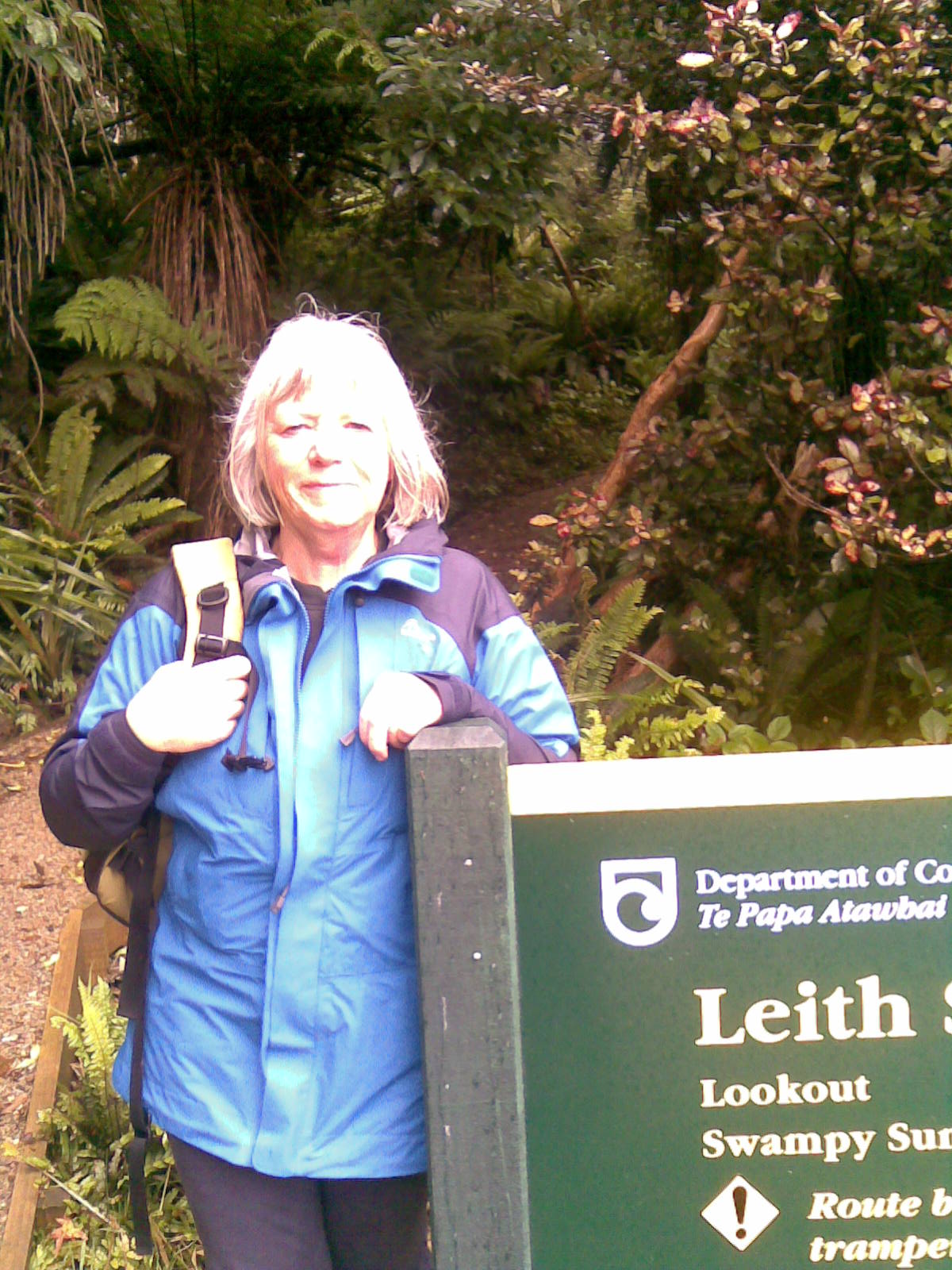
You may be wondering why I am introducing myself with a picture of a kune kune piglet. For me she represents diversity. I am an Educational Developer, and work with a broad variety of people, as well as teaching the Flexible Learning course. A couple of years ago, Priscilla was one of our customers in the Educational Development Centre. She was such a gorgeous wee thing and kept us entertained for an hour while we waited for the SPCA to arrive. She was a wanderer from one of the local student flats, brought in by one of the polytechnic students who found her out the front on Forth street. Yes this is me in the next picture, after one of my weekend walks in the bush with hubby. It is a great way to forget about the academic stuff. 


I have been involved in teaching this course since 2006, and helped to develop the Graduate Certificate in Tertiary Learning and Teaching. I entered the staff development side of things in 2001 when I was appointed the Blackboard coordinator for the organisation. Before that, I had been teaching bioscience in the nursing and midwifery degrees – both online, on-campus distance and in block courses. My interest in eLearning has taken me on a very interesting pathway in teaching and learning. I have recently submitted my Doctorate in Education and am now playing the waiting game. My focus was on using reflective frameworks for professional learning and practice.

I also teach an online course called Evaluation of eLearning for Effective practice. This is part of the Graduate Certificate in Applied eLearning now run by Manukau Institute of Technology, and originally developed as a TANZ initiative when I was involved in their elearning group. I really enjoy keeping up with the latest trends in learning and teaching. This includes not only the technologies which are springing up everywhere, but also innovative thinking around learning. I have recently been involved in running workshops on critical thinking, self-directed learning, reflective practice, ePortfolios and Web 2.0 tools. Oh yes, and I do lots of work with learning design, and have led curriculum development and research projects. I am really looking forward to reading your blogs.

Only Those Who Dare – Motivating Kids To Think Like Entrepreneurs

Source: ASIDE, 2015


We’re in the midst of our fifth season working with our elementary students on the entrepreneur project-based learning unit. Even with the flexibility in our curriculum to teach, we still find that each year it gets harder to get kids to extend themselves, to take a risk, and to dare to be different.

Not that a car commercial could change all that, but lucky for us, Cadillac launched its new ads during the Academy Awards to promote its latest luxury sedan. In all four commercials, the last frame appears with the line:

 “Only those who dare drive the world forward.” 

We wrote it on the board without the credit line. Surprisingly, kids, teachers, and even some administrators who visited the classroom remarked about the statement. Of course, we then gave credit to Cadillac. By not associating the carmaker with the word “drive,” it changed the interpretation of the quote, making it a far more powerful statement about human motivation.


Most of our students didn’t realize that the carmaker was a 112-year-old company, nor that the association with the word “dare” represented a company not afraid to reinvent itself by making connections with other innovators such as fashion designer Jason Wu, “Boyhood” director Richard Linklater, and Apple co-founder Steve Wozniak. It even promoted the social media connection with its #DareGreatly hashtag. Needless to say, it became our mantra for the spring. Those who dare to think, see, and do things differently change the way we think.

We piggybacked “The Daring, No Regrets” video from Cadillac with the motion graphic “What Is Innovation?”, designed by Rafa Galeano and written by Fast Company blogger David Brier. Brier’s post on the making of this video describes his own inspiration for the theme and the motivation to use his essay to make a motion graphic on innovation for others.


It provided our students with another view of how ideas, from the discovery of fire to their own electronic devices, came from the motivation of others who saw the potential in their creations.

Perhaps the last four lines of this video drive home the point we want our kids to understand:

“So what is innovation?
Those other dots.

The ones others miss.

And having the certainty to know that the dots you see are not only valid, but necessary if the world is to move forward.”

Providing opportunities for students to see the potential of others driven by need, or a desire, helps them to let go, to dare. We want them to not only see the possibilities of being an entrepreneur, but also to embrace the notion that it can be a reality. That’s when we showed them 11-year-old Lily Born’s Kangaroo Cup. That made the most impact on the kids and their ideas.


NO SPILL CUP from Bryan Munoz on Vimeo.

Lily wanted to build a better cup to help her grandfather who has Parkinson’s disease. Lily’s advice to fellow pre-teen entrepreneurs actually applies to all ages: “Don’t freak out if you screw up or fail, because you’ll fail a lot before you get it right.” She also says, “Don’t be afraid to ask for help.” She used her ingenuity to rethink how best to change an ordinary cup to help others. She dared to make a change and never gave up on her idea. This video made an impact on the students.

With a little ingenuity, Lily redesigned an ordinary cup to function for someone with special needs. More importantly, she started making prototypes at the age of eight. It took three years and plenty of iterations before going to market.

Source: Imagiroo


Creativity takes time, and it’s not a simply “point and click.” Cultivating that initial idea remains the hardest part for our young entrepreneurs. We push them to think beyond the craft kit, bake sale, or carnival game. Frustration often sets in because immediate gratification isn’t the name of the game. It takes hard work, failure, and perseverance.

Accepting feedback, or a simple, “no, that idea won’t work,” sends some off in tears. They come back. Some build a prototype to prove their idea works, some return with a new iteration based on an earlier model, and others completely scrap an idea for a new one. Great! This is exactly what we want. We only have a semester, not three years, but nudging them out of their comfort zones is all part of the process. And sometimes, it’s not an easy thing for many a 10 year-old.

Steering learners away from settling on the status quo forces them to see the potential of taking a chance on their ideas. Dare to be different, dare to take a risk, and dare greatly. As educators, we believe it will foster their entrepreneurial spirit for a lifetime.