Short Essay on \’Salim Ali\’ (122 Words)

Full name of \’Salim Ali\’ was Salim Moizuddin Abdul Ali. He was born on 12 November 1896 in Mumbai, India. His father\’s name was Moizuddin and his mother\’s name was Zeenat-un-nissa. His parents died in the very early age of Salim Ali.

Salim Ali was a famous ornithologist and naturalist of India. He is known as the \’Bird Man of India\’ because he was an expert on Indian Birds. He studied the habits and lifestyles of Indian birds all his life. Salim Ali has written books on the birds of India. For his great work he was awarded the Padm Bhushan and Padma Vibhushan by the Government of India.

Salim Ali was passed away on 20 June 1987 at the age of 90. 

Short Essay on \’Salim Ali\’ (122 Words)

Full name of \’Salim Ali\’ was Salim Moizuddin Abdul Ali. He was born on 12 November 1896 in Mumbai, India. His father\’s name was Moizuddin and his mother\’s name was Zeenat-un-nissa. His parents died in the very early age of Salim Ali.

Salim Ali was a famous ornithologist and naturalist of India. He is known as the \’Bird Man of India\’ because he was an expert on Indian Birds. He studied the habits and lifestyles of Indian birds all his life. Salim Ali has written books on the birds of India. For his great work he was awarded the Padm Bhushan and Padma Vibhushan by the Government of India.

Salim Ali was passed away on 20 June 1987 at the age of 90. 

Short Essay on \’Salim Ali\’ (122 Words)

Full name of \’Salim Ali\’ was Salim Moizuddin Abdul Ali. He was born on 12 November 1896 in Mumbai, India. His father\’s name was Moizuddin and his mother\’s name was Zeenat-un-nissa. His parents died in the very early age of Salim Ali.

Salim Ali was a famous ornithologist and naturalist of India. He is known as the \’Bird Man of India\’ because he was an expert on Indian Birds. He studied the habits and lifestyles of Indian birds all his life. Salim Ali has written books on the birds of India. For his great work he was awarded the Padm Bhushan and Padma Vibhushan by the Government of India.

Salim Ali was passed away on 20 June 1987 at the age of 90. 

Short Essay on \’Salim Ali\’ (122 Words)

Full name of \’Salim Ali\’ was Salim Moizuddin Abdul Ali. He was born on 12 November 1896 in Mumbai, India. His father\’s name was Moizuddin and his mother\’s name was Zeenat-un-nissa. His parents died in the very early age of Salim Ali.

Salim Ali was a famous ornithologist and naturalist of India. He is known as the \’Bird Man of India\’ because he was an expert on Indian Birds. He studied the habits and lifestyles of Indian birds all his life. Salim Ali has written books on the birds of India. For his great work he was awarded the Padm Bhushan and Padma Vibhushan by the Government of India.

Salim Ali was passed away on 20 June 1987 at the age of 90. 

Visualizing The Science Of Summer Sports – STEM Animations And Motion Graphics

Source: Tim McGarvey


Both STEM and sports get a bad rap. In the corridors of learning, science is sometimes seen as esoteric or irrelevant, while sports are seen as base or quotidian. Kids are often repelled by the former and drawn by the latter, mostly due to a misunderstanding about the intersection between math and athletics, between technology and physicality.

Fortunately, the possibilities of animations and motion graphics have helped visualize sports in riveting, educational ways. On both the professional and personal levels, data-driven graphics can bring to life the genuine learning benefits of athletics in STEM (Science, Technology, Engineering, and Math) courses.

Source: Spov Design + Moving Image


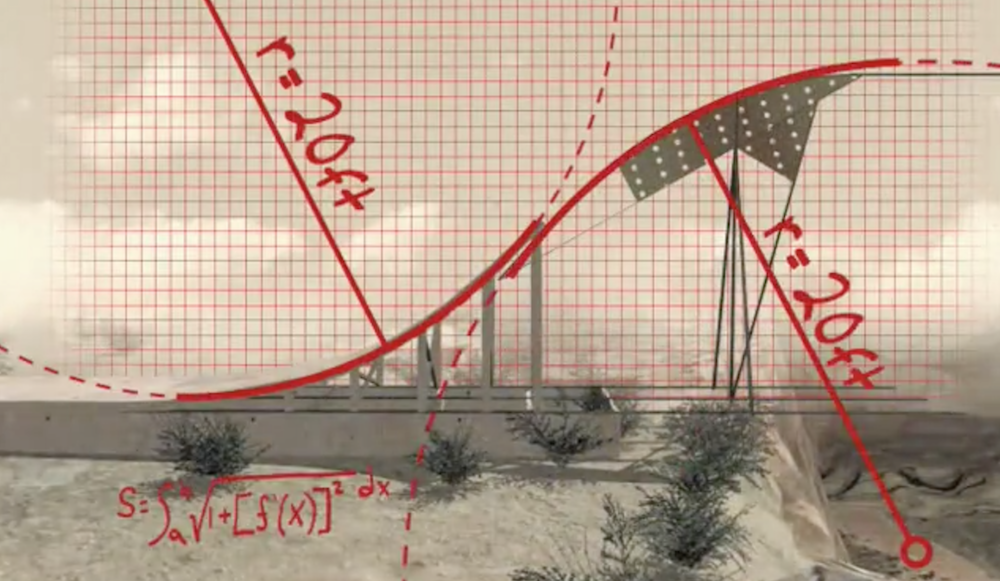
In digitally nuanced videos, physics meets the real-world. Body kinesthesia moves from the static textbook page to vibrant video overlay. The visualizations can layer equations and statistics atop everyday pastimes. Sports heroes become humanized in analyzing the biology and chemistry that make them great. Familiar backyard games become elevated by realizing the arcs and velocities necessary to score a goal.

Furthermore, these stunning artistic creations validate the requisite addition of the \”A\” to STEM. A complete \”STEAM\” approach, including the Arts, proves the value of imagination, design, and narration in producing such compelling animations.

Source: Tim McGarvey


We\’ve explored before the benefits of sports science in the classroom:


The following motion graphics and animations take the discussion even further, looking for fresh avenues to incorporate the personal interests of students into their science and math educations. These videos are great kick-offs to a morning\’s discussion, and they are valuable context-builders for putting formulas, trajectories, and graphs in their rightful, real-world contexts.

‘Who Can Buy a Life Insurance Policy?’ (72 Words)

Any person who has attained majority and is eligible to enter into a valid contract can insure himself/ herself and those in whom he/ she has insurable interest.

Policies can also be taken, subject to certain conditions, on the life of one’s spouse or children. While underwriting proposals, certain factors such as the policyholder’s state of health, the proponent’s income and other relevant factors are considered by the Corporation/ Life Insurance Company. 


Music is at the core of India’s cultural heritage–it unites and connects people

The Vice President of India, Shri M. Venkaiah Naidu said today that music was at the core of India’s cultural heritage and it not only provides solace but also unites and connects people.

Inaugurating 173rd Aradhana Festival of Sri Thyagaraja at Thiruvaiyaru in Thanjavur district today, he observed thatart unites hearts and added that music, painting and art were important facets of our civilization.

Calling for preservation and protection of our unique cultural heritage, he said “Our culture and values are our identity. It is what makes us unique. It is what has earned us the respect of the whole world”.

Paying rich tributes to Saint Composer, Thyagaraja, he described himas one of the greatest music maestros of India. “Sadguru Thaygaraja is one among the most revered 18th Century Trinity of composers–the others being Shyama Sastry and Sri Muthuswami Dikshithar”, he added.

The Vice President said that Saint Thyagaraja’s contributions to the enrichment of our cultural heritage cannot be quantified or estimated. He not only embodied ethical and philosophical truths in his songs but also put them into practice in his daily life. His style was simple, beautiful, and charming, which appealed to the learned and laymen alike, Shri Naidu stressed.

Praising Saint Thyagaraja as the composer of countless immortal kritis in various ragas, Shri Naidu said that Sri Thyagaraja’s compositions were treasures for the world of Music and would live in our hearts forever. “His heart poured out his Bhakti for Lord Rama and his songs are full of bhava/emotion that melts your heart”, he observed.

Lauding the tradition of conducting the festival of Thyagaraja Aradhana every year, he said that there was a growing interest and participation in the annual event to pay tributes to Saint Thyagaraja .

He also called upon the schools and educational institutions to sensitize children to the diverse elements of our rich culture. From reading the Jataka tales to experiencing the architectural marvels of ancient India, they must be encouraged to explore the various fascinating facets of our culture and learn life lessons from them, VP said.

Stressing the need to take the treasures of our culture to future generations, the Vice President said that they must know of the stalwarts like Saint Tyagaraja and must be proud of their glorious cultural inheritance. They must not forget their roots and must draw inspiration from its brilliance, he added.

The Vice President complimented the Thyagabrahma Mahotsava Sabha Shri Moopanar’s family for maintaining the tradition of conducting Annual Aradhana Festivals every successive year.

Thiru Vellamandi N.Natarajan, The Minister for Tourism, Govt of Tamil Nadu, Shri G.K. Vasan, President of the Thyagabrahma Mahotsava Sabha, Shri A.K. Palanivel, Secretary of the Sabha and Shri V. Raja Rao, Secretary of the Sabha, were among those who graced the occasion.

The following is the full text of the speech:

I am very happy to be here at the 173rd Aradhana Festival of Sri Thyagaraja at Thiruvaiyaru, a holy place on the banks of river Cauvery. It is heartening to note that this tradition has been maintained for 173 years and that year after year, there is growing interest and participation in this Aradhana festival that pays tributes to Saint Thyagaraja.

As we pay tributes to one of the greatest music maestros of India, we celebrate his life, his compositions and, his unparalleled legacy.

Saint Thyagaraja was, beyond any doubt, a stalwart, one of the tallest figures in the world of music.

The contributions of Saint Thyagaraja to the enrichment of our cultural heritage cannot be quantified or estimated.

It is infinite in its resonance.

His compositions which have been cherished over centuries will continue to be treasured by the young and the old for all time to come.

I compliment the Thyagabrahma Mahotsava Sabha for maintaining the tradition of conducting Annual Aradhana Festivals.

I am confident this Aradhana Festival will inform and remind all who participate, of a golden which marked a high point in the history of classical music in India.

My dear sisters and brothers,

In the turbulent times that we live in, it is comforting and invigorating to pause and reflect on our unique cultural heritage.

India is one of the most ancient civilizations of the world and is home to astounding cultural diversity. Indian culture, often described as an amalgamation of several cultures, spans across the Indian subcontinent and has been influenced by a history that is several millennia old.

Many elements of India’s diverse culture, such as relegions, philosophy, cuisine, languages, dance, music, yoga and movies, have a profound impact world over.

There is no doubt that ‘art unites hearts’. Music is among those elements of our culture that have great potential to unite people, to help us connect and understand each other.

From the first lullaby that is lovingly sung by mother to her child, music penetrates almost every part of our life, our work, our relationships and even the way we worship the almighty.

Music, in its pure form, is spiritual nourishment for our souls.

It is at the core of our cultural and age old heritage.

Our classical music, which has its origin in the Vedas, is said to be a gift of God himself; it is ‘Nadabrahma’, the sound of God, the music that pervades the universe.

Saint Thyagaraja is the composer of countless immortal kritis in various ragas. Most of his compositions are in Telugu, a sweet language which has been described as a suitable language for music by Mahakavi Subrahmanya Bharati.

Born in Thiruvarur in 1767 to Sri Ramabrahmam and Sitammal, Sri Thyagaraja settled down in the holy town of Thiruvaiyaru, where he learned music under the tutelage of Shri Sonti Vennkataramana Sastri.

A composer of kritis in rare ragas, Saint Thyagaraja, a Rama Bhakta, made his devotion to Lord Rama the theme for almost all of his kritis. As his heart poured out his Bhakthi for Lord Rama the songs are full of bhava/emotion that melts your heart. The conversation between a bhaktha and the God are profound messages to mankind .

Many of his compositions in Telugu are rendered as centre pieces in the concert by artistes young and old and  convey  the beauty of the raga as well as the emotional content so well making the listeners go into raptures . In singing his compositions such as మోక్షము గలదా (Mokshamu Galada) or వందనము రఘునందనా (Vandanamu Raghunandana) the bhava rules supreme!

Ramabhakthi and nadopasana were the two cardinal features of his compositions. He realized that music, in all its aspects, formed part of nadayoga.

In his songs, he reveals the supremacy of nadayoga as a means of realisation of God.

Another important contribution of Saint Thyagaraja to music lies in his improvisation of sangathis in kirthanas. His style was simple, beautiful, and charming, which appealed to the learned and laymen alike.

It is the richness of the raga bhava of his compositions that gives him a place amongst the greatest composers of music.

Saint Thyagarajanot only embodied ethical and philosophical truths in his songs but also put them in practice in his daily life.

He rejected riches and opted for austerity. The pious soul felt that a poor and honest life spent in ‘nadopasana’ was preferable to chasing earthly pleasures and riches.

This philosophy of life has been revealed in his famous song, (నిధి చాలా సుఖమా?)“Nidhi chalaa sukhama?”

His followers believed that he was a re-incarnation of Sage Valmiki.

When he attained the lotus feet of Sri Rama on Pushya Bahula Panchami Day in 1847, his mortal remains were interred on the left bank of River Cauvery with the honour and religious rites due to a Sanyasi.

Sadguru Thaygaraja is one among the most revered  18 th Century Trinity of composers –the others being Shyama Sastry and Sri Muthuswami Dikshithar.The majestic Pancharathna Krithis – the five gems in five ragas are sung with utmost devotion by all musicians coming together from various parts of India and the World  in the Annual Aradhana .A Brindavan was erected over that spot and his disciples started performing the Aradhana every year on Bahula Panchami day at the Samadhi.

All the disciples of Saint Thyagaraja were deeply devoted to him, but the contributions of Bangalore Nagaratnam Ammal are worth mentioning.

She was an ardent devotee of Saint Thyagaraja. I am happy to know that befitting the memory of Nagaratnam Ammal, it is in front of her mandapam that musicians now perform during the Aradhana.

Thyagaraja’s compositions are truly treasures for the world of Music  and will live in our hearts forever.After all these years, if we congregate at this holy place even today to pay our humble respects to Saint Thyagaraja every successive year, it is because of the yeomen services rendered by Shri Moopanar’s family and the past and present Office-bearers of the Sabha to the memory of Sri Thyagaraja and to the Thyagabrahma Mahotsava Sabha.

I am happy to know that Shri G.K. Moopanar was associated with the Sabha as its President from 1966 for 36 years and that it was during his days of Presidentship that the Sabha rose to great heights and the Aradhana became an international festival.

After his demise, the legacy was carried on by his brother Shri G.Rangasamy Moopanar who has been spearheading the development of the Sabha and its activities for 18 long years successfully.

Now, the mantle of Presidentship of the Sabha has passed on to Shri G.K. Vasan. Having observed the performance of Shri Vasan, in public life, in Parliament, and in Government, and also going by his meticulous planning to make this Aradhana festival a grand success, I am sure the Sabha is in very safe hands.

I am confident that he will take the Aradhana festival to greater heights in the time to come.

My dear sisters and brothers,

Our culture and values are our identity. It is what makes us unique. It is what has earned us the respect of the whole world.

The philosophy of our civilization has always been that of ‘vasudhaiva kutumbakam’. We have always embraced the whole world as our own. ‘Sarve Jana Sukhino Bhavanthu’ has always been our prayer.

We must protect this ancient culture and the immortal, humanitarian values that are our legacy.

The most effective way to ensure this is to take the treasures of our culture to future generations. They must know of the stalwarts like Saint Tyagaraja and must be proud of their glorious cultural inheritance. They must draw inspiration from its brilliance and unite to chart a path forward for the nation.

Our schools and educational institutions must strive to sensitize children to the diverse elements of our culture. From reading the Jataka tales to experiencing the architectural marvels of ancient India, they must be encouraged to explore the various fascinating facets of our culture and learn life lessons from them.

Our future generations must never forget their roots. But they also must not be confined by it.

Mahatma Gandhi once said that “Nothing can be farther from my thought than that we should become exclusive or erect barriers. But I do respectfully contend that an appreciation of other cultures can fitly follow, never precede, an appreciation and assimilation of our own”.

I hereby declare the 173rd Thyagaraja Aradhana Festival open.

I am hopeful that it will succeed in taking the treasures of India classical music to future generations.

Vanakkam.

Thank You!Jai Hind!

***

Short Article on \’Cinema: As a means of Education\’ (125 Words

Apart from the great pleasure the cinema gives us a means of entertainment, it is in many ways an education in itself.

The film companies from time to time produce historical pictures and these pictures are of great assistance to the teacher of history. A couple of hours spent in the company of historical personage, dressed in the proper dress of the period, can teach us far more than we can learn from a whole week\’s reading of a history book.

Some of the educational film companies devote their time to the filming of the habits and customs of animals, insects, fish, germs and many other branches of scientific life. Such pictures are quite interesting and are a great help in the cause of education. 

Short Article on \’Cinema: As a means of Education\’ (125 Words

Apart from the great pleasure the cinema gives us a means of entertainment, it is in many ways an education in itself.

The film companies from time to time produce historical pictures and these pictures are of great assistance to the teacher of history. A couple of hours spent in the company of historical personage, dressed in the proper dress of the period, can teach us far more than we can learn from a whole week\’s reading of a history book.

Some of the educational film companies devote their time to the filming of the habits and customs of animals, insects, fish, germs and many other branches of scientific life. Such pictures are quite interesting and are a great help in the cause of education. 

Short Article on \’Cinema: As a means of Education\’ (125 Words

Apart from the great pleasure the cinema gives us a means of entertainment, it is in many ways an education in itself.

The film companies from time to time produce historical pictures and these pictures are of great assistance to the teacher of history. A couple of hours spent in the company of historical personage, dressed in the proper dress of the period, can teach us far more than we can learn from a whole week\’s reading of a history book.

Some of the educational film companies devote their time to the filming of the habits and customs of animals, insects, fish, germs and many other branches of scientific life. Such pictures are quite interesting and are a great help in the cause of education. 

Short Article on \’Cinema: As a means of Education\’ (125 Words

Apart from the great pleasure the cinema gives us a means of entertainment, it is in many ways an education in itself.

The film companies from time to time produce historical pictures and these pictures are of great assistance to the teacher of history. A couple of hours spent in the company of historical personage, dressed in the proper dress of the period, can teach us far more than we can learn from a whole week\’s reading of a history book.

Some of the educational film companies devote their time to the filming of the habits and customs of animals, insects, fish, germs and many other branches of scientific life. Such pictures are quite interesting and are a great help in the cause of education. 

Short Article on \’Cinema: As a means of Education\’ (125 Words

Apart from the great pleasure the cinema gives us a means of entertainment, it is in many ways an education in itself.

The film companies from time to time produce historical pictures and these pictures are of great assistance to the teacher of history. A couple of hours spent in the company of historical personage, dressed in the proper dress of the period, can teach us far more than we can learn from a whole week\’s reading of a history book.

Some of the educational film companies devote their time to the filming of the habits and customs of animals, insects, fish, germs and many other branches of scientific life. Such pictures are quite interesting and are a great help in the cause of education. 

Short Article on \’Cinema: As a means of Education\’ (125 Words

Apart from the great pleasure the cinema gives us a means of entertainment, it is in many ways an education in itself.

The film companies from time to time produce historical pictures and these pictures are of great assistance to the teacher of history. A couple of hours spent in the company of historical personage, dressed in the proper dress of the period, can teach us far more than we can learn from a whole week\’s reading of a history book.

Some of the educational film companies devote their time to the filming of the habits and customs of animals, insects, fish, germs and many other branches of scientific life. Such pictures are quite interesting and are a great help in the cause of education. 

FLLinNZ facilitation sessions – day two

Sean McDougall – speaking via videoconferencing classrooms of the futurenot a lot has changed – still sitting in classrooms altogether slumped over desks which are unsuitable for learning and sitting at all day. All studying at same time in groups. Sean has been working in designing learning spaces for the future.

No point in designing new buildings and doing the same sort of teaching there will be no additional benefits for the teachers and students. \”It is about how you do it not where you do it.\” Example of a design where the teacher could get around the students (children) better which improved the activitiy. Design of saddle seats which could swivel in any direction – take up less of a footprint – tables fit around the room – four-way data projector. Cheaper option than billions spent on school rebuilding. Room designed to encourage conversation and collaboration and teacher tried to teach by standing up the front. Learned from mistakes – need to educate teachers in new approaches.

Design my school – tool where students could be involved in designing school. http://designmyschool.net used wikipedia design – Co-Design

Provided some statistics about education in UK – 80% black children leave school at 16yrs and over half jobs advertised in UK in 2012 will require a degree. need to get back to the idea of a creative school rather than an \”exam factory\”. The system is not working – community minority groups illustrate this.

Singapore exampleeight years old problem-solving re bomb in an oil facility – building robots to clean up oil, building website to keep parents informed, writing business plan – a year long project. need to invent and create and solve future for themselves.

Xchurch School called Unlimited
Barriers removed – students direct their own learning Involved in projects in which they are interested e.g. designing logos, music distribution, own record label. Studying alongside 18 yr olds to get qualifications like Business.

Design done by people and with people. How can we work with excluded communities?
Example from Ireland – Sean is working with nuns in Cork. How can they work with people who are falling through groups. Responsive servicing. Immigrants, travellers, prisoners working together to find solutions to help stop people dropping out. They told their stories –
1. need place to come to meet with friends

children had different perspectives about how the building looked like – teachers forget what the rooms of the school look like.
Introduce opposites e.g. if you want technology look at what the organisation would look like without technology.

Another example-what could we do to make a fountain better? Designing a programmable, interactive fountain e.g. speed camera – measure how fast children are running around. could measure height and jets could respond to different heights. Give fountain three wishes – to see, hear, feel. Children helped design a mural with pictures and ideas of what they liked or did not like about the school. invites configuration and brings people together to work on a common problem to prepare them for the rapidly changing 21 century. create your own models and not wait for someone to \”design a catalogue and you order from it\”.

Allow people to skill up – learn and make mistakes. Video showing chidren with robots they constructed – watching them work and showing the great excitement. learning what they need for the knowledge economy. Need to redesign the service to meet the needs of the children e.g. reading construction manuals as that is where the interest lies for one of the children who likes building things.
Have moved from where things are done to them to one where people create their world. can you hand over what is seen to be important information to be displayed e.g. Cardiff streets.

1.What will it mean if we get it right?

increased success. Teachers who get it. learners who get what they want.

2.What happens if we carry on as we are?

no change as technology etc. changes around us.

3.Why haven\’t we done anything about it?

too hard, no money.

4. What could we do about it?

let people know what skills people will need in the future

Mark Nichols – institutional change for eLearning
Statement: 
now know how eLearning works – do we? We know how to facilitate online discussion – do we?
Beeby 1992 wrote about lessons learned in 1930s. Mark is an educational evolutionist. Focus is on formal education. He has failed spectacularly. Failures are far more interesting and you can learn from it. In his FLLinNZ year he read a lot about institutional change and talked to lots of people about it. Reckons it is commonsense. Has been ignored and now feels like he is prophetic. 
What do we know about change
Peter Senge – 
see institution as a whole \”see the wood for the trees\”. Large scale change is complex. Example: had a CDROm of video, looked after website, used discussion – looked after it himself and it worked well. what would happen if it was systemised? Need to train people and learners. need to copy multiple CDs. What about looking after discussions – technical support, archiving.

Who maintains resources? How do we support subject matter experts with elearning. can they use pre-prepared materials. how are new technologies incorporated? How do we enrol students? Innovation in one course is very different to what is needed in a whole programme. Good systems solve problems before they happen.

Best to work with late majority – sustainability through transformationwork on changing core ideas – workshops Core and custom – complement standardisation with innovation. How do you get buy in. Use systems that organisation has in place – systems for internal review. Meet with programme leaders and work with them. Division of labour – how to best support those who are not tech literate. Engage at level of the core with tech support at that level.
FL strategy or teacing and learning strategy – use them.

How do you go about internalising elearning?
strategic ownership – VLE a thermometer – some staff flocked to it – others ignored it. If few staff got excited good prognosis – otherwise more difficult to change ideas about eLearning.

John P. Kotter – leading organisational change, very good book.
useful orientation to major changes that are involved.

Examples from Bible College
1. establishing a sense of urgency –
 better resourcing of students, costing
Developing a strategy and PD. College eLearning audit and prepare national exemplar.
Sense of urgency varies – depends on hierarchy and priorities e.g. pbrf. When there is a crisis – lack of students for programmes. Responding to market.

2. Creating the guiding coalition
put ideas in front of managers with evidence

3.Developing a vision and strategy
what evidence is there that it improves learning? works well where there is no choice or it supports lifestyle. Don\’t change what is working and change what and when you need to.

4. Communicating the change vision

5. Empowering broad-based action

6. Generating short term wins

7. Consolidating gains and producing more change

8. Anchoring new approaches in the culture

Some discussion on the above questions but not enough time and no summarising of them at the end.

Maret Staron – TAFEOverview of some research projects. \”Designing Professional development for the Knowledge era\”.
Big emphasis in Australia with workforce development. Mentioned learning environmnet managers – work done in the workplace with learners there. Moving more to learner directed ideas. Open standards
Now in the Knowledge era – environment, learning ecology, business,
focus for all four areas on learners, context, technologies

Suggestion that the knowledge era will only last a decade – has progressed from information era. Next era proposed to be the concept era. Is this true?

Need to be knowledge workers – need to find, use information. Now need to generate our own information. One of our greatest challenges – how to work in groups to generate new knowledge?

Work is becoming more unbounded in time and space now with practitioners increasingly needing to work and engage in their own learning at work and at home\” (ANTA 2004).

Used an ecology metaphor – broader than networks – what is your learning ecology? relationship between entitities and their environment. Dynamic, adaptive and diverse – there is no one way. Maron promised a model to help but no one way.

Stuck in the mechanistic metaphor – want to think, feel, use intuition, be creative – a contradiction.

Strength-based Philosophy – moves us from deficit-based modelWhat is wrong and we will fix it. Hard to shift to strength-based model. Constrained by bureaucracies who follow the deficit-based model. A lot of organisations try and solve problems by looking at what they need to fix. Martin Seligman – how to look at what helps people thrive. How to help organisations be the best they can. Mihaly Csikszentmihalyi – psychology of optimal experience – \”in the flow\” when things work well and you are in the optimal skill level. When in the flow anxiety, boredom and apathy reduces.

Business wisdom
How to bring leadership on board. What is the glue that connects the elements of a learning organisation? (Wise thinking and actions.)

Key findings of research
Strength-based orientation more effective.
capability – moves beyond professional development – confident, capable, competence – ability to work in unknown areas.
Values is the bedrock
Disruptive model

  • action learning, mentoring is strength-based, communities of practice

Some places run events on a cafe conversation model for PD. Look at what is working and why.
Who is practising deviance in a positive way for the benefit of the organisation.
What gifts does each person bring to the organisation?
How to reshape the description of your work so it is more flexible – job sculpting.
Appreciative inquiry.
Disruptive technology – policy, research, processes
Life-based learning, expert-centred model, work-based learning
In reality learning crosses work, leisure, family etc.
What is the source of learning not the continuum? \”Learning for work is not restricted to learning at work.\”
Life-based learning is integrated and holistic. What are the enablers to create this type of learning?
\”A business approach to capability development \”- companion document to research report.

http://www.icvet.edu.au

Discussion of four questions: Modifying what could we build? – Listening, sharing stories and conversations. previous knowledge and recording.
Exploring – what assumptions should we challenge?
Visioning – what would be your ideal, your dream?
Experimenting – what can we combine and test?

What is your personal stance in relation to work-based and life-based learning? What does it it mean to design this ideal for approaches to learning?

Stanley Frielick – Real change institutional challenges and opportunitiesThreshold concepts and troublesome knowledge – a new way of understanding, interpreting or viewing something may emerge a transformed internal view of subject matter, subject landscape or world view.
What is a threshold moment? – when someone starts contributing and/or facilitating to an online discussion. When people take charge of something – self-directed learning.

The real university is a state of mind. Zen and the art of motorocycle maintenance : an inquiry. Are there two universities? The first real university is the concrete one – state of mind sits within there. What are the mental models which underly our university structures?

Teachers and learners are inextricably linked and there is not just a one-way flow of information. Reactive (teacher-centred) versus constructive (learner-centred). Both demonstrate a dualist model – autonomous model where learner is separated from the world. Ecological model – capillaries of power – an energy which circulates through an institution. (Foucalt). Need to focus on capillaries when look at change. what are the technologies of power?

threshold concept 3 – Can teaching and learning function like an ecosystem? Is it similar to indigenous models of learning? Example, dialogical model where relationships occur between teachers and learners.

Mention of DNA and genetics as shaping learning – evolution, mutants, survival of the fittest – social dynamism – who supports the weak and do we just leave them in the wilderness?

Threshold concept 4 – ecological sensibility – disruptive technologies. who decides what is knowledge? Who decided what is needed for promotion?

Real change
Form (media) and content – most disruption happening here – disruptive technologies and disruptive pedagogies.
Assessment examination and accreditation
Appraisal (teacher) and evaluation (courses)

Immune system – assessment and appraisal areas. what is needed to make this disruptive – quality, prescriptive and normative, secretive – policies and processes, rewards. Suggests real change needs to be focussed on immune system (resistance). Make them more open, networked and ecological. 

The disruptive technologies and pedagogies will act as an external stimulus which will upset the balance of the ecosystem and stimulate internal systems in assessment and appraisal i.e. disrupt them – they will have to change so they can revert to a balanced model. Change cannot occur in an ecosystem without an external stimulus. An internal stimulus can change an individual\’s system but not when an individual is part of a bigger system. Negative and positive feedback. Negative feedback in a closed system will return it to the status quo. Positive feedback will stimulate either rebirth or bleeding to death or system wide shock and collapse.

In complexity or chaos theory where there is a complex system – competency alone is not enough – it is very linear and serves only part of the purpose. Capability occurs when there is a branching out and multiple layers of action and direction.

Learning design – a definition

So far in the oldsmooc the definitions of learning design are all teacher centric because the teacher is always in charge of designing the learning. I think we probably need to throw away the established theories and the models – even though Ida has done a fabulous job of collating them on the wiki – and begin afresh using a truly learner-centric model – even the Arcs model by John Keller that Ida states is more learner-centred is teacher-led. This would mean moving to a constructivist/connectivist framework, and leaving cognitive/behaviourist approaches behind.

I think the role of teachers is to mentor and to teach critical thinking, scaffold metacognition and to guide students in how to be self-directed and self-regulated learners – our role is to guide students to develop their own strategies for learning, and to obtain and manage the information they need – access, filter, evaluate and create – and in doing so they will develop the knowledge they need to reach their learning goals. Teachers are thereby freed up from hours of designing and developing content and activities, and can support student learning more effectively through mentoring. 

Unfortunately, the spiel about learner-centred learning still occurs around curricula where the learning outcomes for courses and qualifications are set by the organisation, and teachers still set the learning objectives for each module.  Even if students already have skills and knowledge, they are often required to sit through the same stuff again, so they become bored and switch off and they disengage. Sure learning outcomes do guide the students and helps them know what they need to understand about a topic, but surely they should be the ones to decide the meaning that they need to extract from a learning experience, and what learning experiences they need to achieve their dreams?

So I am a fan of learning design whereby students take \’the reins\’ and the teacher mentors and facilitates the process. Is there a name for this type of learning design yet? Individualized learning design is a term used by Suny Empire State College.

I really like the idea of enabling students to \’pick and mix\’ the courses they want to take and decide the shape of their qualifications, so assessment of prior learning is going to be key to this, as is constructivism and connectivism as approaches to learning. I really like the individualized learning design and mentor model (with learning contracts and student-designed degrees) practised by Suny Empire State College – read more.

Learner-designed activities 
Back to the idea of learning activities designed by students for students ….Lets say for argument\’s sake that the topic they need to explore is around creating an identity on the Internet. If using individualized learning design, the students may have decided that they need to do this to up their profile for the future and to connect to others while they learn. For some many it will be more beneficial professionally to have an Internet presence. So creating an online presence and identity becomes one of their learning goals. A student might say:

  • Who do I want to be? 
  • Where will I show myself on the Internet?
  • What do I want others to see? 
  • What tools can I use to achieve this? 
  • What do I know already and what do I need to know? 
  • Who can help me with this? 

Some students will go it alone. Others will join with peers, and some may ask the teacher. From my perspective, the role of learning design is handed to the students – the teacher may support the students with questions to get them started, but the only thing the teacher might provide is guidance with the task that the students has decided to undertake, in discussion with his or her mentor (teacher): 

  • Create an identify for yourself on the Internet.
  • Share what you learn with others.

I wonder what others think? Is this a cost-effective model of learning?