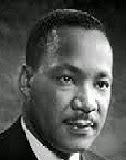
Short Biography of ‘Dr. Martin Luther King, Jr.’ (107 Words)

‘Dr. Martin Luther King, Jr.’ was born on 15th January, 1929 in Atlanta, Georgia. He was born Michael King, but his father changed his name in honor of German reformer Martin Luther.

Dr. Martin Luther King, Jr. was a legendary activist and leader in the African-American civil rights movement (1955-1968). He received the Nobel Peace Prize in 1964 for combating racial inequality through nonviolence. He was assassinated on April 4, 1968. Dr. Martin Luther King, Jr. is best known for being an iconic figure in the advancement of civil rights in the United States and around the world, using non-violent methods following the teachings of Mahatma Gandhi.

Short Biography of ‘Paul Laurence Dunbar’ (116 Words)

‘Paul Laurence Dunbar’ was born on June 27, 1872 in Dayton, Ohio. He was the son of ex-slaves. His father’s name was Joshua and his mother’s name was Matilda.

Paul Laurence Dunbar wrote his first poem at age 6 and gave his first public recital at age 9. At an early age he edited and published many newspapers.

Paul Laurence Dunbar wrote many short stories, novels, plays, songs, essays and poetry. Due to racial discrimination, he could only find work as an elevator operator. He wrote most of his works while taking people up and down the elevator. Paul Laurence Dunbar was among the first African-American poets to gain national prominence. He passed away on February 9, 1906.

Short Biography of ‘Harry Houdini’ (141 Words)

‘Harry Houdini’ was born on March 24, 1874 in Hungary. His real name was ‘Eric Weisz’. His parents were Rabbi Mayer Samuel Weisz and Cecília Weisz. When Harry was still a baby, his parents decided to go and live in the U.S.A.

Harry Houdini was a great escape-artist. When he was nine years old he gave his first public performance. Houdini was so very interested in magic, that he practiced many tricks until they were perfect.

Houdini’s most famous trick was to escape. On stage he would be tied up or locked up with chains and in a few minutes he would get free. He performed many other famous tricks. Some of his tricks were very dangerous.

Harry Houdini died on October 31, 1926 at the age of 52. He had shown in his life that he was ready to meet any challenge.

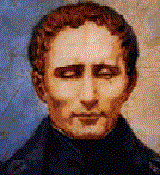
Short Biography of ‘Louis Braille’ (97 Words)

‘Louis Braille’ was born on 4th January 1809 in France. Due to an accident in early life he was completely blind in both eyes.

Louis Braille himself was a blind and worked in a blind school in Paris. He perfected a system of reading and writing especially for the blind. This writing is called Braille. The system that he developed in 1834 was not used much until about the time of his death.

Louis Braille died on 6th January, 1852 at the age of 43. He will always be remembered for his system remains known worldwide simply as braille.

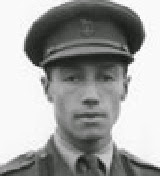
Short Biography of ‘Siegfried Sassoon’ (117 Words)

‘Siegfried Sassoon’ was born on 8th September, 1886 in England. His full name was Siegfried Loraine Sassoon. His father Alfred Ezra Sassoon was a member of the wealthy Baghdadi Jewish Sassoon merchant family. Siegfried Sassoon was an eminent English poet and writer.

Siegfried Sassoon served during the first world war as a captain. At first he was very excited and felt honoured to be in the war and fighting for his country; but then, when he saw the horrors of the war at first hand, he began to speak out against it. He wrote some moving poetry about the hardships and tragedy felt in war. Siegfried Sassoon died on 1st September 1967 at the age of 80.

Short Biography of ‘Jagdish Chandra Bose’ (176 Words)

‘Jagdish Chandra Bose’ was born on 30 November 1858 in Bengal, India (Now in Bangla Desh). His father, Bhagawan Chandra Bose was a leader of the Brahmo Samaj. Jagdish Chandra Bose was raised in a home committed to pure Indian traditions and culture.

Jagdish Chandra Bose attended Cambridge University after studying physics at Calcutta University. He returned to India in 1884 after completing a B.Sc. degree from Cambridge University. He made many discoveries in biology and physics. He showed that plants have feelings. He found that metals get ‘tired’ after some time. He invented a machine to measure the growth of plants.

Jagadish Chandra Bose is one of the most prominent first Indian scientists who proved by experimentation that both animals and plants share much in common. He authored two illustrious books, ‘Response in the Living and Non-living’ and ‘The Nervous Mechanism of Plants’. He set up the Bose Institute at Calcutta. He was honoured with many notable awards for his great work.

Jagdish Chandra Bose passed away on 23 November 1937 at the age of 78.

Short Article on ‘Uses of Domestic Animals’ (160 Words)

The ‘Domestic Animals’ are the animals that have been tamed and kept by humans as a work animal, food source or pet. There are different kinds of domestic animals. Cow, buffalo, sheep, goat, dog, cat, elephant, horse, camel, cock, hen, parrot, pigeon are some example of domestic animals.

Domestic Animals are very useful to man. Cow gives us milk. bullocks help the farmers in farming. Furs of sheep are very soft and long. These furs are sheared and made into wool. We get milk from the she-goats. Dogs are very faithful animals and they watch our houses. Elephants are used to carry heavy logs of wood. Horses are used to ride. Camels are used in deserts. The parrot is a talking bird. Most of the domestic animals are greatly devoted to their masters. Our domestic animals are quite friendly to us. They do very useful jobs for our benefit. Hence, we should treat them with all kindness.  

‘Care to be taken while completing Life Insurance Proposal Forms’ (150 Words

A contract of life insurance is a contract of utmost good faith technically known as uberrima fides. The principle of disclosing all material facts is embodied in this important concept which applies to all form of life insurance. It becomes the duty of the proposer to inform the insurer of everything likely to affect the judgement of the insurer, however unimportant it may seem to him/ her (the proposer).

Hence, the proposer should ensure that all questions in the proposal form are correctly answered. Any misrepresentation, non- disclosure of facts/ information which is material to acceptance of risk, or fraudulent information in any document leading to the acceptance of the risk will render the insurance contract null and void.

Hence, it is quite important that the policyholders and his dependants provide the correct and full information to secure the precious benefits of the insurance policy for his near and dear ones. 

Short Biography of ‘A.J. Cronin’ (74 Words)

Full name of ‘A.J. Cronin’ was Archibald Joseph Cronin. A.J. Cronin was born on 19 July 1896 in Cardross, Scotland. He was a great physician and a writer from scotland.

A.J. Cronin wrote several novels and short stories. His works are renowned for their memorable characters and powerful portrayal of the injustices in the society. His best-known novel was ‘The Citadel’. A.J. Cronin was passed away on 6 January 1981 at the age of 84. 

Short Biography of ‘Salim Ali’ (122 Words)

Full name of ‘Salim Ali’ was Salim Moizuddin Abdul Ali. He was born on 12 November 1896 in Mumbai, India. His father’s name was Moizuddin and his mother’s name was Zeenat-un-nissa. His parents died in the very early age of Salim Ali.

Salim Ali was a famous ornithologist and naturalist of India. He is known as the ‘Bird Man of India’ because he was an expert on Indian Birds. He studied the habits and lifestyles of Indian birds all his life. Salim Ali has written books on the birds of India. For his great work he was awarded the Padm Bhushan and Padma Vibhushan by the Government of India.

Salim Ali was passed away on 20 June 1987 at the age of 90. 

Short Biography of ‘Lala Lajpat Rai’ (132 Words)

‘Lala Lajpat Rai’ was born on 28 January 1865 in Punjab state of India. His father’s name was Radha Krishan, who was a was an Urdu teacher.

Lala Lajpat Rai was a large believer in the idea of Hinduism. He joined Indian National Congress and took active part in the freedom struggle of India. He was a great Indian freedom fighter and for this he was deported to Burma. Lala Lajpat Rai was elected President of the Congress party in the Calcutta Special Session of 1920.

Lala Lajpat Rai worked with great Energy and enthusiasm to improve education and social conditions in India. He was popularly known as ‘Punjab Kesari’ meaning the lion of Punjab also known as ‘Sher-e- Punjab’. He was died on 17 November 1928 at the age of 63. 


Indian Economic Service / Indian Statistical Service Examination, 2019

Based  on  the  results  of  the  written  examination of the Indian Economic Service / Indian Statistical Service Examination, 2019 held  by  the Union Public Service Commission from 28th to 30th June, 2019 followed by interviews  for  Personality  Test  in December, 2019 and January, 2020,  the  lists,  in  order  of  merit, of  the  candidates who have been recommended for  appointment  to  the  posts in Indian Economic Service and Indian Statistical Service are appended.

            The number of vacancies reported by the Government for posts to be filled is as under:-

Service GEN EWS OBC SC ST Total
Indian Economic Service 14 03 08 05 02 32

[Incl. 01 PwBD-1]

Indian Statistical Service 14 03 09 05 02 33

[Incl. 01 PwBD-1, 01 PwBD-3,

01 PwBD-4 & 5]

     The number of candidates recommended for appointment to the posts in Indian Economic Service and Indian Statistical Service is as under:

Service GEN EWS OBC SC ST Total
Indian Economic Service 14

[incl. 01 PwBD-1]

03 08 05 02 32

[incl. 01 PwBD-1]

Indian Statistical Service 10

[incl. 01 PwBD-3]

05 10

[incl. 01 PwBD-1]

05 02 32

[incl. 01 PwBD-1  & 01 PwBD-3

            Appointments shall be made strictly in accordance with the extant rules and the number of vacancies available.

            The Result of following Roll Nos. of recommended  candidates  are provisional :

Indian  Economic  Service (06 Nos. )

0470285 0870008 0870471 0870579 0870998
0871425        

Indian Statistical Service (11 Nos.)

0880344 0880973 0881551 0881725 0881762
0882260 1080073 1080493 1180510 2680088
2680798        

      The offer of appointment to the candidates whose result has been kept provisional will not be issued till the Commission verifies the original documents awaited from such candidates and till clarifies the provisional status of these candidates. The provisionality of these candidates will remain valid only for a period of three months from the date of declaration of Final result. In case the candidate fails to submit the requisite documents as required by the Commission within this period, their candidature will be cancelled and no further correspondence would be entertained in this regard.

           UPSC  has  a ‘Facilitation Counter’  near Examination Hall in its campus. Candidates  can obtain any information/clarification regarding their examination/ recruitment on the working day  between 10.00 hrs. to 17.00 hrs in person  or over telephone nos.  011-23385271 / 23381125.  Result  will  also  be  available  on  the  UPSC  web  site  i.e. www.upsc.gov.in Marks  of  the  candidates  shall  be  made  available  on the  website  within  fifteen  days  from  the  date  of  publciation  of  the  result.

Results – IES

Results – ISS

********

RCJ/PK

IEA Launches First In-depth Review of India’s Energy Policies

In partnership with NITI Aayog, International Energy Agency (IEA) today released the first in-depth review of India’s energy policies.

The report highlights the achievements of India’s energy policies and provides recommendations to support the government’s goals of promoting well-functioning energy markets and boosting deployment of renewables.

Dr Fatih Birol (Executive Director of the IEA) presented the key findings of the review in New Delhi in the presence of Shri Pralhad Joshi (Minister of Coal), Shri Dharmendra Pradhan (Minister of Petroleum and Natural Gas and Minister of Steel), Shri R K Singh (Minister for Power and Renewable Energy), Dr Rajiv Kumar (Vice Chairman, NITI Aayog), Shri Amitabh Kant (CEO of NITI Aayog), key energy secretaries, ambassadors and think tanks.

IEA regularly conducts in-depth reviews of energy policies for its member and association countries.This is the first review carried out for India, which has been an IEA-association country since March 2017.

Introducing the report, NITI Aayog Special Secretary Shri RP Gupta welcomed and commended the hard work of the IEA. He said, ‘As India builds on the remarkable growth and development of its energy sector, this in-depth review will help the Government in meeting its energy objectives by setting out a range of recommendations in each energy policy area.’

NITI Aayog CEO Amitabh Kant, who had brought up the idea with IEA to conduct the review, said: ‘With clear goals in place, the country is making great strides towards affordable, secure and cleaner energy for all its citizens. India is working hard to move towards its aspirations of transforming the energy sector.’

‘IEA has the privilege of enjoying a close relationship with India. This first in-depth review of the country’s energy policies illustrates the value of our growing collaboration,’ said Dr Birol.

‘The energy choices that India makes will be critical for Indian citizens as well as the future of the planet. This was demonstrated at IEA’s 2019 ministerial meeting, which mandated the Agency to start consultations with India for a strategic partnership that could serve as a path to eventual membership, a game-changer for international energy governance.’

The IEA report congratulates the Indian government on its outstanding achievements in extending citizens’ access to electricity, affordable efficient lighting and clean cooking in record time through historic schemes like SAUBHAGYA, UJALA and UJJWALA,while pursuing energy market reforms and the swift deployment of renewable technologies. The report highlights the strong growth of renewables in India, which now accounts for almost 23% of the country’s total installed capacity. The review also found that energy efficiency improvements in India avoided 15% of additional energy demand, oil and gas imports, and air pollution as well as 300 million tonnes of CO2 emissions between 2000 and 2018.

India is becoming increasingly influential in global energy trends. The country’s demand for energy is set to double by 2040, and its electricity demand may triple, according to the IEA report. Indian oil consumption is expected to grow faster than that of any other major economy. This makes further improving energy security a key priority for India’s economy, says the IEA.

IEA welcomes Indian government policies designed to conduct large-scale renewable energy auctions, open up coal mining to private companies, and promote access to oil and gas markets for foreign investors. The report offers a wide range of recommendations for reforms in support of India’s goal of promoting open and well-functioning energy markets in sectors such as coal, gas and electricity. These include building strong regulators to ensure non-discriminatory access, moving from state allocation to market pricing, and further rationalizing energy subsidies.

In India’s renewables-rich states, the share of variable renewables in electricity generation is already above 15%, a level that calls for dedicated policies to ensure they integrate smoothly into the power system. NITI Aayog can play a strong role in working with the states to implement power sector reforms, advance grid integration, improve flexibility and coordinate energy policy decisions.

The review also strongly encourages India to institutionalise energy policy coordination across government with a national energy policy framework.

Power and Renewable Energy Minister R K Singh congratulated IEA and NITI Aayog for the launch of the report: ‘India’s energy policy is a global story. India has the largest unified power grid that operates in a single frequency. India has moved from scarcity to surplus electricity over the past few years, while implementing the largest and the fastest energy access improvement and energy efficiency programmes in the world.’

Coal Minister Joshi said,‘With the support of Amitabh Kant and Dr Rajiv Kumar, India recently launched commercial mining operations. IEA’s report will be very helpful for designing our future course of action in the energy sector.’

Petroleum and Natural Gas Minister Pradhan said:‘NITI Aayog has already started preparing a National Energy Strategy, and I would like to propose an annual event where NITI and IEA can bring together global energy stakeholders to have a structured energy dialogue. We look forward to engaging with IEA on oil security and on helping India move towards a natural gas-based economy.’

NITI Aayog Vice Chairman Dr Kumar emphasised that India’s energy goals cannot be achieved without a strong coordination of policies and targets between Central and state governments, notably on electricity market design and renewable targets, and that a stronger cooperation is therefore needed on these fronts.

The report will help India to design implementation strategies to achieve secure and sustainable energy access for its citizens.

***

23rd National Youth Festival-2020 to be organized from 12th to 16th January, 2020

Ministry of Youth Affairs and Sports and State Government of Uttar Pradesh are jointly organizing 23rd National Youth Festival (NYF) 2020 at Indira Pratishthan, Lucknow from 12th to 16th January, 2020. Chief Minister, Uttar Pradesh Yogi Adityanath   and Minister of State (I/C) for Youth Affairs & Sports, Shri Kiren Rijiju will inaugurate the  NYF 2020  on 12th January on the occasion of birth anniversary of Swami Vivekananda, the great Youth icon. The inauguration will be followed by cultural/musical performance by local and renowned artists.

The closing ceremony of the festival on 16th January will be graced by the Governor of Uttar Pradesh and Shri Kiren Rijiju.

The Government has been organizing National Youth Festival (NYF) since 1995. The objective of NYF is to provide a platform to bring the youth of the country together in an attempt to provide them opportunity to showcase their talents in various activities. It also provides an arena, by creating a mini-India, where youth interact in formal and informal settings and exchange their social and cultural uniqueness. This blend of diverse socio-cultural milieu proves the Hon’ble Prime Minister’s commitment and belief in  ‘Ek Bharat Shrestha Bharat’.

The theme of the 23rd National Youth Festival 2020 is ‘FIT YOUTH FIT INDIA’ in pursuance of the goal of Hon’ble Prime Minister Narendra Modi for New India to be a fit India. NYF 2020 would leverage on the knowledge and ideas that Youth of today bring to the table where they are hugely connected and integrated through online and offline communication channels than ever before. The NYF 2020 intends to focus on bringing the attention of the Youth towards dialogue and discussions on selected thematic interfaces so that the outcome feeds into a National Level.

The National Youth Festival is like a mega National Integration Camp. NYF 2020 would have around 6000 participants (volunteers from NYKS, NSS and local youth) from each State of the country. As the theme of 2020 NYF suggests, the youth will inculcate physical activity and sports in their everyday lives which is essential to make new India a Fit India.

From 13th January to 16th January, different Competitive (Folk Dance, One Act Play, Hindustani Vocal Solo, Carnatic Vocal Solo, Elocution, harmonium Light, Tabla, Mridangam, Veena, Flute, Sitar, Guitar, Dances Manipuri, Odissi, Kuchupuri, Bharatnatyam, Kathak) and Non Competitive Events (Young Artist Camp, Yuva Kriti, Food festival, Adventure Camp, Suvichar, Youth Convention) will be organized.

****

Shri Dharmendra Pradhan to launch ‘Purvodaya’ : Accelerated development of Eastern India through an Integrated Steel Hub

Ministry of steel in partnership with CII and JPC is organising the launch of Purvodaya-Accelerated Development of Eastern Region through an Integrated Steel hub, in line with Prime Minister’s Vision  for focused development of the Eastern States. Shri Dharmendra Pradhan, Minster for Petroleum & Natural Gas and Steel will launch the Purvodaya on 11th January 2020 at The Oberoi Grand Kolkata. Prime Minister Shri Narendra Modi  has highlighted the need for focused development of the Eastern states in order to unleash their untapped potential thereby ensuring the growth of the region as a whole and the country at large.

Creation of such a world-class steel hub would significantly contribute to Purvodaya by propelling socio-economic development in the Eastern region. Steel capacity addition as envisioned in the hub would entail capital investments of >70 Bn. $ and lead to an incremental GSDP of >35 Bn. $ through steel alone. Growth of steel industry through such a hub would lead to significant employment opportunities across the entire value chain, creating over 2.5 Million jobs in the region. Creation of world-class logistics and utilities infrastructure would also spur development of other manufacturing industries across sectors. This would also be accompanied by social infrastructure in the form of cities, schools, hospitals, skilling centres etc. Such development, especially in the most under-developed regions in these states, will play a significant role in overall socio-economic growth of Eastern India, thus reducing the disparity between the East and other regions of the country.

Background

The Eastern region of India, though extremely rich in resources, lags behind other states in terms of development. Eastern states of India (Odisha, Jharkhand, Chhattisgarh, West Bengal and Northern Andhra Pradesh) collectively hold ~80% of the country’s iron ore, ~100% of coking coal and significant portion of chromite, bauxite and dolomite reserves. In addition to its rich mineral reserves, these states also have a significant locational advantage. There is a presence of major ports such as Paradip, Haldia, Vizag, Kolkata etc. with >30% of India’s major port capacity, 3 major National Waterways as well as strong road, rail connectivity to most parts of the country. Despite these advantages, these states are currently behind many other Indian states in terms of economic and development indicators such as GSDP per capita and Human Development Index (HDI).

In India’s march towards a $5 trillion economy, the 5 Eastern states can play a major role where steel sector can become the catalyst. The presence of natural resources, coupled with an already established steel industry, presents an excellent opportunity for Eastern India to spearhead the expected growth in the domestic steel industry, the region at large and the country as a whole. This Eastern belt has the potential to add more than 75% of the country’s incremental steel capacity envisioned by the National Steel Policy. It is expected that out of the 300 MT capacity by 2030-31, over 200 MT can come from this region alone, driven by Industry 4.0.Rs.100 lakh crore infrastructure investment announced by the Government in the next 5 years will result in additional boost to construction and infrastructure through various initiatives such as Pradhan Mantri Awas Yojana, Jal Jeevan Mission, Sagarmala, Bharatmala, etc. Steel industry has a multiplier effect in the GDP as well as in employment. These States would march ahead on the development index because of which the Ministry of Steel has envisioned an Integrated Steel Hub in this region, which will serve as a catalyst in the transformation of Eastern India by developing a vibrant steel industry.

  Integrated  Steel  Hub

The  proposed  Integrated  Steel  Hub, encompassing  Odisha, Jharkhand, Chhattisgarh, West Bengal and Northern Andhra Pradesh, would serve as a torchbearer for socio-economic growth of Eastern India.

The objective of this hub would be to enable swift capacity addition and improve overall competitiveness of steel producers both in terms of cost and quality. In addition to increased steel capacity, this hub would also help enhance best-in- class value addition capabilities. The Integrated Steel Hub would focus on 3 key elements:


  1. Capacity addition through easing the setup of greenfield steel plants
  2. Development of steel clusters near integrated steel plants as well as demand centres
  3. Transformation of logistics and utilities infrastructure which would change the socio-economic landscape in the East

These elements would be supported through additional enablers such as ensured availability of raw materials, presence of supporting industries such as capital goods and well-established avenues for skill development.

Steps Taken by Ministry of Steel

Various steps to make this hub a reality are already being taken by the Ministry. The Central Ministries, the State Governments and Private Players across the spectrum are allied to the cause of Purvodaya. The following actions have already been initiated by the Ministry of Steel, in co-ordination with the various stakeholders:


  1. A policy facilitating the creation and upgradation of steel clusters has been put up after due consultation with Central Ministries, State Governments and industry. Kalinganagar and Bokaro have been identified as pilot locations for steel clusters around ISPs. Task Forces and Working Groups, with the support of the respective State Governments, have been created. Detailed planning for operationalization of these clusters is currently underway.
  2. In an effort to ease capacity addition through greenfield route, a framework policy is being created to address the challenges faced in land acquisition, raw material linkage and obtaining
    This being done in consultation with Central Government Ministries, State Governments and industry stakeholders.
  3. Critical logistics and infrastructure projects are being identified for expedition across the 12 major steel zones identified in the region (Kalinganagar, Angul, Rourkela, Jharsuguda, Nagarnar, Bhilai, Raipur, Jamshedpur, Bokaro, Durgapur, Kolkata, Vizag). These include major rail, road and port capacity expansion projects to debottleneck existing capacity and create world-class multimodal logistics infrastructure across these zones.


****