Recess Rescue: Why Play Time Should Be Written Into The Students\’ Bill Of Rights

Source: ASIDE 2016


As our nation’s children head to back to the classroom, many schools find themselves trying to rein in kids’ summer impulses. Strict conduct policies are emphasizing rules and enforcing straight lines on students who are used to gamboling in backyards and lolling for hours.

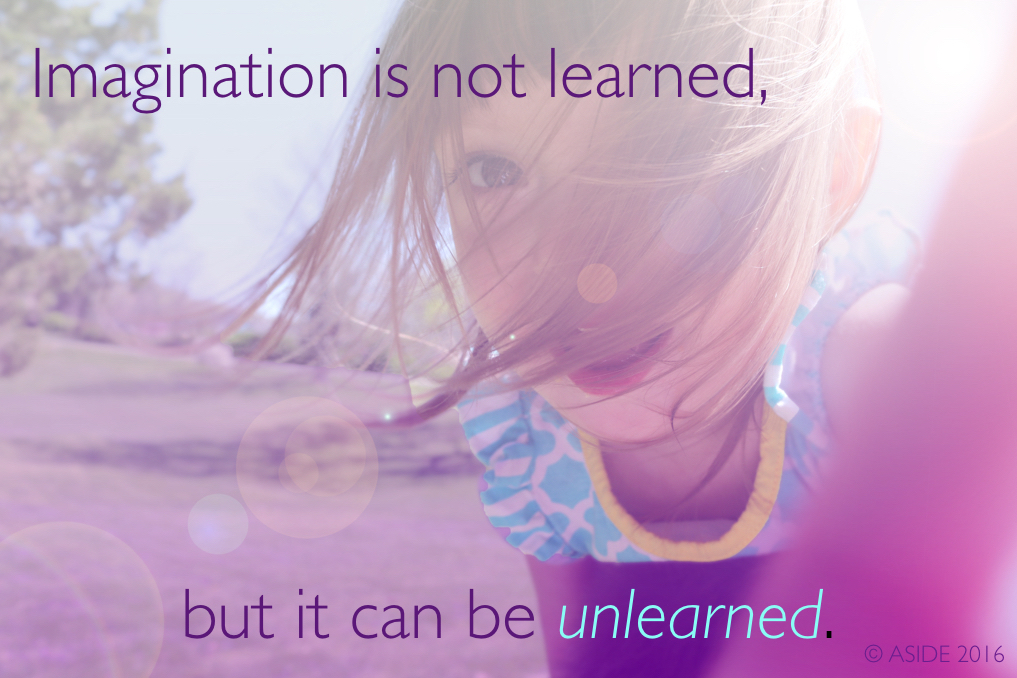
Many Scandinavian countries, most brain science, and all veteran teachers would encourage the exact opposite. They would argue that instead of limiting play, educators should expand the amount of free time dedicated to socialization and creativity. Imagination itself is not learned, but it can be unlearned due to the drone of worksheets and mandates.


Source: ASIDE 2016


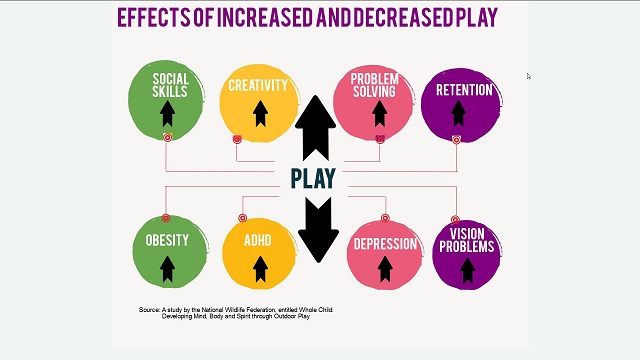
While many schools nationwide are reducing free play opportunities, our neighboring Patchogue-Medford district here on Long Island has actually doubled recess time from 20 to 40 minutes. In fact, a few Texas and Oklahoma schools now schedule recess four times a day. These changes are not capricious; they are part of studies such as the LiiNK Project, which has found that physical activity increases students\’ emotional well-being and reduces instances of bullying and stress. The American Academy of Pediatrics supports these findings with its seminal white paper about \”The Crucial Role Of Recess In School.\”

Across the board, students, teachers, parents, administrators, kinesiologists, therapists, and test graders are all witnessing the positive outcomes of enhanced play time. The scientist Jaak Panksepp has devoted a career of research to answering two pivotal questions: Where in the brain does play come from? And is it a learned activity, or is it a basic function?

Source: ASIDE 2016


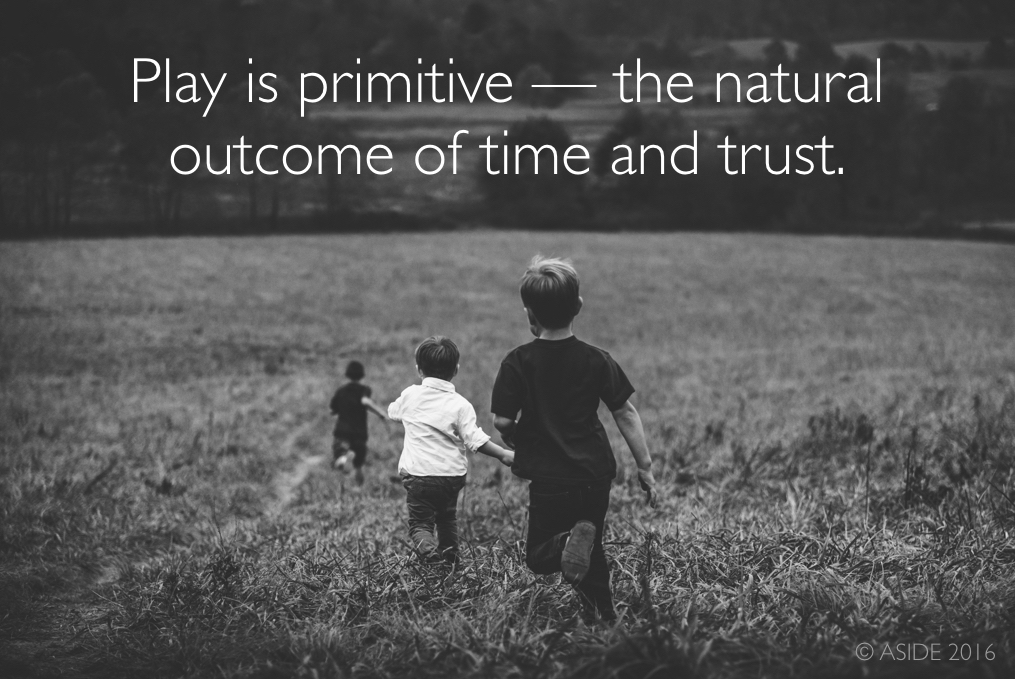
NPR has highlighted Panksepp’s studies, showcasing that play is deep and instinctive, shared across mammals, and integral to survival. Important social skills stem from play, in testing interactions, probing limits, and navigating hierarchies. In other words, play is primitive, the natural outcome of time and trust.

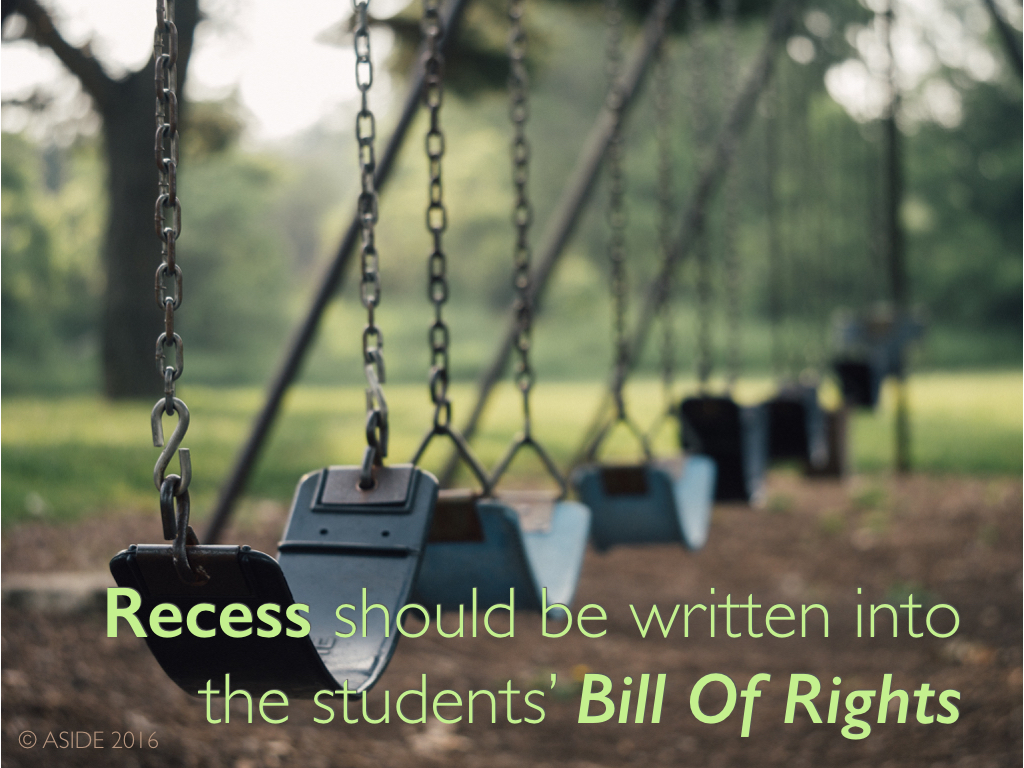
Children need this unstructured time to make mistakes and develop friendships on their own terms. The arena of the soccer field or the sand box is ideal in nurturing successful adults. Recess is not a privilege. It should not be an afterthought. It should instead be written into the students’ Bill Of Rights.

Source: KOIN


Otherwise, what are our playgrounds? Are they monuments to eras past? Are they the still testaments to the naivety of earlier generations? Are they just another hallmark of the sped-up modern day, the never-enough-time-for day, when the things we wish for are just that — wishes?

Recess Rescue: Why Play Time Should Be Written Into The Students\’ Bill Of Rights

Source: ASIDE 2016


As our nation’s children head to back to the classroom, many schools find themselves trying to rein in kids’ summer impulses. Strict conduct policies are emphasizing rules and enforcing straight lines on students who are used to gamboling in backyards and lolling for hours.

Many Scandinavian countries, most brain science, and all veteran teachers would encourage the exact opposite. They would argue that instead of limiting play, educators should expand the amount of free time dedicated to socialization and creativity. Imagination itself is not learned, but it can be unlearned due to the drone of worksheets and mandates.


Source: ASIDE 2016


While many schools nationwide are reducing free play opportunities, our neighboring Patchogue-Medford district here on Long Island has actually doubled recess time from 20 to 40 minutes. In fact, a few Texas and Oklahoma schools now schedule recess four times a day. These changes are not capricious; they are part of studies such as the LiiNK Project, which has found that physical activity increases students\’ emotional well-being and reduces instances of bullying and stress. The American Academy of Pediatrics supports these findings with its seminal white paper about \”The Crucial Role Of Recess In School.\”

Across the board, students, teachers, parents, administrators, kinesiologists, therapists, and test graders are all witnessing the positive outcomes of enhanced play time. The scientist Jaak Panksepp has devoted a career of research to answering two pivotal questions: Where in the brain does play come from? And is it a learned activity, or is it a basic function?

Source: ASIDE 2016


NPR has highlighted Panksepp’s studies, showcasing that play is deep and instinctive, shared across mammals, and integral to survival. Important social skills stem from play, in testing interactions, probing limits, and navigating hierarchies. In other words, play is primitive, the natural outcome of time and trust.

Children need this unstructured time to make mistakes and develop friendships on their own terms. The arena of the soccer field or the sand box is ideal in nurturing successful adults. Recess is not a privilege. It should not be an afterthought. It should instead be written into the students’ Bill Of Rights.

Source: KOIN


Otherwise, what are our playgrounds? Are they monuments to eras past? Are they the still testaments to the naivety of earlier generations? Are they just another hallmark of the sped-up modern day, the never-enough-time-for day, when the things we wish for are just that — wishes?

Recess Rescue: Why Play Time Should Be Written Into The Students\’ Bill Of Rights

Source: ASIDE 2016


As our nation’s children head to back to the classroom, many schools find themselves trying to rein in kids’ summer impulses. Strict conduct policies are emphasizing rules and enforcing straight lines on students who are used to gamboling in backyards and lolling for hours.

Many Scandinavian countries, most brain science, and all veteran teachers would encourage the exact opposite. They would argue that instead of limiting play, educators should expand the amount of free time dedicated to socialization and creativity. Imagination itself is not learned, but it can be unlearned due to the drone of worksheets and mandates.


Source: ASIDE 2016


While many schools nationwide are reducing free play opportunities, our neighboring Patchogue-Medford district here on Long Island has actually doubled recess time from 20 to 40 minutes. In fact, a few Texas and Oklahoma schools now schedule recess four times a day. These changes are not capricious; they are part of studies such as the LiiNK Project, which has found that physical activity increases students\’ emotional well-being and reduces instances of bullying and stress. The American Academy of Pediatrics supports these findings with its seminal white paper about \”The Crucial Role Of Recess In School.\”

Across the board, students, teachers, parents, administrators, kinesiologists, therapists, and test graders are all witnessing the positive outcomes of enhanced play time. The scientist Jaak Panksepp has devoted a career of research to answering two pivotal questions: Where in the brain does play come from? And is it a learned activity, or is it a basic function?

Source: ASIDE 2016


NPR has highlighted Panksepp’s studies, showcasing that play is deep and instinctive, shared across mammals, and integral to survival. Important social skills stem from play, in testing interactions, probing limits, and navigating hierarchies. In other words, play is primitive, the natural outcome of time and trust.

Children need this unstructured time to make mistakes and develop friendships on their own terms. The arena of the soccer field or the sand box is ideal in nurturing successful adults. Recess is not a privilege. It should not be an afterthought. It should instead be written into the students’ Bill Of Rights.

Source: KOIN


Otherwise, what are our playgrounds? Are they monuments to eras past? Are they the still testaments to the naivety of earlier generations? Are they just another hallmark of the sped-up modern day, the never-enough-time-for day, when the things we wish for are just that — wishes?

Recess Rescue: Why Play Time Should Be Written Into The Students\’ Bill Of Rights

Source: ASIDE 2016


As our nation’s children head to back to the classroom, many schools find themselves trying to rein in kids’ summer impulses. Strict conduct policies are emphasizing rules and enforcing straight lines on students who are used to gamboling in backyards and lolling for hours.

Many Scandinavian countries, most brain science, and all veteran teachers would encourage the exact opposite. They would argue that instead of limiting play, educators should expand the amount of free time dedicated to socialization and creativity. Imagination itself is not learned, but it can be unlearned due to the drone of worksheets and mandates.


Source: ASIDE 2016


While many schools nationwide are reducing free play opportunities, our neighboring Patchogue-Medford district here on Long Island has actually doubled recess time from 20 to 40 minutes. In fact, a few Texas and Oklahoma schools now schedule recess four times a day. These changes are not capricious; they are part of studies such as the LiiNK Project, which has found that physical activity increases students\’ emotional well-being and reduces instances of bullying and stress. The American Academy of Pediatrics supports these findings with its seminal white paper about \”The Crucial Role Of Recess In School.\”

Across the board, students, teachers, parents, administrators, kinesiologists, therapists, and test graders are all witnessing the positive outcomes of enhanced play time. The scientist Jaak Panksepp has devoted a career of research to answering two pivotal questions: Where in the brain does play come from? And is it a learned activity, or is it a basic function?

Source: ASIDE 2016


NPR has highlighted Panksepp’s studies, showcasing that play is deep and instinctive, shared across mammals, and integral to survival. Important social skills stem from play, in testing interactions, probing limits, and navigating hierarchies. In other words, play is primitive, the natural outcome of time and trust.

Children need this unstructured time to make mistakes and develop friendships on their own terms. The arena of the soccer field or the sand box is ideal in nurturing successful adults. Recess is not a privilege. It should not be an afterthought. It should instead be written into the students’ Bill Of Rights.

Source: KOIN


Otherwise, what are our playgrounds? Are they monuments to eras past? Are they the still testaments to the naivety of earlier generations? Are they just another hallmark of the sped-up modern day, the never-enough-time-for day, when the things we wish for are just that — wishes?

Recess Rescue: Why Play Time Should Be Written Into The Students\’ Bill Of Rights

Source: ASIDE 2016


As our nation’s children head to back to the classroom, many schools find themselves trying to rein in kids’ summer impulses. Strict conduct policies are emphasizing rules and enforcing straight lines on students who are used to gamboling in backyards and lolling for hours.

Many Scandinavian countries, most brain science, and all veteran teachers would encourage the exact opposite. They would argue that instead of limiting play, educators should expand the amount of free time dedicated to socialization and creativity. Imagination itself is not learned, but it can be unlearned due to the drone of worksheets and mandates.


Source: ASIDE 2016


While many schools nationwide are reducing free play opportunities, our neighboring Patchogue-Medford district here on Long Island has actually doubled recess time from 20 to 40 minutes. In fact, a few Texas and Oklahoma schools now schedule recess four times a day. These changes are not capricious; they are part of studies such as the LiiNK Project, which has found that physical activity increases students\’ emotional well-being and reduces instances of bullying and stress. The American Academy of Pediatrics supports these findings with its seminal white paper about \”The Crucial Role Of Recess In School.\”

Across the board, students, teachers, parents, administrators, kinesiologists, therapists, and test graders are all witnessing the positive outcomes of enhanced play time. The scientist Jaak Panksepp has devoted a career of research to answering two pivotal questions: Where in the brain does play come from? And is it a learned activity, or is it a basic function?

Source: ASIDE 2016


NPR has highlighted Panksepp’s studies, showcasing that play is deep and instinctive, shared across mammals, and integral to survival. Important social skills stem from play, in testing interactions, probing limits, and navigating hierarchies. In other words, play is primitive, the natural outcome of time and trust.

Children need this unstructured time to make mistakes and develop friendships on their own terms. The arena of the soccer field or the sand box is ideal in nurturing successful adults. Recess is not a privilege. It should not be an afterthought. It should instead be written into the students’ Bill Of Rights.

Source: KOIN


Otherwise, what are our playgrounds? Are they monuments to eras past? Are they the still testaments to the naivety of earlier generations? Are they just another hallmark of the sped-up modern day, the never-enough-time-for day, when the things we wish for are just that — wishes?

NCC committed to groom youth into responsible citizens, says DG NCC Lt Gen Rajeev Chopra

Director General of National Cadet Corps (NCC) Lt Gen Rajeev Chopra has emphasised that the NCC is committed to grooming the youth into responsible citizens who contribute immensely in nation building. Addressing the annual press conference during the NCC Republic Day Camp (RDC) here today, the DG NCC highlighted the major role of NCC in empowering the youth in nation building, creating social awareness, community development, environment protection, sports and adventure among them.

Lt Gen Chopra said, the training philosophy of the NCC cadets has been refined to accommodate the changing aspirations of the youth and expectations of the society. “The focus is now on personality development, leadership traits and improving soft skills of the cadets, so as to equip them for future challenges,” he added.

The DG NCC highlighted that Memoranda of Understanding (MoUs) have been signed with 10 countries for Youth Exchange Programme (YEP). However, to give the cadets a wider exposure, YEP with seven more countries is in an advanced stage of approval, he said.

The RDC 2020 commenced at the Cariappa Parade Ground on January 01, 2020. Lt Gen Chopra addressed the cadets & officials and asked the cadets to participate wholeheartedly and derive maximum benefits from each activity during the camp.

The aim of the RDC is to provide an exposure to the rich culture and traditions of the country through important events that take place in the national capital during the run up to the Republic Day as well as to enhance the personal traits of the cadets by strengthening their value system. Cadets attending the camp participate in a number of activities like cultural competitions, national integration awareness programme and various institutional training competitions.

A total of 2,155 cadets, including 710 girls, drawn from all 28 states and nine Union Territories (UTs), are participating in this month-long camp. They include cadets from UTs of Jammu & Kashmir, Ladakh and 120 cadets from the North Eastern Region. Portraying a reflection of ‘Mini India’, the camp will be visited by a number of dignitaries, including Raksha Mantri, Raksha Rajya Mantri, Chief of Defence Staff, the Chiefs of the Army, Navy and Air Force and the Chief Minister of Delhi. The camp will culminate with the customary Prime Minister’s rally on January 28.

A number of competitions will take place during the camp, wherein all 17 directorates compete for the coveted Prime Minister’s Banner which is presented by the Prime Minister Shri Narendra Modi during the PM rally. A large number of selected cadets will get an opportunity to participate in the prestigious Republic Day Parade on January 26 at Rajpath.


****************

AI & machine learning will contribute Usd 1 trillion to Indian economy by 2035; government committed to ensuring stable environment for investors and startups- Piyush Goyal

Commerce and Industry & Railways Minister Piyush Goyal today inaugurated the National Stock Exchange (NSE) Knowledge Hub in New Delhi, an Artificial Intelligence (AI) powered learning ecosystem that will assist the banking, financial services and insurance (BFSI) sector. Speaking on this occasion Commerce & Industry Minister said that although India has developed as the second largest fintech hub in the world, a lot of work still needs to be done in the BFSI sector. He hoped that the Knowledge Hub created by NSE will fill in these gaps and help the financial sector to move into the future.

The NSE Knowledge Hub will enhance skills and help academic institutions in preparing future-ready talent for the financial service industry. It is also available on mobile and attempts to bring together world class content and learners through this state- of- the- art and future- ready platform.

Commerce and Industry Minister said that this industry driven learning eco systemwill help India in building next generation skills and capabilities in the BFSI sector. The use of AI will ensure that the skill upgradation is affordable and accessible and helps in the creation of a workforce that is adequate for the requirements of the sector said Piyush Goyal. AI and Machine Learning will contribute USD 1 trillion by 2035 and this is a good beginning by NSE to tap the potential of AI and use it as a tool to create a workforce in the BFSI sector in India added the Minister.

Commerce and Industry Minister assured continued Government support to investors and startups and said that India is a safe investment destination today for investors, even the smallest of investors and this Knowledge Hub by NSE will strengthen and empower those working in the BFSI sector and will benefit investors and the financial services to give world class services through knowledge, innovation and value- addition.

***

Election Commission of India Announces Schedule for General Election to the Legislative Assembly of NCT of Delhi, 2020– Polling to be held on 8th February, 2020 and Counting on 11th February, 2020

Election Commission of India  today announced the Schedule for General Election to the Legislative Assembly of NCT of Delhi, 2020.  Please see the following link for due details.

            Pl. click here to see the details


*************

Call on Prime Minister by Mr. Tharman Shanmugaratnam, Senior Minister and Coordinating Minister for Social Policies, Singapore

Mr. Tharman Shanmugaratnam, Senior Minister and Coordinating Minister for Social Policies, Singapore called on Prime Minister Shri Narendra Modi today.

Prime Minister welcomed Mr. Shanmugaratnam to India and extended his warm wishes on the occasion of New Year to Mr. Shanmugaratnam and through him to Mr. Lee Hsien Loong, Prime Minister of Singapore.

Prime Minister and Mr. Shanmugaratnam expressed satisfaction at the rapid pace of bilateral relations.  They discussed several matters of mutual interest in the sphere of economic cooperation, including infrastructure, skills, India-Singapore Comprehensive Economic Cooperation Agreement (CECA), and digital economy.  Mr. Shanmugaratnam lauded Prime Minister Shri Narendra Modi’s leadership in social transformation of India and in encouraging digital economy.

Prime Minister also expressed his desire to strengthen further cooperation between India and Singapore in the areas of infrastructure, tourism, digital payment systems, innovation and governance.

*************

PM attends the centenary celebrations of Kirloskar Brothers Ltd.

Prime Minister Shri. Narendra Modi graced the centenary celebrations of Kirloskar Brothers Ltd. (KBL) organised in New Delhi today. Prime Minister released a postage stamp to commemorate 100 years of KBL. The PM also unveiled the Hindi version of the biography of Late Shri. Laxmanrao Kirloskar, founder of Kirloskar Brothers, titled ‘Yantrik ki Yatra – The man who made machines.’

Congratulating the Kirloskar Brothers Limited for their centenary celebrations, PM said that this sense of taking risks, expanding into new areas, is still the identity of every Indian entrepreneur. India’s entrepreneur is impatient for the development of the country and to expand his capabilities and successes.

“Today, when we are entering a new year, we are entering a new decade, I have no hesitation in saying that this decade will be for Indian entrepreneurs,” PM added.

PM stated that the true power of the people of the country can come to the fore only when the government stands not as a hindrance to India, Indian and Industries, but as their partner.

’Reform with Intent, Perform with integrity, Transform with intensity’ has been our approach in the last few years. We have tried for a governance that is professional and process driven. In the last five years there is an environment in the country to work with integrity and complete transparency. This has given the country the courage to set big goals and achieve them on time.

PM said, “In the Financial Year 2018-19, there was a transaction of about 9 lakh crore rupees through UPI. In this financial year till December only about 15 lakh crore rupees have been transacted through UPI. You can guess how fast the country is adopting digital transactions. The Ujala Scheme has completed 5 years only yesterday. It is a matter of satisfaction for all of us that more than 36 crore LED bulbs have been distributed throughout the country”.

“Similarly success stories of Make in India campaign are the strength of our industry. I want success stories from every field of Indian industry”, the PM added.

Text of PM’s speech at the centenary celebrations of Kirloskar Group

आप सभी को नववर्ष की बहुत-बहुत शुभकामनाएं। Kirloskar समूह की और उनके लिए तो ये एक दोहरे से‍लिब्रेशन का अवसर है। राष्‍ट्र निर्माण में सहयोग के सौ वर्ष पूरे हो रहे हैं और Kirloskar समूह को मैं बहुत-बहुत बधाई देता हूं।

साथियो, Kirloskar समूह की सफलता भारतीय उद्यम और भारतीय उद्यमियों की सफलता की भी पहचान है। सिंधु घाटी सभ्‍यता से लेकर आज तक भारतीयों की spirit of enterprise देश के विकास को नई ऊर्जा, नई गति दे रही है। जब देश गुलामी की जंजीरों में जकड़ा हुआ था, तब श्री लक्ष्‍मण राव किर्लोस्‍कर जी ने और ऐसे उद्यमियों ने भारत की spirit को, इस जज्‍बे को जीवित रखा; किसी भी परिस्थिति में उसे कमजोर नहीं होने दिया।

यही वो भावना थी, जिसने स्‍वतंत्रता के बाद भी देश को आगे बढ़ने में मदद की। आज का ये दिन लक्ष्‍मण राव किर्लोस्‍कर जी की सोच और उनके सपनों को सेलिब्रेट करने का तो है ही, उद्यमियों के लिए innovation और dedication  की प्रेरणा लेने का भी एक अमूल्‍य अवसर है। आज के दिन लक्ष्‍मराव जी की बायोग्राफी का और नाम भी बहुत अच्‍छा रखा है- यांत्रिकी यात्रा- उसका विमोचन, ये भी मेरे लिए एक सौभाग्‍य की बात है। और मुझे विश्‍वास है कि उनकी यात्रा के अहम पड़ाव भारत के सामान्‍य युवा को innovation और enterprise spirit के लिए प्रेरित करते रहेंगे।

साथियो, कुछ कर गुजरने की ये भावना, जोखिम उठाने की ये भावना, नए-नए क्षेत्रों में अपना विस्‍तार करने की ये भावना आज भी हर भारतीय उद्यमी की पहचान है। भारत का उद्यमी अधीर है देश के विकास के लिए, अपनी क्षमताओं और सफलताओं के विस्तार के लिए। आप सोच रहे होंगे कि आज जब world economy और साथ ही हमारी अर्थव्‍यवस्‍था की गति को लेकर अलग-अलग तरह की खबरें आ रही हैं तो मैं इतने विश्‍वास से ये कैसे कह रहा हूं।

सा‍थियो, मेरा विश्‍वास भारतीय उद्योग जगत पर है, आप सभी पर है। परिस्थितियों को बदलने के लिए, हर चुनौती से पार पाने के लिए जिस इच्‍छा शक्ति की जरूरत होती है, वो भारतीय उद्योग जगत की रग-रग में समाई है। और इसलिए आज जब हम एक नए वर्ष में प्रवेश कर रहे हैं, नए दशक में प्रवेश कर रहे हैं, तो मुझे ये कहने में कोई हिचक नहीं है कि ये दशक भारतीय उद्यमियों का होगा, भारत के entrepreneurs का होगा।

सा‍थियो, इस दशक में five trillion dollar की अर्थव्‍यवस्‍था का लक्ष्‍य तो एक पड़ाव है। हमारे सपने और बड़े हैं, हमारी उम्‍मीदें और बड़ी हैं, हमारे लक्ष्‍य और बड़े हैं। और इसलिए 2014 के बाद से देश में निरंतर ये प्रयास हुआ है कि भारतीय उद्योग जगत के सपनों को, उनके विस्‍तार को किसी रुकावट का सामना न करना पड़े। इस दौरान हर फैसले, हर कार्रवाई के पीछे एक ही सोच रही है कि भारत में काम करने वाले हर उद्यमी के सामने की हर प्रकार की रुकावट दूर हो, उसके लिए एक बेहतर business environment बने।

साथियो, देश के लोगों को उनका सही सामर्थ्य तभी सामने आ सकता है, जब सरकार, इंडिया, इंडियन और इंडस्ट्रीज के आगे बाधा बनकर नहीं, बल्कि उनका साथी बन करके खड़ी रहे। बीते वर्षों में देश ने यही मार्ग अपनाया है। बीते वर्षों में देश में reform with intent, perform with integrity, transform with intern city, process driven and  professional governance देने की कोशिश लगातार होती रही है। उद्योग जगत की मुश्किलों को समझा गया है, उन्‍हें दूर करने का प्रयास किया गया है।

साथियो, आजकल insolvency और bankruptcy  code IBC की इतनी चर्चा होती है, लेकिन ये सिर्फ इतना पैसा वापस आया, उतना पैसा वापस आया- वहां तक ही सीमित रहती है। लेकिन वो उससे भी आगे है। आप सभी ये बेहतर जानते हैं कि कुछ स्थितियों में धंधे से बाहर निकलना ही कई बार समझदारी माना जाता है। ये जरूरी नहीं की जो कंपनी सफल न हो रही हो, उसके पीछे कोई साजिश ही हो, कोई गलत इरादा हो, कोई लालच हो; ये जरूरी नहीं है। देश में ऐसे उद्यमियों के लिए एक रास्ता तैयार करना आवश्यक था और IBC ने इसका आधार तय किया। आज नहीं तो कल, इस बात पर अध्‍ययन जरूर होगा कि IBC ने कितने भारतीय उद्यमियों का भविष्‍य बचाया, उन्‍हें हमेशा-हमेशा के लिए बर्बाद होने से रोका।

साथियो, भारत के टैक्‍स सिस्‍टम में पहले किस तरह की कमियां थीं, इससे आप भलीभांति परिचित हैं। इंस्‍पेक्‍टर राज, टैक्‍स से जुड़ी नीतियों में भ्रम, और अलग-अलग राज्‍यों में टैक्‍स के जाल ने भारतीय उद्योग जगत की स्‍पीड पर जैसे ब्रेक लगाया हुआ था। देश अब इस ब्रेक को भी हटा चुका है। हमारे टैक्स सिस्टम में transparency आए, efficiency आए, accountability बढ़े, taxpayer और tax departments के बीच human interface समाप्त हो, इसके लिए एक नई व्यवस्था का निर्माण किया जा रहा है। आज देश में corporate tax और corporate tax rates जितने कम हैं, उतने पहले कभी नहीं रहे।

साथियो, goods and services tax reform या public sector bank reform, इनकी मांग लंबे अर्से से होती रहती थी, हर किसी ने मांग की। ये सब आज सच हुआ है तो इसी सोच की वजह से कि India industry के सामने की हर रुकावट दूर की जाए, उसे विस्‍तार का हर मौका दिया जाए।

साथियो, कुछ लोग ये छवि बनाने में अपनी ऊर्जा लगाते हैं कि भारत सरकार उद्यमियों के पीछे डंडा ले करके चल रही है। कुछ बईमान और भ्रष्‍टाचारियों के खिलाफ कार्रवाई को India industry पर सख्‍ती का रूप दिया जाना मैं समझता हूं एक बहुत बड़ा दुष्‍प्रचार है। भारतीय उद्योग, एक पारदर्शी माहौल में भय के बिना, बाधा के बिना, आगे बढ़े, देश के लिए wealth create करे, खुद के लिए Wealth create करे, यही हम सभी का प्रयास रहा है। ये निरंतर कोशिश की गई है कि भारतीय उद्योग जगत को कानूनों के जाल से मुक्ति मिले। देश में डेढ़ हजार से ज्‍यादा पुराने कानून इसी कोशिश की वजह से खत्‍म कर दिए गए हैं। कम्‍पनी लॉ से जुड़ी छोटी-छोटे technical mistake के लिए भी उद्यमियों पर किस तरह criminal prosecution होता था, मैं इसके विस्‍तार में जाना नहीं चाहता। अब ऐसी अनेक गलतियों को decriminalize किया जा चुका है। जिन labor courts पर अभी काम चल रहा है, वो भी labor compliance को simplify करने की प्रक्रिया है, जिसका लाभ industry और workforce, laborers, दोनों को होगा।

साथियो, भारतीय अर्थव्‍यवस्‍था को मजबूत करने के लिए देश में तत्‍कालिक उपायों के साथ ही long term solution पर एक साथ काम किया जा रहा है। देश में ऐसे फैसले लिए जा रहे हैं जिनसे न सिर्फ वर्तमान, बल्कि आने वाली पीढ़ियों को भी लाभ मिलेगा।

सा‍थियो, पिछले पाँच साल में, देश में निष्ठा के साथ काम करने का, पूरी ईमानदारी के साथ काम करने का, पूरी पारदर्शिता के साथ काम करने का माहौल आज देश में सर्वत्र दिखाई देता है। इस माहौल ने देश को बड़े लक्ष्य तय करने, और तय समय पर उसे प्राप्त करने का हौसला दिया है। भारत में 21वीं सदी के infrastructure के लिए 100 लाख करोड़ रुपए से ज्‍यादा का निवेश हो, लोगों की ease of living के लिए हर स्‍तर पर योजनाएं हों, देश की human capital पर invest करना; हर मोर्चे पर काम चल रहा है और पहले के मुकाबले कई गुना ज्‍यादा तेजी से काम हो रहा है।

साथियो, मैं जिस transforming with intensity की बात आपसे कर रहा हूं, वो आंकड़ों में भी नजर आती है। तेज गति ये जमीनी स्‍तर पर काम करने का ही नतीजा है कि सिर्फ पांच साल में ease of doing business  की ranking  में 79 ranks का सुधार आया है। इनोवेशन को बढ़ावा देने के लिए देश में जिस तेज गति से नीतियां बनाई गई, निर्णय लिए गए, उसी का असर है कि सिर्फ पांच साल में Global innovation index में 20 rank का सुधार आया है। लगातार कई सालों से एफडीआई आकर्षित करने वाले दुनिया के top 10 countries में बने रहना भी भारत की एक बहुत बड़ी उपलब्धि है।

साथियो, बीते कुछ वर्षों में देश में एक और बहुत महत्वपूर्ण परिवर्तन आया है। ये परिवर्तन आया है युवा उद्यमियों की संख्या में। आज देश के युवा उद्यमी, नए Ideas, नए Business Models लेकर सामने आ रहे हैं। अब वो दौर भी बीत रहा है जब इंडस्‍ट्री के कुछ खास सेक्टर्स जैसे कमोनिटीज, माइनिंग, हैवी इंजीनियरिंग पर ही जोर रहता था। हमारे आज के युवा नए सेक्‍टर्स को भी विस्‍तार दे रहे हैं। और इसमें भी खास ये कि देश के छोटे से छोटे शहरों से निकलकर ये नौजवान बड़ी मंजिलें हासिल कर रहे हैं।

साथियो, एक जमाना था जब कहा जाता था कि Bombay Club देश के उद्यमियों का, उनके बिजनेस इंटरेस्‍ट का प्रतिनिधित्‍व करता था। अब आज अगर ऐसा कोई Club बने तो उसे Bharat Club ही कहा जाएगा, जिसमें अलग-अलग क्षेत्रों में अलग-अलग सेक्टर्स, पुराने दिग्गज और नए entrepreneurs, सभी का प्रतिनिधित्व होगा। मैं समझता हूं कि भारत के बदलते बिज़नेस कल्‍चर, उसके विस्‍तार, उसके सामर्थ्‍य, उसका बहुत उत्‍तम उदाहरण होगा। और इसलिए भारत के सामर्थ्‍य को, भारतीय उद्यमियों के सामर्थ्‍य को कोई कम करके आंक रहा है, तो वो गलती कर रहा है। नववर्ष की शुरुआत में, आज इस मंच से मैं भारतीय उद्योग जगत को फिर कहूंगा कि निराशा को अपने पास भी मत फटकने दीजिए। नई ऊर्जा के साथ आगे बढ़िए, अपने विस्तार के लिए आप देश के जिस भी कोने में आप जाएंगे, भारत सरकार आपके साथ कंधे से कंधा मिलाकर चलेगी। हां, आपका मार्ग क्‍या होगा, क्‍या होना चाहिए- इस बारे में मैं लक्ष्‍मणराव जी के जीवन से ही प्रेरणा लेते हुए इसे विस्‍तार देना चाहता हूं।

साथियो, लक्ष्‍मणराव जी देश के उन प्रेरक व्‍यक्तियों में से एक थे, जिन्‍होंने भारत की आवश्‍यकताओं के अनुसार टेक्‍नोलॉजी के इस्‍तेमाल और मशीनों के निर्माण का बीड़ा उठाया। देश की आवश्‍यकताओं और उससे जुड़े निर्माण की यही सोच भारत के विकास की गति और इंडियन इंडस्‍ट्री के विकास की गति को तेज करेगी। हमें zero defect, zero effect के मंत्र पर चलते हुए विश्‍व स्‍तर के प्रोडक्ट बनाने होंगे, तभी हम एक्‍सपोर्ट बढ़ा पाएंगे, विश्‍व बाजार में अपना विस्‍तार कर पाएंगे। हमें Indian solutions, Global applications के बारे में सोचना होगा, उसी के मुताबिक अपनी योजनाओं को अमल में लाना होगा। मैं यहां पर दो योजनाओं की चर्चा करना चाहता हूं। एक है Financial transaction से जुड़ी UPI योजना और दूसरी है देशभर में LED bulb पहुंचाने वाली उजाला योजना।

साथियो, आज का भारत तेज banking transaction चाहता है, टेक्‍नोलॉजी का बेहतरीन इस्‍तेमाल होते हुए देखना चाहता है। सिर्फ तीन साल में UPI के बढ़ते हुए नेटवर्क ने उसकी इस इच्‍छा को पूरा किया है। आज स्थिति ये है कि 24 घंटे-सातों दिन देश आसान और online transaction कर रहा है। आज Bhim App बहुत बड़ा ब्रांड बन चुका है।

साथियो, 2018-19 के Financial Year में, UPI के जरिए करीब 9 लाख करोड़ रुपए का ट्रांजेक्शन हुआ था। इस वित्तीय वर्ष में दिसंबर तक ही लगभग 15 लाख करोड़ रुपए का लेनदेन UPI के जरिए हो चुका है। आप अंदाजा लगा सकते हैं कि देश कितनी तेजी से डिजिटल लेन-देन को अपना रहा है।

साथियो, देश को ऐसे समाधान की जरूरत थी जो बिजली कम बिजली के पीछे कम खर्च करे, रोशनी ज्‍यादा दे और उसकी कीमत भी कम हो। इसी आवश्‍यकता ने उजाला योजना को जन्‍म दिया। LED manufacturing को बढ़ावा देने के लिए जरूरी कदम उठाए गए। नीतियों में परिवर्तन किया गया। इससे बल्‍ब की कीमत कम हुई और एक बार लोगों ने इसके लाभ को अनुभव किया तो डिमांड भी बढ़ी। कल ही उजाला स्कीम को 5 वर्ष पूरे हुए हैं। ये हम सभी के लिए संतोष की बात है कि इस दौरान देशभर में 36 करोड़ से ज्यादा LED बल्ब बांटे जा चुके हैं। इतना ही नहीं देश के Traditional Street Light System को LED आधारित बनाने के लिए भी 5 साल से प्रोग्राम चल रहा है। इसके तहत एक करोड़ से अधिक LED Street Light Install की जा चुकी हैं। इन दोनों प्रयासों से ही करीब 5,500 करोड़ kilowatt/hour बिजली की बचत हर वर्ष हो रही है। इससे हर वर्ष हजारों करोड़ रुपए का बिजली खर्च कम हो रहा है और कार्बन डायआक्‍साईड के emission  में भी बड़ी कमी आ रही है। और ये हम सबके लिए खुशी की बात है कि भारत से निकले ऐसे innovations चाहे UPI हो या उजाला, दुनिया के कई देशों के लिए भी प्रेरणा का माध्‍यम बन रहे हैं।

साथियो, ऐसी ही Success Stories हमारे मेक इन इंडिया अभियान, हमारे उद्योग जगत की शक्ति है, ताकत है। मुझे ऐसी ही Success Stories भारतीय उद्योग जगत से, हर क्षेत्र में चाहिए। जल-जीवन मिशन हो, renewable energy हो, electric mobility हो, disaster management हो, डिफेंस हो; हर सेक्‍टर में आपके लिए अनेकों Success Stories आपका इंतजार कर रही हैं। सरकार हर तरह से आपके साथ है, आपकी हर जरूरत के साथ है।

आप इस माहौल का पूरा लाभ उठाएं, निरंतर innovate करते रहें, invest करते रहें, राष्‍ट्र सेवा में अपना योगदान देते रहें। इसी कामना के साथ मैं अपनी बात समाप्‍त करता हूं और एक बार फिर किर्लोस्‍कर समूह को, किर्लोस्‍कर परिवार को अनेक-अनेक शुभकामनाएं देता हूं। शानदार शतक के लिए भी बहुत-बहुत बधाई देता हूं।

धन्‍यवाद।

*****

eLearner profiles: Diversity in Learning

I was very interested in a report of a Tertiary eLearning research fund project 2005 which looked at learner profiles – learning styles and preferences of students for elearning. Samuel Mann was on the research team and you may have seen the questionnaire. i have requested a copy of the questionnaire on CD from the lead researcher.

Jeffrey, L. Atkins, C. Laurs, A. & Mann, S. (2005). eLearner profiles: Diversity in Learning. Ministry of Education, TeLRF project report. Available at: http://cms.steo.govt.nz/eLearning/Projects/Tertiary+eLearning+Research+Fund.htm you need to scroll down the page.

What I liked about this research report is the comparison between student preferences for traditional lectures, tutorials and blended forms of online and f2f learning. You may find that these findings mirror some of the feedback you may be getting from your students about online learning. For example, they do not particularly want to be self-directed and do group work. They want lectures and are not particularly keen on online learning which can cause them a lot of anxiety. This is a NZ-based project

\”The sample size was 1811 and came from six universities, five polytechnics or institutes and six private training organisations.\”

Also the researchers categorised the learner profiles as: cognitive voyagers, strategic competitors and multimedia collaborators. If you read the executive summary of the report you will get the gist of the different profiles.

The researchers measured things such as extrinsic and intrinsic motivation, learning styles, dependent versus independent learning preferences, achievement motivation, relativistic reasoning rather than factual,working collaboratively rather than alone, time poorness, global versus sequential learning and reflective versus analytical and much more. It is a fascinating study. I hope you will take a look. Do you believe that this is the same situation for your students.

Part One: Open Pedagogy – A model for Open Education Practice

This is the first part in a series about Open Education Practices. I welcome your comments. 

Open Pedagogy – A model for Open Education Practice 
Models that are developed to describe Open Education Practice must include the concept of openness in learning and teaching, as this needs to be understood before practitioners can engage with open education. Five principles for openness informing the adoption of open education practices are described by Conole (2013). The approach:
1. facilitates a broader approach to being ‘open’;
2. enables dialogue around learning and teaching ideas and strategies;
3. uses social media to facilitate “collective aggregation”, potentially benefiting learners and teachers over time;
4. supports digital scholarship through sharing good practice and peer critiquing; and
5. encourages spontaneous innovation, creativity and different viewpoints.

Open pedagogy as a theoretical basis for open education also needs to be considered. From my perspective, and according to Conole’s (2013) work on openness, an open pedagogy has eight interconnected and dynamic attributes. These include:

  • technology that is participatory (Web 2.0 and mobile) – includes social media and applications  used by mobile devices;
  • people who have trust in others’ work, are confident and demonstrate openness;
  • innovation and creativity – involves spontaneity and a willingness to adopt another view and different approaches;
  • sharing of ideas and resources freely so that knowledge and materials can be disseminated;
  • connected community so that practitioners can network and become part of a community of practice;
  • learner-generatedness – facilitating learners’ contributions by enabling and encouraging them to create and share information, resources and ideas;
  • opportunities for reflective practice –  initiated by participation in critical analysis of practices, professional learning and connection with others’ perspectives; and
  • peer review – the open critique of others’ work and scholarship.

These attributes are shown in the diagram. The ability to freely access resources and Reuse, Revise, Remix and Redistribute them (known as David Wiley’s four Rs, 2013) is essential for these attributes to be enacted and is an integral component of an open pedagogy.  Wiley (personal communication, IT Forum, 2014) is not in favor of using the term ‘open’ to describe something unless it is clear how it differs from the norm. Each of the attributes for open pedagogy, as shown, can arguably occur separately and without being linked to open pedagogy but in this model, they are interconnected and contributing holistically to open practices. This model assumes that the conditions, as described by Wiley (2013), for open pedagogy are met.

Pedagogy 2.0
Another pedagogy that integrates well with Open pedagogy, relates to the use of social software tools for learning, and is claimed to be part of implementing what McCloughlin and Lee (2008) label as Pedagogy 2.0. They consider that this pedagogy includes the following: 

  • Content – learner-generated;
  • Curriculum – dynamic with formal and informal learning;
  • Communication – open, peer-to-peer, and multifaceted;
  • Process – situated, reflective, and inquiry based;
  • Resources – multiple informal and formal global media sources;
  • Scaffolds – support for students from a wide ranging network;
  • Learning tasks – authentic, personalized, learner-driven, and experiential (adapted from McCloughlin and Lee (2008, p. 2).

As you can see, Open pedagogy and Pedagogy 2.0 are very similar. They both rely on a dynamic, and innovative learner-generated curriculum design. Content is generated and shared by learners who participate actively in learning that is relevant to them, creative and able to be personalised. Open methods of communication and interaction are used within a global community of learners who provide peer support and review. However, Open pedagogy places more emphasis on the concept of open practices such as openness, sharing,  connectedness and reflective practice.

When Grammar Is Animated, Usage Sticks

Source: TED Ed

We are huge fans of TED Ed: Lessons Worthing Sharing. The short, animated videos on a variety of topics deliver the perfect dose of information to help students with content areas. Because educators write the scripts for these animations, they hit that sweet spot of just enough to make the point while engaging the eye as well. We also routinely publish some of these videos that don’t necessarily fit into our curriculum on our Humanities Enrichment Tumblr. As a result, our students have become big fans as well.

This summer, TED published a host of videos about grammar that we thought were extremely helpful with our learners. Two deal with punctuation, and the others talk about word usage. Emma Bryce is the author of three of the four, and she has a real knack for simplifying tricky grammatical problems.

When To Use Apostrophes 

In the first video, entitled “When To Use Apostrophes,” educator Laura McClure reviews the sometimes complicated usage. The visuals make it easy for learners to understand.


How To Use A Semicolon

Emma Bryce’s’s video called “How To Use A Semicolon” explains the correct way to use the semi-colon, and the animator, Mark Storer, creates a playful character that knocks out periods as if in an arcade game. She “clarifies best practices for the semi-confusing semicolon.”


When To Use Me, Myself, and I

In Bryce’s second video, she addresses “When To Use Me, Myself, and I.” Once again, she skillfully clarifies the different role each one plays in a sentence, even though all three refer to the same thing.


How Misused Modifiers Can Hurt Your Writing

The last Bryce video, called “How Misused Modifiers Can Hurt Your Writing,” follows in the same vein as the others. She uses her expertise to explain how misplaced modifiers create ambiguity. The animation makes it easy to see how words, phrases, and clauses in the wrong places create problems instead of adding helpful information.


Gaming The 2016 Election – Videos & Toolkits To Let Students Join The Debates

Source: PBS Learning Media


In the modern era, presidential debates have become must-see theater. In many cases, these general election showdowns have produced critical moments to determine the November outcomes. Even at their most pedantic, these debates are rare opportunities to hear the nation\’s leaders speak directly to citizens and to each other. Voters can judge how the candidates handle themselves on the world\’s largest stage.

The first debate between Democratic nominee Hillary Clinton and Republican nominee Donald Trump at Hofstra University (down the road from us here on Long Island) on Monday, September 26, 2016, is predicted to shatter television viewing records. Not incorporating this event into a day\’s lesson, therefore, would constitute educational malpractice.

Source: Watch The Debates


Teachers need to foster in their students an appreciation for civics. They need to guide young people toward understanding rhetoric and messaging. They need to use policy discussions as springboards to social awareness and future voting choices. One way to do this is by incorporating the practices of game interactions. This \”gamification\” approach to learning puts students in the driver\’s seat.

Source: PBS Learning Media

Fortunately, PBS has put together two terrific resources to bring the debates to life. The first is \”Watch The Debates\” from PBS Newshour. It allows users to view and interact with every candidate confrontation since 1960. Students can watch full encounters or highlights, and they can respond with their own verdicts.

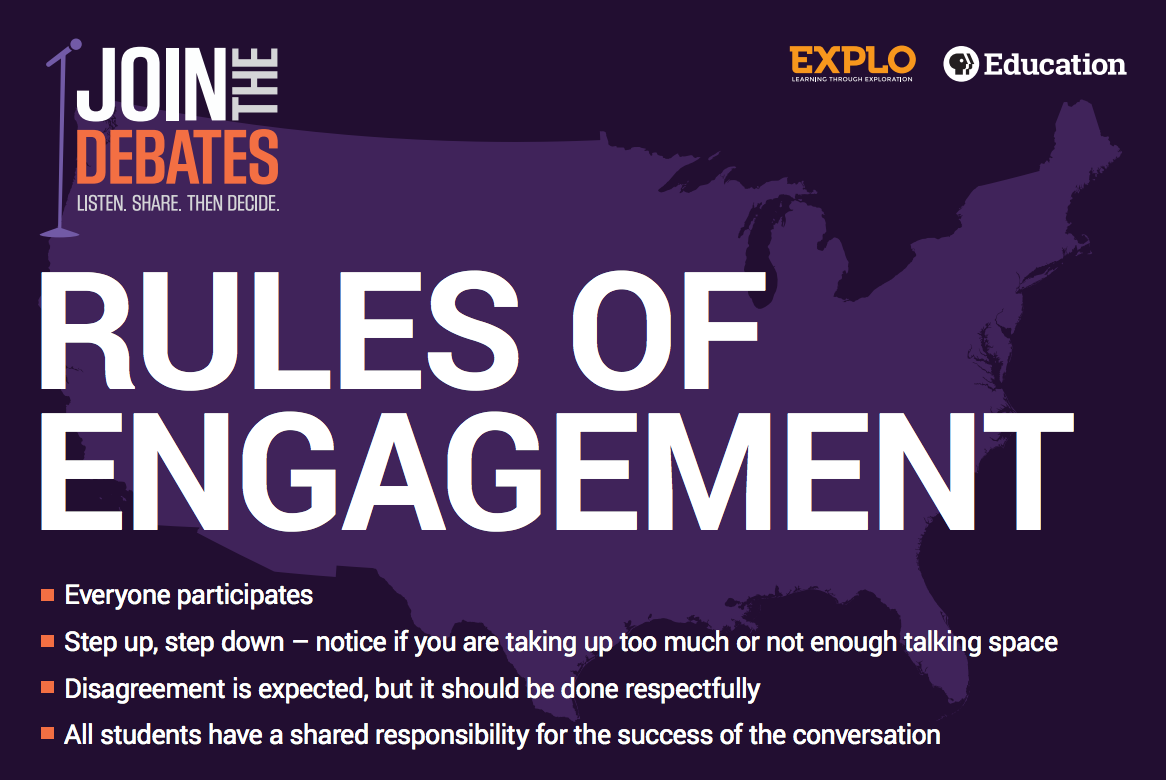
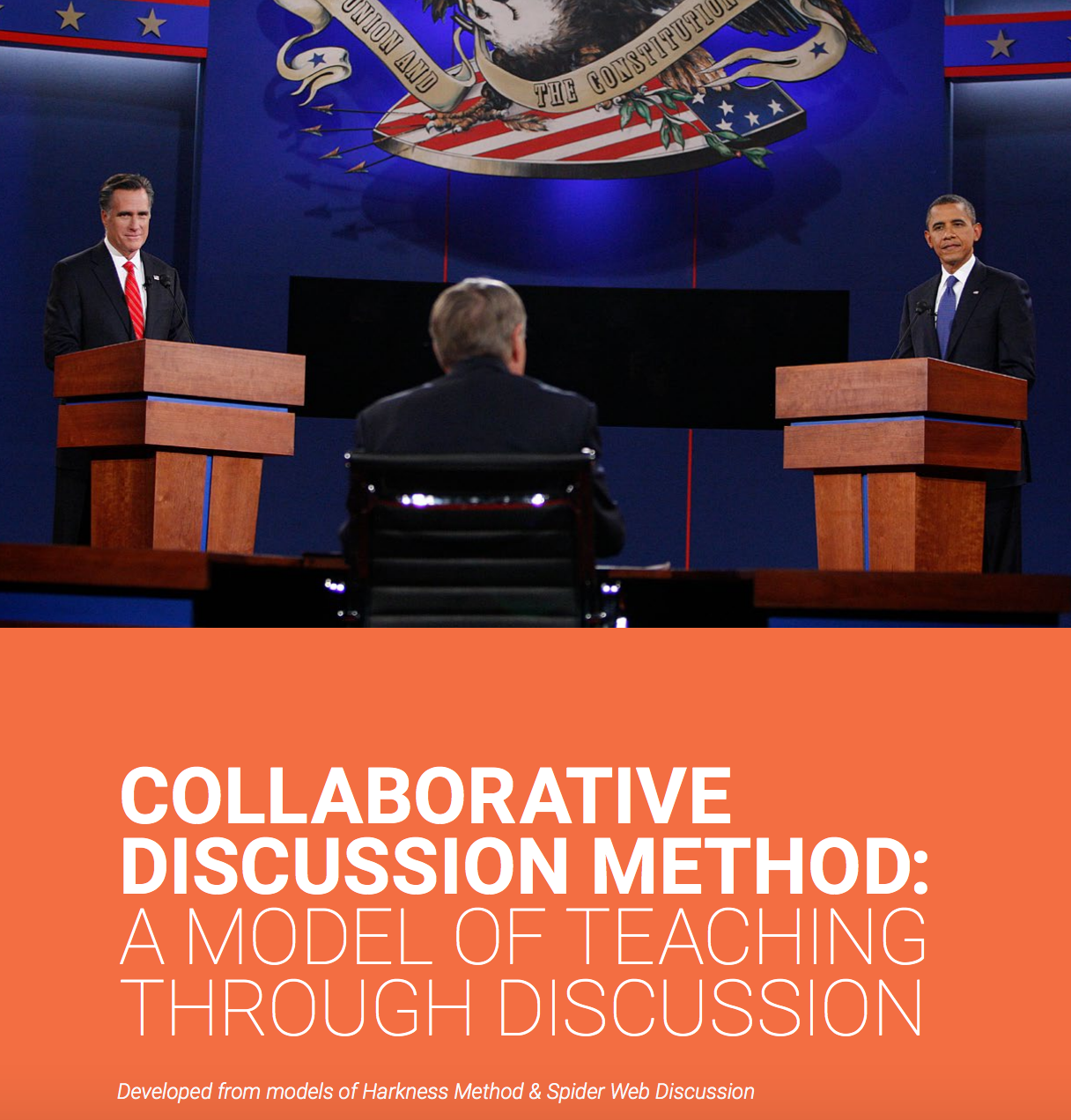
The second resource is \”Join The Debates,\” from PBS Learning Media. This site provides educators with a poster and toolkit to stage student dialogues in their own classrooms. Based on the Harkness Method and Spider Web discussion, these detailed guides allow children to reenact the debate format. Kids become owners of their own opinions, and they gain a better appreciation of the rigors of presidential parleys and the complexities of global issues.