- Teaching Strategies to Understand Student Interests
- Consider Students’ Readiness Level
- Give Students Responsibility
- Invite Student Input
- And More!
The 9th Women Science Congress (WSC) organised as part of the Indian Science Congress (ISC) at the University of Agricultural Sciences, Bangalore showcased the achievements of women scientists and motivated young women to actively participate in science to identify and find simple solutions to a range of problems through Science and Technology.
Dr. Tessy Thomas, Director General, Aeronautical Systems, DRDO highlighted the remarkable contributions of renowned women scientists like Marie Curie, Kadambini Ganguly, Rajeshwari Chatterjee and Kiran Kiran Mazumdar Shaw and their participation in the overall development of the country through S&T.
She encouraged the young women to learn from the exemplary courage of eminent women scientists who had overcome several hurdles to contribute to science.
The event which was inaugurated at the University of Agricultural Sciences, Bengaluru on 5th January highlighted opportunities that can help women overcome the hurdles they face because of their gender in the pursuit of Science.
Dr. Trilochan Mohapatra, Secretary, Department of Agricultural Research and Education & Director General, ICAR strongly emphasised that women need to be brought into the mainstream of national development.
He pointed out that girls should be inspired at the home, school and college levels. He mentioned about gender bias at home, which is a behavioural problem that needs to change. He asked to WSC to deliberate and delve deep on these issues and bring out recommendations.
Dr. Namita Gupta, Scientist ‘G’, Department of Science and Technology highlighted the DST schemes especially for women. “Women are applying in large numbers to utilise schemes like ‘KIRAN’ available for women and they are benefiting immensely,” she added.
KIRAN (Knowledge Involvement in Research Advancement through Nurturing) is the women-exclusive scheme of DST with the mandate to bring gender parity in S&T through gender mainstreaming. Different programs and components of KIRAN like Women Scientist Scheme-A (WOS-A), Women Scientist Scheme-B (WOS-B) deal with various crucial issues (break in career primarily due to family responsibilities, self employment, part time career, relocation and so on) faced by women scientists in their career path.
The women’s science congress, an important platform for participants to share their knowledge and learn from each other, is one of the main events in 107th Indian Science Congress, which was inaugurated by the Prime Minister, Narendra Modi on January 3, 2020.
Renowned women scientists are showcasing their work and delivering lectures at this two-day event with the aim to empower young women and to inculcate scientific interest and temper among them.
***
Launched by Hon’ble Prime Minister Shri Narendra Modi on January 5th, 2015, the Government of India’s zero subsidy Unnat Jyoti by Affordable LEDs for All (UJALA) and LED Street Lighting National Programme (SLNP), marked its fifth anniversary today.
SLNP is the world’s largest streetlight replacement programme and UJALA is the world’s largest domestic lighting project. Both have been spearheaded and implemented by Energy Efficiency Services Limited (EESL), a joint venture of PSUs under the Ministry of Power, Government of India.
Under the SLNP programme, over 1.03 crore smart LED streetlights have been installed till date, enabling an estimated energy savings of 6.97 billion kWh per year with an avoided peak demand of 1,161 MW and an estimated greenhouse gas (GHG) emission reduction of 4.80 million tCO2 annually. LED streetlights have been installed in various states across the country, helping generate approximately 13,000 jobs to support GoI’s Make in India initiative.
Through the UJALA initiative, over 36.13 crore LED bulbs have been distributed across India. This has resulted in estimated energy savings of 46.92 billion kWh per year, avoided peak demand of 9,394 MW, and an estimated GHG emission reduction of 38 million t CO2 annually.
With the concerted efforts towards building a robust ecosystem for LED in India, these programmes have bagged global awards like the prestigious South Asia Procurement Innovation Award (SAPIA) 2017 and for the innovative use of IT and the business results achieved in Street Lighting National Programme (SLNP), it won 2019 CIO 100 award. The highly successful UJALA and SLNP have also bagged the Global Solid State Lighting (SSL) award of excellence for the transformational contribution to the LED sector.
UJALA project brought the market transformation in energy efficiency sector. Prices of LED bulbs being distributed under UJALA programme have fallen to one-tenth of their rates in 2015 from INR. 310 to INR 38 in 2018. The switch from inefficient incandescent bulbs to LEDs is helping families reduce their electricity bills while also enabling them to access better brightness in homes. The money saved adds to a household’s disposable income and lifetime savings, thus improving their quality of life, generating prosperity in local communities, and in expanding energy access to all. With the average household electricity bills down by 15 per cent, the annual energy saving is equivalent to a week’s average earning. The sale of LED bulbs in the Indian market increased from 0.1 per cent of the lighting market in 2014 to 15 per cent within a year, with a projected increase to 60 per cent by 2020. The domestic LED market has also grown significantly beyond the UJALA programme, with the industry selling over 1.15 billion LEDs, far exceeding the UJALA programme’s target of 700 million LED unit sales.
Apart from this, the Government of India initiated the Gram Swaraj Abhiyan (GSA) in 2018, which was aimed at promotion of social harmony by apprising rural communities of various government welfare schemes and initiatives. As a part of GSA, 21,058 Indian villages with a significantly large number of poor households were able to buy LED bulbs for a special price under UJALA programme. The LED bulbs equipped homes with energy-efficient, cost-effective lighting, and higher lumen output than conventional incandescent bulbs.
Simultaneously, LED Street Lighting National Programme has enabled citizens to increase productivity at night and made roads safer for pedestrians and motorists due to enhanced brightness and reduced dark spots. The power utilities of states where the installation of LEDs has been implemented save up to 50 per cent in electricity bills, while ensuring 95 percent of streetlight uptime. As these lights are automated, they switch on and off at sunrise and sunset thereby reducing wastage. Utilities can also remotely track and rectify any faults with support of CCMS. In the last five years, the LED streetlights installed have illuminated 3,00,000 km of roads in India, enabling public safety and energy efficient lighting.
Functioning of Gram Panchayats (GP) has a direct impact on the everyday life of millions of rural people. Hence, the role of GP is critical for overall inclusive development and for deepening democracy through participatory governance. The estimated number of streetlights in GPs of India is 3.08 crores, by retrofitting these 3.08 crores conventional streetlights to LED streetlights can enable energy savings of approx. 3420 Million kWh & CO2 emission reduction of approx. 29 lakh tons. Till date, under Street Lighting National Programme, approx. 23 lakhs LED streetlights have already been retrofitted in the Gram Panchayats in Andhra Pradesh, Telangana, Goa and Andaman & Nicobar Islands.
By March 2020, SLNP aims to replace 1.34 crore conventional streetlights in India with smart LEDs. This ambitious goal will make a tremendous difference, enabling peak demand reduction of about 1500 MW, annual energy savings of 9 billion kWh, and reduction in 6.2 Million tons of CO2 per year. EESL has an ambitious plan in this portfolio for next 4-5 years where it intends to bring investment to the tune of INR 8,000 crores by 2024 by covering entire rural India. It is expected that more than 30 million LED streetlights would be retrofitted/installed by EESL.
***
The deliberations of the three-day training programme on Capacity Building conducted by Department of Administrative Reforms and Public Grievances (DARPG) in collaboration with National Institute for Financial Management (NIFM), National Centre for Good Governance (NCGG) and Institute of Management, Public Administration and Rural Development (IMPARD) concluded here today with Government e-Marketplace (GeM) remaining focus of speakers on day three.
Chairing the valedictory session, Advisor to Lt. Governor, J&K, Shri Farooq Khan called upon the officers to get maximum benefit out of today’s session on GeM so that the public exchequer could be used genuinely. He exhorted that if Govt. purchase is done properly and timely, it would serve the basic purpose of the welfare of the people. He also complemented DARPG, NIFM, NCGG and IMPARD for organising such event.
Speaking during the practical session on procurement through GeM, Joint Secretary, Govt. of India, Ministry of Commerce and Chief Finance Officer, GeM, Shri Rajeev Khandpal said that this Capacity Building Programme will give more exposure to the officials of J&K regarding General Financial Rules (GFR) and other financial matters while dealing with their day to day administrative and financial work.
Commenting on ‘GeM Samvaad’, an outreach programme launched by the Government of India, Shri Rajeev Khandpal said that ‘GeM Samvaad’ has been launched by the Govt. of India with an aim and objective to get an onspot feedback from all the States and UTs regarding GeM. He added that by this outreach programme, senior officials of GeM will visit all States and UTs to get feedback on how GeM portal can be made more user friendly. The Governments of different States and UTs can save upto 25% of public exchequer by procuring various departmental equipments throgh GeM, he added.
During the afternoon session, Business Facilitator, GeM, Shri Kush Tyagi delivered a presentation on ‘Introduction to Functionality of Buyer’ which highlighted the a pre-requisities for registration as primary and secondary user on GeM portal. The speaker gave an onspot demonstration on how to register as a buyer on GeM portal to the officials of J&K.
Earlier during the morning session, a detailed and an insightful presentation on GeM was delivered by Director, GeM, Shri Deepesh Gehlot highlighting the procedure of registration on GeM portal. He also explained the mechanism of procurement on GeM portal to the participating officials.
On January 3, the three day Capacity Building Programme was inaugurated by the Union Minister of State, PMO, Personnel, Public Grievances and Pensions, Dr Jitendra Singh in presence of Chief Secretary, Union Territory of J&K, Shri BVR Subrahmanyam, Additional Secretary, DARPG, Shri V Srinivas and Finance Commissioner, Dr. Arun Kumar Mehta.
During the three day programme, various technical sessions were held on wide ranging issues like GFR-2017 and Procurement of Goods, Manual for Procurement of Goods-2017, Outsourcing of non-consultancy services, Hiring of Consultancy Services, Manual for Works 2019, GeM: an introduction and registration process and procurement through GeM. The trainers had a threadbare discussion on the subjects they spoke about. They elaborated the contents of their topic with respect to the relevant sections of the GFR.
As a part of the conference, several interactive sessions were held in every module to provide participants an opportunity to attain better understanding of various topics covered in the programme.
Pertinently, the programme was held with an aim to promote good governance practices and evolve transparent public policy in the Union Territory of Jammu and Kashmir after the abrogation of Article 370. Around 385 senior high level officers of J&K Government participated in the three-day Capacity Building Programme.
******
Union Minister of Information & Broadcasting, Shri Prakash Javadekar will confer the first ‘Antarrashtriya Yoga Diwas Media Samman’, in New Delhi on 07th of January, 2020.
Acknowledging the positive role & responsibility of media in disseminating the outreach of Yoga in India and abroad, the Ministry of I&B had instituted the first Antarashtriya Yoga Diwas Media Samman (AYDMS) in June, 2019 to mark the contribution of media in spreading the message of Yoga.
The Samman to be conferred on Media Houses would be given under the following categories:
The Samman will comprise of a special medal/plaque/trophy and a citation. The contribution of Media in popularizing of Yoga and the entrieswas assessed by a Jury comprising of 6 members and was headed by Justice C. K. Prasad, Chairman, Press Council of India.
Brief on International Day of Yoga
The International Day of Yoga has been celebrated annually on 21 June since 2015. The idea of International Day of Yoga was first proposed by the Prime Minister of India, Shri Narendra Modi, during his address at the United Nations General Assembly (UNGA), on 27 September 2014.
While proposing the idea the Prime Minister stated:
“Yoga is an invaluable gift of India’s ancient tradition. It embodies unity of mind and body; thought and action; restraint and fulfillment; harmony between man and nature; a holistic approach to health and well-being. It is not about exercise but to discover the sense of oneness with yourself, the world and the nature. By changing our lifestyle and creating consciousness, it can help in well being. Let us work towards adopting an International Yoga Day.”
Following this initial proposal, the UNGA held informal consultations on the draft resolution, entitled “International Day of Yoga”, on 14 October 2014. The consultations were convened by the delegation of India.On 11 December 2014, India’s Permanent Representative introduced the draft resolution in the United Nations General Assembly. The draft text received broad support from 177 Member States who sponsored the text, which was adopted without a vote. This initiative found support from most global leaders. A total of 177 nations co-sponsored the resolution, which is the highest number of co-sponsors ever for any UNGA resolution of such nature.
***
GK
The Agri Export Policy was announced last year with an objective of doubling the export and ensuring doubling of farmers’ income. In order to achieve this objective, Agricultural and Processed Food Products Export Development Authority (APEDA) has been adopting a focused approach for ensuring greater involvement of the State governments for effective implementation of Agri Export Policy (AEP). Throughout the year APEDA held a series of meetings with the State Government officials and other stakeholders for the preparation of State Action Plan which included all essential components like production clusters, capacity building, infrastructure and logistics and R & D and budget requirements for the implementation of AEP. Several rounds of discussions were held with Ministry of Agriculture and Farmers’ Welfare, Department of Animal Husbandry & Dairying, Ministry of Food Processing Industries and other agencies under Line Ministries for seeking the inputs for formulating a strategy to increase exports and address the existing bottlenecks in the trade.
Many States have nominated Nodal agency and Nodal officer. Maharashtra, Uttar Pradesh, Kerala, Nagaland, Tamil Nadu, Assam, Punjab and Karnataka have finalized the State Action Plan and other States are at different stages of finalization of the action plan.
State level Monitoring Committees have been formed in many of the States. Cluster visits have been made by APEDA Nodal officers to the product clusters at Jalandhar (Potato), Jodhpur (Isabgol), Banaskantha (Dairy products), Sangli (Grapes), Solapur (Pomegranate), Nagpur (Orange), Chittoor (Mango), Theni (Banana), Salem (Poultry products), Indore (Onion) and Chikkaballapur (Rose onion). The roadmap for cluster development in the clusters notified under AEP was prepared to address the identified interventions during the cluster visits. As a result of cluster visits by APEDA, the cluster level committee has been constituted in the States viz. Potato in Punjab, Isabgol in Rajasthan, Pomegranate, Orange and Grapes in Maharashtra and Banana in Tamil Nadu.
APEDA has organised a number of seminars and meetings for the implementation of Agri Export Policy throughout the year. A workshop on the role of state nodal agencies in agriculture exports was organised in New Delhi on 3rd September, 2019 where majority of the states actively participated for brainstorming on implementation of AEP in States.
An MoU was signed with National Cooperative Development Corporation to include Co-operatives for their active role in AEP. A Farmer Connect Portal has also been set up by APEDA on its website for providing a platform for Farmer Producer Organisations (FPOs) and Farmer Producer Companies (FPCs) to interact with exporters. Over 800 FPOs have been registered on the portal.
Buyer Seller Meet (BSM) cum Workshops between exporters and FPOs were organized in association with the State Nodal agency at Ujjain (M.P)., Mehboobnagar, Mahbubabad, Sangareddy (Telangana), Kandhamal (Odisha), Chitradurga (Karnataka), Shillong (Meghalaya), Shimla (H.P), Kadapa (Andhra Pradesh), Kolkata (West Bengal), Agartala (Tripura), Nagpur, Sangli (Maharashtra) and Dehradun (Uttarakhand).
A Market Intelligence Cell was set up in APEDA and the activity of dissemination of e-market intelligence reports comprising detailed market analysis, international trade issues, current scenario of the interest to Indian exporters in important markets and statistical information has been started from 25th November 2019. All e-reports are available on APEDA website https://apeda.gov.in. Till now 27 reports have been disseminated for mango, basmati rice, non-basmati rice, groundnut, grapes, gherkins, dehydrated onion, pomegranate, banana, potato, buffalo meat, swine meat, fresh cut flowers, wine, egg, dairy products (SMP & cheese), biscuits, jaggery, millets, vegetable seeds, moringa, makhana, fruit juices, mango pulp, potato flakes and cereal preparations.
***
Are we like this lego maze (Lego Maze Eric4 by Anvilon)
– structured yet in a quandary and having to find our way around and out? Is there really an end point for a course like this? I hope not….I believe participation in Facilitating eLearning communities needs to be an evolving experience which has to ebb & flow with the technologies, change according to the needs of the participants and catch the trends and waves of eLearning.
I know it is not about mastery learning because the learning is intended to come out of the participants own perceptions, explorations and knowledge development. Plus there is no exam or test. But…
If structured = mastery learning and sequential step by step learning – then this course is not structured. If structured = guided and free to follow your own interests & explore – this course is structured.
I find it quite intriguing that people feel the course is unstructured. Yes there were more instructions for the first few topics and activities and directed discussion than the latter part of the course – yet some people chose not to engage.
The 10 min lecture series has been structured, and also allows discussion and reflection. some people have not been able to engage synchronously and have done so after the events and have made very good postings on their blogs about some, not all the presentations. Others have not engaged at all. Several people have engaged with the assessments – learning log (blog) and wiki – others have not.
I wonder why people feel it is unstructured – or does this mean unguided? Even though there is a learning guide, posted lists of what people should be doing on the course blog, email directions, directed activities for the first few topics, directed assessments, a lecture series, a list of resources, content on WikiEducator etc. Does guided mean something different for all of us? Guided does not equal structured or does it?
In a true constructivist learning community the course is far too structured. There are too many things participants are told to do already. There was very little for them to negotiate. Do participants feel they need to be sat down and directed through a series of topics, and some workshops on how to use some of the technologies? Does structured for some mean teacher-directed rather than learner-directed?
What I would like to know is do people feel they are being guided to be part of an online community? If the answer is yes, then we are on the right track.
Perhaps it is the topic. I believe people learn best how to be an online facilitator by being exposed to a range of strategies and practical opportunities rather than a whole lot of content and theory about how to do something though there is some of that too. Part of being an online facilitator in a community is to experience discomfort as well as comfort. David alludes to that and also mentions the value of finding out things for ourselves.
I am surprised that he feels that participants are \”relatively unguided\” – people have been given a lot of material to look at and plenty of discussion topics have arisen. The facilitators could have continued to impose very directed discussion topics all through, but instead chose to use the 10 minute lectures as the basis for discussion…which has occurred.
Perhaps what we need now is a short presentation to bring all the threads together for the community – this could serve as a reflection on what we have covered and a stimulus for the next leg of discussion. Watch this space!
Bharat Ratna, Professor C.N.R. Rao has said that the future of the country depended on science and technology and the future of science lay on the children who with their hard work and sincerity can work wonders in science. He was addressing the inaugural session of the Rashtriya Kishore Vaigyanik Sammelan (Children’s Science Congress), a part of the ongoing 107th Indian Science Congress being held at the University of Agricultural Sciences, Bengaluru today. Eminent Scientists from India and abroad called on the numerous children gathered at the event to be determined, believe in themselves and be prepared for unexpected results in their pursuit of science.
Professor, Ada Yonath from Israel, who was awarded the Nobel Prize in Chemistry in 2009 advised the young children that in science everything would not go the way they want and that they should be prepared for the unexpected. “Even if things do not go your way, believe in yourselves and do not look for advice from others” she added.
She recalled that as a child she wanted to pursue science as a hobby and had set up her experiment to measure the height of the ceiling of her balcony.
She referred to the inspiration which she received from Professor G.N. Ramachandran, FRS who was known for the formulation of the Ramachandran plot for understanding peptide structure and for proposing the triple-helical model for the structure of collagen. “I had thought that I had lost the first experiment as a scientist, but that experiment was later presented by my guide at a conference in India and appreciated by Professor Ramachandran.
He stressed that science does not require degrees but dedication, doggedness and tenacity and mentioned that many of the great scientists like Michael Faraday, had made phenomenal contributions without degrees.
He also mentioned the timeless work of great Indian scientists like Sir C.V. Raman, Srinivasa Ramanujan and Professor J.C. Bose who went out of their way and carried out scientific research despite constraints of time, finance and facilities.
The Rashtriya Kishore Vaigyanik Sammelan (Children’s Science Congress) prominent event of the Indian Science Congress, was inaugurated by the Nobel Laureate Prof. Ada Yonath, Bharat Ratna Prof C.N.R. Rao in the presence of Dr. Akhilesh Gupta, Head, NCSTS, Department of Science and Technology (DST) and other dignitaries.
Children Science Congress is financially supported by NCSTC, DST. The main objective is to provide a unique opportunity to children of the age group of 10-17 years to use their scientific temperament and knowledge and to quench their thirst for creativity by conducting scientific experiments to solve problems identified by them. The students also get an opportunity to interact with scientists and subject experts.
Every year about 7-8 lakhs school children in the age group of 10-17 years participate at various levels from the districts, states & union territories. Around 2 to 3 best projects from each state are exhibited in the Indian Science Congress. Several projects made by students are being showcased in the University of Agricultural Science campus and students had the opportunity to listen and interact with the Young Scientists and Nobel Laureates.
During the event, Infosys ISCA Travel Award 2020 was also given to top 10 students for their best write ups for innovations in the field of Science & Technology.
***
Directorate of Publications Division (DPD) of the Ministry of Information & Broadcasting is showcasing a vide variety of books at the New Delhi World Book Fair that started today. The DPD stall was declared open by the Additional Secretary, of the Ministry of Information & Broadcasting Shri Atul Tiwari. It has books on Mahatma Gandhi and other national leaders, books for children, and also on art, culture and several other subjects.

Attractive price discounts,even exceeding 50 percent in some cases, are being offered on a variety of books.
***********
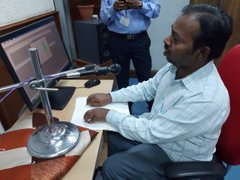
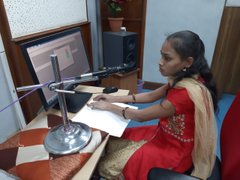
All India Radio News and its regional units in Pune and Nagpur have observed World Braille Day in an innovative way by broadcasting news read by Visually impaired students and officers.The news was scripted in Braille and read Live.
Hindi samachar of 5 Minutes was broadcast from Delhi at 11:00AM and was read by visually impaired officer Mr.KamalPrajapati.
#WorldBrailleDay:As a tribute to Louis Braille,All India Radio News has broadcast Hindi news bulletin read by Visually impaired officer Mr.Kamal Prajapati.
The news was scripted in Braille and went Live on AIR at 11 AM.@socialpwds @MSJE_AIC
Watch:

The News in Marathi went Live from Pune at 07:10AM and was presented by visually impaired students – GulabKambale&KavitaGavali. The students are from Pune Blind Men’s association. AIR Pune has been broadcasting news read in Braille since 2016. Pune Unit has been well appreciated for this unique effort.

In Nagpur unit of AIR, Ms.SaloniKapgate read FM News bulletin of 2 minutes at 11.58am today. She fluently read the news in Braille with the help of her tutor Ms.KanchanNajpande. The move was made to support the idea of empowering divyang and promoting their mainstream presence.
On the occasion of #WorldBrailleDay All India Radio News-Pune @airnews_pune broadcasted news read by visually impaired students – Gulab Kambale (गुलाब कांबळे )and Kavita Gavali (कविता गवळी).
The news was prepared in the Braille script

On the occasion, Principal Director General of All India Radio (News) Ira Joshi said that AIR is an all inclusive medium and is the most easily accessiblenews medium to the Drishti Divyangs. She said that occasions like Braille Day give a chance to rededicate ourselves to an inclusiveand accessible society.She said that making the visually impaired a part of news production not only makes them confident, but also makes the audience and others involved in the news rooms more sensitive to the needs of the Divyangs. She said that ‘Accessible Programming’ is a reflection of Accessible India Campaign launched by Prime Minister in 2015.
*****
Union Human Resource Development Minister Shri Ramesh Pokhriyal ‘Nisank’ inaugurated the 28th edition of New Delhi World Book Fair 2020 (NDWBF) at PragatiMaidan in New Delhi today. Eminent Gandhian scholar, Prof. GirishwarMisra; Chairman, National Book Trust, Prof. Govind Prasad Sharma; Joint Secretary, MHRD, Shri Madan Mohan, , Shri Rajesh Aggarwal, Executive Director, ITPO and other officials were present on the occasion.
Speaking on the occasion Shri Pokhriyal said that we are in the midst of ocean of books and this Mahakumbh of books is filled with thoughts, the thoughts which give power to humanity. He said that this book fair is a place where people meet each other, and generate and share new thoughts and ideas. He added that the books help youth of India to come across new thoughts.
Speaking on the theme of the Fair this year, which is GANDHI: WRITERS’ WRITER, the HRD minister said that we are celebrating 150 years of Mahatma Gandhi, in times when we need him the most. The world today is facing several challenges including terrorism. He added that the world, the nation, the society and all individuals, need Gandhi because of his vision and his philosophy of peace and non-violence. The Minister also urged publishers to promote books and the habit of reading as people are moving away from books, and a book fair like the NDWBF ensures that books and reading is preserved and increases.
The Minister appreciated the fact that the New Delhi World Book Fair is arguably Asia’s biggest book fair and he was hopeful that this fair would soon become the world’s biggest book fair.
Prof. GirishwarMisra, eminent Gandhian scholar, and the Guest of Honour on the occasion spoke in detail about the life and teachings of Mahatma Gandhi. He said that Mahatma Gandhi was the Man of Century. He showed the path of truth, peace and non-violence because of his wide reading of books including Gita, Quran and Bible.
While welcoming the guests, Prof. Govind Prasad Sharma, Chairman, NBT informed the audience about this edition of the New Delhi World Book Fair, and said that through this world of books, one can gain more and more knowledge in different fields and show us new direction.
More Details about attractions of the Fair:
Theme Pavilion: This year, the theme of the New Delhi World Book Fair 2020 is ‘Gandhi: TheWriters’ Writer’ to commemorate the 150th Birth Anniversary celebrations of Mahatma Gandhi.Mahatma Gandhi was a prolific writer, editor, publisher, Printer and Institution Builder. He wrote extensively in Gujarati, Hindi and English languages. His writings not only reflected his philosophy of non-violence and peace but also gave an insight into the socio-economic and political scenario of the country. The theme is an attempt to give booklovers a glimpse of how Mahatma Gandhi, a great strategic communicator, inspired and influenced generations of writers and how the writers understood and emulated Gandhiji in words. In the specially designed pavilion (inspired by Sabarmati Ashram), with hand-spun materials as wall cladding; there will be an exclusive exhibition of 500 books of 100 publishers on and by Gandhi in different Indian languages, as well as 30 panel discussions, book launches and performances related to the theme. The archival materials on display at the Theme pavilion are from Navjivan Trust, Ahmedabad and National Gandhi Museum, New Delhi.
Authors’ Corners / Seminar Hall
Some of the well-known writers both popular and critically acclaimed like AnirbanGanguly, BhawanaSommaya, Kevin Missal, Madhulika Dutta, Manoshi Sinha Rawal, Sudha Murthy, SumitDuttMajumdar, among others will engage in lively banters with the visitors at Authors’ Corners. There will be three special Corners which include International Events Corner (Hall No. 7A), Reflections (Hall No. 8) and LekhakManch (Hall No. 12).
During the Fair, various literary events, discussions, conversation with authors & scholars, book release functions, children’s activities, film screenings on the theme of the fair, cultural programmes, etc. will be organized. Some of the well-known speakers who will participate in these programmes include, Dr Rakesh Pande, Dr Varsha Das, Shri Aflatoon, Shri AvinashDudhe, Shri Firoz Khan, Ms Fouzia Khan, Shri Suresh Sharma, Shri Rajeev Shrivastava, Shri Rajeev Raj, Ms ShashiprabhaTewari, Prof.AkhtarulWasey, Prof.RizwanKaisar, Dr M William Bhaskaran, Dr T Ravichandran, Dr Sachidanand Joshi, former Justice Narendra Chapalgaonkar, Ms Deena Patel, Shri Annamalai, Dr Sumer Singh Siddhu, Dr Khushwant Singh Bargadi, among others.
Braille Books: National Book Trust, India in collaboration with the All India Confederation of Blind (AICB) has jointly published a set of books in Braille for visually impaired readers. So far, over 250 books in Hindi, English and other Indian languages have been published. To take the project further, the NBT and AICB have signed an MOU, under which more titles shall be published in Braille in different Indian languages as part of NBT’s annual publishing programme. A catalogue of these books in Braille as well bilingual catalogue in English and Hindi have also been brought out by NBT. A special exhibit of these books will also be put up.
Children’s Pavilion: At the Children’s Pavilion (Hangar near Hall No. 7H), a number of activities like seminars, panel discussions, storytelling sessions, workshops on creative writing and illustrations among others will be organized to promote books and reading amongst children and young adults. The pavilion has been decorated with specially designed panels on tactile and silent books. A special career counselling session for persons with special needs will also be organized. A number of schools and NGOs will also participate in these activities.
Foreign Countries: Over 15 countries including Abu Dhabi, China, Denmark, Egypt, France,Germany, Iran, Nepal, Poland, Saudi Arabia, Sharjah, Spain, Sri Lanka, UK, USA, are participating in the Foreign Pavilion at the Fair. They are housed at the Foreign Pavilion, Hall No. 7ABC.
B2B Activities: New Delhi World Book Fair, also provides a platform for B2B activities for publishers from India and abroad. These B2B sessions include CEO Speak, a Publishers Forum to be organized in association with FICCI on 5 January 2020; the New Delhi Rights Table, a 2-day event to be held on 6 & 7 January 2020. Over 40 publishers from India and abroad will participate in the New Delhi Rights Table. In addition, a National Conclave on Readership and Book Promotion will be organised on 8th January 2020, and a Business Meet with Trade Partners on 9 January 2020.
Special Photo Exhibitions
1. India as Guest of Honour: NBT has been playing a significant role in promoting Indian books and authors abroad. NBT regularly participates in major international book fairs like Sharjah International Book Fair, London Book Fair, Frankfurt Book Fair, etc. Recently, India was the Guest of Honour country at Abu Dhabi International Book Fair held in April 2019, and at Guadalajara International Book Fair, Mexico in November 2019. India will also be Guest of Honour country at forthcoming Paris Book Fair in March 2020. NBT being the nodal agency, coordinates the Guest of Honour Country Presentations at International Book Fairs. A special photo exhibition on the GoH Presentations – 2019-2020 will be put up at Hall 7A. In addition, the NBT titles translated and published in Arabic and Spanish as part of the Guest Country Presentations, will also be put on display.
2. Padhe Bharat Badhe Bharat: A special photo exhibition on NBT’s contribution in promoting books in schools and libraries under Govt. of India’s programme for the school education will also be put up outside Hall No.7.
Publishers: This year, more than 600 publishers from India and Abroad are participating at the book fair. The Indian publishers exhibiting books in different languages include Bangla, English,Gujarati, Hindi, Maithili, Malayalam, Punjabi, Sanskrit, Sindhi, Tamil, Telugu and Urdu across more than 1300 stalls at the Fair.
******
Ministry of Tourism is committed to make policies and programmes for the development and promotion of tourism. This sector has the capacity to boost economy, foreign exchange earnings and provide large number of jobs at every level that’s why Ministry of Tourism continuously consults and collaborates with other stakeholders in the sector including various Central Ministries/ agencies, the State Governments/ Union Territory Administrations and the representatives of the private sector. In 2019 Ministry of taken several steps like reducing E–visa fees, reducing GST rates on hotel room booking, opening 120 new peaks for mountaineering etc. Along with this several steps taken under Swadesh Darshan, PRASHAD Scheme and various other events of Ek Bharat, Shresth Bharat were some of the important highlights for the ministry this year.


ITM was organized in the North Eastern region with the objective of highlighting the tourism potential of the region in the domestic and international markets. A total of 35 foreign delegates from 18 Countries, 79 domestic sellers from the North Eastern Region and 32 domestic delegates from the Western, Eastern and Northern Region participated in ITM – 2019.
*******
The Prime Minister, Shri Narendra Modi inaugurated the 107th Indian Science Congress (ISC) today at University of Agricultural Sciences, Bengaluru.
Delivering the inaugural address, the Prime Minister said, “The growth story of India depends on its achievements in the Science & Technology sector. There is a need to revolutionise the landscape of Indian Science Technology and Innovation.”
“My motto for the young scientists bourgeoning in this country has been – “Innovate, Patent, Produce and Prosper”. He said these four steps will lead India towards a faster development. “Innovation for the people and by the people is direction of our ‘New India”, he added.
He said, “New India needs technology and also a logical temperament, so that we can give a new direction to our social and economic sectors”. He said science and technology provides a level playing field in making opportunities accessible to all and that it also plays a unifying role in the society.
Prime Minister said, “Now the developments in information and communication technology are able to provide cheaper smart phones & cheaper data and that has made it accessible to everyone in the country, where as it was seen as a privilege of the few earlier. This made the common man now believe that he is not distantly separated from the Government. Now he can directly connect with the Government and make his voice heard”
Prime Minister exhorted the young scientists to work in the field of rural development where there are several opportunities for cheaper and better innovations.
Referring to the theme of 107th ISC – “Science and Technology: Rural Development”, the Prime Minister said that it is only due to Science & Technology, that Government Programmes have reached the needy.
He highlighted that India now stands at 3rd position globally, in the number of Peer-reviewed Science and Engineering Publications. “I have been told that India has climbed to third position globally in the number of peer reviewed science and engineering publications. It is also growing at a rate of about 10% as compared to global average of 4%”, he said.
He also mentioned about Improvement in India’s ranking at Innovation Index to 52. He highlighted that Government programmes have created more incubators in the last 5 years than in previous 50 years.
Prime Minister said Technology is being harnessed at a large scale to achieve the objective of Good Governance. “Yesterday our Government was able to release to 6 crore beneficiaries the instalment under the PM-KISAN programme. This was possible only due the Aadhaar enabled technology”, he said. Similarly he said that it was technology which helped in building toilets and providing electricity to the poor. He said that owing to the technology of Geo Tagging and Data Science, many of the projects in rural and urban areas could be timely completed.
Prime Minister said, “We are continuing our efforts to ensure the ‘Ease of doing Science’ and effectively using information technology to reduce red tape”.
He emphasized that Digitalisation, E Commerce, Internet Banking and Mobile Banking services are assisting rural population significantly. He said Technology can be harnessed for several rural development initiatives, particularly in the area of cost effective Agriculture and Farm to Consumer supply chain network.
He urged everyone to find technological solutions for – stalk burning, maintenance of Ground water tables, prevention of communicable diseases, environment friendly transportation etc. He emphasized that Science and technology has a major role in contributing towards making India a $5 Trillion Economy.
The Prime Minister launched the Indian Scientific, Technology and Engineering facilities Map (I-STEM) Portal on this occasion.
The Union Minister for Science and Technology, Earth Sciences and Health and Family Welfare, Dr. Harsh Vardhan highlighted that as per a recent National Science Foundation (USA) Report, India has already climbed to the third spot in the number of science and engineering publications and that Jawaharlal Nehru Centre for Advance Scientific Research (JNCASR) in Bangalore has scored the 7th position in the quality of research by Nature Index.
Dr. Harsh Vardhan also emphasized that several schemes have been worked out for enhancing the quality of research, empowering young women students and scientists, technology development, creation of an end-to-end startup ecosystem, bringing the best of global science to India, linking of academia-research labs-industry-society, sharing of scientific resources and science communication.
He pointed out that our innovation ecosystem in the last five years has doubled from the previous fifty years and that the Scientific Social Responsibility Policy has been formulated to reach out to the widest-spectrum of stakeholders of S&T with knowledge, human resources and infrastructure.
Dr. Harsh Vardhan elaborated that missions have been initiated in the disruptive technologies such as Cyber-Physical Systems, deep-ocean exploration; quantum systems, energy storage and gene editing which are creating unprecedented opportunities for our young and dynamic scientists to work on securing the future. At the same time traditional knowledge systems in areas such as health and well-being, water conservation, environmental management and sources of local livelihood have been strengthened.
He stressed that our scientists will make this decade a Vigyan se Vikas ka Dashak for a rapid, inclusive and sustainable socio-economic growth—to aid the Hon’ble PM’s vision of five trillion dollar economy by 2024-25.
The Chief Minister of Karnataka, Shri B.S. Yediyurappa highlighted the importance of agricultural technology in rural development.
The Science Congress which will continue till January 07, 2020 consists of 28 Plenary Sessions on areas ranging from Climate Smart Agriculture for Food Security, Crop Improvement Towards Food & Nutrition Security, Materials Science And Technology For Rural Development, Challenges and Opportunities In Cancer Drug Discovery, Artificial Intelligence And Medical Technology, Advances In Basic Medical And Clinical Interactions, Non-Communicable Diseases In Rural Population as well as Cancer Research – Therapeutic Applications. The areas also include Nano Materials for Energy, Environment and Health Care, Novel Solutions for Oil and Gas Industry Problems and so on in which senior scientists and officials will discuss on the status, challenges, opportunities and scope in these research areas.
The Nobel Laureates who are participating in this Indian Science Congress include German physicist Professor Stefan Hell who is one of the directors of the Max Planck Institute for Biophysical Chemistry in Göttingen, Germany and Professor Ada E. Yonath from Israel.
Apart from this, several senior Scientists from India and abroad along with several government officials are participating in this event to exchange their views on a range of scientific issues, both at the national and international level.
***
Indian Railways sportspersons have performed excellently in the year 2019 by winning medals and bringing laurels to themselves as well as Indian Railways at National and International levels.
Following Railway Sportspersons have been honored with National Sports Awards during 2019-20:-
| Sr. No | Name of the Sportsperson | Sport | Award | Zone |
| 1 | Shri Bajrang Punia | Wrestling | Rajeev Gandhi Khel Ratna | NR |
| 2 | Shri S. Bhaskaran | Body Building | Arjuna Award | SR |
| 3 | Ms Sonia Lather | Boxing | Arjuna Award | NWR |
| 4 | Shri Chinglensena Singh Kangujam | Hockey | Arjuna Award | NWR |
| 5 | Ms Poonam Yadav | Cricket | Arjuna Award | NCR |
| 6 | Shri Niteen Kirrtane | Tennis | Dhyanchand Award | CR |
At National Level, Indian Railway team won National Championship titles in 11 games and stood runners-up in 06 and podium third in 02 games out of 23 games participated.
At International Level, Shri Ravi Kumar (NR), Shri Bajrang Punia (NR) and Ms. Vinesh Phogat (NR), Wrestling players have qualified for Tokyo Olympic Games 2020 to be held in Tokyo (Japan) from 24th July, 2020 to 9th August, 2020.
Indian Railway Weightlifters – Ms. Jhilli Dalabehera (ECoR) won gold Medal, Ms. S. Mirabai Chanu (NFR) won gold Medal, Ms. M. Santoshi (ECoR) won Silver Medal, Ms. Rakhi Halder (ER) won gold Medal, Shri R.V. Rahul (SCR) won Silver Medal and Shri Pardeep Singh (NR) won gold Medal in the Commonwealth Senior (Men & Women) Championships held at Apia (Samoa) from 06.07.2019 to 14.07.2019.
Shri Swapnil Dhopade (CR) Chess player won Bronze Medal in the Commonwealth Chess Championship held at Delhi from 30.06.2019 to 07.07.2019.
Ms.Chitra P.U. (SR) (1500 M) Won Gold Medal, Ms.Anu Rani (DMW) (Javelin Throw) won Silver Medal, Shri Ajay Kumar Saroj (NER) (1500 Meter) won Silver Medal and Ms. Parul Chaudhary (WR) (5000 Meter) won Bronze medal in the 23rd Asian Athletics Championship held at Doha (Qatar) from 21.04.2019 to 24.04.2019.
Greco Roman player – Shri Sunil Kumar (NWR) Wrestling player won Silver Medal and Free Style (M & W) players – Shri Bajrang Punia (NR) won gold Medal, Shri Parvin Rana (NR) won Silver Medal, Shri Rahul Aware (CR) won Bronze Medal, Shri Satyavrat Kadyan (NR) won Bronze Medal, Shri Sumit (NR) Bronze Medal, Ms. Vindesh Phogat (NR) won Bronze Medal, Ms. Sakshi Malik (NR) won Bronze Medal and Ms. Divya Kakran (NR) won Bronze Medal in the Asian Wrestling Championship held at Xian (China) from 23.04.2019 to 28.04.2019.
Ms. Jhilli Dalabehera (ECoR/Weightlifter) won Silver Medal in the AWF Senior Asian Weightlifting Championship held at Ningbo, China from 17th to 29th April, 2019.
Ms. Sonia (NR) and Shri Asish (NCR) won Bronze Medals in the Asian (M & W) Boxing Championship held at Xian China from 23.04.2019 to 28.04.2019.
Ms. Pranati Nayak (CLW) Gymnastic player won Bronze Medal in the 8th Senior Asian Gymnastic Championship held at Ulaanbaatar (Magnolia) from 19th to 22nd June, 2019.
Indian Railway Volleyball (Men) team won gold Medal in the 17th USIC (World Railway) Volleyball Championship held at Albena Bulgaria from 24th to 29th August, 2019.
Indian Railway Athletics (Men & Women) teams won the 17th USIC Men and 14th USIC Women (World Railway) Athletics team Championships held at Trutnov, Czech Republic from 10th to 13th September, 2019.
***
You must be logged in to post a comment.