8 Employee Benefits for Working Parents

We would all love to be able to stay home and take care of the kids without having to worry about going to work. But, for most of us, this just isn’t financially feasible. Raising kids is expensive, and even for those who have full-time employment, it can still be a struggle. Child care is a huge expense, and it involves a lot more than paying a sitter or a daycare center. Thank goodness for employee benefits, and there are many that are ideal for working parents. Let’s take a look at eight of the best employee benefits for working parents.

1. Flexible Schedules

If you have school-age kids, you may want to find out if your company offers flexible schedules that allow you to be home in the mornings before school, as well as after school. This is going to save you a lot of money, because chances are that the cost of child care for these hours is going to be more than you would earn, unless you have a really high paying job.

2. Backup Child Care

Many companies offer access to backup child care assistance. If your company offers this, you won’t have to worry if something happens that your regular caregiver isn’t available. You will be able to find a qualified caregiver, and not have to miss any time from work because you had to be home with the kids.

3. Onsite Child Care

More and more companies are opting to have on-site child care for their employees. This is great for parents of kids who are not old enough to attend school. They don’t have to worry about finding a sitter or paying for child care, because they can simply drop their kids off at the on-site center, and pick them up when they are ready to leave.

4. Family Care Time

Here is a great benefit that allows parents to stay at home with a sick kid without having to worry about using up their vacation time or regular sick days. Many companies will offer a few paid days off per year for parents, and you don’t even have to worry about getting a doctor’s note.

5. Paid Parental Leave

Employers are recognizing that their employees need more than the usual 6-12 weeks of paid parental leave when they have babies. The great thing about parental leave is that it is not just for mothers. Fathers can also take advantage of this benefit, and some companies offer up to 20 weeks of paid parental leave.

6. Family Medical Plan

According to KidsBestDentistNYC many companies offer a full health care package for families, and not just for the employees themselves. This can come in pretty handy when you need to take the kids for checkups, to get medications for them, etc. Ask if your company provides bonus health assistance for children.

7. Unlimited Vacation Time

A newer benefit that is becoming increasingly popular is unlimited vacation time. Of course, this is not paid vacation, but it does give you the flexibility to be able to take days off when you need to. This is a benefit that is on top of your regular paid vacation, and it will not interfere with your paid sick days.

8. Flexible Spending Accounts

This benefit lets employees save pre-tax money to pay for both health care expenses and day care expenses that are related to their jobs. This can include, but is not limited to, before and after school care programs for kids, as well as summer day camp and even preschool. This can help you save as much as $2,000 per year.

A Marketing Career Can Show You the World

Few careers can claim the opportunity for world travel that marketing contains. If you have a passion and desire to see the world, travel as much as you’d like, and experience the wonderful magic of unparalleled experiences, a marketing career would be a great choice for you. We’ll explore some of the top reasons why marketing can be your magic carpet.
  • A truly international role: Few jobs are as needed in every corner in the world as much as marketing. Since marketing is relevant to any and every type of business, you can find employment in any country. With a marketing degree and some professional experience (build that portfolio!), you can hop countries every few years or more, depending on your chosen career trajectory. Show us a profession that is in this much demand worldwide and we’ll show you a magic lantern containing what that profession is. Spoiler alert: it’s marketing.
  • Learning about all the cultures of the world: As many businesses as there are, there are multiple times over of customer segments that these businesses would like to reach with marketing. When learning marketing, you will learn topics such as demographic research, which provides insight on specific populations of people and how to best market to them based upon data points such as cell phone use and cultural beliefs, norms, and traditions. This knowledge will not only make you more worldly overall, but can be a “foot in the door” to relocation or at least an even more awesome future travel experience. You may even get paid to learn a language, only furthering your endless opportunities.
  • International networking: As if the possibilities for international communication and travel by premise of performing your daily job duties weren’t enough, yet another way marketing can show you the world is through networking. Marketing has one of the most highly-active professional networking communities of all industries, with frequent conferences all over the world. Sharing cocktails with professionals within marketing that originate from all continents is not an uncommon scene within the marketing profession.
  • Content creation: Marketing has seemingly endless methodologies and content channels. You may be asked to manage an Instagram social media channel; and what better way to provide relevant content than to be collocated with the pertinent content? If that content is on a cruise ship, you’ve got pretty good justification to be on that cruise ship. You may conveniently select marketing assignments that take you where you want to be, and we promise not to tell anyone your secret to all expenses paid travel.
  • Freelancing: More and more marketing professionals are going independent, either by launching their own business or freelancing. As opposed to a traditional marketing employee, enslaved to the depressing corporate office, a freelancer can work both whenever and wherever they desire. While it is certainly a requirement to have a high level of personal responsibility and accountability to work with this level of independence, your office can be your bedroom, the local coffee shop, or the Caribbean. Nothing like pina coladas and search engine optimization!

What in the World Can I Do With a Major in Environmental Science?

We see many students in Environmental Science who are interested in exploring career options in sustainability, field research, educating others on protecting our world, urban planning and transit…the list goes on. Students who gravitate toward Geography & the Environment in particular have a deep love for giving back, and are often interested in so many different areas that it can be tough to land on just one or two.
The long process of career exploration can be tough, but it has the potential to provide great results. Imagine being able to identify what it is you’re good at, go deeper to get a sense of what speaks to your soul, and share it with the world? With Environmental Science, it’s even more rewarding to see the connection students make between their why (what gets you out of bed in the morning) and their career paths.
Here are a few practical tips, and questions you might want to ask yourself, as you begin to explore your options in Environmental Science.
Start with why
We often will begin career exploration sessions with students by asking them, “What brought you to Environmental Science? Why did you choose to study this field?”
We encourage you to begin asking yourself that question.
What about Environmental Science spoke to you that a major in Biology or Sociology could not?
To go a little bit further, we often suggest that students take some time to look at their full degree audit. Ask yourself:
  • Which courses have I enjoyed most?
  • What is it about those courses (the learning community, the concepts, the programs) that resonated with me?
  • Which courses do I find myself procrastinating for? What am I replacing that time with? Does (some of) it relate back to my major and/or potential interests?
  • What skills am I learning? Which skills do I like learning and practicing?
Research your options
Once you have a decent sense of what drives you in the classroom, you will want to begin identifying career paths that speak to those skills, concepts, and interest areas.
Some resources you may want to explore include:
  • O*NET: A comprehensive database of many occupations. Start with the “Green Economy Sector,” perhaps?
  • Pioneer Careers: Check out the “Research Tools” > “Outcomes Index” tab to look at what DU graduates in recent years have gone on to do, and where they are working
You may also want to look at databases such as GuideStar to identify causes that mean a lot to you, and see where your interest in geography and the environment might intersect with those specific areas. How can you plug in? Talk to someone? Start to volunteer? Apply for an internship with those organizations?
Learning about specific career paths of DU alumni can be another useful strategy in career exploration. Job titles of Environmental Science graduates include:
  • Abandoned Mine Restoration Project Manager
  • Environmental Specialist
  • Hydroponic Intern
  • Recycling Program Administrator
  • Stormwater Manager
  • Sustainability Coordinator/Manager
  • Water Resources Analyst
Get connected!
While the Internet is an excellent way to begin exploring your options, there’s nothing like sitting down for coffee with a sustainability professional to learn more about how they got to where they are today, or to meet a Wilderness Ranger in the backcountry for job shadowing.
There are a ton of ways to get connected with the larger DU community. We recommend starting with Pioneer Connect, a tool specific to DU where alumni sign up and volunteer specific career development resources to current students. But, leverage your network! Chat with professors, peers, upperclassmen, current graduate students about their experiences and why they made the career decisions they did. It’s a great place to begin figuring out where you want to go after life at DU ends.

Right Foot Forward- Bringing Mentoring to Student Veterans

This blog is co-authored by Damon Vine and Patty Hickman.
Veterans face many challenges as they transition from active duty or reserve status back into civilian life. The University of Denver is doing its part to help veterans reintegrate into civilian life. Nationally, the average age of a student veteran is 28; this includes graduate and undergraduate students.
Most veterans departing from the military are unfamiliar with the career skills they need to begin their civilian career. DU’s Veterans Services has partnered with Career & Professional Development to bring our student veterans the Right Foot Forward (RFF) program. RFF matches current student veterans with a mentor in the field in which they wish to pursue a career.
The participants must also attend two career fairs as well as schedule three meetings with Career & Professional Development to review their resume/cover letter, LinkedIn profile and practice interview skills. After these objectives have been completed they are matched with their mentor, a senior executive with at least five years separation from the military, and/ or five years professional experience in their field.
After completing the five meetings with their mentor Veterans Services accompanies the participating veteran to Brooks Brothers for a custom suit fitting at no charge to the veteran.
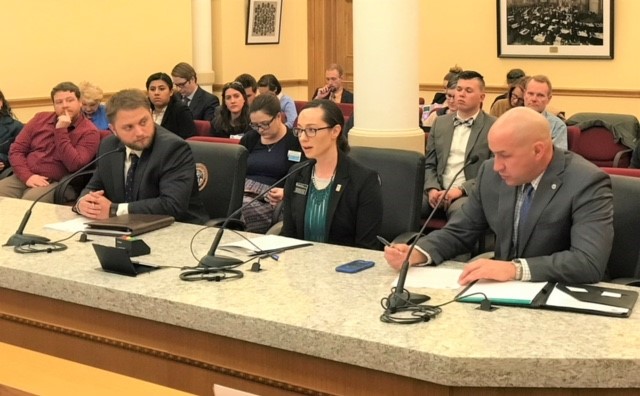
RFF has experienced great success and has been asked to speak in front of the State of Colorado’s Senate Committee on Education (see picture) along with CU-Boulder and CU-Denver’s programs which have programs similar to DU’s Right Foot Forward.
For more information about the Right Foot Forward program please contact Damon Vine at damon.vine@du.edu or  303-871-2074.
 Submitted by Damon Vine/Veterans Service Coordinator and Patty Hickman/Director Graduate Career & Professional Development

10 Ways to Stay Healthy When You Work in an Office

Many people think that the safest jobs are those that involve being in an office all day. Sure, you likely aren’t going to have any heavy objects falling, or have to deal with injuries involving heavy equipment, but working in an office comes with its own particular set of health hazards. In fact, a lot of people who work in offices are less healthy than those who work at jobs that are much more physically demanding. Today we are going to take a look at 10 things you can do to help you to stay healthy if you work in an office.
  • Walk to Work – If you don’t live far away from the workplace, keep your car parked at home and start walking to work. You may not always be able to do this (lack of time, bad weather, etc.), but the more often you walk, the healthier you are going to be.
  • Use a Standing Desk – We are learning more and more about the dangers of sitting all day long. In fact, they say that sitting is the new smoking. It is important to be able to stand and sit, so if you have an adjustable desk, you can sit for periods, and then stand up for periods as well.
  • Use a Fitness Ball – Instead of using a regular chair, get yourself a fitness ball. Sure, it may look a bit kooky, but it is a great way to work the muscles in your back and legs, because you have to be able to balance yourself on the ball as you work.
  • Don’t Eat Out – One of the biggest problems facing office workers is eating out. It is so easy to grab something quick from a take-out or the cafeteria, but it isn’t always the healthiest option. Stop eating out, and bring your own healthy lunches and snacks to work instead.
  • Bring Exercise Gear – You can exercise both while you are working and while you are on breaks if you have some fitness gear in your office. Bring some dumbbells or elastics to work, and do exercises while you are reading notes, making phone calls, etc.
  • Exercise in the Office – There are loads of things you can do right in the office that are going to help you to stay in good shape. For instance, you can start taking the stairs instead of the elevator. Do various exercises right in your chair, such as leg raises and isometrics. Move around as much as possible. 
  • Ask for a Fitness Corner – Many companies don’t have the space for an in-house fitness center, but you can suggest that they offer a fitness corner with one or two fitness apparatuses, such as a mini trampoline. This can easily be set up in the lunch room, or any other corner in the building and as this article by Groom+Style suggests can be completed on a small budget.
  • Exercise on Breaks – Instead of sitting down for lunch and other breaks, use this time to get some exercise. If it is nice outside, go for a walk. Find a work buddy to walk with you so it is more enjoyable. You may even find a group of coworkers who want to start walking regularly.
  • Hold Walking Meetings – Another way to exercise while at work is to walk while you talk. Instead of holding meetings in the boardroom, get everyone to go for a walk in the park, around the block, etc. You can talk about everything you would in the boardroom, and get some exercise too.
  • Set Up Fitness Classes – Get together with your fellow employees and hold fitness classes in the workplace. These can take place during lunch hours, and they are not only a great way to stay in shape, but also a great way to get to know your colleagues better in a non-work setting.

How to Future-Proof Your Career Against AI

In a just a decade or too, artificial intelligence has gone from science fiction fantasy to an everyday reality for many of us. Do you have a smartphone with Siri or Google Assistant baked in? Perhaps an Amazon Echo standing on a bookcase back home? Those disembodied voices, linked over the internet to a vast network of servers and self-propelled neural networks, are AI – and they are moving ever closer to passing the legendary Turing Test.
Of course, none of these products are genuinely self-aware, in the broadest sense of the term ‘intelligent’. But that is coming (probably). Popular futurologist Ray Kurzweil, who now works for Google, believes we will achieve the so-called ‘singularity’, the point at which artificial intelligence overtakes the human variety, in just a few decades’ time. That’s either an exciting or scary prospect, depending on how you look at it.
But what does the gradual spread of AI mean for us today? Physical factory robots have existed for decades, freeing people from the most repetitive and wearisome tasks but at the same time causing job losses. Since then they become ever sophisticated, and their development has run alongside the growth of AI. Now we find ourselves at a point when a notable number of non-factory positions are also under threat from machines – more than at third of administrative and support service positions for example, and just under a third of financial and insurance positions. Finance, in particular, has taken with enthusiasm to AI: many loan and insurance assessments are made by machines, and stockbroking is now hugely automated, with computers buying and selling shares between themselves at tremendous speeds and with little human intervention.
This will only continue, so is there anything we can do? Is it possible to future-proof your job and keep the robots from the door? The first thing to realize is that AI, at least in its current form, can only do certain things, and all that must be rigidly programmed in. AI cannot be creative, think spontaneously, or tackle the multiple intricacies of social interaction: although scientists and engineers are doing their very best to teach them all those things. But it’s a tough task: these are all tremendously difficult things for machines to grasp. No matter how polished a user experience they produce, AI is, fundamentally, a product of computing, and that in turn boils down at the deepest level to binary ones and zeros. Not very human.
So the more human your job is, the safer it will be is from AI: for now, anyway! But what if you work in a field that is vulnerable to the rise of the robots – for example, transportation, wholesale distribution or manufacturing? The best approach is perhaps to accept that the robots will be always better at repetition and heavy lifting, and AI will always be better at crunching numbers. Instead, move sideways and adapt to the new opportunities that will present themselves. Learn to repair the robots or programme the AI. Become a manager or supervisor – a position no robot can take. Or move into a customer facing role and specialize in all that tricky social interaction.
For all its continuous evolution and intricacy, AI is still characterized as much by what it can’t do as what it can. As HAL famously put it, “I’m sorry Dave, I’m afraid I can’t do that…” We humans aren’t redundant just yet!

Smart Writing as a New Start for Your Career

Hero Images/Getty Images
If you search “smart writing” on Google, you’ll come across Moleskine’s smart writing system, but you won’t find much more information on the term. What’s smart writing, anyway? It’s not a term reserved for Moleskine. It’s something much broader; something that affects all of us.
In its simplest definition, smart writing is a writing practice that serves a purpose. It helps you achieve a precise goal. You plan how you’ll achieve that goal, and you organize the process of writing in a way that helps you get there.
When it comes to launching your future as a professional in any field, smart writing can really help. You can start the practice before you even graduate, and you can take it further when you’re ready to hit the job market. We’ll tell you how.
  1. Start With Your School Projects
When you’re at college or graduate school, a big part of your responsibilities are based on writing. This is your chance to practice smart writing. These are not mere assignments without any purpose. Oh; they serve a big purpose: they teach you how to conduct research and develop arguments based on facts. You’ll benefit from those skills no matter what career you choose. Whether you’re a doctor, economist, marketing expert, or social sciences, research and writing will be a big part of your professional progress.
So pay attention to these projects! If you’re not a good writer, the best paper writing service can help you develop these skills. You will work with a professional writer, who will guide you through all steps of the planning, research, writing, and editing.
If you’ve already graduated, then you can learn by going through the papers you’ve written. You surely stored several of them on your hard drive, right? Well, it’s time to improve them. Do some smart writing! What can you do to make them more convincing?
  1. Start Blogging
Let’s get back to those school projects. Are you confident enough to share your research with a wider audience? This will boost your smart writing practice. When you connect with like-minded people through your blog, you’ll learn from their comments. Some of them will ask questions that will require more research. With time, you’ll learn how to develop stronger arguments and convey them through content that people love reading.
Your blog doesn’t have to be reserved for research projects. Regular blogging can be smart writing, too. Just pick a niche that corresponds to the career path you want to follow. Then, start working on different topics and write awesome content!
A great blog requires an investment. You’ll make it successful not only through high-quality content published on a regular basis, but through a SEO and social media marketing strategy, too. It will take a lot of work, but you’ll yield great results in return.
The blog can literally start your career! When you submit a CV or resume for a job and you include a link to your blog, the potential employer will be curious to see what you’ve got. If they see an influential blogger who knows tons about the industry, you’ll definitely get an interview.
  1. Improve Your Vocabulary
No; we’re not saying you should become one of those people who write endless sentences with “big” words. That’s not smart writing. It’s silly writing!
However, smart writing still has a lot to do with vocabulary. The language used in research projects, professional blogging, and business communication is different from the language you use for speaking or personal writing. This means you’ll have to explore some new, more influential ways to express yourself.
For starters, you should learn more about the industry of your choice. Understand the slang! You won’t want to use it so much when you write for a general audience, but you still have to understand it. You should know how to define and use all terms related to your profession. Strong vocabulary will make your writing more convincing.
  1. Learn from Constructive Criticism
This is the biggest favor you could do to yourself: hire an editor for the important content that you’re going to publish. Yes; it’s an investment. However, it will greatly improve the quality of your writing. It’s not easy to see your “baby” taken apart. The editor will remove all unnecessary parts of your sentences. They will make the content more readable. They will contact you with advice to add information where the logical flow fails.
This will test your ability to learn from constructive criticism. You don’t have to hire an editor every single time. Do it only for the most important smart writing projects. You will not allow the editor to change your voice, tone, and message. However, you should certainly accept their detached involvement.
The same thing goes for the comments you get on your blog. Sure, you’ll be getting some of the “keep up the good work” stuff, but that won’t be all. Some of your readers will be critical. They will argue your point. You should listen to their criticism, too! It actually helps you to write better content next time. Progress – that’s what smart writing is all about.
Are you ready to start this journey? Smart writing can make you a better professional in any career. It makes you a more attractive candidate for employment or promotion, too!

About the Author

 Mark Delarika is a professional content writer, teacher, and a blogger. He taught in more than 10 countries for students all over the world. He is major in educational innovations. Mark is a business writer at best paper writing service. He helps students to improve writing skills, shares his personal experience and gives practical tips for educators. 

Is It Feasible to Turn a Passion for Blogging into a Career?

A few people have turned blogging into a very successful career. But as you probably already know, there are countless blogs out there, and their owners are not necessarily making a living out of their efforts.
So, if you are thinking of getting into blogging, not just as a hobby, but as a way to earn a living, then there are some points you need to understand first.
First of all, you should know that starting a blog is pretty inexpensive. Setting up a blog site is one of the easiest things to do, and also the cheapest ways to have a site of your own. That said, you will need to have a few other skills to make your blogging career a success.
Learn about Digital Marketing
As a professional blogger, should have a decent grasp of what digital content marketing entails. At the end of the day, if you are getting into blogging for the money, you are running a business. And any good business needs good marketing to be a success.
Without going into details, you should know a few marketing techniques you can use to promote your site and get it the online attention it needs to offer monetization opportunities.
Some of the marketing channels you can try include social media, being a guest poster on similar blogs, and getting endorsements from influential individuals in the niche you are blogging about.
Basically, you should go with the marketing modes that will give you the greatest benefits. So, do not be afraid to step out of your comfort zone as you explore ways to market your blog.
Keep your Audience Interested
Blogging as a career will also require that you keep your audience interested through fresh content. That means you should be ready to write regularly or at least pay someone to write or create great content for you. While at it, make sure you give your audience value for their time. 
Write about What You Know
It helps to write about a subject you are (or are willing to become) an expert at. Do not struggle to try to blog about topics you are unfamiliar with, especially if you intend to create the content yourself. Writing about things you love and know about in depth will give you greater authority, in addition to, ensuring you always have something of worth to give your audience whenever you sit down to create new content.
Matt from Greece, who has always enjoyed trying new products and writing reviews, started his a blog in 2014 and he has focused it on product reviews that educate and inspire. He advises new bloggers to choose a topic they are passionate about.
Steven from New York, who was working as a journalist for a cybersecurity magazine, started blogging about Internet security, giving tips, endorsing products, and offering deals and coupons for award-winning antivirus and security software that can protect his blog readers from the ever-increasing threats in the cyberspace.
Alex from Ireland, who struggled as a student to make ends meet, and became an expert at saving money using coupons throughout his college years, created a voucher site that today helps people save hundreds of dollars annually.
You can Get Paid to Blog
Your career can still be a success when you decide to blog for others. Obviously, there is a level of satisfaction that comes with creating your own blog, but being a blogger at an established site is also a good way to make a living in this field.
The benefit of this option is that you will start getting paid immediately. You will also have the assurance that your blogging will actually make money. Creating your own blog is fraught with many risks. For one, it could take months before the blog starts making any money for you, if you are lucky.
You don’t even have to be loyal to a single blog. Many professional bloggers work with many companies or sites, making significant amounts of money from their blogging careers. So, finding a blogging job is something worth considering. And who says you cannot have your own blog even as you work as a professional blogger for sites you don’t own?
Take your Blog Seriously
Also, while trying to launch a career as a blogger, you need to get rid of “I’m doing this as a hobby” mentality. Creating web content about things you like can certainly be fun, especially if you have people who follow your work closely as fans. However, you should take blogging seriously if you consider it a career. That means you have to actively seek out opportunities to make money off your blogging.
Such options include getting companies like Google to advertise on your site so that you earn when people visit your site. You can also post sponsored content, but without ruining the content quality your audience has come to expect from your blog.
Be a Learner
A blogger also needs to be open to learning. Many bloggers out there had no clue their successful money-minting sites would turn out the way they did when they started out. But with patience and a willingness to learn, they set up blogs that turned into raging monetary successes.
Similarly, you should be open to learning if you are to succeed as a blogger. For instance, your blog will need things like a good ranking on Google. That means you will have to learn more about how these rankings are made to ensure your site is better-positioned in search engine results.
In Conclusion
So, you can definitely have a successful career as a blogger. All you need is to put in the appropriate effort. If you can learn more about content marketing, offer your bloggers value for their time, and be open to learning new things about the field, then you can certainly succeed as a blogger.

What to Do with a Public Policy Major?

Careers for Public Policy Majors

WHAT IS A PUBLIC POLICY MAJOR?
The University of Denver’s interdisciplinary program in public policy focuses on major social issues and how they impact the public and private sectors. public policy is a highly disciplined, evidence-based approach to the analysis and solution of contemporary issues like fiscal policy and government spending, entitlement reform, health care, national security, regulation, criminal justice, education, and immigration.
Also, visit the government/public policy career resources page.

COMMON CAREERS FOR PUBLIC POLICY MAJORS

With a deep understanding of the issues of the day, many public policy majors go on to work in the education, government, non-profit or healthcare industries.

COMMON JOB TITLES HELD BY THESE PUBLIC POLICY MAJORS INCLUDE:

  • advocate
  • attorney
  • campaign worker
  • communications specialist
  • contractor or consultant
  • development assistant
  • director of government relations
  • foundation manager
  • grants specialist
  • legislative auditor
  • lobbyist
  • nonprofit manager
  • paralegal
  • planner
  • policy adviser
  • policy analyst
  • policy director
  • politician
  • political activist
  • program analyst
  • public administrator
  • public relations specialist
  • researcher
  • sustainability coordinator
  • teacher or professor

PROFESSIONAL SKILLS OF PUBLIC POLICY MAJORS

In addition to the careers listed above, public policy majors are well-suited to fields that require the following skills:
  • interpersonal communication
  • research
  • communication
  • persuasion
  • data analysis
  • critical thinking and interpretation
  • problem-solving
  • writing

IS A PUBLIC POLICY MAJOR RIGHT FOR YOU?

Still unsure if you should major in public policy? Schedule a session with a career counselor, attend our “Choosing a Major” workshop, and attend career events where you can network with employers that hire public policy majors and alumni who majored in public policy. Also, schedule a session with the department chair, where you can explore other possible career paths.
PROFESSIONAL ORGANIZATIONS FOR PUBLIC POLICY MAJORS
RESOURCES FOR PUBLIC POLICY MAJORS

Alumna, Robin Colombin, Building Community in Benin

A few days before Christmas I touched base with Robin Colombin over a Facebook messenger phone call. Robin (BS ’16, international business, minor in fine art) is stationed with the Peace Corps in rural Benin and traveled two hours to the capital, Cotonou, to make this call.
When I caught up with Robin, she was teeming with enthusiasm for her work and loads of new international economics and business vocabulary. French is the official language of Benin, so our conversation was marked by the vacillations and pauses that develop when communicating ideas and concepts across multiple languages and cultures. Colombin, who studied French at DU, traveled abroad her junior year to Aix-in-Provence in southern France.
DU Alumni: Tell me about your time at DU. How did you get here, what did you study, etc.?
Colombin: I was really interested in marketing and was impressed with Daniel’s College of Business when I came to visit. I graduated with a bachelor’s in international business from Korbel and Daniels. I took some first year classes in international politics and economics and I fell in love. I was especially inspired by Professor Robert Uttero. It was through my class work and work study position in the humanitarian assistance graduate program that I became interested in humanitarian aid. I took a lot of Korbel classes and knew that if I wanted to do it seriously, I also wanted to have an idea of what it is like on the ground, which led me to the Peace Corps.
DU Alumni: How did you choose Benin? What was that like?
Colombin:  With the Peace Corps, you pick your top three placement choices, much like the study abroad program at DU.  You could always choose “Wherever I’m Needed” as an option and roll the dice, or you can choose a specific region or country.  I chose Benin as my first choice.  It was the only country that had an opening for a Community Economic Development Advisor in a Francophone country, which were two of my requirements.
DU Alumni: What was the process like?
Colombin: A lot of paperwork and medical tests. I had to wait a few months to hear back. I graduated in March 2016 and I heard back from Peace Corps right after graduation, but I didn’t leave for Benin until September, six months later. It’s a bit of a leap of faith—you don’t know a lot when you are accepted. I knew I’d be doing community economic development because I had applied particularly for that, but the descriptions are very generic. You might be working with various organizations—women’s groups, savings groups, NGOs, etc.
When I got to Benin, I first traveled to Lokossa, which is in the South of the country for training. I was living with a host family and I had training every day for three months. After two months, they told me where my permanent post was and who I would be working with. I was told that I would be going to Agon, Benin. At that point, I got to visit the village for two weeks and meet the people I’d be working with.
DU Alumni: What is your life in Agon like?
Colombin: I’m the only American and non-local in the community. There are about 2,000 people living here and it’s largely an agricultural economy. Most people are farming corn, cassava, pineapples, palm trees, and local vegetables.
I personally really like being in a smaller community where most people know me, but it is a lot like living in a fishbowl.  Everyone has been so understanding and supportive here, and it’s been amazing working with them.
DU Alumni: How did you end up in Agon as opposed to another city in Benin?
Colombin: Each volunteer gets requested by someone in the community – that person becomes your counterpart. My counterpart is Delphin Sessou–he’s been working for over 10 years to get savings and loans groups started – there were 10 in place when I got here. They have been growing, too. We teach community members the structure, how to manage them and oversee the accounting.  While we provide overall management of groups, each group has its own self-elected managerial structure.
DU Alumni: What is a savings and loans group?
Colombin: Savings and loans groups go by a few different names and acronyms. In French they are called AVEC (L’association villageoise d’épargne et de crédit) and the English translation is VSLA (village savings and loans association). The need for AVEC comes from a gap between banking and microfinance. There are not a lot of banks nearby, especially in small villages, so it’s not easy to do banking. The goal of AVEC is to help the most vulnerable people, particularly women, save and loan money to each other when access to a bank is not possible, or individuals are not comfortable doing business with banks. Big banks can be intimidating. Many people can’t read or write and the documents are in French.  Quite simply, some people just don’t see the value in having a savings account either.

DU Alumni: So, how does the AVEC work?
Colombin: Each AVEC has its own rules, but generally speaking, members agree to contribute a small amount of money to the savings group each week. The group then makes loans from their combined savings. Individuals pay interest on their loans and pre-decided fees (fees for coming late to meetings, reimbursing loans late, etc.). At the end of the year, the interest and fees are divided based on savings and paid out to the individual members.  So after a year, members get their total savings back plus interest.
AVEC serves as a money-management tool as well as an easy way for people to invest and take out loans.  There is also an insurance element to the structure.  Individuals pay a small amount into an emergency fund that individuals can access for urgent cases—medicine, funeral expenses, etc.  It is an amazing structure to financially empower those who need it most.
DU Alumni: You said that the AVECs are growing. Can you tell us about the growth you’ve seen?
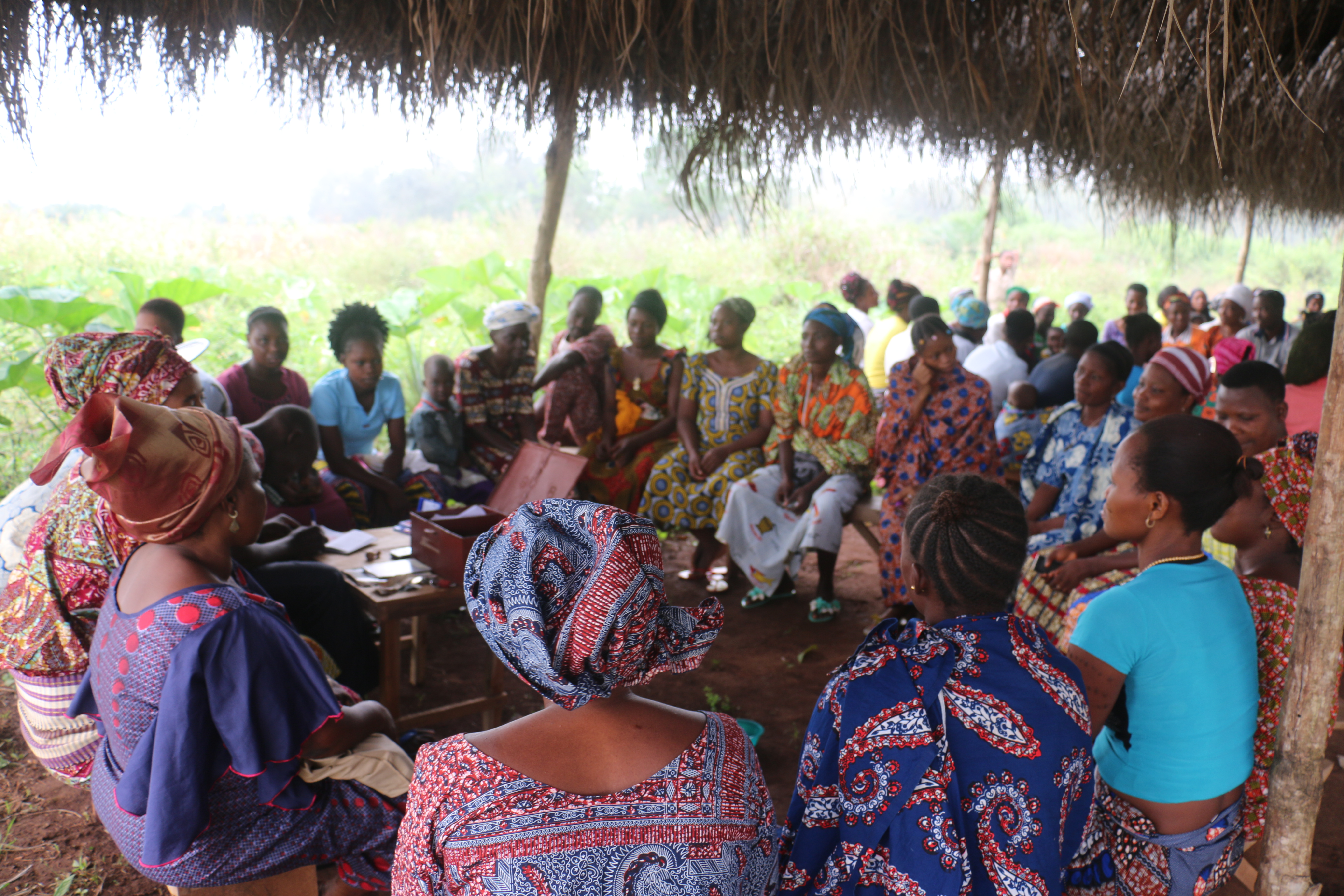
Colombin: When I arrived there were 10 AVECs. About a year later, we have 15 groups made up of 450 people. They are also opening new AVECS in other nearby villages where there is demand. For now, the groups meet under a tiny, flood-prone shelter, essentially a dirt floor covered by palm fronds. When it rains, the meeting space floods. Also, the palm fronds need to be replaced, and there is not nearly enough room for everyone so some groups meet under nearby trees.
They have made a lot of progress as far as building their own organizational infrastructure goes; now they need a permanent building structure.  They have a project to build an Integrated Business Development Center where the groups can meet and store documents.  They will hold free business classes there, and two rooms will be left open for any entrepreneurs in need of the space to use—that includes agricultural groups and women’s groups.  Agon does not have a community center of any kind, so everyone is very excited about having this open community space. We would love your help (see link)!
DU Alumni: So, we like to ask alumni a few questions to connect with current students and with their fellow alumni. What advice do you have for a first or second year students who are just getting started at DU?
Colombin: I recommend taking classes that sound interesting to you; the best thing you can do is figure out what you are most passionate about and dive in.  I came out with an entirely different degree than I thought I would.
DU Alumni: What professional or life advice do you have for fellow alumni or students who are about to graduate and launch their careers?
Colombin: Apply for things you don’t feel qualified for.  Once you have the position, work hard to be over-qualified for it.  That is how you’ll grow.
Robin Colombin (’16) is a Peace Corps Volunteer in Agon, Benin. In addition to serving the community on economic development projects, she is helping to raise funds for the Integrated Business Development Center. Wondering how you can help? Click to learn more about the project and donate.

27 Leaders, Athletes & Celebrities You Wouldn’t Know Have Learning Disabilities

In your job search journey, it can be helpful and inspirational to look to leaders in the professions you are passionate about or want to learn more about who came across challenges as students and, through those challenges discovered their talents and passions and have found meaning in their lives and careers. 

Learn more about how Nike’s Chief of Design, John Hoke, uses his Dyslexia to better understand himself and how he has built his career through using his talent and passion for doodling.

Explore a list of 13 celebrities in sports, movies, and music who have Dyslexia, ADHD, and Dyscalculia and have used these as driving forces of hard work and success.

Check out a list of 13 entrepreneurs who discuss their learning and attention challenges and how these have been opportunities for creativity, innovation, and problem solving.

What to Do with a Design and the Arts Major?

At the intersection of design and the arts is a set of skills that allow for creative expression and communication. Whether you’re studying Art, Art History, Emergent Digital Practices (EDP), Film, Marketing, or another related program, these creative arts have the power to influence, persuade, and educate, along with the potential to activate emotion and mobilize action.
Common industries for these degrees include advertising, marketing, technology, and film, in addition to museums and local arts associations. If you’re wondering how to find opportunities in these fields, there are several resources to support the search process. Take a look at the content below to discover the companies, organizations, and professional associations that relate to your interests.
Advertising/Marketing:
Digital Arts/Technology:
Film:
Art and Art History:
Final Tips:
Research people and organizations on LinkedIn using a keyword search and narrow down by city and state.
Check out the alumni page and Pioneer Connect to identify any DU Alumni who may be working for these organizations with whom you can reach out and request an informational interview to learn more about the industry, the specific company, or their position.
Take note of the organizations and companies these individuals work for, including their current and past job titles that might align with future roles that could fit for you.

Marsico Scholar to Visit NSM!

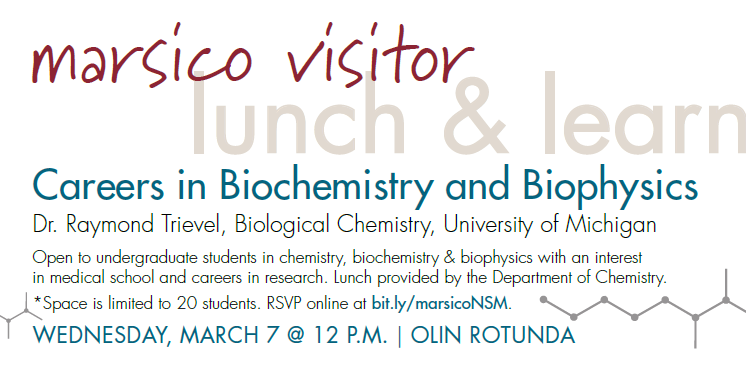
The Department of Chemistry & Biochemistry is pleased to welcome Professor Raymond Trievel from the University of Michigan. As a visiting Marsico scholar, Dr. Trievel is a tremendous resource for undergraduate students wanting to learn more about research at a medical school and/or careers in biomedical research.
You are invited to join Dr. Trievel on March 7 at noon for a free lunch and a talk on career paths in biochemistry and biophysics. Lunch attendees can also sign up for one-on-one “office hours” with Dr. Trievel, taking place Thursday, March 8, to further discuss scholarship, research and career goals.
Lunch space is limited to 20 students. Students must RSVP to reserve a space.
Wednesday, March 7 | 12:00pm | Register via Pioneer Careers
Dr. Trievel will also present a talk on Structural Enzymology of Lysine Methylation at 4 p.m. on Thursday, March 8 in Olin 105. All are welcome to join us!

Powering Through the Winter Slump: 5 Tips for Making the Most of Winter Days

Ever feel a bit sluggish and down during the winter? Feel a cold coming on? With the days getting shorter and weather colder it can become harder to stay motivated and healthy during the winder. This greatly affects our productivity and overall health/wellness in school, internships, and work. Here are some tips to over coming the winter slumps.
Get outside- even for 20 minutes.
We are lucky that Denver has over 300 days of sunshine and although it may not be warm, getting outside for 20 minutes for a quick study break or walk helps circulate your blood and lymph system giving you a nice pick-me-up.
 Make social plans. Start a book club.
Interestingly, Carnegie Mellon doctors found that hanging out with friends combats stress and keeps you healthier. Individuals with larger social networks produced more flu fighting antibodies so surround yourself with friends and others who make you happy.
 Healthy snacks are key.
Ever feel yourself hitting an afternoon crash? Eating fewer sugary and high carbohydrate foods will help you avoid this feeling. Therefore, stocking up on healthy snacks such as fruit, veggies, nuts, and almond butter will keep you full and sustained throughout the afternoon.
Stock up on your own pens and pencils.
Studies show that cold and flu germs are passed through hand-to-hand contact so you may want to reconsider borrowing pens/pencils with classmates. Instead, stock up on plenty of your own so you can avoid contracting a virus.
Take your vitamin C.
Fun fact: In the 1940’s, Dr. Klenner cured tons of diseases such as chicken pox, measles, and polio using vitamin C alone. This vitamin is loaded with properties that fight off infectious diseases and help to heal your body so consider adding a dose of vitamin C to your morning routine.
Need a little extra motivation? Follow some of the best healthy life-style bloggers on Instagram. These accounts full of delicious looking food, workout ideas, and inspirational quotes may help foster a bit of extra motivation during the long winter months.

When You’re Not Certain, You’ve Got to Become an Explorer of Your World!

“What are you going to do after DU!?” With two months away from graduation it’s likely that most encounters with family, friends, and professors lead to some variation of this question and you might not have an answer.
And, if you’re not at that transition point of graduation, then perhaps you’re in the midst of your undergraduate journey and uncertain about what major to pursue and constantly being bombarded with, “What are you majoring in?”  Whatever the case, being in a space of uncertainty can induce all sorts of anxiety, doubt, and questioning, especially when receiving pressure to have it all figured out.
Give yourself permission to ‘not know,’ and consider reframing that uncertainty to one of exploration, which offers you room to pause and reflect. And, consider engaging the steps below as a process to move you towards a state of relative clarity, at least in knowing your first next steps.
 1. Conduct an Archaeological Dig— Create some space in your week to pause and evaluate your past and current experiences. What jobs, volunteer experiences, clubs or organizations have you been a part of? Have you traveled, nurtured a particular hobby, sport, or other activity? What did you most enjoy about these things? Least enjoy? Why? What skills did you cultivate through those experiences; and, what came easily and naturally to you? Of those skills and talents, which were most rewarding and satisfying to use? Why? Write your answers down.
2. Return to Your Youth—…and, answer this question: What was it I most loved to do as a kid? Whatever the answer, start to unpack what it was about that thing, or activity, that was most engaging, rewarding, or meaningful, because embedded in your response are clues to where you’re likely to be happy and motivated. Even if the same five people answer: ‘playing with Legos,’ their reasons will be different. One individual might explain that they loved starting with nothing and the process of creating something; while another might describe how their imaginations became activated when crafting a story that corresponded to the Lego world they built. While the answer to a major, or your career isn’t to necessarily pursue Lego building, though it’s an option, take note on how the elements of where you were most engaged could translate into a future role, or area of study, such as a field that leverages your creativity and design thinking.
3.  Become an Expert Observer— Each day, start tracking where you light up, what captivates you, and engages you. Notice what are you doing when you lose track of time, and on the contrary, pay attention to what drains you of energy and where you check out, or become disengaged. These details offer clues to where you’re likely to be motivated and vice versa.
4. Pursue your Curiosity— When Steve Jobs dropped out of college he took a calligraphy class just for fun and simply out of interest. Fast forward to the launch of his first Apple computer and it turns out the font he used had been informed by that seemingly random calligraphy class. So, pursue curiosity, because you never know where it will lead. Experiment! Take a class that piques your interest, engage a hobby you’ve been wanting to reignite, attend a lecture, take a road trip, watch a documentary, go swing dancing; whatever it is, you’ve got to get out in the world and have experiences, because it is through experiences upon which we can reflect and learn about ourselves, discovering where we come alive and when our unique talents and personality shine through.
5. Connect the Dots—Brainstorm on the Intersections of your interests, talents, and values. What do you want to do and where do you want to have an impact? (i.e.—be a champion for individuals with learning differences, conserve the environment, build self-esteem, etc.)? Where are you wanting to plug in? (i.e.—Blogging, education/training, fundraising, data analytics, developing a community support group, lobbying, etc.).
6. Seek out Humans— Find the people at the intersection of your interests and meet them! Go pick their brain and build those connections. Use the LinkedIn alumni page and Pioneer Connect to identify alumni who are doing the very things that pique your interest, or for which you’re curious. Request an informational interview to learn more about the nature of their job, the industry, and their career journey. You might also find relevant organizations via Guidestar.
7. Be Kind to Yourself—The decision-making process can be overwhelming for some people; as such, engage daily practices of self-care, whether it’s meditation, journaling, eating healthy foods, getting your body moving through yoga, or other types of exercise. And, keep connected to the community, whether through your friends, family, or other individuals you find supportive.