I Semester – Special English – Unit 3 – Skill Oriented Teaching


A quality time of period we have spent over discussing how teaching of a language differs from teaching a subject. The main difference falls in the instructional objectives of teaching the both.

Teaching a subject is predominantly knowledge oriented whereas through teaching a language, a teacher facilitates the learners to acquire / develop his/her communication skills. Hence, apart from teaching, a considerable amount of training aspect should also be found in the language teaching.

The teaching sessions should be oriented to incorporating varied skills of language.

1.      Reading skills are extremely important. Students that have the confidence and ability to read and comprehend reading material can begin to build a different English perspective. Articles and short stories are a great example of reading exercises, pairing reading with practice and production questions that will spark discussion with classmates.
2.      Discussion skills develop better conversation. Your students begin processing information in English when listening and speaking. They will be required to respond in English to what they hear. For video clips, you can have your students discuss the summary of what they had seen and heard. In a dialogue exercise, students can practice the art of conversation with a partner or in a collaborative group exercise.
3.      Writing skills are often overlooked in ESL, yet these skills are just as important as any other ESL skill around. Writing enables students to leap into description, putting their grammar and new vocabulary into practice. Your students can utilize writing in various ways, conveying their thoughts in English to the class, at home or even in their profession.
4.      Pronunciation skills allow your students to develop the sounds in their speech to be understood when speaking English abroad or during a business presentation. If your students lack the essential concepts within pronunciation, than they run the risk of being misunderstood and it may diminish the confidence they have built in your classroom after months of ESL study.

I I leave this list to you students to be further furnished / elaborated / added with other skills.

Expecting your contribution in the comments…

Job Offers: 5 Things to Consider

Congratulations! You have a job offer. What to do next? You will likely have to live with the salary for at least a year so now is the time to think about the offer!
Do research on the salary range by checking sites like salary.com, salaryexpert.com, and glassdoor.com.
** Take time: You will be spending a large number of your waking hours at this job so ask for 3 days to a week to review the offer. This will give you time to objectively decide if the job is a good fit for you.
**Benefits: A great benefits package can compensate for a lower salary. What is the health insurance plan and what percentage does the employer pay? Tuition reimbursement? Educational benefits? What about employer contributions to a retirement plan? How much paid vacation/sick leave?
**Hidden Costs: Will you have a long commute??Be away from family and friends due to a lot of out-of-town travel? Do you need to leave at a set time to pick-up a child from daycare/school? Do you need relocation assistance?
**Culture: Do you think that you will fit in easily? If not, are you willing to adjust? Is your supervisor interested in your growth and success? Are you comfortable with the management style? What about the dress code?
By doing your research and reflection before accepting the position, you will feel more confident about your new position. Contact the Career Center at 303.871.2150 to schedule a time to meet with a Career Advisor for additional advice.

The Art of Discussing Salary During the Interview

We’ve always been told that it is never a good idea to discuss salary during an interview. But, this is not actually always the case. There are instances where you can, and should discuss salaries, but you need to know how to go about it in the right way. In fact, some employers actually love the game of negotiation, and the better you are at it, the better your chances are of being hired, because you have the skills the employer is looking for. The following are some tips that will help you to master the art of discussing salary during the interview.

Know Your Worth

There is a market value for every job, and in order to get the highest possible salary, you need to know what you are worth, and be able to articulate this to prospective employers. Think about what you are earning right now, and then set a realistic goal for what you expect to receive as a salary for your next job. The more skills you have, the higher the salary you will be able to negotiate.

Do the Right Research

“Prior to the interview, make sure that you learn as much about the company as possible, especially the salary ranges, benefits, and industry standard salary ranges. That way, you will have a good idea of what you should be offered for a salary, and if it is lower, you have some room to negotiate,” suggests HR manager from GadgetSalvation. Also be sure to research how easy it is to move up in the company, and what salaries are like for the positions you hope to achieve.

Time it Right

You need to feel out the interviewer and figure out when the time is right to ask about salaries. Wait until you know for sure that they really like you and that they are interested in hiring you. Then, you have a bit of leverage. Once they have decided that they want to hire you, it will be easier to negotiate a salary that works for both you and for the employer. They want you, so you need to make them prove it by offering what you want.

Be the First to Mention Salary

It is a good idea to mention a salary range before the employer. This is going to begin the negotiations in your favor. Remember, when it comes to the art of negotiation salaries, the first offer is the starting point for the entire conversation. If you let them do it first, they are not likely to be offering the salary you want. If you ask first, they will be forced to negotiate with you if they really want to hire you.

Don’t Jump on Any Offers

Never accept the first offer made to you. In most cases, the employer will actually be prepared to offer more if you negotiate, so if you take the first offer, you could end up making a lot less than you should be. After the first offer, tell them that you will get back to them with your decision in a specific amount of time. That will tell them that you want to negotiate, and they may end up offering a higher salary before your deadline.

Talk about Other Offers

If you can show that you would be an asset to the company, an employer is going to want to make sure that they hire you. So, let them know that you have other interviews, and that other offers have been made. They may just speed up the interview and make the right offer right away, so they will know for sure that they are going to be able to have you as part of their team.

Job Searching with a Chosen/Preferred Name

Names written on colorful paper.It’s the first thing you type in an application form, the biggest text on your resume, and the first thing a potential employer learns about you: your name. What captures us more succinctly and wholly than our name? It’s more than just a label, and it encompasses so much of who we are. Especially if we chose our name ourselves.


For people using a chosen or preferred name in the job search, what to write down in the application or on the resume can feel like a conundrum. Will HR reject my application if I don’t list my legal name? What will an employer think if I have one name on the resume and another in my email address? Sometimes, we just don’t want to deal with it, and go through a job search process using our legal name even if it’s not the right fit.
Fortunately, it doesn’t have to be that way. In short, you can use your chosen or preferred name throughout your job search, as long as you provide your legal name when it comes time for a background check. (If you don’t provide current or prior legal names at that point, it can be seen as lying on the application, and grounds for firing.) How would you like to be addressed during interviews, and how would you like to introduce yourself? Use that name throughout the process.
If you go by a nickname and don’t mind sharing your legal name, you can put this on your resume like these: Xiu Ying “Suzie” Li or Robert “Bobby” Doe. Since a resume is essentially a personal marketing document, and doesn’t require a legal name, the same individuals could simply put Suzie Li or Bobby Doe on their resumes.
Sometimes when deciding whether to list a chosen or preferred name, there are additional considerations. For instance, if you are trans or genderqueer, using a name that does not “match” your gender presentation or gender identity could potentially be an issue during your job search. Perhaps the name on your application would immediately out you to your employer, or using a name you don’t prefer would cause discomfort as you present yourself professionally in a way you wouldn’t prefer to. In these cases, career coaches and trans people who have been through it themselves generally recommend to evaluate your own comfort with using one name or another given where you are in your coming out process or transition, and use your chosen or preferred name during the job search if you plan to use it while on the job. If you are concerned about safety or discrimination, there is nothing wrong with using your old or legal name during the job search, and coming out after being hired. And if you would prefer to not be out at work at all, that is OK too!
If you are interested in changing your name legally, there are resources to help you do so in Colorado. The Colorado Name Change Project assists with background checks, filling out paperwork, and will also soon assist with changing the gender marker on Colorado state-issued ID cards and birth certificates. For help changing documents outside of Colorado, you can check this resource from the National Center for Transgender Equality or contact local organizations in that other state or country.

Have You Met Your Career Advisors?

Career@DU is a collection of career offices across campus designed to meet the needs of every student. Whether you are a traditional undergraduate, a graduate student in a professional program or a student with unique needs, we’ve got career advisors and programs dedicated to supporting your career and professional development.
Career & Professional Development
Did you know that Career & Professional Development offers advising in multiple languages? Our International Student Peer Advisors are here to help you in Arabic, French, or Spanish! You can make an appointment with Walid Hedidar or Roxana Toledo on Pioneer Careers.
Daniels College of Business Career Services
  • DCB undergraduates, graduate students (MBA, PMBA, EMBA, MS), and DCB alumni
  • danielscareers@du.edu | 303-871-3911 | daniels.du.edu/career-services/
Josef Korbel School of International Studies Office of Career & Professional Development
Sturm College of Law Office of Career Development and Opportunities
  • JD students, MLS, LLM, MLA students, Alumni of SCOL
  • careers@law.du.edu | 303-871-6124 | law.du.edu/career
Alumni Career & Professional Development
  • Alumni are served by Career & Professional Development or the career team in their respective school up to 1 year after graduation.
  • Alumni Professional Development
Make an appointment with your advisor today!

Funding an Unpaid Internship

Have you learned about an amazing internship, but aren’t sure if you can afford to take the role because it is unpaid? Don’t be discouraged, there are a lot of options that can help make this work! Below you will find some great tips as well as information on funding sources that can help.
Negotiate!While it is common for internships to be unpaid, these positions are often very flexible. Consider asking to work only 10-15 hours a week during the summer so you can supplement the internship with a paid job. Also ask if the organization provides stipends to cover parking or transportation costs.
Some for-profit organizations, especially small ones, don’t pay interns because much of an intern’s time is spent training and that time isn’t able to be billed to a client. If that is the case, ask if they will consider transitioning the internship from unpaid to paid, once you learn the ropes and are doing work that can directly be billed to the client. Many organizations will agree to this approach.
Apply for Financial Support
There are numerous funding sources on campus that can help you afford an unpaid internship or research experience. Check out the list below for more details. Please note some of the awards outlined below are intended to cover the cost of tuition for credited internships.
Undergraduate Internship Award
$2,500 |For summer internships include awards for internships abroad | April Application Deadline
AHSS Summer Internship Award$3,000 |AHSS Juniors & Seniors doing summer internships for credit | April Application Deadline
AHSS Student Research Award
$1,250 | AHSS undergraduate and graduate students eligible | April Application Deadline
Taylor Internship Scholarship (Daniels)
Available for paid and unpaid internships for those with financial need | Ongoing application
Chancellor’s Global Innovation Fellowship$5,000 | Undergraduate or Graduate students doing global impact internship | April Application Deadline
Partners in Scholarship
$1,500 | Conducting a research project with a faculty member | Deadlines on a quarterly basis
Summer Research Grant
Up to $3,500 | Summer research projects conducted with a faculty member | April Application Deadline
Graduate International Internship Grant
Up to $1,500 | Supports graduate students with internship positions outside of the U.S. and outside of the student’s home country. | Deadlines on a quarterly basis
Last, check with the department for your majors and/or minors. Some departments also have funding available to support experiential learning activities!

Navigating Your Career Path?

Geography majors build an impressive skill set as they move through the curriculum. They have the chance to learn technical competencies such as remote sensing and GIS, obtain a deeper understanding of our earth and the environment, and build skills in teamwork, communication, research methods, and so much more. Dr. Paul Sutton, in his professional development course for graduating seniors in Geography, suggests that students communicate their passion for the field in their internship or job applications; the technical and soft skills can be more deeply developed over time!
What’s more, Geography majors are often enthusiastic and knowledgeable about issues such as conservation, sustainable transit, and reducing our carbon footprint. As the AAG outlines, “Geography is unique in bridging the social sciences and the natural sciences.” Not many students have the opportunity to exercise such a broad range of skills!
Geographers work in a number of industries, including government, business, nonprofits, and education. Many of our students and alumni gravitate toward opportunities with organizations such as the USGS, Esri, DigitalGlobe, Denver Public Schools, and the National Forest Service.
Sample job titles of our graduates include:
  • Disaster Preparedness & Emergency Assistance Case Manager
  • GIS Analyst
  • GIS Developer/Consultant
  • ESRI Specialist
  • Planner/Spatial Analyst
  • Regional Environmental Manager
  • Sustainability Coordinator
  • Transportation Coordinator
  • Transportation Demand Management Program Administrator
Are you still figuring out summer plans, or what you aim to do after graduation? Are you exploring careers in geography?
Consider joining us for a special Dine & Dialogue on Careers in Geography!
This exciting event will take place on Friday, May 11 from 12:00-1:00pm in BW 124. We will have four amazing panelists joining us for lunch – cartographers, geospatial data scientists, abandoned mine restoration project managers – and they are looking forward to meeting you.
We hope to see you there! RSVP via Pioneer Careers.

Want to Stand Out? Share Your Global Perspective!

“As an international student, how can I stand out in the application process?”
It’s a great question, and one that can lead to rich, engaging conversations. It’s also one of the most frequently asked questions that we respond to in Career & Professional Development.
The internship and job search process is challenging for any seeker, but can be especially tough for an international student. There are many reasons for this, including a limited time to secure employment with a looming deadline. But international students have so much to offer to companies, no matter the industry.
Last year, I had the opportunity to borrow The International Advantage by Marcelo Barros from a colleague of mine. It was such an engaging book that I ended up requesting that our Career Library (Driscoll South, Suite 30) and the University Library (Anderson Academic Commons; HF5382.75.U6 B36 2015) each purchase a copy for our students to learn from. If you haven’t read it yet, and are an international student, I highly recommend it!
One of the most important pieces of advice that Marcelo shares has to do with focusing on what you offer. So often, students will focus on the gaps between their skills and experiences, particularly barriers in communication. While it’s good for us to be realistic about where we have room to grow, it’s even more crucial to hone in on the good. What makes us a top candidate for a specific internship or job? What do we have to offer?
You bring a unique perspective and set of skills that your domestic peers might not have. As an international student spending four (or more) years in a new country, you are an independent, efficient problem-solver who is willing to think quickly and creatively to get to the next step. No matter who you are, where you are from, or what your previous experiences may be, most international students possess these skills because you took the risk to attend college in a new country.
Marcelo Barros lists, at the end of the book, “questions for international minds to consider.” In reflecting on your time in college, and on your job search, he suggests you ask yourself questions such as the four found below (questions adapted from chapter 18 of the International Advantage).
  1. How might you share your knowledge of both your home country and the US through your own lived experience with an interviewer?
  2. Going further, what are some of the experiences that you’ve had, both at home and in the US, that have shaped your cultural and global perspectives?
  3. What surprised you most about moving to the US? How have you grown, what have you learned, and how might you communicate that to someone new?
  4. How might you use your international background to reimagine a problem or see something in a new way?
In addition to taking time to reflect, do your research on the companies who will be interviewing you. Are they based in the US or elsewhere? Do they have locations in other parts of the world? Do they have connections to your home country? If so, how might you communicate your global knowledge with them?
Your global, lived experience can be compelling; in many cases, it serves as an asset to your candidacy. Your interviewers want to learn about your global experiences, and it is possible to weave your skills – your innovation, comfort with taking risks, creativity, knowledge of multiple languages, and more – into the stories you choose to tell. I challenge you to think deeply about where you’ve lived, what you have learned, and your successes. Consider how you might communicate your answers to the above questions, including how your global experience connects with the mission of the company, in your cover

Internships for Credit

If you have landed an internship, you might be wondering what steps you need to take in order to secure credit for the experience. Below are some important tips and considerations.
Basics of Internship Credit
  • Some companies will require that you get credit for your internship in order to participate, especially for unpaid internships. Organizations sometimes require this to ensure they are in compliance with federal labor laws.
  • A few majors and programs on campus require that you secure an internship or field experience prior to graduation, check with your department or faculty advisor for more information. For most students, getting credit for their internship is completely optional. You do not need to receive credit for it to be a valuable internship that you put on your resume!
  • If you secure a summer internship and want to register for credit, please be aware there are financial implications as you will have to pay tuition for summer quarter.
  • If you intern during the school year and are interested in credit, keep in mind that many students have 2 “extra” or unused credits in their tuition as the rate is the same for 12 credits – 18 credits, and typically, many students are enrolled in 4 classes for 16 credits each quarter.
Securing Credit for Your Internship
Internship credits are typically offered by the academic department where you are securing your majors and/or minors. Most departments will expect that your internship aligns with the work being done in the department so you can apply the internship experience to your academic learning.
Every department has different rules and processes for securing credit including the amount of hours you are required to work and the academic reflection that you are expected to do as part of the internship. Many departments don’t give credit for the internship itself, but instead give credit for a paper or reflection that is done in conjunction with the internship experience. Some internship courses are graded as pass/fail, and others are by letter grade.  In some cases, students must have junior or senior standing, have taken a certain number of classes within the major, and/or have a certain GPA threshold in order to be eligible for internship credit. Contact your faculty advisor for more information on securing credit within your department of study.
If your department doesn’t offer internship credit, or your internship is not related to your area of study, the Pioneer Leadership Program may be an alternative office that you can work with to secure credit, even if you are not a PLP student. You will be expected to conduct academic work that focuses on leadership as part of the experience. Contact the Pioneer Leadership Program for more information.

Faculty Tips for Integrating Career Development into the Classroom

Integrating career development into the classroom is a great way to ensure students see the connections between coursework and their future career or continuing education goals.  According to the National Association of Colleges and Employers (NACE), or Higher Education, Below are a few examples of simple ways faculty can engage career development into the curriculum.
Career, Alumni & Employer Guest Speakers
Career staff, alumni, and local employers can make great classroom speakers, to help make connections between course content and real-world applications. Need help identifying a guest for your classroom? Contact us – we are happy to assist you with uncovering professionals that align with your course content.
Case Studies & Projects
Bringing case studies into the classroom in partnership with local employers can be a great way for students to understand how their academic learning applies to real-world problems. These projects not only elevate our University of Denver talent to local organizations, they also help students develop project-based experiences that can add value as they apply to graduate school or full-time employment.
Informational Interviews
Incorporating an informational interview with a local professional or alum as a course assignment is a great way to encourage students to build their professional network and learn practical applications for their field of study. Career Services staff members can not only teach your students how to effectively conduct these meetings and uncover professionals in their network, we can also show students how to leverage Pioneer Connect to access over 5000 alumni career volunteers in the OneDU community of support that are eager to aid student career success.
Highlighting Skills in Your Syllabus
Students often fail to recognize how the coursework they are taking develops transferable skills for their future career goals. Consider adding a brief statement to your course syllabus identifying the professional skills that the course content and assignments are helping students develop for the future. Integrate transferable skills into your learning outcomes to help students see those connections.
Faculty are in a great position to link classroom learning to posts-graduation goals to help students see the value of their major coursework and common curriculum requirements. Writing, research, verbal communication, critical thinking, and data analysis are just a few examples of skills developed in the classroom that are highly sought by employers for a wide variety of positions.
Bloom’s Taxonomy[1] consists of various levels of observable actions that help describe and classify knowledge, skills, attitudes, behaviors and abilities. Consider describing your course outcomes or objectives using an action verb that is most appropriate to the level of your course. For more information on the skills employers seek in your field of expertise, contact DU Career Services for assistance.
Introductory Intermediate Advanced  
§  Categorize §  Structure §  Assess
§  Classify §  Order §  Restructure
§  Contribute §  Strategize §  Lead
§  Describe §  Link §  Plan
§  Demonstrate §  Clarify §  Restate
§  Discover §  Collect §  Synthesize
§  Discuss §  Prepare §  Debate
§  Estimate §  Calculate §  Transform
§  Express §  Persuade §  Negotiate
§  Infer §  Deduce §  Predict
§  Interpret §  Compare §  Adapt
§  Listen §  Comment §  Moderate
§  Locate §  Appraise §  Integrate
§  Observe §  Predict §  Hypothesize
§  Record §  Edit §  Mix/Remix
§  Relate §  Share §  Facilitate
§  Retell §  Explain §  Convince
§  Search §  Organize §  Integrate
§  Summarize §  Compare §  Analyze
§  Tabulate §  Calculate §  Extrapolate
§  Utilize §  Reformulate §  Create
§  Visualize §  Illustrate
§  Design
Sample Syllabus Statements
“The learning objectives for this introductory course will develop critical thinking skills that employers seek. They include: (1) discovering the qualitative differences between primary and secondary historical sources; (2) observing different time periods of politics, economy, and culture, and (3) expressing the complexity of American history in regards to significant social topics and events.”
“This upper division course will progressively improve those collaboration and leadership skills valuable in the work place. Course outcomes: (1) contribute to an assigned team task; (2) strategize a task solution in a way that fosters positive team relationships; and (3) lead a group task that makes a contribution to team goals.”

Interested in Learning about DO School?

Have you ever considered becoming an osteopathic doctor, or a D.O.? While the training for both M.D. (allopathic) and D.O. programs looks quite similar, a D.O. focuses on healing the whole person. A D.O. will partner with their patients in order to support them in being well, often asking questions about the patient’s environment and lifestyle to assess how both might be impacting their overall health. While the content knowledge that both an M.D. and D.O. gain will often times be similar, D.O. programs include additional training in the musculoskeletal system.

Image source: rvu.edu
We are fortunate to have an osteopathic medical program here in Colorado, Rocky Vista University (RVU). RVU offers a comprehensive D.O. program through its College of Osteopathic Medicine, as well as a Master’s program in Biomedical Sciences and a Physician Assistant program. On Wednesday, May 9, two representatives from admissions at RVU will visit campus to educate us on the D.O. admissions process and pathway! This program is being offered in partnership with Career & Professional Development and Pre-Professional/Allied Health Advising.
If you are interested in meeting one-on-one with an admissions counselor from RVU, please sign up online. Students who are planning to apply to D.O. programs for this upcoming cycle will be given priority for the one-on-one office hours, and a resume review with Kimberly White, Career Advisor to undergraduates in NSM, is required before attending office hours.
Any student interested in learning more about what it means to be a D.O. and how to get there is welcome to attend the information session immediately following the scheduled office hours. The information session will be held at 6:00pm in ECS 410. We hope you will join us!

Learn About Health Disparities in Denver!

Are you interested in learning more about health disparities? If you are a pre-health student, this is a particularly important topic to explore. Understanding health disparities is key to recognizing and responding to the needs of our community, and your knowledge will be tested in interviews for professional programs. What better way to learn more about health disparities than by reflecting on opportunities, challenges, and obstacles in our own community. The HDD workshop is unique in that many disciplines will be represented to give participants the opportunity to analyze health disparities from a number of lenses.
Consider attending the Health Disparities in Denver (HDD) workshop on April 20 & 21!
Pre-Health Advising & CCESL will be hosting a workshop for students to learn more about the social determinants of health and how these obstacles can lead to health disparities and compromised health outcomes. The workshop aims to help students gain a better understanding of the realities facing those living entrenched in resource-limited conditions.

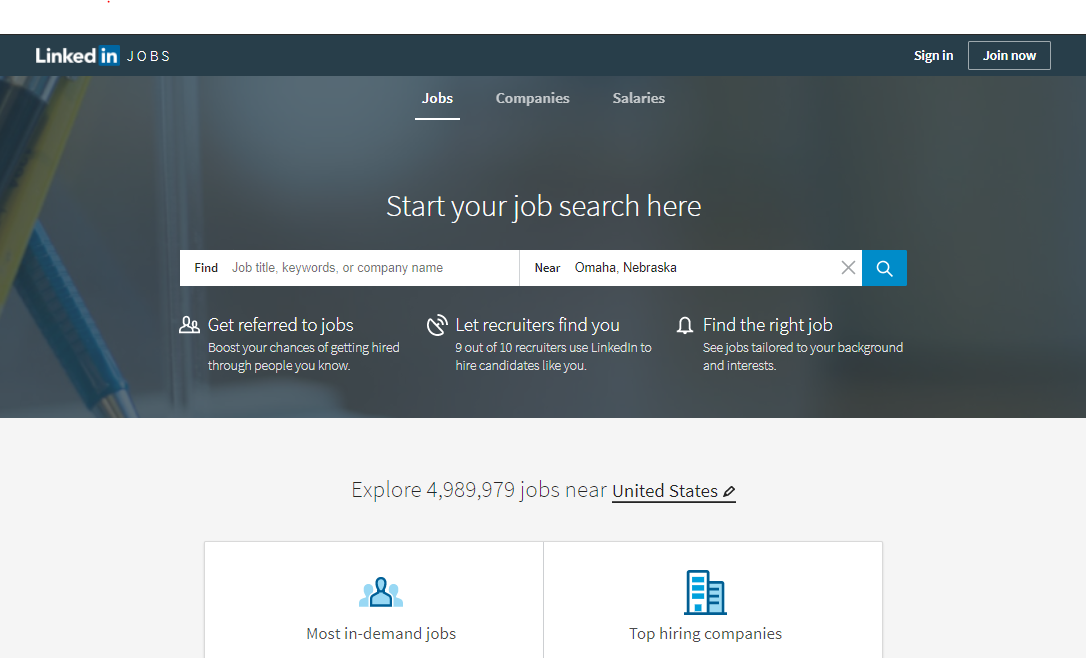
LinkedIn Jobs: It’s Not What You Know, It’s Who You Know

Guest Blog by the LinkedIn Careers Team – Article 1/5
LinkedIn Jobs: It’s Not What You Know, It’s Who You Know
Your soon-to-be awarded degree is likely a requirement for your dream job. But what is going to set you apart from everyone else who just graduated college with the same qualification? Your network! 

Harness the power of your network, providing you an edge in your job search
Do I even have a network?
LinkedIn is helping soon-to-be grads from around the country tap into their professional community—whether they realize they have one already or not.  LinkedIn has the power to uncover 1st and 2nd degree connections that will boost your chances of getting hired for highly sought-after jobs in a competitive market.  We found that 70% of people were hired at a company where they had a connection.
One of the easiest ways for students to make connections is through the LinkedIn Alumni tool. It’s a simple way to explore and create alumni connections from your school.  You can lean in on where they work now and in what cities. Simply search for your school and select “see alumni” to get started. You can access career paths for more than 23,000 colleges and universities worldwide.
Your First Job is a First Step!
Even if you land your dream job right out of college, the most successful professionals will warn you about complacency and how it may negatively affect your earning potential over time.  Searching for jobs can seem like a daunting task, especially right after you’ve just landed one. It’s ideal to continue interviewing and keep an open mind for your next career move.  LinkedIn has made it easier than ever to keep your options open even when you’re not actively seeking alternative employment.  It’s called Open Candidates and it’s as easy as updating your LinkedIn career interest preferences.  By flipping the switch, you privately signal to recruiters that you’re interested in new opportunities.
What Now?
Create or update your LinkedIn profile today.  There is no other place where you can access such a wide range of knowledge, skills and resources to help you reach your goals!

Federal Contracting Success Series

By Chemeketa SBDC

1. The Basics of Government Contracting
Topics:
• Who is GCAP and how can we assist your small business to succeed in government contracting
• Understanding the federal codes NAICS and PSC
• Finding leads FedBizOpps, FedConnect, GCOM
• Federal Acquisition Regulations (FAR)
• Federal contracting set-asides HUBZone, 8(a), SDVOSB, VOSB, WOSB, EDWOSB
• Registrations SAM and DSBS
Date: February 13, 2014
Time: 9 am to 12:00 pm
Instructor:  Marta Clifford
2. Understanding Federal and State Small Business Certifications
Topics:
• FEDERAL-Understanding Small Business Certifications
• Understanding Small Business Goals|• Small Disadvantaged Business (SDB) Certification & 8(a) Program
• Service Disabled Veteran Owned Small Business Certification (SDVOSB)
• Woman Owned / Economically Disadvantaged Woman Owned Small Business Certification
• HUBzone Certification
• Veteran Owned Small Business (VOSB) Certification
• STATE-ESB- Emerging Small Business, DBE- Federal Disadvantaged Business Enterprise
• WBE-Woman Business Enterprise, MBE- Minority Business Enterprise
• What are the benefits of state certifications?
• How do I market to state agencies? Do any agencies set aside contracts for certified small businesses?
• What are the requirements for state certification?
• How to leverage your small business certifications
Date: February 20, 2014
Time: 9 to 11 am
Instructor:  Marta Clifford
3. Marketing Materials and Methods
Topics:
• Capability Statement what it is, how to write one and how to use it to market to the Federal government
• Websites: why you should have one and what should be included on your website
• BUSINESS cards what do they say about your business
• GCOM GCAP’s Government Contracting Opportunities Match how to make it work for you.
The instructor will assist you with the form while in class.
Date: February 27, 2014
Time: 9 to 11 am
Instructor: Marta Clifford
Location: Chemeketa Center for Business & Industry
626 High Street NE, Downtown Salem
Cost: $10 each session or $25 for all three
Registration and Information: 503.399.5088

ANALYZE THIS: PART I. TOP SKILL #4 IN THE EYES OF EMPLOYERS IS ANALYTICAL REASONING AND CRITICAL THINKING

According to the annual survey of the American Association of Colleges and Universities, one of the top skills sought by employers is a combination of critical thinking and analytical reasoning. Our own sample of 162 employers who attended the Job and Internship Fair in March 2016 has confirmed this finding: 89% of them were looking for candidates with this particular skill combination. These employers range from not-for-profits and businesses to government agencies and international organizations in various fields and industries.
What do the employers mean by “analytical” and “critical thinking” skills? Why are these skills so much in demand? Do you possess these skills? If you do, how would you demonstrate that to your potential employer? What activities would help develop analytical reasoning and critical thinking?
Find out this and more in my two part blog.
First, what are we talking about?
We are talking about two higher order cognitive skills. Both analytical reasoning and critical thinking help understand the information, topic, problem, data, etc. They enable one to tackle a problem and make the right decision in a more efficient way. However, these skills are not identical.
Analytical reasoning refers to a thinking process that entails breaking the information (topic, problem, data, etc.) into the parts, researching, and evaluating each part separately, to comprehend the complexity of the topicdiscover connections, causes and effects, patterns, etc.  
Critical thinking refers to a thinking process that entails coming up with questions, searching for flaws or strengths, evaluating possible scenarios, etc., to interpret the complexity of the topic based on the facts as well as prior knowledge and experience. Critical thinking involves figuring out the “Why?” and “Why not?”
For sure, I have simplified the definitions of these skills — there is much more to both analytical reasoning and critical thinking.
Why do employers look for analytical reasoning and critical thinking skills? 
There are three major reasons:
First, employers look for these skills because of the complexity of the today’s workplace. Such complexity involves multiple sources of information, numerous stakeholders, complex challenges (economic, social, or political), increasing competition, etc.  To achieve success in whatever organizations do (development or implementation of products, programs, services, projects or policies, etc.) in such complex environments, employers need analytical and critical thinkers who can grasp individual components and their relationships, as well as probe deeper to figure out what is important and what is not.
Second, many organizations have concluded that the decentralized structure of decision-making help them work more efficiently. This means that junior staff get more responsibilities to make decisions, come up with solutions, and recommend innovations. All these tasks call for good analytical reasoning and critical thinking skills.
Finally, the employer prefers new hires who will be able to become effective in their job as fast as possible. This requires figuring out how the organization operates, your tasks and expectations, where to get mentorship, communication channels, etc. To master all this information fast, the new hire should use analytical reasoning to understand these important components and their relations at the new workplace.
Obviously, different fields and industries would require their own analytical approaches and modes of critical thinking. Research assistants in the science fields would use different inquiry methods than research assistants in policy organizations. Business professionals of various specializations would employ different analytical tools to meet their goals. Educators, media and communications specialists, program coordinators or event planners — all would use different analytical approaches, strategies and techniques in their day to day job. However, the principles of analytical reasoning and critical thinking are universal, which makes them essential transferrable skills.
Now, while I am working on my second part of this blog, I would like to suggest that you get busy as well.
First,  put on your analytical reasoning cap and analyze your academic, internship, leadership, work and other experiences to find suitable examples of utilizing analytical reasoning and critical thinking skills.  Think of specific projects and tasks that you have accomplished where you had to figure out components (factors, aspects, steps), research, and evaluate them separately and together. Think of any examples where you identified information gaps, flaws, or thought through and/or suggested possible alternatives.
Next, put on your critical thinking cap and try to assess your performance on these tasks and think of specific ways you can continue further developing these skills.