India and Norway strengthen partnership on blue economy

India’s Minister for Earth Sciences, H.E. Dr Harsh Vardhan, and Norway’s Minister for Climate and Environment, H.E. Mr Sveinung Rotevatn, opened the India-Norway Task Force on Blue Economy for Sustainable Development today. The two countries also commenced a new collaboration on Integrated Ocean Management & Research.


As a part of the Joint Initiatives, several projects on combating Marine Litter are already being implemented. Today, the two Governments signed a Letter of Intent confirming that they will develop a new framework for collaboration on Integrated Ocean Management and Research. The letter of intent was signed in the presence of Mr. Ratan P. Watal, Member Secretary, EAC to PM; H.E. Hans Jacob Frydenlund, the Norwegian Ambassador to India; Ms Nina Rør, Deputy Director General, Ministry of Climate and Environment, Norway; Mr. M. Rajeevan, Secretary, Ministry of Earth Sciences, Govt. of Indiaand Dr. Sumita Misra, Senior Adviser, EAC to PM.


“Managing the resources in the oceans in a sustainable manner is a matter of mutual interest and concern for both countries. The fact that Norway and India are commencing a new initiative is a signal that the cooperation between the two countries is growing even stronger, making the Indo-Norwegian Ocean Cooperation a key pillar in the bilateral relationship,” said Dr Harsh Vardhan at the signing ceremony.

In addition, Minister Rotevatn highlighted that “the Norway-India cooperation in the field of oceans is based on our shared interest in the blue economy and the sustainable use of marine resources, as well as a desire to advance scientific knowledge about our oceans. Norway and India are engaging on ways to ensure integrated ocean management at the government level. At the same time, Norwegian companies and private institutions are increasingly seeking opportunities with Indian counterparts, making India an even more significant partner for Norway.”

The India-Norway Task Force on Blue Economy for Sustainable Development was launched jointly by the Indian Prime Minister Mr Narendra Modi, and the Norwegian Prime Minister Ms Erna Solberg, during her visit to India in January 2019. The purpose of the task force is to develop and follow up joint initiatives between the two countries. The meeting on February 18th 2020 is the third meeting of the Task Force.

The strength and value added of the India-Norway Joint Task Force on Blue Economy is its ability to mobilise relevant stakeholders from both Norway and India at the highest level, and ensure continued commitment and progress across ministries and agencies.


**********

SNC

Services sector shows 23.69% growth in Rupee terms

The Special Economic Zones (SEZs) continue to take the lead in expanding the exports for the country. Even in the midst of volatile global economy, SEZs in India have shown resilience and have achieved 100-billion-dollar worth of exports in FY 2019-20,as on 17thFebruary 2020. It may be mentioned that SEZs achieved this land-mark of 100-billion-dollar worth of exports in 2018-19 in full financial year. A comparison of FY 2019-20 vs. 2018-19 upto February 17th is given below:

Exports in INR Terms (In Crores)

Export Segment FY 2019-20 (Upto Feb 17) FY 2018-19 (Upto Feb 17) Growth in Export Value (INR) Growth in Export Value (%)
Merchandise 2,97,557 2,86,553 11,004 3.84%
Services 4,04,264 3,26,825 77,439 23.69%
  7,01,821 6,13,378 88,443 14.42%

Exports in USD Terms (In Millions)

Export Segment FY 2019-20 (Upto Feb 17) FY 2018-19 (Upto Feb 17) Growth in Export Value (USD) Growth in Export Value (%)
Merchandise 42,702 41,471 1,231 2.97%
Services 57,891 47,217 10,674 22.61%
  1,00,593 88,688 11,906 13.42%

It is observed that while the services segment, constituting majorly of IT &ITeS services was driver of the export growth at 23.69 %.Therewas almost 4% growth in manufacturing segment also. This reflects overall expansion and interest in SEZs in the country.Numberof operational SEZs have grown to 241 as against 235 at the end of FY 2018-19.

Important sectors that saw healthy growth in this financial year include Gems & Jewelry (13.3%), Trading & Logistics (35%), Leather & Footwear (15%), Non-Conventional Energy (47%), Textiles & Garments (17.6%). Petrochemicals constitute a major segment of SEZ exports, howevergrowth was muted in this segment; which may be attributed to softening of global crude prices.

***

India to stop import of thermal coal from Financial Year 2023-24 – Pralhad Joshi

India will stop importing thermal coal from Financial Year 2023-24, said Union Minister of Coal and Mines Shri Pralhad Joshi while chairing “Chintan Shivir” – a two day brainstorming session. The session was organized to find a way forward for the coal sector – at Kevadia in Gujarat on 17th and 18th February 2020.

“The Shivir has engaged the participants in contemplating and deliberating to think out of the box to overcome various bottlenecks and provide innovative solutions to the Indian coal sector” Shri Pralhad Joshi said while interacting with the media on the sidelines of the Shivir.

Highlighting key takeaways of the Shivir, Union Coal and Mines Minister said that various ways and means were discussed with key stakeholders to achieve 1 billion tonnes (BT) coal production target by Coal India Limited (CIL) by Financial Year 2023-24. The Ministry of Coal will coordinate with Indian Railways and Shipping Ministry and enable CIL, Captive and Commercial Miners evacuate more coal by 2030.

Stressing upon the diversification in the Indian Coal sector, the Minister said that ideas have also been mooted that CIL could think of coming up with the state of the art pithead thermal power plants to transform it into an integrated energy company. It was also proposed that CIL could generate 5 GW of solar power by FY 2023-24 and could diversify into coal gasification with a target of 50 Million Tonnes by 2030 enabling a sustainable energy mix for the country. All these ideas will be deliberated, studied and examined for their feasibility in detail and based on that, they could be implemented.

The Minister further stressed upon the safety of workers in the Coal mining sector and has urged coal companies to achieve zero mortality rate by FY 2023-24.

He also announced that the Ministry of Coal will introduce a “Coal Minister’s Award” soon to recognize and appreciate best practices in coal production, productivity, safety, sustainability etc. by the coal companies.

The Minister further stated that drilling agencies like Central Mine Planning and Design Institute(CMPDI) and Geological Survey of India (GSI) should benchmark their operations to global standards by digitizing their databases. He added that it will enable better utilization in years to come.

During the two day Shivir, strategies were evolved for sustainable mining, environmental conservation, use of clean coal technologies and for extending helping hand to all stakeholders in and around coal mining areas to coexist in a mutually sustainable manner.

*****

Second Advance Estimates of Production of Foodgrains, Oilseeds and other Commercial Crops for 2019-20

The 2nd Advance Estimates of production of major crops for 2019-20 have been released by the Department of Agriculture, Cooperation and Farmers Welfare today. The cumulative rainfall in the country during the monsoon season (June to September, 2019) has been 10% higher than Long Period Average (LPA). Accordingly, the production of most of the crops for the agricultural year 2019-20 has been estimated higher than their normal production. These estimates are subject to revision on account of more precise information flowing over the time.


As per 2nd Advance Estimates, the estimated production of major crops during 2019-20 is as under:


  • Foodgrains  –  291.95 million tonnes. (record)
    • Rice  –  117.47  million tonnes. (record)
    • Wheat  –  106.21  million tonnes. (record)
    • Nutri / Coarse Cereals  –  45.24 million tonnes.
    • Maize  –  28.08 million tonnes.
    • Pulses  –  23.02 million tonnes.
    • Tur  –  3.69 million tonnes.
    • Gram – 11.22 million tonnes.
  • Oilseeds  –  34.19 million tonnes.
        • Soyabean  –  13.63 million tonnes
        • Rapeseed and Mustard – 9.11 million tonnes
        • Groundnut  –  8.24 million tonnes
  • Cotton  –  34.89 million bales (of 170 kg each)
  • Jute  & Mesta – 9.81 million bales (of 180 kg each)
  • Sugarcane – 353.85 million tonnes


As per Second Advance Estimates for 2019-20, total Foodgrain production in the country is estimated at record 291.95 million tonnes which is higher by 6.74 million tonnes than the production of foodgrain of 285.21 million tonnes achieved during 2018-19. However, the production during 2019-20 is higher by 26.20 million tonnes than the previous five years’ (2013-14 to 2017-18) average production of foodgrain.


Total production of Rice during 2019-20 is estimated at record 117.47 million tonnes.   It is higher by 9.67 million tonnes than the five years’ average production of 107.80 million tonnes.


Production of Wheat during 2019-20 is estimated at record 106.21 million tonnes. It is higher by 2.61 million tonnes as compared to wheat production during 2018-19 and is higher by 11.60 million tonnes than the average wheat production of 94.61 million tonnes.


Production of Nutri / Coarse Cereals estimated at 45.24 million tonnes, which is higher by 2.18 million tonnes than the production of 43.06 million tonnes achieved during 2018-19. Further, it is also higher by 2.16 million tonnes than the average production.


Total Pulses production during 2019-20 is estimated at 23.02 million tonnes which is higher by 2.76 million tonnes than the Five years’ average production of 20.26 million tonnes.


Total Oilseeds production in the country during 2019-20 is estimated at 34.19 million tonnes which is higher by 2.67 million tonnes than the production of 31.52 million tonnes during 2018-19. Further, the production of oilseeds during 2019-20 is higher by 4.54 million tonnes than the average oilseeds production.


Total production of Sugarcane in the country during 2019-20 is estimated at 353.85 million tonnes. The production of sugarcane during 2019-20 is higher by 4.07 million tonnes than the average sugarcane production of 349.78 million tonnes.


Production of Cotton is estimated at 34.89 million bales (of 170 kg each) is higher by 6.85 million bales than the production of 28.04 million bales during 2018-19.  Production of Jute & Mesta is estimated at 9.81 million bales (of 180 kg each).


Please click here for details


****


India to stop import of thermal coal from Financial Year 2023-24 – Pralhad Joshi

India will stop importing thermal coal from Financial Year 2023-24, said Union Minister of Coal and Mines Shri Pralhad Joshi while chairing “Chintan Shivir” – a two day brainstorming session. The session was organized to find a way forward for the coal sector – at Kevadia in Gujarat on 17th and 18th February 2020.

“The Shivir has engaged the participants in contemplating and deliberating to think out of the box to overcome various bottlenecks and provide innovative solutions to the Indian coal sector” Shri Pralhad Joshi said while interacting with the media on the sidelines of the Shivir.

Highlighting key takeaways of the Shivir, Union Coal and Mines Minister said that various ways and means were discussed with key stakeholders to achieve 1 billion tonnes (BT) coal production target by Coal India Limited (CIL) by Financial Year 2023-24. The Ministry of Coal will coordinate with Indian Railways and Shipping Ministry and enable CIL, Captive and Commercial Miners evacuate more coal by 2030.

Stressing upon the diversification in the Indian Coal sector, the Minister said that ideas have also been mooted that CIL could think of coming up with the state of the art pithead thermal power plants to transform it into an integrated energy company. It was also proposed that CIL could generate 5 GW of solar power by FY 2023-24 and could diversify into coal gasification with a target of 50 Million Tonnes by 2030 enabling a sustainable energy mix for the country. All these ideas will be deliberated, studied and examined for their feasibility in detail and based on that, they could be implemented.

The Minister further stressed upon the safety of workers in the Coal mining sector and has urged coal companies to achieve zero mortality rate by FY 2023-24.

He also announced that the Ministry of Coal will introduce a “Coal Minister’s Award” soon to recognize and appreciate best practices in coal production, productivity, safety, sustainability etc. by the coal companies.

The Minister further stated that drilling agencies like Central Mine Planning and Design Institute(CMPDI) and Geological Survey of India (GSI) should benchmark their operations to global standards by digitizing their databases. He added that it will enable better utilization in years to come.

During the two day Shivir, strategies were evolved for sustainable mining, environmental conservation, use of clean coal technologies and for extending helping hand to all stakeholders in and around coal mining areas to coexist in a mutually sustainable manner.

*****

Soil Health Card Day to be Observed Tomorrow

The Soil Health Card Day will be observed tomorrow. It commemorates the day Soil Health Card Scheme was launched by the Prime Minister Shri Narendra Modi on February 19, 2015 at Suratgarh, Rajasthan. Coincidentally, the International Year of Soils was celebrated the same year.

The objectives of the Soil Health Card (SHC) scheme are to issue soil health cards to farmers every two years so as to provide a basis to address nutritional deficiencies in fertilization practices. Soil testing is developed to promote soil test based on nutrient management. Soil testing reduces cultivation cost by application of right quantity of fertilizer. It ensures additional income to farmers by increase in yields and it also promotes sustainable farming.

The scheme has been introduced to assist State Governments to issue SHCs to all farmers in the country. SHC provides information to farmers on nutrient status of their soil along with recommendation on appropriate dosage of nutrients to be applied for improving soil health and its fertility.

Deterioration of soil chemical, physical and biological health is considered as one of the reasons for stagnation of agricultural productivity in India.

The challenges are enormous: Indian soils are working with negative nutrient balance to the tune of 12-14 million tons per year and the negative balance is likely to increase in future even after using the full potential of fertilizer industry. The Nutrient deficiency in India is in the order of:  95, 94, 48, 25, 41, 20, 14, 8 and 6% for N, P, K, S, Zn, B, Fe, Mn and Cu respectively. The limiting nutrients do not allow the full expression of other nutrients, lower the fertilizer response and crop productivity.

Improving fertilizer/nutrient use efficiency is important rather than applying more fertilizer in Indian agriculture. Nutrient use efficiency presently is low ranging from 30-50% (Nitrogen), 15-20% (Phosphorus), 60-70% (Potassium), 8-10% (Sulphur) and 1-2% (micronutrients).

The overall strategy for increasing crop yields and sustaining them at a high level must include an integrated approach for managing soil health along with other complementary measures which have a major impact on soil quality, plant growth, crop productivity and agricultural sustainability.

The Government under the component of Soil Health Management of National Mission for Sustainable Agriculture (NMSA) is promoting soil test based balanced and integrated nutrient management in the country through setting up/strengthening of soil testing laboratories, establishment of bio-fertilizer and compost unit, use of micronutrients, trainings and demonstrations on balanced use of fertilizers etc.

SHC scheme was launched during 2015 to evaluate soil fertility of every farm holdings across the country in every two years. During cycle –I (2015-17), 10.74 crore Soil Health Cards and during cycle – II (2017-19), 11.74 crore Soil Health Cards have been distributed to farmers. The Government has spent more than Rs.700 crores on the SHC scheme since its launch five years ago.

So far 429 new static Soil Testing Labs (STLs), 102 new mobile STLs, 8752 mini STLs and 1562 village level STLs have been sanctioned under the scheme since 2014-15. Out of these sanctioned labs, 129 new static Soil Testing Labs (STLs), 86 new mobile STLs, 6498 mini STLs and 179 village level STLs are already established.

The Government is also implementing the Nutrient Based Subsidy (NBS) scheme and promoting customized and fortified fertilizers for balanced use of fertilizers. The recommended subsidy rates (in Rs./Kg) fixed during the year 2019-20 for N, P, K & S are Rs.18.901, 15.216, 11.124 and 3.562 respectively. In order to overcome the deficiency of micronutrients in soil and to encourage their application along with primary nutrients, additional subsidy on Boron and Zinc has also been provided @ Rs.300/- and Rs.500/- per tonne respectively.

So far, 21 fertilizers have been brought under the NBS scheme. Presently, 35 customized and 25 fortified fertilizers notified by the Government are in use.

During 2019-20, a pilot project ‘Development of Model Villages’ has been taken up where soil samples collection has been taken up at individual farm holding with farmer’s participation instead of sample collection at grids.

Under the pilot project, one village per block is adopted for holding based soil testing and organization of larger number of demonstrations up to a maximum number of 50 demonstrations (1 ha each) for each adopted village.

So far 6,954 villages have been identified by the States in which against the target of 26.83 lakh samples / Soil Health Cards, 21.00 lakh samples have been collected, 14.75 lakh samples analysed and 13.59 lakh cards distributed to farmers. Apart from this 2,46,979 demonstrations and 6,951 Farmer Melas approved to States.

During the next five years, it is proposed to cover four lakh villages under individual farm holding soil sampling & testing, organize 2.5 lakh demonstrations, setting up of 250 village level soil testing labs, strengthening 200 soil testing labs with Intensively Coupled Plasma (ICP) spectrophotometer and promotion of micro-nutrients in 2 lakh hectare area.

Given that more than half of India’s 1.27 billion population depends on agriculture for their livelihood, the declining productivity of soil should be a matter of grave concern for all especially the fact that 86% of these farmers are marginal and small category.

Soil is a vital resource for achieving food, nutritional, environmental and livelihood security and thereby managing soil resource and conserving this vital natural resource base for future generations without any deterioration is the major challenge in 21st century.

Soil Health Card provides two sets of fertilizer recommendations for six crops including recommendations of organic manures.  Farmers can also get recommendations for additional crops on demand.  They can also print the card as their own from SHC portal. SHC portal has farmers database of both the cycles and is available in 21 languages for the benefit of the farmers.

Awareness among farmers is being stepped up by coordinated efforts of the Department of Agriculture Cooperation and Farmers Welfare and the Department of Fertilizers, backed by technology and network of Krishi Vigyan Kendras of Indian Council of Agriculture Research. Farmer can track their samples, print their Cards etc at Common Service Centres also at the Farmers Corner of www.soilhealth.gov.in and fulfil the mantra of Swastha Dhara to Khet Hara (if the soil is healthy, the fields will be green).

A 2017 study by the National Productivity Council (NPC) found that the SHC scheme has prmoted sustainable farming and led to a decrease of use of chemical fertilizer application in the range of 8-10%. Besides, overall increase in the yield of crops to the tune of 5-6% was reported due to application of fertilizer and micro nutrients as per recommendations available in the Soil Health Cards.

****

Election Commission of India holds discussions with Legislative Department on Pending Electoral Reforms

Election Commission of India today held detailed discussions with the Legislative Department of Ministry of Law and Justice on various issues of pending electoral reforms. Chief Election Commissioner Shri Sunil Arora, Election Commissioners Shri Ashok Lavasa, Shri Sushil Chandra and senior officers of ECI met Shri Narayan Raju, Secretary of the Department along with Mrs Rita Vashishth, Addl Secretary and other officers at the meeting.

While welcoming the Law Secretary and other officers of the Ministry, CEC Shri Sunil Arora thanked the Department for facilitating postal ballot facilities for PwD and electors of above 80 years and electors belonging to essential services by the recent amendment in the Conduct of Election Rules on ECI’s recommendation. Shri Arora also mentioned that there are more than 40 different proposals of electoral reforms which are pending since long and Commission is at present discussing some of these proposals. “Commission would like to have such meetings with Legislative Department at regular intervals to pursue all such pending proposals” he said.

Matters discussed during the meeting interalia included : More than one qualification date in an year for becoming Elector; Aadhar linkage with electoral roll; paid news and false affidavit as electoral offence/corrupt practice;  Print media and social media intermediaries to be covered under Section 126 of the RP Act 1951; Substituting the term ‘wife’ by ‘spouse’ in the RP Act 1951 to facilitate electoral registration to the spouse of women service officials in the category of service voter; amendment in Contribution Form. Secretary Legislative Department.  Shri Raju assured that they are already examining these proposals.

….

SBS/RKP/AC

Working Groups of Election Commission present their draft Recommendations to ECI

   Nine working groups of ECI officials and over 20 Chief Electoral Officers met over two-days’ long conference in New Delhi to deliberate on the learnings from the General Elections to Lok Sabha and other elections held recently.

In his message to members of the working groups and CEOs, Chief Election Commissioner Shri Sunil Arora complemented the officers of the nine working groups for their pithy and cogent recommendations.  He said that the Commission will look into the recommendations of the working group and after consideration and acceptance, the recommendations will be put up in public domain for getting views of the stakeholders.  CEC Sh Arora was unable to be physically present at the concluding session.

Addressing the officers, Election Commissioner Shri Ashok Lavasa advised the Officers to make implementable recommendations. He said that “while submitting their reports to the Commission, the groups should draw short term, medium-term and long term categorised actions for suggesting procedural or Rule or Law amending requirements.

Election Commissioner Sh Sushil Chandra said the ultimate aim of the exercise has to be making the registration and voting experience pleasant for the voters. Sh Chandra said while the Groups have labored to identify the existing gaps and way forward in electoral processes, CEOs should take due help of technology to streamline procedures for future. Sh Chandra cited the example of recent Delhi elections where Booth App, QR code slips facilitated the polling experience for all users.

The Commission had formed Nine working groups of CEOs and Commission Officers covering various  facets of election process including Electoral Roll issues, Polling Stations management, MCC, Voting processes & Materials inventory, Capacity Building, IT applications, Expenditure Management, SVEEP and Media interface as also Electoral Reforms.

The Commission thanked and congratulated all CEOs and all ECI officers for the in-depth deliberation and effort put in over months to arrive at these recommendations and action point.

Vice President calls for timely completion of all sports projects in Andhra Pradesh

The Vice President of India Shri M Venkaiah Naidu today advised the Minister of State (I/C) for Youth Affairs & Sports, Shri Kiren Rijiju to expedite various ongoing sports projects in Andhra Pradesh, including the construction of multipurpose Sports Complex at Mogallapalem village in Nellore district.

At a meeting held at Uparashtapati Bhawan, the Union Minister Shri Kiren Rijiju briefed the Vice President about the progress of sports project and said that some were being delayed for want of utilization certificates from state sports authorities.

The Vice President advised the Minister and Secretary of the Ministry to keep in touch with Andhra Pradesh Government and monitor progress of projects on urgent basis.

The other projects came up for discussion include Mini Sports Complex at Kommadi near Visakhapatnam, Astro-turf Hockey field at Kakinada, and Multipurpose Indoor Stadium in Vizianagaram District.

During the meeting, the Vice President telephonically spoke to Minister for Tourism, Culture and Youth Advancement of Andhra Pradesh, Muttamsetti Srinivasa Rao and enquired about the progress of various sports projects.

The Vice President asked Shri Rejiju to involve the private sector in a big way in promoting sports activities in the country. He wanted various Union Ministries to cooperate with the Sports Ministry and sponsor different sporting events.

Given the importance of sports and fitness in one’s life, Shri Naidu urged all universities and educational institution to accord high priority to sports.

He wanted all stakeholders to provide a massive thrust for the development of games and sports to enable India to achieve greater glory in various sporting events across the globe in the years to come.

The Vice President appreciated the Government for promoting sports by way of the Khelo India initiative and for promoting sporting culture in the country.

****

Jingle Bells

Jingle bells, jingle bells
Jingle all the way,
Oh what fun it is to ride
In a one-horse open sleigh,
Jingle bells, jingle bells
Jingle all the way,
Oh what fun it is to ride
In a one-horse open sleigh.
Dashing through the snow
In a one-horse open sleigh
Through the fields we go
Laughing all the way.
Bells on bob-tail ring
Making spirits bright
What fun it is to ride and sing
A sleighing song tonight.
Jingle bells, jing-jingle bells
Jingle all the way,
Oh what fun it is to ride
In a one-horse open sleigh, brruup
Jingle bells, jingle bells
Jingle all the way,
Oh what fun it is to ride
In a one-horse open sleigh.
Dashing through the snow
In a one-horse open sleigh
Through the fields we go
Laughing all the way.
Bells on bob-tail ring
Making spirits bright
What fun

Why Innovation Matters for Leaders in Today’s Economy

If you’re looking for a company that’s a model of innovation and social responsibility, look no further than Green Mountain Power.
Green Mountain Power (GMP) is recognized as a national leader in renewable energy, demonstrating how electricity can be generated, stored, and distributed in ways that are clean, cost-effective, and more resilient to climate change and outages.
Consider these innovation successes:
  • GMP became the first utility in the world to receive B-Corp Certification in 2014.
  • It became the first utility to offer customers Tesla’s Powerwall home battery when it was released in 2015. GMP now uses a network of stored energy in customers’ homes to help lower costs for all customers.
  • GMP’s Stafford Hill Solar Farm is the first known solar storage project in the country repurposing brownfield land once used to bury waste for generating solar energy.
  • GMP was the first utility to offer customers help in going off grid.
  • GMP was named to Fast Company’s list of the world’s Most Innovative Companies three years in a row in 2017, 2018, 2019.
We talked to Josh Castonguay, Vice President, Chief Innovation Officer of GMP, about why innovation for leaders and companies is more important than ever.

How has innovation helped GMP go from a relatively small utility to becoming a national leader in innovation?

Like many things, it starts with leadership and a willingness to try and move quickly in the innovation space.  When you’re talking about innovation and energy, you can’t take six years to develop something.
For example, back in 2006 or so, solar power wasn’t as big as it is today. I was always interested in solar, and I mentioned to CEO Mary Powell an idea about building a solar project. She said, “Let’s do it.” So we built a solar array in Berlin. We already owned the land and it was in an industrial part of town, so it only took about 10 months from start to finish. Once we set our mind to it, we did it.

Do you think a company’s culture plays a part in being innovative?

It’s totally about the culture. You can have the best laid strategy on the planet, but if your company or organization has a dysfunctional or toxic culture, you won’t get anywhere. 
We’re so lucky to have Mary Powell and a great team here that is creative. When we start pushing big ideas and acting on them, they gain a lot of attention.

What are some effective ways professionals can identify innovative opportunities in their company?

I think it’s more about listening day to day. One of my favorite ideas came from a team member who is a field designer in southern Vermont. We were talking about an old distribution line that went through Emerald Lake State Park in East Dorset, an area that she is familiar with. The park had rest room facilities served by an electric line stretching a half-mile through swamps, marshes, and heavily forested terrain that needed to be replaced.
She suggested we take the line down and put in solar battery. That’s just what we did.  The park went off-grid in the summer of 2017. It saved GMP customers the cost of maintaining the power line, it provides the power needed, and it keeps line workers safer from having to repair the old lines feeding the park.

It sounds like that was a brilliant and simple solution to something that could have been more complicated.

Exactly. This is an example of listening to your team members and to those pain points they might not even know they’re conveying. I love the saying, “Think big, start small, and scale fast.”  I always tell people I’ll take creativity over extreme technical aptitude any day.

What are the skills needed to disrupt the business-as-usual approach?

Personally, I think you have to be a persuader, and you have to be passionate. It’s already hard to push these ideas if they’re going to disrupt business, so you have to be confident and passionate about what your idea is. If you’re self-aware enough to know you don’t have skills to persuade others, team up with someone who does.
The hardest part about taking a new approach is sticking with your idea because you’re always going to get push back—some constructive and some not. It’s all about perseverance and working with team members who can build on each other’s ideas.  

Can you talk about some of your own professional growth in the company, and how you approach opportunities for innovation?

I started as engineer at GMP in 2003. I was always interested in pushing the envelope on anything. One of the greatest pieces of advice I ever got was when I was starting college at the University of Maine. My uncle said, “Don’t expect to walk out of college and be an expert in anything. College teaches you how to learn.”
It’s true. What has been way more important, I’ve learned, is knowing how to find the information I need to pursue something. When I started at GMP, I knew some engineering and I introduced ideas, and I just kept reading and digging in. My approach is about not taking no for an answer and just pushing through.

Why is innovation so important in today’s economy?

From the energy space, it’s very clear to everybody that we have a serious issue with the planet. We have to innovate because, from an energy and climate standpoint, we have no choice.
Even if you’re not in the energy field, there’s a lot about innovation that can be tied to the climate. We have to find new ways to do things because the status quo is not going cut i

How to Protect your Startup from Crime

Protecting your business from crime is essential for all enterprises, no matter how long they have been operating or at what scale. With the rise of cyber crime alongside regular criminal activity, as well as white-collar crime, there is a lot to consider when setting up preventative measures for your new startup.
In addition to protecting your business interests – including stock, premises and business assets – staff welfare and safety must also be considered. Creating a successful strategy, therefore, requires planning, as well as execution, and this guide is designed to help protect your startup from the beginning.
Begin with a risk assessment
Risk assessments are common in business, and while they are usually completed most frequently in the field of health and safety, adopting this strategy when beginning your security setup is a useful and effective starting point.
Using the five steps to risk assessment within a security context is an extremely helpful way to first consider the potential risks your startup may be susceptible to. To some extent, risk assessment requires a little creative thinking – try to consider broadly the various forms of crime that are out there. Communicating with other businesses may be a good way to think outside the box, and get a clear idea of the various potential risks.
Protect your premises and assets
Having completed your risk assessment you can then start considering your security setup. An effective security strategy requires installing the right security systems for your specific requirements. While fanciful face recognition tech and Chamber of Secrets-style vaults might be preferable, they’re probably unaffordable (and maybe a little unrealistic) for a startup!
The security systems you do opt for need to be realistic and practical, as well as affordable. They should act as both a deterrent to potential criminals, and as a protective measure should crime occur. Selecting the right systems from the get-go is essential.
Effective staff policies
Having the most effective security equipment in the world is one thing, but not backing it up with a well-measured and carried out policy makes the investment somewhat redundant. A successful company policy should ensure consistent regulations and standards across the board.
Make sure that employees understand what is expected of them through a code of conduct, and what can happen should they commit white-collar crime against your startup. Consistency is the key!
Setting up for cyber crime
Cyber crime is an increasing concern for businesses – both more established, and startups – due to the convenience and anonymity afforded by the internet. When setting up a new business venture, particularly a digital company, it is increasingly important to be aware of the types of cyber crime that exist, in order to take effective preventative measures.
It is essential to be both aware of cyber crime yourself, and to educate your staff on how to prevent it occurring. This should begin through your staff policies and regulations – you need to include a social media policy, both to prevent poor conduct, as well as potential cyber crime.
As well as staff policies, you need to protect your startup from external threats. Police your internal networks thoroughly, conduct regular audits, and make sure portable devices (as well as desktop computers) are scanned. Checking out who you are working with, such as external partners and suppliers is also important in safeguarding your business from cyber crime.
Monitor your security measures as your business grows
As well as ensuring your security measures are effective from the beginning, it is essential to consistently assess and update your procedures as your business grows, in order to stay well protected from crime.
This can be done through regular risk assessments, external surveys and audits, and consistent reviews of your policies and systems. As your business grows, new crime threats can emerge, so regular reviews are an important part of ensuring ongoing protection for your startup against crime.

Waste to Compost plant running in Delhi at Model Town

By SN Sharma

Waste to Compost plants play a crucial role in addressing the challenges of urban waste management by converting organic waste into nutrient-rich compost. Composting is an environmentally friendly process that involves the decomposition of organic waste materials under controlled conditions, resulting in a valuable soil conditioner.

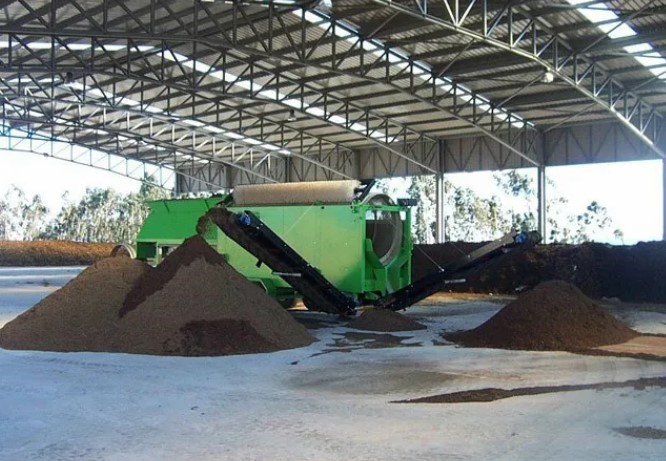
Waste to Compost plant in Model Town, it is likely designed to handle organic waste generated by households, markets, and other sources in the locality. The process involves the collection of organic waste, including kitchen scraps, garden waste, and other biodegradable materials. This waste is then transported to the composting facility.

The composting process typically includes several stages:

  1. Segregation: Waste is sorted to separate organic matter from non-biodegradable items.
  2. Shredding: Large pieces of organic waste may be shredded to facilitate faster decomposition.
  3. Aerobic Decomposition: Organic waste undergoes aerobic decomposition in the presence of oxygen. This process is usually managed in windrows or using mechanical turning systems to ensure proper aeration.
  4. Maturation: The partially decomposed material is allowed to mature, enhancing its nutrient content and stability.
  5. Screening: The final compost undergoes screening to remove any remaining impurities or oversized particles.

The resulting compost is a valuable resource that can be used to enrich soil fertility in gardens, parks, and agricultural fields. It helps in reducing the burden on landfills, mitigating greenhouse gas emissions from organic waste decay, and promoting a circular economy.

Local communities often benefit from Waste to Compost plants by having a more sustainable and eco-friendly waste management system, reducing the need for landfill space, and creating a valuable resource from waste. Additionally, these initiatives contribute to the overall environmental well-being of the region.

If you are specifically looking for up-to-date information on a Waste to Compost plant in Model Town, Delhi, I recommend checking with local authorities, municipal bodies, or official sources for the latest details on such facilities in the area.