

Month: February 2020
Bloom\’s Taxonomy with verbs
Bloom\’s Taxonomy with verbs
Bloom’s Taxonomy Across Stages of Language Acquisition
Bloom’s Taxonomy Across Stages of Language Acquisition
|
Levels of thinking and language functions
Level of thinking and academic language move from concrete recall to more complex and more abstract in any undertaking.
|
Language use across stages of second-language acquisition
Moves from simple to complex in grammatical tenses, forms, vocabulary, etc.
|
||||
|
Preproduction:
(Level 1)
Nonverbal response.
|
Early Production:
(Level 2)
One-word response.
|
Speech emergence:
(Level 3)
Phrases or short sentences.
|
Intermediate fluency:
(Level 3)
Longer and more complex sentences.
|
Advanced fluency:
(Level 3)
Near native-like.
|
|
|
Creating
Appraise, argue, assess, choose, compare, defend, estimate, judge, predict, rate. select, support, value, evaluate
|
Teacher mismatches animal with its environment and asks: Is this the right environment? Find the right environment.
|
What are the best materials for the duck to build a nest?
|
What makes a good home for a bear? (Examine settings and evaluate: “A cave makes a good home.”)
|
What would happen if you put a worm in the desert?
|
Recommend a different environment for a mother duck to raise her ducklings. Defend your choice.
|
|
Evaluating
Arrange, assemble, collect, compose, construct, create, design, develop, formulate, manage, organize, plan, prepare, propose, set up
|
Point to the animals that live in the soil.
|
Say the names of the animals that live in the soil.
|
How could you change a scorpion so it could swim?
|
What would a camel need to survive in the desert?
|
How would you protect the wildlife in a forest where hiking was popular?
|
|
Analyzing
Analyze, appraise, calculate, categorize, contrast, criticize, differentiate, discriminate, distinguish, examine, experiment, question, test
|
Show me an animal that cannot lie in the forest.
|
Name the parts of a fish that help it live in the water.
|
How are raccoons and squirrels the same? How are they different?
|
How does a bear use its claws to catch fish? Gather berries?
|
Why do you think a bear hibernates in winter?
|
|
Applying
Apply, choose, demonstrate, dramatize, employ, illustrate, interpret, operate, practice, schedule, sketch, solve, use
|
Show me what would happen I we put the fish in the desert.
|
Tell me what would happen if we put a fish in the desert.
|
How could you change the body of a fish to make it fly?
|
How would you capture and transport scorpions to a zoo?
|
How would a deer camouflage itself in the forest in winter? In the desert?
|
|
Understanding
Classify, describe, discuss, explain, express, identify, indicate, locate, recognize, report, restate, review, select, translate
|
Show me where a deer lives.
|
Tell me which animals eat meat.
|
Why is a toad the color it is?
|
Explain how a snake catches its prey.
|
Why do fish need gills to live in the water? How do gills work?
|
|
Remembering
Arrange, order, define, duplicate, label, list, name, recognize, relate, recall, repeat, reproduce
|
Where is the raccoon?
|
What is the name of this animal?
|
What are the body parts of a turtle?
|
Give the definition of a mammal.
|
Tell me everything you know about a clam.
|
Source: Adapted from Bloom’s Taxonomy, Halliday’s language Functions, and Krashen’s Stages of Language Acquisition. Contributors: Mike Gaddis and Cynthia Bjork. As shown on the Journal of the National Staff Development Council, Winter 2008.
The End of Life Doula Movement

Doulas have traditionally supported women during childbirth, but recently there has been a surge of interest in learning how to support people at the end of life as well.
UVM’s fully online End of Life Doula Professional Certificate program helps caregivers prepare to meet the growing demand for end of life support as people live longer.
End of Life Doula s support clients with individualized, compassionate care in a number of ways including emotional, spiritual, informational, and physical support, which greatly helps to lower stress levels, aid in comfort, and promote personalized, even positive dying passages for clients and their loved ones.
s support clients with individualized, compassionate care in a number of ways including emotional, spiritual, informational, and physical support, which greatly helps to lower stress levels, aid in comfort, and promote personalized, even positive dying passages for clients and their loved ones.Francesca Arnoldy, lead instructor for UVM’s End of Life Doula certificate program, recently wrote an article for Today’s Geriatric Medicine magazine highlighting of the many benefits of end-of-life care to the caregiver, patient and famil
How To Build Your Learning Skills The Right Way
It’s never too late to learn. We learn things our whole life, but we don’t think about how we do that. Not surprisingly, only a small amount of everyday skills is turned into long-time habits. Is there a way to become a more efficient person? How to develop necessary learning skills and make them root?
Answers to those questions you can find in this article.
Plans like “read more,” “get up early” or “learn something new” are too vague and uncertain. Specify what you want to achieve. Give your goal a form of concrete, measurable and controlled action. For example: “every month to attend a conference in an interesting to me field,” “read 50 books related to my occupation for a year” or “spend two hours every Thursday, reading articles that were kept in bookmarks during the week.” A defined goal will stimulate you to act.
- Take time to think big
In the constant chaos of everyday life, there is frequently no time to think about global life goals. Where do you see yourself in five years? How could you develop your skills to make your work more productive, and yourself – a valuable specialist? We are all different, someone is enough half an hour for such reflections, and someone prefers to think about problems of a global scale, having gone on a long bike trip. If you enjoy being alone, take this time to review your skills and aspirations. You may also go a completely different way and discuss everything with colleagues or with old friends, you trust.


- Ask yourself: Whom do you envy?
Envy is a negative emotion, but it can serve as an excellent stimulus for self-development. If you envy someone, then this person has something that you really want to have. To whom do you envy: your friend, who is constantly traveling, your dad who doesn’t miss any of the mornings runs or your colleague, who successfully passed the MBA program. You don’t envy people; you envy their achievements. Envy helps to choose the direction of personal growth if you treat this emotion wisely.
- Control your habits
Control has a strange power over us. Studies show that by simply controlling our behavior, we begin to perform tasks much faster. It does not matter what exactly it will be: counting the steps from the apartment to the nearest store or the number of phone calls made per day. The same can be applied to how frequently we look at teaching materials or devote time to practice a new skill. Watch how the new habit begins to develop, and it will help you to keep growing.

- Set up a learning schedule
The goal, formulated as “to study something of this sort,” will always be somewhere at the end of your to-do list. Of course, this task is essential, but there is no definite deadline for it, and we always can postpone it for another day. That’s why it’s helpful to create a plan for building new skills.
And, don’t forget that you have to form skills, which will bring you benefits: strengthen your temper, broaden the mind horizon, and train professional features. When we do something for our good, the chances of successfully forming a new skill are doubled.
When it’s time to ask for a raise
Asking for a raise certainly falls into the category of things outside the comfort zone: it may be weird, difficult, and intimidating. Addressing a boss for a salary inquiry has always been one of the things that employees fear because, simply saying, some bosses may face it with a negative attitude or perceive in a wrong way. However, in many cases, going outside the comfort zone is a good thing because it provides new opportunities and allows to avoid wasting time. Are you ready to step out?
You may think “what will possibly happen if I do not ask for a raise this time and wait for another opportunity?” Well, most people who think that way postpone asking for weeks and even months and eventually abandon this idea. As the result, they lose the chance to get compensated for their good performance that may be very important for the overall success of the organization. That’s not the way to build a successful career, agree?
In contrast, people who step out of the comfort zone and ask for a raise do the right thing and succeed. It’s not done that easy: to avoid feeling awkward when the boss decides to ask why he or she should do it, there are some answers that need to be prepared. The infographic from the team of Aussiewriter has a series of smart questions with answers you can select to make the decision whether to ask for a raise today, next week, or later.
It will ask you the questions that will show your worth as an asset to your organization and justify the decision to ask or not to ask. Just start at the bottom and work your way through to the three outcomes: “Stay Cool,” “Take it, it’ all yours!” and “Top yourself!” By using the information provided by this infographic, your voyage beyond the comfort zone may not be so intimidating.
Making a Career in the Arts and Entertainment Industry
We all know that landing a career in the entertainment industry is far from easy, and the industry is hardly known for its diversity. Up and coming film and arts students face many hurdles, which can often keep aspiring talent on the outskirts of the industry.

Careers in the entertainment industry can be even harder for minority demographics. According to a report released last year by the Media, Diversity & Social Change Initiative (MDSC), of the top 100 movies of 2016, just 31% included a female character with a speaking role. Only 13.6% of speaking roles in films went to a black actor, 5.7% to an Asian actor and only 3.1% of Hispanic actors were lucky enough to land a speaking role in 2016’s blockbusters. 2.7% of characters with a speaking role were depicted as having some sort of physical or mental disability, and only 1.1% were depicted as being gay, lesbian or bi-sexual. There were zero speaking roles for transgender characters amongst all 100 films.
This isn’t because there are no minority or LGBTQ actors looking for roles. It’s because the traditional talent scouting process leaves a lot to be desired, disproportionately favoring managed talent. That’s those entertainers lucky enough to have landed a deal with an agency or agent. It’s a problem occurring on a global scale and is particularly important to drama, music and acting graduates.
For years getting into the entertainment industry has been all about who you know, not what you know. But a subtle shift has been taking over. Thanks to new technology and platforms like YouTube, SoundCloud and Special Guest App, some lucky performers have been able to break out into the mainstream.
YouTube, founded by Jawed Karim and Chad Hurley, has given everyday people the chance for a career in entertainment. Special Guest App, the brainchild of Hollywood actor and comedian, Damon Wayans Jr. and successful entrepreneur, Kristopher Jones also democratizes the process of finding talent for live entertainment. “I grew up in LA, and have been in and around entertainment my entire life. My experience with how hard it is to get discovered in Hollywood was the basis for Special Guest App.” The platform offers a way for people to hire live entertainment, from kid’s entertainers, circus performers and dancers, to actors, comedians, singers and DJs.
Likewise, Instagram now also provides a platform for aspiring arts students, including photographers, videographers, illustrators and painters. The platform exemplifies democratization of talent scouting for artistic talent. Future arts students chasing a career in the industry must make use of new technologies and platforms, rather than relying on traditional means.
3 New Career Paths in 3D Printing
3D printing is an amazing innovation that has developed quickly in recent years, with this technology being applied in numerous fields. The potential of 3D printing could be a real game-changer for many industries, from medicine to construction, and even food and leisure.
As this technology continues to develop and become a key factor in many industries, new career opportunities will appear too. Here are three new career paths that have arisen thanks to 3D printing.
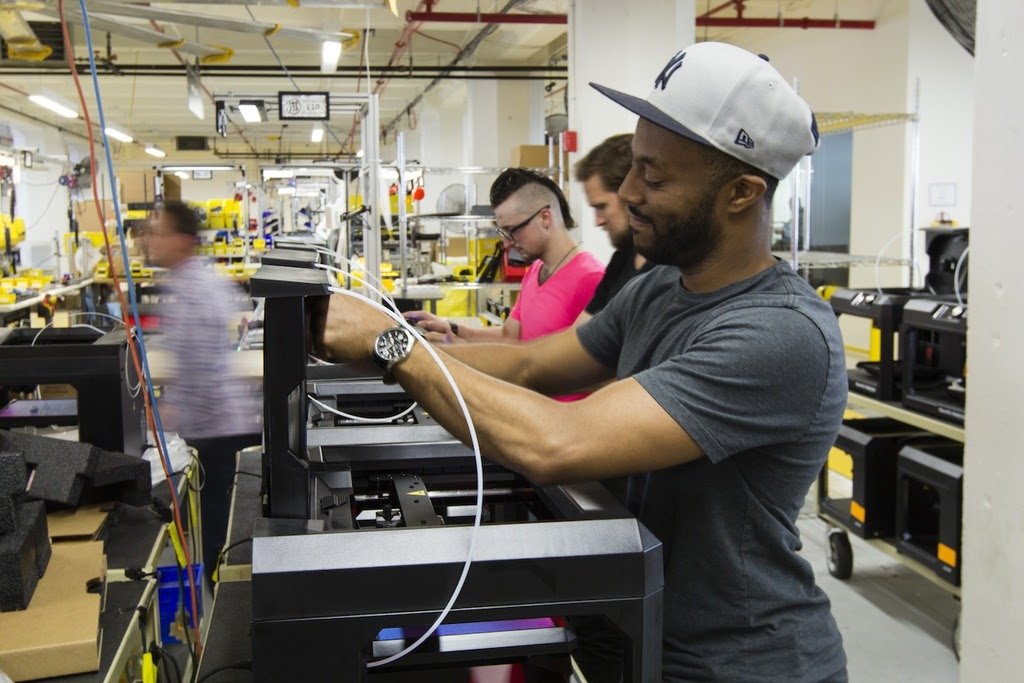
- Medicine and healthcare
By 2025, scientists expect to be able to 3D print human organs by combining DNA from the patient with modified stem cells. This is bioprinting, a concept that first emerged in the early 2000s, with the discovery that living cells could be sprayed through inkjet printers.
3D bioprinting is set to have a huge impact on the medical industry, providing a viable answer to growing waiting lists for organ transplants, which is estimated to be the leading cause of death in the US.
There are also various research programmes working on other applications for 3D bioprinting, including a firm in Michigan who are developing implants for broken bones. This technology could also have a big impact on dermatology, with current research looking at printing skin directly onto the surface of the body.
Expect to see plenty of 3D printing career paths opening in healthcare over the next 5-10 years.
- Beauty and skincare
While a little more left field, there are also opportunities for beauticians in 3D printing, with the technology being explored in this industry too.
One example of this technology, is the Soap01, which is the first 3D printer to print in soap. This printer uses soap scraps as cartridges, printing customisable soap designs and simultaneously upcycling wasted materials.
3D printers are also being developed for makeup, with the MODA by Foreo allowing the user to select a makeup look from a catalogue of images, before printing directly on to your face. The MODA scans your face, and applies makeup in three layers in as little as 30 seconds.
While there is no launch date announced for this technology yet, such a development potentially opens up a host of new career opportunities.
- Construction and engineering
Perhaps the industry with the most to gain from 3D printing, construction and engineering are set to be radically changed by this technology.
Being able to 3D print parts means a new way of thinking about engineering, which will affect how many products are designed and built. By 2020, it is expected that more than 100,000 airplane parts will be 3D printed, making planes lighter and more efficient.
While this technology continues to develop, and is not without flaws, 3D printing opens up new options for prefabricated building too. By being able to essentially print building parts, construction can become a faster, cheaper, and more efficient job, with Dubai aiming for 25% of its new buildings to be 3D printed by 2030.
The growth of 3D printing across industries has opened up various career paths, with this technology presenting a host of potential employment opportunities in the future.
Jingle Bells
Jingle Bells
Jingle bells, jingle bells
Jingle all the way,
Oh what fun it is to ride
In a one-horse open sleigh,
Jingle bells, jingle bells
Jingle all the way,
Oh what fun it is to ride
In a one-horse open sleigh.
Jingle all the way,
Oh what fun it is to ride
In a one-horse open sleigh,
Jingle bells, jingle bells
Jingle all the way,
Oh what fun it is to ride
In a one-horse open sleigh.
Dashing through the snow
In a one-horse open sleigh
Through the fields we go
Laughing all the way.
Bells on bob-tail ring
Making spirits bright
What fun it is to ride and sing
A sleighing song tonight.
In a one-horse open sleigh
Through the fields we go
Laughing all the way.
Bells on bob-tail ring
Making spirits bright
What fun it is to ride and sing
A sleighing song tonight.
Jingle bells, jing-jingle bells
Jingle all the way,
Oh what fun it is to ride
In a one-horse open sleigh, brruup
Jingle bells, jingle bells
Jingle all the way,
Oh what fun it is to ride
In a one-horse open sleigh.
Jingle all the way,
Oh what fun it is to ride
In a one-horse open sleigh, brruup
Jingle bells, jingle bells
Jingle all the way,
Oh what fun it is to ride
In a one-horse open sleigh.
Dashing through the snow
In a one-horse open sleigh
Through the fields we go
Laughing all the way.
Bells on bob-tail ring
Making spirits bright
What fun…
In a one-horse open sleigh
Through the fields we go
Laughing all the way.
Bells on bob-tail ring
Making spirits bright
What fun…
7 Simple Ways to Maximize Your Job Search Productivity

So, you’re out there trying to get your first job. The problem is, since you don’t really have anything in the way of experience, getting a job can be a lot easier said than done. But, you need experience to get experience, right? Well, not necessarily. There are a lot of companies out there that really want to hire students and new grads. The trick is to find these companies. This means that you need to step it up and take your job search to the next level, unless you want to end up schlepping burgers for the rest of your life. Let’s take a look at seven ways that you can maximize your job search productivity.
Try Time Tracking
Once you have decided on the hours in the day that you are going to be job hunting, you need to make sure that you are sticking to that schedule. One way to do this is to start using time tracking software like Time Doctor. This is going to help you stay on track, and it will even show you where you are wasting time so you can start using your time more wisely and get that job you really want.
Get on LinkedIn
These days, you really do need to be on LinkedIn when you are searching for a job. In fact, more than 90% of job recruiters use LinkedIn as one of their main search tools when looking for new employees. If an employer is looking for someone with your qualifications, and in your area, if you have a profile, they are going to find you.
Start with a Plan
If you are just applying for any old job, chances are that all you are going to end up with just any old job. You need to focus on the type of work that you want to do, and find the companies that are offering jobs that you are interested in. Also, you need to create a schedule. Set aside certain times during the day to concentrate on your job search, and only concentrate on that.
Send Thank-You Notes
After each interview, take the time to write and send a personalized thank-you note to the interviewer. This is not only going to help keep you fresh in their minds, but also to show that you are conscientious, and that you really want the job. Those who send thank-you notes often get hired over those who do not.
Create Your Cover Letter(s)
Make sure that you have a generalized cover letter ready to go at all times. If you are applying for different types of jobs, it is a good idea to have several cover letters ready, so you have one for each job type. You can change a few things for each job you apply for to make them specific for those particular jobs. Keep your cover letters organized so you always use the right one for the right job.
Don’t be Afraid to Change Course
It may be that you have concentrated on one area for your job search, and you have spent a lot of time and energy (and perhaps even a lot of money) on your search. This doesn’t mean that you have to continue along this line. It may be that there is a better job in a different area, and you won’t even know about it if you don’t change course.
Get Out into the Real World
A lot of people make the mistake of only using the Internet to find employment. Sometimes, the best way to find a job is to get out there and pound the pavement. Knock on a few doors, ask for applications or to leave your resume, etc. Don’t make the mistake of only traveling down one job search road.
Delegation Vital to a Business’ Growth
One of the harder chores that a business owner faces is delegation. While there may be immediate gratification when someone takes a task off your overwhelmingly full plate, the fact is that once you feel the relief, you may very well begin to question whether it has been done as well as you expected, as fast as you could do it, or even done right.
No one can do everything alone. We know that intellectually. But whether we can accept it personally is another step. Delegation is vital to the growth of a business. It is also important in developing the sills and abilities of your staff. It allows you to groom your staff for higher-level positions and to take increasing important roles in decision-making.
While delegation, the assignment of part of your work, is the reason you add staff, often we don’t fully understand that with delegation also must come authority and accountability. Three steps are generally needed for the delegation process to be successful.
First you must assign responsibility to someone. You must ask someone to do a job or perform a task.
Second, you must give that person the authority, the power, to accomplish the task or job. This may include the power to get specific information, order supplies, authorize expenditure and make some decisions.
Finally, you must create accountability, the obligation to accomplish the task. (Note that while you can create accountability – you cannot delegate it away. You remain accountable to your business. If your staff fails to complete the job – you are accountable.)
Communication, good communication, is the key to successful delegation. First you have to know what you want to accomplish and you need to clearly communicate the task or project. If there are any absolutes you also need to let you staff know what they are and how these absolutes must be accomplished. You need to think of the tools (including information) the person will need and let them know where they can access these tools. You should be very clear about the expected outcomes, deadlines and deliverables.
And then you need to get out of the way. And remember, it is always a learning process. If you cannot afford mistakes, you cannot avoid training. Set your staff up for success, not failure.
Networking: As bad as a trip to the DMV?
The word networking tends to evoke strong and oftentimes negative reactions in both students and experienced professionals. As DU’s Alumni Career Advisor, I can personally attest that networking generates a negative response on par with finding out you have to renew your license at the DMV, getting your wisdom teeth removed or filing your taxes.
I’ve started keeping a running list of my clients’ viewpoints of networking. Some direct quotes include:
- “Networking is kissing other people’s butts.”
- “I don’t like networking…it feels like the relationship is transactional and I am trying to gain something from those with whom I am interacting with.”
- “The worst part about networking is having to introduce yourself to strangers and make small talk when you really don’t want to… especially when you’re an introvert. It’s painful!”
- “I want to network, but I don’t feel like I have anything to offer anyone.”
I find this rising sentiment troublesome as developing a meaningful network is one of the single best investments you can make in your professional success. In addition, all of these comments came from intelligent, talented and capable professionals whom I believe in and deeply respect. What does it say if these individuals feel like they shouldn’t or can’t network?
According to leading research:
- Over 70% of all jobs are filled through networking[i]
- Networking provides access to knowledge, expertise and influence[ii]
- Individuals with strong networks experience higher performance ratings, faster promotions and earn more money[iii]
On a personal level, I also find these negative viewpoints unfortunate. Research aside, networking has been one of my richest professional experiences because it involves surrounding myself with people who support and inspire me. The average career lasts 40+ years. That’s a long time to go it alone.
Defining Networking
When I consider these polar opposite viewpoints of networking, they appear to be stemming from differences in definition. For the purposes of this post, I’ll be using the following definition:
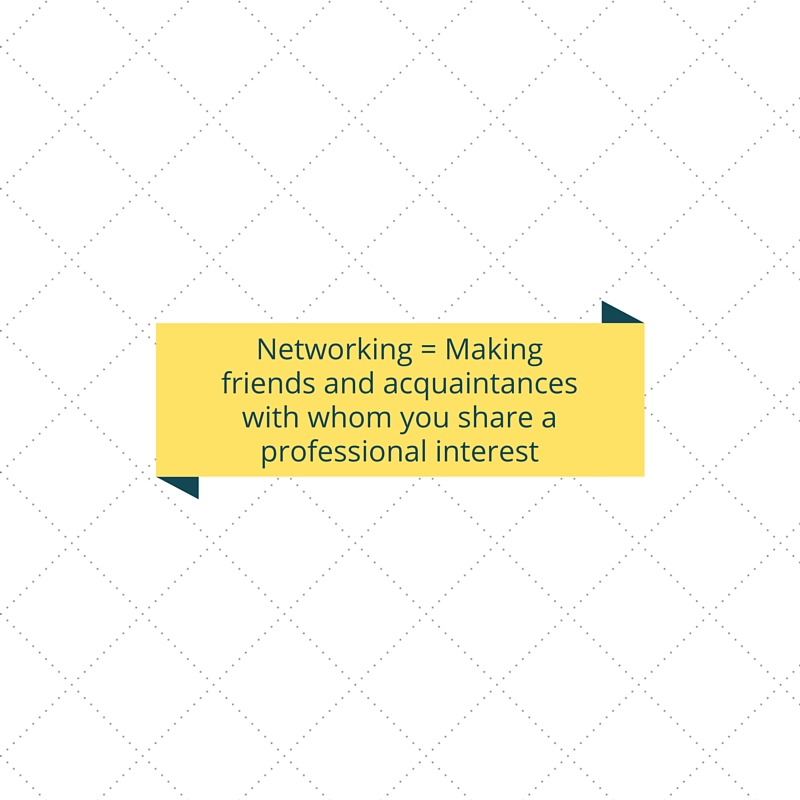
Networking = Making friends and acquaintances with whom you share a professional interest
There are two types of networking: Short-Term Networking and Long-Term Networking
Short-Term Networking: Developing relationships with professionals based on a desired outcome or motive (i.e.) job, sale, etc. This is networking because you need something.
Short-term networking is often time-bound. For example, a job is posted and the application closes tomorrow. You don’t know anyone at the company. You have a hard deadline to find a contact and while, in the ideal world you would be able to build a long-term relationship before you reach out, circumstances do not allow you to invest the needed time.
If short-term networking was a relationship style, at its best it would be your most memorable summer fling. At its worst, a tacky booty call.
Long-Term Networking: Developing relationships with professionals you admire regardless of whether they can help you. This is networking without keeping score.
Long-term relationships require a longer time investment…I know this is shocking. Although they develop slowly and require patience, these relationships can evolve into life-long collaborations and partnerships (did you know that the Founders of Patagonia and the North Face were BFFs????). Long-term networking also serves as the foundation for mentor relationships.
If long-term networking was a relationship style it would be a courtship or a treasured childhood friendship that has stayed with you into adulthood.
In normal person speak, short-term networking is fast-food and long-term networking is cooking at home.

Cooking at home is not only cost-effective, but also healthier and made from better ingredients; however, there are some days when our best option is to stop at a drive through. Just like there’s a time and a place for fast food, there’s a time and a place for short-term networking but if our whole diet is fast food we will likely develop some serious health problems. Don’t believe me? Just ask Morgan Spurlock.
When people say they hate networking, what they generally mean is that they hate short-term networking because we don’t like to build relationships with ulterior motives. Remember, networking is just making professional friends. Would these same individuals say they hate friends? Of course not, who hates friends? Do you also hate puppies and ice cream?
Of course, the act of making friends is very different from having friends. While we can all generally agree that friendship is a fundamental human experience, the pursuing of relationships (professional, personal or romantic) can be intimidating.
With networking, there is also an added sense that we need to sell ourselves. This feeling is especially prevalent in short-term networking because we are building relationships with a desired outcome. What’s ironic is that most people hate selling themselves and, coincidentally, most people also hate being sold to. Even Jordan Belfort, aka Leo DiCaprio in “The Wolf of Wall Street,” hates sales people. The good news here is that the feeling is mutual.
You are officially released from selling yourself, but you are not released from learning how to network.
The question is not, “How do I pitch myself?,” but rather “How do I go about developing meaningful professional relationships?” The answer: change your diet.
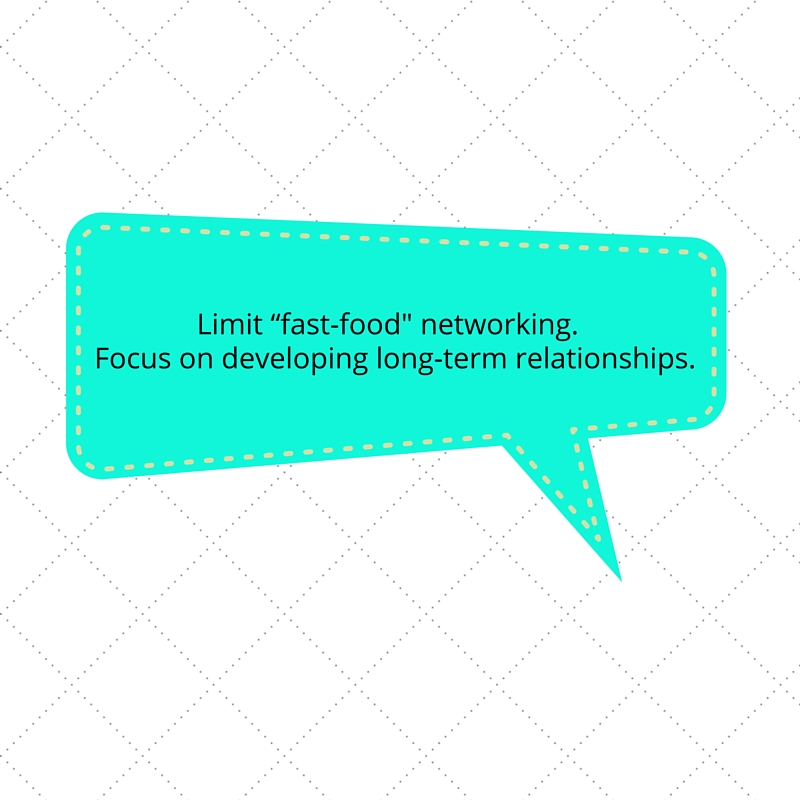
Limit “fast-food” short-term networking activities and focus on long-term, healthy relationship development.
Got it. So how do I become a long-term networker?
To develop meaningful professional relationships, consider the following long-term networking guidelines.
- Be a fan: If you see a professional you admire, tell them how great a job they are doing and cite specific examples. When a client sends me a thank you note, it makes my day. It means the world to me when I feel recognized and appreciated.
- Be genuine: The difference between meaningful networking and brown-nosing is truth and intention. If you think someone is doing a great job, tell them so, but only when you truly believe it.
- Focus on what you have in common: Regardless of our level of professional success, we all need meaningful relationships in our lives. If you focus on the differences between you and successful professionals, you will likely become intimidated. Begin conversations with one goal: finding something in common. This could be that you both went to the same school or that you were both camp counselors in Maine. The strongest connections often coming from sharing personal, not professional interests.
- Know your value: Research indicates that mentoring and helping others can not only retain employees, but can lead to higher levels of personal satisfaction and meaning.[iv] You have just as much to offer in this relationship as they do.
- Start with small, easy to answer questions: Don’t propose on the first date! When initially reaching out to an experienced professional, ask them a question that can be answered in 5-minutes or less. When they respond, thank them and then follow-up on their suggestion. If they continue to respond, then consider requesting a lunch or coffee meeting where you can continue to grow the relationship.
- Be patient: One of the benefits of long-term networking is that you get to develop relationships with experienced, successful professionals; however, these professionals can also be very busy.
——————————————————————————————————————————————————————————————————————————————————————————
Here’s an example of an email I sent to an industry leader, made anonymous to prevent being creepy.
Subject: Compliment/Fan Mail
Rockstar Professional,
My name is Lindsey Day and I am a Career Advisor at Anonymous University (AU).
I’m writing to relay a compliment to you. I was recently asked how I wanted to grow as a leader and I cited you as an example. In your one year here, I have been impressed with your leadership, specifically your ability to be a calm, approachable and even vulnerable leader. When I’ve seen you speak, you have the ability to make any conversation feel like a one-on-one conversation and you are able to remain non-defensive and open even when others are asking you tough questions. This is a quality I hope to cultivate in myself as I grow in my career.
We are so very lucky to have you at AU.
Sincerely,
Lindsey Day
——————————————————————————————————————————————————————————————————————————————————————————
I meant what I wrote from the bottom of my heart. It took this leader one week to respond to me. Here’s her direct response:
“What a thoughtful and generous note! I am sorry to be delayed in responding but I have been hiking and some places I have hiked to lacked cell coverage!
Let’s check in when school starts and see how we might have a further conversation on this. And I’d love to hear about your work!”
Next Steps:
At the Career Center, we’re focused on helping you develop the skills you need to start or grow your professional network.
Consider the following next steps to get started:
- Attend one of our upcoming workshops led by DU’s team of job search and career coach experts:
- Networking Basics, May 3rd
- Advanced LinkedIn, May 4th
- Advanced LinkedIn, May 5th
- Reach out to DU alumni or your fellow classmates by registering for Pioneer Connect or joining the DU Alumni LinkedIn group. PS- these groups are open to students and alumni.
- Make an appointment to meet with your Career Advisor by calling 303-871-2150 to discuss your personalized networking plan.
United States Department of State Events
There are two events held by the State Department this month that are open to all!

U.S. Department of State
International and Domestic Careers Information Session
Tuesday, September 19, 2017
International and Domestic Careers Information Session
Tuesday, September 19, 2017
U.S. Foreign Service Officer and Diplomat in Residence (DIR) Stewart Devine will conduct a U.S. Department of State Careers Information Session at University of Denver in Denver, CO during which you will learn about U.S. Department of State Foreign Service (international) careers, Civil Service (domestic) careers, and internship programs.
Tuesday, September 19, 2017, 12:00pm-1:45pm
Sie Center, Room 1020, University of Denver
Sie Center, Room 1020, University of Denver
The Secret Formula of a Winning Resume is Revealed

Ever wondered how some of your friends get the coolest jobs and they’re not even that good? Or you keep wondering why you were never called for an interview, even though you’ve applied to several job positions for the last few consecutive days?
The answer is simple: your physical or digital resume is not good enough. The physical is the traditional one, where you get to handwrite/print a piece of paper which contains everything an employer needs to know.
The digital resume is basically your online presence. The fastest way employers can get to you is by leveraging social media channels. So if your online presence looks unprofessional, there are quite good chances that your traditional (sent) resume won’t matter.
Now even though the title of the article talks about the “secret” formula, I’m here to break the ice and tell you that there’s no secrecy when it comes to landing awesome jobs. You see, most people (including you) might perceive work, jobs, and even success as something that might or might not come.
You wait for an article like this to give you the “secret” pill to success, a concept which suggests the instant possibility of a better future, without any work.
How to Actually Build Your Way Up to The Top
You need to start perceiving yourself as a business. Now think…what do most successful businesses do best? They spread their name around, sell their products and services, and most importantly, they create a brand image which will always suggest their own unique name.
In your case, a professional who’s looking to build a career, you need to consider the following aspects:
-
What talents do you have that others don’t?
-
What makes you remarkable and basically a good choice for the employer?
-
What have you practically done to improve your expertise and professionalism?
-
How can you benefit the companies that you will work for in the future?
Figure out the answers to these questions as soon as you can! If the answers are somehow disappointing, if you notice that you’re ‘not good enough’, that’s a big warning sign that you need to improve yourself.
Improving Your Online & Offline Resume
As I’ve already suggested, creating an effective resume that instantly convinces employers to give you a shot for an interview is not going to happen overnight. You need to commit to improving your image over time. The best mindset is this:
You need to be extremely patient but focus on speed as much as you can. If it didn’t make sense to you, let me explain: most of the major successes happen as a result of lots of work and patience. Your resume is the same: you need to build skills, prove results, and create authority.
Here are some quick insights that should improve the next resumes that you’ll send. The job marketplace tendencies always change, so these tips are extremely relevant for 2017.
They’ll help you judge what could work best for your own situation. Keep in mind that each domain of activity has its own twist, so you need to judge if these strategies are possible in your own niche.
-
Show Your Social Media Presence
Smart employers are always looking at your social media channel in case they’re interested in what they’ve previously seen on your traditional resume. Now, in order make their life easier, add your LinkedIn, Facebook, and/or Twitter professional account.
In case you’re using social media only for fun and communication, you can’t add this up. I’d suggest building professional pages and posting interesting links which are related to your niche. If your social media presence gives the impression of professionalism, you’re improving your chances of being called big time!
-
Emphasize Human-Only Skills
Nowadays, technology is replacing a lot of skills that until now only humans could have. The digital tools and apps that are showing up on the market each and every day are revolutionizing the way things work, and they’re definitely changing the job marketplace’s dynamics.
Employers will mainly look for people who are technical at something. Being a pro on one skill is better than being a newbie at 10. Now – if you possess qualities that computers cannot replicate and skills that can only be leveraged by humans, emphasize them as much as you can.
-
Display Emotional Intelligence Skills
Emotional intelligence has become an extremely discussed topic nowadays. The “IQ” score slowly starts to fade away after numerous studies have revealed that a person’s “IQ” can change as they’re improving their mental abilities. But the “EQ” concept is different.
It refers to extremely different skills and concepts such as self-awareness, empathy, or emotions management. People who show high degrees of emotional intelligence are always welcomed with open hands by their employers. Figure out and list those emotional intelligence traits and see the results blooming in no time!
-
Use a Professional Service
There are different services that have already managed to help thousands of professionals like you. I’ll list just three of them, the ones which I’ve actually tested myself:
-
CareersBooster.com – the place which helps you take care of every possible aspect that’s related to your personal image and to the resume writing and editing process.
-
VisualCV – visual content is on the rise, and this service gives you choices to plant visually stimulating content throughout your CV.
-
Vizualize.me – similar to the above, this service creates visual CVs that could make a huge impact.
Choose the service you like most and work on the design of a resume until you’re satisfied with the end product. Work with professional tools to assist you in resume creation process is actually s smart choice.
Conclusion
Do you want to build the best resume ever? You need to work hard, gain experience, gain skills, gain knowledge, and only then…only then you should consider how to make everything look better.
Until you don’t take action towards your personal development process, you can’t expect for great things to happen. Once you have something to show, landing good jobs will be a piece of cake!
 Eduindex
You must be logged in to post a comment.