Jingle Bells

Jingle bells, jingle bells
Jingle all the way,
Oh what fun it is to ride
In a one-horse open sleigh,
Jingle bells, jingle bells
Jingle all the way,
Oh what fun it is to ride
In a one-horse open sleigh.
Dashing through the snow
In a one-horse open sleigh
Through the fields we go
Laughing all the way.
Bells on bob-tail ring
Making spirits bright
What fun it is to ride and sing
A sleighing song tonight.
Jingle bells, jing-jingle bells
Jingle all the way,
Oh what fun it is to ride
In a one-horse open sleigh, brruup
Jingle bells, jingle bells
Jingle all the way,
Oh what fun it is to ride
In a one-horse open sleigh.
Dashing through the snow
In a one-horse open sleigh
Through the fields we go
Laughing all the way.
Bells on bob-tail ring
Making spirits bright
What fun

Why Innovation Matters for Leaders in Today’s Economy

If you’re looking for a company that’s a model of innovation and social responsibility, look no further than Green Mountain Power.
Green Mountain Power (GMP) is recognized as a national leader in renewable energy, demonstrating how electricity can be generated, stored, and distributed in ways that are clean, cost-effective, and more resilient to climate change and outages.
Consider these innovation successes:
  • GMP became the first utility in the world to receive B-Corp Certification in 2014.
  • It became the first utility to offer customers Tesla’s Powerwall home battery when it was released in 2015. GMP now uses a network of stored energy in customers’ homes to help lower costs for all customers.
  • GMP’s Stafford Hill Solar Farm is the first known solar storage project in the country repurposing brownfield land once used to bury waste for generating solar energy.
  • GMP was the first utility to offer customers help in going off grid.
  • GMP was named to Fast Company’s list of the world’s Most Innovative Companies three years in a row in 2017, 2018, 2019.
We talked to Josh Castonguay, Vice President, Chief Innovation Officer of GMP, about why innovation for leaders and companies is more important than ever.

How has innovation helped GMP go from a relatively small utility to becoming a national leader in innovation?

Like many things, it starts with leadership and a willingness to try and move quickly in the innovation space.  When you’re talking about innovation and energy, you can’t take six years to develop something.
For example, back in 2006 or so, solar power wasn’t as big as it is today. I was always interested in solar, and I mentioned to CEO Mary Powell an idea about building a solar project. She said, “Let’s do it.” So we built a solar array in Berlin. We already owned the land and it was in an industrial part of town, so it only took about 10 months from start to finish. Once we set our mind to it, we did it.

Do you think a company’s culture plays a part in being innovative?

It’s totally about the culture. You can have the best laid strategy on the planet, but if your company or organization has a dysfunctional or toxic culture, you won’t get anywhere. 
We’re so lucky to have Mary Powell and a great team here that is creative. When we start pushing big ideas and acting on them, they gain a lot of attention.

What are some effective ways professionals can identify innovative opportunities in their company?

I think it’s more about listening day to day. One of my favorite ideas came from a team member who is a field designer in southern Vermont. We were talking about an old distribution line that went through Emerald Lake State Park in East Dorset, an area that she is familiar with. The park had rest room facilities served by an electric line stretching a half-mile through swamps, marshes, and heavily forested terrain that needed to be replaced.
She suggested we take the line down and put in solar battery. That’s just what we did.  The park went off-grid in the summer of 2017. It saved GMP customers the cost of maintaining the power line, it provides the power needed, and it keeps line workers safer from having to repair the old lines feeding the park.

It sounds like that was a brilliant and simple solution to something that could have been more complicated.

Exactly. This is an example of listening to your team members and to those pain points they might not even know they’re conveying. I love the saying, “Think big, start small, and scale fast.”  I always tell people I’ll take creativity over extreme technical aptitude any day.

What are the skills needed to disrupt the business-as-usual approach?

Personally, I think you have to be a persuader, and you have to be passionate. It’s already hard to push these ideas if they’re going to disrupt business, so you have to be confident and passionate about what your idea is. If you’re self-aware enough to know you don’t have skills to persuade others, team up with someone who does.
The hardest part about taking a new approach is sticking with your idea because you’re always going to get push back—some constructive and some not. It’s all about perseverance and working with team members who can build on each other’s ideas.  

Can you talk about some of your own professional growth in the company, and how you approach opportunities for innovation?

I started as engineer at GMP in 2003. I was always interested in pushing the envelope on anything. One of the greatest pieces of advice I ever got was when I was starting college at the University of Maine. My uncle said, “Don’t expect to walk out of college and be an expert in anything. College teaches you how to learn.”
It’s true. What has been way more important, I’ve learned, is knowing how to find the information I need to pursue something. When I started at GMP, I knew some engineering and I introduced ideas, and I just kept reading and digging in. My approach is about not taking no for an answer and just pushing through.

Why is innovation so important in today’s economy?

From the energy space, it’s very clear to everybody that we have a serious issue with the planet. We have to innovate because, from an energy and climate standpoint, we have no choice.
Even if you’re not in the energy field, there’s a lot about innovation that can be tied to the climate. We have to find new ways to do things because the status quo is not going cut i

How to Protect your Startup from Crime

Protecting your business from crime is essential for all enterprises, no matter how long they have been operating or at what scale. With the rise of cyber crime alongside regular criminal activity, as well as white-collar crime, there is a lot to consider when setting up preventative measures for your new startup.
In addition to protecting your business interests – including stock, premises and business assets – staff welfare and safety must also be considered. Creating a successful strategy, therefore, requires planning, as well as execution, and this guide is designed to help protect your startup from the beginning.
Begin with a risk assessment
Risk assessments are common in business, and while they are usually completed most frequently in the field of health and safety, adopting this strategy when beginning your security setup is a useful and effective starting point.
Using the five steps to risk assessment within a security context is an extremely helpful way to first consider the potential risks your startup may be susceptible to. To some extent, risk assessment requires a little creative thinking – try to consider broadly the various forms of crime that are out there. Communicating with other businesses may be a good way to think outside the box, and get a clear idea of the various potential risks.
Protect your premises and assets
Having completed your risk assessment you can then start considering your security setup. An effective security strategy requires installing the right security systems for your specific requirements. While fanciful face recognition tech and Chamber of Secrets-style vaults might be preferable, they’re probably unaffordable (and maybe a little unrealistic) for a startup!
The security systems you do opt for need to be realistic and practical, as well as affordable. They should act as both a deterrent to potential criminals, and as a protective measure should crime occur. Selecting the right systems from the get-go is essential.
Effective staff policies
Having the most effective security equipment in the world is one thing, but not backing it up with a well-measured and carried out policy makes the investment somewhat redundant. A successful company policy should ensure consistent regulations and standards across the board.
Make sure that employees understand what is expected of them through a code of conduct, and what can happen should they commit white-collar crime against your startup. Consistency is the key!
Setting up for cyber crime
Cyber crime is an increasing concern for businesses – both more established, and startups – due to the convenience and anonymity afforded by the internet. When setting up a new business venture, particularly a digital company, it is increasingly important to be aware of the types of cyber crime that exist, in order to take effective preventative measures.
It is essential to be both aware of cyber crime yourself, and to educate your staff on how to prevent it occurring. This should begin through your staff policies and regulations – you need to include a social media policy, both to prevent poor conduct, as well as potential cyber crime.
As well as staff policies, you need to protect your startup from external threats. Police your internal networks thoroughly, conduct regular audits, and make sure portable devices (as well as desktop computers) are scanned. Checking out who you are working with, such as external partners and suppliers is also important in safeguarding your business from cyber crime.
Monitor your security measures as your business grows
As well as ensuring your security measures are effective from the beginning, it is essential to consistently assess and update your procedures as your business grows, in order to stay well protected from crime.
This can be done through regular risk assessments, external surveys and audits, and consistent reviews of your policies and systems. As your business grows, new crime threats can emerge, so regular reviews are an important part of ensuring ongoing protection for your startup against crime.

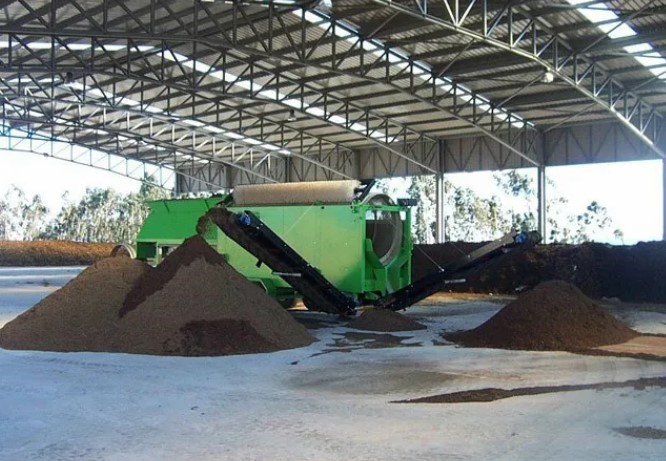
Waste to Compost plant running in Delhi at Model Town

By SN Sharma

Waste to Compost plants play a crucial role in addressing the challenges of urban waste management by converting organic waste into nutrient-rich compost. Composting is an environmentally friendly process that involves the decomposition of organic waste materials under controlled conditions, resulting in a valuable soil conditioner.

Waste to Compost plant in Model Town, it is likely designed to handle organic waste generated by households, markets, and other sources in the locality. The process involves the collection of organic waste, including kitchen scraps, garden waste, and other biodegradable materials. This waste is then transported to the composting facility.

The composting process typically includes several stages:

  1. Segregation: Waste is sorted to separate organic matter from non-biodegradable items.
  2. Shredding: Large pieces of organic waste may be shredded to facilitate faster decomposition.
  3. Aerobic Decomposition: Organic waste undergoes aerobic decomposition in the presence of oxygen. This process is usually managed in windrows or using mechanical turning systems to ensure proper aeration.
  4. Maturation: The partially decomposed material is allowed to mature, enhancing its nutrient content and stability.
  5. Screening: The final compost undergoes screening to remove any remaining impurities or oversized particles.

The resulting compost is a valuable resource that can be used to enrich soil fertility in gardens, parks, and agricultural fields. It helps in reducing the burden on landfills, mitigating greenhouse gas emissions from organic waste decay, and promoting a circular economy.

Local communities often benefit from Waste to Compost plants by having a more sustainable and eco-friendly waste management system, reducing the need for landfill space, and creating a valuable resource from waste. Additionally, these initiatives contribute to the overall environmental well-being of the region.

If you are specifically looking for up-to-date information on a Waste to Compost plant in Model Town, Delhi, I recommend checking with local authorities, municipal bodies, or official sources for the latest details on such facilities in the area.

The DO’s and DON’Ts of the NEW Pioneer Careers

Pioneer Careers, DU’s job and internship system, recently went through an update, and we wanted you to have some information to help make the most of the new system.
Do your research!
  • Pioneer Careers now has a variety of Research Tools to help you target companies that have successfully recruited DU students.  Find out salary data, offer timelines and job sources.
Don’t miss out!
  • Did you know that you can “opt-in” to a newsletter where the system will automatically alert you to new job and internship opportunities and upcoming events? Simply go to account settings in the upper right corner of your screen, select newsletter settings and choose your preferences.
Do find opportunities meant for YOU!
  • Rather than scrolling through hundreds of job and internship postings, narrow down your search by specifying Type of job, Job Function and Industry.
Don’t overlook OCI (On-Campus Interview) postings!
  • Employers oftentimes elect to conduct interviews here on campus—you can find these opportunities under job postings, OCI tab.
DO complete your profile!
  • This information will be helpful when doing job, internships and event searches.
Don’t forget to keep your contact info up-to date!
  • Especially your phone number…your parents will be glad to hear you got an interview but it’s much better if we can reach you first! Simply click the upper right account settings to make edits.
Do cancel your registration for an event that you cannot attend!
  • Another student may want your spot-simply click my events, the event itself and a “cancel” my registration will appear or cancel through your email confirmation.
Don’t forget to upload your resume!
  • Your submitted resume needs to be in PDF form—allow 2 business days for approval.
Do keep track of your applications!
  • Easy to do under your applied tab in Pioneer Careers.
Don’t hesitate to reach out for help!
  • Contact Daniels Career Services at 303-871-3911 or email danielscareers@du.edu with any questions/concerns you may have!  We are here for YOU!

Career & Internship Fair– Is It on Your Calendar?

Invest in your professional future by attending the annual Career & Internship Fair on Wednesday, February 21st from 3:00-6:00 PM in the Ritchie Center Concourse.
To register and view a list of participating employers, log into Pioneer Careers.
Resume preparation and review by employers and Career & Professional Development staff is available on Tuesday, February 20th from 12:00-4:00 PM on the Driscoll Bridge.

Let’s Talk About Sustainability!

Are you an Environmental Science or Geography student with a passion for science and impacting the planet we live on?
Have you been wondering about what a career in sustainability might look like? Looking for an internship in this field, perhaps?
Are you looking for a fun way to celebrate Earth Month, learn about career paths, and enjoy a free lunch?!
We have the wonderful opportunity to hear from four DU alums from our Environmental Science and Geography programs about their career paths to celebrate Earth Month in April and get your wheels turning about your own career development. “Let’s Talk About Sustainability” is a special Dine & Dialogue that will focus on advocacy, recycling, sustainable transit, stormwater management, and more. Our alums come from a variety of organizations in the community, including the City & County of Denver, Century Communities, Inc., and Denver Recycles. One of our alums previously worked with Denver Bikes, another awesome organization committed to sustainable transit. They are passionate about protecting our environment and developing sustainable solutions for our community; and, they are thrilled to meet you!
The goal of our Dine & Dialogue series is to create an intimate setting where students can ask questions and have small-group discussions around career paths of interest to them. We expect this to be a learning and networking opportunity for all participants, to engage both students and alumni and open the door for potential mentorship, job shadow, internship and job opportunities.
We hope to see you on Wednesday, April 18 from 12-1pm in the Leo Block Alumni House! To register, visit Pioneer Careers. Space is limited, and lunch is free, so be sure to register today!

Today I am going to discuss the Properties of Language in Pedagogy class for I year B.Ed. students.

Definition of the following features of language:
Vocal-auditory channel: Human language is produced orally and is received through the ear.
Reciprocity: Human beings communicate by sending and receiving signals.
Specialization: Linguistic signals have only one purpose—of communication.
Non-directionality: Linguistic signals can be picked up by anyone within the range of the signals.

How does human language differ from animal languages?
Human languages differ from animal languages in many ways. Some of the major features of human languages are 1) displacement, 2) arbitrariness, 3) productivity, 4) cultural transmission, 5) discreteness, and 6) duality. Animal languages do not possess these features.

What is meant by displacement feature of human language?
A major difference between animal language and human language is the displacement feature of human language. It means that human language can overcome the limitations of time and space. Animal communication is designed for here and now. But, human language can relate to events removed in time and space.

What is meant by arbitrariness of human language?
A major difference between animal language and human language is the arbitrariness of human language. It means that human linguistic signs do not have any natural connection between its form and meaning. The only exceptions are the onomatopoeic sounds. In the animal communication, the signs they use are synonymous with meaning.

What is meant by productivity of human language?
A major difference between animal language and human language is the productivity of human language. This refers to the human ability to combine limited linguistic signs to produce new sentences and expressions. Animals are incapable of this as animal signals have fixed reference.

What is meant by cultural transmission of human language?
A major difference between animal language and human language is the cultural transmission of human language. While animals get their language genetically, human beings acquire language. Human languages are passed down by the society in which one lives and grows up.

What is meant by discreteness of human language?
A major difference between animal language and human language is the discreteness of human language. This refers to the uniqueness of the sounds used in human languages. Every language use a set of different sounds. Each of these sounds is different from the rest and are combined to form new meanings. A sound can be repeated, or combined with another to form a new meaning. But, animal languages do not have this feature of discreteness.

What is meant by duality of human language?
One major difference between animal language and human language is the duality of human language. This is not found in animal languages. Human language can be both spoken and written. Even the languages that do not have alphabet can be written down using some symbols. Animal languages are only spoken.

Job interview: what are the proper ways to discuss salary?

Passing an interview for the job is a nerve-wracking and time-consuming process, but when it comes to discussing a salary, the whole thing becomes even more intense and complex. How should I ask about it? What is the best wording? What benefits can I have? How much will I get after probation term? These questions are coming to the mind of every job seeker, baffle one, and distract. That is why we`ve gathered the most relevant tips for you to do your best.
1) Make decent research
The first thing you are to do once you`ve received that call from a recruiter is to find information about the position you`ve been offered. Monitor the Internet and understand key responsibilities, required a set of skills and expectations for the vacancy. Afterwards, find out data about the company and its culture. Digest all the information and if everything fits in your life, pass to the next step.
2) Conduct great resume
No job search comes without an outstanding resume/CV, so make certain to have a good outline of your skills and experiences. Note down your achievements, relevant courses and successful projects you took part in.
  • salary expectations
You`ll need to do salary research just to be aware of the current value of the work you want to do in the market. Browse the web, ask a person who works in the similar position, visit salary information websites and make sure that the price you desire to possess corresponds to the actual cost.
  • salary history
Check professional resume examples in order to see if your outline is relevant to the job. In most of the cases, salary is not mentioned in the resume, but this info can be requested by the HR manager. So what you should do up there is to be flexible, general and benefits-oriented.
3) Choose the right time
There is no such thing as the best moment for discussing your salary, as everything depends on the situation. The first marker of «time X» is when you understand all the responsibilities of a particular position. Moreover, if you feel that the atmosphere during the interview is pleasant and you`ve found a common language with the interviewer; you can bring up the issue of the payment when your interlocutor mentions the topic. On the other hand, if you face the «cold» interviewer asking about the salary can just annoy the speaker.
4) Ask a question
The main issue for every person yearning to get a job is: «Should you ask about salary in the first interview?» The answer lies in the company`s policy. If the firm definitely has more than one stage of the interview, you better show what you`re capable of and then bid up. On the other side, if interview process is simple, you can ask indirect questions about payment (however, it`s better to leave this burden to the interviewer).
5) Point out your value
Know what you`re worth and prepare some evidence why you should be paid this amount of money. You should be armed with all your set of skills and position yourself as the best choice for the company. Be ready to defend your desired value and negotiate it. For instance, if the employer doesn’t agree with your demanded salary, but you feel that it`s the right place of work for you, you can negotiate this money issue with establishing a special system of bonuses.
6) Shorter your expectations
Now that you know the average salary for the job you should determine the price, which is acceptable for you. This amount should be similar to the cost you should be given taking into account your professionality, experience, and specialization.
7) Discuss benefits and extras
If the interviewer is not ready to offer you the salary, which you want, you can accurately suggest discussing perks. For example, suggest completing Personal Development Plan, where you`ll list the targets you are to achieve. These goals will match a definite rise in payment. At the same time, if you are offered the exact salary you asked for, there is no harm in clearing out your future perspectives as an expert in a particular field, which keep abreast with the salary increase.
8) Pass to negotiation
Finally, you can proceed to salary negotiation. Be careful and always mind the mood of the interviewer, changing the pace of conversation if needed. Ask delicately, be polite and thoughtful.
9) Ask for offer in writing
It`s not an issue for a legitimate employer to provide one with a job offer in writing, as it`s a documented result of the whole interview procedure and ensures the credibility of a firm as well as your safety from frauds.
Once you`ve followed all these steps, it’s open-and-shut! Wish you a successful interview and desirable salary!

Writing Unique Cover Letters

danielscareers-coverletterDo all employers read cover letters? No. Do all employers require one? No. So should you take the time to write a cover letter? Absolutely! The cover letter can set you apart from your competition. It gives you the opportunity to not only give a brief summary of your qualifications, but lets you explain why you are genuinely interested in a particular opportunity and company. Do you really want to be the candidate that doesn’t take the time to write a well-crafted cover letter?


Your cover letter is often your first impression made on a potential employer. Don’t fall into the trap of writing the same canned cover letter for every position you apply for.  When advising graduate students, I ask them to bring the job description they are applying for when reviewing their cover letter, as each should be customized to the unique position and company they hope to work for.

The following tips will help to ensure that you don’t fall into the common mistakes I see and that your cover letter makes it to the top of the applicant pool pile.

Be prepared before you begin writing your cover letter:

  • Review cover letter samples for inspiration and review the job description of the position for which you are applying.
  • Identify the key points from your resume that meet the requirements listed in the job description.
  • Be sure to give yourself time to create a draft, hone a finished version and proofread.

A well-structured cover letter includes a heading, salutation, introduction, list of qualifications and a closing paragraph.

  • The heading should include your name and contact info (email, customized LinkedIn URL, phone number) and should be exactly the same as that of your résumé to give a polished professional image.
  • The salutation should be dated and addressed to a specific person. Take the time to research who the hiring manager is instead of addressing the letter to the “hiring manager” or even worse “to whom it may concern”.
  • Your opening paragraph should state the position for which you are applying and mention how you found the position or how you met your contact (campus career fair, industry panel, guest speaker in class, professor referral).
  • Be sure to give a genuine reason as to why you would like to work for the company. Stating because of the company’s reputation sounds canned and because it fits in your career plan sounds self-serving.
  • Summarize how your qualifications match those the company is looking for as listed in the job description as closely as possible without repeating word for word what is on your résumé.
  • In the closing paragraph, reiterate your interest in the position and state how and when you will follow up.

Some final tips:

  • Highlight your most significant achievements that match the position.
  • Keep your cover letter length to one page.
  • Meticulously check for spelling and grammar mistakes.
  • Send as a PDF.
  • Do not start with: “My name is…”
  • Do not take the focus off your strengths by emphasizing skills or experience you lack.
  • Do not fail to make the connection between your education and the position you are pursuing.
  • Do not display a lack of knowledge about your potential future employer.
Remember to demonstrate that you put some thought and effort into writing your cover letter. At the very least, you should read it aloud, or better yet, have someone else review it. Make an appointment with your assigned career coach to have your cover letter reviewed. You only have one chance to make a good first impression.
Susan Goodwin is an Assistant Director and Graduate Career Coach of the Suitts Graduate & Alumni Career Center. Susan has seven years of experience in career services and coaches graduate students in career development, including job search techniques, networking, resume writing and interview preparation. Goodwin also creates and facilitates career service workshops and works with companies to promote graduate employment.

Tips to Help you Reach New Customers

By Chemeketa SBDC

Looking for some free and easy ways to reach customers?
These aren’t new, but probably worth revisiting. Incorporate a few of them into
your marketing and results will follow.
• Get a tagline if you don’t already have one (this is
a short phrase or sentence that captures what you do). And then use it all the
time. Print it on the back of your business cards. Put it on every piece of
marketing collateral. Use it until customers won’t hear your business’ name
without mentally reciting it.
• Remember the golden rule of marketing: repeat,
repeat, repeat. People simply don’t register a marketing message the first few
times. Or the first few dozen times. You must repeat your message to the same
audience in the same place, over and over again.
• Make sure people can find you on the web.
Learn about social media, and consider getting a Facebook page and Twitter feed.
Pay attention to your reviews on Yelp or other customer feedback sites. Set up
your free business pages in Google Places, Yahoo Local, Yelp, and others.
• Constantly think of filling your customer pipeline.
Make a list of your top 10 prospects or referral sources and keep it on your
desk, your mobile phone, or use it as the “wallpaper” on your computer. Contact
each of them no less than once a month.
• Get out there in person. People do business with
people they know, so build your business network. Attend industry conferences,
join community organizations. Be visible. Connect in person and not just
online.
• Establish a strong company brand and identity. Create
a distinct graphic image—logo, colors, typeface, etc.—that conveys what you’re
about and use them consistently and on everything. This includes your website,
business cards, packaging, newsletters, marketing materials, job ads.
• Tell people what they get (benefits), not what you
and your product/service do (features). All of your materials need to focus on
the benefits the buyer receives—rather than just long lists of features of your
products or descriptions of how you perform your services. Of course, customers
compare features and services, so you’ll need to include those, but always
emphasize the benefits those features bring.
• Get on the email newsletter bandwagon. An email
newsletter is one of the most effective and inexpensive ways to communicate with
customers, prospects, and referral sources. Make sure your newsletter provides
some value for the recipient, such as useful information, details on sales, or a
special offer.

United States Department of State Events

There are two events held by the State Department this month that are open to all!
U.S. Department of State
International and Domestic Careers Information Session
Tuesday, September 19, 2017
U.S. Foreign Service Officer and Diplomat in Residence (DIR) Stewart Devine will conduct a U.S. Department of State Careers Information Session at University of Denver in Denver, CO during which you will learn about U.S. Department of State Foreign Service (international) careers, Civil Service (domestic) careers, and internship programs.
Tuesday, September 19, 2017, 12:00pm-1:45pm
Sie Center, Room 1020, University of Denver

TECH303: Denver’s Booming Tech Industry!

Denver is known as a top city for business and career growth, especially over the past five years, and this won’t be changing any time soon. Our region is a global hub of innovation and entrepreneurship, and technology is THE fastest growing sector. The best part is, you don’t have to be a coder to be part of Colorado’s BOOMING tech industry!
The Daniels College of Business is hosting an event on April 14th from 10:30am-12:30pm (lunch is provided) where students of all majors will have the exclusive opportunity to hear about the latest products from innovative local companies. You’ll also have a chance to network with representatives from the industry and learn how you can be a part of these exciting and rapidly growing organizations. Tech303 will be held in the Reiman Theater in Margery Reed Hall.
Some of the companies planning to attend: RingCentral, ibotta, signpost, TestPlant, Zoom, stackoverflow, HomeAdvisor, talentReef
RSVP through the Events tab in Pioneer Careers.

Small Business Management (SBM) Program

If you are an established small business looking to experience increased efficiency, profitability, and support through interactive learning sessions and monthly one-on-one business coaching tailored to your individual needs, the Small Business Management (SBM) program could be right for you. SBM is ideal for small business owners (1-50 employees) who have been in business 2-35+ years. Service, retail, contractors, professionals, and manufacturing businesses throughout the Willamette Valley have all benefited from the SBM program and you can too! See what other business owners are saying.

How the Vermont Craft Beer Industry is Finding Success in a Crowded Market

By Emma Marc-Aurele
The craft beer industry has contributed over $271 million to the Vermont economy while the industry has added a total $55 billion to the United States’ economy. The craft beer business is growing exponentially each year. According to the Brewers Association, 1.5 breweries open every day throughout the United States. In 2011, there were 2,033 breweries open in the US and that number more than doubled by 2015 when the Brewers Association recorded 4,269 as the running total.
That same trend has occurred in Vermont: in 2011 the state had 22 established breweries and by 2015 that number doubled to 44. With 9.4 breweries per capita, Vermont is ranked first for number of breweries based on population and is recognized as a leader in this booming industry.
In 2015, Vermont produced 261,654 barrels of craft beer, ranking 20thin the US, according to the Brewers Association.
“There are no signs of a let up in demand for high flavored craft products driven by millennials who favor craft products,” said Greg Dunkling, program director of the University of Vermont’s Business of Craft Beer Program.

A Pioneer of Craft Beer

Dunkling seems to think that Vermont’s top spot in the craft beer industry can be attributed to Greg Noonan, the founder of Vermont Pub and Brewery in Burlington and author of the famous “Brewing Lager Beer” guide. Noonan’s guide to brewing was written in 1984 and became the go-to-guide for small-scale home brewers and even some larger scale professionals.
A number of today’s brewmasters in some of the most famous breweries in Vermont (Lawson’s Finest Liquids, The Alchemist Brewery and Hill Farmstead Brewery) worked under the mentorship of this great beer pioneer. These successful breweries are consistently ranked at the top of the charts by beer consumers as well as in regional and national beer awards.
In 2015, RateBeer.com announced Hill Farmstead Brewery as the number one brewery in the world. The Alchemist was also recognized by RateBeer.com in 2015, when they earned third and fourth place spots on the list of top beers in the world. Focal Banger took the third place spot while Heady Topper landed right behind its fellow brew in fourth.
Long lines in local retailers stocked with patient consumers in search of their products are a testament to not just cold suds but exceptional beer. With the help from Greg Noonan, these three breweries have helped Vermont become a leading contributor to the growing and global craft beer industry.
The state of Vermont’s regulatory support has also contributed to the rise of Vermont’s craft beer industry. Before Noonan, Vermont’s law stated that establishments could not sell alcohol in the same place it was produced. With the realization for potential in their fellow brewing community members, the Legislature changed the law to help create a craft-beer community at its finest.
High quality beer and a simple business strategy seem to be the main goal when talking to brewers. In terms of what it takes to become a successful brewery in Vermont, the CEO of 14th Star Brewery, Andrea Gagner, further emphasizes Miller’s point to make high quality products, while also having the flexibility to adapt to the changing palates of these hop-driven consumers.
Gagner says that 14th Star Brewery aims to “grow slowly and organically” and become “good corporate citizens” which seems to be the trend of most breweries in the area. This business of high quality brewing encourages breweries to grow slowly and focus on the integrity of their product, which in turn allows community involvement and the use of local ingredients.
Bill Mares, a knowledgeable craftsman of craft beer and co-author of the book “Making Beer,” is another leader in the industry.
He and business partner Todd Hair, who has worked in well-known breweries like Magic Hat and Switchback, recently opened up The House of Fermentology on Pine Street in Burlington Vermont.
They are unique in that they are a “blendery” and are producing a line of sour beers. Although their product may be distinct from the others, it seems even they have this same idea of focusing on the quality of the drink.
The obvious problem with this “staying-small” craft business strategy is ensuring that these companies can brew good beer consistently in order to keep customers happy and coming back for more.
Mares said, “We have to brew really good beers all the time. We can’t afford one bad batch.”
For a company that does not rely on volume, the small amount of beer that these partners invest their time in need to be at the same level or better than their local brewing competitors. These breweries seem to be under this same pressure to be consistent in the high quality of their batches.
Thankfully for them, over the years there have been some advancements in brewing technology that make the process a bit easier. Mobile canners have been helpful to smaller brewers in getting the product to markets outside the local community.
They allow these small businesses to package their products so they can be placed in retail establishments statewide, and across the country. Without these canners, they have to depend on only draft distribution and are at the whim of restaurant and bar owners.
Founder of Otter Creek Brewing (and current Shumlin Administration official), Lawrence Miller, is quoted in the book “Making Beer.” He puts it, “The state adapted to what we needed without blowing open the door to create an unstable market. There was a good camaraderie among all brewers, professionals, and amateurs. The home brewers were the educated consumers who could then educate the public to be more appreciative of good beer. The brewers benefited from these open-mouthed people willing to come back and say what they thought. If you were a brewer and open-minded you could adjust. Some who could not adjust, are not around anymore.”
Now with this new technology, consumers can see and become familiar with the product in stores and are able to purchase it more conveniently.

Beer Business and Strategy

So with all these new brewing inventions and flavors, where is this trending industry headed?
UVM’s Dunkling said: “As beer styles become more experimental and breweries push the envelope expanding the traditional definition of a beer style, consumers transition from other alcoholic beverages into this sector. There’s simply too much flavor to ignore.”
Dunkling and his fellow staff members provide industry specific knowledge that people require to either gain employment in the industry or to undertake their dream of someday launching their own brewery. In 2014, overall beer sales were only up 0.5 percent, while craft beer sales increased by 17.6 percent.
Along with this increase in specific craft sales and Vermont’s leading standings in number of breweries per capita, Dunkling’s UVM program seems like the perfect way to take advantage of Vermont’s brewing success and help continue the growth of the industry.
UVM’s program includes both business strategies as well as some of the fundamentals of brewing craft beer. Overall, though, this growth in the craft beer industry seems to be larger than just beer. Many industry analysts relate the craft brewing sector to the broader locavore food movement and the desire of consumers for “local, high-end artisanal products,” Dunkling said. This want for beer brewed in a consumer’s backyard is more than beer and emphasizes local, local, local.
Paul Sayler, co-owner of Zero Gravity Brewing, is quoted in “Making Beer” saying, “At its most basic, beer is a cottage industry. And Vermont is a state where cottage industries spring up. It’s Yankee craft and ingenuity at work. Add to that Vermont’s strong culture of local foods and small scale.”
Some may wonder if this explosion of craft beer in Vermont is simply just a fad and eventually some may see the state as an oversaturation of craft breweries, but most think that the demand for a quality beverage will never go away.
Darby Kitchel, manager of Switchback Brewery feels that the massive amount of breweries stands out as a tool for inspiration to brew better beer.
Kitchel said, “It creates a sense of competitive spirit, which makes for good drive to make better beer and, in the end, run a better business.”
Emma Marc-Aurele is a freelance writer from Burlington. This story first appeared in the July issue of Vermont Business Magazine