Video: The Myth of the Super Teacher

Roxanna Elden, author of See Me After Class: Advice for Teachers by Teachers, reveals how the myth of the super teacher creates unreal expectations for struggling young teachers.

This clever, practical presentation will hit close to home for every educator and will help set realistic expectations for new teachers.

Tuesday Teacher Picks

This week\’s teacher recommended website, books and school supplies are….

Website: Big Huge Labs
See recommendation & details

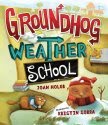
Kids book: Groundhog Weather School by Joan Holub
See recommendation & details or Get Book (scroll down)
Classroom Management Tool: Kagan Selector Tools Software
Instructional Tool: Place Value Decimal Cubes
See recommendation & details or Get Place Value Decimal Cubes (scroll down)
Find more of this week\’s Teacher Picks

Technology in the Classroom for New Teachers

New teachers might seem to be plugged in to the intricacies of technology in the classroom more than their more-seasoned colleagues. But that’s not always the case.
With that in mind, today on TeachHUB.com, frequent contributing writer Janelle Cox, who is a seasoned elementary school educator based on the East Coast, takes a look at some specific technology in the classroom, both new and old, that will help new (and veteran!) educators get in tune with all the ed-tech gizmos you’ll need to be effective.
Janelle cites:
  • The Interactive Whiteboard
  • E-Portfolios
  • Digital Portfolio
  • Classroom Planning
  • And More!

Janelle sums up today’s article in this manner: “There are many ed-tech tools and apps that exist today, essentially it’s up to you to familiarize yourself with all of them. While exploring the many tools may be intimidating, just remember that in order for you to be ahead of the game and keep your students up to date with the latest in technology, you need to start learning how to use them now.”
What technology in the classroom tools do you want to learn more about? Tell us in the comment section, we would love to help you out.
Subscribe to the TeachHUB.com newsletter
A great way for interested teachers and educators to stay connected with the great ideas, lesson plans, and inspirational articles we post every week is by subscribing to the TeachHUB.com e-newsletter. Every Friday, you’ll get a concise snapshot of what we’ve posted each week, as well as a look at trending articles and evergreen-type stories. Best of all, it’s absolutely FREE!

Fitness is the key to Stress-free Life

By – Karina Sharma

Being healthy and fit in simple terms means taking good care of the body. We should remember that a healthy mind resides only in a healthy body. Good health of both mind and body helps to maintain the required energy level to achieve success in life. All of us must strive to achieve wholesome health.

healthy food
healthy food

Protecting your body from the intake of harmful substances, doing regular exercises, having proper food and sleep are some of the important instances that define a healthy lifestyle. Being fit allows us to perform our activities without being lethargic, restless, or tired.

A healthy and fit person is capable of living life to the fullest, without any major medical or physical issues. Being healthy is not only related to the physical well-being of a person, but it also involves the mental stability or the internal peace of a person.

Generally, a healthy diet consists of taking proper and healthy food which includes eating green and fresh vegetables, fruits, having milk, eggs, minerals, proteins and vitamins essential for a human’s lifestyle. Practicing Yoga including regular exercises in your daily routine also helps you maintain your desired fitness, blood sugar and immunity level.

Healthy habits improve your physical appearance, mental stability, ability to perform activities in a better way, which helps you lead a stress-free lifestyle, maintaining happy moods, high energy levels, etc. Each individual should take off one’s health on a priority; no single day should be skipped for making efforts on maintaining physical and mental fitness. Being happy is directly related to boosting your mental strength and health, so happiness can be considered as the result as well as the part of a healthy and fit lifestyle.

In a nutshell, Health is the most important thing that a person should take care of. Leading a healthy lifestyle leads to happiness, success and achievements.


Disrespect, not Dress, does it – The increasing rape cases are a serious concern for mankind

By- Ekta Sain

Looking at the current state it looks like after some time we will be living in a country where we won’t be giving birth to a human, we will give birth to a human who is worse than an animal. This nation is becoming unsafe not for only girls but also for boys. Not only streets, roads or workplace but our homes are becoming dangerous for us.

Every year there are many cases of molestation and rape came across. Some are registered, some not. Why are these happening in our country? Why are these molesters or rapists moving freely?

t-dont-tell-me-how-to-dress-tell-them-not-12823773

According to the Indian Constitution, the definition of Rape is “when a man forcibly does any sexual activity with women then it is considered as rape.” They never recognized that a man can also be raped.

According to a study conducted by NDTL on an average of 8 women get molested every day in India. But the research of the Centre for Civil Society says that the victims of assault are 57.3% males and 42.7% females. In such cases, family members of female victims avoid disclosure and maintain the confidentiality of the victim and sometimes they complain about the crime. But when it comes to males being a victim for sexual molestation, they don’t get reported for it. It is a myth in our society that boys cannot cry in front of everyone they have to be mentally strong. This myth stops boys from confessing their molestation.

Men believe this myth and feel lots of guilt and shame because they got physically aroused during the abuse. It is important to understand that males can respond to sexual stimulation with an erection or even an orgasm – even in sexual situations that are traumatic or painful. That’s just how male bodies and brains work. Those who sexually use and abuse boys know this. They often attempt to maintain secrecy and to keep the abuse going, by telling the child that his sexual response shows he was a willing participant and complicit in the abuse. “You wanted it. You liked it,” they say.

But that doesn’t make it true. Boys are not seeking to be sexually abused or exploited. They can, however, be manipulated into experiences they do not like, or even understand, at the time

There are many situations where a boy, after being gradually manipulated with attention, affection and gifts, feels like he wants such attention and sexual experiences. In an otherwise lonely life (for example, one lacking in parental attention or affection – even for a brief period), the attention and pleasure of sexual contact from someone the boy admires can feel good.

But in reality, it’s still about a boy who was vulnerable to manipulation. It’s still about a boy who was betrayed by someone who selfishly exploited the boy’s needs for attention and affection to use him sexually

There was a study conducted by a research scholar of Babu Banarsi Das University Lucknow in which she described myths related to rape cases. According to her,  “rape myths exist for a number of historical and cultural reasons including gender role expectations, acceptance of violence and misinformation about sexual assault and they are the one reason why victims are shamed into remaining silent.”

According to this research, the reason why rapes are happening is women are dressing provocatively and that turns out as a problem for her. This is believed by 45% of individuals. Many of them blame the girls who drink. According to them if a girl drinks then she deserves to be raped. Another reason for rape is a girl in the relationship and some blamed the girls who stay outside late at night.

Till when we only ask our girls to hide their beauty and innocence can’t we ask boys to control and behave themselves? If these cases were not taken seriously in our country then it is natural that after some time we won’t find a road where girls will walk freely, it will be hard to find a home where they could live freely.


WHY YOU SHOULD HIRE A MISFIT (OR TWO)

“Here’s to the crazy ones. The misfits. The rebels. The troublemakers. The round pegs in the square holes. The ones who see things differently. They’re not fond of rules, and they have no respect for the status quo. You can quote them, disagree with them, glorify and vilify them. About the only thing you can’t do is ignore them because they change things. They push the human race forward. And while some may see them as crazy, we see genius. Because the people who are crazy enough to think they can change the world, are the ones who do.”
The quote above, penned by Steve Jobs and his team at Apple for a commercial almost 20 years ago, might be advertising copy — but it’s also relevant advice in today’s hiring landscape.
While we’re accustomed to (and perhaps expect) start-ups to be run by mavericks hell-bent on bringing their crazy vision to market, the “crazy ones” tend to be less visible among the ranks of large corporations — to a fault. It’s time for traditional organizations to take a page from the startup handbook, and take a risk when it comes to recruiting.

Why Misfits Matter

Established, old-guard companies need these left-field thinkers and misfits to drive innovation in their companies. In our fast-changing world, an organization will quickly fall behind competitors unless the team is thinking two steps ahead.
Of course, the importance of “innovation” likely comes as no surprise to HR professionals and executives — according to a recent Boston Consulting Group report, 79 percent of respondents ranked innovation as either the highest priority or in the top three priorities for their respective companies over the coming year.
And yet, this “priority” isn’t always reflected in action —many companies’ hiring policies and practices are at odds with enabling the very thing they claim to emulate: innovation.

The ‘Perfect’ Hire Isn’t Necessary the ‘Right’ Hire

Recruitment techniques, aided by technology, are becoming ever more sophisticated. HR professionals are able to take a more scientific approach to matching people’s personality, attributes and attitudes to specific job roles, in addition to their technical knowledge or relevant experience. Yet, while the latest technology and analytics tools certainly improve your chances of recruiting the perfect person to fill a prescribed role, hiring the “perfect” recruit also has its consequences.
Pre-employment tests will point you to someone who has relevant knowledge, works well with the existing team, and aligns with the company’s current hiring success track record. Granted, these are all good things — but they are also safe things. Will these tests recommend you hire left-field thinkers, career pivoters or other “misfits”? Will they point you toward “what works now” for a candidate, or what is innovative? Is it possible that hiring candidates who match the precise needs of the team or company culture is actually counter-productive?
There’s an argument for creating teams with one or two people from outside the group — people who aren’t the best programmers or may not have an extensive background in sales. Resilience, agility and innovation don’t necessarily thrive in an environment that is ruthlessly efficient — or “perfect.” Sometimes, the people who don’t quite fit the mold are the ones who make the most significant impact on a company’s success.

Classroom Management Tips for Using Proximity Control

Decent classroom management includes creating and cultivating a positive, relaxed relationship that makes students wish to perform at their highest level.
A simple way to bring about a higher level of learning is via proximity control, or just a matter of the teacher sitting nearby to the students.
Today on TeachHUB.com, frequent contributing writer Jordan Catapano, himself an English teacher in the Chicago suburbs, addresses proximity control. His piece includes ways to use proximity control effectively, including:
  • Stand close, but don’t hover
  • Make yourself available
  • Avoid using words
  • And more!

Jordan sums up his article thusly: “Considering how easy and effective good proximity control can be, it’s almost a given that the effective teacher will employ this simple technique in their classroom. So as you look for ways to respectfully redirect student attention and subtly reinforce your high standards, get on your feet and make yourself physical present around your students!”
How and when do you use proximity control in your classroom?
Professional Development: Reasons to Love Being a Teacher
All of us might need a reminder of why we’ve embarked upon the education profession, and recently, frequent TeachHUB.com contributor Janelle Cox offered up just that with an article that stirs us to remember why we became teachers.
Some of Janelle’s reasons to remember why to love being a teacher:
    You Are Making a Difference
    You Can Express Your Creative Side
    You are an Inspiration
    It Keeps You on Your Toes
Overall, this article serves as a pleasant reminder of why we became teachers in the first place.
What are your top reasons for loving teaching? Is there anything we should add to the list?

How to Motivate Students, Etc.: Advice from Real Teachers

For teachers of all level of experience, it’s good to hear success stories from fellow educators. With that in mind, today on TeachHUB.com, frequent contributing writer Janelle Cox, who is an experienced educator based on the East Coast, takes a look at some tips and suggestions on topics from how to motivate students to how to survive the school year.

Regarding how to motivate students, Janelle recommends:

Find out what your students love
Put down the textbooks
Incentivize
And more!

Likewise, Janelle offers up how to survive the school year. Her tips for that challenge include:

  • Have some time fillers ready in advance
  • Organize everything
  • Plan ahead
  • And more!


Janelle sums up her article like this: “Successful teachers embrace technology and do not look at it like it is something negative for their students. They keep up-to-date on all of the latest devices and gadgets because they know that technology is the future of learning, and they want their students to be successful.”

Do you have any advice for that you would like to share with your fellow educators? Please feel free to leave your tips and suggestions on any topic (not just the ones above). We would love to hear what you have to say.


Summer Vacation: How Pets Can Help Kids Learn

Did you know that pets are a great way for kids to keep learning through the summer months?
It’s true! Today on TeachHUB.com, frequent contributing writer Janelle Cox takes a look at some of the ways that interacting with pets can help kids learn. Her ideas include:
  • Reading to Pets
  • Make Toys for Pets
  • Learn the Value of Money
  • And More!

Janelle sums up her article thusly: The summertime can be tough to get children to want to learn. But, you can make it easy on them by simply telling them to simply go play with their dog. Pets can be a lot of fun and may be just be the key to getting and keeping students learning all summer long!”
Do you have any pet-related activities that students will love to do during the summer months at home?

Top 12 Young Adult Books for Reluctant Readers

It is nearing the end of the 2010-2011 school year (how can that be???) and I have my list for the best read, most asked for, and favorite books from my class library.

The list includes books aimed for both guys and girls. This list is (most importantly) not up to me–all of these books were checked out most of the year because my students LOVE them.

Without further adieu, here are the top 12 young adult reads for your classroom library:

All About the Flipped Classroom

It’s certainly one of the popular educational buzzwords of this young century, and indeed, the flipped classroom is for sure altering the way some teachers are running their classrooms.
Of course, many teachers have a lot of lingering questions about the still-nascent flipped classroom, so today on TeachHUB.com, frequent website (and TeachHUB Magazine) contributing writer Janelle Cox walks us through some common flipped classroom questions that educators have, and she offers up quite a few answers, too.
Some flipped classroom questions she addresses include:
  • What are the Pros of a Flipped Classroom?
  • What is the Teacher’s Role in a Flipped Classroom?
  • What is the Parent’s Role?
  • And More!

Janelle sums up her article like this, in a section entitled, “How Does it Change Learning for the Students?”: The best thing about a flipped classroom is that students get to work at their own pace. If a student isn’t sure that they understand a concept, they can just watch that piece of the video again. If they have already learned about a concept in the past, then they can just fast forward past that part. It changes the way students learn because it differentiates learning. Each child learns at a pace that is right for them, and in a way that works for them. A flipped classroom is individualized learning where all students get the opportunity to really use important 21st century skills. It allows students to engage with their peers and learn in a more meaningful way that is tailored to their needs.”

What do you think about flipped learning? Have you flipped any part of your classroom instruction or homework? If so, how did it work out? We would love to hear about your experiences, so please feel free to leave a comment!

Lessons for a Snowy Day

We had our first Chicago snow storm last night which meant digging out my car, an unpleasant drive to work and basically feeling soggy all morning. But I am determined to maintain a romanticized winter wonderland mentality this year. To stay optimistic, I’m focusing on the upside of snow.

1. It’s pretty (esp. through the window while you’re warm and cozy next to a fire drinking cocoa).

2. Snowball fights and snowman building
3. Shoveling is great cardio.
4. Snow days!!!!
5. And, finally, seasonally sensational learning opportunities.

Women\’s History Month Lesson: Your Place in the Race

A race is a work of art that people can look at and be affected in as many ways as they\’re capable of understanding ~ Steve Prefontaine

As educators, we often try to teach our students more than just facts and formulas. Being an avid female runner, there is a certain historical story which holds great meaning to me and teaches a lesson that cannot be graded through any test or quiz. Not only have I found personal inspiration from it, but I also found it has great ties to the classroom.

It wasn\’t that long ago that women were denied entry into distance running races. Despite records of women having completed marathons in the late 19th and early 20th centuries, prior to 1968 women were not allowed to compete. Many believed that females simply weren\’t fit for such athletic feats. And so, decade after decade, officials declared that women had no place in the race.

This didn\’t stop women from running, of course. There\’s an almost primal drive that compels some humans to move, to push, and to explore. Despite my love for my comfy chair, blankets, and lap dog, I feel that drive. I run to think, to quiet my thinking, to let out stress, to see the world, to appreciate nature, to feel alive. I race myself, I cheer on others, and I love going further than I\’ve ever gone before. I simply can\’t fathom being told I\’m not cut out for the challenge.