

Literature is an effective tool that reflects a plethora of sociopolitical and psychological occurrences of a society which helps people to comprehend the attitude and perception of the society as a Whole. Literature has never failed to serve the role of a satiric reflector while still being as real and as relatable as possible in its essence.

History, on the contrary, records the events in a chronological manner that take place in a society and Sociology, on the other hand, gives an overview of the constructive and the structural patterns through which a society operates. However, the main objective of Literature is to bring forth the essence of realism which includes instances of the various psychological, social and political phenomena that keep arising in a societal sphere. Therefore, Literature can be considered as a tool that adds an emotional and spiritual value to the technicality along with a sense of practicality that is usually presented by the other domains of studies.
Poetry is an effective part of Literature that plays a major role in representing the perception of a society to the readers. For instance, T.S Eliot through his works like “The Waste Land”, “The Love Song of J. Alfred Prufrock” and “The Hollow Men” managed to bring forward the emptiness and hopelessness of the contemporary “modern” society which is again very similar to the nihislistic ideologies of philosopher Nietzche in a very unusual yet an interesting way.
Realist authors from the third world countries have made use of the opportunity in a prodigious way to define their instances of the sociopolitical hardships they have had to face for a prolonged period of time due to the external and internal subalternization following by a process of constant hegemonization and misrepresentation of their values, ideas and ethics by a so-called superior power since the beginning. African novels like Things Fall Apart by Chinua Achebe; Weep Not Child by Ngugi Wa Thiongo, Indian works like Untouchable by Mulk Raj Anand; Midnight’s Children by Salman Rushdie; Australian works like My Place by Sally Morgan; The Swan Book by Alexis Wright are some of the major examples of how authors from the third world countries have put forth their history of exploitation and suppression they had to go through for decades and ages.
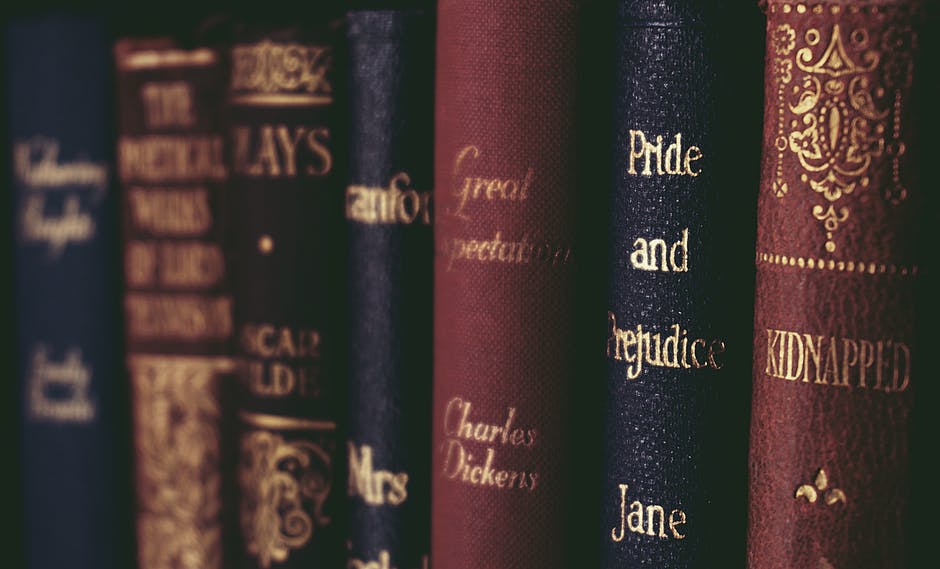
Words tend to get different perspectives along with new syntactical meanings through literature. For instance, the apparent ‘modernness’ and the concept of so-called ‘modernity’ in the ‘modern’ world have been portrayed by various modernist writers through their works. The word “modern” is an arbitray one with a fragile conception associated with it. It keeps changing its meaning and image with the passage of time. In the medieval era, Chaucer had been considered to be the ‘modern’ poet since he was the first one to break through the preconceived traditional poetic forms of the Anglo Saxons and then a few centuries later it was Shakespeare who did the same within his own environmental sphere. Similarly, T.S Eliot, W.B Yeats, Ted Hughes, Thomas Hardy and their contemporaries have been marked as the modernists of the twentieth century. Thus, the word gets a new time and a new perspective every time some new poet/writer/author from a different time period expresses their views of their contemporary society through literature.
Apart from reflecting the societal truth, the objective of Literature goes beyond to being a representative of life, a reflector of human existence through which a shared belief system comes into existence. It does not confine itself into a perishable sphere. It goes beyond the mortality of the world and allows human beings to explore different metaphysical along with a profusion of metaphorical domains through which it manages to bring about a collective consciousness that transcends all physical barriers and eventually gives us a sense of unparalleled aestheticism.
– Suvasree Bandyopadhyay.

 Eduindex
You must be logged in to post a comment.