

History of Indian Ocean Sea Trade-
The Indian Ocean, used, explored and travelled by the navigators for over 5000 years, is the
oldest sea in the records of history till now. It is believed that Indian Ocean is the third largest maritime space in the world. It is a well known fact that Indian Ocean has remained a major route of maritime trade since the ancient times.
Basically the Indian Ocean is too related with the history of the maritime trade in Asia
predominantly. The strength and efficiency of the navy belonging to an Indian Ocean power varied widely with respect to the value of the sea borne trade the ruler’s
income. It was from the period from Augustus up to the early 3rd century CE of the Principate that represents a high point for the direct Mediterranean involvement in the Indian Ocean
trade.. Also, on conquering Egypt, the Roman Empire secured direct access to the centuries-old Indian Ocean trade network that in Roman times brought together China,India, Arabia, Parthia and other regions. In addition to this, the archaeological evidences allow the scholars and historians to observe as well as analyse the peak of Roman involvement in the Indian Ocean sea trade during the 1st century CE.
A lot of cities near the Indian Ocean trade route came into being, of which few of them are
Aden, Jeddah, Arikkamedu, Zanzibar and much more.
The maritime explorations as well as trade through the Indian Ocean have remained in focus
from a very long time and to this date as well, it acquires a great position in terms of worldly
trade networks.
Various sites from Indian Ocean Sea Trade Network having Archaeological Remains-
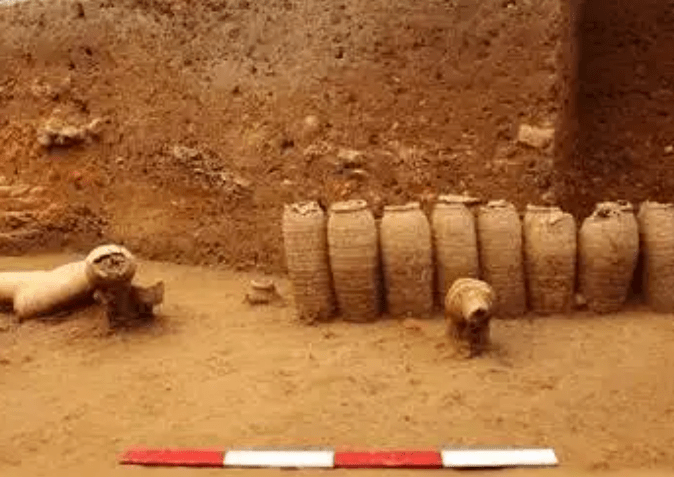
Site 1 (the ancient site and the oldest known till now): one of the oldest sites is an ancient
port of Muziris (present day Pattanam), near Kochi in India, belonging to an early historic
period of 2nd century BCE. Archaeological
evidences suggest that Roman amphorae, pottery shards, precious gem stones, early Chera
coins, turquoise glazed potteries, semi precious stone with lion figure measuring 2cm
etc.were unearthed from the site.
https://www.thehindu.com/news/national/other-states/tubular-jars-excavated-at-pattanam-puzzle-researchers/article7271893.ece/amp/ In this link one can find about the excavation of the site of Pattanam that took place few months ago.
Site 2 (one from the medieval times): one of the major sites from the medieval period is
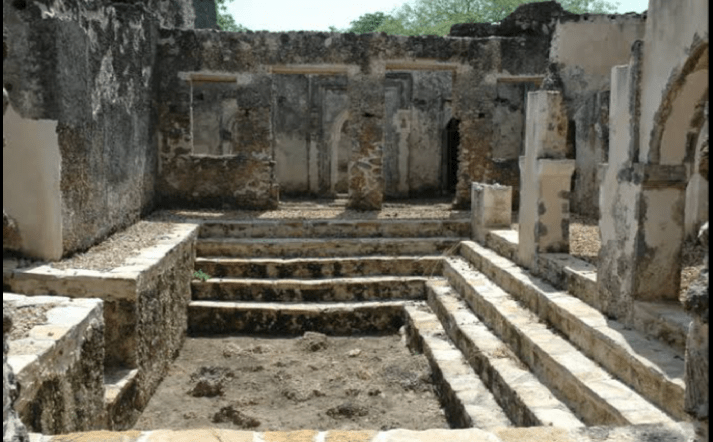
Kilwa Kisiwani, one of the Swahili towns of eastern coast of Africa. Here, several architectural remains can be found, that shows it was one of the trading cities lying in
the Indian Ocean Sea trade route. Constructions such as the warehouses, mosques, wells and merchant houses have been found here, that were built in 14th to 15th centuries. It was also evidently analysed that from 13th to 16th centuries, the
merchants of Kilwa dealt in gold, silver, pearls, perfumes, Arabian crockery and much more
through Indian Ocean trade network. At present the Kilwa Kisiwani is under the
UNESCO world heritage site list along with her sister port named Songo Mnara.
Site 3 (from recent times): during the early modern period, the port town of Aceh emerged
as one of the important ports in the northern part of Sumatra.It became an
important port town from the early 17th century. Archaeological evidences
includes of material such as medieval ceramics, old stone grave markers, and the ruins of
structures and fortifications. This tells about Aceh history prior to the 17thcentury in the
Indian Ocean. As an archaeological remain, an inscription dated 1088 that
refers to the members of a major commercial guild of India of the South, the Ayyavole guild,
relating to rights to pay by the merchants visiting the place of Aceh, have been
found. Aceh emerged as a crucial centre of pepper trade in the 16th
century.
Colonial influence on the Indian Ocean sea trade –
The Indian Ocean trade began with the sea voyages and explorations by the Iberian nations, i.e, Portugal and Spain during the colonial times (from 13th century onwards) and it was
through the early sea voyages by Vasco da Gama and Christopher Columbus, that Portuguese
were able to set up a colony in various regions including India, Macao,Brazil, Madiera etc.
However, the trade network in the Indian Ocean too observed a colonial influence since the
times of French, Dutch as well as British, apart from the Spanish and Portuguese sea voyages.Through trade of commodities as well slaves, they all wanted to dominate India
along with Indian Ocean; originally their main motive was to control trade through Indian
Ocean to various regions of the world. The Portuguese also claimed as lords of the sea, the right to control, direct and tax all trade in the Indian Ocean. Imperial conquests, notably the extension of British power into the western Indian Ocean in
the second half of the 19th century, would seem to fit, as would the Omani, French, and
Portuguese imperial ventures.
Indian maritime trade was little affected by the Portuguese as they relied more on the customs of the Indian shipping. Subsequently,Gujarati ships enabled Goa to earn
about a sixth of its entire revenues from the surplus of Diu in the 17th century and henceforth, Diu became an Indo-Portuguese entrepot of importance. The Dutch were more interested in slave trading as well as Coromandel cloth trading while the Britishers
focussed mainly on commodities of export to Europe such as indigo, pepper, cardamom,
clove, precious stones, cloth and mercantile and much more. So this was how colonialisation impacted the Indian Ocean maritime trade during the colonial times, hence.
Conclusion-
As a conclusive part of this topic, it can be said that the Indian was itself a vast component and a factor in facilitating trade. This was due to the fact that Indian Ocean proved to be a better means for promotion of trade via various segmentary routes for distance trade. Also, the nature of the trade in the Indian Ocean has changed a lot as well. And these days the Indian Ocean is in the news as due to lockdown, the shipping traffic declined and in turn,less noise pollution has been noted. Just like in
ancient times, the trade in recent times from Indian Ocean is extracting out a huge variety of
commodities along with generating economic growth of all the countries involved in the sea trade via this ocean, henceforth.

 Eduindex
You must be logged in to post a comment.