Order Convening General Court Martial Can Be Challenged Before AFT: SC

 In an interesting and significant development, the Supreme Court in Union Of India & Ors. Vs. P.S. Gill in Criminal Appeal No. 404 of 2013 decided on November 27, 2019 has held clearly and convincingly that an order convening a General Court Martial (GCM) can be challenged before an Armed Forces Tribunal (AFT). While differing with an order of the AFT, the Union of India had approached the top court claiming that an order by which the GCM was convened cannot be the subject matter of an appeal before the Tribunal. It was also contended that the jurisdiction of the Tribunal is only for adjudication of complaints and disputes regarding service matters and appeals arising out of the verdicts of the Court Martial.  But it got no relief on this and the top court made the picture clear by holding clearly and convincingly what has been stated above. It merits no reiteration that this should now certainly put to rest all speculations on this important topic.

                                       To start with, the ball is set rolling in para 1 of this noteworthy judgment authored by Justice L Nageswara Rao for himself and Justice Hemant Gupta wherein it is observed that, “The Union of India is in Appeal against the judgment of the Armed Forces Tribunal, Principal Bench, New Delhi (hereinafter, ‘the Tribunal’) quashing the order dated 23.02.2010 by which General Court Martial was convened against the Respondent.”

                                To recapitulate, it is then pointed out in para 2 that, “In the year 2005, the Chief of the Army Staff directed an investigation by the Court of Inquiry into the allegations pertaining to irregularities in procurement of ration, as a result of which the quality of supplies for the troops was compromised. A Court of Inquiry was convened on 10.10.2005 by the General Officer Commanding-in-Chief (GOC-in-C) Western Command to identify the Army personnel responsible for the aforementioned irregularities. Twenty-three witnesses were examined by the Court of Inquiry. The Court of Inquiry identified Twelve Army personnel who were prima facie responsible for the said improprieties. The Respondent who was working as the Chief Director of Purchase (CDP), Army Purchase Organisation, Ministry of Defence was one out of the twelve persons against whom a prima facie case was found. Disciplinary action was also initiated against the Respondent by the GOC-in-C, Western Command on 14.06.2006 which was challenged by the Respondent by filing a Writ Petition in the High Court of Delhi. By an order dated 11.01.2007, the High Court quashed the Court of Inquiry on the ground that Rule 180 of the Army Rules, 1954 (hereinafter, ‘the Army Rules’) was violated. However, an option was given to the Appellants to either hold a fresh Court of Inquiry after complying with Rule 180 of the Army Rules or to proceed directly under Rule 22 by hearing the charge without relying on the Court of Inquiry. The Court of Inquiry was re-constituted pursuant to the option given by the High Court. Later, the Appellants sought a modification of the order dated 29.07.2008 and informed the High Court that proceedings would be initiated under Rule 22 of the Army Rules since most of the officers involved had already retired and that it would be difficult to re-constitute a Court of Inquiry. The High Court permitted the Appellants to proceed under Rule 22 with the condition that no reliance can be placed on the old Court of Inquiry. The order of the Chief of the Army Staff by which cognizance was taken of the offences and the attachment order issued on 26.09.2008 were the subject matter of another Writ Petition filed by the Respondent in the High Court of Delhi which was dismissed on 03.10.2008.”      

                                   While elaborating further, it is then enumerated in para 3 stating that, “A hearing of the charge under Rule 22 against the Respondent was convened on 08.12.2008 and recording of summary of evidence under Rule 23 of the Army Rules was ordered against the Respondent on 24.12.2008. The Commanding Officer of the Respondent i.e. General Officer Commanding (GOC), 15 Infantry Division found that no offence was prima facie made out against the Respondent. The said view was approved by the GOC, 15 Corps on 28.04.2009. In the meanwhile, the Respondent retired on attaining the age of superannuation on 31.05.2009. However, Section 123 of the Army Act, 1950 was invoked by the Appellants to continue the proceedings against the Respondent. The GOC-in-C, Western Command examined the matter and the recommendations made by the GOC, 15 Infantry Division and GOC, 15 Corps and arrived at a conclusion that a prima facie case was made out against the Respondent. An attempt was made by the Respondent to challenge the findings of the GOC-in-C, Western Command, but in vain. The General Court Martial was convened by a letter dated 23.02.2010. The Respondent filed O.A. No. 147 of 2010, assailing the validity of the order convening the General Court Martial. He also sought for quashing the proceedings of the Court of Inquiry, summary of evidence and the conclusion of the GOC-in-C, Western Command holding him prima facie guilty. He further questioned the invocation of Section 123 of the Army Act against him to continue the proceedings even after his retirement. He also sought promotion to the rank of Major General along with his batchmates.”

                                         As it turned out, para 4 then holds that, “The Tribunal held that a prima facie case to proceed against the Respondent by a General Court Martial was not made out. The Tribunal was of the opinion that even if the entirety of evidence of the prosecution is taken to be true, no offence was made out against the Respondent. The Appellants made an attempt to obtain leave to Appeal under Section 31 of the Armed Forces Tribunal Act, 2007 (hereinafter, ‘the Act’) to approach this Court, which was not entertained. Aggrieved by the judgment of the Tribunal, the above Appeal is filed.”

                                   Be it noted, para 13 points out that, “At the outset, it is relevant to note that the O.A. was filed both under Sections 14 and 15 of the Act. Section 15 confers jurisdiction and power on the Tribunal to entertain appeal against any order, decision, finding or sentence passed by a Court Martial.”

                                   To put things in perspective, it is then pointed in para 14 that, “Section 15 (2) of the Act provides for an appeal which can be filed by the person aggrieved by an order, decision, finding or sentence passed by a Court Martial. The order challenged in the OA in this case is a proceeding by which the General Court Martial was convened. As there was no order, decision, finding or sentence by the Court Martial, an appeal under Section 15 per se is not maintainable.”

                                          While explaining the purpose of Section 14, it is then made clear in para 15 that, “Section 14 enables a person aggrieved to make an application to the Tribunal in any service matter. ‘Service matters’ are defined in Section 3 (o) to mean all matters relating to the conditions of their service, which shall include termination of service, inter alia. There are some matters which are excluded from the purview of the definition of ‘service matters’. There is no dispute in this case that the said exclusions do not come into play.”

                                      Of course, it is then also made clear in para 16 that, “Any matter relating to the conditions of service falls within the definition of ‘service matters’ under Section 3 (o) of the Act and can be the subject matter of an application filed before the Tribunal. ‘Conditions of service’ mean those conditions which regulate the holding of a post by any person right from the time of his appointment till his retirement and even after his retirement including pension etc. Therefore, conditions of service also include dismissal from service [State of Maharashtra v. Marwanjee Desai, (2002) 2 SCC 318].”

                                        To put it succinctly, the foregoing discussion leads the Bench to hold in para 18 that, “It is clear from the above that any proceeding which leads to an order of termination would fall within the expression ‘relating to conditions of service’. In any event, the proceedings initiated against the Respondent cannot be said to be not related to his service. A final order to be passed by the General Court Martial, apart from the imposition of other penalties, might have led to the termination of the service of the Respondent.”

                                      More importantly, the Bench then very rightly holds in para 19 that, “We have no doubt in our mind that Section 14 of the Act which confers jurisdiction over service matters of the Army personnel should receive wide construction. This Court had held that an interpretation which confers jurisdiction should be preferred over an interpretation which takes away jurisdiction. [Mantri Techozone v. Forward Foundation, 2019 SCC Online SC 322 (3JB).”

                                 Most importantly, it is then observed in para 20 that, “We are also conscious that the object with which the Act was made is to provide adjudication of complaints and disputes regarding service matters and not only appeals against the verdicts of the Court Martial. It is trite law that statement of objects and reasons can be used as a tool for interpretation. [S.S. Bola v. B.D. Sharma (1997) 2 SCC 522, State of Maharashtra v. Marwanjee F. Desai, (2002) 2 SCC 318]. The sequitur of the above discussion is that the impugned judgment of the Tribunal does not suffer from lack of jurisdiction.”

                                   Going ahead, it is then held in para 21 that, “Regarding the charges sought to be framed against the Respondent, we do not find any error in the approach of the Tribunal. The material on record was perused by the Tribunal to come to a conclusion that no prima facie case is made out against the Respondent. We do not see any reason to interfere with the said findings.” Finally, it is then held in the last para 22 that, “Accordingly, the Appeal is dismissed.”

                                      To summarise, we see that the Apex Court Bench in this latest, landmark and extremely laudable judgment very rightly upholds the AFT order. It has been very rightly held that an order convening a GCM can be challenged before an AFT. It was also rightly submitted by Mr K Ramesh that jurisdiction of the Tribunal cannot be curtailed on pedantic grounds and the order by which General Court Martial was convened was rightly set aside by the Tribunal. No wonder that the Apex Court Bench comprising of Justice L Nageswara Rao and Justice Hemant Gupta very rightly upheld the bona fide submission of the learned counsel Mr K Ramesh and emphatically ruled in his client’s favour while rejecting the submissions made by Ms. Diksha Rai who was the learned counsel appearing for the Appellant who contended that the judgment of the Tribunal is vitiated due to a jurisdictional error! There can be no denying or disputing it!    

Sanjeev Sirohi, Advocate,

s/o Col BPS Sirohi,

A 82, Defence Enclave,

Sardhana Road, Kankerkhera,

Meerut – 250001, Uttar Pradesh.

How to delete cookies in Android and IOS.

What is a cookie?

First let us know what cookies actually are so a cookie is some sort of a message which is sent by the server to the web browser. It is generally a small piece of mechanism or data which is sent by the website you have visited. It generally stores the information like the items you have added in your shopping cart or when you allow the website to remember your password, the pages you have a visited etc.

How to delete the cookies in various browsers?

Chrome.

Chrome for andriod.

1 – First obviously you have to open the Google Chrome app in your android device.

2 – Then click to the right of your address bar which indicates 3 dots vertically and then select the option of settings.

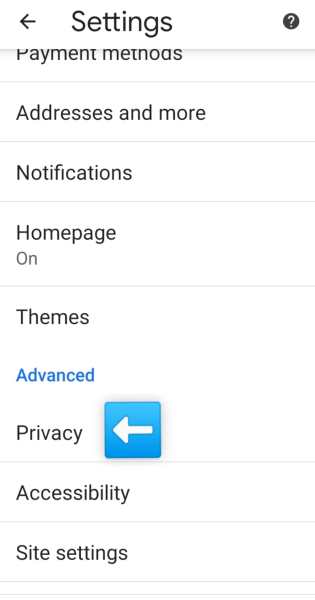
3- After clicking settings move on to the privacy category and then select “clear browsing data”.

4- After that you can select the column of cookies and delete it permanently.

That’s how you clear cookies in your android device as your browser chrome.

Chrome for IOS.

IOS has somewhat similar process to remove cookies.

  • Firstly open the Google Chrome app on your Apple device.
  • Moving on you have to click the 3 vertical dots on the right of the web address bar and then click “settings”.
  • Then move on to privacy and after that click “Clear browsing data”.
  • Then choose the column of cookies and unselect the remaining columns.
  • Lastly select Done.

Firefox for android.

Let’s see how can we delete the cookies using Firefox in an andriod device.

Click on the menu icon representing the 3 vertical dots located at the top right corner. On older Android devices you’ll have to press the hardware menu key and then tap “More.”

  1. Go to the “Settings” after clicking on menu.
  2. On the settings menu, look for “Privacy & security” and select “Clear private data.”
  3. Then you will proceed to a list of what can be cleared and where you can select “Cookies & active logins.”
  4. Select cookies , tap the “Clear data” button to finally delete cookies.

Firefox for IOS.

  1. Move on to the “Settings” menu.
  2. On the settings menu, click “Privacy & security” and then select “Clear private data.”
  3. Then you will proceed to a list of what can be cleared where you select “Cookies & active logins.”
  4. Then after selecting the right column , tap the “Clear data” button to finalize. deleting cookies.

Safari for IOS.

  1. Move to the Settings menu on your device.
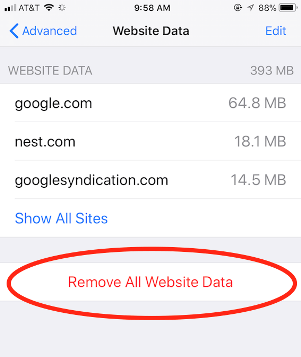
  2. Scroll down to “Safari,” then “Advanced,” then “Website Data”
  3. Tap on “Clear history and website data” to clear cookies it is that simple in this format.

Now regarding the Tablet operating system as it is run on Google Andriod system the process to delete the cook

How to become an Instagram Influencer

With the growing advancements of this digital era, apps like Facebook, Instagram, Twitter have taken over our life in a huge way. Instagram has become one of the most essential and influential apps of today’s world among teenagers and adults who simply find it fascinating as to how the app works and also helps many of them become influencers with thousands of followers. Sounds amazing, right? This article aims at representing the major steps and strategies that should be followed by anyone and everyone in order to become an Instagram influencer in today’s world.


1. Stick to a Genre.


Choose the genre/ subject that your instagram account would be based on. If you have a fascination towards food, make an account with quality food pictures, delicious food recipes, remarkable restaurant reviews/locations and on. If you are an enthusiast traveller, make an account and start posting travel pictures along with distinctive locations of tourist spots, your experiences, write blogs about your journey so on and so forth.

2. Use a Good Camera.


No matter whether your aim is to become a fashion influencer or a travel blogger or a food blogger, always use a relatively good camera with a good picture durability. The more you put an effort to post clear and better pictures, the more engaging your account will get. Even many mobile phone cameras have good picture quality these days. All you have to do is to pick a good device that will help you post good pictures!

3. Make it Aesthetic!


There is a common misconception that only writers/poets/authors have aesthetic instagram profiles. If you are an aspiring food/ travel blogger and if you try your hand at aestheticism, you will surely get more followers in less time than people whole do not have an in-dept aesthetic and artistic touch in their feed.

4. Use proper Hashtags!


Hashtags bring more engagement to your feed. It helps your post reach to people from different countries and different tastes which eventually makes the post more engaging. And remember, more engagement leads to more followers! Maximum numbers of hasgtags to use in a single post is 30 (currently). Take some time to do your research on the popular hashtags that are related to your content and then use them properly!

5. Communicate With Your Followers!


Simply replying to some of the comments on your posts can bring nore engagement to your account. Try responding to some direct messages in free time. It will help in developing the numbers of followers in your account.

6. Put an Impressive Bio.


Whoever comes across your profile will notice your bio first bio first before anything else(yes, even that special post you put so much effort before uploading). Hence, do not make the mistake of putting a bio in a casual manner that makes no sense. Think, take your time and come up with an entertaining, humorous and impressive bio. Do not forget, bio is the first impression that you would be giving out!

7. Shift to a Business Account.


Making your account a business account will simply turn it into a public profile. Public profiles reach to people way faster than the private ones. Once it is a business account you will be offered to work with different brands which will eventually bring you more followers!

8. Put Thoughtful Captions.


Captions play a major role in the development of your instagram account. Take sufficient time to think of an impressive yet humorous caption related to your post that will engage your audience for 2-3 minutes minimum.

9. Go Out of The Box!


Posting similar things for a long period of time may create a sense of monotony in your audience. Therefore, come up with surprises. Go out of the box. Put up different content occasionally to bring about a shock value which will help in creating more engagement and traffic to your feed.
There are various ways that you can explore in order to become a successful instagram influencer, and these are some of the easy yet effective steps that will definitely work out if followed in a proper way. Good Luck !

– Suvasree Bandyopadhyay.

Educational Minister Sisodiya thinking of reopening of school in july in Delhi

Manish Sisodiya wants to open school for class 4 onwards students

The Educational Minister Manish Sisodiya in the latest interview talk about the reopening of School in July for senior students. He told Union Minister that they are thinking about school reopening because for the students of class 4 onwards they really need offline classes to go through about their academics.

But the situation under Corona disease , it can’t be tolerated as the students might be going to do social gathering between them. So, how they will manage social distance.And also for the students school management also needs a lot of changes in rule of conduct. But afterall the question arises are really student follow the guidelines.

All the students also have to be check regularly for thermal screening , that is really a tough work as well as the maintenance of social distance among them also can’t be possible.The Minister had to really go back on his decision and rethought the process of reopening of School.

We can conclude that in today ‘s scenario it is too hard to make this type of thing possible. Because afterall students would be going to hangout with their friends. Also the social distance also a type of impossible task. So Government had to just closed the school till the situation comes under control.

COVID-19 and Creativity

Covid-19 outbreak has created a complex sphere for everyone across the globe with different consequences and repercussions in terms of psychological, physical, social and economic domains as long as human existence is concerned. Apart from infecting around 6.6 million people from different parts of the world, it has also caused several other issues followed by a transformation that is gradually taking place in the society.


The Pessimistic Side


With the growing number of infected cases throughout the whole world, a sense of tension has taken over the mindset of people. The prolonged lockdown period has caused several mental and psychological issues that everyone at some point or the other has faced since the beginning point.

Due to the instructions from the government and the unpredictability of the situation everyone has refrained themselves from stepping out of their house which eventually led to the gradual downfall of economy and financial status of several countries and states. Along with that, a sense of nothingness has grasped around with the passage of time. Monotony and boredom have taken over and it has caused mental disturbances in people from time to time.

Having mentioned the aforementioned points, it should also be mentioned how it has gone to affect the aestheticism and creativity in a larger scale. Many lost their jobs, artists, actors and the others belonging to professions where their wage is depends on daily productivity are suffering quite a lot.

This prolonged period of lockdown across the globe has caused ‘a great depression’ that has eventually taken over our lifestyle. It has been extra harsh on people with mental illness. Those in need of therapists have had to stop their visits due to the lockdown protocols and needless to mention it has led to the deterioration of their mental health.

Lockdown has been really harsh for extroverts who generally find it really difficult confine themselves in a same place for a long period of time. Artists are suffering due to the current situation and with very little hope for their future. In order to maintain a minimum financial stability, several artists have taken up different freelance jobs, which is far from their comfort zone and preferences.


The Optimistic Side

However, despite of the depressive monotony caused by the lockdown, it has also provided us with a great opportunity to work on ourselves more than ever before. Painters, singers, digital artists, writers and others with the same kind of professional roles have found this time really helpful to work on their art works.

Art needs time to develop. Research activities and innovative ideas take time to be brought forth. This period of lockdown has provided these people with a huge amount of free time that they would never get anywhere else. For instance, writers are finding it really helpful and they are making use of the opportunity to write as much as possible which was nearly impossible in the pre-lockdown period with the monotonous hectic life schedules.

Even common people who are not associated with art works and aestheticism, are finding this time really useful. It is a great opportunity to work on ourselves. It has also been helping people to retrospect about literally anything and everything. Everyone has been working a lot in order for them to be better versions of themselves. Therefore, a psychological, mental, sociological and socio-political transformation is taking place due to this deadly virus. In other words, it has been an eye opener for many.

What’s Next?


Although nothing is as unpredictable as our life is right now, it would not be too hard to guess the future, or at least a supposed glimpse of it. This prolonged lockdown period has provided everyone with a huge amount of time which has caused a transformation in everyone at one way or the other. The post-lockdown period will be a new beginning for everyone. It will demand a new system with a fresh mindset of people along with an enthusiastic sense of belongingness. Everyone will be working on their respective professional roles but with more determination, hard work and passion.

Therefore, it can be said that it will go back to normal, but this ‘normal’ will be a different one than what it had been before. Along with the habit of cleaning and purifying ourselves with hand sanitizers and soaps a tendency of living in a purer way will also take place in an eventual manner. The usage of masks can be described in a metaphorical way to be a tool to keep ourselves away from the pollution in the form of negativity and pessimism. A ray of hope therefore is developing in the minds of people to make it a better tomorrow, and the world a better place for each and every organism residing in it.

– Suvasree Bandyopadhyay.