

SWOT is an evaluation-process of external and internal factors through the process of communication which can also be termed as empirical Analysis. This analysis is based on observations and experiments which act as strategic management. SWOT in Business stands for:
S- Strengths
W- Weaknesses
O- Opportunities
T- Threats
Swot analysis is applied in laying down the policies of large organizations. An organization, based on SWOT analysis, can make a relative/comparative study of its strengths, weakness, opportunities, and threads. On the basis of SWOT analysis, a business organization by exploiting its strengths and opportunities can achieve its multifaced goals, by overcoming its weaknesses and rendering its threads innocuous. SWOT analysis trains us in deriving the maximum benefit from the opportunities and the strengths, it is also identified with the term (WOTS-UP).
In other words, SWOT analysis is a technique that enables a business organization to make the best use of its strengths based on the opportunities and by doing so, an organization can keep the possible threads at bay by overcoming its vulnerable areas.
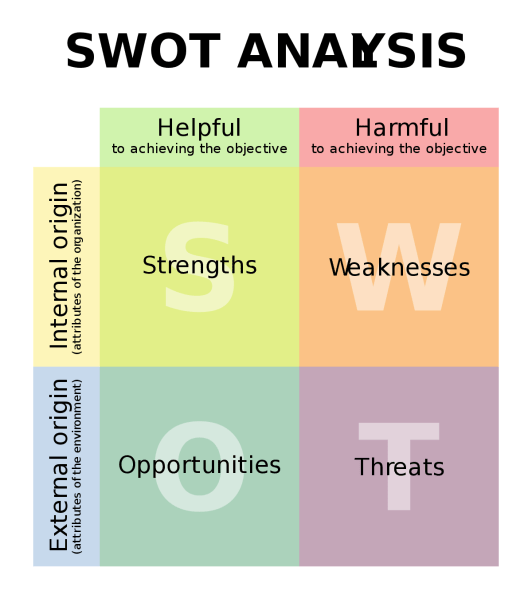
INTERNAL FACTORS
1. STRENGTH
Every individual and every organization possesses some strengths or characteristics or peculiarities. These peculiarities are known as positive points, such as the right pronunciation or right scent in communication, vocabulary, language, command and group discussion, etc., are the positive qualities which fascinate their audience and in course of discussion or debate, satisfying the audience with a clear and valid explanation to their queries, etc., are the major strengths. An effective personality becomes the strength in organizational communication. So strength is a very important factor for anyone.
2. WEAKENESSES
Like strengths and positive assets, there are certain weaknesses in every individual or an organization. Identifying weaknesses and marking them is an important factor. These shortcomings are known as ‘Negative Points” such as faculty and erroneous pronunciation, fast or impatient articulation, inability in drawing others attention and faculty or casual-listening as an audience, non-seriousness, or a casual approach towards communication in a business organization.
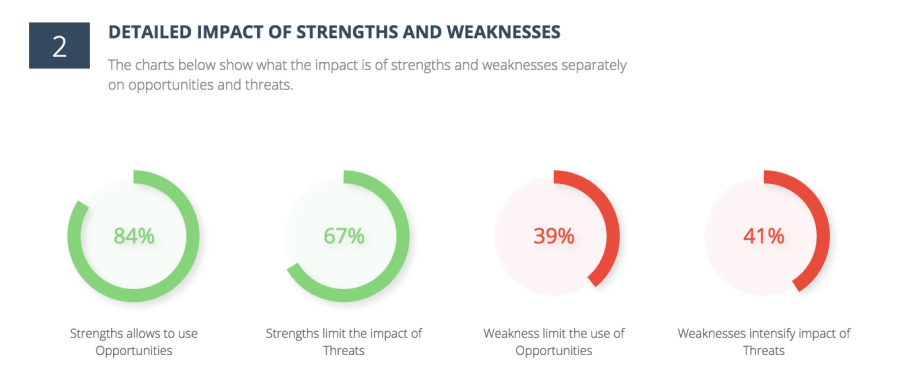
EXTERNAL FACTORS
3. OPPORTUNITIES
In any business, it is essential to avail of opportunities. In the career of any business organization, professional or individual, there are a plethora of opportunities which can be transformed to destinations or in other words can be described as the gateway to one’s destination, for instance, some professionals by benefiting from e-commerce, have attained a global dimension in their business.
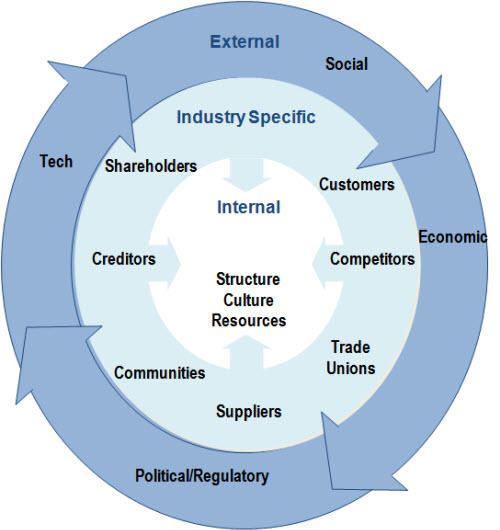
4. THREADS
Society and the external environment give rise to threats. Every organization, business, profession, or an individual has to go through a rigmarole or a series of difficulties/challenges, on way to success. These threads give way to opportunities, such as the discovery of new means of communication e.g., internet, e-commerce, and e-banking, etc.,
As there are always two sides to a coin, in every business or professional area, the strength and weaknesses march together. Each thread provides opportunities. In this analysis, threats, and opportunities (T-O) and weaknesses and strengths (W-S), through the equation, their interrelated analysis is done, which is also know as TOWS Analysis.

 Eduindex
You must be logged in to post a comment.