

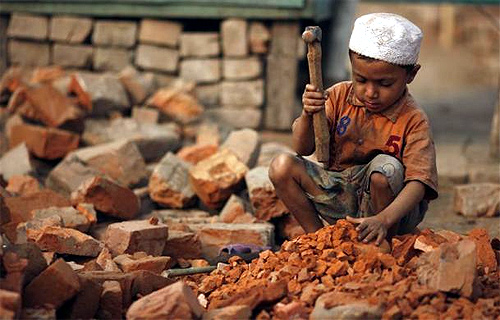
Child labour is the employment of children in any type of work. It keeps children away from the childhood and interferes with their schooling. It is dangerous and harmful to all the children (below age group of 14 years) in the aspects like physically, mentally, and socially or morally.According to the 24th Article of the Constitution of India, the work of children below 14 years of age as labourers, factories, hotels, domestic servants, etc., is covered under child labour, if a person is found doing so There is a provision for appropriate punishment.As reported by UNICEF, there has been a 54% increase in child labor in urbanized areas for children between the ages of 5-14. In addition, according to a Campaign Against Child Labour study, India has approximately 12 666 377 child laborers total. Uttar Pradesh, a state in northern India, has 19,27,997 child labourers Child labour and exploitation are the result of many factors, including poverty, social norms condoning them, lack of decent work opportunities for adults and adolescents, migration and emergencies. These factors are not only the cause but also a consequence of social inequities reinforced by discrimination
How we can reduce child Labour?
- Review national laws regarding child labour.
- Refer to your buyers’ requirements.
- Check the age of your employees.
- Identify hazardous work.
- Carry out workplace risk assessment.
- Stop hiring children below the minimum age.
- Remove children from hazardous work.
- Reduce the hours for children under the
Generally the child of poor families work as Child labour. So , there must be more employment among the poor people. Government should provide more jobs . By reducing poverty we can eradicate the child labour.152 million children worldwide are victims of child labor; 88 million are boys and 64 million are girls. Girls who leave school early do so disproportionately to undertake responsibility for chores within their own homes, while boys are more likely to leave school prematurely in order to join the labor force.The Juvenile Justice (Care and Protection) of Children Act of 2015: This law made it a crime, punishable with a prison term, for anyone to keep a child in bondage for the purpose of employment.A new report by risk analysis firm Maplecroft, which ranks 197 countries, identifies Eritrea, Somalia, Democratic Republic of Congo, Myanmar, Sudan, Afghanistan, Pakistan, Zimbabwe and Yemen as the 10 places where child labor is most prevalent All over the world, children are being exploited through child labour. This mentally and physically dangerous work interferes with schooling and long-term development—the worst forms include slavery, trafficking, sexual exploitation and hazardous work that put children at risk of death, injury or disease
Child labour refers to the exploitation of children through any form of work that deprives children of their childhood, interferes with their ability to attend regular school, and is mentally, physically, socially or morally harmful.
The government has failed to eliminate this dehumanisation of childhood . It has also failed to launch compulsory primary education for all, despite the rhetoric . Between 60 and 100 million children are still at work instead of going to school and around 10 million are working in hazardous industries . India has the biggest child population of 380 million in the world , plus the minimum age of employment ; this makes implementation of these laws difficult .
If the government was at all serious about granting children their rights , an intensive effort ought to have been made to implement the supreme court’s directive of 1997 which laid down punitive action against employers of child labour (Rs.20,000 per child to be paid by offending employers ). Only compulsory primary education can eliminate can eliminate child labour .
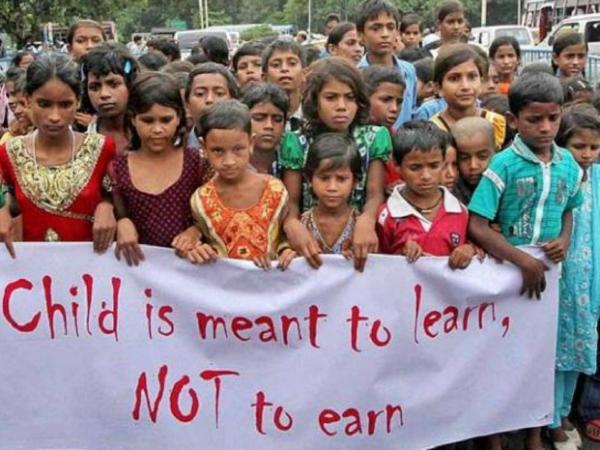
Surely , if 380 million children are given a better life and elementary education , India’s human capital would be greatly enhanced . But that needs , as president Abdul Kalam says , a “second vision“. Can our political establishment see beyond the haze of shallow realpolitik?

 Eduindex
You must be logged in to post a comment.