

There are so many facts about camels that make them a unique animal. All we know about camels is only limited till that they are found mostly in deserts and they carry weight.
Here are some interesting facts about camels that not many of us know.
- Camels are of two types viz. One humped or “dromedary” camels and two humped Bactrian camels.
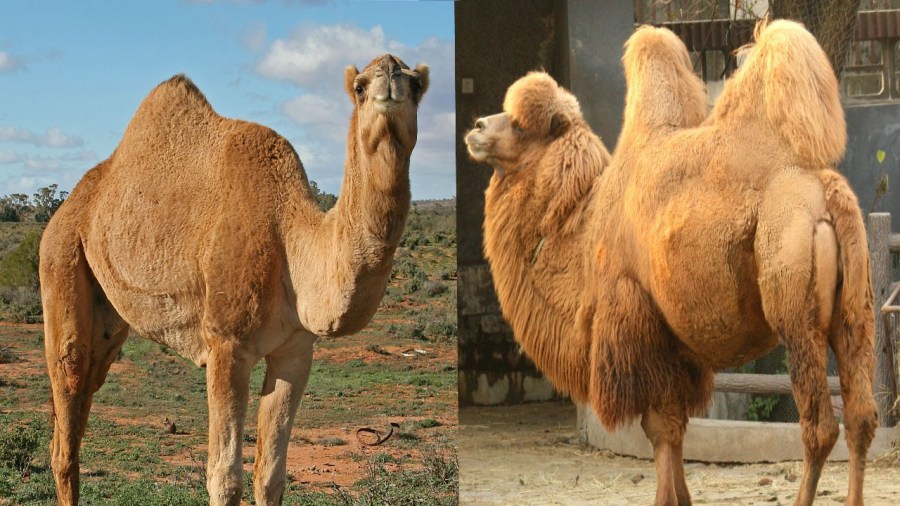
- Dromedary or one humped is of enormous size. That is because their weight ranges from 400 to 650 kilograms, height is easily over two meters and the body length measures more than three meters. The hump is an adaption of the desert life and stores fatty tissues which is used for their nourishment as they travel long distances. Some people believe that the hump of the camel is used to store water which is not true. Their lifespan is about 40 years. They do not have thick coat of fur. Dromedaries naturally range in the North and North-Eastern Africa through the Middle East countries up to Pakistan and India. They do not have any subspecies.
- Two humped Bactrian camels have subspecies. They have long thick coat of fur. camels (especially Bactrian camels) together have a natural range in the Central Asian regions of China and Mongolia.
- Water Storage
Even though camels do not store water in their hump but they have sufficient amount of water in their body for their survival in the desert. they can go without drinking water for nearly a week. This is partly because of the unique shape of their blood cells, which are oval. Oval-shaped blood cells allow camels to consume large amounts of water (up to 30 gallons in one go ) since the cells are more elastic and can change shape more easily. This shape also allows their blood to flow more easily when water is scarce, which is common in a desert.
A camel’s humps is very important for its survival in a desert. Without its humps, a camel would be more likely to overheat and produce sweat but it’s the oval-shaped blood cells that help the camel retain so much water, not the humps.
- Nostrils
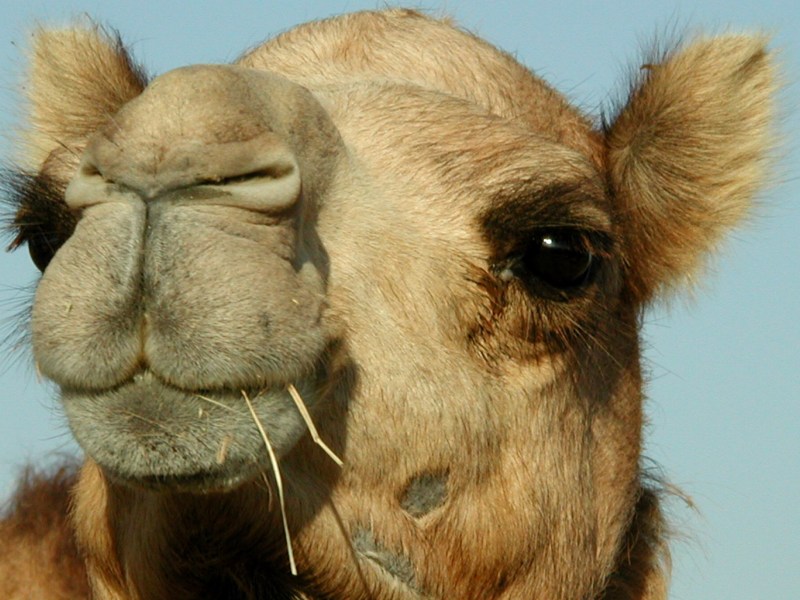
The design of the nose of the camel is very efficient for their survival in the desert. The loss of body water is minimized due to their nostrils. Their nose acts as humidifier and dehumidifier both in one. When an animal breathes, they exhale air along with water vapor. In the dry areas like desert, water is scare and the water loss through breathing increases. This happens because dry desert air that is inhaled is exchanged for the moisture-laden air that is exhaled causing loss of body water. When the large amount of water vapor is exhaled, it is trapped by the nostrils and returned to the body fluids. Therefore, the cooler the air is, the less moisture it will absorb.
Camels can completely shut their nostrils during sandstorms.
- Mouth

The lips of the camel are fat, the mouth is very sturdy that makes them able able to chew thorny desert plants.
- Eyes

Camels have three sets of eyelids and two rows of eyelashes. Two of the eyelids have eyelashes that protect their eyes from sand. The third is a very thin lid which works as a sort of “windshield wiper” to clean off their eyes. It opens and closes sideways instead of up and down. So in a sandstorm or otherwise windy day where sand is being stirred up, they can close that lid to protect their eyes from the sand, but still see where they are going.
Temperature Tolerance
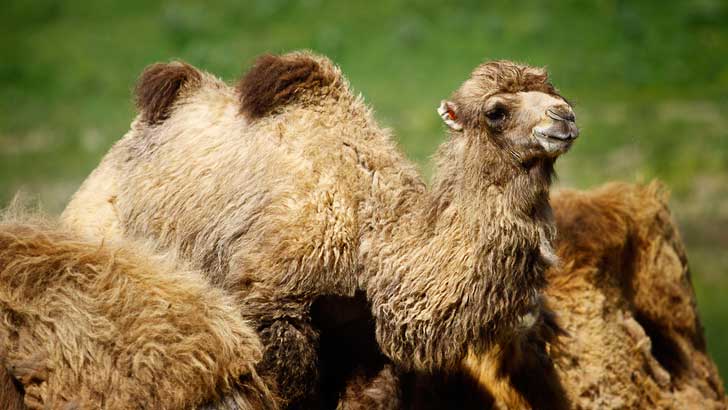
Camels have thick pads of skin on their chest and knees, camels can comfortably sit in very hot sand. Its thick coat reflects sunlight instead of absorbing it. A shaved camel has to sweat 50% more to avoid overheating. It also insulates them from the intense heat that radiates from hot desert sand. Camels are able to withstand changes in body temperature and water content that would kill most other animals. Their temperature ranges from 34°C (93°F) at night up to 41°C (106°F) in the day and only above this threshold will they begin to sweat. This allows them to preserve about five liters of water a day. Camels can withstand at least 25% weight loss due to sweating.
Legs and feet
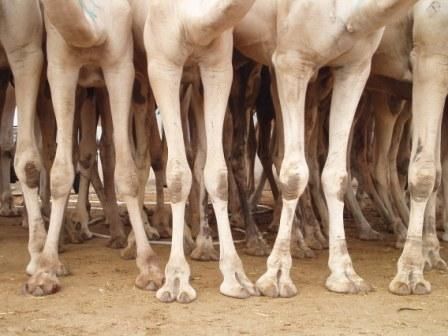
The long legs of the camel keep them further from the hot ground. Camels have tough feet so that they can endure the scorching desert sands. Camel have been known to swim if given the chance. The foot of a camel is made up of a large leathery pad, with two toes at the front, the bones of which are embedded in the foot. Camels can travel at up to 40 miles per hour.
The colour of their skin is sandy for them to camouflage in the desert to protect themselves from the predators which other than humans, are only tigers. The kidneys of a camel are very efficient. Urine comes out as a thick syrup. The female camels can carry their calves for upto 14 months before giving birth to them.
When a camel is angry they spit. So whenever you are around a camel and if they spit, consider it as a threat.
All these characteristics makes a camel very efficient for survival in desert areas and unique from other animals.

 Eduindex
You must be logged in to post a comment.