

The colonial Bengal saw enormous number of peasant revolution in the 19th century; one of them being the Pabna movement in the district of Pabna in Bengal. It was in the year 1873 when the Agrarian League was formed in the Yusufshahi Paragana of Pabna district, where the oppression of a few new landlord pushed the peasants to the thresholds of tolerance, as mentioned by the author Shekhar Bandhopadhyay.
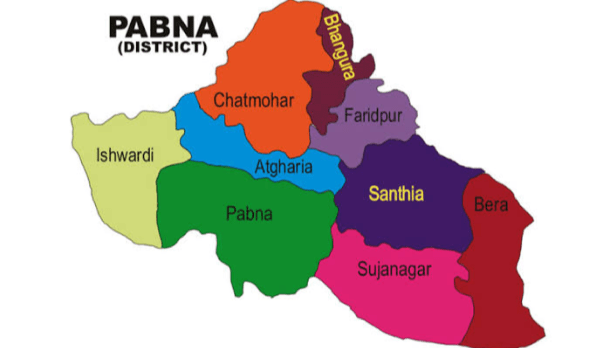
In this area, the rate of rent was continuously increasing along with extra illegal cesses, known as Abwabs. But the main grievance lies in the fact that the landlords were destroying the occupancy rights of the peasants by denying them leases in the same plot of land, on a constant rate for last 12 years.
What Kalyan Kumar Sengupta stresses upon is that in 1873,the occupancy riots of the Pabna district struggled against their landlords to defend the right of occupancy granted to them as well as to the other Bengali cultivators by the Rent Act X of 1859. This agrarian unrest had an impact on the politics of Westernized urban elite of Calcutta and the seat of the 19th century Bengali Bhadralok culture.
It’s also pertinent to mention that the movement was actually non-violent in nature and remained within the fencing of the law, as said by Shekhar Bandhopadhyay. Later, the peasants formed an Agrarian League to raise money to take landlords to the court.
Now, the Pabna experiment was done on other districts of eastern and central Bengal where the zamindars resorted to high landlordism, as described by Benoy Chaudhuri, where they defied all the laws in the management of their estates, enhancing the rent at their will, imposing cesses and destroying the occupancy rights of the peasants. Moreover, agrarian leagues came up in Dacca, Bogra, Faridpur, Tripura and other districts. These were also the regions where the Feraizee Movement had large followers and Naya Miya, the son of Dudu Miya, himself actively organised the agrarian combination in Mohendigunge in 1880. As a result of this movement, the increasing tensions accelerated the functioning of the Bengal Tenancy Act of 1885.
Whereas, RC Dutt suggested measures for the solution of the problems caused by the strained agrarian relations, Parbati Churn Ray, on the other side of the coin, defended tenent rights and tried to counter the landlords’ argument in favour of the enhancement of the rent.
Sunil Sen, another dominant scholar, further writes that the rich peasants and the Bhadraloks often formed the leadership of the rent unions, as in this revolt, the leaders were from the backgrounds of jotedar, talukdar, village headman and rich peasants, of course. To count on a few, the major ones were- Ishan Chandra Ray (known as Bidrohi Raja by the local peasants), Raja Sarkar, Shambhunath Pal and Khoodi Mullah (a Muslim jotedar) etc.
In these ways, the Pabna Movement got its momentum, leading to the formation of the Pabna Agrarian League, where the peasants were too desirous of becoming the Queen’s riots, as mentioned by sir Sanjay Ghildiyal. So, it can be said that the movement, which is obviously not free from numerous debated, had remained a major theme of a hot discussion in the history of colonial Bengal, where one can see an active participation of the rebellious peasants against the increasing harsh behaviour of the landlords hence.

 Eduindex
You must be logged in to post a comment.