

Tamil culture is the culture of the Tamil people. Tamil culture is rooted in the arts and ways of life of Tamils in India, Sri Lanka, Malaysia, Singapore and across the globe. Tamil culture is expressed in language, literature, music, dance, theatre, folk arts, martial arts, painting, sculpture, architecture, sports, media, comedy, cuisine, costumes, celebrations, philosophy, religions, traditions, rituals, organizations, science, and technology.
Language and Literature…
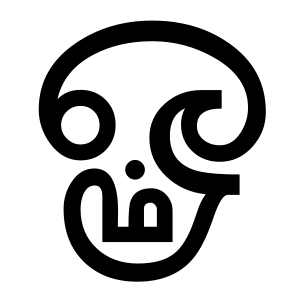
Tamils have strong attachment to the Tamil language, which is often venerated in literature as “Tamilan , “the Tamil mother”.It has historically been, and to large extent still is, central to the Tamil identity.Like the other languages of South India, it is a Dravidian language, unrelated to the Indo-European languages of northern India. The Tamil language preserves many features of Proto-Dravidian, though modern-day spoken Tamil in Tamil Nadu freely uses loanwords from Sanskrit and English and vice versa. Also, the language does not have many commonly used alphabets in the English language and Hindi (a product of Sanskrit and written in Devanagri script).Tamil literature is of considerable antiquity, and is recognised as a classical language by the government of India. Classical Tamil literature, which ranges from lyric poetry to works on poetics and ethical philosophy, is remarkably different from contemporary and later literature in other Indian languages, and represents the oldest body of secular literature in South-east Asia.
Relegious…
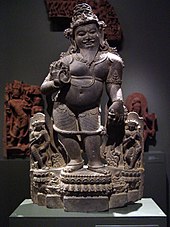
Ancient Tamil grammatical works Tolkappiyam, the ten anthologies Pattuppattu, the eight anthologies Ettuttokai sheds light on early religion of ancient Dravidian people. Murugan was glorified as, the god of war, who is ever young and resplendent, as the favored god of the Tamils.Sivan was also seen as the supreme God.Early iconography of Murugan and Sivan and their association with native flora and fauna goes back to Indus Valley Civilization.The Sangam landscape was classified into five categories, thinais, based on the mood, the season and the land. Tolkappiyam, mentions that each of these thinai had an associated deity such Seyyon in Kurinji-the hills, Thirumaal in Mullai-the forests, and Venthan in Marutham-the plains, Kotravai in Palai-the deesert and kadalon in the Neithal-the coasts and the seas. Other gods mentioned were Mayyon and Vaali who were all assimilated into Hinduism over time. Dravidian influence on early Vedic religion is evident, many of these features are already present in the oldest known Indo-Aryan language, the language of the Rigveda (c. 1500 BCE), which also includes over a dozen words borrowed from Dravidian.This represents an early religious and cultural fusionor synthesis between ancient Dravidians and Indo-Aryans, which became more evident over time with sacred iconography, flora and fauna that went on to influence Hinduism, Buddhism and Jainism.
About 88% of the population of Tamil Nadu are Hindus. Christians and Muslims account for 6% and 5.5% respectively.The majority of Muslims in Tamil Nadu speak Tamil,with less than 15% of them reporting Urdu as their mother tongue.Tamil Jains number only a few thousand now.Atheist, rationalist, and humanist philosophies are also adhered by sizeable minorities, as a result of Tamil cultural revivalism in the 20th century, and its antipathy to what it saw as Brahminical Hinduism.
The most popular deity is Murugan, he is known as the patron god of the Tamils and is also called “Tamil Kadavul” (Tamil God).In Tamil tradition, Murugan is the youngest son and Ganesha/Pillayar is the eldest son of Shiva/Sivan, and it is different from the North Indian tradition, which represents Murugan as the eldest son. The goddess Parvati is often depicted as a goddess with green skin complexion in Tamil Hindu tradition. The worship of Amman, also called Mariamman, is thought to have been derived from an ancient mother goddess, is also very common.Kannagi, the heroine of the Cilappatikaram, is worshipped as Pattini by many Tamils, particularly in Sri Lanka.There are also many followers of Ayyavazhi in Tamil Nadu, mainly in the southern districts. In addition, there are many temples and devotees of Vishnu, Siva, Ganapathi, and the other Hindu deities. Muslims across Tamil Nadu follow Hanafi and Shafi’i schools. Most Tamil Muslims are Shadhilis. Erwadi in Ramanathapuram district and Nagore in Nagapattinam district are the major pilgrimage centres for Muslims in Tamil Nadu.
The most important Tamil festivals are Pongal, a harvest festival that occurs in mid-January, and Puthandu, the Tamil New Year, which occurs on 14 April. Both are celebrated by almost all Tamils, regardless of religion. The Hindu festival Deepavali is celebrated with fanfare; other local Hindu festivals include Thaipusam, Panguni Uttiram, and Adiperukku. While Adiperukku is celebrated with more pomp in the Cauvery region than in others, the Ayyavazhi Festival, Ayya Vaikunda Avataram, is predominantly celebrated in the southern districts of Kanyakumari District, Tirunelveli, and Thoothukudi.
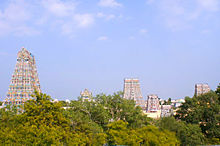
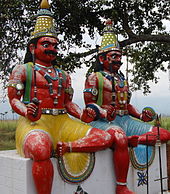
In rural Tamil Nadu, many local deities, called aiyyanars, are thought to be the spirits of local heroes who protect the village from harm.Their worship often centres around nadukkal, stones erected in memory of heroes who died in battle. This form of worship is mentioned frequently in classical literature and appears to be the surviving remnants of an ancient Tamil tradition.
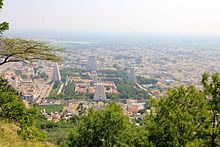
The Saivist sect of Hinduism is significantly represented amongst Tamils, more so among Sri Lankan Tamils, although most of the Saivist places of religious significance are in northern India. The Alvars and Nayanars, who were predominantly Tamils, played a key role in the renaissance of Bhakti tradition in India. In the 10th century, the philosopher Ramanuja, who propagated the theory of Visishtadvaitam, brought many changes to worshiping practices, creating new regulations on temple worship, and accepted lower-caste Hindus as his prime disciples.
Tamil Jains constitute around 0.13% of the population of Tamil Nadu.Many of the rich Tamil literature works were written by Jains.According to George L. Hart, the legend of the Tamil Sangams or “literary assemblies: was based on the Jain sangham at Madurai.

 Eduindex
You must be logged in to post a comment.