Rights of women in India : Know your rights

“Human rights are women’s rights and women’s rights are human rights, once and for all.” - Hillary Clinton

Women in India have provided with some rights. Unfortunately, many of the women do not know their rights.

On the grounds of gender equality, here are some rights an Indian woman holds in India :

Constitutional rights for women in India :


The Preamble to the Constitution resolved to secure all its citizens, including equality of status and opportunity while Articles 14 to 18 and 39 provide for Right to equality and non- discrimination among men and women. Article 14 ensures that the state shall not deny to any person equality before law. It prohibits class legislation but permits reasonable classification. This is a very important provision which provides equal legal protection to women against any women based crime. Article 15 (1) prohibits discrimination against any citizen based on religion, race, caste, sex or place of birth while Article 15 (3) permits ‘protective discrimination’ in favour of women according to which state can make special provision for women and the scope of this article is wide enough to cover the entire range of state activity including employment. Article 16 of constitution of India ensures equal employment opportunity to every citizen of India.

  • RIGHT TO FREEDOM OF WOMEN Articles 19 to 22 of The Constitution of India provide a detailed scheme of Rights (speech and expression, assembly, association or unions, movements, residence, profession and occupation) for citizens with reasonable restrictions and Article 21 provides for Right to life and personal liberty of each and every person in India which includes Right to live with human dignity, right to livelihood, right to work, right to privacy, right against sexual harassment etc. The Indian Parliament also enacted The Indecent Representation of Women (Prohibition) Act bits indecent representation of women through advertisements, books, writings, paintings, figures films or any other manner. The Supreme Court also emphasized the need to provide a life of dignity to the sex workers in our country by giving them some technical skills through which they can earn their livelihood instead of by selling their bodies.
    • RIGHTS OF WOMEN AGAINST
      EXPLOITATION
      Right against exploitation is recognized under Article 23 and 24 of the Constitution of
      India. Article 23prohibits “traffic in human beings and beggar and other similar forms of labour”. The expression “traffic in human beings is evidently a very wide expression including the prohibition of traffic in women for immoral or other purposes. Also the Suppression of Immoral Traffic in Women and Girls Act, 1956 has been enacted with the object of inhibiting or abolishing the immoral trafficking of women and girls. Articles 21 & 23 also impose the duty on state to identify, release and rehabilitate freed bonded labourers. In Gaurav Jain vs. Union of India, the Supreme Court held that the children of the prostitutes have the right to equality of opportunity, dignity, care, protection and rehabilitation so as to be part of mainstream social life.
  • RIGHTS OF WOMEN UNDER DIRECTIVES
    Directive principles of State policy under Articles 36 to 51 of the Constitution of India are fundamental in the governance of the country and it shall be the duty of the state to apply these principles in making laws. Under this various rights of women have been implemented through legislations. The Directive under Article 39(a) provides that the citizens, men and women equally have the right to an adequate means of livelihood and Article 39(d) ensures that there is equal pay for equal work for both men and women. The Parliament has enacted the Equal Remuneration Act, 1976 and to implement Article 39 (d). Article 42of the Constitution provides that the state shall make provision for securing just and humane conditions for work and maternity relief and for this purpose the Maternity Benefit Act, 1961 was enacted.
  • POLITICAL REPRESENTATIONS OF WOMEN
    Article 40 of the Constitution which lay down that the state shall take steps to organize village panchayats and endow them with such powers and authority as may be necessary to enable them to function as units of self government. To realize the Directive the 73rdand 74th Constitutional Amendments had sought to ensure a certain proportion of women as chair persons of panchayats. According to Article 243- D (3) and 243-T (3), not less than one third of the total number of seats to be filled by Directive election in
    every Panchayat/Municipality shall be reserved for women (including SCs AND STs). This opportunity of being a part of local level arbitration process has improved the social conditions of women in village areas.

Legal Rights for Women in India :

Equal Remuneration Act, 1976 (Women have a right to equal pay)


According to provisions under the Equal Remuneration Act, one cannot be discriminated on the basis of sex when it comes to salary or wages. Working women have the right to draw an equal salary.

Sexual Harassment Of Women At Workplace Act, 2013 (Women have a right against harassment at work)

The enactment of the Sexual Harassment of Women at Workplace Act gives you the right to file a complaint against sexual harassment. The law enables a sexually harassed woman employee can put in a written complaint to an Internal Complaints Committee (ICC) at a branch office within a period of 3 months as per the Sexual Harassment Act. This complaint further is taken up by the Local Complaints Committee (LCC) at a district level, ensuring investigations start regarding the same if proper action has not been taken against the employer. The complaint can also be filed by any of the woman’s legal heirs on her behalf or any other person who has written permission given by her to make the complaint.

Protection of Women from Domestic Violence Act (2005) (Women have a right against domestic violence)


The act primarily looks to protect a wife, a female live-in partner or a woman living in a household like a mother or a sister from domestic violence at the hands of a husband, male live-in partner or relatives. She or anybody on her behalf can file a complaint.
Section 498 states that whoever, being the husband or the relative of the husband of a woman, subjects her to cruelty, shall be punished with imprisonment for a term which may extend to three years and shall also be liable to fine. The complaint registered against an offender makes it a non-bailable one, ensuring a woman’s safety and provide protection from domestic abuse. The acts of violence are not limited to physical brutality, but also other forms of abuse like verbal, economic, emotional and sexual.


Women have a right to anonymity for sexual assault victims

Victims of sexual assault have a right to anonymity. To ensure that her privacy is protected, a woman who has been sexually assaulted may record her statement alone before the district magistrate when the case is under trial, or in the presence of a female police officer.

Legal Services Authorities Act (1987) (Women have a right to free legal aid)

All-female rape victims have the right to free legal aid, under the Legal Services Authorities Act. It is mandatory for the Station House Officer (SHO) to inform the Legal Services Authority, who arranges for the lawyer.


. Code of Criminal Procedure (1973) (Women have right not to be arrested at night)

A woman cannot be arrested after sunset and before sunrise, except in an exceptional case on the orders of a first class magistrate. Further, the law states, “The police can interrogate a woman at her residence in the presence of a woman constable and family members or friends”. A woman can also not be detained at night at the police station without legal permission.


Women have a right to register their complaint virtually

If a woman is not in a position to physically go to a police station and file a complaint, there is a provision for virtual complaints where she can lodge a complaint via e-mail or write her complaint and send to a police station from a registered postal address. This provision leads to the SHO (Station House Officer) sending police to the complaint’s place to record her.


Indecent Representation of Women (Prohibition) Act (1986)


The depiction in any manner of the figure of a woman; her form or body or any part in such way as to have the effect of being indecent, or derogatory to, or denigrating women, or is likely to deprave, corrupt or injure the public morality or morals”, is a punishable offense.

Women have a right against being stalked

Section 354D of the IPC and legal action can be taken against an offender. It has been considered as a legal offense. Stalking has been defined by the law as, “To follow a woman and contact, or attempt to contact such woman to foster personal interaction repeatedly despite a clear indication of disinterest by such woman; or monitor the use by a woman of the internet, email or any other form of electronic communication.”


The provision of zero FIR

The ruling by the Supreme Court mentioned that a woman who is a victim can register her complaint at any police station under the Zero FIR ruling. The Zero FIR is an FIR that can be filed at any police station irrespective of the location where the incident occurred or a specific jurisdiction it comes under. So once that FIR is lodged and investigation and filling are done with a magistrate, it can be moved to the Police Station in whose jurisdiction the case falls under. This ruling was passed to save time that would impact a victim and also lead to an offender getting away scot-free.
Right to dignity and decency
In an event that the accused is a woman, any medical examination procedure on her must be performed by — or in the presence of — another woman.

Maternity Benefit Act


This ensures that women working in establishments for decided time (both before and after childbirth) are entitled to maternity and other benefits.

Medical Termination of Pregnancy Act


This allows the termination of certain cases of pregnancies by registered doctors on humanitarian and medical grounds.

Pre-Conception and Pre-Natal Diagnostic Techniques (Prohibition of Sex Selection) Act


This will prevent of sex selection before or after a woman conceives. This will reduce unwanted and illegal abortions in the country.

Hindu Marriage Act


This has been instrumental in introducing monogamy and allowed divorce on certain specified grounds. This law has helped in bringing Indian man and woman on the same platform in terms of marriage and divorce.

Hindu Succession Act:


This recognises the right of women to inherit parental property equally with men.

So these were the rights women have in India.

UNIQUE GIFT IDEAS

Welcome everyone today we are going to know about more gift ideas.Gift is something when you give the person the persons feel happy so I visited a site i.e Geek Monkey (https://www.geekmonkey.in/). I visited the site I find very wonderful thing and gifts in the site.

You can have every types of categories of gift for him,her and also for kids and low price.You can also have your personalized gift. The categories are baby shower gift, birthday gift, farewell gifts and many more.There are types of Rakhi as Rakhi festival is coming so you can get there variety of gift.

This site has unique gifts for every type of person like traveler,creative, fashionable,super hero fan and many more are there.You should once visit there site and see there categories.

I love the things and different categories were there. I hope you all will also find you gifts

As any occasion people like buy gifts and this time because of covid-19 we can’t go outside as it is dangerous for us so why not stay at home and search as many as product and buy easily.

I hope you will visit this site and find it useful.

Thank you for reading my article and have a nice day!

Big loss to China:Chinese apps to lose around USD 6 billion after ban in India.

Chinese  tech giant unicorn ByteDance Ltd. is anticipating a huge loss of over USD 6 billion after ban on its 3 apps including hugely popular video making TIK TOK app in India. The decision was taken by indian government in wake of  unfortunate clash in Galwan valley in Ladakh between Indian and Chinese soldiers which led to death of 20 Indian brave soldiers and more number of casualties in Chinese camps.

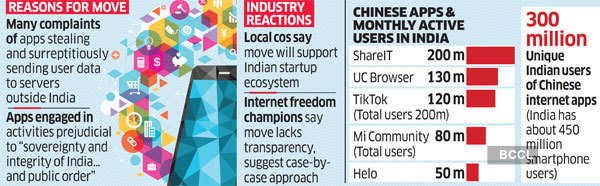
Besides TikTok , India on last Monday banned 58 more Chinese apps including Club Factory, UC Browser and Share it apps for engaging in activities prejudicial to sovereignty  and integrity of India, defence of India, security of India and public order.

India was the biggest market in terms of users . Of the total 611 million  downloads nearly 112 million are from India which is considerably huge. This ban has however sent image to Chinese government that India would never compromise its privacy, sovereignty and integrity.

The Chinese government has been angry over the decision and want us to take back the decision. However the ban period is not clear and the banned apps are claiming that they have not revealed any information to foreign countries even China.

A top official said the government had considered all aspects before taking the decision. “These apps have been there for a long time, and there are some privacy and security issues with them including risks of data going out of the country,” said the person. 

The statement from the Ministry of Electronics and IT (MeitY) said it had received complaints from various sources, including several reports about the misuse of some mobile apps for stealing and surreptitiously transmitting users’ data in an unauthorised manner to servers outside India. 

graph

The ban would surely help in bringing Indian alternatives for the Chinese apps and reduce the dominance of Chinese products in Indian market.

MASLOW’S NEED FOR HIERARCHY THEORY

Abraham Maslow an eminent US psychologist, offered a theory of motivation called the ‘Need Hierarchy theory’ and he felt that wide range of needs which motivate them to strive for their fulfilment and human can be categorised into five types as- Physiology needs, security needs, social needs, esteem needs, and self-actualisation needs.

HIERARCHY OF NEEDS

Motivation is concerned with the behaviour of a person or group of persons and nay behaviour is need-based, what is this need? A need is  a feeling that something is required and this feeling creates mental tensions and this tension in mind is transformed into want and to satisfy this want the person who feels the need (he or she who is  deprived of something), acts in one or another way to satisfy this want and satisfaction of a particular want releases the tension and then the behaviour to satisfy that want ceases, but in the meantime, some other need may be felt and thus need causing tension, tension causing the behaviour, satisfying the felt-need is a continuous process and needs are of different kinds and these have varying influences on motivation, for example:

Maslow’s hierarchy of needs, a scalable vector illustration on white background

1. Basic Physiological Needs:

  Basic needs such as food, water, clothing, shelter, sleep and sexual satisfaction are included in this set of needs and these are the primary needs for sustaining human life itself and according to Maslow until these needs are satisfied to the extent necessary to sustain life these needs remain the motivating force.

2. Security or safety Needs:

Security is means “the feeling which involves being able to hold on to that one has. Being sure that one will be able to fare as well in future as in the past”. Thus these needs include being free from physical danger and the fear of losing a job, proper food, clothing or shelter.

3. Affiliation or Belonging Needs:

These include the need for love i.e. the need for affection and desire for association with others and the need for affiliation or acceptance becomes more prominent and becomes a motivating force.

4.Esteem Needs:

These needs include the desire to enjoy social approval, self-assertion and self-esteem and such a knowledge (Gratification of need for esteem) contributes to a feeling of self-confidence, worth or capability and it generates satisfaction such as power, prestige and status and status is the relative ranking that a person holds in a group or organization.

5. Self-Actualization Needs:

This refers to the desire for self-fulfilment and achievement and it is the desire to become what one believes to be capable of becoming and he wants to maximise his potential and to accomplish something and this need is regarded by Maslow as the highest in his hierarchy of needs.

ASSUMPTIONS OF MASOW’S THEORY

Maslow’s theory is based on the following assumptions:

  1. People’s behaviour is based on their needs. The satisfaction of such needs influences their behaviour.
  2. People’s needs are in hierarchical order, starting from basic needs to other higher-level needs;
  3. A person moves to the next higher level of the hierarchy only when the lower needs is satisfied; and
  4. A satisfied need can no longer motivate a person; only next higher need can motivate him.

FACTS ABOUT ANCIENT EGYPT!

Hello everyone today we are going to know facts about ancient Egypt.Before we start with facts of Egypt first let know about the place.

Ancient Egypt civilization is from northeastern Africa which started from 4th Millennium B.C. It can be thought as the oasis in the desert of northeastern Africa which dependent on Nile River for its agricultural support.It was the most powerful civilization in the history of the world.It has a rich culture including religion,government,arts, writing etc.The Ancient Egypt start to began weak in 700 B.C which was conquered by other civilization.

Let’s move to the facts of Ancient Egypt.

1.Egyptian men and women both use makeup which help them to protect their skin from sun rays.

2.This civilization was the first civilization who invented writing.

3.This Egyptians has a major role in Bible.

4.The Pharaoh kept their hair covered only regular people are allowed to see.

5.Cats were believe as sacred in Egypt.

6.Ancient Egypt love to play board games.

7.In Ancient Egypt the women had a wide range of rights and freedoms.

8.We all heard that the pyramids are made by slaves but it is not true, the slaves didn’t made the Pyramids.

9.Egyptians love to keep many animals as there pet.

10.The afterlife had exist in the Ancient Egypt.

So this were some facts that have also surprise you.

I hope you like my article and let me know in the comment box which fact you like.

Thank you for reading my article and have a nice day!

WOMEN EMPOWERMENT

Hello everyone today we are going to discuss about women empowerment.As we all know when a girl is born first she became daughter of parents then when they grow up they become ladies and do jobs for better future of their family then they become mom, there are some mom who also do jobs and also take care of their child. Women also take care of the child and also the house they do so much for us.If we ask for there rights is this wrong?

Why some men say that women are for doing household works they can’t work outside of the house? I don’t understand why the men are jealous if the lady do a better work. You should be proud as your partner is doing nice work with you. There are also so many thing that man things that they are only capable, ladies can’t do that.In our Indian culture women are given utmost request,but our culture also worship female goddess.Women plays an important role in our society. We should give them equal rights what the men are getting.

Suppose imagine one day you wake up and you don’t found your mother, wife, your daughter, or any ladies those who are working for you, if they suddenly get disappear you don’t find them no where what you will do? You take this two day lightly as it is a joke then later on you will first face problem then slowly you will miss them. If we don’t give them proper equality with us then we are going to loose them. Always women are suppressed by their family members then by their husband and later on by their children.Why we always try to suppress them?Because they do so much for us or it’s there duty!

In order provide women with protection and give them a equal right and minimize the female crime government has passed a bill that is Child and Care Protection in 2015 to decrease the juvenile cases at the age of 16 to 18.

In order to really give the women empowerment to the society, the main cause of evil practices against women that are male-dominated societal structure needs to be understood and abolished.We must be open-minded and have an equal thoughts for male and female.

I hope you like my article and let me know what do you think about Women Empowerment?

Thank you for reading my article and have a nice day!

Accidently Created Radiation Shield around Earth in Deep Space : EMI Test Exclusive …………..//

NASA spends a lot of time researching the Earth and its surrounding space environment. One particular feature of interest are the Van Allen belts, so much so that NASA built special probes to study them! They’ve now discovered a protective bubble they believe has been generated by human transmissions in the VLF range.

VLF transmissions cover the 3-30 kHz range, and thus bandwidth is highly limited. VLF hardware is primarily used to communicate with submarines, often to remind them that, yes, everything is still fine and there’s no need to launch the nukes yet.  It’s also used for navigation and broadcasting time signals.

It seems that this human transmission has created a barrier of sorts in the atmosphere that protects it against radiation from space. Interestingly, the outward edge of this “VLF Bubble” seems to correspond very closely with the innermost edge of the Van Allen belts caused by Earth’s magnetic field.

Credit : Third Party Reference

What’s more, the inner limit of the Van Allan belts now appears to be much farther away from the Earth’s surface than it was in the 1960s, which suggests that man-made VLF transmissions could be responsible for pushing the boundary outwards.

Overall, this seems like an accidental, but potentially positive effect of human activity – the barrier protects the Earth from potentially harmful radiation. NASA’s YouTube video on the topic suggests that understanding this mechanism better could enable us to protect our satellites and space vehicles from some of the harmful effects of the space environment.

A week or two ago we featured a research paper from NASA scientists that reported a tiny but measurable thrust from an electromagnetic drive mounted on a torsion balance in a vacuum chamber. This was interesting news because electromagnetic drives do not eject mass in the way that a traditional rocket engine does, so any thrust they may produce would violate Newton’s Third Law.

Credit : Third Party Reference

Either the Laws Of Physics are not as inviolate as we have been led to believe, or some other factor has evaded the attempts of the team to exclude or explain everything that might otherwise produce a force.

As you might imagine, opinion has entrenched itself on both sides of this issue. Those who believe that EM drives have allowed us to stumble upon some hitherto undiscovered branch of physics seized upon the fact that the NASA paper was peer-reviewed to support their case, while those who believe the mechanism through which the force is generated will eventually be explained by conventional means stuck to their guns. The rest of us who sit on the fence await further developments from either side with interest.

Over at Phys.org they have an interview from the University of Connecticut with [Brice Cassenti], a propulsion expert, which brings his specialist knowledge to the issue. He believes that eventually the results will be explained by conventional means.

But explains why the paper made it through peer review and addresses some of the speculation about the device being tested in space. If you are firmly in one of the opposing camps the interview may not persuade you to change your mind, but it nevertheless makes for an interesting read.

Reference – https://divyanshspacetech.wordpress.com

Developed countries must implement financial and technological commitments under UNFCCC and Paris agreement: Prakash Javadekar

Environment Minister Prakash Javadekar today said, developed countries must implement the financial and technological commitments under UNFCCC and Paris agreement. Representing India at the fourth edition of the virtual Ministerial on Climate Action, Mr Javadekar said, India has taken very significant steps for combating climate change and will continue its efforts in the future also.

He called upon developed country parties, once again, to do their part as envisaged under UNFCCC and Paris Agreement, for extending financial and technological support to developing countries. The Environment Minister said, the promise of one trillion dollars by 2020 has not been fulfilled so far, and expressed hope that in the remaining 5 months of 2020, the promised amount will be mobilized and delivered for further strengthening climate actions in developing countries.

Highlighting India’s efforts, the Environment Minister said, India has achieved reduction of 21 percent in emission intensity of its GDP between 2005 and 2014, thereby achieving its pre-2020 voluntary target. He said, India’s renewable energy installed capacity has increased by 226 percent in last 5 years and stands at more than 87 Gigawatt. The share of non-fossil sources in installed capacity of electricity generation increased from 30.5 percent in March 2015 to 37.7 per cent in May 2020.

He said, Prime Minister Narendra Modi has further announced the aspirational target of increasing renewable energy capacity to 450 GW.

The minister further said that government has provided 80 million LPG connections in rural areas, providing them with clean cooking fuel and healthy environment. India’s total forest and tree cover is 8,07,276 square kilometres which is 24.56 percent of the total geographical area of the country. He said, more than 360 million LED bulbs have been distributed under UJALA scheme, which has led to energy saving of about 47 billion units of electricity per year and reduction of 38 million tonnes of CO2 per year.

Highlighting India’s efforts towards cleaner fuel, Mr Javadekar said that India has also leapfrogged from Bharat Stage-IV to Bharat Stage-VI emission norms by 1st April this year which was earlier to be adopted by 2024. The minister also highlighted how India had levied a coal cess of 400 rupees as, part of one of the most explicit green initiatives and this is now subsumed under Goods and Services Tax

Developed countries must implement financial and technological commitments under UNFCCC and Paris agreement: Prakash Javadekar

Environment Minister Prakash Javadekar today said, developed countries must implement the financial and technological commitments under UNFCCC and Paris agreement. Representing India at the fourth edition of the virtual Ministerial on Climate Action, Mr Javadekar said, India has taken very significant steps for combating climate change and will continue its efforts in the future also.

He called upon developed country parties, once again, to do their part as envisaged under UNFCCC and Paris Agreement, for extending financial and technological support to developing countries. The Environment Minister said, the promise of one trillion dollars by 2020 has not been fulfilled so far, and expressed hope that in the remaining 5 months of 2020, the promised amount will be mobilized and delivered for further strengthening climate actions in developing countries.

Highlighting India’s efforts, the Environment Minister said, India has achieved reduction of 21 percent in emission intensity of its GDP between 2005 and 2014, thereby achieving its pre-2020 voluntary target. He said, India’s renewable energy installed capacity has increased by 226 percent in last 5 years and stands at more than 87 Gigawatt. The share of non-fossil sources in installed capacity of electricity generation increased from 30.5 percent in March 2015 to 37.7 per cent in May 2020.

He said, Prime Minister Narendra Modi has further announced the aspirational target of increasing renewable energy capacity to 450 GW.

The minister further said that government has provided 80 million LPG connections in rural areas, providing them with clean cooking fuel and healthy environment. India’s total forest and tree cover is 8,07,276 square kilometres which is 24.56 percent of the total geographical area of the country. He said, more than 360 million LED bulbs have been distributed under UJALA scheme, which has led to energy saving of about 47 billion units of electricity per year and reduction of 38 million tonnes of CO2 per year.

Highlighting India’s efforts towards cleaner fuel, Mr Javadekar said that India has also leapfrogged from Bharat Stage-IV to Bharat Stage-VI emission norms by 1st April this year which was earlier to be adopted by 2024. The minister also highlighted how India had levied a coal cess of 400 rupees as, part of one of the most explicit green initiatives and this is now subsumed under Goods and Services Tax.

Locust control operations carried out in more than 2.75 lakh hectare area so far: Agriculture Ministry

Union Agriculture Ministry has said that locust control operations have been carried out in more than 2.75 lakh hectare area so far since 11th of April in various states. The States are Rajasthan, Madhya Pradesh, Punjab, Gujarat, Uttar Pradesh, Maharashtra, Chhatisgarh, Haryana and Bihar. The Ministry said, aerial spraying capacity has been strengthened for anti-locust operations.
 
A Bell helicopter has also been deployed in Rajasthan for use in Scheduled Desert Area as per the need. Indian Air Force has conducted trials in anti-locust operation by using an Mi-17 helicopter and the results are encouraging. IAF started participating in anti-locust operations from 5th of this month by deploying the Mi-17 helicopter for aerial spraying in Jodhpur district. This is first of its kind exercise in the history of locust control in India.
 
The Ministry said, further, five companies with 15 drones are deployed at Barmer, Jaisalmer, Bikaner, Nagaur and Phalodi in Rajasthan for effective control of locusts on tall trees and in inaccessible areas through spraying of pesticides. It said, presently 60 control teams with spray vehicles are deployed in State of Rajasthan, Gujarat, Madhya Pradesh and Uttar Pradesh and more than 200 Central Government personnel are engaged in locust control operations. In addition, 20 spray equipments have reached India.
 
The Ministry said, no significant crop losses have been reported in the States of Gujarat, Uttar Pradesh, Madhya Pradesh, Maharashtra, Chhatisgarh, Bihar and Haryana. However, some minor crop losses have been reported in some districts of Rajasthan.

US considering to ban Chinese Apps including TikTok

The United States is looking at banning Chinese social media apps, including TikTok. The US Secretary of state Mike Pompeo said this in an interview with an American news channel.

US lawmakers have raised national security concerns over TikTok’s handling of user data. They were worried about Chinese laws requiring domestic companies to support and cooperate with intelligence work controlled by the Chinese Communist Party.

Pompeo’s remarks also come amid increasing US-China tensions over the handling of the coronavirus outbreak, China’s actions in Hong Kong and a nearly two-year trade war.

Meanwhile, the app, which is not available in China, has sought to distance itself from its Chinese roots to appeal to a global audience and has emphasized its independence from China.

CBSE reduces syllabus for classes 9th to 12th by 30% for academic year 2020-21

Central Board of Secondary Education (CBSE) has rationalised the syllabus up to 30 per cent for classes 9 to 12 to make up for academic loss during COVID-19 lockdown.
 
In a series of tweets, Human Resource Development Minister Ramesh Pokhriyal Nishank said, considering the importance of learning achievement, it has been decided to rationalize syllabus by retaining the core concepts.

He said, looking at the extraordinary situation prevailing in the country and the world, CBSE was advised to revise the curriculum and reduce course load for the students of Class 9th to 12th.

India has one of the lowest COVID-19 cases per million in world

India has one of the lowest COVID-19 cases per million in the world. Union Health Ministry said, according to World Health Organization Situation Report, India’s cases per million population is around 505 while the global average is at over one thousand 453.

Chile has witnessed around 15,459 cases of COVID-19 per million population, while US over 8,500, Brazil over 7,419 and Spain witnessed over 5,358 cases per million population. The WHO Situation Report also shows that India has one of the lowest deaths per million population. India’s cases of death per million population is around 14 while the global average is more than its four times, at 68.

The Ministry said, India has ramped up the hospital infrastructure to adequately and effectively manage the cases. The preparedness included arrangement of oxygen support, ICU and ventilator facilities. As on today, there are over 1200 Dedicated COVID Hospitals, two thousand 611 Dedicated COVID Healthcare Centres and nine thousand 909 COVID Care Centres to look after COVID patients from those with very severe to very mild symptoms. Early detection and timely effective clinical management of COVID-19 cases have resulted in increasing daily recoveries.

During the last 24 hours, a total of 15,515 COVID-19 patients have been cured, taking the cumulative figure of recovered cases to more than 4,39,000. The Ministry said, due to coordinated efforts at all levels of the national and State governments for prevention, containment and management of COVID-19 are showing encouraging results with consistently increasing gap between recoveries and active cases. As on date, there are over one lakh 80 thousand recovered cases more than the active COVID-19 cases.

The recovery rate among COVID-19 patients has increased to 61.13 per cent yesterday. Presently, there are over 3, 59,000 active cases and all are under medical supervision.The Ministry said, more than two lakh tests being conducted per day. During the last 24 hours more than 3, 41,000 samples have been tested. With this, the nationwide samples tested for COVID-19 reached to over one crore two lakh. 

India has one of the lowest COVID-19 cases per million in world

India has one of the lowest COVID-19 cases per million in the world. Union Health Ministry said, according to World Health Organization Situation Report, India’s cases per million population is around 505 while the global average is at over one thousand 453.

Chile has witnessed around 15,459 cases of COVID-19 per million population, while US over 8,500, Brazil over 7,419 and Spain witnessed over 5,358 cases per million population. The WHO Situation Report also shows that India has one of the lowest deaths per million population. India’s cases of death per million population is around 14 while the global average is more than its four times, at 68.
 
The Ministry said, India has ramped up the hospital infrastructure to adequately and effectively manage the cases. The preparedness included arrangement of oxygen support, ICU and ventilator facilities. As on today, there are over 1200 Dedicated COVID Hospitals, two thousand 611 Dedicated COVID Healthcare Centres and nine thousand 909 COVID Care Centres to look after COVID patients from those with very severe to very mild symptoms. Early detection and timely effective clinical management of COVID-19 cases have resulted in increasing daily recoveries.

During the last 24 hours, a total of 15,515 COVID-19 patients have been cured, taking the cumulative figure of recovered cases to more than 4,39,000. The Ministry said, due to coordinated efforts at all levels of the national and State governments for prevention, containment and management of COVID-19 are showing encouraging results with consistently increasing gap between recoveries and active cases. As on date, there are over one lakh 80 thousand recovered cases more than the active COVID-19 cases.
 
The recovery rate among COVID-19 patients has increased to 61.13 per cent yesterday. Presently, there are over 3, 59,000 active cases and all are under medical supervision.The Ministry said, more than two lakh tests being conducted per day. During the last 24 hours more than 3, 41,000 samples have been tested. With this, the nationwide samples tested for COVID-19 reached to over one crore two lakh. 

India, US reaffirm their commitment to work towards ensuring free, open & peaceful Indo-Pacific region

India and the US have reaffirmed their commitment to work towards ensuring a free, open, inclusive, peaceful and prosperous Indo-Pacific. They also agreed on the need to deepen cooperation in the United Nations, especially during India’s membership of the United Nations Security Council.
 
Foreign Secretary Harsh Vardhan Shringla and the US Under Secretary of State for Political Affairs David Hale exchanged views on a number of regional and global issues of shared interests during the virtual foreign office consultations between the two countries yesterday. They reviewed the entire gamut of engagements under the India-US Comprehensive Global Strategic Partnership, including political, economic, commercial, regional and international cooperation.
 
In the backdrop of the COVID-19 pandemic, they agreed to further strengthen the bilateral health partnership, including on pharmaceuticals and vaccine development. They agreed to remain in touch and move forward on the bilateral agenda through a range of mechanisms like the 22 ministerial that India will host later this year.
 
Mr Shringla and Mr Hale discussed ways to further enhance mutually beneficial trade and people-to-people ties, including through visa facilitation for students and professionals. Sources said the issue of F-1 visa students attending online-only classes in the US was raised during the meeting. They said the US side took note and said they will keep the best interests of the students in mind and try and mitigate impact. Sources also said that detailed implementation guidelines are yet to come out.