Education System in Covid-19

These are some really different times, most of us in our lifetimes have never experienced a situation like this where our always prepared future plan seems bleak and our present seems stuck. We have been under Lockdown from the past 3 months due to an ongoing pandemic which seems to be in full flow in our country with cases skyrocketing to more than 7,50,000 making our country the third most affected nation due to coronavirus.

All of our daily activities including education were halted for a significant amount of time and although we always seem to find a solution to everything, a reliable solution to continue with our education seemed lost but as we all know, life seems to find a way and we also found answers to continue with our daily routine with education taking the online route. Softwares like Zoom, Cisco Webex and Microsoft Teams came to our rescue and the education system went online. In the start it seemed weird, looking at our friends and teachers through a screen sitting comfortably in our pyjamas but overtime it became a habit and this system amalgamated pretty well with our schedule. Online education has proved to be a boon in this lockdown as even though everything seems uncertain, we are able to continue to grow as individuals and receive our education.

Faculties are able to impart knowledge from the comfort of their houses and same is the case for students which makes it even more acceptable and a reliable means for the foreseeable future.

Is Social media becoming curse?

Social networking was often used as a symbol of modern growth every now and then. It has come in an attempt to enable our country and our people to rise to great heights..However we humans still fail to understand the effective use of these social media platforms.Where the very technology is meant to connect us , divides us.It’s going down from becoming a social media benevolence to being a bane. And it’s just because of us humans who lead to destroying this tremendous usage of technology by being the devil and bringing birth to a future of darkness.

Lets take example of trending social apps such as Facebook , whatsapp ,  Instagram, twitter etcWhen anyone isn’t identified in either of these sociable sites, much of our human mindset will be to condemn them because they’re not in the social networking realm, and it’s the degree of which we’re now fascinated with it because it’s now too evident to us, even though their pitfalls are often overlooked..These social media sites have over one billion active users per day, filled with millions of post-uploads and stories per hour.Although others are attempting to build artificial intelligence by granting machines the ability to think like humans, here humans themselves are being regulated like machines by impulses to lose interest and caring for the same.

I said earlier that these sites are becoming bane by contributing to make us lazier. So much lazier that now we’re not even trying to remember anyone’s birthdays or many important dates because we’re indirectly getting to know about it from these sites..So that’s what weakens our bonds with others. people don’t even think any social gatherings, they just end such interactions on Facebook, video chat or voice calls, etc., so they’re totally losing the human touch in shared culture..Infact now in visiting some tourist or religious sites have often lost natural harmony and moment of joy and during that period people are so inshowoff these sites in social places that they are still not involved in learning the real past, tradition and speciality of such locations..We have ignored the true value of sharing time with loved ones. This causes us interact with others miles away and forget the person right next to us. Not creating positive interactions.t just making people so addictive just to keep connection with those who doesnt even matter or stay for us for too long.People have been such a seeker of popularity that they can do anything just to receive people’s views, followers and tweets.This triggered a increase in depression by endless similarities that we create in our minds regarding our lives, about the lives of others depending on what they share on their social media. Of course people only post the positive aspects, and perfectly posed/calculated shots, so things appear to be perfect.

People whose business actually runs through social media are being used wisely, while young people whose age is to build a career and learn life lessons are being seen wasting a lot of time on social media.

Humans should know how to allow good and successful usage of these networking media, such as connecting with those people who genuinely lead to creating jobs in our life through being motivation rather than toxic. Simply by being concentrated, diligent, self-conscious and never forgetting to calculate the influence on society rather than just popularity.

Diamonds

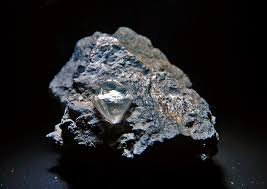
Diamond is an allotrope of Carbon and also the most precious gemstone of all times. There are other fun facts that make diamonds more fascinating.

  1. Diamond is known as the symbol for strength, courage and invincibility.
  2. The heaviest diamond ever discovered was of weight 3106 carats.
  3. On an average, a diamond loses 50% of its weight when it cut and polished.
  4. It is the hardest natural substance.
  5. Most of the diamonds found in nature are one to three billion years old.
  6. Diamonds were first discovered in India and then Brazil.
  7. The ashes of a loved one can be turned into man-made diamond and can be cherished for life.
  8. At fifty light years from Earth, there is a diamond in the sky named Lucy.
  9. Diamonds are not always colourless. Very rare diamonds are found in nature who having shaded of red, yellow, blue, pink, brown, orange, black and green.
  10. 1.5 million nanoparticles of diamond can be found in a candles flame.

Right to education in India

India has the largest student population in the world with over 13.5cr pupils in primary education followed by China at over 12.1cr pupils at this level. With a literacy rate of 61% India ranks a disappointing 172nd on this front. Educating such a large population is not only an expensive task but also a very difficult one. Of the nearly 200 million children in the 6 to 14 age group, more than half do not complete eight years of elementary education, as never enrolled or dropouts. Of those who do complete eight years of schooling, the achievement levels of a large percentage, in language and mathematics, is unacceptably low.

Problems to be sought out:

Firstly, there is the problem of access. School education is simply unavailable to the vast number of children in the country. During the last few decades, there has been some progress in improving enrolment. The gross enrolment ratio (GER) from Classes I to VIII was 94.9 per cent and from Classes I to XII, 77 per cent. Even these enrolment figures are generally rigged and exaggerated for various administrative and political purposes. Moreover, the attendance has generally been found to be at least 25 per cent below enrolment and the drop-out rate from Classes I to X was 61.6 per cent; and in a State like Bihar it was above 75 per cent. Among those who drop out, the percentage of children belonging to the
Scheduled Castes in the country as a whole was 70.6 and of the Scheduled Tribes, 78.5. In Bihar, the figure was close to 90 per cent for both the categories. The net result is that a sizeable percentage, as much as 30 per cent, of children in the school-going age in India are out of school; the percentage is as high as 50 in Bihar (1.5 crores out of three crore children in the school going age-group).
Only 53 per cent of all habitations have a primary school On an average, an upper primary school is 3 km away in 22 percent of habitations More than 50 percent of the girls in the country do not enrol in schools When working outside the family, children put in an average of 21 hours of labour per week, at the cost of education 60 million children are thought to be child labourers. More than 35 million children in the 6-14 age group are out of school Only 45.8 percent girls complete education in rural areas as compared to 66.3 percent boys. In urban areas, 66.3 percent girls complete education as opposed to 80.3 per cent boys.

Necessity of compulsory education:


In essence, a citizen is only free when he can make a meaningful challenge to his fellow citizens or Government’s attempt to curtail his natural freedom. For this to happen, he needs a certain degree of education. Without it, a citizen may never come to know of his other rights; nor would he have the resources to adequately enforce them.
The Supreme Court has explained why education should be compulsory. A free educated citizen could meaningfully exercise his political rights, discharge social responsibilities satisfactorily and develop a spirit of tolerance and reform. Therefore, education is compulsory. Primary education to the children, in particular, to the poor, weaker sections, Dalits and Tribes and minorities is mandatory. The basic education and employment-oriented vocational education should be imparted so as to retrieve them from poverty and, thus, develop basic abilities to live a meaningful life, the principal means and primary duty of the State for stability for the democracy, social integration and to eliminate social tensions.

Article 21 of Indian Constitution


Education is one of the basic elements, for the success of democratic system of any Government. An educated citizen may choose better representatives, to form the Government. Education provides human dignity to a person, to develop himself as well as contribute towards the development of his country. The framers of our constitution realising the importance of education, impose a duty on the State under Article 45, as one of the Directive Principles of State Policy, to provide free education to all children until they complete the age of 14 years, within 10 years from the commencement of the Constitution. The object was to abolish illiteracy from the country. It was expected that the elected Governments of the country would honestly implement this directive. But, this right was not recognised by many of the States. The Hon’ble Supreme Court held that right to free education falls in the ambit of “right to life” enshrined by Article 21 of the Constitution.

Unfortunately, that goal of the Constitution imposed by Article 45, could not be achieved within 10 years but succeeded after five decades, in the form of Constitution (86th Amendment) Act, 2002. By this Amendment, Article 21A was inserted in Part III, providing free and compulsory education to the children between the age of 6 to 14 years. Even after the lapse of around six decades of independence, illiteracy has a high ratio in the country.
With intense public pressure, government relented to introduce Right to Education Bill in December 2002 and introduced 86th Amendment Act (2002) via Article 21A (Part III) “The State shall provide free and compulsory education to all children of the age of 6 to 14 years in such manner as the state may, by law, determine”. Thereby the fundamental right given in Article 21 was diluted by excluding children aged 0-6 years from the purview of the Bill, thereby depriving around 170 million children below six years of their right to education. The original Right to Education Bill, 2002 was rigorously debated and several modifications were ultimately introduced in the parliament in 2009. The RTE Act provides the legislative framework for Universalisation of Elementary Education (UEE). The bill was adopted after 8 years of intense and sustained pressure by civil society organizations.
The citizen of the this country have a fundamental right to education and it flows from Article 21. This right is, however, not an absolute right. Its content and parameters have to be determined in the light of Articles 45 and 41. In other words, every child/citizen of this country has a right to free education until he completes the age of 14 years. Thereafter his right to education is subject to the limits of economic capacity and development of the State.
Right to education is not stated expressly as a Fundamental Right in Part III of the Constitution of India, However, having regard to the fundamental significance of education to the life of an individual and the nation, right to education is implicit in and flows from the right to life guaranteed by Article 21. That the right to education has been treated as one of transcendental importance in the life of an individual is recognised all over the world. Without education being provided to the citizens of this country, the objectives set forth in the preamble to the Constitution cannot be achieved. The Constitution would fail.


Right to free education is fundamental right from six to fourteen years of age:


Of late, in the year 2002 after 52 years of the enforcement of the Constitution, the Parliament has made the fundamental right to education, free and compulsory for the children of the age 6 to 14 years by Constitution (86th Amendment) Act, 2002. This Amendment has inserted Article 21A and clause (k) in Article 51A with the substitution of Article 45 of the Constitution.
The RTE Act requires surveys that will monitor all neighbourhoods, identify children requiring education, and set up facilities for providing it. The World Bank education specialist for India, Sam Carlson, has observed: “The RTE Act is the first legislation in the world that puts the responsibility of ensuring enrolment, attendance and completion on the Government. It is the parents’ responsibility to send the children to schools in the US and other countries.”

The Right to Education of persons with disabilities until 18 years of age is laid down under a separate legislation – the Persons with Disabilities Act. A number of other provisions regarding improvement of school infrastructure, teacher-student ratio and faculty are made in the Act.
The Central and the State Governments shall have concurrent responsibility for providing funds for carrying out the provisions of this Act. This Act is an essential step towards improving each child’s accessibility to secondary and higher education. The Act also contains specific provisions for disadvantaged groups, such as child labourers, migrant children, children with special needs, or those who have a disadvantage owing to social, cultural, economical, geographical, linguistic, gender or any such factor. With the implementation of this Act, it is also expected that issues of school drop out, out-of-school children, quality of education and availability of trained teachers would be addressed in the short to medium term plans.

The enforcement of the Right to Education Act (External website that opens in a new window) brings the country closer to achieving the objectives and mission of the Millennium Development Goals (MDGs) and Education for All (EFA) and hence is a historic step taken by the Government of India.

The Right to education act lays down the norms and standards related to:


Pupil Teacher Ratios (PTRs), Buildings and infrastructure, School-working days, teacher-working hours.
It had a clause for “No Detention Policy” which has been removed under The Right of Children to Free and Compulsory Education (Amendment) Act, 2019.
It also provides for prohibition of deployment of teachers for noneducational work, other than decennial census, elections to local authority, state legislatures and parliament, and disaster relief.
It provides for the appointment of teachers with the requisite entry and academic qualifications.
It prohibits Physical punishment and mental harassment, Screening procedures for admission of children, Capitation fee, Private tuition by teacher Running of schools without recognition.
It focuses on making the child free of fear, trauma and anxiety through a system of child friendly and child centred learning.

Benefits of Right to Education Act, 2009

RTE has been a part of the directive principles of the State Policy under Article 45 of the Constitution, which is part of Chapter 4 of the Constitution. And rights in Chapter 4 are not enforceable. For the first time in the history of India we have made this right enforceable by putting it in Chapter 3 of the Constitution as Article 21. This entitles children to have the right to education enforced as a fundamental right.

Right to compulsory education:
The word ‘compulsion’ is not to be related to the student or the parents. Parents cannot be penalized for being too poor to send their children to school. The word, ‘compulsion’ has to be understood in relation to the State and the obligation of the State to provide for free education.


The Supreme Court has held that so many children drop out of, or are, absent from, school before they turn fourteen, “free education” alone cannot solve the problem. The current patchwork of laws on compulsory education is insufficient. Monetary fines do not go far enough to ensure that Article 21A is upheld. The Statement of Objects and Reasons for Article 21A states that the Constitution of India in a Directive Principle contained in Article 45, has made a provision for free and compulsory education for all children up to the age of fourteen years within ten years of promulgation of the Constitution. We could not achieve this goal even after 50 years of adoption of this provision. The task of providing education to all children in this age group gained momentum after the National Policy of Education (NPE) was announced in 1986. The Government of India, in partnership with the State Governments, has made strenuous efforts to fulfil this mandate and though significant improvements were seen in various education indicators, the ultimate goal of providing universal and quality education still remains unfulfilled. In order to fulfil this goal, it is felt that an explicit provision.

Every generation looks up to the next generation with the hope that they shall build up a nation better than the present. Therefore education which empowers the future generation should always be the main concern for any nation. It is now an undisputed fact that right to education can be realized on a national level only through compulsory education, or better say, through free compulsory primary education. However due to the widespread poverty and various prejudices in the society, the efforts to develop an educational system in India with full access, equality and quality of education has not been achieved. The inability to check the dropout rates among the marginalized sections of the population is another cause of worry.


18th meeting of high-level Group of Ministers on COVID-19 held in New Delhi

The 18th meeting of the high-level Group of Ministers, GoM on COVID-19 was held in New Delhi through video conferencing under the chairpersonship of Health Minister Dr. Harsh Vardhan. 

The GoM was briefed on the current status of COVID-19 in India. The global comparison between the five most affected countries clearly depicted that India has one of the lowest cases per million which is 538 and deaths per million which is 15 compared the global average of 1453 and 68.7.

Within the country, eight states Maharashtra, Tamil Nadu, Delhi, Karnataka, Telangana, Andhra Pradesh, Uttar Pradesh and Gujarat contribute to around 90 per cent of the active caseload and 49 districts account for 80 per cent of active caseload, as of today.

Moreover, six states Maharashtra, Delhi, Gujarat, Tamil Nadu, Uttar Pradesh and West Bengal account for 86 per cent of total deaths, and 32 districts account for 80 per cent deaths.

Dr Harsh Vardhan stated that as we move forward, the focus shall be on the management of COVID-19 through strict containment measures and surveillance; utilizing full testing capacity and focus on monitoring of co-morbid and elderly population. 

He pointed out that the aim is to reduce the Case Fatality Rate low by early identification and effective clinical management.

Director of National Centre for Disease Control Dr Sujeet K Singh presented a detailed report on surveillance efforts undertaken in India during the pandemic.

In a detailed presentation, Chairman of Empowered Group-8 on Information, Communication and Public Awareness,Amit Khare briefed the GoM on the key steps taken in Communication of Information and in raising public awareness.

Dr Harsh Vardhan was joined by External Affairs Minister Dr. S. Jaishankar, Civil Aviation Minister Hardeep S. Puri, Minister of State for Health Ashwini Kumar Choubey, Minister of State for Shipping and Chemical and Fertilizers Mansukh Mandaviya, Member Health in NITI Aayog Dr. Vinod Paul joined the meeting through video conference link.

ICSE and ISC exam results for Class 10th, 12th to be announced at 3 PM today

ICSE and ISC exam results for students of Class 10th and 12th will be announced at 3 pm today. The results will be uploaded on the website of the Council for the Indian School Certificate Examination.  

Students will be able to view their result by logging on to cisce.org and results.cisce.org

Results will also be available through SMS for which detail has been posted on the websites. A press release said, affiliated schools can access results by logging into the CAREERS portal using Principal’s login ID and password.

MHA permits NIA to investigate Thiruvananthapuram Airport Gold smuggling case

Union Home Ministry has permitted the National Investigation Agency to investigate the Thiruvananthapuram Airport Gold smuggling case. The Ministry said, the decision has been taken as the organised smuggling operation may have serious implications for national security.

It came a day after Kerala Chief Minister Pinarayi Vijayan wrote a letter to Prime Minister Narendra Modi seeking an effective investigation into the seizure of gold worth crores of rupees from a diplomatic baggage at the airport in the state capital.

The gold, weighing over 30 kg, was seized from the diplomatic baggage that had landed by air cargo at Kerala’s Thiruvananthapuram International airport recently from the Gulf. 

UP govt imposes three day restrictions in state from this evening amid spurt in Covid-19 cases

The Uttar Pradesh government has decided to impose fresh restrictions of 55 hours in the state from this evening amid spurt in Covid-19 cases. The restrictions will be in place from 10 PM today till 5 AM on 13th July.

AIR correspondent reports, as per the directions issued by Chief Secretary of State RK Tiwari, All offices, business institutions and markets in urban and rural areas across the state will be closed during the restriction period. Although All emergency services will continue as usual.

Apart from the continuous working units in urban areas and industrial units in rural areas all other industrial activities will be closed. These restrictions will not affect rail and air services along with movement on national highways and road transportation including goods services.

On these three days that is 10,11 and 12 july a massive sanitization and clean water supply campaign will be launched across the state. Through a public address system an awareness campaign will also be launched regarding covid-19 and other communicable diseases. 

PM Modi to dedicate to nation a 750 MW Solar project at MP’s Rewa today

Prime Minister Narendra Modi will today dedicate to the nation a 750 MW Solar project set up at Rewa in Madhya Pradesh. The Rewa project will reduce carbon emission equivalent to about 15 lakh ton of CO2 per year.

The project comprises three solar generating units of 250 megawatt each located on a 500 hectare plot of land situated inside a Solar Park. The Solar Park was developed by the Rewa Ultra Mega Solar Limited (RUMSL). It is a Joint Venture Company of Madhya Pradesh Urja Vikas Nigam Limited, and Solar Energy Corporation of India, a Central Public Sector Undertaking.  Central Financial Assistance of 138 crore rupees has been provided to RUMSL for development of the Park.

The Rewa Solar Project was the first solar project in the country to break the grid parity barrier. Compared to prevailing solar project tariffs of approximately 4.50 rupees per unit in early 2017, the Rewa project achieved historic results. This means a tariff of 2.97 rupees per unit with a tariff escalation of 0.05 paise per unit over 15 years and a levelized rate of 3.30 rupees per unit over the term of 25 years.  

The Rewa Project has been acknowledged in India and abroad for its robust project structuring and innovations. Its payment security mechanism for reducing risks to power developers has been recommended as a model to other States by the Ministry of New and Renewable Energy.  It has also received the World Bank Group President’s Award for innovation and excellence and was included in the Prime Minister’s “A Book of Innovation: New Beginnings”.  

The project is also the first renewable energy project to supply to an institutional customer outside the State. The Delhi Metro will get 24 percent of energy from the project with the remaining 76 percent being supplied to the State DISCOMs of Madhya Pradesh.

The Project also exemplifies India’s commitment to attain the target of 175 GW of installed renewable energy capacity by the year 2022, including 100 GW of Solar installed capacity.

A radio report on the event, produced by AIR Rewa, will be broadcast by AIR Delhi on its Indraprastha, FM Gold and AIR Live News 24×7 Youtube channels at 5:20 PM today.  

Prime Minister Modi will dedicate the solar project to the nation virtually at 11 am.

Madhya Pradesh Governor Anandiben Patel and Chief Minister  Shivraj Singh Chouhan will take part in the programme through video conference. Union Minister RK Singh will also take part in the programme.

AIR correspondent reports, the project comprises three solar generating units of 250 MW each located on a1590-hectare plot inside a solar park. According to the official release, this project will reduce carbon emission equivalent to approximately 15 lakh tonne of CO2 per year. It is the first renewable energy project to supply institutional customers outside the state, including Delhi Metro, which will get 24 per cent of energy from the project. The remaining 76 per cent is being supplied to the state distribution companies of Madhya Pradesh.

The Rewa project has been acknowledged in India and abroad for its robust structuring and innovations. Its payment security mechanism for reducing risks to power developers has been recommended as a model to other states by the Ministry of New and Renewable Energy.

The solar park was developed by the Rewa Ultra Mega Solar Ltd (RUMSL), a joint venture of Madhya Pradesh Urja Vikas Nigam Ltd and Solar Energy Corporation of India, a central undertaking.